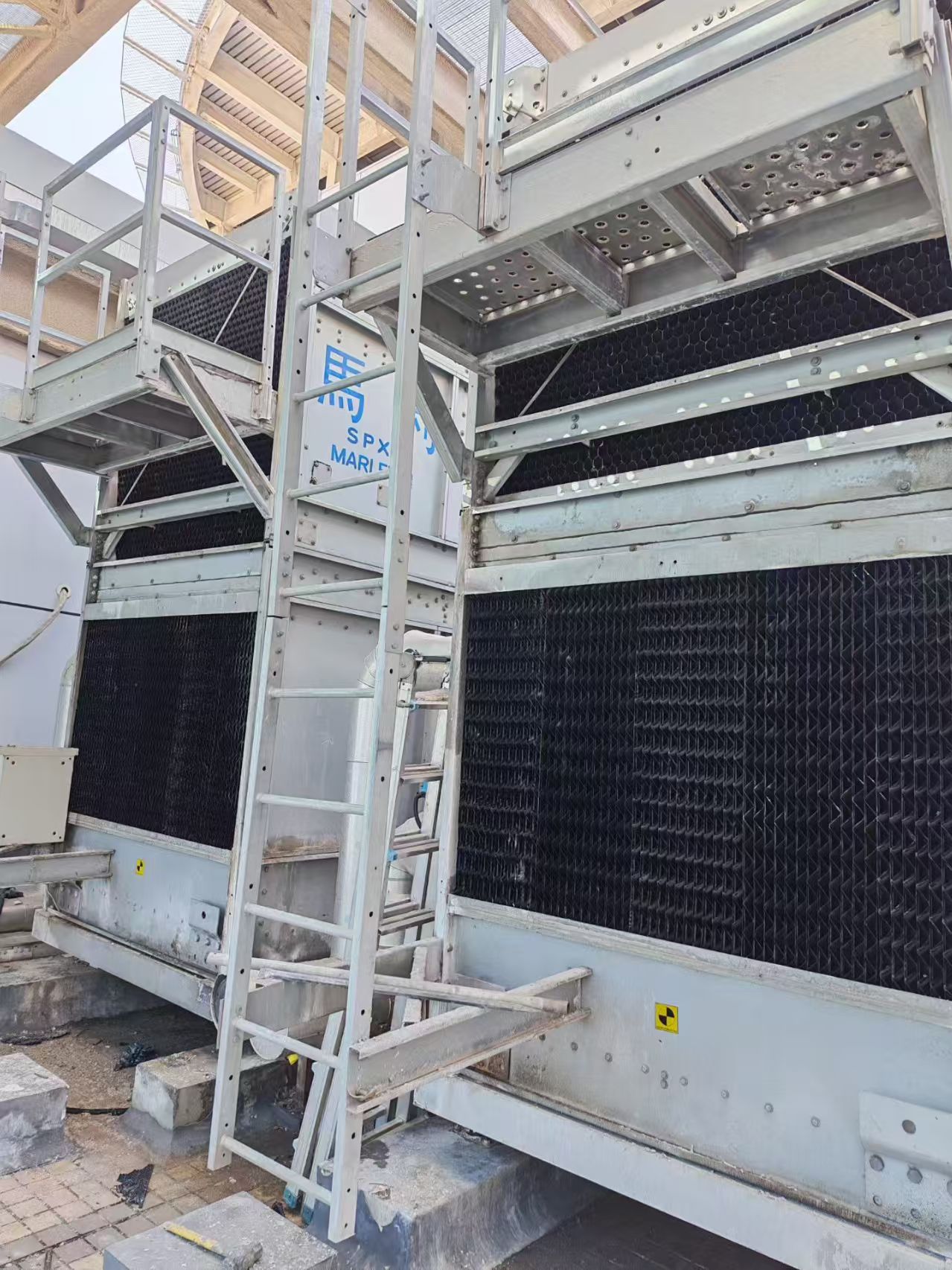
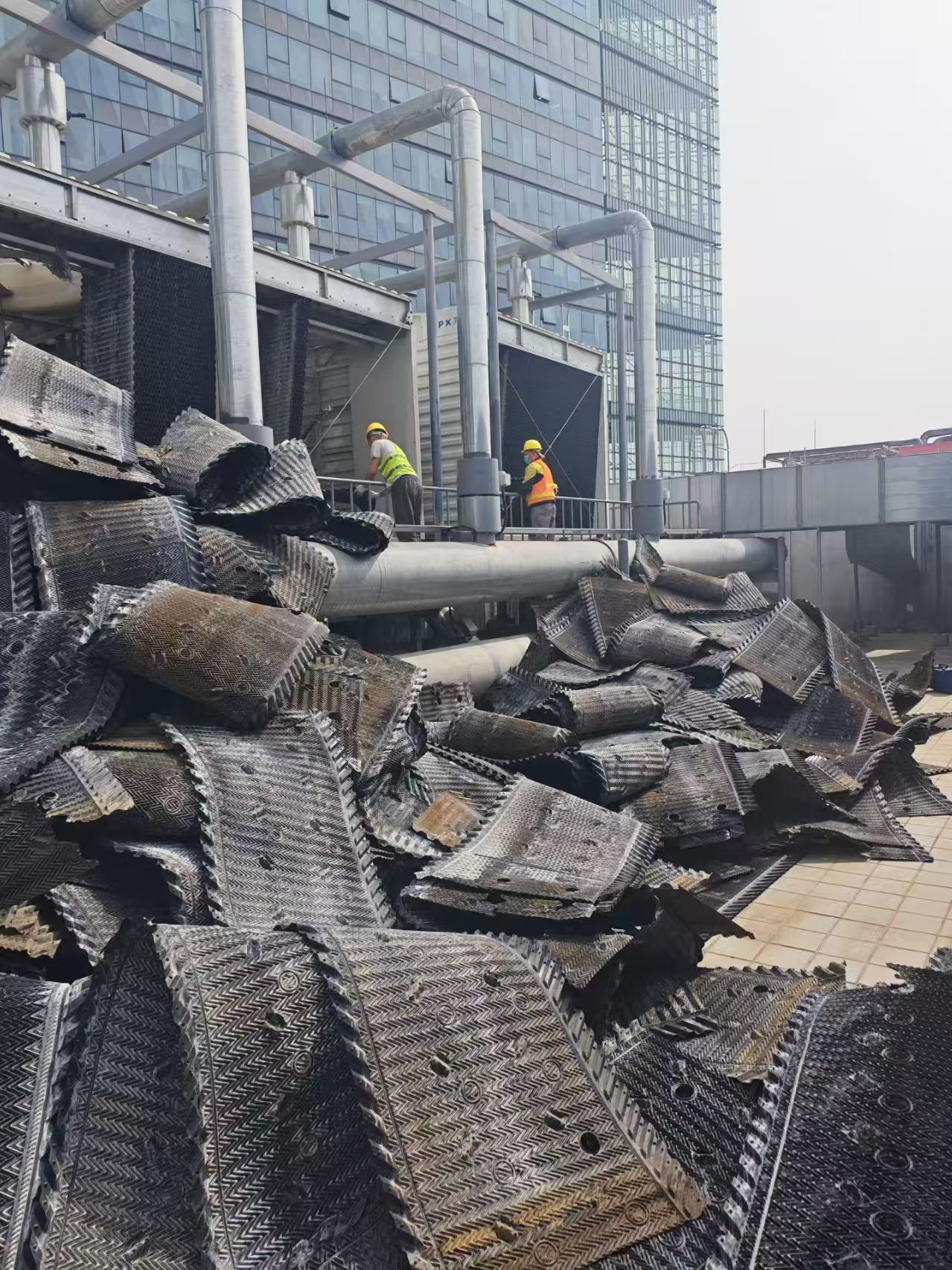
Marley Cooling Tower Fill Replacement: Materials and Selection
Marley cooling tower fill replacement is an important maintenance solution for industrial facilities, commercial buildings, power plants, and HVAC systems that rely on efficient heat rejection. Over time, cooling tower fill media can become blocked, deformed, brittle, or damaged by scaling, biological growth, chemical exposure, and high operating temperatures. These problems can reduce heat transfer efficiency, increase energy consumption, and affect overall cooling tower performance.
Selecting the right replacement fill requires more than matching the dimensions of the existing media. Buyers should consider material properties, cooling tower configuration, water quality, operating temperature, airflow resistance, and thermal performance. PVC and polypropylene (PP) are two common materials used in cooling tower fill manufacturing, and each offers advantages for different operating environments.
Whether you are replacing aging Marley cooling tower fill or sourcing compatible replacement media from an independent manufacturer, understanding material selection and installation requirements can help reduce maintenance risks and improve long-term system reliability.
Why Is Marley Cooling Tower Fill Replacement Important?
Cooling tower fill increases the contact area between circulating water and air, allowing heat to transfer more effectively through evaporation and sensible heat exchange. When fill media deteriorates, the cooling tower may struggle to maintain the required cold-water temperature.
What Happens When Cooling Tower Fill Deteriorates?
Cooling tower fill operates continuously in a wet environment and may be exposed to mineral deposits, microorganisms, suspended solids, and changing water temperatures.
Common Signs That Replacement Is Needed
Several conditions indicate that Marley cooling tower fill may require replacement:
Blocked passages: Scale, sediment, and biological growth restrict airflow and water movement.
Deformed sheets: Excessive heat, mechanical loading, or aging can distort the fill structure.
Cracked or brittle material: Long-term exposure to unsuitable operating conditions can weaken plastic sheets.
Uneven water distribution: Damaged or obstructed fill can create areas with insufficient water-air contact.
Reduced cooling performance: The tower may no longer achieve its required outlet-water temperature under comparable operating conditions.
Frequent maintenance requirements: Repeated cleaning may become uneconomical when the fill is severely deteriorated.
Not every performance problem requires fill replacement. Fan operation, water distribution, heat load, water treatment, and airflow restrictions should also be checked before a replacement project is approved.
How Does Replacement Fill Improve Cooling Tower Performance?
Replacing severely fouled or damaged fill can restore the designed contact area between water and air. When the replacement media is properly selected and installed, it may help improve heat transfer, restore water distribution, and reduce operating problems associated with blocked passages.
Benefits of Properly Selected Replacement Fill
A suitable Marley cooling tower fill replacement solution can provide several potential benefits:
More effective heat transfer.
Improved water distribution through the fill pack.
Reduced blockage caused by unsuitable or deteriorated media.
More stable cooling performance.
Easier inspection and maintenance when the new design provides appropriate access.
Better use of the existing cooling tower structure.
Actual results depend on the original tower design, the condition of other components, operating conditions, and the compatibility of the replacement product.
Understanding Materials for Marley Cooling Tower Fill Replacement
Material selection is one of the most important decisions when purchasing replacement cooling tower fill. The selected plastic must withstand the tower's temperature, water chemistry, mechanical loading, and maintenance conditions.
PVC Cooling Tower Fill Replacement
Polyvinyl chloride (PVC) is widely used in cooling tower fill manufacturing because it can be formed into corrugated sheets that create extensive water-air contact surfaces.
Advantages of PVC Fill Media
PVC cooling tower fill offers several practical advantages for many conventional cooling applications:
Good formability for film-fill sheet designs.
Effective heat transfer when the fill geometry matches the tower requirements.
Relatively lightweight construction.
Practical manufacturing costs.
Availability in various sheet profiles and module configurations.
PVC is commonly considered for HVAC cooling towers, commercial buildings, and industrial systems operating within the selected product's rated limits.
Limitations of PVC Cooling Tower Fill
PVC is not suitable for every operating environment. High temperatures, incompatible chemicals, excessive mechanical loading, and prolonged exposure to unsuitable conditions may cause deformation or deterioration.
Before selecting PVC fill replacement, buyers should confirm the manufacturer's maximum recommended operating temperature, chemical compatibility, and any relevant fire-performance requirements.
PP Cooling Tower Fill Replacement
Polypropylene (PP) is another important material for cooling tower fill media. It may be selected for applications requiring particular chemical resistance or a different temperature operating range from that offered by the proposed PVC grade.
Advantages of PP Fill Media
Depending on the material formulation and product design, PP cooling tower fill may offer:
Good resistance to many chemicals.
Potential suitability for certain higher-temperature applications.
Lightweight construction.
Flexibility in manufacturing different fill configurations.
Useful performance in selected industrial cooling environments.
When Should Buyers Consider PP Fill?
PP fill may be worth evaluating when the cooling water contains chemicals that are incompatible with the proposed PVC product or when operating temperatures approach the practical limits of the available PVC fill.
However, not all PP fill products have the same temperature rating or mechanical properties. Buyers should request technical documentation for the exact grade and configuration being supplied.
PVC vs. PP: Which Material Is Better for Replacement?
Neither material is universally better. The correct choice depends on the specific cooling tower and its operating conditions.
| Selection factor | PVC fill | PP fill |
| Typical application | Many conventional cooling systems | Selected chemical and temperature-demanding applications |
| Formability | Well suited to formed fill sheets | Well suited to formed fill sheets |
| Chemical compatibility | Depends on chemical and PVC formulation | Depends on chemical and PP formulation |
| Temperature suitability | Must remain within the product's rated limits | Must remain within the product's rated limits |
| Cost considerations | Often economical for standard applications | May involve different material and processing costs |
| Final selection | Based on operating requirements | Based on operating requirements |
How to Make the Final Material Decision
Start with the actual water temperature, maximum expected operating temperature, chemical treatment program, and cooling tower loading. Then compare the technical specifications and lifecycle costs of the available products.
A lower initial purchase price does not necessarily mean a lower total cost. Service life, maintenance frequency, thermal performance, and replacement accessibility should all be considered.
What Types of Fill Are Used for Marley Cooling Tower Fill Replacement?
The original fill arrangement and cooling tower airflow design influence which replacement configuration can be used.
Film Fill Replacement
Film fill is designed to spread water across a series of closely spaced surfaces, creating a thin film that contacts moving air.
How Film Fill Works
As water flows over the formed surfaces, it spreads into thin layers. Air passes through the fill channels and absorbs heat and moisture from the water.
This arrangement provides a large effective contact area within a relatively compact volume.
Advantages of Film Fill
Film fill can provide high heat transfer performance when water quality is suitable and the media remains clean. It is widely used in applications where compact installation and effective thermal performance are important.
However, narrow passages can be vulnerable to blockage from scale, sediment, biological growth, and other contaminants. Water treatment and regular inspection are therefore essential.
Splash Fill Replacement
Splash fill breaks falling water into smaller droplets as it strikes bars, grids, or other structural elements.
When Is Splash Fill Appropriate?
Splash fill may be worth considering for applications with greater suspended-solids loading or a recurring risk of fouling, provided that the replacement design is compatible with the tower's thermal and hydraulic requirements.
Its more open structure may simplify access and cleaning in some installations.
Important Selection Considerations
Splash fill and film fill are not interchangeable in every cooling tower. A change in fill type may alter thermal performance, water distribution, airflow resistance, and support requirements. Any conversion should be evaluated against the tower's original design and operating requirements.
How to Select Compatible Marley Cooling Tower Fill Replacement
Compatibility is critical when replacing fill in an existing Marley cooling tower. A product that fits the available space may still perform poorly if its geometry, material, or pressure-drop characteristics differ significantly from the original specification.
Confirm the Cooling Tower Model and Fill Configuration
Begin by identifying the cooling tower model, fill location, airflow direction, and original fill arrangement.
Information Required for Product Matching
Provide the following details to the replacement supplier whenever possible:
Cooling tower manufacturer and model.
Crossflow or counterflow configuration.
Original fill type and material.
Fill block length, width, and height.
Sheet thickness and corrugation pattern.
Module arrangement and support dimensions.
Water temperature and design cooling load.
Available drawings, photographs, or samples.
If the original model information is unavailable, detailed measurements and photographs can help the supplier assess potential replacement options.
Match Fill Dimensions and Installation Requirements
Replacement fill must fit the available installation space and work with the existing support structure.
Why Dimensions Matter
Incorrect block dimensions may leave gaps, interfere with water distribution, or prevent the fill from being properly supported. Poorly aligned modules can also create bypass paths that reduce effective water-air contact.
Before production, confirm the dimensions, module arrangement, installation orientation, and any necessary trimming or assembly requirements.
Evaluate Thermal Performance and Airflow Resistance
Fill geometry influences both heat transfer and airflow through the cooling tower.
What Should Buyers Check?
Review the required cooling capacity, water loading, air velocity, fill depth, and pressure-drop characteristics. A replacement fill with significantly different airflow resistance may affect fan performance or reduce airflow if the system cannot accommodate the change.
Where available, request product performance data and confirm that the proposed media is appropriate for the tower's design conditions.
Consider Water Quality and Fouling Potential
Water quality is a major factor in determining the service life of replacement fill.
How Water Conditions Affect Material Selection
High hardness can encourage scale formation, while suspended solids may accumulate in the fill passages. Biological growth can also restrict airflow and reduce heat transfer.
For challenging water conditions, assess whether a more open fill configuration or a revised water treatment and maintenance program is appropriate. Selecting a different plastic material alone will not prevent scale or biological fouling.
What Factors Affect the Service Life of Replacement Fill?
The service life of cooling tower fill varies with material quality, operating temperature, water treatment, environmental exposure, and maintenance practices.
Operating Temperature and Chemical Exposure
Plastic fill must operate within its specified temperature range and remain compatible with the chemicals present in the circulating water.
Preventing Premature Material Deterioration
Regularly review operating temperatures and water treatment practices. If the tower experiences unusual temperature spikes or changes in chemical dosing, confirm that the fill material remains suitable for the revised conditions.
Water Treatment and Routine Cleaning
Proper water treatment helps reduce scaling, corrosion of associated metal components, and biological growth throughout the cooling system.
Recommended Maintenance Practices
Maintenance teams should:
Inspect fill passages for blockage.
Monitor water distribution across the fill pack.
Review water treatment and blowdown practices.
Remove deposits using material-compatible cleaning procedures.
Check for broken sheets, deformation, and loose modules.
Record cooling performance and maintenance findings over time.
Cleaning should be performed using procedures suitable for the fill material. Excessive pressure or incompatible chemicals may damage the sheets and shorten their service life.
Mechanical Support and Installation Quality
Even high-quality fill can fail prematurely if it is poorly supported or installed incorrectly.
Avoiding Structural Problems
Inspect support beams, grids, retainers, and adjacent components before installing new fill. Damaged supports should be repaired according to the tower manufacturer's requirements.
Correct alignment and secure positioning help prevent movement, deformation, and gaps that could compromise cooling performance.
Marley Cooling Tower Fill Replacement: Original Parts or Compatible Alternatives?
When planning a replacement project, buyers may compare original manufacturer parts with compatible fill media produced by independent manufacturers.
Original Replacement Fill
Original replacement parts may offer a direct route to matching the existing tower configuration, particularly when the model number, original specifications, and replacement documentation are available.
What Buyers Should Verify
Confirm part numbers, material specifications, dimensions, current availability, lead time, and the manufacturer's recommendations for the intended application.
Original branding alone does not eliminate the need to verify the exact part and operating conditions.
Compatible Replacement Fill from Independent Manufacturers
Independent manufacturers may offer replacement fill designed to match specified dimensions and performance requirements. Depending on their capabilities, they may also provide custom configurations for aging towers or projects where original parts are difficult to source.
How to Evaluate a Compatible Product
Before purchasing, confirm:
Dimensional compatibility with the existing tower.
Material grade and temperature limits.
Fill geometry and intended airflow arrangement.
Relevant thermal and pressure-drop data.
Manufacturing quality and inspection procedures.
Packaging, delivery schedule, and technical support.
A compatible product should not be assumed to be an officially approved or endorsed Marley product. Buyers should independently verify suitability and any applicable warranty or contractual requirements.
How to Find a Reliable Marley Cooling Tower Fill Replacement Supplier
Choosing a supplier is an important part of controlling procurement risk and ensuring that replacement media meets project requirements.
Evaluate Manufacturing Capability
A capable supplier should understand fill geometry, plastic material selection, cooling tower configuration, and the dimensional requirements of replacement projects.
Questions to Ask a Potential Supplier
Ask whether the supplier can manufacture the required PVC or PP fill, review existing drawings, confirm module dimensions, and provide technical specifications for the proposed product.
For customized projects, confirm that the supplier can maintain consistent dimensions and quality across the required production quantity.
Review Quality Control and Documentation
Quality control helps reduce the risk of dimensional errors, weak bonding, inconsistent sheet thickness, and premature deformation.
Documents Worth Requesting
Depending on the project, request material specifications, dimensional inspection records, technical drawings, performance data, and relevant test reports.
For large industrial installations, agree on inspection criteria and acceptance requirements before production begins.
Compare Total Procurement Costs
Purchase price is only one part of the total cost of a cooling tower fill replacement project.
What Should a Quotation Include?
Compare material type, dimensions, quantity, packaging, production lead time, transportation, warranty terms, and technical support.
For international orders, confirm shipping arrangements, delivery terms, and responsibilities for customs clearance. Clear specifications help buyers compare quotations accurately and avoid unexpected costs.
How to Install Marley Cooling Tower Fill Replacement
Proper installation is necessary to achieve the expected performance of replacement fill.
Prepare the Cooling Tower Before Installation
Before removing the old fill, follow the facility's shutdown, isolation, and access procedures. Confirm that the work area is safe and that the water distribution system and support structure can be inspected.
Pre-Installation Checklist
Check the following items before installation:
Confirm the replacement dimensions and material.
Inspect the fill support structure.
Remove accumulated debris and deposits.
Check nearby water distribution components.
Verify the required installation orientation.
Review the supplier's installation instructions.
Install and Align the Replacement Fill
Arrange the fill modules according to the approved installation layout. Avoid forcing sheets into place or making unapproved modifications that could affect structural integrity.
Verify Water Distribution and Airflow
After installation, inspect the fill pack for gaps, uneven positioning, and unsupported areas. Check that water distribution is appropriate and that the installation does not create obvious airflow restrictions.
Follow the cooling tower manufacturer's recommissioning procedures and monitor operating temperatures and other relevant performance indicators after the system returns to service.
Frequently Asked Questions About Marley Cooling Tower Fill Replacement
How Do I Know Which Replacement Fill Fits My Marley Cooling Tower?
Identify the tower model and original fill configuration, then confirm the required dimensions, material, and operating conditions. If model details are unavailable, provide measurements, photographs, and existing drawings to a qualified supplier for evaluation.
Is PVC or PP Better for Marley Cooling Tower Fill Replacement?
PVC is suitable for many conventional cooling tower applications, while PP may be preferred for certain chemical environments or temperature requirements. The best option depends on the exact material grade, water chemistry, operating temperature, and mechanical conditions.
Can Compatible Fill Media Be Used Instead of Original Marley Parts?
Compatible fill may be an option when its dimensions, material, installation arrangement, and performance characteristics have been verified for the specific tower. Buyers should check technical suitability, contractual requirements, and warranty implications before proceeding.
How Often Should Cooling Tower Fill Be Replaced?
There is no universal replacement interval. The timing depends on water quality, operating conditions, material deterioration, and maintenance effectiveness. Regular inspections and cooling performance records provide a more reliable basis for replacement decisions than age alone.
Does Replacing Cooling Tower Fill Reduce Energy Consumption?
Replacement fill may help restore cooling performance when the existing media is blocked, damaged, or severely deteriorated. Energy savings are not guaranteed, because fan power and overall system efficiency also depend on airflow, heat load, fan controls, water distribution, and other operating conditions.
Can Replacement Fill Be Customized?
Yes. Some manufacturers can produce fill sheets or modules in specified dimensions, materials, and configurations. Custom orders should be based on verified measurements and the cooling tower's design requirements.
Conclusion
Marley cooling tower fill replacement requires careful consideration of materials, fill type, dimensional compatibility, thermal performance, and operating conditions. PVC and PP are both useful materials, but their suitability depends on temperature limits, water chemistry, mechanical loading, and the requirements of the specific cooling tower.
Before purchasing replacement fill, confirm the existing tower configuration, inspect the support structure, evaluate water quality, and compare technical specifications from qualified suppliers. Proper installation and ongoing maintenance are equally important for achieving reliable cooling performance.
For industrial facilities planning a Marley cooling tower fill replacement project, a specification-based purchasing approach can help reduce compatibility risks, control lifecycle costs, and support dependable cooling tower operation.