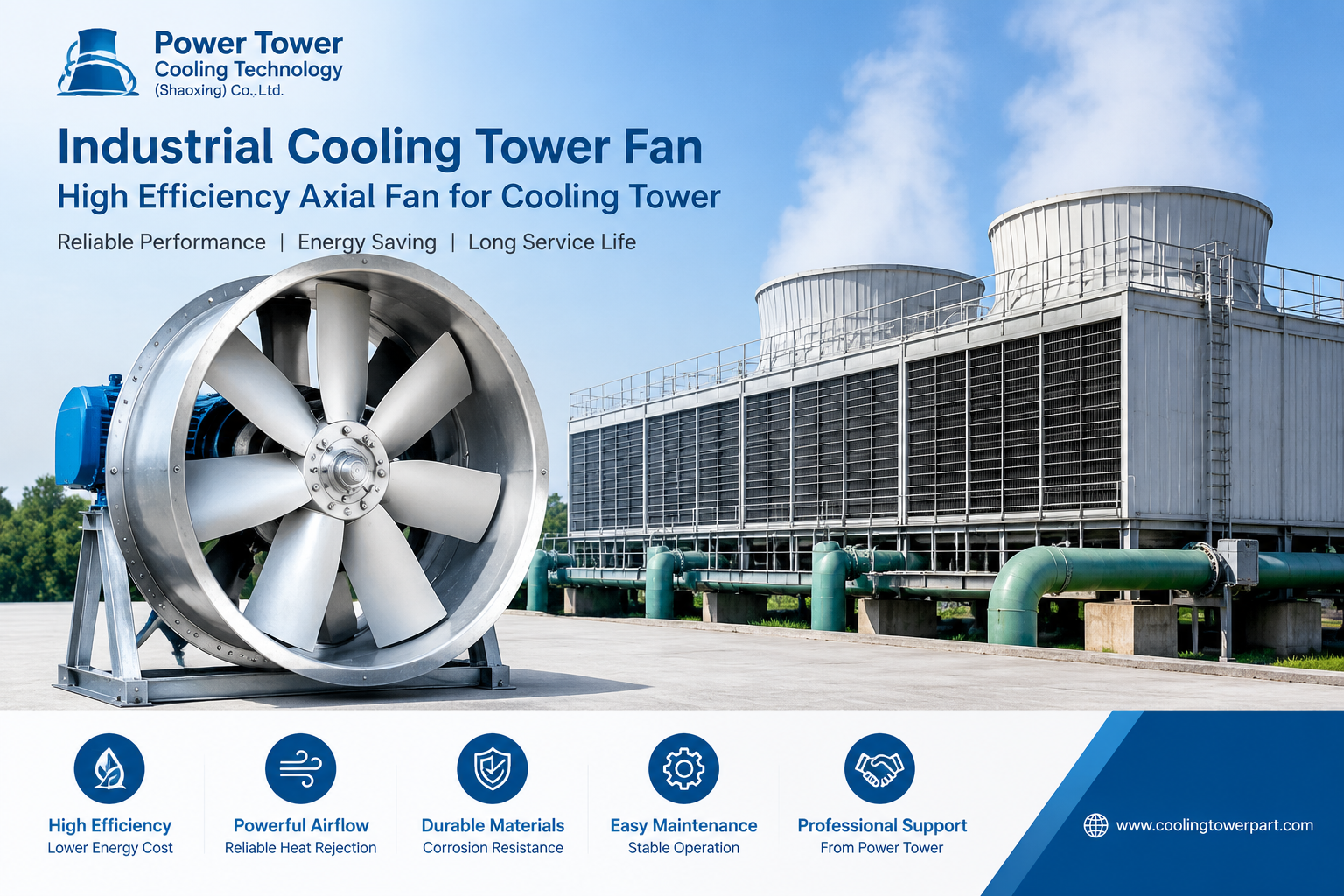
Industrial cooling towers play a vital role in removing excess heat from manufacturing processes, HVAC systems, power plants, and other industrial facilities. At the heart of many mechanical-draft cooling towers is a critical component: the industrial cooling tower fan.
A high-efficiency axial fan helps maintain the airflow required for effective heat rejection, supports stable cooling performance, and can reduce electricity consumption. Choosing the wrong fan, on the other hand, may result in insufficient airflow, excessive energy costs, unwanted noise, and unnecessary equipment wear.
So, how do you choose the right industrial cooling tower fan for your application? What materials, dimensions, and performance parameters should you consider before purchasing a replacement?
In this guide, Power Tower Cooling Technology (Shaoxing) Co., Ltd. explains how cooling tower axial fans work, their main advantages, how to select the right fan, and how proper maintenance can help improve long-term operating performance.
For cooling tower components and replacement solutions, visit our website: https://www.coolingtowerpart.com.
What Is an Industrial Cooling Tower Fan?
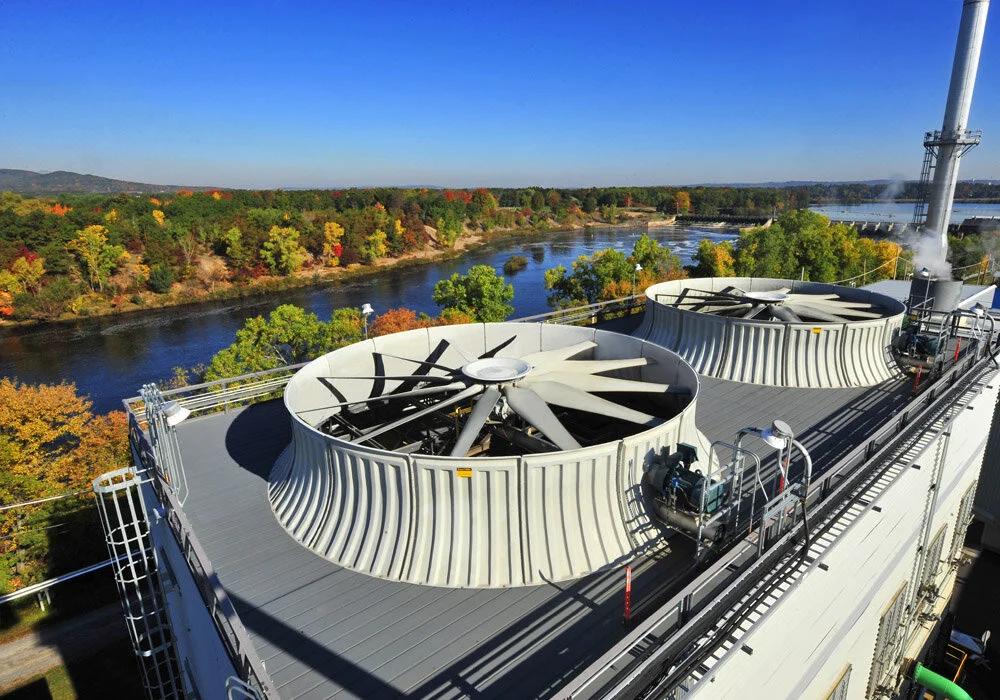
An industrial cooling tower fan is a mechanical device that moves air through a cooling tower to support the heat rejection process. It is commonly used in mechanical-draft cooling towers, where controlled airflow is necessary to achieve the required cooling performance.
Inside a cooling tower, warm circulating water comes into contact with moving air. A small portion of the water evaporates, carrying heat away from the remaining water. The cooled water then returns to the industrial process or HVAC system.
The cooling tower fan helps create the airflow needed for this process.
Think of the fan as the driving force behind the tower's air movement. Even if the cooling tower fill distributes water effectively, insufficient airflow can limit heat transfer and reduce the system's overall cooling capacity.
A properly selected industrial fan can move large volumes of air while operating within the tower's intended pressure and power requirements.
How Does a Cooling Tower Axial Fan Work?
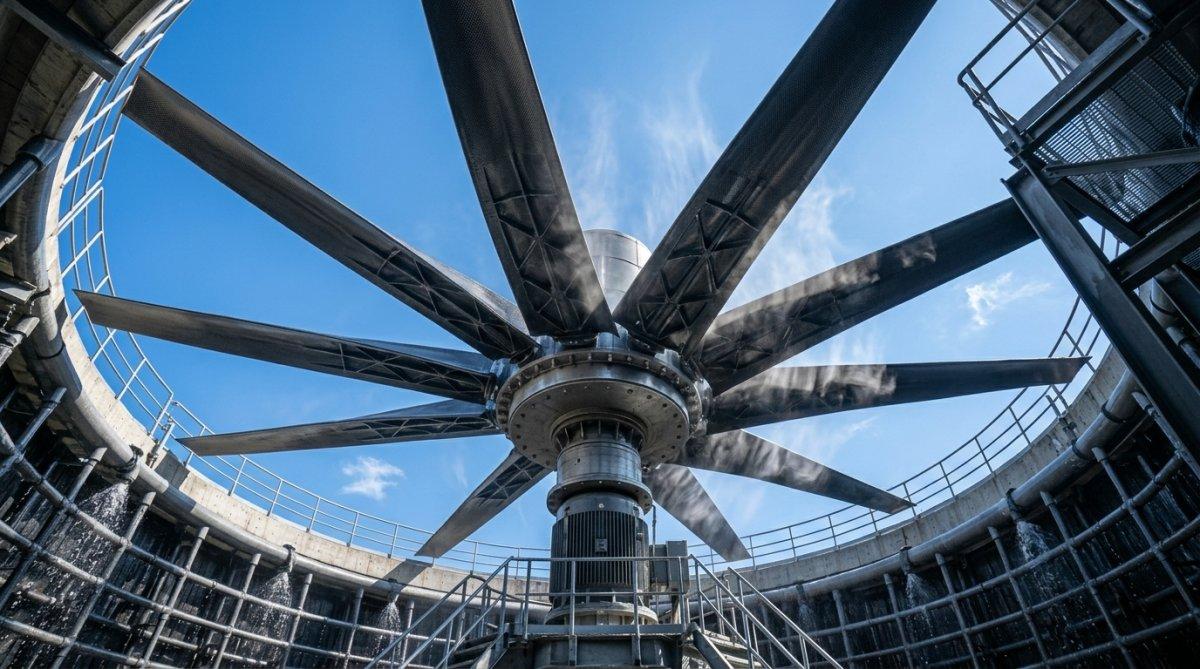
An axial fan moves air parallel to its rotational axis. As the blades rotate, their aerodynamic shape generates airflow through the fan cylinder or stack.
The fan's performance depends on several factors, including blade geometry, fan diameter, blade pitch, rotational speed, motor power, and the resistance of the airflow path.
These factors work together to determine how much air the fan can move and how much energy it consumes.
A fan that is too small may fail to deliver sufficient airflow. A fan that operates at an unnecessarily high speed may consume excessive electricity and place additional load on the motor.
The goal is to select a fan that delivers the airflow required by the cooling tower without wasting energy.
Why Are Axial Fans Widely Used in Cooling Towers?
Axial fans are widely used in industrial cooling towers because they can handle high airflow volumes at relatively low pressure.
Their advantages include:
High-volume airflow for heat rejection.
Compact installation in many cooling tower designs.
Potential for energy-efficient operation.
Relatively straightforward inspection and maintenance.
Compatibility with different motor and drive configurations.
Availability of different blade materials and designs.
Axial fans are commonly used in both induced-draft and forced-draft cooling towers.
In an induced-draft cooling tower, the fan is typically installed near the top of the tower and draws air through the heat-transfer section. In a forced-draft cooling tower, the fan pushes air into the tower, usually through an inlet near the base.
The appropriate arrangement depends on the cooling tower's design and operating requirements.
Key Functions of an Industrial Cooling Tower Fan
The primary function of a cooling tower fan is to provide the airflow required for heat rejection. However, its influence extends beyond simply moving air.
First, the fan helps move air through the tower, supporting evaporation and heat transfer between the circulating water and the surrounding air.
Second, consistent airflow helps maintain predictable cooling performance as process loads change. When industrial equipment generates more heat, sufficient airflow becomes especially important.
Third, a properly selected fan can reduce unnecessary electricity consumption while maintaining the required cooling duty.
Finally, correct installation and balancing help reduce vibration, mechanical stress, and premature wear.
It is important to remember that the fan is only one part of the cooling system. Fill media, water distribution, drift eliminators, water quality, and ambient wet-bulb temperature also affect overall performance.
A high-efficiency fan cannot compensate for severely clogged fill or poor water distribution. Instead, the best results come from a cooling tower in which all major components work together.
Main Types of Cooling Tower Fans
Different cooling towers use different fan designs. Understanding the main types helps buyers select equipment that matches their operating requirements.
Axial Flow Fans
Axial flow fans are among the most common fan types used in industrial cooling towers.
They move air along the fan shaft and can handle high airflow volumes at relatively low pressure. Their design makes them suitable for many large cooling tower air passages.
Depending on the application, axial fans may feature fixed-pitch or adjustable-pitch blades. Some systems also use variable-frequency drives to adjust fan speed according to cooling demand.
Fixed-pitch fans offer a relatively straightforward configuration. Adjustable-pitch blades and variable-speed control may provide greater operating flexibility when correctly engineered.
The best option depends on airflow requirements, operating conditions, motor capacity, and the overall cooling tower design.
Centrifugal Fans
Centrifugal fans draw air into an impeller and discharge it outward, generally at a right angle to the incoming airflow.
They can generate higher static pressure than many axial fans, making them useful in systems with greater airflow resistance.
However, neither fan type is universally better. The correct choice depends on system pressure, airflow requirements, installation space, noise limits, and energy performance.
For many mechanical-draft cooling towers, axial fans remain a practical choice because of their ability to move large quantities of air through a relatively open airflow path.
Benefits of High-Efficiency Axial Fans for Cooling Towers
A high-efficiency axial fan is designed to deliver the required airflow while limiting unnecessary energy consumption and mechanical losses.
The actual benefits depend on aerodynamic design, operating conditions, installation quality, and compatibility with the cooling tower.
Improved Energy Efficiency and Lower Operating Costs
Electricity can represent a significant portion of the operating costs of a mechanical-draft cooling tower. Fans may operate for thousands of hours each year, particularly in industrial facilities that run continuously.
Even a modest improvement in fan-system efficiency can therefore produce meaningful savings over time.
Consider a cooling tower fan system that consumes 30 kW and operates for 6,000 hours annually.
Its annual electricity consumption is:
30 kW × 6,000 hours = 180,000 kWh.
If an upgraded fan system reduces power consumption by 10% while maintaining the required cooling performance, the theoretical annual energy saving would be 18,000 kWh.
At an electricity price of $0.12 per kWh, that represents $2,160 in annual savings.
This is an illustrative example, not a guaranteed result. Actual savings depend on the existing equipment, fan operating point, electricity rates, and verified performance after installation.
The important lesson is simple: when comparing cooling tower fans, consider long-term operating costs as well as the initial purchase price.
High Airflow and Reliable Heat Rejection
A cooling tower must move sufficient air through its heat-transfer section to meet the required cooling duty.
If airflow is inadequate, the tower may struggle to achieve its target cold-water temperature, particularly during periods of high ambient temperature or increased process demand.
A correctly selected axial fan supports consistent airflow and helps the tower achieve its intended thermal performance.
However, more airflow does not always mean better efficiency. Excessive airflow can increase power consumption without producing a proportional improvement in cooling.
The objective is to deliver the airflow required by the system at an appropriate operating point.
Reduced Noise and Stable Operation
Industrial fan noise can result from blade aerodynamics, motor operation, vibration, airflow turbulence, or mechanical contact.
A well-designed axial fan can help control noise when its blade geometry, rotational speed, and installation conditions are properly matched to the cooling tower.
Stable operation also depends on correct balancing, secure mounting, suitable bearings, and appropriate shaft alignment where applicable.
For facilities located near offices, residential areas, or noise-sensitive workspaces, fan noise should be considered during equipment selection rather than after installation.
Reliable Operation and Maintenance
A properly selected fan can support reliable cooling tower operation by reducing unnecessary mechanical stress and operating within its intended performance range.
Regular inspection of the blades, hub, motor, bearings, and drive system helps identify potential problems before they cause unexpected shutdowns.
The fan's material selection and construction also influence its ability to withstand moisture, temperature changes, and environmental exposure.
Key Components of a Cooling Tower Axial Fan
Understanding the main components of an axial fan helps buyers evaluate replacement options and communicate more effectively with cooling tower parts suppliers.
Fan Blades and Blade Angles
Fan blades generate airflow. Their shape, width, curvature, and pitch influence aerodynamic performance.
The blade angle determines how the blade interacts with the air. Increasing the pitch may increase airflow under certain conditions, but it can also increase motor load and power consumption.
Changing the blade angle without checking the fan's operating requirements can overload the motor or move the fan outside its intended operating range.
Blade design should therefore be evaluated alongside fan diameter, rotational speed, and system resistance.
Fan Hub, Shaft, and Drive System
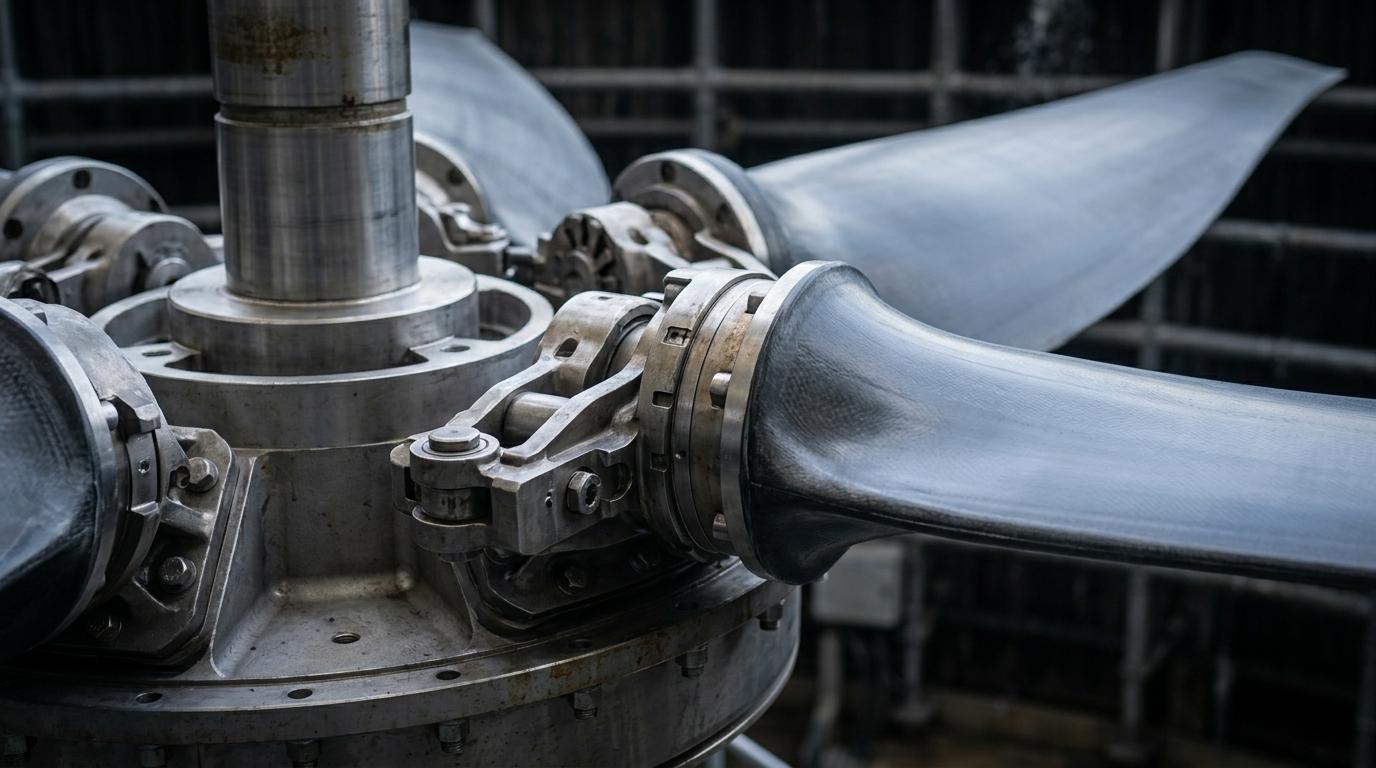
The hub connects the blades to the rotating assembly and transfers mechanical forces during operation.
Depending on the design, the fan may connect directly to a motor shaft or use a transmission system involving belts, pulleys, a gearbox, or other drive components.
Not every cooling tower uses the same configuration.
When replacing a fan, confirm the hub dimensions, shaft arrangement, mounting-hole positions, rotational direction, and required mechanical clearances.
Two fans with similar diameters may still be incompatible because their hubs or mounting interfaces differ.
Fan Motor and Transmission
The motor supplies the mechanical energy needed to rotate the fan.
Motor power, rated speed, efficiency, voltage, frequency, and protection rating must be suitable for the operating environment.
Where belts or gearboxes are used, transmission losses and maintenance requirements also affect overall performance.
Variable-frequency drives can provide useful speed control when the motor and fan system are designed for that application. However, the allowable speed range, motor cooling, vibration limits, and fan operating stability must all be considered.
A complete fan-system assessment is more useful than evaluating the blades alone.
Common Materials Used in Cooling Tower Fan Blades
Cooling tower fans operate in environments that may involve moisture, temperature changes, water treatment chemicals, and outdoor exposure.
Blade material affects durability, weight, corrosion resistance, and maintenance requirements.
Common materials include the following:
| Material | Main Characteristics | Key Considerations |
| Fiberglass-reinforced plastic (FRP) | Lightweight and corrosion-resistant in many industrial environments | Confirm resin type, temperature limits, and structural design |
| Aluminum alloy | Relatively lightweight with good strength-to-weight characteristics | Consider corrosion exposure, fatigue, and protective measures |
| Engineered composite materials | Can offer tailored stiffness, weight, and corrosion performance | Verify material specifications and application suitability |
| Steel | High structural strength and broad industrial use | Requires suitable corrosion protection in wet environments |
There is no single material that is best for every cooling tower.
FRP and other composite blades can be attractive where corrosion resistance and reduced rotating weight are priorities. Aluminum may suit particular fan designs, while steel components may be appropriate where their mechanical properties and protective systems meet the application requirements.
Before purchasing replacement blades, check the manufacturer's material specifications, operating temperature limits, chemical compatibility, and mechanical ratings.
How to Choose the Right Industrial Cooling Tower Fan
Choosing the correct fan requires more than measuring the diameter of the existing unit.
A replacement must satisfy the cooling tower's airflow requirements, fit the available installation space, operate within the motor's limits, and withstand environmental conditions.
Check the Required Airflow
Airflow is one of the most important parameters in fan selection.
The required airflow depends on the tower's heat load, water flow rate, entering and leaving water temperatures, ambient wet-bulb temperature, and overall tower design.
Fan airflow may be expressed in cubic meters per hour (m³/h) or cubic feet per minute (CFM).
When requesting a quotation, provide the existing fan's airflow rating if available. If the rating is unknown, share the cooling tower model, design duty, and operating information so that the supplier can help evaluate the requirement.
Avoid choosing a fan based solely on a general cooling tower capacity label. Towers with similar nominal capacities may have different airflow and pressure requirements.
Confirm Fan Diameter and Tower Dimensions
Fan diameter must be compatible with the fan cylinder, stack, or surrounding structure.
An oversized fan may have insufficient blade-tip clearance or interfere with the housing. An undersized fan may not deliver the required airflow under the intended operating conditions.
The installation must provide appropriate clearance between rotating blades and stationary structures, taking account of manufacturer specifications and operating conditions.
For replacement projects, measure the existing fan diameter and confirm the actual installation dimensions. Do not assume that nominal cooling tower capacity alone determines the correct fan size.
Evaluate Motor Power and Rotational Speed
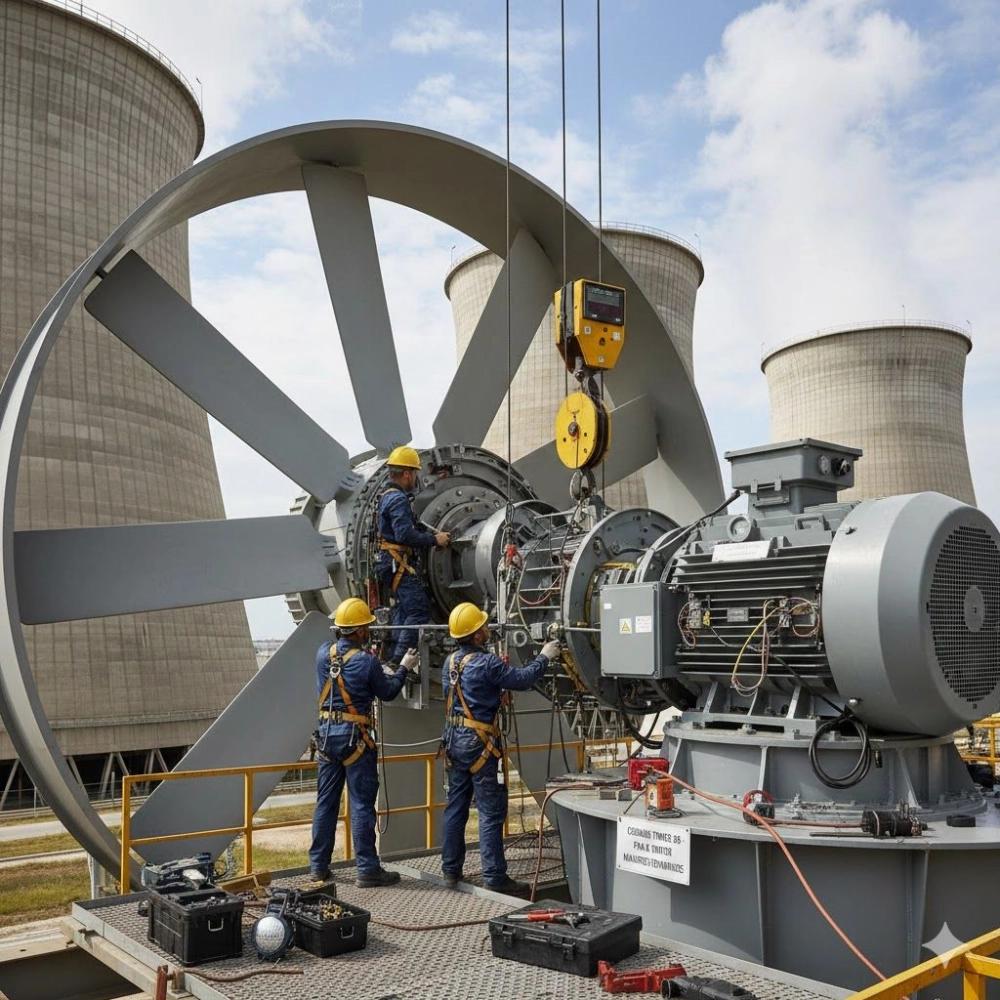
The motor must provide enough power to operate the fan at its intended duty point without exceeding its rated limits.
Important parameters include:
Rated motor power in kW or HP.
Motor rotational speed in RPM.
Supply voltage and electrical frequency.
Fan operating speed and rotational direction.
Drive arrangement and transmission ratio.
Starting method and speed-control requirements.
A fan with a different blade pitch or aerodynamic profile may draw a different amount of power even when its diameter remains unchanged.
Always verify expected motor loading before commissioning a replacement fan.
Consider Environmental and Corrosion Resistance
Cooling tower fans are exposed to moisture and may encounter chemical contaminants carried by circulating water or surrounding air.
The appropriate blade and hub materials depend on water treatment chemicals, ambient conditions, temperature, and the degree of exposure to corrosive substances.
Outdoor installations may also require consideration of ultraviolet exposure, wind conditions, and seasonal temperature changes.
Providing these details to your supplier can help narrow the options and reduce the risk of premature material degradation.
Verify Compatibility Before Ordering
Before placing an order, confirm the main mechanical and operating parameters.
These include fan diameter, blade count, hub dimensions, mounting arrangement, rotational direction, motor power, rotational speed, and required airflow.
Photographs of the existing fan, hub, motor nameplate, and installation area can be especially helpful.
If the original fan model is unavailable, these details provide a practical starting point for evaluating a compatible replacement.
Applications of Industrial Cooling Tower Fans
Industrial axial fans are used in a wide range of facilities that rely on cooling towers for heat rejection.
Manufacturing plants: Production machinery, process equipment, and industrial heat exchangers often require continuous cooling to maintain reliable operation.
HVAC systems: Commercial buildings, hospitals, hotels, and large campuses may use cooling towers as part of centralized chilled-water systems.
Power generation: Cooling towers can support heat rejection in power plants and associated industrial systems, depending on the plant design.
Chemical and petrochemical facilities: Process cooling is essential in many operations, and fan selection must account for environmental conditions and applicable safety requirements.
Food and beverage processing: Cooling towers may serve refrigeration condensers and process-cooling equipment where dependable temperature control supports production.
Data centers: Some facilities use cooling towers or evaporative heat-rejection systems as part of their cooling infrastructure.
In every application, the correct fan depends on the system's thermal requirements and mechanical design. A fan suitable for one plant should not automatically be assumed suitable for another.
Cooling Tower Fan Maintenance and Troubleshooting
Even a high-quality fan requires regular inspection. Routine maintenance can identify developing problems before they cause unexpected shutdowns or damage to the rotating assembly.
Common Cooling Tower Fan Problems
Several issues can reduce fan performance or indicate a mechanical fault.
| Problem | Possible Causes | Recommended Action |
| Insufficient airflow | Incorrect blade pitch, damaged blades, wrong rotation, obstruction, or unsuitable speed | Check the airflow path, rotation, blade condition, and operating settings |
| Excessive vibration | Imbalance, loose fasteners, bearing problems, or shaft misalignment | Stop and inspect the rotating assembly before continued operation |
| Unusual noise | Blade damage, loose components, bearing wear, or mechanical contact | Investigate the source and check clearances |
| High motor current | Excessive fan load, incorrect pitch, electrical issues, or mechanical resistance | Verify motor load and inspect the drive system |
| Reduced cooling performance | Low airflow, clogged fill, poor water distribution, or increased heat load | Assess the complete cooling tower, not only the fan |
These symptoms can have multiple causes. Diagnosis should be based on actual operating measurements and inspection rather than assumptions.
Preventive Maintenance Practices
A practical maintenance program should include regular checks of fan blades, hubs, fasteners, motors, bearings, and drive components.
Inspect blades for cracks, deformation, erosion, corrosion, and other visible damage. Confirm that fasteners remain secure according to the manufacturer's requirements, and investigate signs of vibration or abnormal noise.
For belt-driven systems, inspect belt condition and tension in accordance with the drive manufacturer's instructions. For gearbox-driven systems, follow the specified lubrication and inspection schedule.
Monitor motor current, vibration, operating speed, and cooling performance where suitable instrumentation is available. Comparing current readings with historical operating data can help identify developing problems.
Safety must always come first. Before inspection or maintenance, isolate the equipment from its power source, follow the facility's lockout/tagout procedures, and confirm that all rotating components have stopped. Repairs involving blades, hubs, and rotating assemblies should be performed by qualified personnel.
Maintenance intervals should reflect the manufacturer's instructions, operating hours, environmental conditions, and the consequences of equipment failure.
When Should You Replace a Cooling Tower Fan?
Not every performance problem requires a new fan. Sometimes, cleaning, balancing, repairing the drive system, or correcting an installation issue is sufficient.
However, replacement may be appropriate when blades are cracked or structurally damaged, corrosion has compromised the assembly, the hub or mounting system is no longer reliable, or the fan cannot meet the required duty despite appropriate maintenance.
Replacement may also be worth evaluating when a legacy fan consumes excessive energy or when spare parts are difficult to obtain.
Before making a decision, compare repair costs with the expected benefits of replacement. Consider purchase and installation costs, downtime, energy consumption, maintenance requirements, and expected service life.
For an upgrade project, confirm that the proposed fan is compatible with the existing tower structure, motor, drive system, and airflow requirements.
A replacement that fits physically but performs poorly under actual operating conditions may create more problems than it solves.
Why Fan Efficiency Matters for Cooling Tower Performance
A cooling tower is an integrated heat-rejection system. The fan, fill media, water distribution system, drift eliminators, and basin all contribute to its overall operation.
If the fan does not provide the required airflow, heat transfer may be limited. If it consumes excessive power, operating costs may rise without a meaningful improvement in cooling.
This is why fan efficiency should be evaluated together with thermal performance.
For example, a lower-speed fan with a suitable aerodynamic design may deliver the required airflow more economically than an unsuitable fan operating at a higher speed. The result depends on the fan curve, system resistance, and operating point.
For variable-load applications, speed control may provide additional opportunities to reduce energy use during periods of lower cooling demand. Nevertheless, the control strategy must remain within the fan's approved operating range and maintain the process's cooling requirements.
The best solution is not necessarily the fan with the highest advertised efficiency in isolation. It is the fan system that delivers the required cooling performance reliably and economically under real operating conditions.
Why Choose Power Tower Cooling Technology (Shaoxing) Co., Ltd.?
Selecting a cooling tower component supplier is an important step in any maintenance, retrofit, or replacement project.
Power Tower Cooling Technology (Shaoxing) Co., Ltd. provides cooling tower parts and product information through its website, www.coolingtowerpart.com.
When evaluating an industrial cooling tower fan or a potential replacement, buyers should focus on technical compatibility, clear specifications, and application requirements.
Support for Cooling Tower Replacement Projects
Replacing an existing fan can involve several interconnected dimensions and operating parameters. Providing accurate information at the beginning helps reduce uncertainty during product selection.
When contacting us about a cooling tower fan, prepare the following details whenever possible:
Cooling tower manufacturer and model.
Existing fan diameter and blade count.
Blade material and hub configuration, if known.
Motor power, speed, voltage, and frequency.
Required airflow or original fan specifications.
Photographs of the fan, hub, motor, and nameplate.
Operating temperature and environmental conditions.
Existing vibration, noise, or airflow problems.
These details help establish whether a proposed solution is suitable for further technical evaluation.
A Practical Approach to Component Selection
A successful replacement project should consider more than the initial purchase price.
Compatibility, installation requirements, operating efficiency, material suitability, and long-term maintenance all influence the value of the final solution.
We encourage customers to provide available equipment information rather than relying on cooling tower capacity alone. This makes it easier to assess the requirements and identify which specifications need confirmation before an order is placed.
For cooling tower component information and replacement inquiries, visit Power Tower Cooling Technology (Shaoxing) Co., Ltd..
Frequently Asked Questions About Industrial Cooling Tower Fans
How Does an Axial Fan Improve Cooling Tower Efficiency?
An axial fan moves air through the cooling tower to support evaporation and heat transfer. When properly selected and operated, it can deliver the required airflow with relatively low energy consumption.
Its contribution depends on fan design, operating speed, system resistance, and the condition of the tower's other components.
How Do I Select the Correct Cooling Tower Fan Diameter?
Start with the existing fan diameter and the cooling tower's original specifications. Then confirm the fan cylinder dimensions, blade-tip clearance, hub arrangement, required airflow, rotational speed, and motor capacity.
A replacement should be evaluated against the actual operating requirements rather than selected by diameter alone.
Can I Replace an Existing Cooling Tower Fan?
Yes, replacement may be possible, but physical fit is only one consideration.
The new fan must be compatible with the tower structure, motor, drive system, airflow requirements, and operating conditions. Blade material, rotational direction, hub dimensions, and motor loading should also be checked.
Providing photographs and equipment nameplate information can help the supplier assess the replacement requirements.
How Often Should a Cooling Tower Fan Be Inspected?
Inspection frequency depends on operating hours, environmental conditions, manufacturer recommendations, and the consequences of failure.
Facilities with continuous operation or aggressive environments may require more frequent inspections. Operators should follow the equipment maintenance schedule and investigate abnormal vibration, noise, motor current, or cooling performance promptly.
Are FRP Blades Suitable for Industrial Cooling Tower Fans?
FRP blades can be suitable for many industrial cooling towers because they combine relatively low weight with corrosion resistance.
However, suitability depends on the resin system, blade construction, operating temperature, chemical exposure, and mechanical requirements. Confirm the manufacturer's specifications before choosing a material.
Can a High-Efficiency Fan Reduce Electricity Costs?
It can, provided the replacement improves fan-system efficiency while maintaining the required cooling performance.
Potential savings should be evaluated using actual power consumption, annual operating hours, electricity prices, and expected operating conditions. A performance assessment is more reliable than assuming a fixed percentage of savings.

Conclusion
An industrial cooling tower fan is essential to reliable heat rejection, stable operation, and effective energy management. Among the available fan designs, axial fans are widely used because they can move large volumes of air through cooling towers with relatively low pressure requirements.
Choosing the right fan requires careful attention to airflow, fan diameter, blade geometry, material selection, motor power, rotational speed, and installation compatibility. Regular maintenance is equally important for controlling vibration, identifying damage, and protecting the rotating assembly.
For industrial operators planning a fan replacement or cooling tower maintenance project, accurate equipment information is the best starting point.
Power Tower Cooling Technology (Shaoxing) Co., Ltd. provides cooling tower component information and replacement-related support through www.coolingtowerpart.com.
Contact us with your cooling tower model, existing fan dimensions, and operating requirements to begin evaluating a suitable solution for your application.


