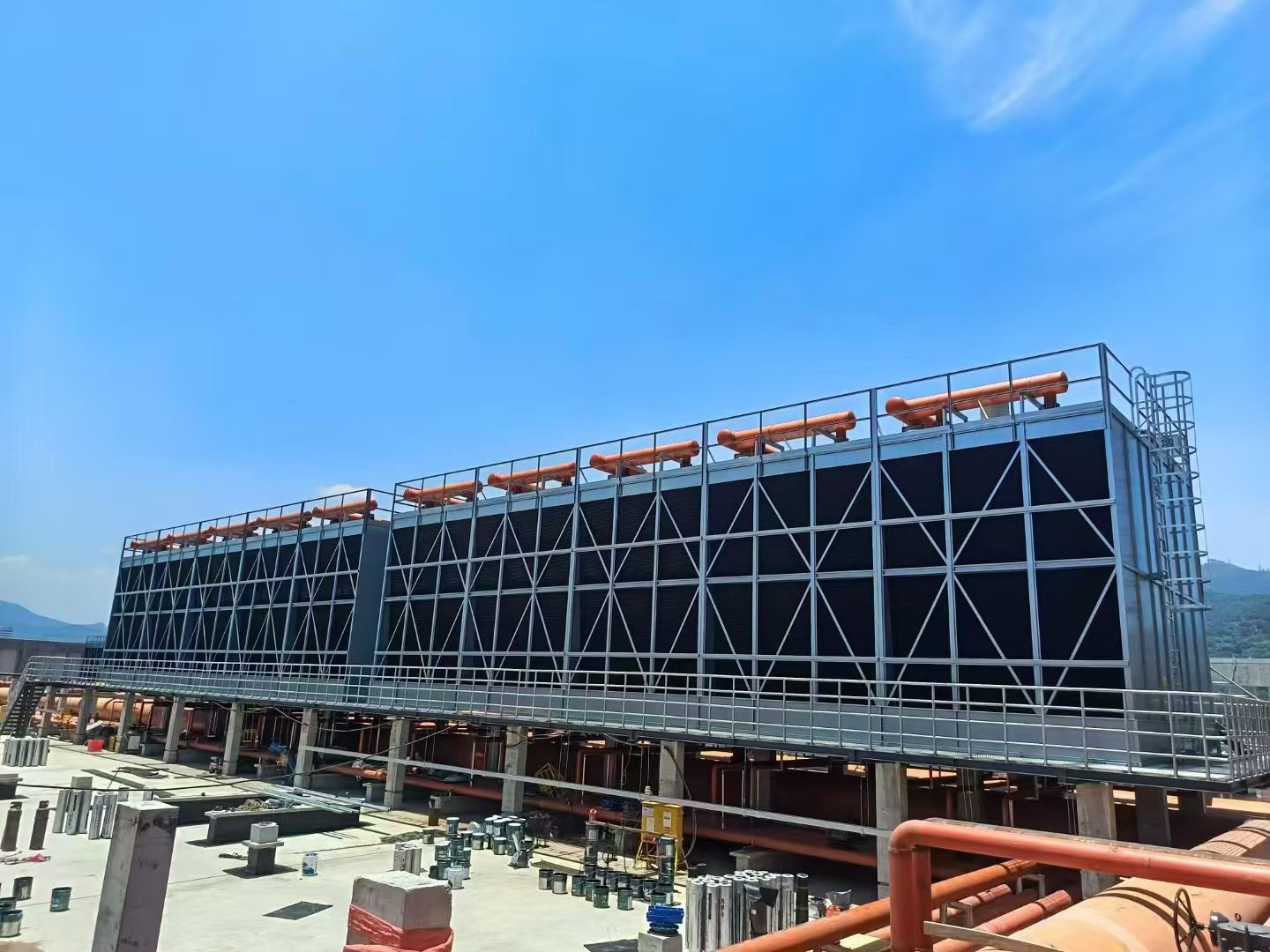
Cooling tower fill media is one of the most important components in an evaporative cooling tower. It increases contact between circulating water and air, helping the system reject heat efficiently. But what happens when the fill becomes clogged, deformed, or damaged? Cooling performance drops, maintenance becomes more expensive, and the entire system may struggle to meet its required cooling load.
The good news is that proper maintenance can help extend the service life of cooling tower fill media and reduce the risk of premature replacement. You do not always need to replace old fill simply because it has been operating for several years. In many cases, better water treatment, appropriate cleaning, and regular inspections can preserve its performance.
In this guide, we explain the main factors affecting cooling tower fill life, practical maintenance methods, material selection, and the warning signs that indicate cleaning or replacement may be necessary. We also introduce cooling tower fill solutions from Power Tower Cooling Technology (Shaoxing) Co., Ltd.
Why Cooling Tower Fill Media Service Life Matters
Cooling tower fill is constantly exposed to warm water, airborne contaminants, dissolved minerals, and changing operating conditions. Over time, these factors can affect both its heat-transfer performance and physical strength.
When fill passages become blocked, water may no longer spread evenly across the packing. Airflow can become restricted, and parts of the fill may receive too much or too little water. The cooling tower may then struggle to maintain its target outlet-water temperature.
Premature fill failure also creates avoidable costs. Replacement involves materials, labor, access equipment, installation time, and potentially production disruption. Extending the service life of fill media helps control these expenses while supporting stable cooling performance.
However, longer service life does not mean keeping the same fill forever. The goal is to maintain it for as long as it remains safe, structurally sound, and thermally effective.
What Determines the Service Life of Cooling Tower Fill?
There is no universal lifespan for every cooling tower fill product. Actual service life depends on the fill material, operating temperature, water chemistry, contaminant levels, installation quality, and maintenance practices. Two towers installed in the same year may experience very different results if one has excellent water treatment and the other does not.
Water Quality and Mineral Scaling
Hard water can leave mineral deposits on fill surfaces. As these deposits accumulate, they may narrow water passages, change water distribution, and reduce the effective heat-transfer area.
Suspended solids, dust, rust particles, and process debris can create additional fouling problems. The best protection starts with understanding the circulating water and controlling contaminants before they build up inside the tower.
Regular monitoring of water chemistry can help maintenance teams identify changes before deposits become difficult to remove. The specific control limits should be established according to the water source, system design, operating conditions, and treatment program.
Biological Growth and Organic Fouling
Warm water and suitable nutrients can support algae, bacteria, and biofilm growth. These deposits may restrict airflow and water movement through the fill.
Biological fouling is not simply a cosmetic issue. It can affect cooling performance and form part of a broader cooling tower water-management problem. A properly managed water treatment and cleaning program helps control biological growth and protect equipment.
Do not rely on visual inspection alone. Some biological problems develop inside the fill pack or elsewhere in the water circuit before they become obvious from outside. Follow applicable water-management requirements and the facility's safety procedures.
Operating Temperature and Chemical Compatibility
Every fill material has operating limits. Excessive water temperature can soften or deform unsuitable plastic fill, while incompatible chemicals may weaken or damage the material.
Before selecting or replacing fill, check the normal and maximum water temperatures, chemical exposure, and manufacturer's specifications. Choosing a material that matches the actual operating environment is one of the most effective ways to prevent premature failure.
Airflow, Water Distribution, and Mechanical Stress
Poor water distribution can create dry areas, concentrated water channels, and uneven deposits. Restricted airflow can also reduce cooling performance.
Mechanical damage matters, too. Incorrect support spacing, careless handling, and excessive loading can deform fill packs or break individual sheets. Proper installation and regular checks help prevent these avoidable problems.
10 Ways to Extend Cooling Tower Fill Media Service Life
Extending fill life is not about one special cleaning product or a single annual maintenance task. It requires a consistent approach that addresses water quality, operating conditions, cleaning, and physical condition.
1. Maintain a Consistent Water Treatment Program
Water treatment is the foundation of long-term fill maintenance. A suitable program helps control mineral scale, corrosion products, suspended solids, and biological growth.
Monitor the parameters relevant to your system, which may include pH, conductivity, hardness, cycles of concentration, and biological activity. The required control limits depend on the makeup water, tower design, process conditions, and treatment program.
Do not wait until the fill is visibly dirty before checking water chemistry. By then, deposits may already have become difficult to remove. Regular monitoring makes it easier to identify developing problems and adjust treatment before significant fouling occurs.
Water treatment should be consistent, documented, and appropriate for the actual system. Randomly increasing chemical dosages can damage equipment, create safety risks, or cause new water quality problems. Work with a qualified water treatment provider when treatment adjustments are needed.
2. Control Scale Before It Becomes Severe
Scale often develops gradually. A thin deposit may seem harmless, but continued buildup can eventually restrict passages and reduce cooling effectiveness.
Work with your water treatment provider to control scale formation under the system's actual operating conditions. Check for recurring deposits around nozzles, fill surfaces, and other areas where water distribution or evaporation may encourage scaling.
If scale develops despite normal treatment, investigate the cause rather than repeatedly cleaning the same area. Changes in makeup water, cycles of concentration, chemical dosing, or operating load may need attention.
Preventing scale is generally easier than removing heavy deposits after they have hardened. Early intervention can reduce cleaning time and lower the risk of damaging the fill during maintenance.
3. Prevent Algae and Biofilm Accumulation
Biological growth can coat fill surfaces and trap additional debris. To control it, maintain an appropriate water-management program, monitor treatment effectiveness, and clean affected areas when necessary.
Keep the cooling tower basin and accessible water distribution components free from excessive debris. Check whether the system's operating conditions are encouraging recurring biological growth, and review the treatment program if the problem continues.
Cleaning and disinfection should follow the equipment manufacturer's instructions and the facility's safety procedures. Cooling tower water management also needs to address public-health risks, not just fill cleanliness.
Remember that cleaning removes existing deposits, while water treatment helps manage the conditions that allow them to return. Both may be necessary for reliable long-term operation.
4. Clean Fill Media Using the Correct Method
Cleaning can extend the useful life of fill when the material remains structurally sound and the contamination can be removed safely. The correct method depends on the fill material, deposit type, and severity of fouling.
Start by identifying whether the problem is loose dirt, biological slime, mineral scale, or a combination. Remove accessible debris and use a cleaning method approved for the specific fill product. After cleaning, inspect the packing to determine whether its passages are open and its structure remains intact.
Repeated aggressive cleaning is not a substitute for good water treatment. If the same deposits return quickly, investigate the underlying cause.
Avoid Excessive Water Pressure and Aggressive Chemicals
High-pressure washing can deform thin fill sheets, loosen bonded assemblies, or damage fragile, aged plastic. Strong acids, solvents, and incompatible cleaning agents can also weaken the material or damage nearby tower components.
Use the cleaning pressure, temperature, and chemical concentrations recommended by the manufacturer. Do not assume that a method suitable for metal surfaces is safe for plastic fill.
For severe scaling, consult a qualified maintenance specialist before applying chemical cleaning. Always isolate the equipment as required, use appropriate personal protective equipment, and follow the site's lockout and safety procedures.
5. Inspect Water Distribution Nozzles Regularly
Fill cannot perform well if water does not reach it evenly. Blocked, damaged, or missing spray nozzles can create dry patches and concentrated water channels.
Check the distribution system for blockages, damaged components, and uneven spray patterns. Clean or replace faulty nozzles and confirm that the operating water flow matches the system's requirements.
Even distribution helps the fill use its available surface effectively and reduces localized operating problems. It also helps maintenance teams distinguish fill-related issues from problems elsewhere in the tower.
If some areas of the fill are consistently dirtier than others, investigate the distribution system rather than assuming that the fill material itself is unsuitable.
6. Remove Debris Before It Enters the Fill Section
Leaves, dust, fibers, and other airborne debris can enter the cooling tower and accumulate in the fill or basin. Once debris becomes trapped, it may be harder to remove without shutting down part of the system.
Inspect air inlets, louvers, strainers, and the basin. Remove accumulated debris safely and keep water distribution components clear. Where appropriate, evaluate filtration or other solids-control measures for the circulating water.
For systems handling dirty process water, the fill type must match the contamination level. Open splash fill may be worth evaluating for some high-solids applications, while film fill can be suitable for cleaner, well-treated water.
Neither type is immune to fouling. Selection should be based on water quality, thermal requirements, airflow, and the cooling tower's design—not on fill type alone.
7. Monitor Cooling Performance
Your cooling tower can provide early warnings before fill problems become severe. Track outlet-water temperature, inlet-water temperature, ambient wet-bulb conditions, water flow, fan operation, and other available performance data.
If cooling performance deteriorates, do not immediately assume the fill has failed. Blocked nozzles, fan problems, changes in heat load, restricted airflow, and heat exchanger fouling can produce similar symptoms.
Compare current operating data with a reliable baseline under comparable conditions. If cleaning and corrective maintenance do not restore performance, inspect the fill more closely and assess whether replacement is justified.
A simple maintenance log can be surprisingly useful. Recording temperature trends, water treatment readings, cleaning dates, and inspection findings makes it easier to identify gradual changes before they become major failures.
8. Select the Right Fill Material
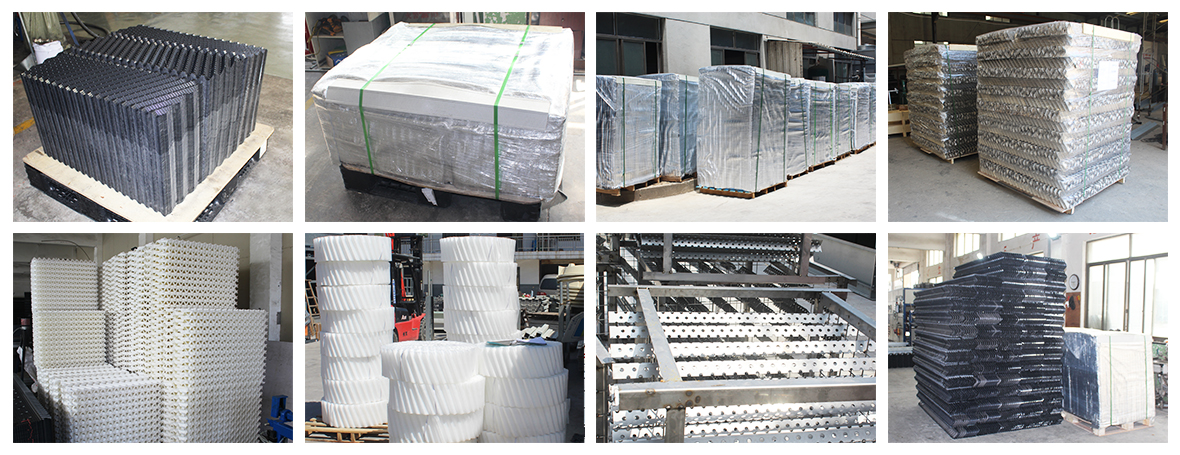
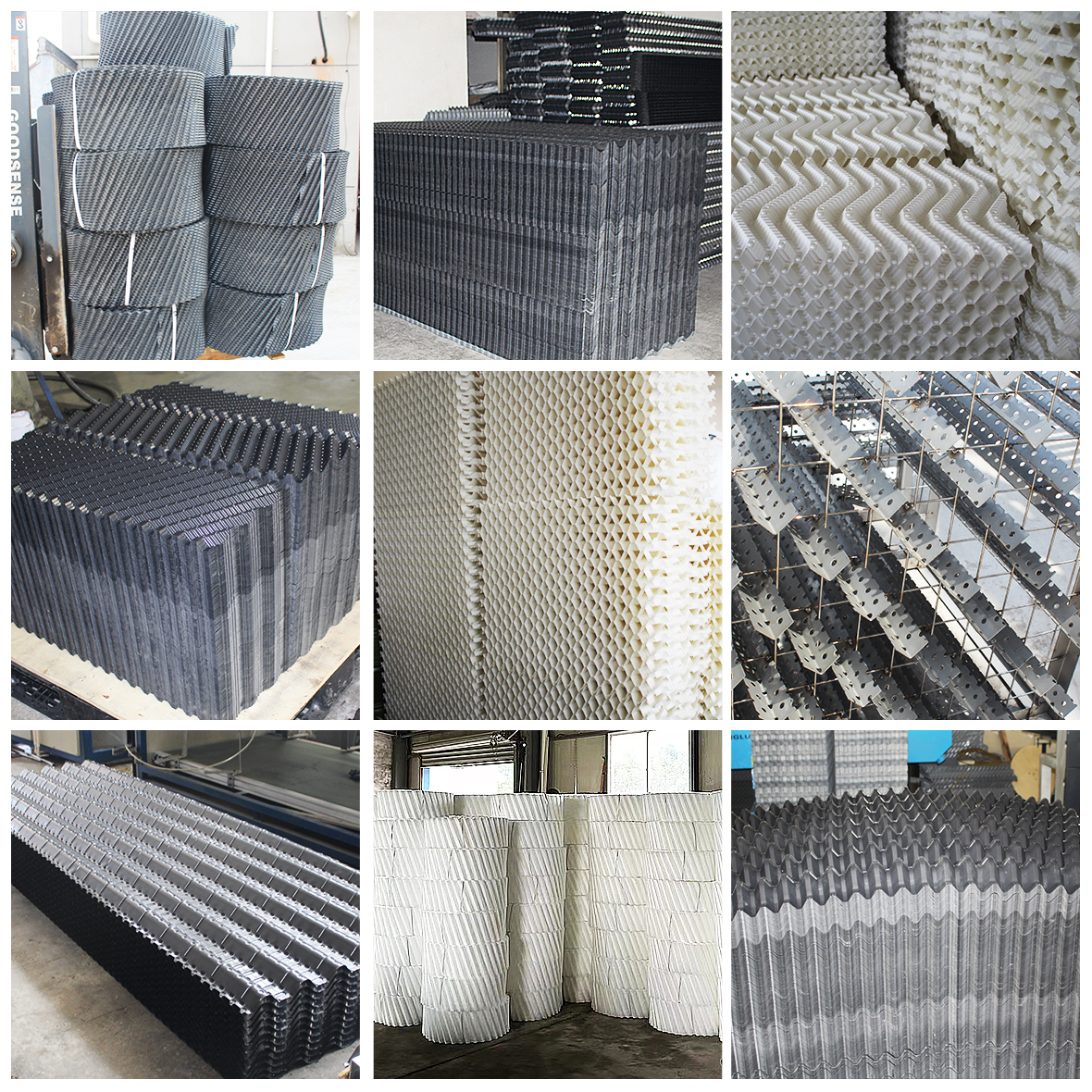
PVC and PP are common materials for cooling tower fill, but they are not interchangeable in every application. The best choice depends on temperature, water chemistry, fill geometry, and cooling requirements.
PVC fill is widely used in conventional HVAC and industrial applications where operating conditions are within the product's specified limits. PP fill may be appropriate for certain higher-temperature or chemically demanding environments, depending on the grade and design.
Material selection should also consider the difference between film fill and splash fill. Film fill provides extensive water-contact surfaces in compact passages, while splash fill breaks water into droplets through an open structure. Each design has advantages and limitations.
If your existing fill repeatedly clogs, changing the material alone may not solve the problem. The fill geometry, spacing, water quality, and solids-control strategy may be equally important.
9. Ensure Proper Installation and Support
Even high-quality fill can fail prematurely if it is installed incorrectly. Poor support, incorrect spacing, damaged modules, and unsuitable assembly can lead to deformation or uneven water and air distribution.
Before installation, inspect the support structure and confirm that the replacement matches the tower's dimensions and configuration. Follow the manufacturer's instructions for orientation, module arrangement, and securing the fill.
Never assume that a product with similar dimensions will deliver the same thermal performance. If you are switching fill types or changing the design, confirm that the tower can meet the required cooling duty and airflow conditions.
Correct handling matters, too. Avoid dropping fill packs, dragging them across rough surfaces, or stacking them in a way that causes compression or deformation before installation.
10. Establish a Preventive Maintenance Schedule
A written maintenance schedule makes it easier to detect problems early and avoid inconsistent inspections.
A practical starting point is to perform routine visual checks and review operating data monthly, monitor water quality at intervals defined by the treatment program, inspect nozzles and water distribution regularly, and carry out a more comprehensive fill assessment during planned maintenance shutdowns.
These intervals are examples, not universal rules. Towers handling high levels of solids or operating under demanding conditions may require more frequent attention. Follow the manufacturer's recommendations and adjust the schedule according to actual operating experience.
Record findings, cleaning activities, and repairs so that recurring problems can be identified and addressed. A documented maintenance history also helps the team make better decisions about repair, cleaning, and replacement.
PVC vs. PP Cooling Tower Fill: Which Lasts Longer?
The service life of PVC and PP fill depends on the particular material grade and operating environment. Neither material automatically lasts longer in every cooling tower.
PVC fill is often selected for conventional cooling conditions because it can provide effective heat transfer and good value when used within its specified operating limits. PP fill may offer advantages in selected higher-temperature or chemically challenging applications, but its suitability still depends on the material formulation and exposure conditions.
When comparing products, evaluate operating temperature, chemical compatibility, water quality, structural strength, fill geometry, and maintenance requirements. Ask the supplier for technical data relevant to your application instead of relying on a single estimated lifespan.
The fill structure is just as important as the material. Film fill and splash fill have different operating characteristics. Film fill can deliver high heat-transfer performance in a compact space, while splash fill may be a practical option for some applications with high suspended solids.
The best product is the one that meets your cooling requirements and remains compatible with your actual operating conditions.
Signs Your Cooling Tower Fill Needs Attention
Watch for these warning signs during inspections:
Fill passages that are visibly blocked by scale, slime, or debris.
Sheets that have become brittle, cracked, or permanently deformed.
Collapsed or displaced fill packs.
Persistent cooling performance decline despite normal operating conditions.
Uneven water distribution or obvious dry sections.
Fouling that returns quickly after cleaning.
Loose modules or damage to the supporting structure.
One sign does not always mean the fill must be replaced. Diagnose the cause, check the physical condition, and evaluate cooling performance before deciding on the next step.
For example, poor cooling may result from blocked nozzles rather than damaged fill. Likewise, deposits may be removable if the underlying material remains in good condition. A careful inspection can prevent unnecessary replacement while helping identify situations where continued operation is no longer practical.
When Should You Clean or Replace Cooling Tower Fill?
Cleaning is usually worth evaluating when deposits are removable, the fill remains mechanically sound, and the passages can be reopened without damaging the material.
Replacement becomes more appropriate when the fill is badly deformed, extensively cracked, structurally weak, or blocked by deposits that cannot be removed safely. Repeated cleaning may also be uneconomical if cooling performance remains poor or the same problems return quickly.
Before replacing the fill, inspect related components such as nozzles, drift eliminators, louvers, supports, and water treatment systems. Otherwise, the new fill may face the same conditions that caused the previous product to fail.
The best decision combines physical inspection, performance measurements, repair costs, expected downtime, and the requirements of the cooling process.
If the fill is old but still clean, intact, and performing as required, immediate replacement may not be necessary. If it is structurally damaged or cannot meet the required cooling duty, extending its use may cost more than installing a suitable replacement.
Common Maintenance Mistakes That Shorten Fill Life
Several common mistakes can shorten fill life even when the original product is suitable.
Using excessive cleaning pressure: This can damage fill sheets and assemblies.
Ignoring water chemistry: Scale and biological fouling may return if the underlying cause remains.
Using incompatible chemicals: An unsuitable cleaning agent can weaken the fill or damage other tower materials.
Delaying minor repairs: Damaged supports or displaced modules may lead to more extensive problems.
Choosing fill without checking operating conditions: The wrong material or design may deform, foul, or fail to meet the required cooling load.
Replacing fill without fixing the cause: New packing cannot compensate for poor water distribution, uncontrolled contamination, or inadequate maintenance.
Relying only on visual appearance: Fill may look acceptable from the outside while operating conditions indicate a developing performance problem.
Avoiding these mistakes helps protect the investment and makes maintenance more predictable. The most successful approach combines preventive maintenance with a clear understanding of the tower's operating conditions.
How Power Tower Cooling Technology Supports Fill Replacement
Power Tower Cooling Technology (Shaoxing) Co., Ltd. supplies cooling tower fill and related components through www.coolingtowerpart.com.

When fill media reaches the end of its useful life, selecting a compatible replacement is important. Buyers should confirm the cooling tower type, fill dimensions, material requirements, operating temperature, water quality, and required thermal performance before ordering.
For a replacement inquiry, prepare the original tower model if available, photographs of the existing fill, measurements of the fill section, and details about the operating conditions. If the system has recurring fouling or blockage problems, describe the contaminants and the cleaning methods previously used.
This information helps narrow down suitable options and identify potential compatibility issues. For projects involving a change from film fill to splash fill, or from PVC to PP, a technical review is particularly important.
A replacement product should do more than fit into the available space. It must also be appropriate for the tower's heat load, airflow, water distribution, and operating environment.
The aim is to find a replacement that fits the equipment and operating conditions—not simply a product that looks similar. Visit coolingtowerpart.com to explore cooling tower fill and related component options.
Frequently Asked Questions About Cooling Tower Fill Media Service Life
How Long Does Cooling Tower Fill Media Last?
There is no guaranteed lifespan for all fill media. Service life varies with water quality, material, temperature, chemical exposure, maintenance, and installation. Inspect the fill's condition and performance rather than replacing it based only on age.
Can Cleaning Extend Cooling Tower Fill Service Life?
Yes, when contamination is removable and the fill remains structurally sound. Use an approved cleaning method and correct the underlying cause of fouling to reduce the chance of rapid recurrence.
How Often Should Cooling Tower Fill Be Inspected?
A monthly visual check is a useful starting point for many systems, supported by regular water quality monitoring and a more detailed inspection during planned maintenance. The appropriate frequency depends on operating conditions, manufacturer recommendations, and the consequences of a cooling failure.
Does PP Fill Always Last Longer Than PVC Fill?
No. PP may be suitable for some higher-temperature or chemically demanding applications, but actual service life depends on material grade, design, water chemistry, and operating conditions. Compare the specifications for the intended application.
Can Damaged Fill Media Be Repaired?
Minor, localized problems may sometimes be addressed by replacing individual modules or correcting support issues, depending on the design. Brittle, collapsed, extensively cracked, or severely deformed fill generally requires replacement rather than continued repair.
What Is the Best Way to Prevent Cooling Tower Fill from Clogging?
Start with water quality management, effective solids control, appropriate biological treatment, and regular inspection of the water distribution system. Choose a fill design that matches the contamination level and thermal requirements. No fill type is completely immune to fouling.
Conclusion
Extending the service life of cooling tower fill media starts with consistent water management, proper cleaning, and regular inspection. Scale, biological growth, debris, excessive temperature, chemical incompatibility, and poor installation can all contribute to premature deterioration.
The most effective strategy is to detect problems early, maintain even water distribution, use cleaning methods appropriate for the fill material, and monitor cooling performance over time. When replacement becomes necessary, select fill based on the cooling tower design, operating conditions, water quality, and thermal requirements.
Power Tower Cooling Technology (Shaoxing) Co., Ltd. provides cooling tower fill and related components through www.coolingtowerpart.com. With the right product selection and a well-planned maintenance program, you can reduce avoidable downtime, manage replacement costs, and keep your cooling tower operating reliably for longer.


