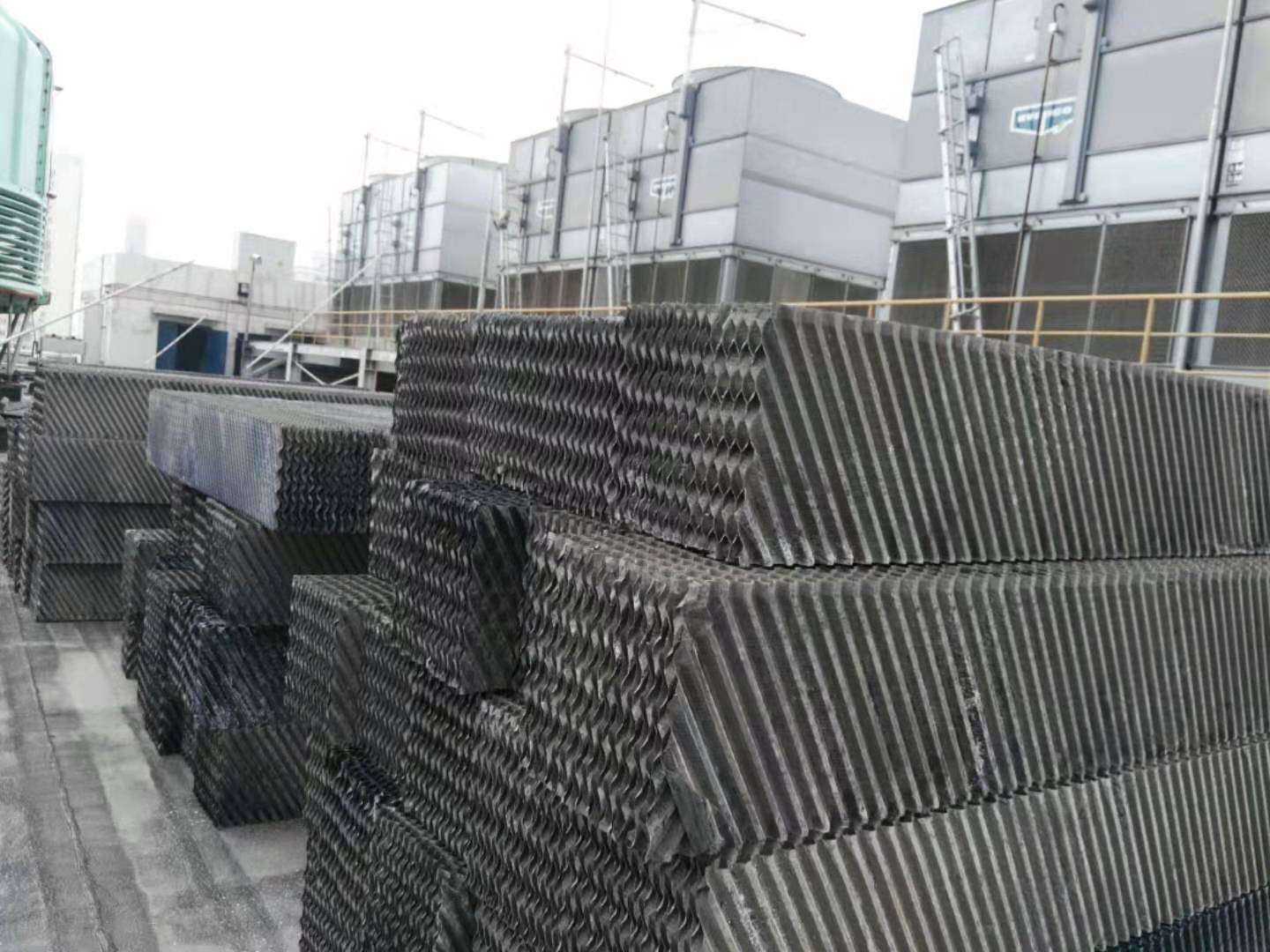
Introduction: Why PVC Fill Maintenance Matters
Cooling tower performance depends on more than the fan, motor, pump, and water circulation system. The fill inside the tower also plays a critical role. It increases the contact area between water and air, helping heat transfer occur more efficiently. When the fill becomes covered with mineral scale or begins to age, the cooling tower may lose efficiency, consume more energy, and require more frequent maintenance.
PVC cooling tower fill is widely used because it is lightweight, cost-effective, and capable of providing a large heat-transfer surface. However, it is not immune to operating problems. Over time, minerals can accumulate on the fill surface, while heat, chemicals, ultraviolet exposure, and mechanical stress can gradually damage the material.
So, what should you do when your cooling tower PVC fill starts scaling or showing signs of aging? Should you clean it, repair it, or replace it?
The answer depends on the severity of the problem, the water quality, the operating temperature, and the condition of the fill itself. In this guide, we will explain how to identify these problems, select suitable treatment methods, extend the service life of PVC fill, and determine when replacement makes more sense than continued maintenance.
For industrial users, facility managers, and cooling tower maintenance teams, understanding these steps can help protect cooling performance and control long-term operating costs.
Understanding Cooling Tower PVC Fill
PVC fill, also known as PVC fill media or cooling tower packing, is installed inside a cooling tower to improve heat and mass transfer between circulating water and air.
As hot water flows over the fill, it spreads into thin films or breaks into smaller streams. Air passes through the fill, allowing a portion of the water to evaporate and carry heat away from the system. The remaining water cools before returning to the process.
PVC is popular because it offers a practical balance between performance, weight, cost, and ease of installation. However, the performance of PVC fill depends on selecting the right design and material for the actual operating conditions.
How PVC Fill Improves Heat Transfer
PVC film fill contains formed sheets with channels, corrugations, or other surface patterns. These features distribute water over a large surface area while guiding airflow through the fill pack.
When the fill is clean and properly installed, water and air can interact effectively. This supports efficient cooling and helps the tower meet its designed thermal performance.
But the channels can also become a weakness when water contains excessive suspended solids or scale-forming minerals. Deposits may gradually narrow the passages, interfere with water distribution, and restrict airflow.
Think of PVC fill as a network of small roads. When the roads remain clear, traffic moves smoothly. When deposits build up, the routes become narrower, and the entire system struggles.
Common Types of PVC Fill
PVC cooling tower fill is available in different designs, primarily for crossflow and counterflow cooling towers.
Crossflow PVC fill: Water generally flows downward while air moves horizontally through the fill.
Counterflow PVC fill: Water flows downward while air moves upward, creating a countercurrent arrangement.
High-efficiency film fill: Designed to provide substantial contact area and effective heat transfer under suitable water conditions.
Specialized PVC fill designs: Developed for particular tower configurations, operating requirements, or installation constraints.
Not every PVC fill product is suitable for every cooling tower. Channel spacing, sheet configuration, material thickness, temperature limits, and water quality should all be considered before selecting a product.
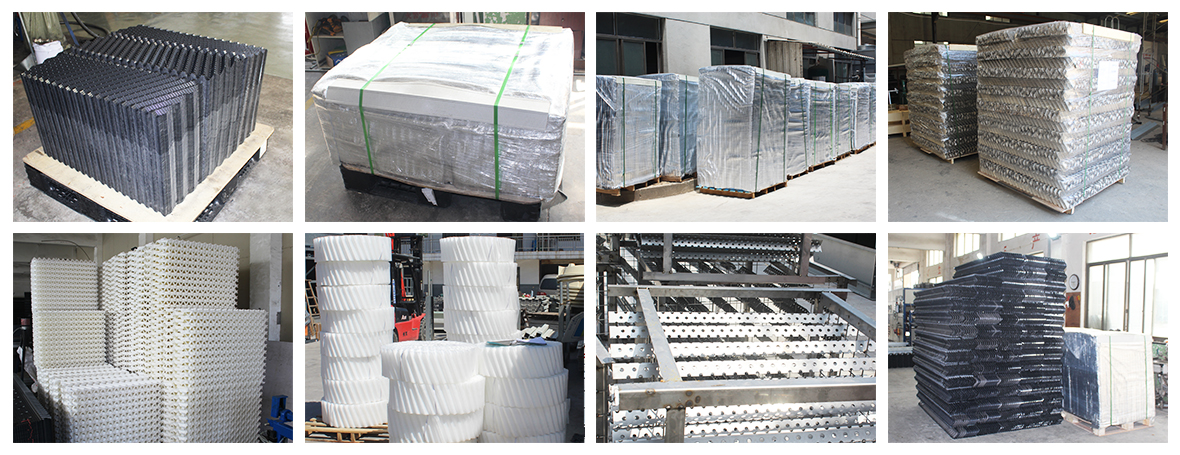
What Causes Scaling in Cooling Tower PVC Fills?
Scaling occurs when dissolved minerals in circulating water form solid deposits on surfaces. These deposits can accumulate on PVC fill, water distribution components, piping, and other parts of the cooling system.
The main problem is that cooling towers continuously lose water through evaporation. Most dissolved minerals remain in the circulating water, so their concentration can increase over time.
Hard Water and Mineral Deposits
Hard water contains dissolved calcium and magnesium salts. Under certain conditions, these minerals can form deposits such as calcium carbonate.
When the water chemistry favors precipitation, scale may begin forming on the fill surface. The deposits can grow layer by layer, gradually reducing the open space between fill sheets.
Hard water does not automatically mean that severe scaling will occur. The risk depends on several factors, including pH, alkalinity, temperature, calcium concentration, treatment chemicals, and cycles of concentration.
This is why a water analysis is more useful than relying on water hardness alone.
Evaporation and Concentration of Dissolved Solids
Evaporation is essential to cooling tower operation, but it also concentrates nonvolatile dissolved substances in the circulating water.
As water evaporates, minerals remain behind. If blowdown and makeup water management are inadequate, dissolved solids may rise to levels that encourage precipitation.
The cycles of concentration describe how much dissolved material has accumulated in circulating water compared with the makeup water. Operating at an unsuitable concentration can increase scale risk, although the appropriate target depends on the water chemistry, treatment program, and system design.
Regular monitoring of conductivity and other relevant water-quality parameters helps operators maintain more stable conditions.
Poor Water Treatment and Operating Conditions
Scaling can become more severe when the water treatment program is ineffective or inconsistent.
Common contributing factors include:
Inadequate scale inhibition.
Incorrect pH control.
Excessive cycles of concentration.
Poor blowdown control.
Inconsistent chemical dosing.
Inadequate filtration or solids removal.
Uneven water distribution across the fill.
Other contaminants, such as suspended solids and biological growth, may accumulate alongside mineral deposits. These materials are not necessarily scale, but they can combine to create stubborn fouling that is more difficult to remove.
Correctly identifying the deposit is important because mineral scale, biological slime, and sediment may require different treatment approaches.
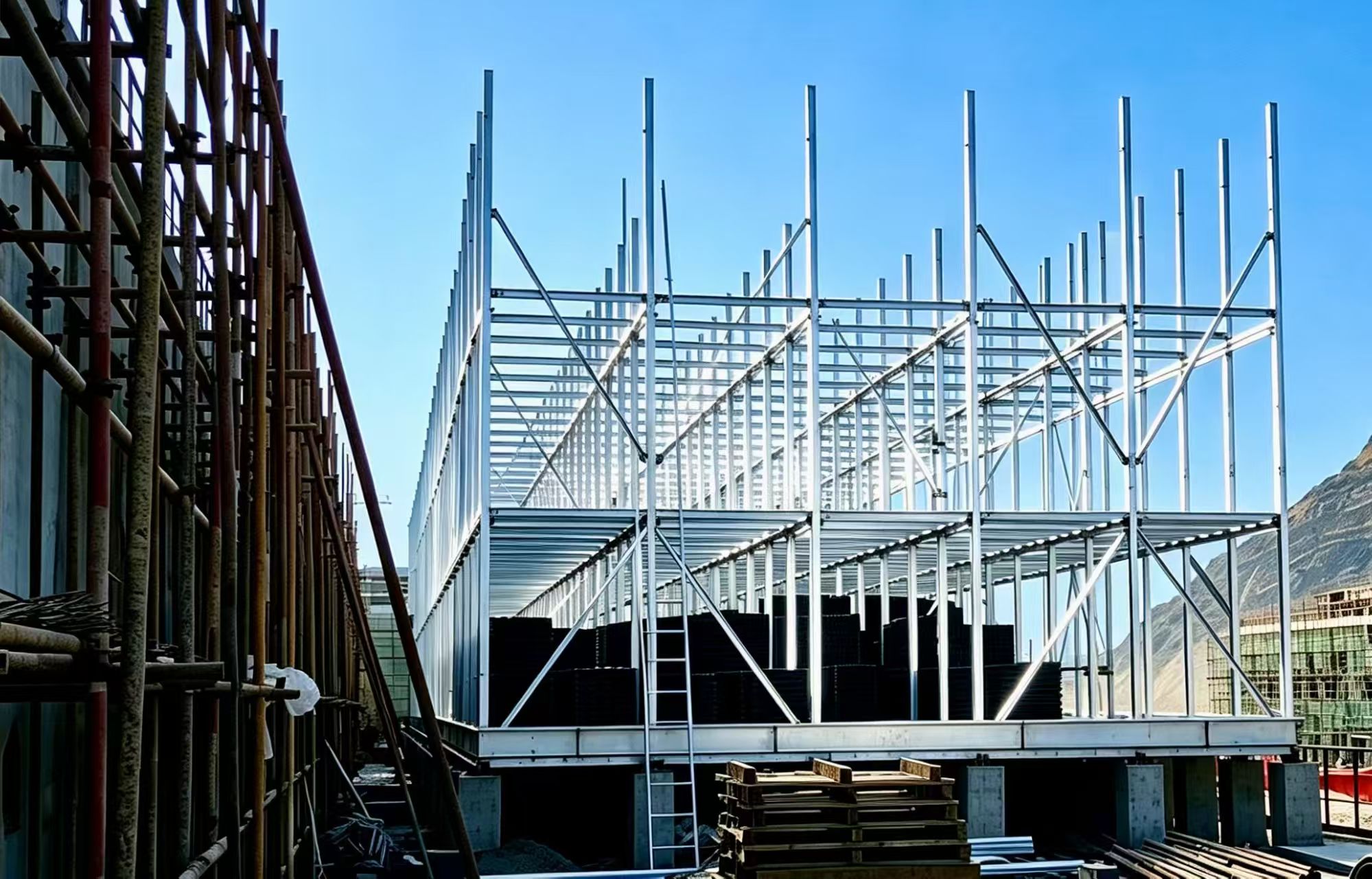
How to Identify Scaling and PVC Fill Aging
Early identification can prevent a manageable maintenance issue from developing into a major performance problem.
A cooling tower may continue operating even when the fill is partially blocked or deteriorating. However, operators may notice declining cooling capacity, abnormal water distribution, or an increase in operating costs.
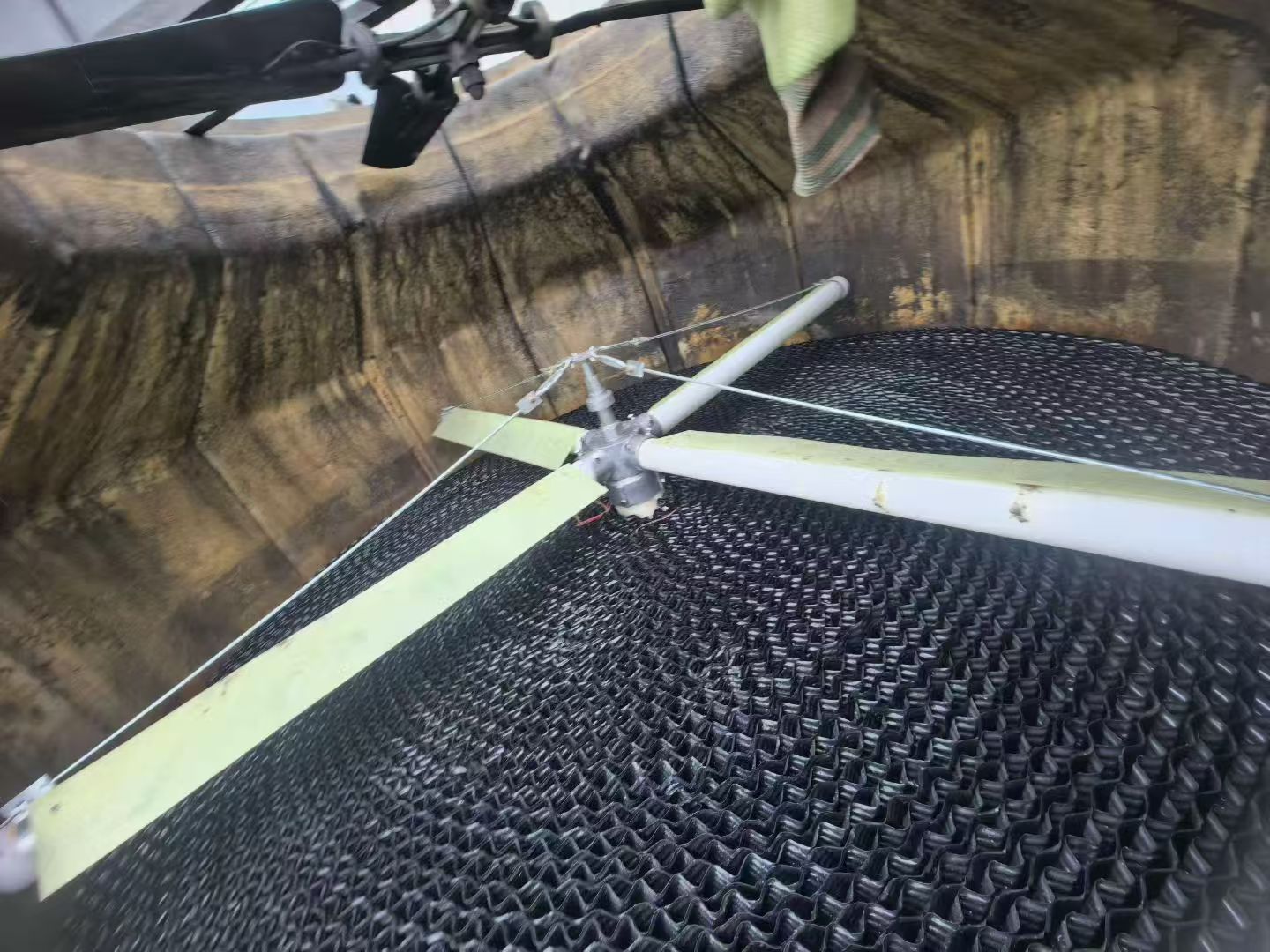
Visible Signs of Scale Buildup
During a safe and properly planned inspection, look for these warning signs:
White, gray, or yellowish mineral deposits on the fill surface.
Narrowed or blocked channels between fill sheets.
Uneven water flow across the fill pack.
Dry areas where water is not spreading correctly.
Increased debris accumulation in certain sections.
Reduced cooling performance despite normal operation of other equipment.
Color alone cannot confirm the composition of a deposit. Some deposits may contain a mixture of minerals, corrosion products, sediment, and biological material.
If the cause is unclear, water analysis and deposit testing can help determine the appropriate cleaning strategy.
Signs of Aging, Deformation, and Brittleness
Scaling is a deposit problem, while aging is a material-condition problem. The two can occur together, but they should not be confused.
PVC fill may deteriorate over time because of prolonged heat exposure, incompatible chemicals, ultraviolet radiation during storage or exposure, mechanical stress, or normal material aging.
Look for:
Cracked, broken, or brittle sheets.
Warped or sagging fill packs.
Loose bonding points or separated sheets.
Permanent deformation that changes the channel geometry.
Localized melting or heat damage.
Fill that breaks apart during gentle inspection.
Aging can reduce the fill pack's structural stability and affect water and airflow distribution. In severe cases, damaged sheets may collapse, become displaced, or obstruct other parts of the cooling tower.
Cleaning will not restore the original mechanical strength of aged PVC. If the material has become brittle or seriously deformed, replacement is usually the more appropriate solution.
How to Deal With Scaling on PVC Fills
The correct approach depends on the type of deposit, the condition of the PVC, and the cleaning method permitted by the equipment manufacturer.
Do not immediately apply strong chemicals or high-pressure water. An aggressive cleaning method may damage the fill while failing to solve the underlying water-quality problem.
Step 1: Inspect the Fill Pack
Before cleaning, examine the fill and surrounding components.
Check the degree of scaling, the amount of sediment, the condition of the sheets, and the distribution of water across the fill. Also inspect nearby spray nozzles, distribution pipes, strainers, and drift eliminators where accessible.
Determine whether the main issue is:
Mineral scale.
Suspended solids or sediment.
Biological fouling.
PVC material deterioration.
A combination of these problems.
This initial assessment helps prevent unnecessary cleaning and reduces the risk of choosing an unsuitable chemical or mechanical treatment.
Follow the site's lockout, isolation, fall-protection, confined-space, and chemical-handling procedures as applicable. Cooling towers can present biological and other occupational hazards, so inspection and cleaning should be planned with worker safety in mind.
Step 2: Choose the Right Cleaning Method
Once the deposit has been identified, choose a cleaning method compatible with both the fill material and the tower design.
Low-Pressure Water Cleaning
For loose sediment and light surface deposits, controlled low-pressure water cleaning may be sufficient.
The objective is to remove loose material without deforming the fill sheets or forcing debris deeper into the pack. Water should be directed in a way that suits the fill arrangement and allows removed material to drain away safely.
Avoid excessive pressure, close-range aggressive spraying, or rough mechanical scraping. These methods may break brittle sheets, separate bonded packs, or damage delicate surface features.
Water cleaning may not remove firmly attached mineral scale. If deposits remain after gentle cleaning, the next step is to assess whether a compatible chemical treatment is appropriate.
Chemical Descaling
Chemical descaling may be necessary when mineral deposits are firmly attached to the PVC fill. However, the chemical should be selected according to the deposit composition, the fill manufacturer's compatibility guidance, and the requirements of the overall cooling system.
An acidic descaler, for example, may dissolve certain mineral deposits, but an unsuitable product or excessive concentration can damage nearby metal components, seals, coatings, and other materials. Chemical treatment may also create wastewater that requires controlled collection and disposal.
Before using a chemical cleaner:
Confirm that it is suitable for the specific PVC fill.
Review its concentration, temperature, and contact-time requirements.
Check compatibility with metals, seals, coatings, and other system components.
Follow the product's safety data sheet and site procedures.
Conduct a controlled compatibility test when recommended.
Rinse or neutralize as directed by the chemical supplier.
Do not mix cleaning chemicals unless the manufacturer explicitly permits the combination. Some combinations can release dangerous gases or cause hazardous reactions.
If the fill is severely scaled, brittle, or deformed, chemical cleaning may not be cost-effective. A professional assessment can help determine whether cleaning or replacement is the better option.
Step 3: Remove Debris and Check Water Distribution
Cleaning is incomplete if removed material remains inside the cooling tower.
Sediment can collect in the cold-water basin, strainers, distribution pipes, and other components. If it is not removed, it may circulate back into the system and contribute to renewed fouling.
After cleaning, check the following:
Whether the fill channels are sufficiently open.
Whether water is distributed evenly across the fill.
Whether spray nozzles are blocked or damaged.
Whether the basin contains excessive sediment.
Whether the circulation system is operating as intended.
Restart the equipment according to the site's approved procedure. Observe water distribution and cooling performance, then compare operating data with the pre-maintenance baseline.
Remember that cleaning may improve performance, but it cannot compensate for undersized equipment, poor airflow, inadequate water distribution, or other unrelated operating problems.
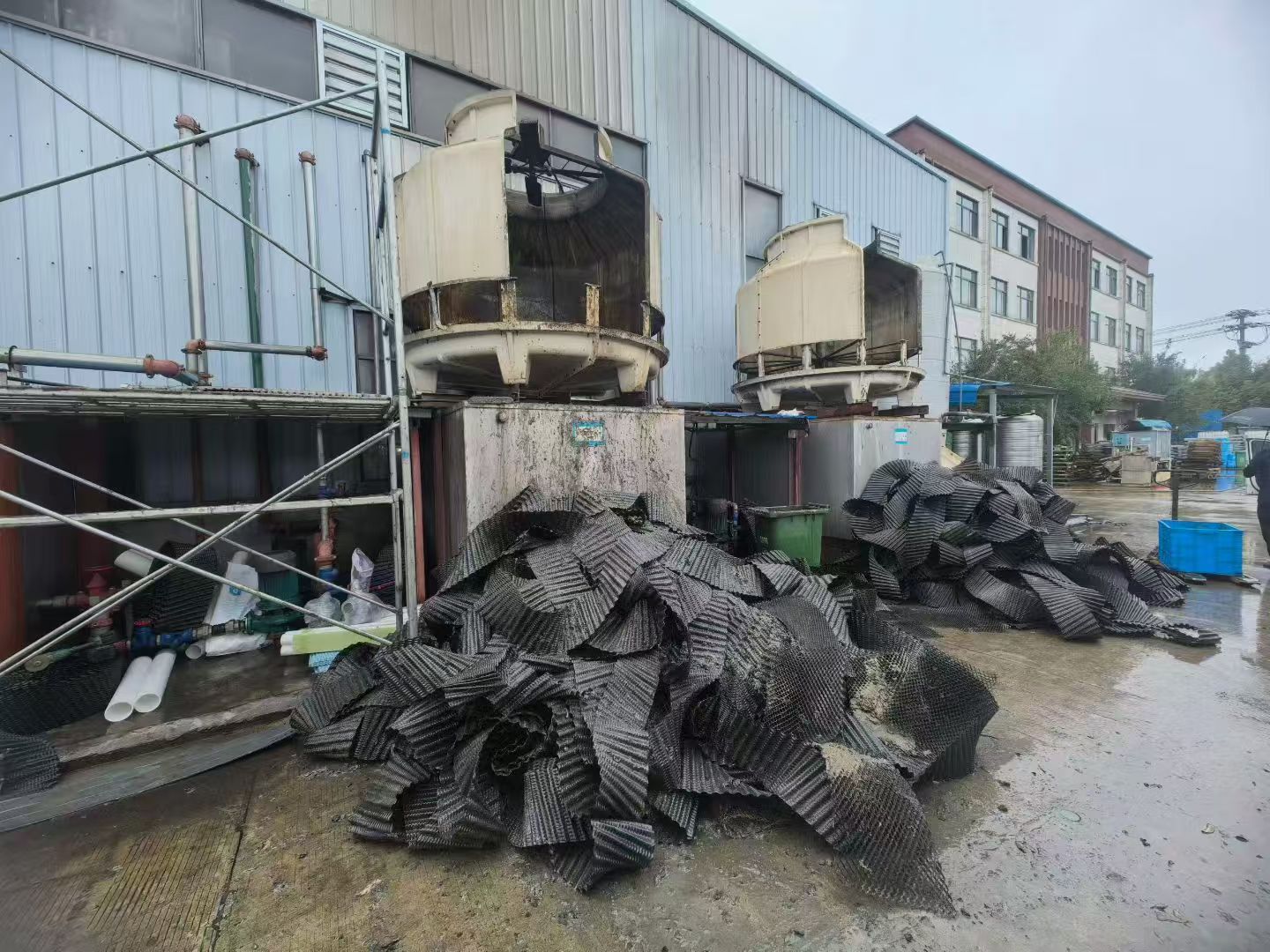
How to Slow Down PVC Fill Aging
Unlike scale, material aging cannot always be reversed. The goal is to reduce avoidable stress and maintain suitable operating conditions throughout the fill's service life.
Control Water Chemistry
Good water treatment helps reduce mineral deposition, corrosion, and biological fouling.
A practical water management program should include regular checks of parameters relevant to the specific system, such as:
pH.
Conductivity.
Calcium hardness and alkalinity.
Cycles of concentration.
Scale inhibitor concentration, where applicable.
Microbiological control indicators.
Makeup water quality.
The correct limits depend on the water source, metallurgy, tower design, treatment chemicals, and operating conditions. A qualified water-treatment provider should establish the control ranges.
Operators should also confirm that blowdown equipment, dosing systems, and conductivity controllers work correctly. Even a well-designed treatment program can fail if chemicals are not fed consistently or the monitoring instruments are inaccurate.
Prevent Excessive Heat and Chemical Damage
PVC has defined temperature and chemical-resistance limits. Continuous operation outside the product's recommended conditions may cause softening, deformation, embrittlement, or other forms of deterioration.
Before installation, verify that the selected fill is suitable for the actual water temperature and chemical environment, including any unusual process conditions or cleaning procedures.
Avoid exposing the fill to incompatible solvents, aggressive cleaners, or concentrated treatment chemicals that have not been approved for the material.
If the tower handles unusually hot water or a specialized process stream, consult the fill manufacturer about the required material grade. A different material or fill design may be more appropriate for some high-temperature or chemically demanding applications.
Improve Routine Inspection and Maintenance
Routine inspection can reveal small problems before they spread.
Create a maintenance schedule based on water quality, operating hours, environmental conditions, and the manufacturer's recommendations. Systems with poor makeup water quality or frequent fouling may need more frequent checks than systems operating with clean, well-treated water.
Record inspection findings, cleaning dates, water-quality results, cooling performance, and any replacement work. These records make it easier to identify recurring problems and evaluate whether a change in water treatment or operating conditions is necessary.
When Should Cooling Tower PVC Fills Be Replaced?
There is no single replacement interval that applies to every cooling tower. Service life depends on fill quality, operating temperature, water chemistry, maintenance practices, and mechanical conditions.
Some fill packs may remain serviceable for years with appropriate care. Others may deteriorate much sooner if exposed to unsuitable temperatures, aggressive chemicals, severe fouling, or poor maintenance.
Repair, Clean, or Replace?
Use the overall condition of the fill to guide your decision.
Condition | Recommended Action |
Light deposits with intact sheets | Inspect and clean using a compatible method |
Moderate scaling with structurally sound fill | Evaluate cleaning and correct the underlying water chemistry |
Repeated scaling despite cleaning | Review water treatment, filtration, and operating conditions |
Localized damage with a practical repair option | Assess whether a limited repair is safe and effective |
Widespread brittleness, cracking, or deformation | Consider replacing the affected fill pack |
Severe blockage or loss of structural integrity | Plan replacement after a professional assessment |
Replacement becomes more attractive when cleaning produces only short-lived improvement, cooling performance remains below requirements, or the fill is too fragile to withstand further maintenance.
When comparing costs, consider more than the purchase price of new fill. Include cleaning labor, downtime, energy consumption, recurring treatment costs, installation requirements, and the risk of continued performance loss.
A cheaper cleaning job may not be the economical choice if the same problem returns every few weeks.
How to Prevent Scaling and Premature Aging
The most effective strategy combines proper fill selection with consistent water management and planned maintenance.
Here are practical steps operators can implement:
Test the makeup water. Understand its hardness, alkalinity, suspended solids, and other relevant characteristics.
Set appropriate water-treatment controls. Work with a qualified provider to manage scaling, corrosion, and biological growth.
Maintain suitable cycles of concentration. Avoid allowing dissolved solids to rise beyond the system's treatment limits.
Keep water distribution components clean. Blocked nozzles and uneven flow can create localized fouling and reduce cooling performance.
Remove sediment regularly. Clean strainers and basins according to the maintenance plan.
Inspect fill condition periodically. Look for deposits, broken sheets, loose bonding, and deformation.
Choose the right fill geometry. Consider channel design and fouling risk when selecting replacement fill.
Use compatible cleaning products. Confirm material compatibility before applying chemicals.
Track operating performance. Monitor relevant indicators such as water temperature, airflow, pressure drop where measurable, and cooling approach.
Replace deteriorated fill promptly. Do not continue using severely damaged material simply because it has not completely failed.
These steps help reduce avoidable damage, although they cannot eliminate all scale formation or material aging.
Common Mistakes to Avoid
Even experienced maintenance teams can make mistakes when dealing with cooling tower fill.
Using excessively high water pressure can break brittle sheets or dislodge fill packs. Choose a controlled cleaning method suitable for the product.
Applying an unsuitable acid or descaler can damage the fill or other system components. Identify the deposit and confirm chemical compatibility before treatment.
Treating scaling without correcting water chemistry often leads to recurring deposits. Cleaning should be paired with an assessment of pH, hardness, alkalinity, conductivity, and the treatment program.
Assuming every white deposit is mineral scale can lead to ineffective cleaning. Deposits may contain mixed contaminants, so testing may be necessary.
Ignoring aging because the fill looks clean is another common mistake. A clean but brittle or deformed fill pack may still need replacement.
Selecting replacement fill based only on price can result in a poor match for the tower's thermal, mechanical, or water-quality requirements. Confirm dimensions, material grade, configuration, and operating limits before purchasing.
How to Choose Replacement PVC Fill
If replacement is necessary, begin with the original tower design and the conditions under which the equipment actually operates.
Consider the following factors:
Tower configuration: Confirm whether the tower uses crossflow or counterflow fill.
Dimensions: Check the required height, width, length, and installation clearances.
Material grade: Verify temperature limits and compatibility with the water and treatment chemicals.
Fill geometry: Consider channel spacing, surface pattern, and the balance between heat-transfer performance and fouling risk.
Water quality: Evaluate hardness, suspended solids, biological activity, and the effectiveness of the treatment system.
Thermal requirements: Ensure the proposed fill suits the tower's required cooling duty and design conditions.
Installation method: Confirm pack arrangement, support requirements, and compatibility with existing components.
Maintenance needs: Consider access for inspection and cleaning, especially in systems prone to deposits.
If the circulating water contains high levels of suspended solids, do not assume that standard high-efficiency film fill is automatically the best choice. Depending on the system, pretreatment, improved filtration, a more fouling-tolerant fill configuration, or a different material may be worth evaluating.
A qualified supplier can help compare the available options against actual operating conditions rather than recommending a product based on price alone.
Why Work With an Experienced Cooling Tower Fill Manufacturer?
Choosing a reliable manufacturer is important when you need to clean, maintain, or replace aging cooling tower fill. The right supplier should understand not only the product itself but also how water quality, tower configuration, temperature, and maintenance practices affect performance.
Power Tower Cooling Technology (Shaoxing) Co., Ltd. supplies cooling tower-related products and can be contacted to discuss fill requirements, product specifications, and replacement options.
Visit the official website at https://www.coolingtowerpart.com to explore product information and contact the company about your project.
Before ordering replacement fill, prepare the following information:
Cooling tower model or original fill specifications, if available.
Fill dimensions and required quantity.
Crossflow or counterflow configuration.
Normal and maximum operating water temperatures.
Makeup and circulating water quality.
Existing scaling, fouling, or aging problems.
Photographs of the existing fill and installation area, where safe and practical.
Providing these details helps the supplier evaluate the application and reduces the risk of ordering fill that does not fit or perform as expected.
Frequently Asked Questions
1. Can scaled PVC cooling tower fill be cleaned and reused?
Yes, if the deposits can be removed safely and the PVC sheets remain structurally sound. The appropriate method depends on the type and severity of the deposits. If the fill is brittle, cracked, or permanently deformed, cleaning may not restore reliable performance.
2. What causes white deposits on PVC cooling tower fill?
White deposits may be caused by mineral precipitation, particularly calcium-based scale, but appearance alone is not conclusive. Laboratory analysis or a suitable water-quality assessment can help identify the deposit and guide treatment.
3. Does chemical descaling damage PVC fill?
It can if the chemical, concentration, temperature, or contact time is unsuitable. Always verify compatibility with the fill manufacturer and chemical supplier before treatment. Follow the product instructions and applicable safety requirements.
4. How often should cooling tower PVC fill be inspected?
Inspection frequency depends on operating conditions, water quality, fouling history, and manufacturer guidance. High-fouling systems may require more frequent checks. Establish a documented schedule and increase inspection frequency when cooling performance declines or deposits begin to appear.
5. How can I extend the service life of PVC fill?
Maintain appropriate water chemistry, control scaling and biological growth, prevent excessive temperature and chemical exposure, keep water distribution components clean, and inspect the fill regularly. Correcting the cause of repeated scaling is especially important.
6. Should I choose PVC film fill or splash fill for scaling-prone water?
The answer depends on the complete application. PVC film fill can provide high heat-transfer efficiency with suitably treated water, but narrow passages may be more vulnerable to blockage. Splash fill may be more tolerant of some solids-containing conditions because of its more open structure, but it can still foul and does not prevent mineral scaling. Compare water quality, thermal requirements, and maintenance capabilities before choosing.
7. Is it better to clean or replace old PVC fill?
Cleaning is usually worth evaluating when the deposits are removable and the sheets remain sound. Replacement may be more practical when damage is widespread, the material has become brittle, or repeated cleaning fails to restore acceptable performance.
Conclusion
Scaling and aging are two common reasons cooling tower PVC fills lose performance. Mineral deposits can restrict water and airflow passages, while prolonged heat exposure, incompatible chemicals, and mechanical stress can weaken the material itself.
The best solution starts with identifying the actual problem. Inspect the fill, analyze the water conditions, select a compatible cleaning method, and correct the operating factors that contribute to repeated fouling. When the fill is severely damaged or no longer performs reliably, replacement may offer better long-term value than repeated cleaning.
For industrial users, a proactive maintenance program is usually more effective than waiting until cooling capacity drops noticeably. Regular water-quality monitoring, proper chemical treatment, careful cleaning, and timely replacement can help maintain stable cooling performance and reduce unnecessary downtime.
When selecting new fill, work with an experienced supplier and confirm that the product matches your tower configuration, operating temperature, water quality, and maintenance requirements.
Power Tower Cooling Technology (Shaoxing) Co., Ltd. provides a starting point for discussing cooling tower fill requirements and replacement options. Visit www.coolingtowerpart.com to learn more.


