Cooling tower fill media plays a critical role in improving heat transfer between hot process water and air. By increasing the contact area between water and airflow, cooling tower fill helps reduce water temperature and improve overall cooling tower efficiency.
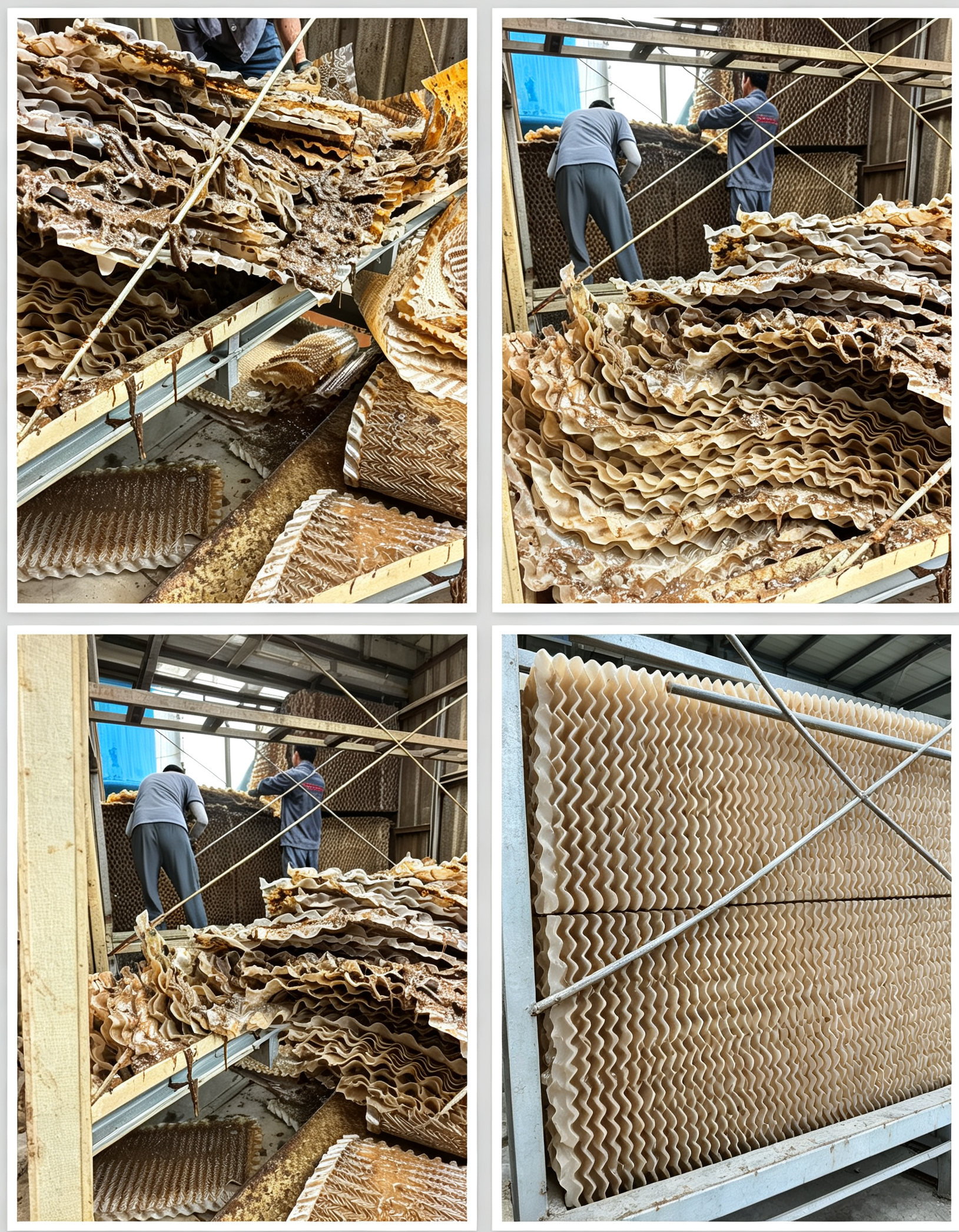
However, cooling tower fill media can gradually become contaminated with scale, dirt, algae, sediment, biological growth, and other deposits. If these contaminants are not removed, they can restrict water distribution, reduce airflow, increase pressure drop, and lower cooling performance.
So, how should cooling tower fill media be cleaned and maintained?
This guide explains how to inspect, clean, maintain, and replace cooling tower fill media while helping operators extend service life and maintain reliable cooling performance.
Why Is Cooling Tower Fill Media Cleaning Important?
Cooling tower fill media operates continuously under wet conditions. Over time, contaminants can accumulate on the fill surface and inside the passages.
Regular cleaning helps maintain the designed water and air contact area while reducing the risk of blockage.
What Problems Can Dirty Cooling Tower Fill Cause?
Dirty or clogged fill media can create several operational problems.
Reduced Heat Transfer Efficiency
Scale and deposits cover the surface of the fill, reducing effective water-air contact. As a result, the cooling tower may require more operating time or higher airflow to achieve the required outlet water temperature.
Restricted Water Distribution
Deposits can partially block the channels between fill sheets. Water may then concentrate in certain areas instead of spreading evenly across the fill pack.
Uneven water distribution creates dry zones and overloaded wet zones, reducing the effective performance of the cooling tower fill.
Increased Airflow Resistance
Blocked passages can increase resistance to airflow. Fans may need to operate at higher power to move the required amount of air through the tower.
Higher Risk of Biological Growth
Wet cooling tower environments can support algae, bacteria, and biofilm formation. Organic deposits can accumulate on fill surfaces and further restrict water and airflow.
What Causes Cooling Tower Fill Media to Become Dirty?
Understanding contamination sources is important when developing a cleaning and maintenance program.
Scale Deposits
Minerals in circulating water can form deposits on cooling tower fill media. Calcium carbonate and other mineral compounds are common causes of scaling.
Scale is especially problematic when water chemistry is not properly controlled.
Dirt and Suspended Solids
Dust, sand, rust particles, and other suspended solids can enter the cooling tower system through makeup water or surrounding air.
These materials may accumulate inside fill channels and gradually reduce the open area.
Algae and Biological Growth
Cooling towers provide moisture, nutrients, and suitable temperatures for biological growth.
Algae can form a layer on exposed fill surfaces, while biofilm can trap additional dirt and minerals.
Corrosion Products
Corrosion inside pipes, basins, heat exchangers, and other components can generate particles that eventually reach the fill media.
These particles can accumulate in narrow passages and contribute to clogging.
How Often Should Cooling Tower Fill Media Be Cleaned?
There is no single cleaning interval suitable for every cooling tower.
The required frequency depends on water quality, operating hours, environmental conditions, fill design, and the effectiveness of the water treatment program.
What Factors Affect Cleaning Frequency?
Several factors should be considered when establishing a maintenance schedule.
Water Quality
Poor water quality can accelerate scaling, sediment accumulation, and biological growth.
Environmental Conditions
Cooling towers located in dusty, industrial, or polluted environments may require more frequent inspection and cleaning.
Operating Load
Towers operating continuously under high thermal loads may require more frequent maintenance than lightly used systems.
Fill Type
Different fill designs have different channel sizes and fouling characteristics. Film fill with narrow passages may require careful water treatment to minimize blockage.
How Do You Inspect Cooling Tower Fill Media?
Inspection should be performed before deciding on a cleaning method.
Check the Fill Surface
Look for visible scale, algae, mud, sludge, discoloration, and other deposits.
A small amount of surface contamination may be manageable through routine cleaning, while heavy deposits may indicate a more serious water-treatment problem.
Check for Clogged Passages
Inspect whether water and air passages remain open.
Blocked channels can reduce effective heat transfer and increase airflow resistance.
Check for Deformation
PVC cooling tower fill can become deformed when exposed to excessive temperatures, mechanical stress, or unsuitable operating conditions.
Damaged sheets may need to be replaced rather than cleaned.
Check Water Distribution
Inspect spray nozzles and distribution pipes at the same time.
Even clean fill media cannot perform properly if water is not distributed evenly across the fill pack.
What Is the Best Way to Clean Cooling Tower Fill Media?
The appropriate cleaning method depends on the type and severity of contamination.
Low-Pressure Water Cleaning
Low-pressure water is commonly used to remove loose dirt, sediment, and surface deposits.
The water stream should be strong enough to remove contamination but controlled enough to avoid damaging the fill structure.
Why Should Excessive Water Pressure Be Avoided?
Very high-pressure water can deform or damage thin PVC fill sheets.
It can also separate or break fragile fill packs, especially when the material has already aged.
For this reason, controlled pressure is generally preferable to aggressive pressure washing.
Mechanical Cleaning
For heavier deposits, operators may use suitable brushes or other mechanical methods.
Mechanical cleaning should be performed carefully to avoid scratching, cracking, or deforming the fill surface.
Chemical Cleaning
Chemical cleaning may be considered when mineral scale or biological deposits cannot be removed effectively with water alone.
The cleaning chemical must be compatible with the fill material and the cooling tower system.
Why Is Chemical Compatibility Important?
Many cooling tower fill products are manufactured from PVC or PP. An unsuitable chemical concentration, temperature, or exposure time may damage the material.
Always follow the fill manufacturer's recommendations and the chemical supplier's instructions before treatment.
How Do You Remove Scale from Cooling Tower Fill?
Scale removal requires special attention because mineral deposits can strongly adhere to fill surfaces.
Identify the Type of Scale
The first step is to identify the type of deposit.
Common deposits may include carbonate scale, silica-related deposits, corrosion products, and mixed mineral contamination.
Select a Compatible Cleaning Method
After identifying the deposit, select a cleaning method that is appropriate for both the contamination and the fill material.
Chemical descaling should be controlled carefully to avoid damaging PVC or PP components.
Flush the Fill Thoroughly
After cleaning, rinse the fill media thoroughly to remove loosened deposits and residual chemicals.
Poor rinsing can leave chemical residues in the cooling water system.
How Can You Remove Algae from Cooling Tower Fill Media?
Algae can quickly reduce the open area of cooling tower fill if conditions support biological growth.
Improve Water Treatment
Cleaning alone does not solve the underlying cause of algae growth.
An effective water treatment program can help control biological activity and reduce recurring contamination.
Remove Existing Growth
Existing algae should be removed using an appropriate cleaning procedure.
Depending on the severity of growth, this may involve controlled water cleaning, mechanical cleaning, or an approved biocidal treatment.
Prevent Future Growth
Maintaining appropriate water chemistry, controlling sunlight where practical, and implementing a regular cleaning program can help reduce recurring biological growth.
How Should PVC Cooling Tower Fill Be Maintained?
PVC cooling tower fill is widely used because it provides a large surface area for heat transfer and can offer good performance in many industrial and HVAC applications.
However, proper maintenance is still necessary.
Keep Fill Channels Open
The most important maintenance objective is to prevent excessive blockage.
Regular inspection allows operators to identify deposits before they become severe.
Monitor Operating Temperature
Excessive water temperature can negatively affect some PVC fill products.
The actual temperature limits depend on the specific material, design, and manufacturer specifications.
Prevent Mechanical Damage
Avoid standing or placing heavy equipment directly on unsupported fill packs.
During maintenance work, use appropriate access procedures to prevent crushing or deformation.
How Can You Prevent Cooling Tower Fill Clogging?
Prevention is usually more effective than repeated intensive cleaning.
Maintain Proper Water Treatment
Water treatment should control scale, corrosion, suspended solids, and biological growth.
Important parameters may include:
Improve Filtration
Side-stream filtration can help remove suspended particles before they accumulate inside the cooling tower fill.
This can be particularly useful in systems with high levels of dirt or solids.
Clean the Basin Regularly
Sediment that accumulates in the basin can be recirculated into the fill system.
Keeping the basin clean reduces the amount of solid material entering the circulation loop.
What Maintenance Should Be Done During a Cooling Tower Shutdown?
A planned shutdown provides a good opportunity for detailed inspection.
Inspect the Fill Pack
Remove accumulated dirt and inspect the fill for:
Cracks
Broken sheets
Deformation
Severe scaling
Biological growth
Blocked passages
Material deterioration
Inspect Supporting Components
Fill support structures should also be checked for corrosion, damage, or deformation.
Inspect Spray Nozzles
Blocked or damaged nozzles can cause uneven water distribution and reduce the effective performance of the fill.
Why Is Uniform Water Distribution Important?
Cooling tower fill is designed to operate with water distributed across its surface.
If some areas receive too much water while others remain dry, the available heat transfer area is not used effectively.
When Should Cooling Tower Fill Media Be Replaced?
Cleaning can restore performance when the fill is contaminated but structurally sound.
However, replacement may be necessary when the fill has suffered permanent damage.
Signs That Fill Replacement Is Necessary
Consider replacing cooling tower fill media when you find:
Severe deformation
Cracked or broken sheets
Permanent blockage
Extensive material deterioration
Significant loss of structural strength
Repeated fouling despite proper water treatment
Poor cooling performance that cannot be restored through cleaning
Can Cleaning Extend Cooling Tower Fill Life?
Yes. Proper cleaning and water treatment can help reduce fouling and maintain the effective heat transfer area.
However, cleaning cannot restore severely damaged or chemically degraded fill media.
The replacement decision should consider the physical condition of the fill, cooling performance, maintenance history, and operating requirements.
How Does Proper Maintenance Improve Cooling Tower Efficiency?
Well-maintained cooling tower fill media supports stable heat transfer and water distribution.
Better Heat Transfer
Clean fill provides more effective contact between water and air.
Lower Airflow Resistance
Open fill channels allow air to pass through the tower more efficiently.
More Consistent Cooling Performance
Uniform water distribution and clean fill surfaces help the cooling tower maintain stable operating conditions.
Potentially Lower Operating Costs
A clean and properly maintained system may reduce unnecessary fan operation, water treatment problems, and emergency maintenance.
What Is a Practical Cooling Tower Fill Maintenance Schedule?
A practical maintenance program can combine daily monitoring, routine inspection, and periodic cleaning.
Daily or Routine Checks
Operators can monitor:
Cold water temperature
Hot water temperature
Fan operation
Water flow
Pressure or differential pressure where applicable
Visible biological growth
Abnormal vibration or noise
Monthly or Periodic Inspection
Depending on operating conditions, inspect the basin, nozzles, water distribution system, and accessible fill areas.
Annual Detailed Inspection
A more comprehensive shutdown inspection can include fill condition, support structures, spray systems, drift eliminators, fan components, and water treatment performance.
The exact schedule should be adjusted according to site conditions and manufacturer recommendations.
How Can You Choose the Right Cooling Tower Fill Media?
Cleaning and maintenance become easier when the fill media is properly matched to the cooling tower application.
Consider Water Quality
If the circulating water contains high levels of suspended solids, fouling-resistant fill designs may be more appropriate.
Consider Operating Temperature
Select a fill material that is suitable for the expected operating temperature.
Consider Crossflow or Counterflow Design
Cooling tower fill media should match the tower's airflow and water distribution configuration.
Consider Replacement Availability
For long-term maintenance, it is useful to work with a cooling tower fill manufacturer or supplier that can provide replacement fill with compatible dimensions and performance characteristics.
Final Thoughts on Cooling Tower Fill Media Maintenance
Cleaning and maintaining cooling tower fill media is an important part of cooling tower management. Regular inspection can identify scale, dirt, algae, sediment, and physical damage before they significantly affect performance.
The most effective maintenance strategy combines proper water treatment, regular inspection, controlled cleaning, good filtration, and timely replacement.
For PVC cooling tower fill and other types of fill media, cleaning methods should always be selected according to the material, contamination type, operating conditions, and manufacturer's recommendations.
A proactive maintenance program not only helps keep cooling tower fill media clean but also supports efficient heat transfer, stable water distribution, reliable operation, and longer service life.


