How to Choose a Cooling Tower Infill Supplier in Malaysia?
Choosing the right cooling tower infill supplier in Malaysia is an important decision for maintaining efficient heat transfer, stable cooling performance, and long-term tower operation. Cooling tower infill, also known as cooling tower fill or fill media, provides a large surface area that allows hot circulating water to contact air more effectively.
For industrial plants, HVAC systems, power facilities, chemical processing plants, and commercial buildings, the quality of cooling tower infill can directly affect thermal performance and maintenance requirements.
Malaysia's tropical climate creates additional demands on cooling tower systems. High ambient temperatures, humidity, airborne contaminants, biological growth, and water-quality issues can all influence the service life of cooling tower fill.
So, how can you select a reliable cooling tower infill supplier Malaysia? This guide explains the key factors to consider, from fill material and design to customization, quality control, delivery, and technical support.
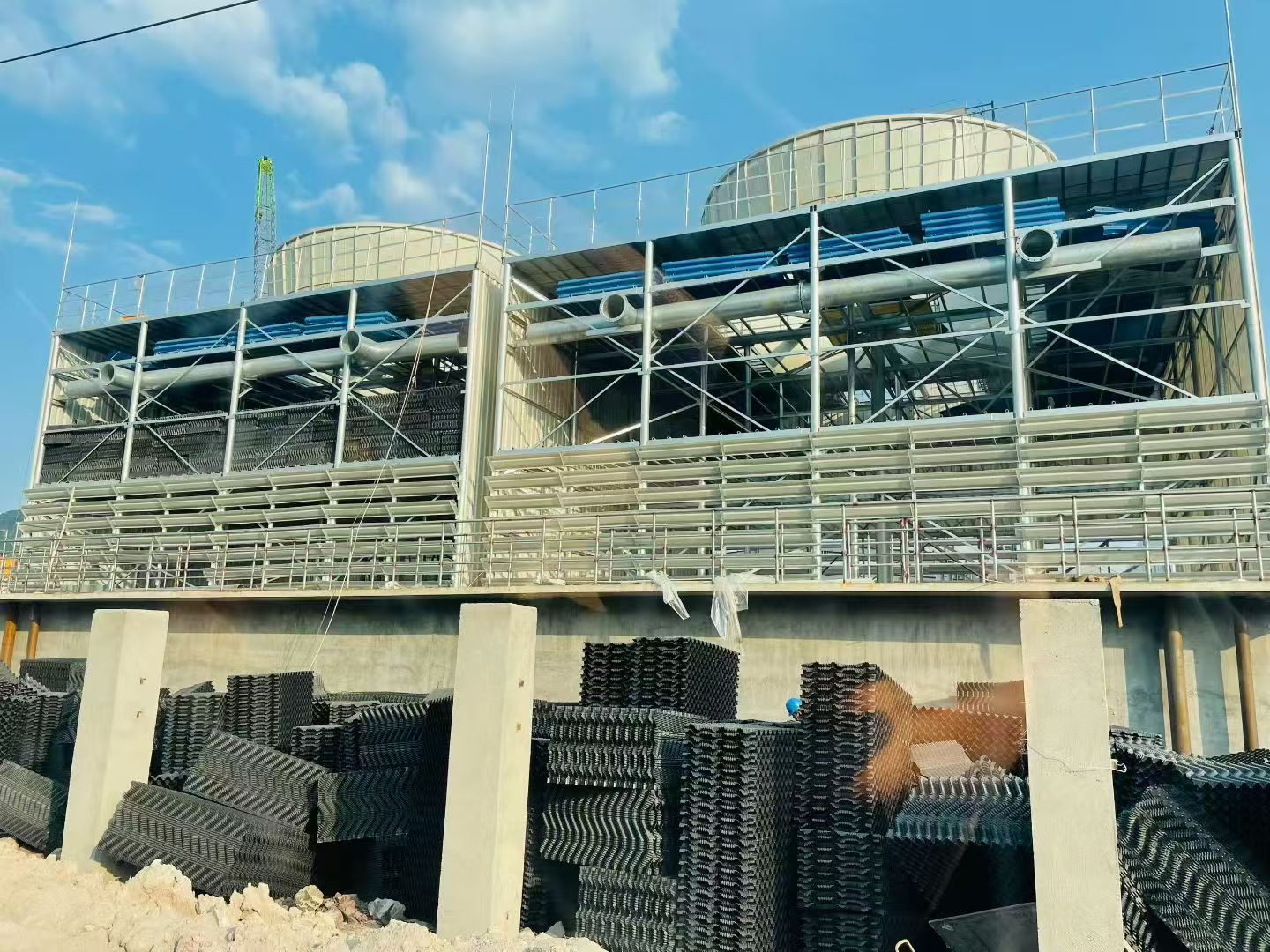
Why Is Cooling Tower Infill Important for Cooling Tower Performance?
Cooling tower infill is one of the most important components inside an evaporative cooling tower. Its primary purpose is to increase the contact area between water and air.
How Does Cooling Tower Infill Improve Heat Transfer?
When hot water enters the cooling tower, it is distributed over the surface of the fill media. The specially designed channels or sheets spread the water into thin films or droplets.
At the same time, air moves through the fill.
What Happens Inside the Fill Media?
The extended contact between water and air promotes:
A well-designed cooling tower fill can therefore improve thermal performance without requiring a larger tower footprint.
Why Does Fill Design Matter?
Different fill designs create different water distribution patterns and air resistance characteristics. The correct design should match the cooling tower's airflow direction, water quality, temperature range, and operating conditions.
Common configurations include:
Selecting the correct configuration is often just as important as selecting the right material.
What Should You Look for in a Cooling Tower Infill Supplier in Malaysia?
Not every supplier provides the same level of product quality, customization, and technical support. Several factors should be evaluated before placing an order.
Does the Supplier Offer the Right Cooling Tower Infill Material?
The material affects the fill's chemical resistance, temperature capability, mechanical strength, and service life.
What Are PVC Cooling Tower Fills?
PVC cooling tower fill is widely used in industrial and HVAC cooling applications because PVC offers a useful combination of durability, cost efficiency, and chemical resistance.
PVC film fill can provide:
For many conventional cooling tower applications, PVC is a practical choice.
When Should You Consider PP Cooling Tower Fill?
PP cooling tower fill can be considered when operating conditions require greater temperature resistance than standard PVC can provide.
Polypropylene may be suitable for applications involving:
Higher water temperatures
Certain chemical environments
Specialized industrial processes
Applications requiring increased thermal resistance
The appropriate material should be selected according to actual operating conditions rather than simply choosing the lowest purchase price.
How Can You Evaluate the Quality of a Cooling Tower Infill Supplier?
Product specifications alone may not tell the complete story. A reliable supplier should be able to explain how its cooling tower fill is manufactured and tested.
Does the Supplier Control Raw Material Quality?
Raw material quality can influence the mechanical properties and service life of cooling tower fill.
What Should You Ask About Materials?
Before purchasing, ask the supplier:
What material is used?
What is the nominal thickness?
Is the material virgin, recycled, or a mixture?
What temperature range is recommended?
What chemical conditions can the fill withstand?
Is the material suitable for the intended water quality?
Clear answers indicate that the supplier understands the application rather than simply selling generic fill sheets.
Is the Cooling Tower Fill Thickness Consistent?
Thickness consistency is another important quality factor.
If fill sheets have significant variations in thickness, the final structure may have inconsistent mechanical strength and thermal characteristics.
A professional cooling tower infill supplier Malaysia should have appropriate production controls for:
Sheet thickness
Sheet dimensions
Corrugation
Bonding
Surface pattern
Block dimensions
Assembly quality
Can the Supplier Provide Customized Cooling Tower Infill?
Cooling towers come in different sizes and configurations, so standard products may not always provide the best fit.
What Cooling Tower Fill Dimensions Can Be Customized?
Depending on the manufacturer, customization may include:
Sheet length
Sheet width
Sheet thickness
Corrugation angle
Fill block dimensions
Support configuration
Assembly height
Water-flow requirements
Why Is Customization Useful?
Properly sized fill blocks can reduce installation difficulties and minimize unnecessary cutting or modification at the job site.
This is especially useful for cooling tower fill replacement projects where the existing tower has limited access or a non-standard internal configuration.
How Important Is Cooling Tower Fill Design?
The geometry of the fill affects how water spreads and how air passes through the media.
What Is Film Fill?
Film fill uses closely spaced surfaces to spread water into thin films.
What Are the Benefits of Film Fill?
Film fill can provide a high effective surface area within a relatively compact volume. It is commonly used where high heat-transfer performance is required.
However, film fill can be more sensitive to suspended solids, dirt, algae, and other contaminants.
When Is Splash Fill More Suitable?
Splash fill breaks falling water into droplets through repeated impact.
It can be useful in applications where water quality is less suitable for fine-channel film fill.
What Should You Consider?
Before choosing between film and splash fill, evaluate:
A knowledgeable supplier should help match the fill type to the cooling tower's operating environment.
Does the Supplier Understand Malaysian Cooling Tower Applications?
A cooling tower infill supplier in Malaysia should understand the operating conditions common to the region.
Why Does Malaysia's Climate Matter?
Malaysia generally has a warm and humid tropical climate. Cooling towers operating in such conditions may experience continuous thermal loads and challenging biological growth conditions.
What Problems Can Occur?
Potential issues include:
Therefore, the cooling tower fill should not be selected based solely on catalog specifications.
How Does Water Quality Affect Cooling Tower Infill Selection?
Water quality is one of the most important factors when selecting fill media.
What Happens When Cooling Tower Fill Becomes Blocked?
When deposits accumulate between fill sheets, the open passages become restricted.
This can result in:
Reduced airflow
Poor water distribution
Higher pressure drop
Reduced heat transfer
Increased fan load
Lower cooling capacity
How Can You Reduce the Risk?
A supplier should consider the water treatment conditions before recommending a specific fill design.
For dirty or heavily contaminated water, a wider-channel or more clog-resistant design may be more appropriate than a fine-pitch film fill.
Should You Choose a Local Malaysian Supplier or an International Supplier?
The decision depends on your project requirements, delivery expectations, technical needs, and purchasing strategy.
What Are the Advantages of Working With a Local Supplier?
A local cooling tower infill supplier Malaysia may offer advantages such as:
Shorter domestic delivery times
Easier communication
Faster site coordination
Local technical support
Easier replacement orders
Lower domestic transportation complexity
When Can an International Supplier Be Useful?
International manufacturers and exporters may offer a wider range of products and customization options.
What Should You Compare?
Instead of considering location alone, compare:
Product quality
Technical specifications
Production capacity
Customization capability
Delivery time
Export experience
Packaging
After-sales support
Total landed cost
The most suitable supplier depends on the specific requirements of your cooling tower project.
How Should You Compare Cooling Tower Infill Prices?
Price is important, but the lowest quotation does not necessarily represent the lowest overall cost.
What Is Included in the Supplier's Quotation?
Ask whether the quotation includes:
Why Should You Consider Total Cost?
A low-cost fill may require more frequent replacement, cleaning, or modification. A product with better dimensional accuracy and suitable material properties may reduce installation and maintenance costs over its service life.
For this reason, evaluate total cost of ownership rather than only the initial unit price.
Can the Supplier Support Cooling Tower Fill Replacement?
Replacement projects require more than simply purchasing new fill.
What Information Should You Provide?
When requesting a quotation for cooling tower fill replacement, provide:
Why Are Existing Fill Dimensions Important?
Even when replacing an old product with a similar design, the new fill must fit correctly inside the tower.
Incorrect dimensions can create gaps, installation problems, or ineffective water distribution.
What Questions Should You Ask a Cooling Tower Infill Supplier?
Before placing an order, consider asking the following questions.
Product Questions
Can the Supplier Provide Technical Data?
Request information such as:
Manufacturing Questions
Can the Supplier Provide Production Details?
Useful questions include:
Where is the fill manufactured?
What production equipment is used?
How is thickness controlled?
How are fill blocks assembled?
What quality inspections are performed?
Can samples be provided?
Service Questions
Does the Supplier Offer Technical Support?
Technical assistance can be valuable during:
New cooling tower design
Fill selection
Fill replacement
Tower refurbishment
Capacity upgrades
Troubleshooting
A supplier that can discuss the application in technical terms can make the purchasing process more efficient.
How Can You Verify a Cooling Tower Infill Supplier Before Ordering?
Supplier verification can reduce purchasing risks.
What Should You Check?
Consider reviewing:
Why Should You Request Samples?
A sample can allow you to inspect:
Surface pattern
Sheet thickness
Material appearance
Corrugation quality
Bonding strength
Dimensional accuracy
For large cooling tower fill replacement projects, sample evaluation can be particularly useful before mass production.
What Are the Most Common Mistakes When Choosing Cooling Tower Infill?
Several purchasing mistakes can reduce cooling tower performance.
Is Choosing Only by Price a Problem?
Yes. Price should be considered together with quality, service life, compatibility, and technical performance.
Is Choosing the Wrong Fill Type a Problem?
Yes. A fill designed for clean water may not perform well in a heavily contaminated cooling-water system.
Can Incorrect Dimensions Cause Problems?
Yes. Poorly matched dimensions can create installation gaps and affect water distribution.
Is Ignoring Maintenance a Mistake?
Yes. Cooling tower fill should be selected with cleaning and inspection requirements in mind.
What Should a Long-Term Plan Include?
A practical maintenance strategy should consider:
How Can You Select the Right Cooling Tower Infill Supplier Malaysia?
A systematic evaluation process can make supplier selection easier.
Step 1: Define Your Cooling Tower Requirements
Identify the tower type, cooling capacity, water temperature, flow rate, airflow direction, and operating environment.
Step 2: Select the Appropriate Fill Material
Compare PVC, PP, and other available materials according to temperature, water chemistry, and application requirements.
Step 3: Confirm Fill Dimensions
Measure the existing fill or provide the tower drawings to ensure compatibility.
Step 4: Compare Supplier Capabilities
Evaluate manufacturing capacity, customization, quality control, delivery, and technical support.
Step 5: Request Samples and Technical Data
Review product samples and documentation before placing a large order.
Step 6: Calculate the Total Project Cost
Consider product price, transportation, installation, maintenance, replacement frequency, and expected service life.
What Makes a Reliable Cooling Tower Infill Supplier?
A reliable supplier should provide more than standard fill sheets.
What Should a Professional Supplier Offer?
Ideally, the supplier can provide:
Suitable PVC or PP cooling tower fill
Multiple fill designs
Customized dimensions
Consistent manufacturing quality
Technical documentation
Replacement support
Export packaging
Responsive communication
Practical application recommendations
Why Does Technical Experience Matter?
Cooling tower fill is not simply a plastic component. Its geometry, material, installation, water quality, and airflow conditions all influence the final cooling performance.
Working with an experienced supplier can therefore make it easier to match the product to the actual cooling tower system.
Final Thoughts: How Do You Choose a Cooling Tower Infill Supplier in Malaysia?
Choosing a cooling tower infill supplier Malaysia requires a balance of product quality, material selection, thermal requirements, customization, delivery, and technical support.
PVC cooling tower fill is widely used for conventional applications, while PP fill may be considered for higher-temperature or specialized conditions. Film fill can provide high surface area, while splash fill may be more appropriate for certain water-quality conditions.
Before ordering, clearly define your cooling tower requirements, verify the supplier's manufacturing capabilities, request technical data and samples, and compare total project costs.
By evaluating these factors systematically, cooling tower owners, contractors, distributors, and industrial buyers can make more informed purchasing decisions and select cooling tower infill that matches their specific operating requirements.
Looking for Cooling Tower Infill for Your Project?
Whether you need PVC cooling tower fill, PP cooling tower fill, crossflow fill, counterflow fill, or cooling tower fill replacement, selecting the right product starts with accurate operating data and compatible dimensions. A qualified supplier can help you evaluate the available options and develop a fill solution for your cooling tower application.


