How Does a Cooling Tower Fill Valve Improve Tower Performance?
A cooling tower depends on efficient water distribution to remove heat from industrial process water, HVAC systems, and other applications. While cooling tower fill receives much of the attention in heat transfer discussions, the components that control and distribute water are equally important. A properly selected cooling tower fill valve can help maintain stable water flow, improve fill wetting, reduce water waste, and support consistent cooling performance.
When the fill valve operates correctly, water reaches the cooling tower fill more evenly. This allows a larger portion of the fill surface to participate in heat and mass transfer. As a result, the cooling tower can achieve better thermal performance without unnecessarily increasing water flow or fan energy.
This guide explains how a cooling tower fill valve works, how it affects tower performance, what types are available, and how to select the right valve for different cooling tower applications.
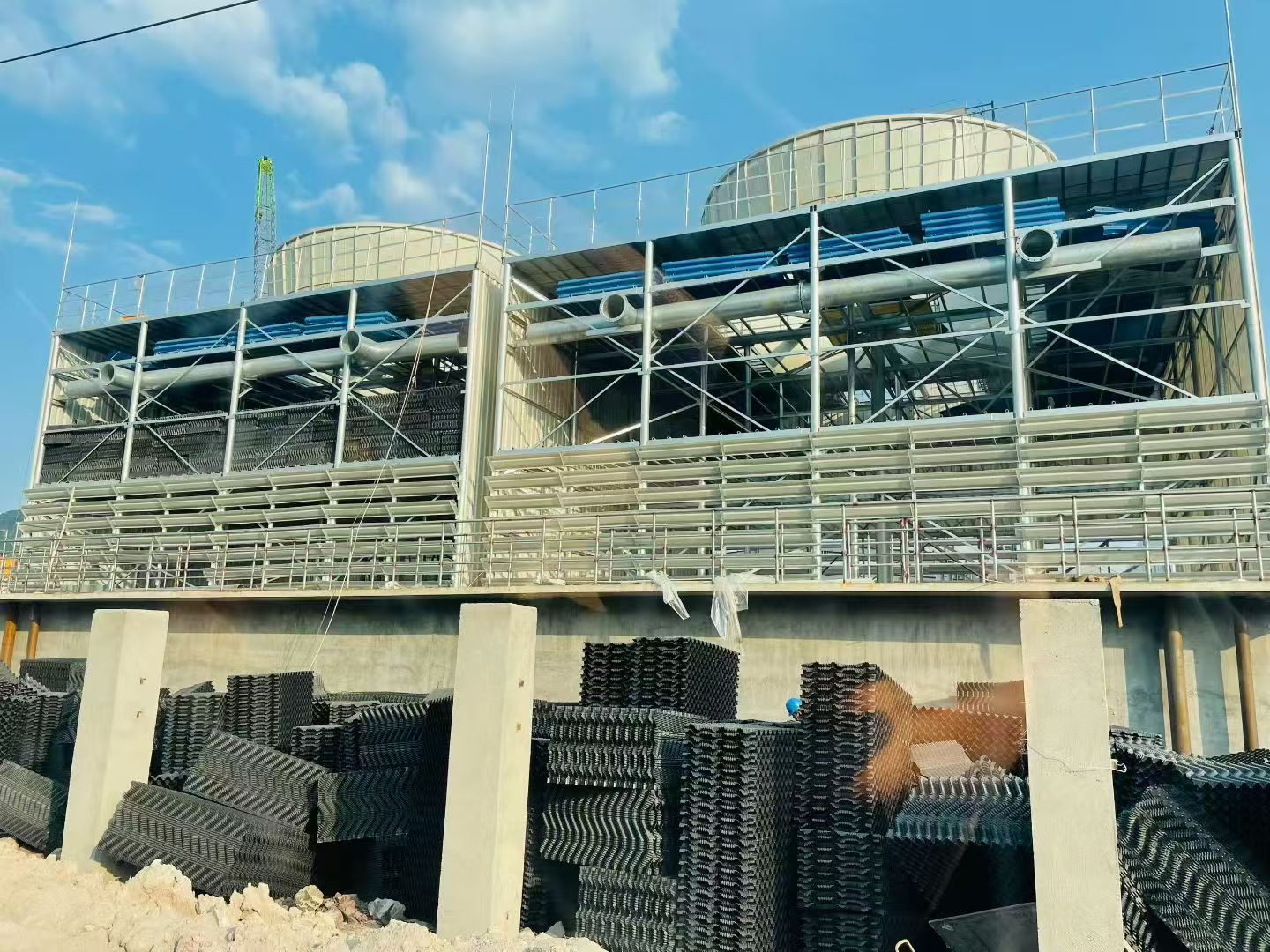
What Is a Cooling Tower Fill Valve?
A cooling tower fill valve is a water-control component used to regulate or manage water entering or circulating through the cooling tower fill system. Depending on the cooling tower design, it may be installed as part of the water distribution arrangement, basin makeup system, or fill-related water control system.
The valve helps maintain an appropriate water supply so that the cooling tower fill remains sufficiently and uniformly wetted.
Why Is Water Control Important?
Cooling tower fill works by increasing the contact area between hot water and moving air. If the water is not distributed properly, some areas of the fill may receive too much water while others remain partially dry.
This creates several problems:
A reliable fill valve helps maintain the water conditions required for stable tower operation.
How Does a Cooling Tower Fill Valve Improve Tower Performance?
The main benefit of a properly selected cooling tower fill valve is better control over water distribution. However, its effect extends beyond simple flow regulation.
1. It Improves Water Distribution
Uniform water distribution is essential for film-type and splash-type cooling tower fills.
When water is distributed evenly across the fill area, more fill surface becomes active in the cooling process. This improves contact between water and air and helps the tower achieve more consistent thermal performance.
Better Fill Wetting
Film fill depends on a thin and continuous water film flowing over its surface. If the water supply is unstable, dry areas can develop on the fill.
A properly functioning valve helps maintain stable flow conditions, allowing the fill media to remain consistently wet.
2. It Supports Better Heat Transfer
The primary purpose of cooling tower fill is to increase the contact area between water and air. The cooling tower fill valve supports this process by helping maintain suitable water flow.
Better water distribution can result in:
More effective air-water contact
More uniform heat transfer
Better cooling range
Improved approach temperature
More stable outlet water temperature
The valve itself does not create the heat transfer surface. Instead, it helps the existing cooling tower fill media operate under appropriate hydraulic conditions.
3. It Helps Prevent Excessive Water Flow
Too much water is not necessarily better for a cooling tower.
Excessive flow can increase hydraulic loading on the fill and may reduce the effectiveness of air-water contact. It can also increase water consumption and potentially increase drift.
A suitable fill valve helps control water flow according to the tower's operating requirements.
Balanced Water Flow
The ideal water flow depends on factors such as:
Cooling tower size
Fill type
Fill surface area
Water temperature
Airflow
Circulating water rate
Cooling load
Tower configuration
Therefore, valve selection should be based on actual operating conditions rather than simply choosing the largest available valve.
What Types of Cooling Tower Fill Valves Are Commonly Used?
Different cooling tower designs require different approaches to water control.
Mechanical Cooling Tower Valves
Mechanical valves use physical components to regulate water flow. They are widely used in industrial and HVAC applications because they are relatively simple and easy to maintain.
Common configurations may include:
Ball valves
Butterfly valves
Gate valves
Globe valves
Float-operated valves
The appropriate type depends on whether the valve is intended for isolation, flow regulation, level control, or another function.
Float Valves for Cooling Towers
A cooling tower float valve is commonly associated with basin water-level control.
When water evaporates from the cooling tower, the basin level decreases. The float mechanism responds to the changing water level and opens the makeup water supply.
Advantages of Float Valve Control
A properly adjusted float valve can help:
Maintain stable basin water level
Prevent pump starvation
Reduce unnecessary makeup water
Support continuous operation
Simplify automatic water-level control
Although a float valve is not the same as a dedicated fill distribution valve, both can contribute to effective cooling tower water management.
Automatic Control Valves
Modern industrial cooling towers may use automatic control valves connected to sensors and control systems.
These systems can adjust water flow according to changing operating conditions.
For example, a control system may respond to:
Outlet water temperature
Cooling load
Flow rate
Basin level
Process conditions
Ambient temperature
Automatic regulation can be especially useful in large industrial cooling tower systems where operating conditions change frequently.
How Does the Valve Affect Cooling Tower Fill Performance?
The relationship between the valve and fill media is important because the fill is responsible for much of the tower's heat transfer performance.
Film Fill Applications
Film fill is designed to spread water into thin films over a large surface area. It generally requires relatively uniform water distribution.
A suitable valve and distribution system help maintain the water loading required by the fill design.
Why Uniform Wetting Matters
If only part of the fill is properly wetted, the effective heat transfer area becomes smaller than the designed area.
This means the tower may need:
More airflow
More fan power
Higher water circulation
Longer operating time
to achieve the same cooling result.
Splash Fill Applications
Splash fill breaks falling water into droplets and increases water-air contact.
While splash fill has different hydraulic characteristics from film fill, consistent water distribution remains important. Uneven flow can reduce the effectiveness of the fill and create localized hydraulic problems.
Can a Cooling Tower Fill Valve Reduce Water Consumption?
Yes, proper water-flow control can contribute to improved water efficiency, although total tower water consumption depends on many factors.
Cooling towers lose water primarily through:
Evaporation
Drift
Blowdown
Leaks
Maintenance activities
A fill valve primarily influences water distribution and flow control rather than directly eliminating evaporation.
Optimizing Circulating Water Flow
If water flow is unnecessarily high, the tower may consume more water without obtaining proportional cooling benefits.
Proper valve sizing and adjustment can help match water flow with the required cooling load.
Reducing Unnecessary Overflow
In systems with poor water-level control, excessive makeup water can enter the basin and eventually result in overflow.
A properly adjusted valve can help maintain the desired operating level and reduce avoidable water losses.
What Happens When a Cooling Tower Fill Valve Is Incorrectly Selected?
A valve that is too small, too large, incorrectly rated, or poorly adjusted can negatively affect cooling tower operation.
Insufficient Flow
A valve with inadequate capacity may restrict the required water supply.
Possible symptoms include:
Excessive Flow
A valve that allows excessive water flow can also create problems.
Potential issues include:
Higher pumping requirements
Excessive hydraulic loading
Increased water consumption
Poor air-water balance
Increased drift risk
Incorrect Valve Material
Cooling tower water can contain chemicals, minerals, suspended solids, and biological contaminants.
If the valve material is not compatible with the water chemistry, corrosion or premature wear may occur.
How to Choose the Right Cooling Tower Fill Valve?
Selecting a cooling tower fill valve requires more than comparing valve prices.
1. Check the Required Flow Rate
The valve should be capable of handling the required operating flow without creating excessive pressure loss.
Consider both normal and maximum flow conditions.
2. Check Operating Pressure
The valve should be suitable for the pressure available in the water distribution system.
A valve with an unsuitable pressure rating may experience poor control or premature failure.
3. Consider Water Temperature
Cooling tower circulating water can operate at elevated temperatures.
The valve material and sealing components should be suitable for the expected temperature range.
4. Evaluate Water Chemistry
Water treatment conditions should also be considered.
Important factors include:
pH
Chloride concentration
Hardness
Corrosion potential
Biocide concentration
Scale-forming tendency
Selecting compatible valve materials can extend service life.
5. Match the Valve to the Fill System
Different cooling tower fill media require different water distribution conditions.
For example, high-efficiency film fill may require more uniform distribution than some traditional splash-fill systems.
The valve should therefore be selected together with the fill and water distribution system rather than as an isolated component.
How Can You Maintain a Cooling Tower Fill Valve?
Regular inspection helps prevent small valve problems from becoming major cooling tower performance issues.
Inspect for Leakage
Check valve connections, seals, and surrounding piping for signs of leakage.
Even a small continuous leak can result in significant water loss over time.
Check Valve Operation
Manual and automatic valves should open and close smoothly.
For automatic valves, verify that the actuator and control signals are functioning correctly.
Clean the Valve and Nearby Components
Cooling tower water may contain sediment, scale, algae, and other contaminants.
These materials can interfere with valve operation or restrict water flow.
Recommended Inspection Points
Maintenance personnel should check:
How Does a Fill Valve Work With Other Cooling Tower Components?
A cooling tower does not depend on a single component for performance. The fill valve works together with the entire water and air distribution system.
Cooling Tower Fill
The fill provides a large surface area for heat and mass transfer.
Water Distribution System
Distribution pipes, headers, nozzles, and valves deliver water to the fill.
Drift Eliminators
Drift eliminators reduce the amount of water droplets carried out of the tower by the exhaust air.
Cooling Tower Fan
The fan moves air through the tower and determines the available airflow for heat transfer.
Basin and Makeup Water System
The basin collects cooled water while the makeup system replaces water lost through evaporation, drift, and blowdown.
When these components are properly matched, the cooling tower can operate more efficiently and reliably.
Cooling Tower Fill Valve vs. Cooling Tower Fill: What Is the Difference?
The terms are sometimes confused, but they describe different components.
| Component | Main Function |
| Cooling tower fill | Increases water-air contact area for heat transfer |
| Fill valve | Controls or regulates water flow |
| Water distribution pipe | Delivers water through the tower |
| Nozzle | Distributes water into droplets or patterns |
| Drift eliminator | Reduces water droplet carryover |
| Fan | Moves air through the tower |
| Basin | Collects cooled water |
The fill is primarily a heat-transfer component, while the valve is primarily a water-control component.
How Can a Fill Valve Improve Cooling Tower Efficiency?
A cooling tower fill valve can contribute to overall efficiency in several ways.
Better Thermal Stability
Stable water flow helps the cooling tower maintain more consistent operating conditions.
Lower Water Waste
Better control can reduce unnecessary flow and avoid some forms of water loss.
Reduced Maintenance Problems
Proper flow control can help reduce abnormal hydraulic conditions that contribute to scaling, fouling, or uneven fill wetting.
Longer Fill Service Life
When water is properly distributed, the fill can operate more uniformly. This may help reduce localized fouling and uneven loading.
However, fill life also depends heavily on water quality, temperature, material selection, cleaning, and operating conditions.
Common Problems With Cooling Tower Fill Valve Systems
Even a high-quality valve may perform poorly if the surrounding system has problems.
Clogged Strainers
Debris can restrict water flow and cause reduced valve performance.
Blocked Nozzles
Blocked nozzles can create uneven water distribution across the cooling tower fill.
Incorrect Valve Adjustment
A valve that is improperly adjusted may cause excessive or insufficient flow.
Scaling and Fouling
Mineral deposits and biological growth can affect valves, pipes, nozzles, and fill media.
Poor Valve Sizing
Incorrect sizing can result in unstable control or excessive pressure loss.
Best Practices for Cooling Tower Fill Valve Selection
For industrial and commercial cooling tower applications, consider the following best practices:
Match Valve Capacity to Actual Flow
Avoid selecting a valve based only on pipe diameter. Actual flow requirements should be considered.
Select Compatible Materials
Choose materials that can withstand the cooling water temperature and chemical environment.
Consider Maintenance Requirements
A valve that is easy to inspect, clean, repair, and replace can reduce long-term maintenance costs.
Integrate Valve and Fill Design
The valve, water distribution system, and cooling tower fill should be evaluated as a complete system.
Allow for Variable Operating Conditions
Industrial cooling loads can change throughout the day or across seasons. A suitable control valve should accommodate the expected operating range.
Why Is Cooling Tower Water Distribution So Important?
Water distribution is one of the foundations of cooling tower performance.
Even a high-quality cooling tower fill cannot deliver its full potential if water is poorly distributed across the fill surface.
A well-designed water distribution system should provide:
The cooling tower fill valve plays an important role in achieving these conditions.
Final Thoughts
A cooling tower fill valve may be a relatively small component, but its influence on cooling tower performance should not be underestimated. By helping regulate water flow and maintain proper water distribution, the valve supports effective fill wetting, stable heat transfer, water efficiency, and reliable operation.
The best results come from treating the valve, fill media, water distribution system, nozzles, pumps, fans, and water treatment system as an integrated cooling solution.
When selecting a cooling tower fill valve, focus on flow rate, pressure, temperature, material compatibility, water chemistry, maintenance requirements, and compatibility with the existing cooling tower fill media. Proper selection and regular maintenance can help the entire cooling tower operate more efficiently and consistently over its service life.
For industrial cooling tower projects, working with an experienced cooling tower fill manufacturer or supplier can also help ensure that the valve and fill system are correctly matched to the tower's operating conditions.


