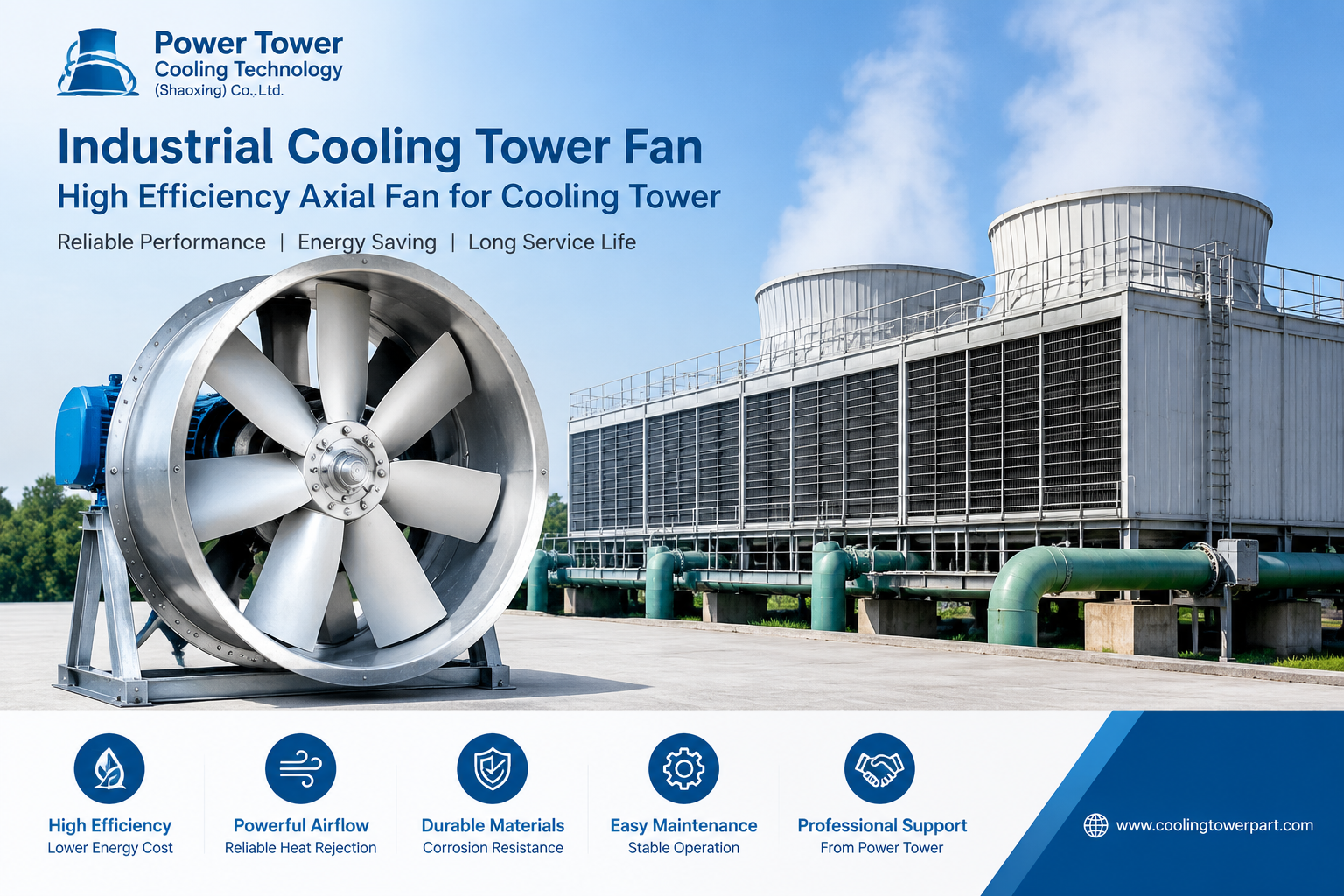
Cooling tower technology is evolving as industrial facilities seek better energy efficiency, reliable operation, and lower maintenance costs. Among the components receiving more attention are cooling tower fan blades. As the main parts responsible for moving air through a mechanical-draft cooling tower, these blades directly influence airflow, fan power requirements, vibration, and operating reliability.
Two materials are particularly important in this upgrade: fiberglass-reinforced plastic (FRP) and aluminum alloy. FRP blades offer a lightweight composite design with good corrosion resistance, while aluminum blades provide established manufacturing methods and useful mechanical strength. Both materials can serve industrial cooling applications, but their suitability depends on the fan design and operating environment.
For cooling tower owners, choosing the right blade is not simply a matter of following a market trend. It means finding a solution that matches the required airflow, rotational speed, environmental conditions, maintenance plan, and budget.
Power Tower Cooling Technology (Shaoxing) Co., Ltd., through its website Coolingtowerpart.com, provides a starting point for exploring cooling tower components and replacement-part requirements. This guide explains how FRP and aluminum blades differ, why material selection matters, and what buyers should consider when planning a cooling tower fan upgrade.
Why Cooling Tower Fan Blade Materials Matter
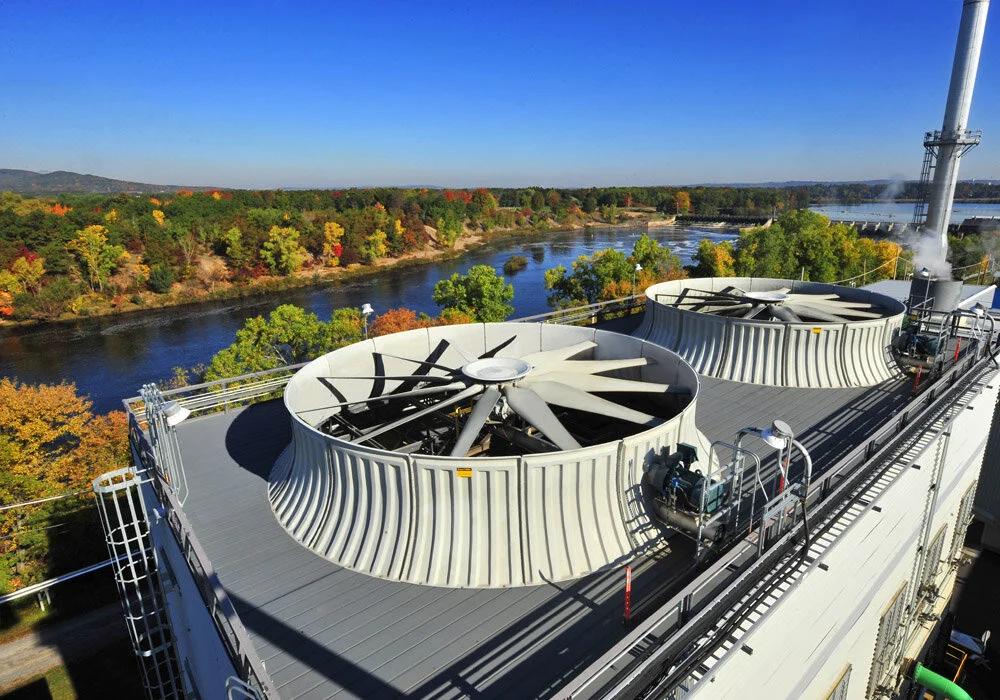
A cooling tower removes heat by bringing water into contact with moving air. In a mechanical-draft tower, the fan generates the airflow needed to support this heat-transfer process. If the fan cannot deliver the required air volume under the intended operating conditions, the cooling tower may struggle to meet its thermal duty.
Fan blades work under continuous mechanical and aerodynamic loads. They must withstand centrifugal forces, air pressure, vibration, moisture, and repeated operating cycles. Depending on the installation, they may also face salt-laden air, chemical exposure, dust, and temperature fluctuations.
The blade material influences the fan's weight, structural properties, corrosion resistance, and maintenance requirements. It also affects which blade shapes and construction methods are practical.
However, material is only one part of the equation. A well-designed fan depends on the interaction between blade geometry, pitch angle, fan diameter, rotational speed, motor power, and system resistance. Selecting a blade material without considering these factors may not deliver the expected improvement.
How Blade Materials Affect Cooling Efficiency
Cooling efficiency depends partly on how effectively the fan moves air through the tower. A suitable blade profile can help generate the required airflow while limiting unnecessary aerodynamic losses.
FRP manufacturing offers considerable flexibility in shaping complex blade profiles. Aluminum blades can also deliver effective aerodynamic performance when their geometry and manufacturing process are properly engineered.
The key is to compare actual fan performance rather than judging the blade by material alone. Buyers should check whether a proposed fan can meet the required airflow and pressure conditions at the specified rotational speed.
The Connection Between Fan Design and Energy Consumption
Cooling tower fans may operate for long periods, so electricity consumption can have a significant effect on operating costs. Improvements in fan-system efficiency may therefore create meaningful long-term value.
A lightweight blade can reduce rotating mass and may reduce the torque required during acceleration. An aerodynamically optimized blade can also help reduce the power needed to deliver a target airflow.
Nevertheless, these benefits depend on the complete fan design. A material change alone does not guarantee lower electricity consumption. When evaluating a replacement, ask for comparable performance data and consider the motor, transmission, operating speed, and resistance of the cooling tower system.
Durability and Maintenance Requirements
Blade failure can lead to downtime, costly repairs, and potential damage to other fan components. Selecting a material that suits the operating environment is therefore essential.
FRP can provide good corrosion resistance when the composite resin and construction are appropriate. Aluminum offers useful mechanical properties but may require suitable protection in corrosive environments.
Both materials require proper installation, balancing, inspection, and maintenance. Even a high-quality blade can experience problems if the fan is incorrectly assembled, operated outside its design limits, or exposed to conditions for which it was not specified.
FRP Cooling Tower Fan Blades: Lightweight and Corrosion-Resistant
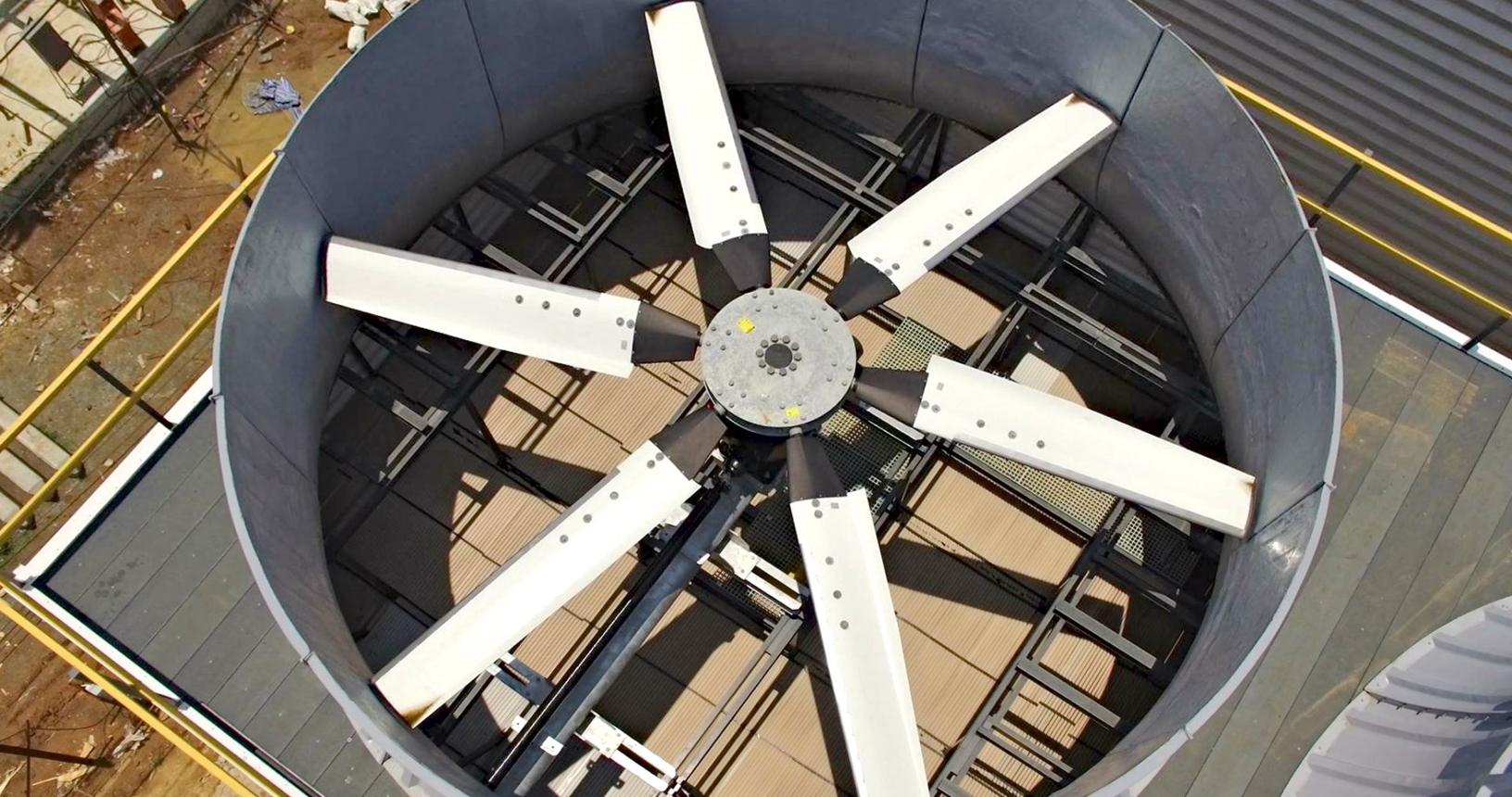
FRP stands for fiberglass-reinforced plastic. It is a composite material made by combining reinforcing glass fibers with a polymer resin. The resulting structure can provide a useful balance of strength, weight, and environmental resistance.
In cooling tower applications, FRP blades are attractive when operators want to reduce rotating mass or address corrosion concerns. Their performance depends on the resin system, fiber orientation, blade geometry, manufacturing process, and quality-control procedures.
Key Advantages of FRP Fan Blades
Lightweight Construction
One of the main advantages of FRP is its relatively low weight. Compared with many metal alternatives, an appropriately designed FRP blade can reduce the mass of the rotating assembly.
Lower rotating mass may ease handling and installation and can reduce the inertia that the drive system must overcome during startup. The effect on total energy consumption, however, depends on the complete system and its operating pattern.
The actual weight difference should be verified using the specifications of the blade models being compared. Blade size, wall thickness, reinforcement, and construction method all affect the final weight.
Good Corrosion Resistance
Cooling towers frequently operate in humid environments where moisture and airborne contaminants can accelerate material deterioration. FRP does not rust like conventional metals and can offer good resistance to many corrosive environments.
This makes FRP worth considering for installations where corrosion-related maintenance is a recurring concern. However, not all FRP formulations have the same chemical resistance.
Buyers should confirm that the resin system is suitable for the actual chemicals, temperature range, and exposure conditions at their site. UV exposure, surface erosion, impact, and composite damage also need to be considered.
Flexible Aerodynamic Design
Composite manufacturing can support complex blade profiles and carefully controlled changes in blade twist and chord. This flexibility gives designers options when optimizing airflow and structural performance.
A well-engineered FRP blade may provide a favorable combination of airflow, strength, and weight. Yet its aerodynamic advantages must be demonstrated through appropriate engineering data or performance testing. FRP construction alone is not proof of superior efficiency.
Limitations of FRP Fan Blades
FRP blades must be manufactured and inspected carefully. Defects in the composite structure, impact damage, cracking, or delamination can affect structural integrity.
Repair also requires attention to the specific composite system. Improvised repairs may not restore the original strength or balance, so damaged blades should be assessed according to the manufacturer's instructions.
Operating temperature, rotational speed, chemical compatibility, and structural load limits should all be verified before purchase. A lightweight blade is only a good choice when it is properly designed for the intended fan.
Aluminum Cooling Tower Fan Blades: Strength and Reliability
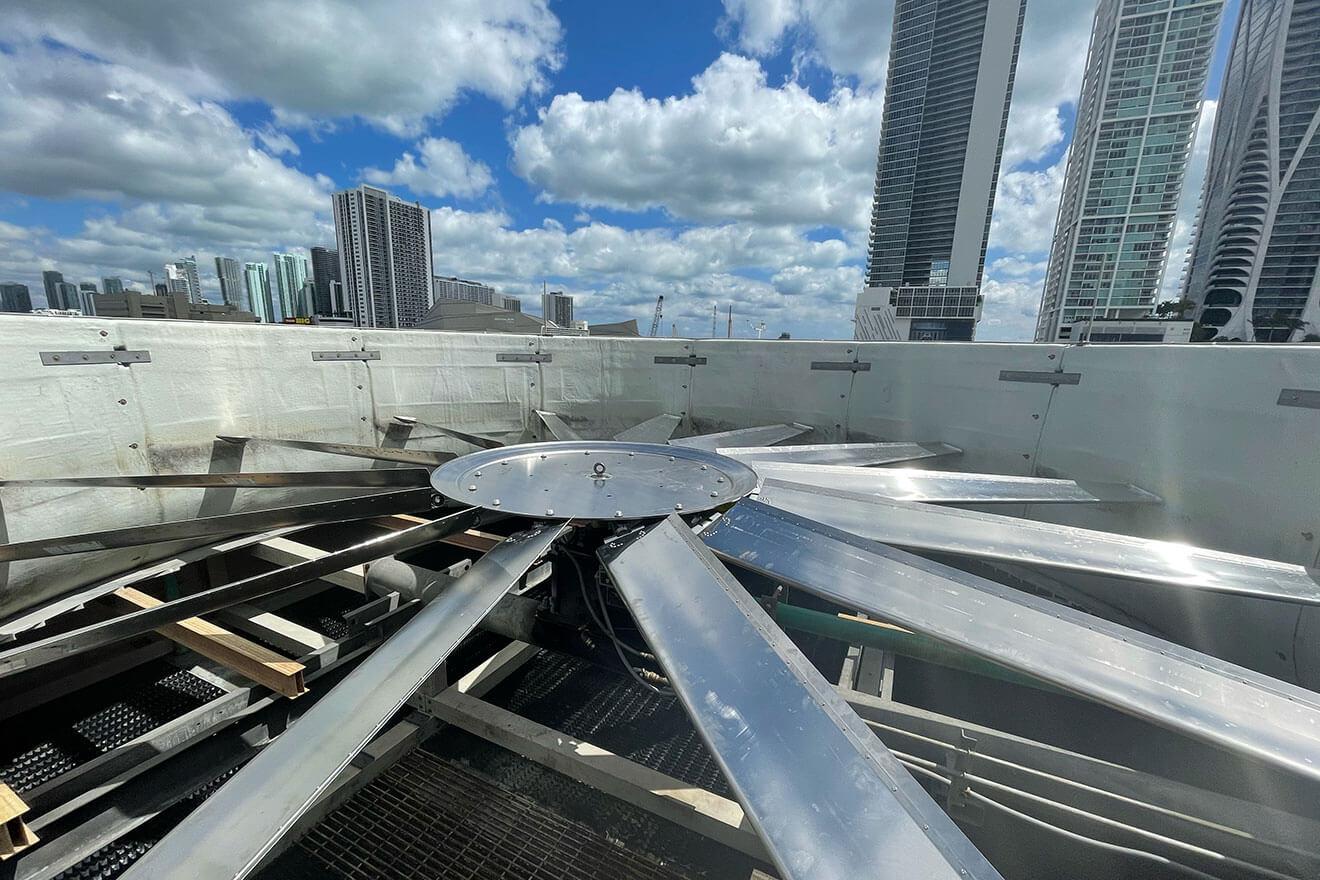
Aluminum alloy remains an important material for industrial fan components. It combines relatively low density with useful strength, established fabrication techniques, and practical machining characteristics.
Aluminum blades can be suitable for cooling towers that require a metal blade design or where the existing fan system is already engineered around aluminum components. Their performance depends on the alloy, blade geometry, manufacturing method, surface treatment, and mounting design.
Key Advantages of Aluminum Fan Blades
Mechanical Strength and Dimensional Stability
Aluminum alloys can provide useful structural strength while remaining lighter than many other metals. When correctly specified, they can withstand the loads associated with normal fan operation.
Maintaining blade geometry is important because deformation may change the aerodynamic profile and affect airflow or vibration. The alloy, blade thickness, root design, and mounting arrangement should therefore be selected according to the intended loads and rotational speed.
Established Manufacturing Processes
Aluminum blades benefit from mature metalworking and manufacturing processes. Depending on the product design, these processes can support consistent dimensions and practical inspection methods.
For replacement projects, aluminum may also be a convenient option when the existing assembly uses a compatible metal-blade design. However, dimensional similarity is not enough to establish compatibility. The replacement must meet the fan's mechanical and aerodynamic requirements.
Inspection and Maintenance
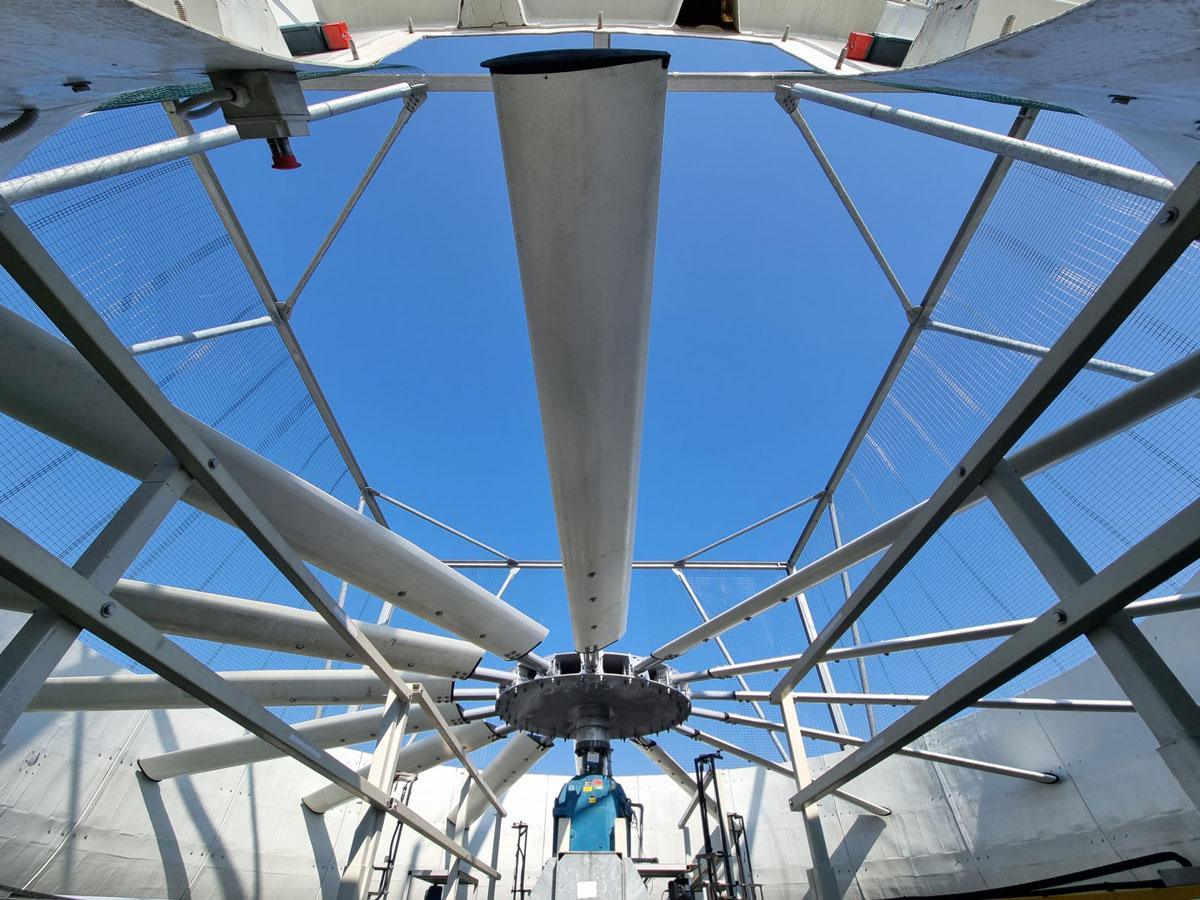
Aluminum blades can be inspected for corrosion, cracks, deformation, and damage around mounting points. Suitable surface treatments may help improve environmental resistance, depending on the alloy and application.
Operators should also inspect the hub, fasteners, and other connected components. Damage around the blade root or mounting interface can be especially important because these areas transfer loads into the fan assembly.
Limitations of Aluminum Fan Blades
Aluminum can corrode under unsuitable conditions, particularly when exposed to aggressive chemicals or unfavorable contact with dissimilar metals. The degree of risk depends on the alloy, environment, surface protection, and installation details.
Some aluminum blade designs may also be heavier than comparable composite designs. But this should be assessed from actual product specifications rather than assumed for every blade.
As with FRP, aluminum blades must be designed for the required rotational speed, centrifugal loads, fatigue conditions, and operating environment. Proper balancing and maintenance remain essential for safe operation.
FRP vs. Aluminum Cooling Tower Fan Blades: A Practical Comparison
Both materials have a place in cooling tower applications. The right choice depends on what the equipment needs to achieve and how the fan will operate throughout its service life.
| Factor | FRP Fan Blades | Aluminum Fan Blades |
| Material | Fiberglass-reinforced polymer composite | Aluminum alloy |
| Weight | Often lightweight, depending on design | Relatively lightweight among metals |
| Corrosion resistance | Generally good when the resin system suits the environment | Depends on alloy, exposure, and surface protection |
| Design flexibility | Offers flexibility in composite blade geometry | Depends on alloy and fabrication method |
| Mechanical behavior | Depends on fiber orientation, resin, and composite construction | Depends on alloy, temper, thickness, and geometry |
| Inspection priorities | Cracks, impact damage, delamination, and surface deterioration | Corrosion, cracks, deformation, and mounting damage |
| Repair | Requires approved composite-specific procedures | Requires approved metal-specific procedures |
| Selection priority | Confirm material suitability and composite quality | Confirm alloy, corrosion protection, and structural requirements |
Which Material Is More Energy-Efficient?
There is no universal answer. A well-designed FRP fan may offer energy advantages over a less aerodynamically optimized metal fan, but a properly engineered aluminum fan can also perform effectively.
Energy consumption depends on the airflow required, blade profile, pitch, fan diameter, rotational speed, motor efficiency, transmission losses, and system resistance.
If energy savings are a major reason for an upgrade, request performance data for the complete fan system. Compare the proposed fan with the existing installation under equivalent operating conditions. Where practical, record baseline motor power and airflow before replacement, then measure the results after commissioning.
Avoid relying on a generic percentage-saving claim without knowing the test conditions. Actual results will vary by installation.
Which Material Offers Better Corrosion Resistance?
FRP generally offers good corrosion resistance when the resin and composite structure are selected for the environment. Aluminum can also provide satisfactory service, but alloy selection and protective treatment may be important in corrosive conditions.
The decision should be based on the actual exposure at the site. Humidity alone does not tell the whole story; water chemistry, airborne chemicals, salt, deposits, and cleaning agents can all influence material performance.
Which Option Has the Lower Total Cost?
The purchase price is only one part of the total cost. Installation labor, maintenance requirements, spare-part availability, energy use, expected service life, and the consequences of downtime also matter.
A blade with a higher initial price may be economical if it provides a measurable operating benefit. Conversely, a premium option may offer little value when the application does not require its specific advantages.
Compare quotations using the same technical requirements, and confirm what is included in each supplier's offer.
What Is Driving the Cooling Tower Fan Market Upgrade?
The interest in FRP and aluminum blades reflects a broader effort to improve the performance and reliability of industrial cooling systems. Several factors are encouraging facility operators to review older fan equipment.
Demand for Energy-Efficient Industrial Equipment
Industrial facilities need to manage energy costs without compromising production. Since cooling tower fans can run for extended periods, their operating efficiency deserves attention.
Upgrades may include improved blade profiles, better pitch adjustment, suitable motor controls, and replacement of damaged or poorly matched components. Material selection can support these improvements, but it should form part of a wider assessment of the fan system.
Reducing Corrosion-Related Maintenance
Corrosion can increase inspection needs and lead to premature component replacement. In challenging environments, choosing the right blade material can help manage this risk.
FRP may be suitable where its composite formulation matches the chemical exposure. Aluminum may remain appropriate when its alloy and protective treatment meet the requirements.
Before replacing a failed blade, investigate why it deteriorated. If the underlying problem is excessive vibration, incorrect installation, unsuitable operating speed, or poor balancing, changing the material alone may not solve it.
Modernizing Existing Cooling Towers
Replacing fan blades can be part of a cooling tower upgrade when the tower structure remains serviceable. A carefully planned replacement may restore performance without requiring the entire cooling system to be changed.
However, a blade replacement must match the existing fan's requirements. Diameter, blade count, hub connection, mounting dimensions, pitch, rotational speed, and structural loading should be checked before an order is confirmed.
A change from aluminum to FRP, or from FRP to aluminum, should be treated as an engineering decision—not a simple material substitution.
How to Choose the Right Cooling Tower Fan Blade Material
The selection process should begin with the cooling tower's operating requirements, not simply the material name. A clear specification helps suppliers recommend a suitable solution and reduces the risk of ordering incompatible parts.
Evaluate the Operating Environment
Review the ambient temperature, humidity, airborne contaminants, chemical exposure, and any salt or corrosive deposits. Consider how frequently the fan runs and whether the equipment experiences repeated startups or unusual operating conditions.
For FRP blades, confirm the resin system's compatibility with the environment. For aluminum blades, review the alloy and the need for protective coatings or compatible mounting hardware.
Check Fan Diameter, Speed, and Mechanical Load
Fan diameter and rotational speed influence airflow and structural loading. Blade pitch and profile also affect the fan's performance.
A replacement blade must be rated for the intended speed and mechanical loads. Never assume that a blade with the correct length will be safe to operate in the existing assembly.
Use the original equipment documentation, model number, or data plate wherever possible. If the specifications are incomplete, seek technical assistance before ordering.
Confirm Hub and System Compatibility
Compatibility involves more than the blade's overall dimensions. Buyers should check the hub interface, bolt pattern, blade-root dimensions, pitch-adjustment mechanism, clearances, and balancing requirements.
The complete fan assembly must also suit the motor and drive system. An incompatible blade may produce excessive vibration, impose unwanted loads, or fail to deliver the required airflow.
When a material change is proposed, ask the supplier to confirm compatibility and identify any installation changes that may be required.
Calculate Total Cost of Ownership
A sound purchase decision considers the full operating picture. Review the initial price, installation labor, maintenance requirements, spare-part availability, expected service life, and the cost of unplanned downtime.
If the main objective is reducing electricity use, compare measured or validated fan performance. Ask how the supplier calculated any stated savings and whether the comparison uses equivalent airflow and operating conditions.
A structured evaluation helps buyers choose a blade that meets technical needs while supporting long-term operating goals.
Why Manufacturer Expertise Matters
A reliable cooling tower component supplier should help buyers clarify specifications, assess compatibility, and understand installation requirements. This support can be particularly important when replacing an older fan or changing blade material.
Product Selection and Technical Communication
Cooling towers differ in design, capacity, airflow requirements, and mechanical configuration. A fan blade that works in one tower may not be suitable for another.
Power Tower Cooling Technology (Shaoxing) Co., Ltd. provides a point of contact for customers exploring cooling tower components through Coolingtowerpart.com. Buyers planning a replacement can share their equipment details to help clarify the parts required.
When requesting a quotation, prepare the cooling tower manufacturer and model, fan diameter, blade count, existing material, rotational speed, hub details, operating environment, and photographs or drawings if available.
If you are considering an FRP or aluminum upgrade, ask the supplier to confirm the available specifications and what technical information is needed to establish suitability. Product availability, customization options, and compatibility should be verified for the particular project.
Quality Control and Installation Support
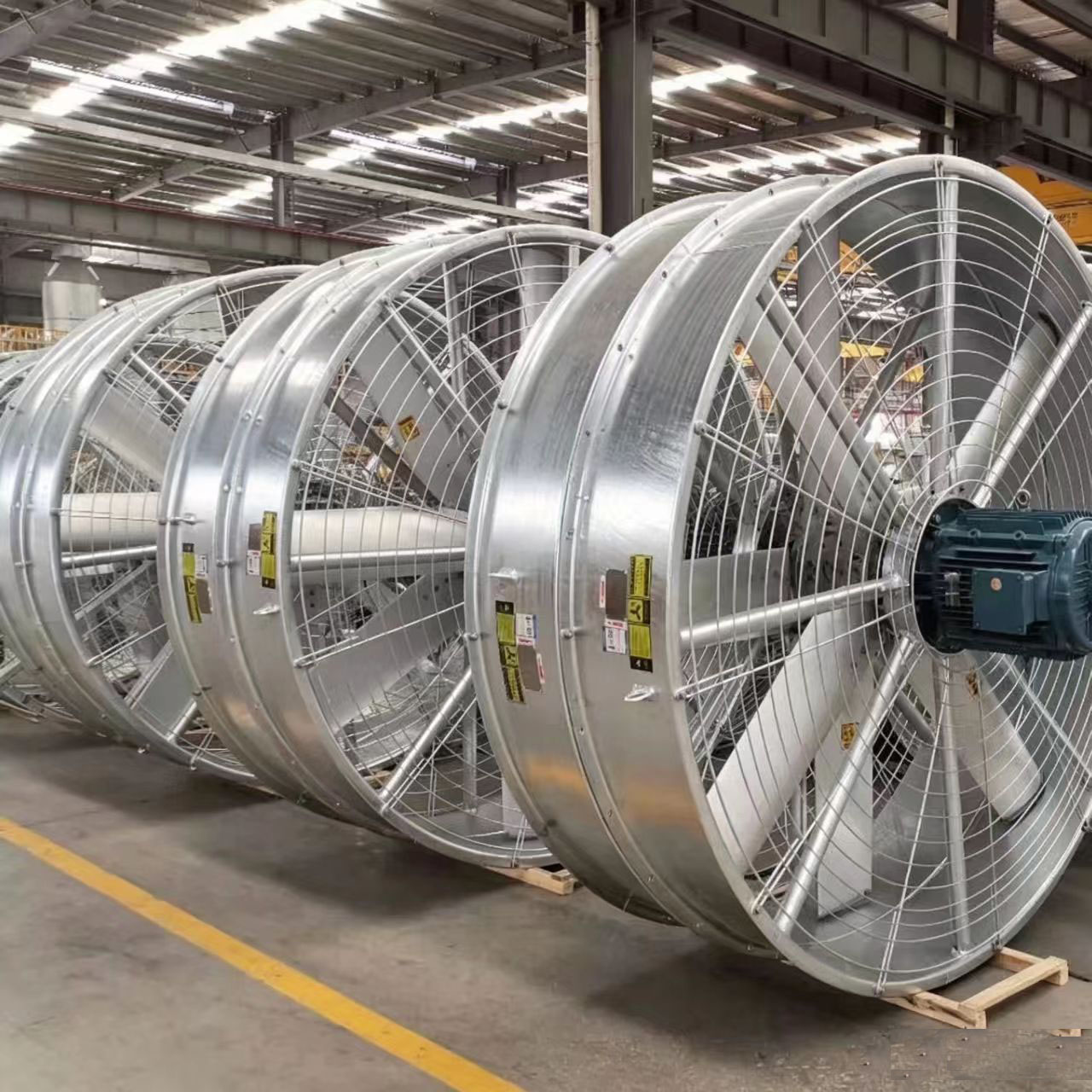
Quality checks should reflect the needs of the rotating assembly. Depending on the product, relevant checks may include dimensional inspection, visual examination, mounting-interface verification, material documentation, and balancing.
Buyers should also clarify handling, storage, and installation requirements before delivery. During installation, qualified personnel should follow the manufacturer's instructions and applicable site safety procedures.
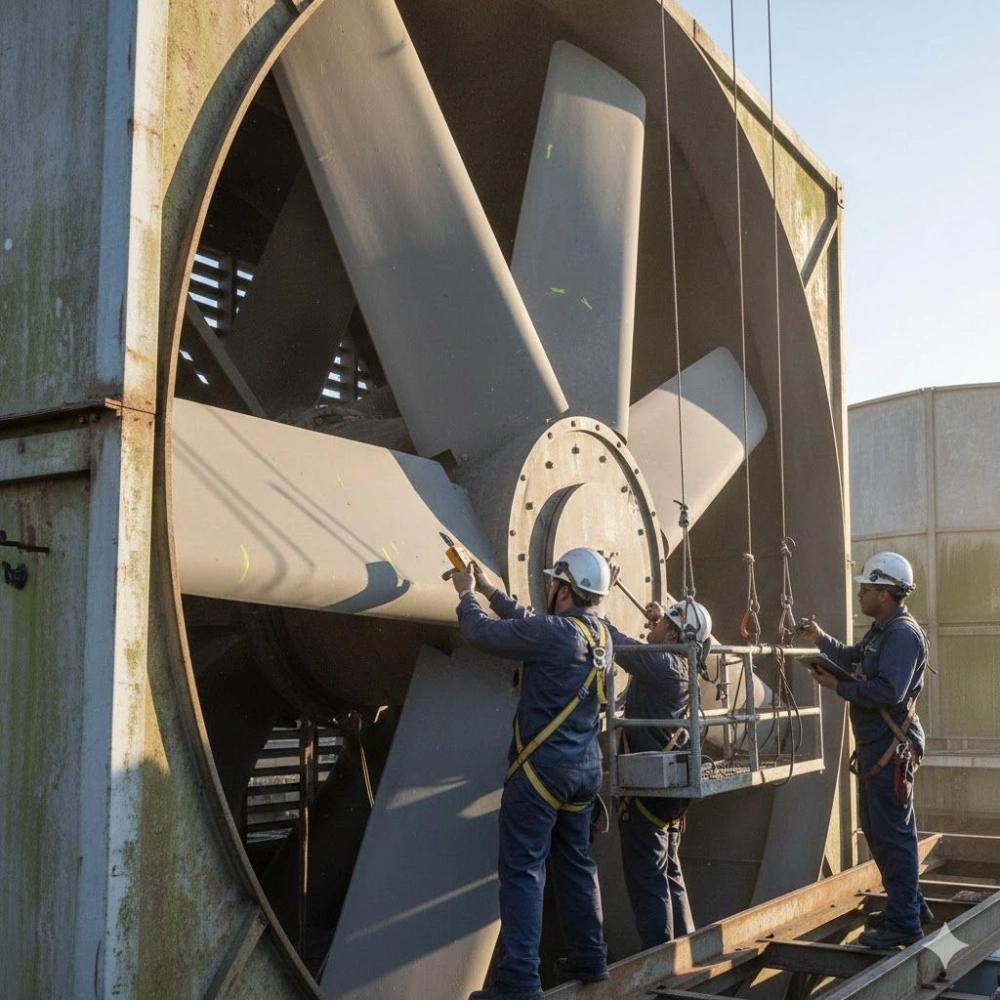
Before the fan returns to service, check the mounting hardware, blade pitch, clearances, guards, and balance. Abnormal vibration or noise should be investigated rather than ignored.
Cooling Tower Fan Blade Maintenance Best Practices
Regular maintenance helps identify early signs of damage and supports safe, reliable operation. The inspection frequency should follow the manufacturer's recommendations and reflect the severity of the operating environment.
Inspect the blades: Look for cracks, chips, deformation, corrosion, and damage near the blade root or mounting points.
Monitor vibration and noise: Changes may indicate imbalance, loose fasteners, bearing problems, or blade damage.
Keep the fan clean: Remove deposits using cleaning methods approved for the blade material.
Check the mounting hardware: Follow specified inspection intervals and torque requirements instead of estimating tightening values.
Monitor operating performance: Changes in airflow, motor current, or cooling performance may signal a developing problem.
Use approved repair procedures: FRP and aluminum require different repair methods. Do not improvise repairs on structural components.
Stop unsafe operation: If a blade is cracked, loose, or seriously damaged, follow site shutdown procedures and arrange a qualified inspection.
Never inspect or work on a rotating fan while it is running. Isolate the power supply, follow the site's lockout/tagout procedure, and verify that the fan has stopped before beginning maintenance.
Frequently Asked Questions
Are FRP cooling tower fan blades better than aluminum blades?
Neither material is always better. FRP can be attractive where low weight and corrosion resistance are important. Aluminum may suit applications that benefit from its mechanical properties and established fabrication methods. The right choice depends on the fan design, operating environment, and required performance.
Can FRP fan blades reduce cooling tower electricity consumption?
They can support an efficient fan design, but savings are not guaranteed by material alone. Blade geometry, pitch, diameter, rotational speed, motor efficiency, and system resistance all affect power consumption. Compare validated performance data under equivalent operating conditions.
Can aluminum cooling tower fan blades corrode?
Yes. Corrosion can occur depending on the alloy, chemical exposure, moisture, surface protection, and contact with dissimilar metals. Appropriate material selection, protective treatment, compatible hardware, and routine inspection can help manage the risk.
Can I replace aluminum blades with FRP blades using the existing hub?
Not necessarily. The blade-root design, hub connection, mounting dimensions, pitch, rotational speed, structural loads, and balancing requirements must be checked. Obtain confirmation from the supplier or a qualified engineer before making the change.
What information should I provide when buying replacement fan blades?
Provide the cooling tower model, fan diameter, number of blades, existing blade material, rotational speed, hub and mounting details, operating environment, and any available drawings or photographs. If the old blades have failed, explain the damage and operating conditions.
How can I extend the service life of cooling tower fan blades?
Choose blades suitable for the environment, install them correctly, maintain the specified pitch and balance, inspect the assembly regularly, and investigate vibration promptly. Follow the manufacturer's guidance for cleaning, inspection, and repair.
Conclusion: FRP and Aluminum Both Have a Role in the Market Upgrade
FRP and aluminum blades are important options for cooling tower fan upgrades. FRP offers the benefits of a lightweight composite construction and good corrosion resistance when correctly specified. Aluminum offers useful mechanical properties and established manufacturing methods.
Neither material should be selected on reputation alone. Fan geometry, operating speed, structural loading, corrosion exposure, system compatibility, maintenance requirements, and total ownership cost all influence the final result.
For industrial operators, the best strategy is to assess the existing equipment, define the required performance, and compare technically suitable options using reliable specifications. A successful upgrade should improve the suitability and reliability of the complete fan system—not simply change the blade material.
Power Tower Cooling Technology (Shaoxing) Co., Ltd. provides a starting point for exploring cooling tower components and replacement requirements through www.coolingtowerpart.com. If you are planning a fan replacement or material upgrade, prepare your equipment information and confirm compatibility before purchasing.
The right fan blade is more than a component. It is part of a carefully matched cooling system designed to deliver dependable performance over the long term.


