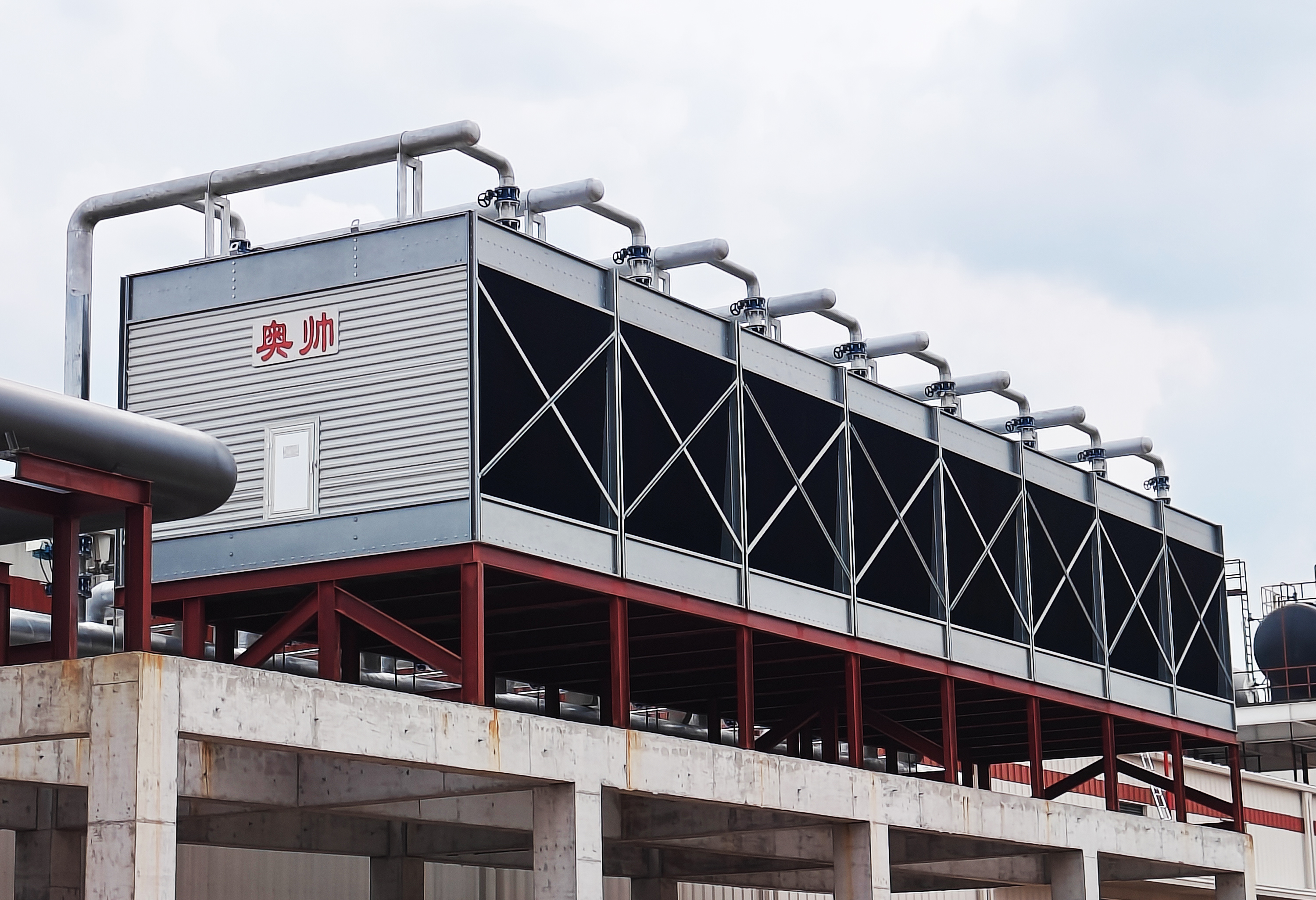
Choosing the right cooling tower fill material can make a significant difference in heat transfer efficiency, maintenance costs, and equipment service life. PVC, PP, and CPVC are three materials worth considering when selecting cooling tower fill or replacement packing. However, they do not perform identically. Each has different temperature capabilities, chemical resistance, manufacturing characteristics, and cost considerations.
So, which material is best for your cooling tower? Should you choose affordable PVC, consider PP for more demanding conditions, or evaluate CPVC for specialized applications?
The answer depends on your operating environment, water quality, cooling tower design, and long-term maintenance requirements. In this guide, we compare PVC, PP, and CPVC cooling tower fill materials to help you make a more informed purchasing decision.
Power Tower Cooling Technology (Shaoxing) Co., Ltd. provides cooling tower fill and replacement packing solutions. Visit www.coolingtowerpart.com to explore available products and discuss your application requirements.
What Is Cooling Tower Fill?
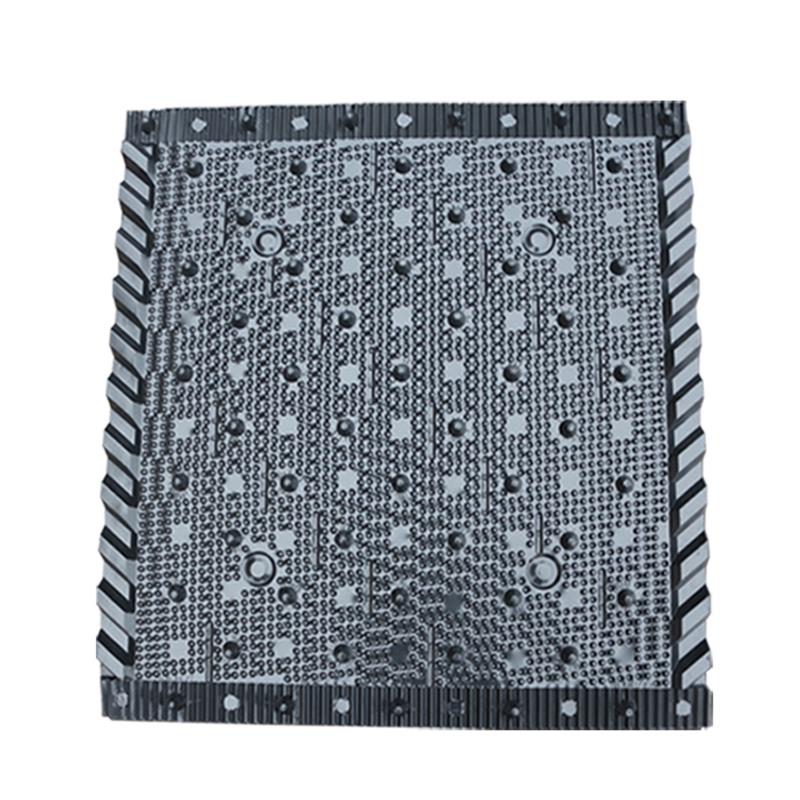
Cooling tower fill, also known as cooling tower packing or fill media, is installed inside a cooling tower to increase contact between circulating water and air. It helps distribute water across a larger effective surface, allowing heat to transfer from the water into the airflow.
Without suitable fill, water may fall through the tower too quickly, reducing the opportunity for effective heat exchange. Properly designed fill slows and spreads the water, helping the cooling tower achieve its intended thermal performance.
Cooling tower fill is generally divided into two main categories: film fill and splash fill.
Film fill uses structured sheets to spread water into thin layers. This design provides a large contact area and is widely used in many HVAC and industrial cooling applications. Splash fill breaks falling water into smaller droplets, making it a potential option for certain applications where water contains more suspended solids or where clogging is a concern.
PVC, PP, and CPVC describe the materials used to manufacture fill, rather than the fill geometry itself. When selecting a replacement, you need to consider both the polymer and the design of the packing.
How Does Fill Media Improve Heat Transfer?
Cooling towers remove heat through a combination of sensible heat transfer and evaporation. Warm water flows over or through the fill while air moves through the tower. A portion of the water evaporates, carrying heat away from the remaining water.
The fill helps maintain effective contact between air and water. However, simply increasing the surface area does not guarantee better performance. If the fill is too dense for the system, airflow resistance may increase. If scale, sediment, or biological growth blocks the passages, water and air distribution can deteriorate.
Effective cooling tower fill must balance several factors:
The material is only one part of the equation. The fill geometry, sheet thickness, bonding quality, and installation arrangement also influence performance.
Why Does Material Selection Matter?
The material affects how the fill responds to heat, chemicals, mechanical loading, and long-term aging.
A poorly matched material may soften, deform, crack, or become brittle under unsuitable operating conditions. Once the fill loses its designed shape, water distribution and airflow can change, potentially reducing cooling performance.
Material selection also influences maintenance and replacement costs. A lower-cost material may work perfectly well in a standard application, while a more demanding industrial process may require a different option.
The goal is not to select the most expensive material. It is to choose a fill material that meets your operating requirements reliably and economically.
PVC Cooling Tower Fill
PVC, or polyvinyl chloride, is one of the most widely used materials for cooling tower film fill. It can be formed into structured sheets with different corrugations and surface patterns, helping create the contact area needed for effective heat transfer.
PVC fill is common in commercial HVAC systems and many industrial cooling applications where water temperatures and chemical conditions remain within the product's specified limits.
For buyers seeking replacement packing, PVC is often an attractive starting point because of its broad availability, practical formability, and competitive cost.
However, not all PVC fill products are the same. Sheet thickness, polymer formulation, forming geometry, bonding quality, and assembly design can all influence durability and performance.
Key Properties of PVC Fill
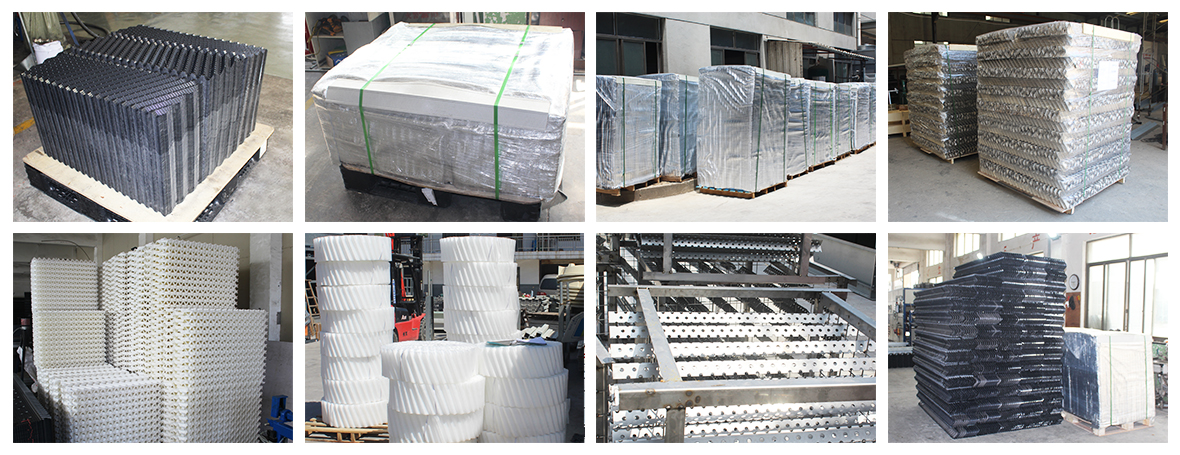
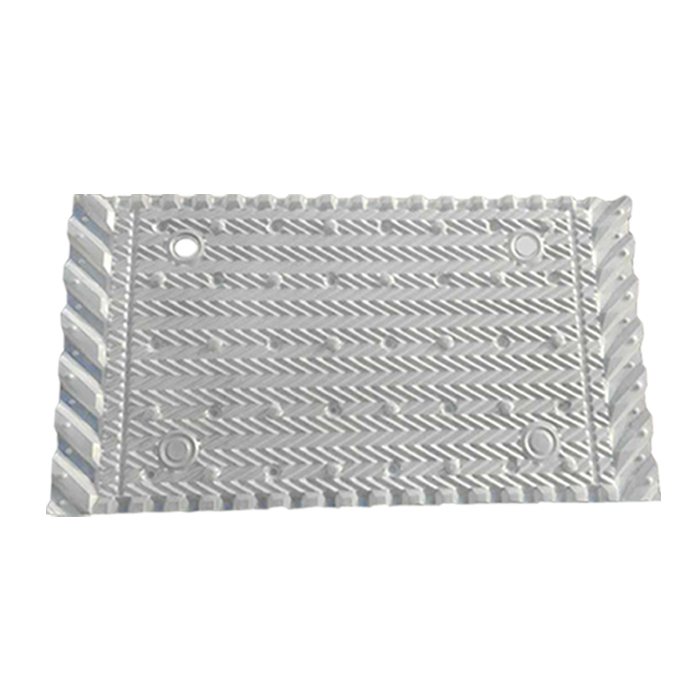
PVC fill is generally lightweight and can be manufactured into a range of film-fill configurations. These designs are used in compatible crossflow and counterflow cooling towers.
Its suitability depends on the product's formulation and operating environment. Elevated water temperatures can cause certain PVC products to soften or deform, especially when the fill is exposed to sustained heat and mechanical loads.
PVC also has limitations when exposed to certain chemicals or unsuitable water-treatment conditions. Buyers should therefore confirm the recommended operating temperature and chemical compatibility for the specific product rather than relying on general material descriptions.
Advantages of PVC Cooling Tower Fill
1. Cost-effective option
PVC is widely used in the cooling tower industry, making standard products and replacement options relatively accessible. For conventional operating conditions, it can provide a practical balance between initial cost and performance.
2. Good manufacturing flexibility
PVC can be formed into different sheet profiles and fill geometries. This flexibility helps manufacturers supply packing designed for specific tower configurations.
3. Broad application range
PVC fill is commonly used in many HVAC and industrial cooling systems where the operating conditions fall within the manufacturer's specifications.
4. Practical replacement availability
When an existing tower uses PVC fill, a compatible PVC replacement may simplify procurement and installation, provided the dimensions and design are properly verified.
For many standard applications, PVC is a sensible choice because it can meet the required cooling needs without unnecessary material costs.
Limitations of PVC Cooling Tower Fill
PVC should not be treated as a universal solution.
Its temperature capability is limited by the specific formulation and product construction. Prolonged exposure to temperatures above the recommended range may result in deformation and reduced structural stability.
Certain chemicals, oxidizing agents, and unsuitable treatment conditions can also affect the material. In addition, PVC fill can still become blocked by mineral scale, sediment, and biological growth.
If your cooling tower operates at elevated temperatures or handles chemically aggressive water, check whether standard PVC is suitable before ordering. Choosing a material based on price alone can lead to premature replacement and unnecessary downtime.
PP Cooling Tower Fill
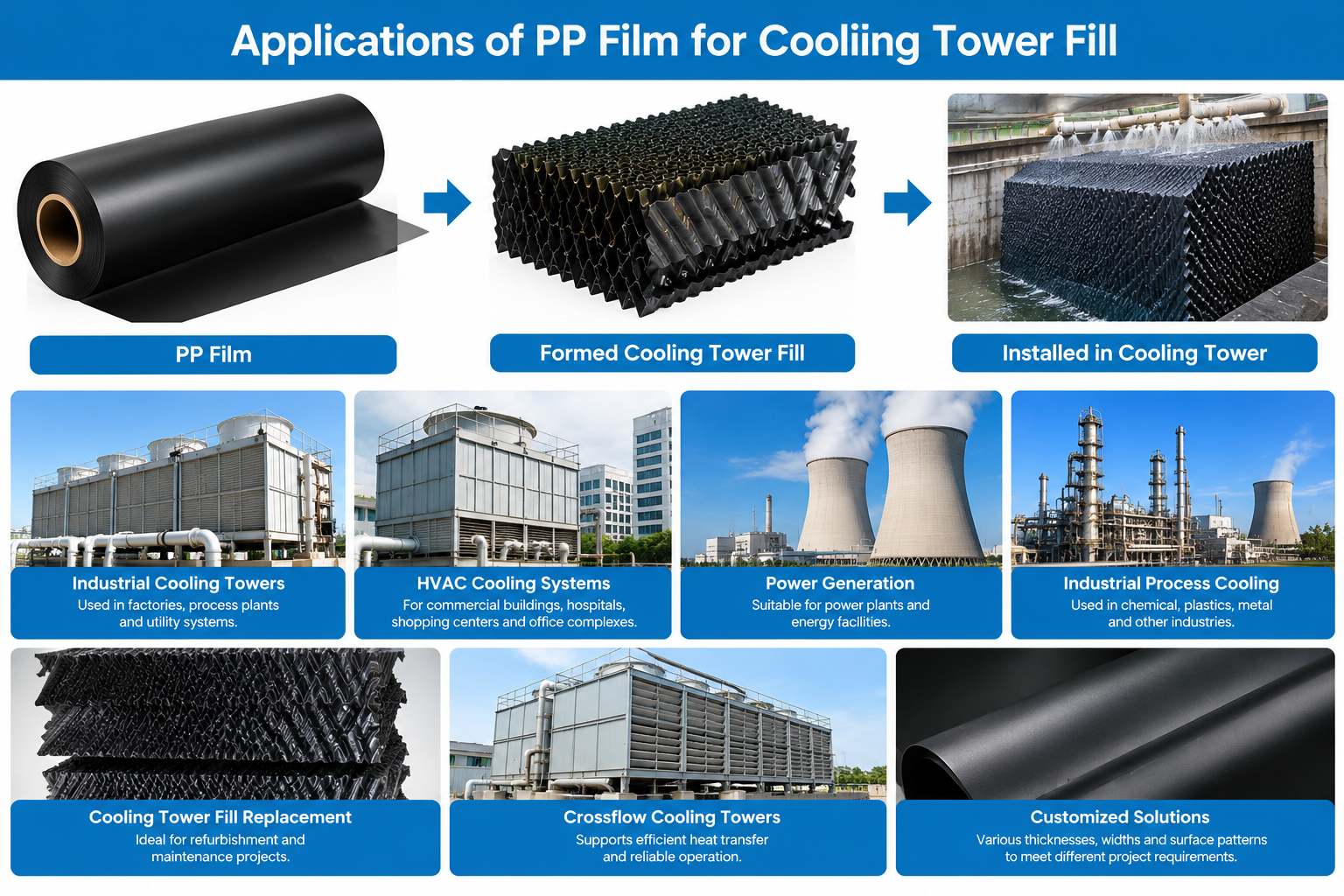
PP stands for polypropylene. It is another thermoplastic used in cooling tower fill and is often considered for applications requiring a different combination of temperature capability and chemical resistance.
Depending on the grade and construction, PP fill may be suitable for some conditions that are more demanding than those typically served by standard PVC fill.
PP can be manufactured into different packing designs, including film-fill and splash-fill configurations. The appropriate option depends on water quality, suspended solids, heat-transfer requirements, and the tower's original design.
It is important to remember that PP is not automatically better than PVC in every application. The complete fill product must be evaluated against the actual operating conditions.
Key Properties of PP Fill
Polypropylene generally offers low density, useful chemical resistance, and temperature capability that may exceed that of some conventional PVC fill products.
However, exact performance depends on the polymer grade, sheet thickness, fill geometry, support arrangement, and exposure conditions.
PP can also expand and contract as temperature changes. Proper dimensions, clearances, and structural support are therefore important when installing PP packing.
Chemical compatibility must be checked carefully. A material that resists one chemical may respond differently to another, particularly when concentration and temperature increase.
Advantages of PP Cooling Tower Fill
1. Potentially higher temperature capability
Certain PP fill products can operate at temperatures beyond the recommended range of some standard PVC products. The actual limit must be confirmed with the manufacturer.
2. Chemical resistance
PP performs well in many chemical environments, although suitability depends on the specific chemical, concentration, temperature, and exposure duration.
3. Lightweight construction
PP's relatively low density can make packing easier to handle during transportation, installation, and maintenance.
4. Flexible design options
PP can be manufactured in different fill configurations to meet various industrial requirements, subject to product availability and engineering suitability.
These characteristics make PP worth evaluating when temperature, chemistry, or other operating conditions place greater demands on the cooling tower packing.
Limitations of PP Cooling Tower Fill
PP may have a higher initial cost than some standard PVC options, depending on the product and project specifications.
Its dimensional changes under temperature variations also need consideration. If the fill is not properly supported or the assembly is poorly designed, thermal expansion and mechanical stress can affect its long-term stability.
Furthermore, PP does not automatically deliver better cooling efficiency. Performance still depends on the fill's surface area, water distribution, airflow resistance, and compatibility with the cooling tower.
Before switching from PVC to PP, compare complete product specifications and confirm that the replacement design fits the tower's operating requirements.
CPVC Cooling Tower Fill
CPVC stands for chlorinated polyvinyl chloride. It is a modified form of PVC that generally offers improved heat resistance in many applications.
Because of this characteristic, CPVC may be considered for specialized industrial environments where standard PVC does not provide a sufficient temperature margin.
However, CPVC is not as commonly used as standard PVC for conventional cooling tower fill. Buyers should not assume that every supplier can provide a purpose-designed CPVC fill pack in the required geometry.
A key distinction is that a polymer's general properties do not automatically establish the suitability of a finished cooling tower fill product. The actual sheet, assembly, and operating limits must all be verified.
Key Properties of CPVC Fill
CPVC's properties depend on its formulation and manufacturing process. Compared with many standard PVC products, it can offer improved heat resistance.
Nevertheless, cooling tower fill faces several operating challenges at once. It is exposed to circulating water, moving air, mechanical loads, water-treatment chemicals, and potentially uneven water distribution.
These factors can affect long-term performance, even when the base material has favorable thermal properties.
When evaluating CPVC fill, request product-specific information about continuous operating temperature, dimensional stability, chemical compatibility, mechanical support, and the intended service environment.
Advantages of CPVC Cooling Tower Fill
1. Potential for specialized temperature requirements
CPVC may be worth evaluating when the operating temperature exceeds the recommended range of a standard PVC fill product.
2. Chemical resistance in selected environments
CPVC can provide useful chemical resistance in certain applications, but compatibility must be confirmed for the actual water chemistry and exposure conditions.
3. An additional option for demanding projects
Where a suitable, engineered CPVC fill product is available, it provides another material to consider for specialized cooling requirements.
Its value is application-specific. Buyers should confirm that the proposed fill is designed for cooling tower service and that its performance advantages justify the added cost.
Limitations of CPVC Cooling Tower Fill
CPVC fill may be less readily available than conventional PVC or PP products, and the purchase price may be higher.
More importantly, a CPVC product designed for piping or another industrial application is not automatically suitable for thin cooling tower fill sheets. Forming, bonding, structural stability, airflow, and water distribution all need to be considered.
If a supplier recommends CPVC, ask for documented specifications covering the actual fill assembly—not simply general information about CPVC as a material.
If the supplier cannot demonstrate that the product is suitable for cooling tower fill service, the material choice remains uncertain.
PVC vs. PP vs. CPVC: Side-by-Side Comparison
The following table summarizes the general characteristics of the three materials. These are broad tendencies rather than guaranteed product ratings. Actual performance depends on formulation, manufacturing quality, fill geometry, assembly design, and operating conditions.
Comparison Factor | PVC | PP | CPVC |
Common use | Conventional HVAC and industrial cooling | Selected industrial applications with more demanding conditions | Specialized applications requiring additional heat resistance |
Temperature capability | Suitable within the product's specified range | Some grades and designs can accommodate higher temperatures than standard PVC products | Generally improved heat resistance compared with many standard PVC products |
Chemical resistance | Suitable for many normal cooling-water conditions; verify compatibility | Good resistance to many chemicals; verify individual compatibility | Can provide useful resistance in selected environments; verify compatibility |
Initial cost | Often economical | May be higher than standard PVC | May be higher and availability may be more limited |
Product availability | Widely used | Available in various configurations | Purpose-designed fill options may be less common |
Design flexibility | Broad range of film-fill configurations | Various film- and splash-fill options, depending on supplier | Must be confirmed for the specific fill design |
Main consideration | Operating temperature and chemical limitations | Grade, temperature rating, expansion, and support | Availability and verified performance of the finished fill assembly |
Temperature Resistance
Temperature is often the first factor to consider when narrowing down material options.
Standard PVC fill is widely used in conventional cooling towers, but its approved continuous operating range must be confirmed. Certain PP fill products can accommodate higher temperatures, depending on the polymer grade and construction. CPVC may offer improved heat resistance compared with many standard PVC products.
However, a material's general temperature resistance is not the same as the operating limit of a finished fill assembly.
Ask for the recommended continuous water temperature and any restrictions concerning short-term temperature peaks. Consider whether the tower operates continuously and whether the fill experiences mechanical loading at elevated temperatures.
If the operating temperature is close to the product's limit, consult the manufacturer or responsible engineer before finalizing the specification.
Chemical and Corrosion Resistance
Plastic fill does not rust like unprotected steel, but that does not mean it is immune to chemical damage.
Chemical exposure, oxidation, temperature, and mechanical stress can affect plastics over time. PP and CPVC may offer advantages in certain environments, but no material is universally resistant to every chemical.
Cooling tower water may contain treatment chemicals, dissolved minerals, suspended solids, and contaminants from the industrial process. Acids, alkalis, oxidizing agents, oils, and solvents can each interact differently with a given polymer.
Before ordering fill, provide the supplier with the chemical names, approximate concentrations, operating temperatures, and any known changes in water chemistry. If the system operates under unusual conditions, request a documented compatibility assessment.
Cost and Service Life
PVC often offers an attractive initial purchase price. PP and CPVC may involve higher upfront costs depending on product design, availability, and project requirements.
However, the purchase price alone does not tell you which material is the most economical over time.
Consider the expected service life, cleaning frequency, replacement labor, production downtime, and the cost of operating a cooling tower that cannot meet its required temperature.
A more expensive material may provide better value if it is better suited to the operating environment. On the other hand, choosing a premium material when a standard option is fully adequate may add unnecessary expense.
The best decision balances material suitability, thermal performance, maintenance requirements, and total ownership cost.
Which Cooling Tower Fill Material Is Best for Your Application?
There is no single winner for every cooling tower. The best choice depends on how your system operates and what you need the fill to withstand.
If your existing tower uses PVC and its operating conditions remain unchanged, a compatible PVC replacement may be the most straightforward solution.
If your process involves higher water temperatures or more demanding chemical exposure, PP or a specialized CPVC product may deserve further evaluation.
The important step is to compare the actual product specifications rather than relying on general material descriptions.
Standard Industrial Cooling
For many conventional HVAC and industrial systems operating within the manufacturer's specified limits, PVC is a practical starting point.
It is widely used and may be readily available in replacement configurations. It can be an economical choice when the water quality, temperature, and chemical conditions are suitable.
Even in standard applications, verify the tower's original fill design, dimensions, and support arrangement. A standard application does not mean every PVC fill pack is interchangeable.
High-Temperature Applications
If the operating water temperature exceeds the recommended range for a standard PVC product, do not assume that a thicker PVC sheet will solve the problem.
First, establish the normal operating temperature, maximum continuous temperature, and any short-term peaks. Then ask qualified suppliers to identify fill materials and configurations rated for those conditions.
PP may be appropriate for certain higher-temperature applications. CPVC may also be considered if a suitable fill assembly is available and its performance is documented.
The final decision should be based on the specific product's operating limits and an engineering review where necessary.
Challenging Water Chemistry
Some industrial cooling towers handle water with elevated suspended solids, scaling tendencies, or unusual chemical contaminants.
In these situations, material compatibility is only one part of the decision. A chemically compatible fill can still become blocked if mineral scale, sediment, or biological growth accumulates inside its passages.
Review chemical compatibility alongside fill geometry, passage size, cleaning access, and the water-treatment program.
If the system regularly experiences clogging, consider whether a different fill design—such as an appropriate splash-fill configuration—could reduce maintenance problems. Any change must still meet the tower's thermal and mechanical requirements.
Film Fill vs. Splash Fill: Does Material Change the Choice?
Yes, but material and fill design are separate decisions.
Film fill creates a large surface area by spreading water into thin layers. It is commonly used when water quality and treatment practices allow the passages to remain open.
Splash fill breaks falling water into droplets. Depending on its design, it may be more suitable for certain applications where suspended solids or fouling present a greater concern.
PVC and PP are used in various fill configurations. The availability and suitability of CPVC designs should be confirmed with the manufacturer.
Do not select a polymer without considering the fill geometry. A material that performs well chemically may still be unsuitable if the fill passages clog easily, airflow resistance is excessive, or the pack does not fit the tower's original arrangement.
How to Choose the Right Cooling Tower Fill
Choosing replacement packing becomes much easier when you follow a structured process. Instead of selecting a material based on price or a general performance claim, collect the tower's operating information and ask the supplier to recommend a compatible product.
This is particularly important when replacing original packing or changing from one material to another.
Check Operating Water Temperature
Record the normal entering-water temperature, expected leaving-water temperature, maximum continuous temperature, and any short-term temperature peaks.
Compare these figures with the proposed fill product's published operating range. Do not rely only on descriptions such as “heat-resistant plastic.”
Request the rating for the actual fill assembly and operating conditions. If the tower operates close to the product's limit, discuss a suitable safety margin with the supplier or responsible engineer.
Evaluate Water Quality and Fouling Risk
Review suspended solids, water hardness, scaling tendency, biological growth, oil contamination, and the existing water-treatment program.
These factors influence whether film fill or splash fill is more appropriate and how often cleaning may be required.
Material selection cannot compensate for poor water treatment. If fill passages frequently become blocked, investigate the root cause before installing replacement packing. Filtration, water treatment, distribution, or cleaning practices may also need improvement.
Confirm Dimensions and Tower Compatibility
Before ordering replacement fill, record the existing pack dimensions, sheet orientation, fill depth, support spacing, and available installation clearance.
Identify whether the tower uses crossflow or counterflow fill. Also check how the packing interacts with drift eliminators, spray systems, louvers, and structural supports.
If you plan to change materials, confirm that the replacement's geometry and mechanical properties are suitable for the installation. A pack that fits physically may still be unsuitable if it changes airflow resistance or water distribution.
Consider Maintenance and Total Cost
Compare more than the initial quotation price.
Ask about cleaning methods, inspection intervals, expected wear, replacement availability, and any restrictions on chemical cleaning. Estimate the costs of labor, downtime, and future replacement.
A material that suits the operating environment and is easy to maintain may offer better long-term value than a cheaper option that requires frequent attention.
Supplier support matters, too. Accurate sizing, clear technical documentation, and appropriate product recommendations can reduce installation errors and project delays.
Installation and Maintenance Recommendations
Even the right fill material can fail prematurely if the packing is poorly installed or the cooling tower is not maintained properly.
Before installation, inspect the support beams, spray nozzles, water distribution system, and surrounding tower structure. Remove old debris and confirm that the new packs sit securely without unintended gaps or excessive compression.
Follow the manufacturer's installation instructions. Avoid cleaning chemicals that are incompatible with the selected polymer, and do not use cleaning methods that could damage thin fill sheets or bonded joints.
During operation, monitor:
Cold-water temperature and overall cooling performance
Water distribution across the fill
Visible deformation, cracking, or brittle areas
Scale, sediment, and biological growth
Changes in airflow or pressure drop, where monitored
Establish an inspection schedule based on the water quality and severity of operation. Address recurring fouling or chemical issues early instead of waiting until the fill is badly damaged.
Why Work with Power Tower Cooling Technology (Shaoxing) Co., Ltd.?

Selecting replacement fill is easier when the supplier understands both the material and the cooling tower configuration.
Power Tower Cooling Technology (Shaoxing) Co., Ltd. provides cooling tower fill and replacement packing solutions for buyers handling maintenance, refurbishment, and cooling-system improvement projects.
When requesting a quotation, prepare as much of the following information as possible:
Cooling tower brand and model, if known
Existing fill material and type
Fill dimensions and pack arrangement
Normal and maximum operating water temperatures
Water-quality and chemical-treatment details
Photographs, drawings, or samples of the existing packing
Required quantity and delivery destination
These details help the supplier assess potential replacement options and identify which product specifications need to be confirmed.
Visit www.coolingtowerpart.com to explore cooling tower fill products and discuss your application requirements.
Material suitability should always be confirmed against the specific product specifications and operating conditions. This is especially important when considering a change from PVC to PP or CPVC.
Frequently Asked Questions
Is PP Always Better Than PVC for Cooling Tower Fill?
No. PP may be more suitable for certain higher-temperature or chemical-exposure conditions, but PVC can be more economical and entirely appropriate for standard operating conditions.
The best material is the one that meets the required temperature, chemical, mechanical, and thermal-performance specifications at a reasonable total cost.
Can CPVC Replace PVC Fill Directly?
Not automatically. Although CPVC generally offers improved heat resistance compared with many standard PVC products, a CPVC fill assembly must also match the tower's dimensions, geometry, support conditions, and airflow requirements.
Confirm that the proposed product is specifically designed and rated for cooling tower fill service before making the change.
How Often Should Cooling Tower Fill Be Replaced?
There is no universal replacement interval.
Service life depends on operating temperature, water quality, chemical exposure, cleaning practices, mechanical support, and the material and design of the fill.
Inspect the packing regularly. Consider replacement when it is extensively cracked, deformed, blocked, or no longer supports effective water distribution.
Can Replacement Cooling Tower Fill Be Customized?
Replacement fill may be available in different dimensions and configurations, depending on the material and product design.
To assess customization, provide the existing fill measurements, tower type, operating conditions, and relevant drawings or photographs. Confirm product compatibility before manufacturing or placing an order.
Does Changing the Fill Material Improve Cooling Tower Efficiency?
Not necessarily. Changing materials alone does not guarantee better cooling performance.
Efficiency depends on fill geometry, water distribution, airflow, operating temperature, water quality, and the overall tower design. A new material may help address a specific limitation, but the complete fill assembly must be suitable for the system.
If your cooling tower is underperforming, investigate the cause before deciding whether a material change is necessary.
Conclusion
PVC, PP, and CPVC each have a place in cooling tower fill selection, but they serve different needs.
PVC is often a cost-effective option for conventional cooling conditions. PP may be worth considering when temperature or chemical requirements call for a different material profile. CPVC can be evaluated for specialized service, provided a purpose-designed cooling tower fill product is available and its performance is documented.
Before making a decision, compare temperature limits, chemical compatibility, fouling risk, fill geometry, total cost, and replacement requirements. Do not choose solely by material name or purchase price.
For cooling tower fill and replacement packing options, contact Power Tower Cooling Technology (Shaoxing) Co., Ltd. through www.coolingtowerpart.com.


