Cooling Tower Filler Manufacturer: Products, Materials and Services
Choosing the right cooling tower filler manufacturer is an important step when building, upgrading, or maintaining a cooling tower system. Cooling tower fill plays a key role in increasing water-to-air contact, improving heat transfer, and supporting efficient evaporative cooling.
A professional manufacturer can provide more than standard cooling tower fill. Depending on the project, customers may need PVC or PP materials, film fill or splash fill designs, custom dimensions, replacement solutions, technical support, and reliable international delivery.
This guide explains the main products, materials, manufacturing capabilities, and services that customers should consider when selecting a cooling tower filler manufacturer.
What Does a Cooling Tower Filler Manufacturer Do?
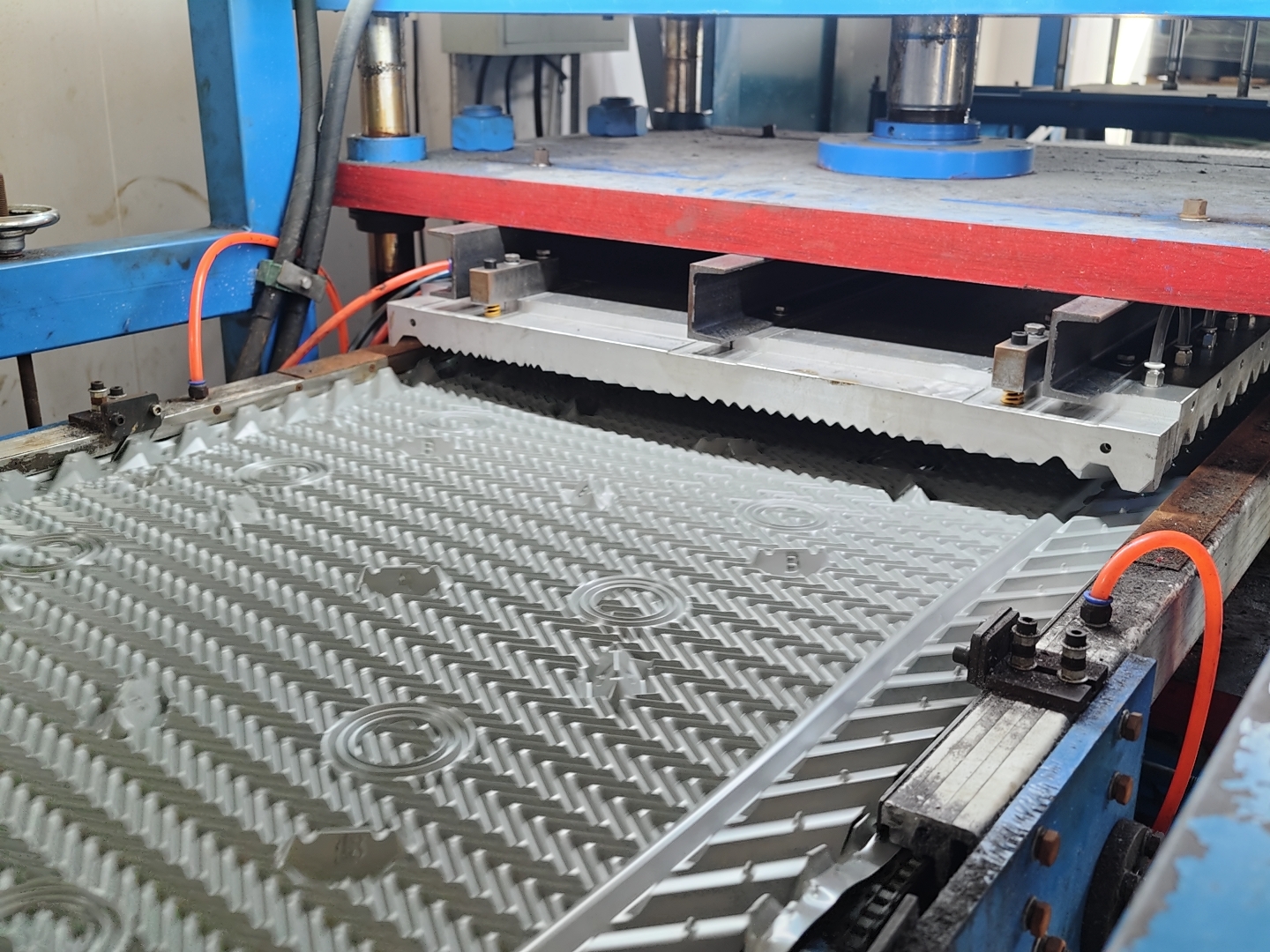
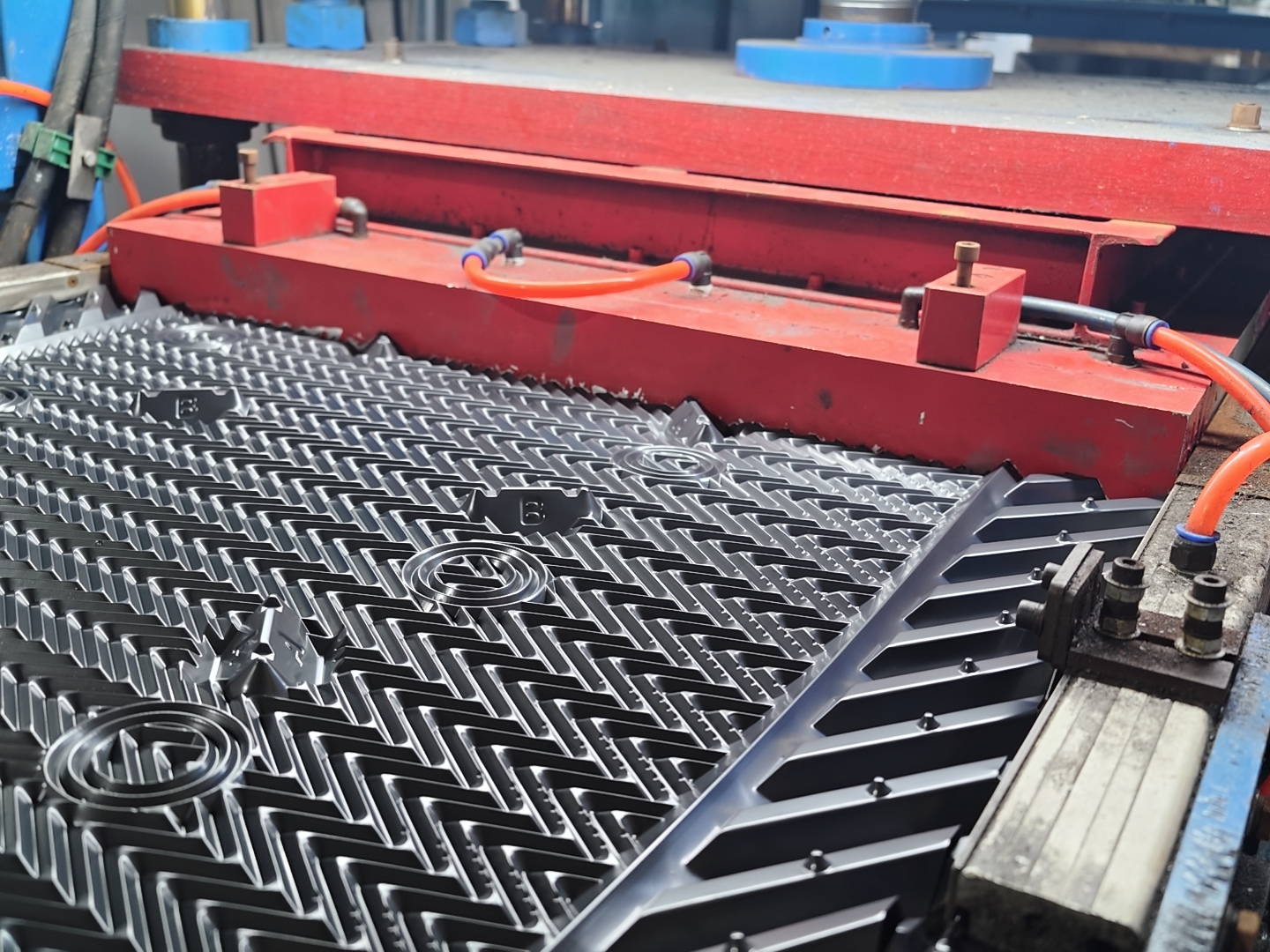
A cooling tower filler manufacturer designs, produces, and supplies fill media used inside different types of cooling towers. The manufacturer's role can include material selection, fill design, thermoforming, assembly, quality inspection, customization, packaging, and after-sales support.
Why Is Cooling Tower Fill Important?
Cooling tower fill creates a larger effective contact area between hot water and moving air. As water spreads across the fill surface, heat and moisture transfer become more effective.
Main Functions of Cooling Tower Fill
Increase water-to-air contact area
Improve heat transfer efficiency
Promote water distribution
Increase evaporation efficiency
Support the required cooling range
Help maintain stable outlet water temperatures
The performance of the fill can therefore have a significant impact on the overall cooling tower system.
What Products Can a Cooling Tower Filler Manufacturer Provide?
A professional manufacturer may offer different types of fill products based on tower design, water quality, operating temperature, and application requirements.
Film Cooling Tower Fill
Film fill consists of formed sheets that distribute water into thin films over a large surface area.
It is widely used in applications where relatively clean circulating water is available and efficient heat transfer is required.
Advantages of Film Fill
High effective surface area
Good heat transfer performance
Lightweight construction
Compact configuration
Suitable for many HVAC and industrial systems
Splash Cooling Tower Fill
Splash fill works by breaking falling water into smaller droplets as it passes through a series of bars or grids.
This configuration can be useful in applications where suspended solids, dirt, or biological contaminants create a higher risk of clogging.
Where Is Splash Fill Used?
Splash fill is commonly considered for:
Industrial cooling systems
Poorer-quality circulating water
Applications with suspended solids
Systems requiring easier passage for debris
Certain older cooling tower designs
What Materials Are Used for Cooling Tower Fill?
The material is one of the most important considerations when selecting cooling tower fill. A manufacturer may offer different materials according to temperature, water chemistry, mechanical requirements, and service conditions.
PVC Cooling Tower Fill
PVC cooling tower fill is widely used in HVAC and industrial cooling applications.
PVC offers a useful combination of lightweight construction, corrosion resistance, formability, and cost efficiency.
Why Is PVC Popular?
PVC can provide:
Good chemical resistance in many applications
Lightweight handling
Good dimensional stability
Efficient sheet forming
Competitive manufacturing cost
PVC film fill is particularly common in standard evaporative cooling systems.
PP Cooling Tower Fill
Polypropylene, commonly known as PP, is another important material used for cooling tower fill.
PP can be considered for applications requiring higher temperature resistance than standard PVC products can provide.
When Should PP Fill Be Considered?
PP cooling tower fill may be appropriate when the operating environment involves:
Higher water temperatures
More demanding industrial processes
Specific chemical conditions
Applications requiring different material properties
The final material selection should be based on actual operating conditions rather than on price alone.
Other Cooling Tower Fill Materials
Depending on the project, manufacturers may also work with other specialized materials or configurations.
The material should be evaluated according to temperature resistance, chemical compatibility, mechanical strength, and expected service life.
How Does a Cooling Tower Filler Manufacturer Design Fill Media?
The design of cooling tower fill media affects heat transfer, airflow resistance, water distribution, and fouling performance.
Why Does Fill Geometry Matter?
The surface pattern, flute height, sheet spacing, and configuration all influence how water and air move through the fill.
A well-designed fill should provide effective contact between water and air without creating unnecessary airflow resistance.
Important Design Parameters
A manufacturer may consider:
Fill surface area
Flute configuration
Sheet spacing
Fill thickness
Block dimensions
Water loading
Airflow resistance
Pressure drop
Fouling characteristics
These parameters need to work together rather than being optimized individually.
Can Cooling Tower Fill Be Customized?
Yes. Custom cooling tower fill is often required when replacement media must match an existing tower or when an industrial project has special performance requirements.
What Can Be Customized?
Depending on the manufacturer's capabilities, customers may request customization of:
Sheet size
Block dimensions
Fill height
Thickness
Flute configuration
Material
Assembly method
Support requirements
Packaging
Why Is Custom Fill Useful?
Standard fill may not always match the dimensions or design of an existing cooling tower.
Custom fill can help ensure compatibility with the tower's internal structure and water distribution system.
How Does a Manufacturer Support Different Cooling Tower Designs?
Different cooling tower configurations require different fill arrangements.
Counterflow Cooling Tower Fill
In a counterflow tower, water flows downward while air moves upward through the fill.
Counterflow fill designs are widely used for industrial and HVAC cooling applications.
Key Counterflow Fill Considerations
The manufacturer may evaluate:
Water loading
Air velocity
Pressure drop
Fill height
Operating temperature
Water quality
Crossflow Cooling Tower Fill
In a crossflow tower, air travels horizontally through the fill while water flows downward.
Crossflow fill should be designed to work effectively with the tower's distribution system and airflow configuration.
Why Does Tower Type Matter?
Using the wrong fill design can affect water distribution, airflow, and heat transfer efficiency. A manufacturer should therefore confirm the tower configuration before recommending a replacement product.
What Quality Control Should a Cooling Tower Filler Manufacturer Have?
Quality control is essential for ensuring that cooling tower fill meets dimensional and performance requirements.
Raw Material Inspection
The quality of the raw material can influence the durability and long-term performance of the finished product.
Manufacturers should control key material properties such as thickness, consistency, and suitability for the intended application.
Dimensional Inspection
Fill sheets and blocks should maintain consistent dimensions.
What Dimensions Should Be Checked?
Typical inspection items can include:
Sheet thickness
Length
Width
Block height
Assembly dimensions
Flute geometry
Consistent dimensions are especially important for replacement projects where the new fill must fit an existing cooling tower.
Visual and Structural Inspection
Finished fill should also be checked for:
Cracks
Warping
Deformation
Poor bonding
Broken sheets
Manufacturing defects
Consistent manufacturing helps reduce installation problems and premature failures.
What Services Can a Cooling Tower Filler Manufacturer Provide?
The right manufacturer can provide both products and technical services.
Fill Selection Support
Customers may not always know which fill configuration is appropriate for their system.
A manufacturer can assess available information such as:
Replacement Fill Recommendations
For replacement projects, the manufacturer may use existing fill samples, drawings, dimensions, photographs, or equipment information to help identify a suitable solution.
Technical Consultation
Technical support may cover:
OEM and Custom Manufacturing
For cooling tower companies and engineering contractors, OEM manufacturing can provide products designed around specific project requirements.
Custom manufacturing may include private labeling, customized dimensions, or special packaging arrangements where applicable.
Why Is Water Quality Important When Choosing Cooling Tower Fill?
Water quality has a direct influence on fill service life and operating performance.
How Does Fouling Affect Fill?
Scale, dirt, algae, and suspended solids can accumulate on the fill surface.
This can reduce the effective contact area between air and water and restrict airflow.
Common Problems Caused by Fouling
For this reason, the fill type should be selected according to actual water conditions.
How Can a Manufacturer Help With Cooling Tower Fill Replacement?
A cooling tower filler manufacturer can support replacement projects by helping identify compatible fill media.
What Information Is Needed for Replacement?
Useful information may include:
Why Are Accurate Measurements Important?
Even a small dimensional difference can make installation more difficult.
Accurate measurements help ensure that replacement fill fits correctly within the existing supports and does not interfere with the water distribution or airflow system.
How Does Cooling Tower Fill Affect Energy Efficiency?
The fill itself does not consume electrical energy, but it influences the performance requirements of fans and other tower components.
Can Efficient Fill Reduce Airflow Resistance?
A properly designed fill can provide effective heat transfer while maintaining reasonable pressure drop.
If airflow resistance is too high, the cooling tower fan may require more energy to move the required volume of air.
Balancing Heat Transfer and Pressure Drop
The goal is not simply to maximize fill density or surface area.
An effective design should balance:
Heat Transfer + Airflow + Water Distribution + Fouling Resistance
This system-level approach is important when selecting cooling tower fill media for industrial applications.
What Should You Consider When Choosing a Cooling Tower Filler Manufacturer?
Selecting a manufacturer requires consideration of both product capability and service capability.
Product Range
Look for a manufacturer that can supply different products and materials, such as:
PVC fill
PP fill
Film fill
Splash fill
Counterflow fill
Crossflow fill
Replacement fill
Custom fill
Manufacturing Capability
A suitable manufacturer should have appropriate production capabilities for forming, cutting, bonding, assembly, and dimensional control.
Why Does Production Capacity Matter?
Large cooling tower projects may require significant quantities of fill within a specific delivery schedule.
Stable production capacity can be important for both new tower projects and large replacement orders.
Customization Capability
Customization is particularly important when the cooling tower has non-standard dimensions or when a customer needs a specific material or configuration.
Quality Assurance
Ask about raw material control, production inspection, dimensional consistency, packaging, and quality documentation.
What Applications Use Cooling Tower Fill?
Cooling tower fill is used across a wide range of industries.
HVAC Cooling Towers
Commercial and industrial HVAC systems use cooling towers to reject heat from chilled-water or condenser-water systems.
Efficient film fill can help support stable tower performance where water quality is properly controlled.
Industrial Cooling Systems
Industrial processes often require continuous heat rejection.
Typical Industrial Applications
Cooling tower fill can be used in:
Power generation
Chemical processing
Manufacturing
Steel production
Plastics processing
Food processing
Data center cooling
Process cooling
Different industries may require different fill materials and configurations.
How Long Does Cooling Tower Fill Last?
The service life of cooling tower fill varies considerably.
What Affects Fill Service Life?
Important factors include:
Water chemistry
Operating temperature
UV exposure
Biological growth
Scale accumulation
Cleaning methods
Mechanical stress
Material selection
Why Does Maintenance Matter?
Proper water treatment and regular inspection can help reduce fouling and physical deterioration.
When fill becomes heavily damaged or blocked, replacement may be more practical than continued cleaning.
Can a Cooling Tower Filler Manufacturer Provide Global Supply?
Many manufacturers work with international customers, including cooling tower contractors, distributors, engineering companies, and industrial end users.
What Should Export Customers Check?
International buyers should consider:
Why Is Packaging Important?
Cooling tower fill consists of lightweight sheets or assembled blocks that can occupy significant shipping volume.
Efficient packaging and container planning can help reduce transportation costs and minimize the risk of damage during shipping.
Frequently Asked Questions About Cooling Tower Filler Manufacturers
What Is the Difference Between a Fill Manufacturer and a Supplier?
A manufacturer produces cooling tower fill, while a supplier may purchase products from one or more manufacturers and resell them.
Working directly with a manufacturer can provide greater access to production details and customization options.
Is PVC Cooling Tower Fill Suitable for Industrial Applications?
PVC cooling tower fill is widely used in many HVAC and industrial applications. Suitability depends on operating temperature, water quality, chemical exposure, and the specific fill design.
Can Cooling Tower Fill Media Be Made to Custom Dimensions?
Yes. Many manufacturers can produce custom dimensions according to tower drawings, samples, or existing fill specifications.
How Do I Select the Right Cooling Tower Fill?
Start by reviewing the cooling tower type, water temperature, water quality, flow rate, airflow, existing dimensions, and required cooling performance.
When Should Cooling Tower Fill Be Replaced?
Replacement is generally considered when the fill is severely blocked, deformed, cracked, chemically deteriorated, or no longer provides the required cooling performance.
Conclusion
A reliable cooling tower filler manufacturer can provide much more than standard fill sheets. The right partner can support product selection, material recommendations, custom manufacturing, quality control, replacement projects, packaging, and technical service.
When evaluating cooling tower fill media, customers should consider the tower type, operating temperature, water quality, airflow requirements, dimensions, and expected service conditions.
PVC and PP are two widely used materials, while film and splash fill designs serve different operating environments. With the right combination of material, geometry, manufacturing quality, and maintenance, cooling tower fill can support efficient heat transfer and dependable cooling performance.
For HVAC, industrial, and process cooling applications, choosing a manufacturer with suitable products, customization capabilities, quality control, and technical support can help ensure that the selected cooling tower fill matches the needs of the entire cooling system.