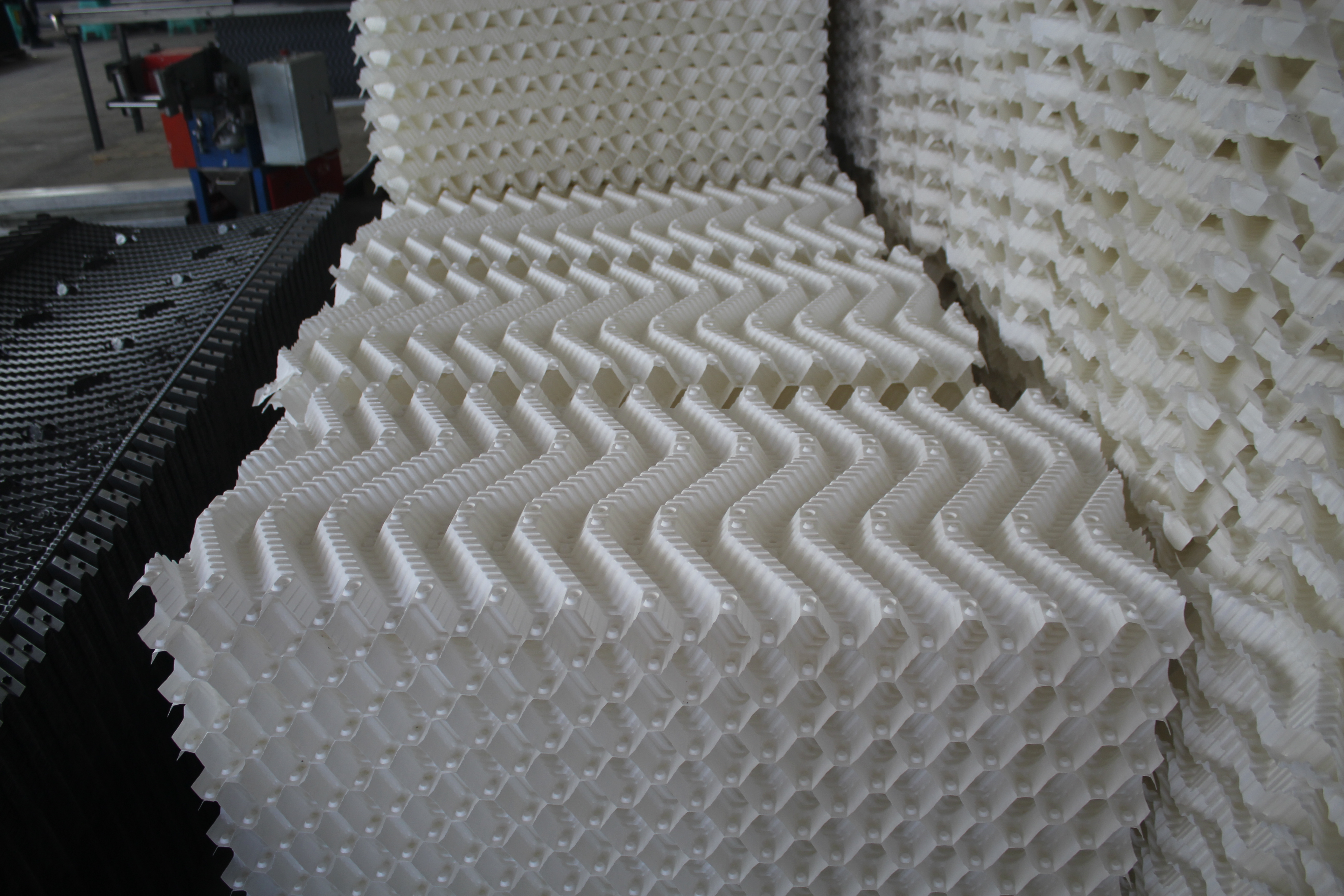
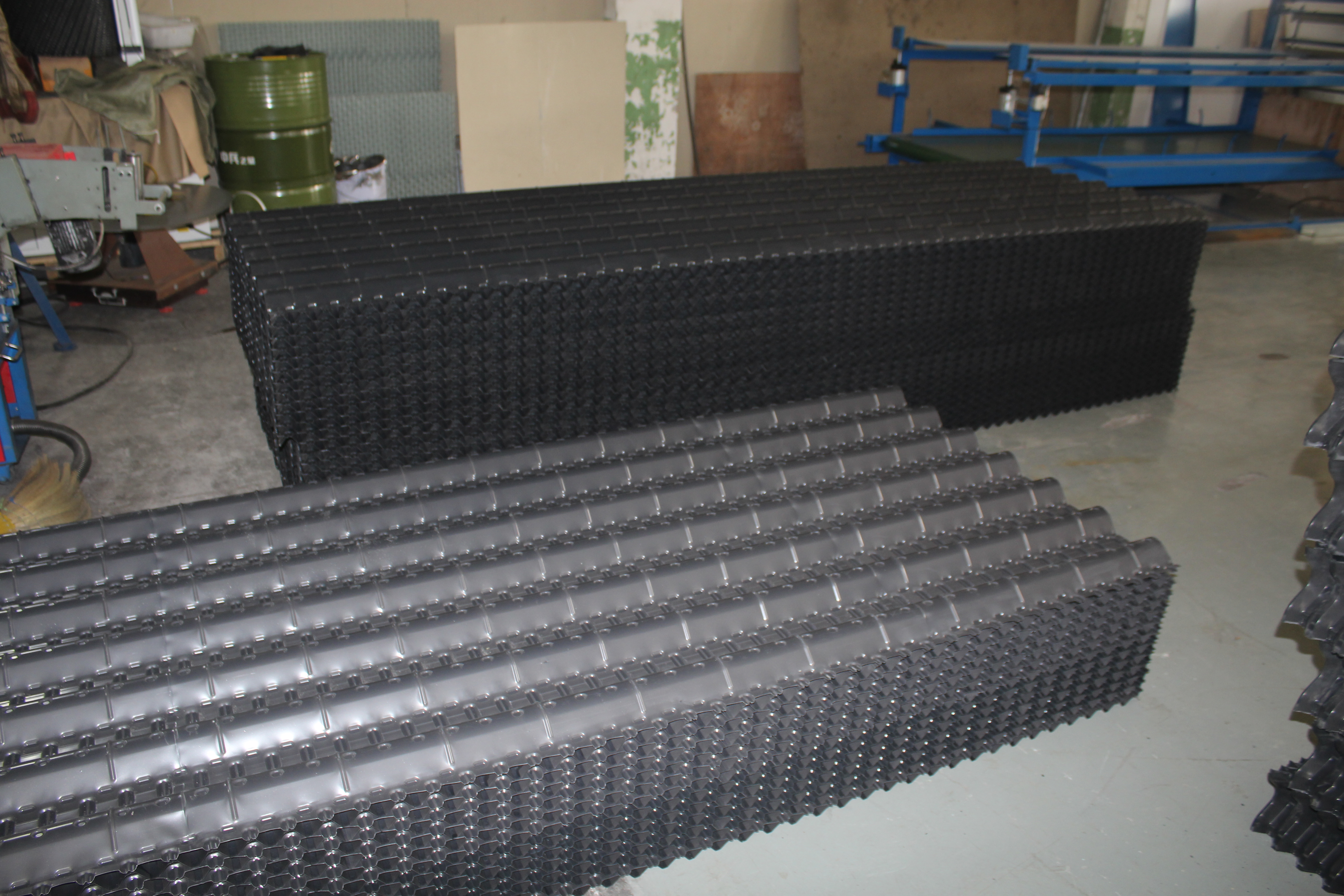
Introduction to Cooling Tower Fill Replacement Suppliers for PVC and PP Fills
Cooling tower fill replacement is an important part of maintaining efficient heat transfer, stable cooling performance, and reliable industrial operation. Over time, cooling tower fill media can become clogged with mineral deposits, damaged by high temperatures, affected by chemical exposure, or deformed by long-term operating conditions. When cleaning is no longer sufficient, replacing the fill can help restore the cooling tower's intended performance.
Choosing a reliable cooling tower fill replacement supplier is essential for industrial facilities, HVAC contractors, cooling tower maintenance companies, and equipment distributors. A qualified supplier should offer suitable PVC and PP cooling tower fills, accurate dimensional matching, consistent manufacturing quality, and dependable delivery.
PVC and PP are two widely used materials for cooling tower fill media. PVC fills are commonly selected for many standard cooling tower applications because of their cost-effectiveness and established manufacturing options. PP fills may be preferred in applications requiring different temperature capabilities or chemical resistance characteristics, depending on the material grade and operating conditions.
This article explains how to choose a cooling tower fill replacement supplier for PVC and PP fills, compare materials, identify replacement requirements, and select suitable products for crossflow and counterflow cooling towers.
What Is a Cooling Tower Fill Replacement Supplier?
A cooling tower fill replacement supplier provides replacement fill media for existing cooling towers. Depending on its capabilities, the supplier may manufacture new fill packs, supply standard products, customize dimensions, or support maintenance contractors with replacement materials.
What Products Should a Fill Replacement Supplier Offer?
A professional supplier should be able to provide fill solutions for different cooling tower configurations and operating requirements.
PVC Cooling Tower Fill Media
PVC cooling tower fills are commonly manufactured as corrugated sheets assembled into modular packs. These structures increase the contact area between water and air, supporting heat transfer and evaporative cooling.
Typical applications include industrial process cooling, commercial HVAC systems, manufacturing facilities, and other cooling systems operating within the product's specified temperature and chemical limits.
PP Cooling Tower Fill Media
PP cooling tower fills are manufactured from polypropylene. Depending on the grade and design, PP may offer useful resistance to certain chemicals and may be suitable for operating conditions where standard PVC products are not the preferred choice.
Before selecting PP fill, buyers should confirm the manufacturer's temperature limits, chemical compatibility data, structural characteristics, and thermal performance information.
Customized Cooling Tower Fill Replacement
Some replacement projects require specific dimensions, sheet profiles, channel orientations, or pack configurations. A supplier with customization capabilities can assess drawings, existing samples, or installation photographs to help identify a compatible replacement.
Customized products should be designed to meet the cooling tower's actual operating requirements rather than simply matching external dimensions.
Why Does Supplier Selection Matter?
The wrong fill media can lead to installation difficulties, poor water distribution, excessive airflow resistance, or unsatisfactory cooling performance.
A reliable cooling tower fill replacement supplier helps buyers reduce these risks by confirming product specifications, material suitability, packaging requirements, and delivery schedules before production.
PVC vs. PP Cooling Tower Fills: Which Material Should You Choose?
PVC and PP cooling tower fills can both support effective heat transfer, but their suitability depends on operating temperature, water chemistry, fill geometry, and the cooling tower's design.
PVC Cooling Tower Fills: Features and Advantages
PVC is widely used in cooling tower fill manufacturing because it can be formed into consistent corrugated sheets and configured into different fill pack designs.
Key Benefits of PVC Fill Media
Cost-effective for many standard cooling tower applications
Suitable for film-fill designs with high effective contact area
Available in different sheet profiles and pack dimensions
Lightweight compared with many traditional construction materials
Resistant to corrosion in many typical cooling tower environments
Convenient to handle and install when supplied in suitable modular packs
PVC fill is often a practical option for replacement projects where the operating conditions fall within the manufacturer's specified limits.
Common Applications of PVC Cooling Tower Fills
PVC fills are commonly used in commercial HVAC cooling towers, industrial process cooling systems, manufacturing facilities, and water-cooled refrigeration installations.
However, standard PVC products may not be appropriate for every high-temperature or chemically aggressive environment. Actual compatibility should always be verified.
PP Cooling Tower Fills: Features and Advantages
Polypropylene is another important material for cooling tower fill manufacturing. Its properties can make it suitable for applications with different temperature or chemical requirements.
Key Benefits of PP Fill Media
Useful chemical resistance for many compatible operating environments
Potential suitability for higher-temperature applications than standard PVC, depending on grade and design
Availability in different fill geometries and configurations
Lightweight construction
Options for customized replacement projects
PP is not automatically superior to PVC in every application. The correct choice depends on the material grade, fill design, operating temperature, water chemistry, and required cooling performance.
When Should Buyers Consider PP Fill?
PP fill may be worth evaluating when operating conditions approach the limits of standard PVC fill or when chemical compatibility is a significant concern.
Buyers should provide the supplier with the actual inlet water temperature, cleaning chemicals, treatment chemicals, and other relevant operating details before making a final decision.
How Can Buyers Compare PVC and PP Fills?
| Comparison factor | PVC cooling tower fill | PP cooling tower fill |
| Typical application | Many standard cooling tower systems | Applications requiring specific material properties |
| Initial cost | Often economical | Depends on grade and design |
| Temperature suitability | Must remain within specified PVC limits | May support higher temperatures with suitable grades |
| Chemical compatibility | Depends on chemical and concentration | Depends on chemical and concentration |
| Fill design options | Film-fill and customized configurations | Film-fill and other available configurations |
| Final selection | Based on actual operating requirements | Based on actual operating requirements |
The table provides general guidance rather than a universal material ranking. Request product-specific technical data before purchasing replacement fill media.
What Types of Cooling Tower Fill Can Suppliers Provide?
A cooling tower fill replacement supplier may offer different designs to suit the tower's airflow arrangement, water quality, and cooling requirements.
Film-Type Cooling Tower Fills
Film fills use corrugated sheets to spread water into thin films across a large effective surface area. Air passes through the channels between the sheets, allowing heat and mass transfer to take place.
Advantages of Film Fill
Film fill can provide effective thermal performance within a compact space when the water quality and operating conditions are suitable.
However, narrow passages can be vulnerable to fouling when the circulating water contains significant suspended solids, scale, or biological material.
Splash-Type Cooling Tower Fills
Splash fill distributes water through repeated impacts on bars, grids, or other structural elements, breaking the water into smaller droplets.
When Is Splash Fill Appropriate?
Splash fill may be considered for systems where suspended solids or fouling risks make conventional narrow-channel film fill less suitable.
The best choice depends on the cooling tower design, water quality, maintenance strategy, and thermal requirements.
Crossflow Cooling Tower Fills
In crossflow cooling towers, water typically flows downward while air moves horizontally through the fill section.
Replacement Considerations for Crossflow Fill
The replacement fill must fit the existing tower layout and work with its water distribution system. Sheet orientation, pack dimensions, airflow resistance, and support arrangements should be confirmed before ordering.
Counterflow Cooling Tower Fills
In counterflow cooling towers, air generally moves upward while water flows downward through the fill.
Replacement Considerations for Counterflow Fill
Counterflow fill packs must accommodate the tower's vertical airflow path and water distribution arrangement. A supplier should verify the original fill geometry, installation space, and support configuration before recommending a replacement.
Crossflow and counterflow fill packs should not be assumed interchangeable, even if their external dimensions appear similar.
When Should Cooling Tower Fill Be Replaced?
Cooling tower fill does not have one universal service life. Replacement timing depends on operating conditions, material quality, water treatment, maintenance practices, and mechanical stress.
Severe Scaling and Persistent Blockage
Mineral deposits can gradually build up on fill surfaces and inside channels. Heavy deposits reduce the available flow area and may interfere with water distribution.
Signs of Excessive Fouling
Common warning signs include:
Visible mineral deposits on fill surfaces
Slime or biological growth
Restricted water passages
Uneven water distribution
Increasing airflow resistance
Reduced cooling performance despite normal operating conditions
Cleaning may restore performance when the fill remains structurally sound. Severely blocked or damaged fill may require replacement.
Physical Damage and Deformation
Fill sheets can become distorted, cracked, brittle, or separated from the original pack arrangement.
Why Structural Integrity Matters
Deformed fill may create uneven water flow, reduce the effective heat transfer area, and alter airflow through the tower. Damaged support structures can also affect fill stability.
A replacement supplier should review the existing installation to determine whether the problem is caused by the fill media, its supports, or other cooling tower components.
Reduced Cooling Performance
If the cooling tower cannot maintain the required cold-water temperature, fill deterioration may be one possible cause.
Inspect the Entire Cooling System
Before ordering new fill, inspect the water distribution system, fans, drift eliminators, air inlets, and operating controls. Changes in ambient wet-bulb temperature, water flow, or heat load can also affect cooling performance.
Replacing fill should be based on inspection findings rather than assuming that every cooling problem originates in the fill media.
How to Choose a Reliable Cooling Tower Fill Replacement Supplier
Selecting a suitable supplier involves evaluating product quality, engineering support, customization, communication, and logistics.
1. Confirm Manufacturing and Quality Control Capabilities
A reliable supplier should be able to explain how it controls material quality, sheet thickness, corrugation profiles, pack dimensions, and assembly consistency.
What Quality Information Should Buyers Request?
Ask about the following:
Raw material specifications
Product dimensions and tolerances
Sheet thickness and profile consistency
Bonding quality where applicable
Inspection procedures
Product temperature limits
Installation and handling recommendations
Technical documents and inspection records can help buyers compare suppliers on more than price alone.
2. Check Experience With PVC and PP Fill Media
A supplier experienced in both materials may be better positioned to discuss their relative suitability for a particular project.
Evaluate Application Knowledge
Ask whether the supplier can review water temperature, water quality, cooling tower configuration, and replacement dimensions before recommending a product.
A good supplier should explain any limitations and request missing technical information rather than promising identical performance for every application.
3. Evaluate Customization Capabilities
Replacement fill must fit the existing tower and meet the required thermal and hydraulic performance.
Information Required for Custom Orders
Prepare the following information when requesting a quotation:
Cooling tower brand and model
Fill material: PVC or PP
Fill type: film or splash
Crossflow or counterflow configuration
Existing fill pack length, width, and height
Sheet thickness and corrugation profile, if available
Required quantity
Normal and maximum operating water temperatures
Circulating water characteristics
Photographs, drawings, or physical samples
Providing accurate information helps reduce the risk of receiving incompatible replacement products.
4. Compare Quotations Beyond the Unit Price
The lowest quotation does not necessarily represent the best purchasing decision.
Evaluate the Total Procurement Cost
Consider material specifications, customization charges, packaging, freight, lead time, installation requirements, and expected maintenance needs.
For international orders, also confirm the agreed trade terms, destination port, payment conditions, and responsibility for shipping and customs documentation.
5. Confirm Delivery and Export Support
Industrial maintenance projects often operate under strict shutdown schedules. Delayed delivery can affect installation planning and production continuity.
What Should Be Confirmed Before Production?
Buyers should confirm the production lead time, packaging method, shipping dimensions, loading plan, and estimated dispatch schedule.
For large orders, pallet dimensions and container loading arrangements should be reviewed in advance to reduce shipping risks and avoid unnecessary freight costs.
How to Order PVC or PP Cooling Tower Fill Replacement
A structured purchasing process helps ensure the replacement fill matches the cooling tower's needs.
Step 1: Identify the Existing Fill
Determine whether the installed media is PVC or PP, and identify whether it is film fill or splash fill.
Verify the Existing Configuration
If the original specifications are unavailable, provide clear photographs, measurements, and equipment information to the supplier. Do not rely on visual appearance alone to determine material grade or thermal performance.
Step 2: Define the Operating Requirements
Record the inlet water temperature, desired outlet water temperature, water flow, air configuration, and water quality where these details are available.
Explain Any Operating Problems
Inform the supplier if the existing fill suffers from frequent clogging, scaling, deformation, or poor cooling performance. These details can help determine whether the replacement should use a different geometry or material.
Step 3: Request a Technical Quotation
A useful quotation should clearly identify the material, dimensions, fill type, quantity, unit price, packaging, lead time, and delivery terms.
Request Clarification Before Approval
Confirm that the proposed product is compatible with the existing tower. If a different fill geometry is proposed, request an explanation of its expected impact on thermal performance, airflow resistance, and maintenance.
Step 4: Approve the Specifications and Packaging
Review the final product drawings or specification sheet before production begins.
Plan for Transport and Installation
Confirm the packing method, pallet size, total shipment volume, unloading arrangements, and installation sequence. Proper handling is important to avoid bending or damaging fill sheets during transport.
Step 5: Inspect the Delivered Fill
After delivery, compare the product with the approved specifications and inspect the packaging for damage.
Verify Before Installation
Check pack dimensions, material identification, sheet condition, and any agreed quality documentation. Report discrepancies before installation whenever possible.
Common Mistakes to Avoid When Purchasing Cooling Tower Fill Replacement
Even experienced maintenance teams can encounter problems when replacing cooling tower fill.
Choosing PVC or PP Without Checking Temperature Limits
Different material grades and designs have different service limits. Always confirm the manufacturer's specifications against actual operating temperatures.
Matching Dimensions but Ignoring Fill Geometry
Two fill packs may have similar external dimensions but different corrugation patterns, channel spacing, or pressure-drop characteristics.
Why Design Compatibility Matters
A replacement that fits physically may still perform differently if it changes water distribution or airflow resistance. Confirm both dimensional and operational compatibility.
Overlooking Water Quality
Film fill can be vulnerable to clogging when the circulating water contains substantial solids or biological material.
Select Fill for the Actual Environment
Discuss water quality and maintenance conditions with the supplier before deciding between film fill, wider-channel designs, or splash fill.
Focusing Only on Initial Price
A low-cost product may not provide the required quality consistency, dimensional accuracy, or delivery reliability.
Compare Value Over the Service Life
Evaluate the complete purchasing and operating costs, including maintenance, cleaning, installation, and possible downtime.
Frequently Asked Questions About Cooling Tower Fill Replacement Suppliers
Can PVC Cooling Tower Fill Be Replaced With PP Fill?
In some applications, PVC fill can be replaced with PP fill, but the change should not be made solely because PP has different material properties. The replacement must be compatible with the tower's geometry, thermal requirements, airflow characteristics, water distribution, and support structure.
Consult the manufacturer before changing material or fill design.
Which Is Better for Cooling Tower Fill Replacement: PVC or PP?
Neither material is universally better. PVC is often economical for standard operating conditions, while suitable PP grades may be preferable for some applications involving different temperature or chemical requirements.
The final decision should be based on product-specific technical data and actual operating conditions.
How Much Does Cooling Tower Fill Replacement Cost?
The cost depends on the material, fill type, dimensions, required quantity, customization, packaging, shipping distance, and installation work.
For an accurate quotation, provide the supplier with the existing fill specifications, quantity, cooling tower configuration, and delivery destination.
Can Suppliers Manufacture Custom Cooling Tower Fill Packs?
Many manufacturers offer customized fill packs based on drawings, measurements, or samples. Buyers should confirm manufacturing capabilities, dimensional tolerances, and product compatibility before placing an order.
How Long Does Cooling Tower Fill Replacement Take?
The schedule depends on specification confirmation, production capacity, order quantity, packaging, transportation, and installation requirements.
For urgent maintenance projects, confirm the production and delivery schedule before finalizing the purchase order.
What Information Should I Send to a Cooling Tower Fill Replacement Supplier?
At a minimum, provide the material preference, required dimensions, quantity, cooling tower type, and delivery destination. Operating temperature, water quality, existing fill photographs, and equipment drawings are also helpful.
More complete information generally allows the supplier to provide a more accurate technical recommendation and quotation.
Conclusion: Find the Right Cooling Tower Fill Replacement Supplier for PVC and PP Fills
Choosing the right cooling tower fill replacement supplier is an important step in maintaining efficient cooling tower operation. PVC and PP fill media offer different material characteristics, and the best option depends on operating temperature, water chemistry, cooling tower design, and maintenance requirements.
A reliable supplier should provide consistent manufacturing quality, accurate dimensional matching, appropriate material recommendations, and dependable delivery. Buyers should also evaluate fill geometry, pressure drop, water distribution, and long-term maintenance needs instead of comparing products on price alone.
Whether the project involves PVC cooling tower fill replacement, PP fill media, or customized replacement packs for crossflow and counterflow towers, a clear technical specification is the foundation of a successful purchase.
By working with an experienced cooling tower fill replacement supplier, industrial operators, contractors, and distributors can make better purchasing decisions, reduce installation risks, and support reliable cooling performance over the long term.