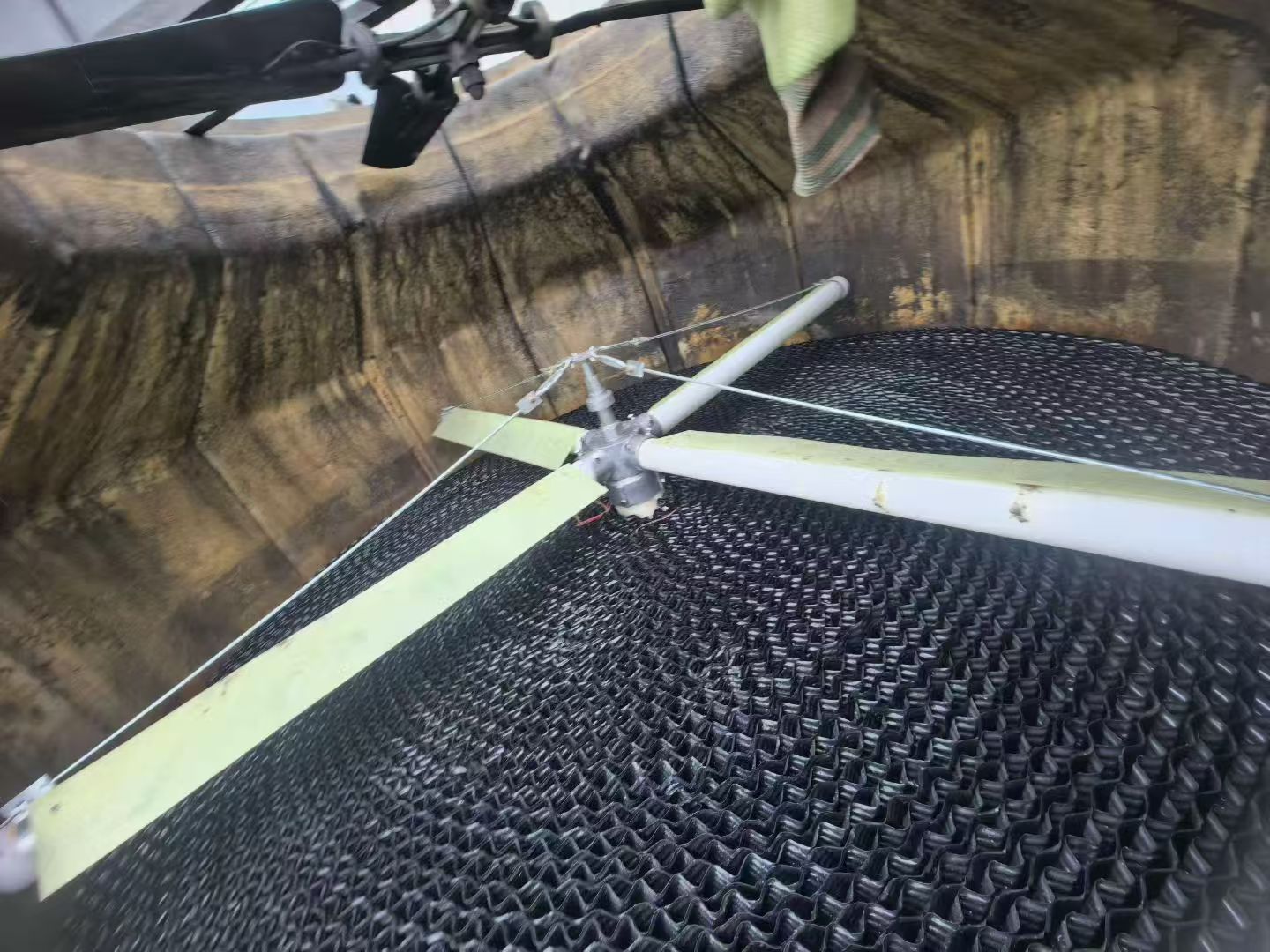
Choosing the right material is an important step in any cooling tower fill media replacement project. The material affects heat-transfer performance, chemical resistance, operating temperature limits, service life, and overall maintenance costs.
Two of the most common materials for cooling tower fill media are polyvinyl chloride (PVC) and polypropylene (PP). Both are widely used in industrial and commercial cooling towers, but their performance varies depending on water quality, operating conditions, fill design, and maintenance requirements.
Should you choose PVC cooling tower fill or PP cooling tower fill for your replacement project? This guide compares their properties, advantages, limitations, and applications to help facility managers, contractors, and industrial buyers make an informed decision.
What Is Cooling Tower Fill Media?
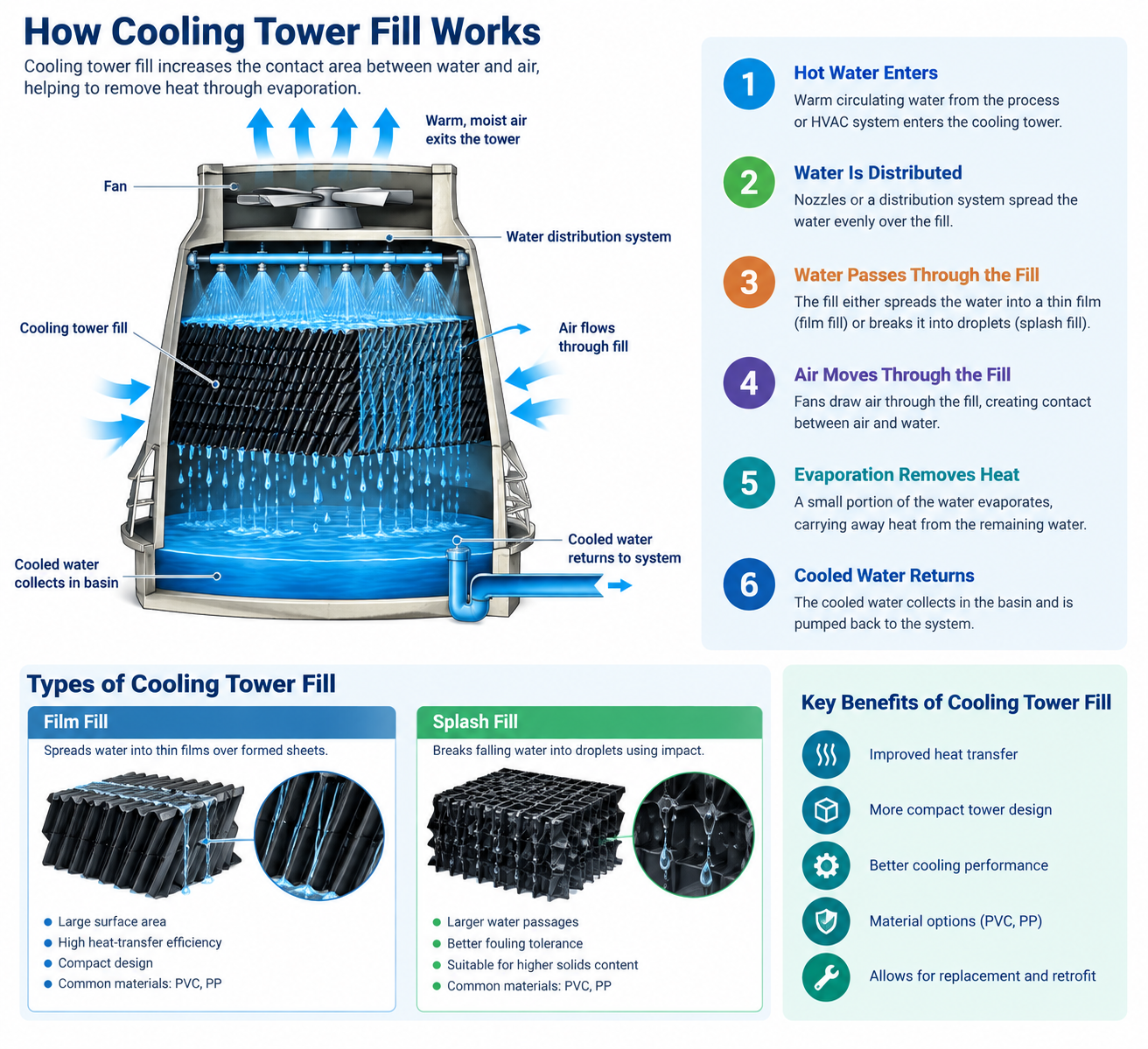
Cooling tower fill media increases the contact area between circulating water and air, improving heat transfer through evaporation and sensible heat exchange.
As hot water flows over the fill, it spreads across the surfaces while air passes through the tower. This process helps lower the water temperature before it returns to the cooling system.
Cooling tower fill is commonly divided into two main types:
Film fill: Thin sheets create a large surface area and distribute water into a thin film. It is commonly used where high thermal efficiency is required.
Splash fill: Water falls over bars, grids, or structured components, breaking into droplets and increasing air-water contact. It may be preferred in applications with higher suspended-solids levels or greater fouling risks.
PVC and PP can both be used to manufacture cooling tower fill, depending on the product design and operating requirements.
PVC Cooling Tower Fill: Features and Benefits
PVC cooling tower fill is a widely used option for industrial and commercial cooling tower systems. It is often manufactured as corrugated or textured sheets that are bonded or assembled into fill packs.
Advantages of PVC Fill Media
High heat-transfer efficiency
PVC film fill can provide a large effective surface area in a compact volume. When properly selected and installed, it supports efficient heat transfer and effective use of tower space.
Cost-effective replacement
PVC fill is widely available in different sheet configurations, thicknesses, and pack dimensions. For many standard cooling tower replacement projects, it offers a practical balance between purchase price and thermal performance.
Established manufacturing options
PVC fill is available in a variety of designs for crossflow and counterflow cooling towers. Buyers can often source replacement packs in dimensions suited to existing installations.
Suitable for many standard applications
PVC fill is commonly used in commercial HVAC systems, industrial process cooling, and other applications where water chemistry and operating temperatures remain within the material's specified limits.
Limitations of PVC Fill
PVC has temperature limitations, and its mechanical properties can deteriorate when it is exposed to excessive heat or incompatible chemicals. Long-term exposure to ultraviolet radiation, poor water treatment, and mechanical stress can also affect service life.
Before selecting PVC replacement fill, confirm its maximum operating temperature, chemical compatibility, and suitability for the actual cooling water conditions.
PP Cooling Tower Fill: Features and Benefits
Polypropylene cooling tower fill is manufactured from PP resin and formed into film-fill sheets or other fill configurations.
PP is often considered when a project requires particular chemical-resistance properties or when the operating conditions make a polypropylene product more suitable than a standard PVC product.
Advantages of PP Fill Media
Chemical resistance
PP offers good resistance to many acids, alkalis, and other chemicals. Its suitability depends on the chemical concentration, temperature, exposure duration, and specific resin formulation.
Higher temperature capability in suitable grades
Some PP fill products can tolerate higher operating temperatures than comparable PVC products. However, the actual temperature limit must be confirmed with the manufacturer because resin grade, sheet thickness, design, and loading all affect performance.
Lightweight construction
PP fill packs are generally lightweight, which can simplify handling and installation. The complete system must still meet structural support and load requirements.
Suitable for selected industrial applications
PP may be a good choice for industrial cooling systems where chemical exposure, water treatment conditions, or temperature requirements favor polypropylene.
Limitations of PP Fill
PP fill may have a higher initial purchase price than some PVC alternatives. Its thermal performance also depends on sheet geometry, surface design, pack depth, and water distribution rather than material alone.
PP can be affected by ultraviolet exposure and oxidation over time. Buyers should check product specifications and any available UV-stabilization provisions for the intended application.
PVC vs. PP Cooling Tower Fill: Key Differences
The following table provides a general comparison. Actual performance depends on the specific fill product and operating environment.
| Comparison Factor | PVC Cooling Tower Fill | PP Cooling Tower Fill |
| Material | Polyvinyl chloride | Polypropylene |
| Initial cost | Often economical | May cost more, depending on grade and design |
| Heat-transfer performance | High with suitable film-fill design | High with suitable film-fill design |
| Chemical resistance | Good for compatible operating conditions | Good resistance to many chemicals |
| Temperature tolerance | Limited by product specification | Some grades offer higher temperature capability |
| Weight | Lightweight | Lightweight |
| Common applications | HVAC and general industrial cooling | Industrial applications requiring specific chemical or temperature resistance |
| Replacement availability | Widely available in common configurations | Available in various industrial configurations |
| Maintenance needs | Depends on fouling and water treatment | Depends on fouling and water treatment |
| Service life | Depends on operating conditions and maintenance | Depends on operating conditions and maintenance |
Important: Neither PVC nor PP is automatically more efficient. Fill geometry, surface area, air and water flow, and installation quality usually have a greater influence on thermal performance than the polymer name alone.
How to Choose PVC or PP for Cooling Tower Fill Replacement
Selecting the right material requires evaluating the complete cooling tower system rather than comparing purchase prices alone.
Evaluate Operating Temperature
Check the normal water temperature and any expected peak temperature. Compare these values with the manufacturer's continuous and short-term temperature limits.
Do not assume that all PP products can operate at higher temperatures than all PVC products.
Check Water Chemistry
Review pH, dissolved chemicals, treatment additives, and potential contaminants. Ask the supplier to confirm material compatibility under the actual operating conditions.
Consider Fouling Risks
Cooling towers handling water with suspended solids, biological growth, or a high scaling tendency may experience fill blockage.
In heavily fouling applications, splash fill may be worth evaluating alongside PVC and PP film fill. Material selection alone cannot prevent fouling; water treatment and appropriate fill geometry are also important.
Confirm Thermal Performance
Consider the tower's heat load, circulating-water flow, entering and leaving water temperatures, and design wet-bulb temperature.
Ask the manufacturer to verify that the proposed fill design can meet the required thermal performance and airflow resistance.
Verify Dimensions and Compatibility
For replacement projects, confirm:
Fill pack length, width, and height
Sheet spacing and corrugation pattern
Fill orientation and stacking arrangement
Crossflow or counterflow configuration
Support spacing and load capacity
Compatibility with existing water distribution and drift eliminators
For Marley, BAC, EVAPCO, SPX, or other cooling tower replacement projects, use verified dimensions and technical information to establish compatibility. A matching brand name or similar appearance does not guarantee a direct fit.
Cooling Tower Fill Replacement Cost: PVC vs. PP
The total cost of cooling tower fill media replacement includes more than the price per pack.
Key cost factors include:
Raw material and fill design
Pack dimensions, thickness, and quantity
Custom manufacturing requirements
Packaging and international shipping
Removal and disposal of old fill
Installation labor and access equipment
Repairs to supports and water distribution components
Production downtime during replacement
PVC may offer a lower initial cost for many standard applications. PP may justify its price when its chemical-resistance or temperature characteristics better match the operating environment.
To compare quotations fairly, request the same technical specifications, required quantity, delivery terms, and performance requirements from each supplier. Evaluate expected service life and maintenance costs as well as the initial purchase price.
Installation and Maintenance Recommendations
Correct installation and regular maintenance are essential for both PVC and PP cooling tower fill.
Before installing new fill, shut down and isolate the cooling tower according to site safety procedures. Remove damaged fill, clean accumulated debris, and inspect support structures for corrosion or deformation.
Install the replacement packs according to the manufacturer's drawings. Keep sheets properly aligned and ensure that air passages and water channels remain unobstructed.
After installation, inspect spray nozzles, distribution pipes, and drift eliminators. Restart the system safely and verify water distribution, airflow, and cooling performance.
For ongoing maintenance:
Inspect fill regularly for cracks, deformation, and blockage.
Monitor water quality and maintain an appropriate treatment program.
Clean deposits using methods compatible with the fill material.
Avoid excessive water pressure and incompatible cleaning chemicals.
Record operating temperatures and maintenance findings.
Replace fill when severe damage or persistent fouling prevents acceptable performance.
Frequently Asked Questions
Is PVC or PP better for cooling tower fill media?
Neither material is universally better. PVC is a common, cost-effective choice for many standard applications, while PP may be preferred when its specific chemical-resistance or temperature characteristics offer an advantage.
Can I replace PVC cooling tower fill with PP fill?
Potentially, but confirm the replacement's dimensions, thermal performance, airflow resistance, temperature rating, and compatibility with the existing tower. A material change should be evaluated as an engineering decision, not just a direct substitution.
Does PP cooling tower fill last longer than PVC fill?
Not necessarily. Service life depends on temperature, water chemistry, ultraviolet exposure, mechanical loading, and maintenance. Compare the actual product specifications and operating conditions before estimating service life.
Which material is better for industrial cooling towers?
The best material depends on the process conditions. PVC may suit general industrial cooling, while PP can be appropriate for applications with specific chemical or temperature requirements. Both require proper fill design and water treatment.
What information should I provide when requesting replacement fill?
Provide the cooling tower model, tower type, existing fill dimensions, material, operating temperatures, water quality information, required quantity, and photographs or drawings. This helps the supplier identify a suitable replacement.
Conclusion
PVC and PP are both important materials for cooling tower fill media replacement. PVC is widely used for its availability and cost-effectiveness, while PP can offer advantages in applications requiring specific chemical resistance or temperature capability.
The right choice depends on operating conditions, water chemistry, thermal requirements, fill configuration, and total lifecycle cost. Before ordering replacement fill, verify technical specifications and confirm that the new packs are compatible with the existing cooling tower.
For industrial retrofit and replacement projects, work with an experienced cooling tower fill manufacturer or supplier that can provide suitable PVC or PP fill media, dimensional support, and product documentation. Proper material selection, installation, and maintenance help restore cooling performance and support reliable long-term operation.
Recommended internal links for CoolingTowerPart.com:


