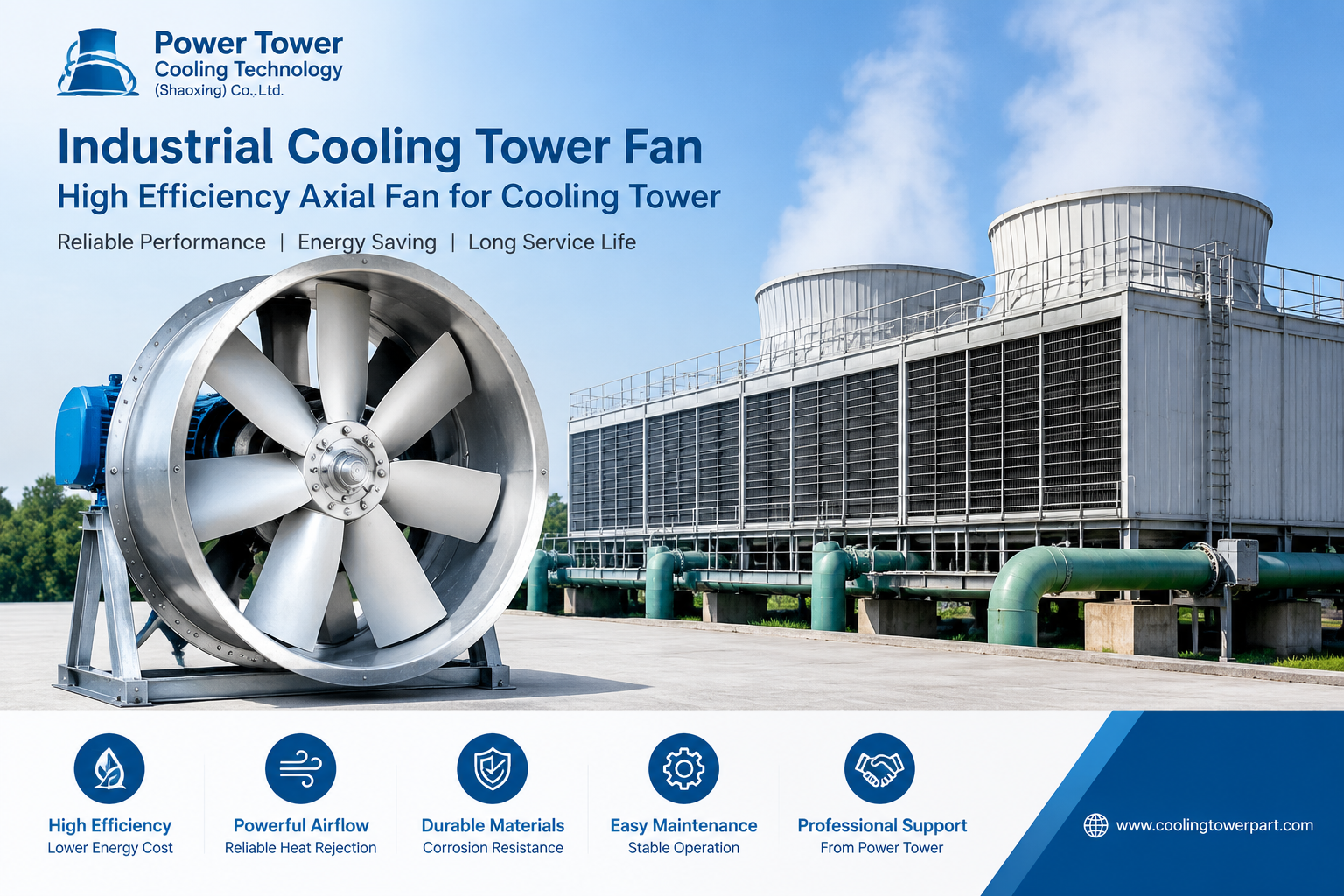
In an industrial cooling system, every component plays a role in maintaining stable operation. However, some parts have a more direct impact on cooling performance than others. The cooling tower fan blade is one of these critical components. It helps move large volumes of air through the cooling tower, supporting heat rejection and helping maintain the required cooling water temperature.
When fan blades become damaged, corroded, unbalanced, or poorly matched to the system, cooling performance can suffer. The result may include insufficient airflow, excessive vibration, increased maintenance requirements, and unnecessary operating costs. Choosing the right replacement blade is therefore an important decision for plant operators, maintenance teams, and cooling tower buyers.
An FRP axial fan blade for an industrial cooling tower is a practical option for many applications. Made from fiber-reinforced plastic, FRP blades can offer a useful combination of relatively low weight, mechanical strength, and resistance to moisture and corrosion. When properly designed and installed, they can help support reliable airflow in demanding industrial environments.
In this guide, we will explain how FRP cooling tower fan blades work, their main benefits, how to choose the right replacement, and what you should know about installation and maintenance.
What Is a Cooling Tower Fan Blade?
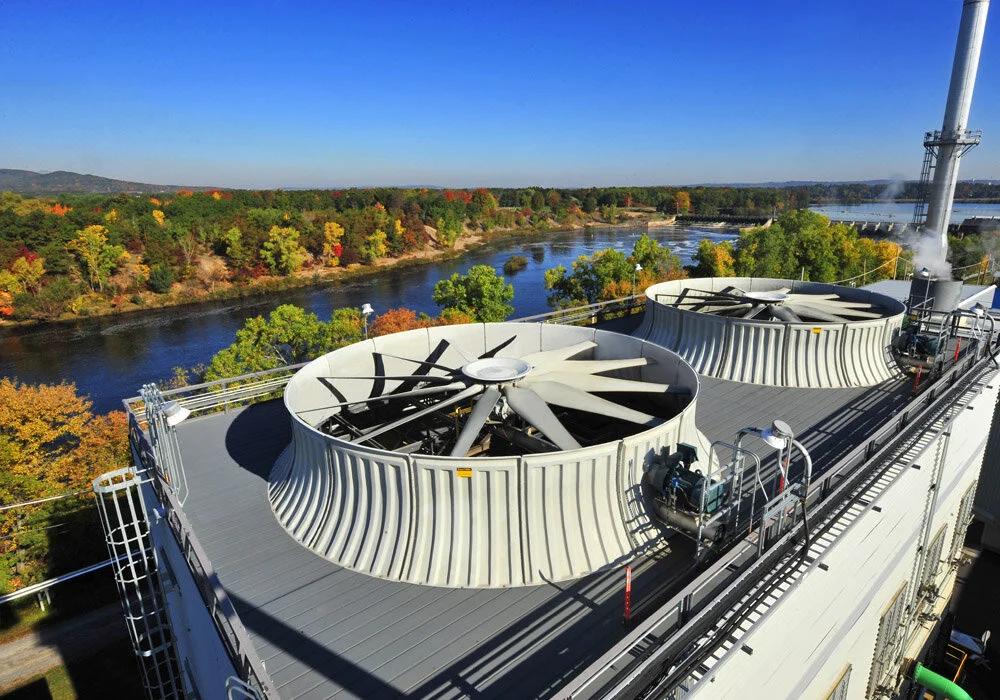
A cooling tower fan blade is part of the fan assembly responsible for moving air through a cooling tower. Together with the fan hub, shaft, motor, and drive system, the blades help generate the airflow required for effective heat rejection.
Cooling towers remove heat from circulating water by bringing water into contact with moving air. A portion of the water evaporates, carrying heat away from the remaining water. The fan supports this process by maintaining the airflow needed for heat and mass transfer.
If the fan blades cannot deliver the required airflow, the cooling tower may struggle to maintain its target water temperature, especially during periods of high heat load. This can affect chillers, heat exchangers, production equipment, and other systems that depend on cooling water.
The performance of a cooling tower fan blade depends on several factors, including its diameter, aerodynamic profile, pitch angle, material, and rotational speed. These factors must work together to meet the cooling tower's design requirements.
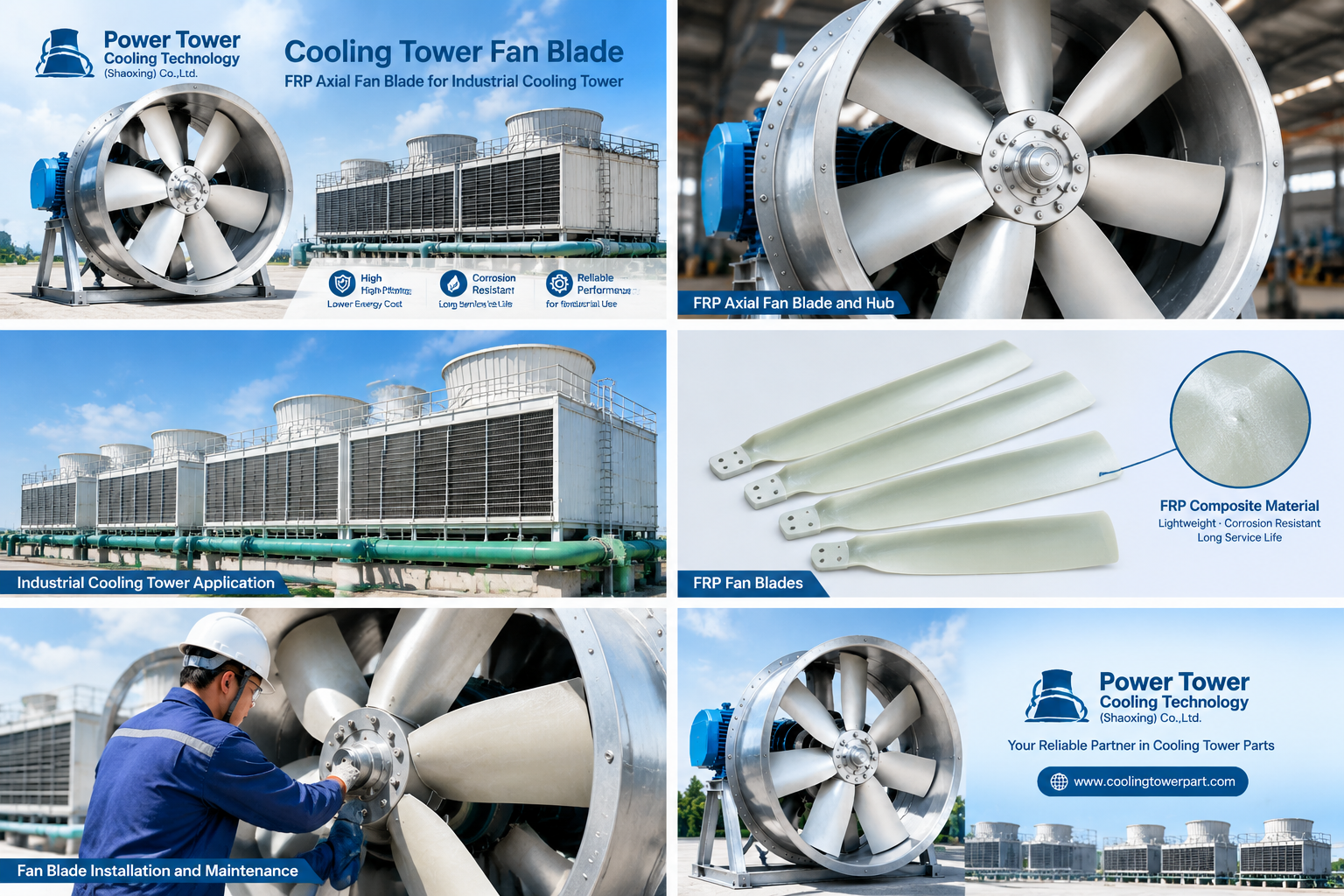
What Is an FRP Axial Fan Blade?
An FRP axial fan blade is a fan blade made from fiber-reinforced plastic and designed to move air parallel to the fan shaft. This is the defining characteristic of an axial fan.
FRP is a composite material that combines reinforcing fibers with a resin matrix. The fibers contribute strength and stiffness, while the resin binds the material together and helps protect the reinforcement from environmental exposure.
Glass-fiber-reinforced plastic is commonly used in industrial composite components. Depending on the product design, the resin system, fiber arrangement, manufacturing method, and surface treatment can vary. These differences affect the blade's mechanical properties and suitability for a particular application.
For cooling towers, FRP fan blades can be attractive because the operating environment often involves high humidity, water droplets, and long operating hours. However, not every FRP blade is suitable for every tower. Buyers should confirm the blade's specifications, material compatibility, and operating limits before ordering.
How Does an Axial Cooling Tower Fan Blade Work?
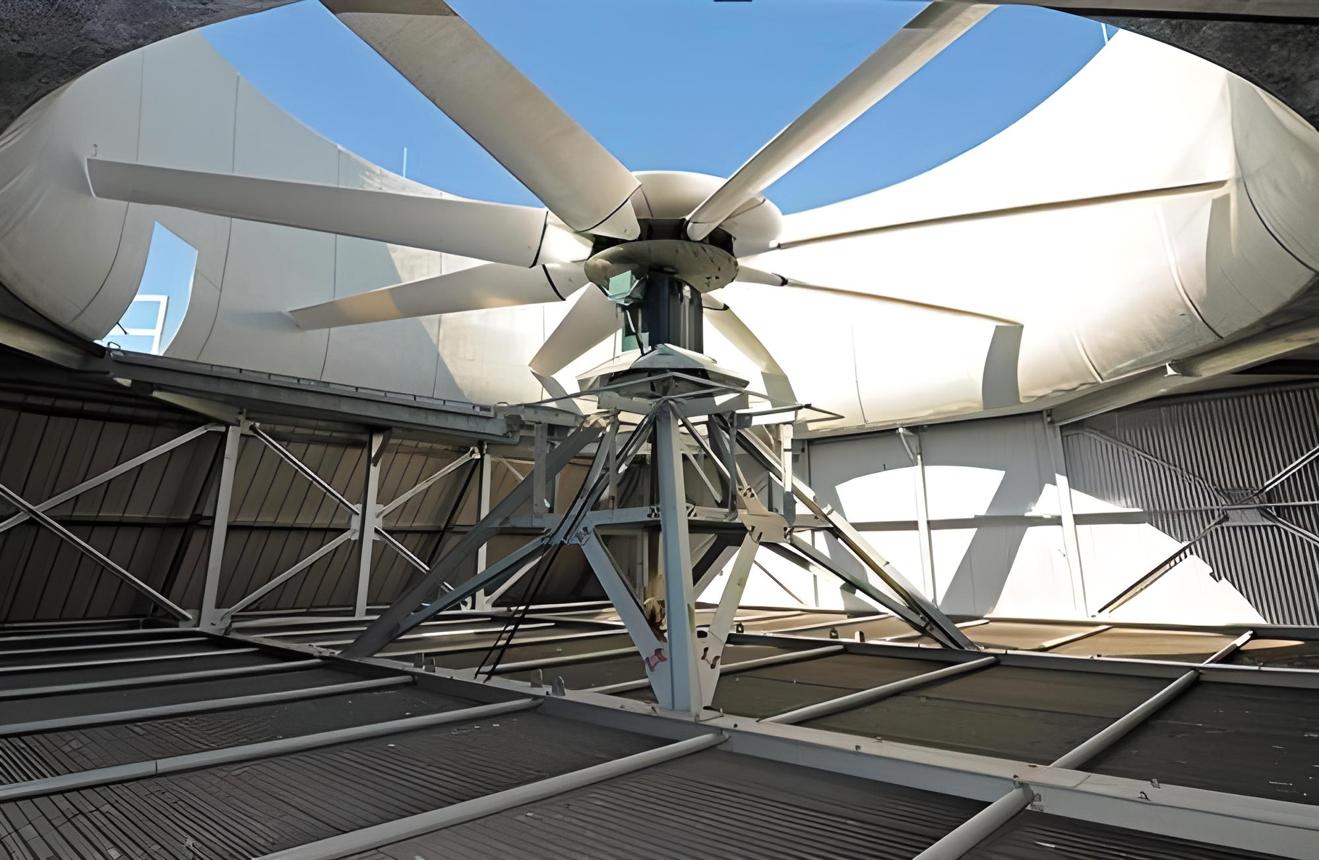
An axial fan blade works on a principle similar to an aircraft wing. As the blade rotates, its aerodynamic shape and angle generate a pressure difference that moves air along the fan's axis.
Multiple blades rotate around a central hub to create the airflow required by the cooling tower. The blade profile, diameter, pitch, and rotational speed all influence airflow and pressure.
Blade pitch is particularly important. If the angle is unsuitable for the fan and tower, the system may deliver insufficient airflow or require more power than expected. Incorrect pitch can also contribute to excessive motor loading and other operating problems.
This is why replacing a cooling tower fan blade is not simply a matter of finding a blade with the same approximate length. The replacement must be compatible with the original fan design and the system's operating requirements.
Why Cooling Tower Fan Blades Matter
A cooling tower relies on effective air movement to remove heat from circulating water. Even when the fill, water distribution system, and other components are in good condition, poor fan performance can limit the tower's overall effectiveness.
Damaged or incorrectly installed blades may create uneven airflow and vibration. These conditions can place additional stress on the hub, shaft, bearings, gearbox, motor, and supporting structure.
Insufficient airflow can also contribute to higher cooling water temperatures when the tower is operating near its capacity. In some industrial processes, this may affect equipment performance or production stability.
The goal is not simply to select the largest fan blade or the one that rotates fastest. The goal is to achieve the required airflow efficiently and safely while remaining within the limits of the fan and drive system.
A correctly selected cooling tower fan blade can help support stable operation, reduce avoidable mechanical problems, and make routine maintenance more manageable.
Key Benefits of FRP Cooling Tower Fan Blades
FRP axial fan blades offer several potential advantages for industrial cooling towers. Their actual performance depends on the blade's design, material formulation, manufacturing quality, and operating environment.
Lightweight Construction
One of the main advantages of FRP is its relatively low weight compared with many traditional metal blade designs.
A lighter blade can reduce rotating mass and may help lower some mechanical loads within the fan assembly. This can be useful when maintaining existing equipment or evaluating a replacement blade.
However, a lightweight blade does not automatically guarantee lower energy consumption. Energy performance also depends on the blade's aerodynamic efficiency, fan speed, system resistance, motor characteristics, and operating point.
For this reason, buyers should evaluate the complete fan system rather than choosing a blade based on weight alone.
Corrosion and Moisture Resistance
Cooling towers operate in environments where moisture is unavoidable. Depending on the site, fan blades may also be exposed to treatment chemicals, airborne contaminants, and outdoor weather conditions.
FRP can provide good resistance to moisture and many corrosive environments when the resin system and construction are selected appropriately. This can make it an attractive alternative for applications where corrosion is a concern.
Nevertheless, FRP is not immune to every chemical or environmental condition. Chemical compatibility, temperature limits, ultraviolet exposure, and the manufacturer's recommendations should be considered before selecting a blade.
Efficient Airflow Performance
A well-designed FRP axial fan blade can provide effective airflow when its aerodynamic profile, diameter, pitch, and rotational speed match the cooling tower's requirements.
Effective airflow helps the tower maintain its required cooling performance. It can also help avoid unnecessary fan operation when the system is correctly selected and controlled.
Material alone does not determine aerodynamic efficiency. Two blades made from different materials may have very different performance because of differences in geometry, stiffness, surface finish, and installation angle.
Always review the available technical specifications and performance information instead of assuming that every FRP blade delivers the same airflow.
Long Service Life
FRP blades can offer a long service life when properly designed, installed, and maintained. Their resistance to many forms of corrosion can be valuable in cooling towers exposed to continuous moisture.
Actual service life depends on several conditions, including operating temperature, ultraviolet exposure, vibration, fatigue, chemical compatibility, and mechanical damage.
Regular inspection is essential. Identifying cracks, chips, deformation, or unusual vibration early can help prevent a minor problem from developing into a more serious equipment failure.
FRP Fan Blades vs. Aluminum Fan Blades
FRP and aluminum are both used in industrial fan applications, but they have different material characteristics. The best choice depends on the fan design, operating environment, structural requirements, and maintenance priorities.
FRP blades can offer a useful combination of low weight and resistance to moisture and many corrosive environments. Their performance depends on the quality of the composite material and the blade's construction.
Aluminum blades can also provide a favorable strength-to-weight ratio and may be appropriate for applications designed around their mechanical characteristics. However, aluminum can be affected by corrosion under certain chemical and environmental conditions.
Neither material is universally better. A blade that performs well in one cooling tower may not be suitable for another.
When considering a material change, do not assume that an FRP blade can directly replace an aluminum blade simply because the dimensions appear similar. Differences in weight, stiffness, center of gravity, aerodynamic loading, and mounting details can affect fan operation.
Before changing materials or blade designs, confirm compatibility with the fan manufacturer or a qualified engineering team.
Common Applications of Industrial Cooling Tower Fan Blades
FRP axial fan blades can be considered for a variety of industrial cooling applications when their specifications match the equipment and operating conditions.
Manufacturing Plants
Manufacturing facilities often use cooling towers to support process cooling loops, heat exchangers, and production equipment. Stable airflow helps the cooling tower maintain the required water temperature as heat loads change.
In these applications, reliability and maintenance planning are important because unexpected cooling problems can affect production schedules.
HVAC and Chiller Systems
Water-cooled chillers use cooling towers to reject heat from the refrigeration system. The fan supports the airflow required to remove that heat from the circulating water.
For these systems, fan selection should account for the cooling load, tower design, seasonal conditions, and fan control strategy.
Power and Process Facilities
Power facilities and industrial process plants may operate cooling equipment for extended periods. Their cooling towers can face demanding environmental conditions and high operational requirements.
When choosing fan blades for these applications, consider the operating temperature, chemical exposure, vibration levels, maintenance access, and consequences of unexpected downtime.
Chemical and Other Industrial Environments
Some industrial environments expose cooling tower components to challenging air and water conditions. FRP may be suitable where the selected resin system and blade construction are compatible with the site's operating environment.
A technical review is recommended whenever chemical exposure, elevated temperatures, or unusual operating conditions may affect material performance.
How to Choose the Right FRP Axial Fan Blade
Choosing a replacement cooling tower fan blade requires more than measuring its length. You should consider the fan's original design, airflow requirements, mounting arrangement, drive system, and operating environment.
Check Fan Diameter and Blade Quantity
Start by confirming the fan diameter and the number of blades in the assembly. Record the existing blade dimensions and any identification numbers shown on the fan, hub, or equipment nameplate.
Fan diameter influences airflow capability, while blade quantity and geometry affect the fan's aerodynamic characteristics. These parameters are part of an integrated design and should not be changed independently without technical review.
If the original documentation is available, use it to verify the replacement specifications.
Confirm Blade Pitch and Airflow Requirements
Blade pitch is the angle at which a blade meets the air. A change in pitch can affect airflow, pressure, power consumption, and motor loading.
Even blades with similar dimensions may perform differently if their profiles or pitch settings differ. When requesting a replacement, provide the original fan specifications or required airflow information whenever possible.
If the cooling tower has been modified over time, consider whether the current fan still meets the system's operating requirements.
Consider Temperature and Environmental Conditions
Temperature, humidity, sunlight, and chemical exposure can affect composite materials. Confirm that the FRP blade is designed for the site's operating temperature range and environmental conditions.
Also consider frequent start-stop cycles, severe weather exposure, abrasive airborne particles, and unusually high vibration levels. These details help determine whether a particular blade construction is appropriate.
Verify Fan Hub Compatibility
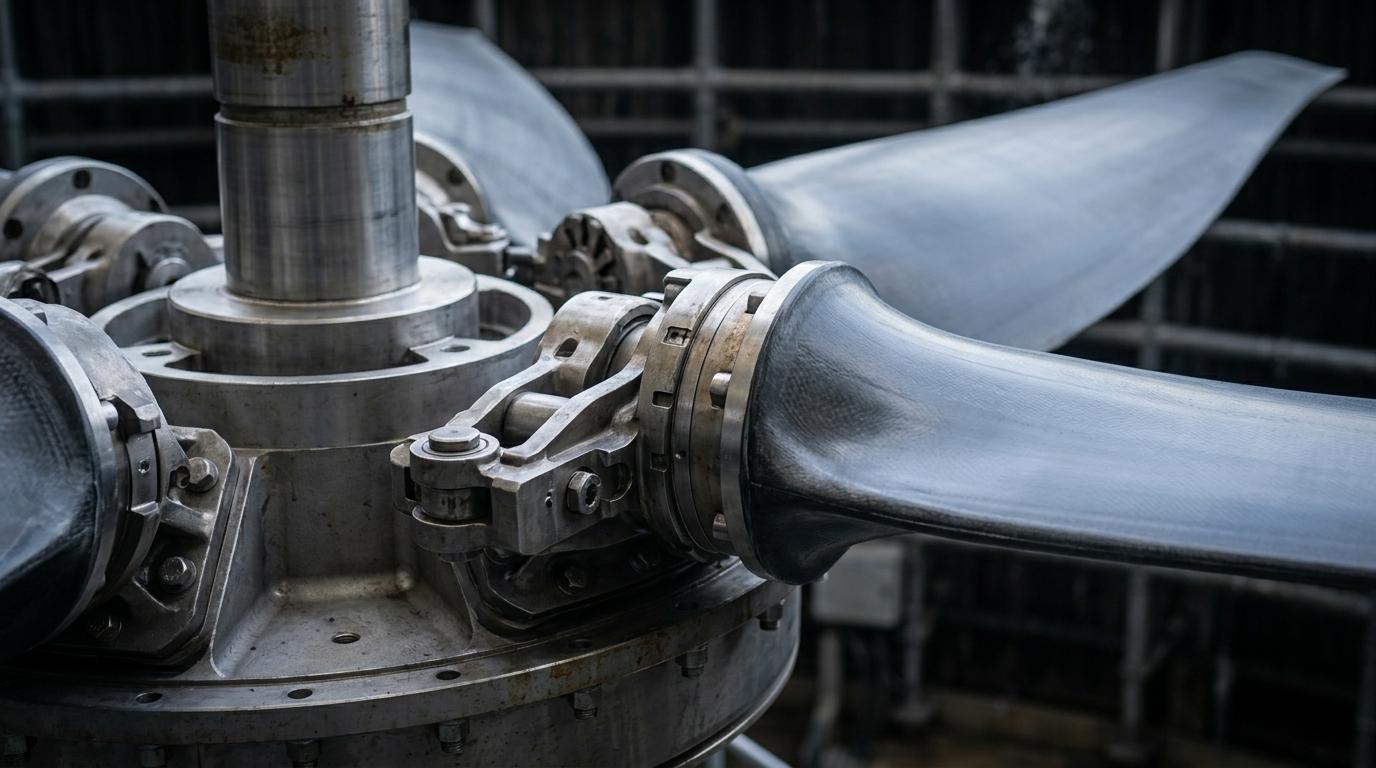
Hub compatibility is critical to safe fan operation. Confirm the mounting arrangement, bolt pattern, blade root dimensions, fastener specifications, and any pitch-adjustment mechanism.
If the fan uses individually replaceable blades, the new blades must match the hub design and the manufacturer's installation requirements.
Never force a blade into an incompatible hub or modify mounting holes without approved engineering guidance. Incorrect mounting can weaken the connection and create a serious rotating-equipment hazard.
If you do not have the original specifications, provide clear photographs and accurate measurements to the supplier for technical review.
Cooling Tower Fan Blade Installation
Correct installation is just as important as selecting the right blade. A high-quality FRP blade can still cause problems if it is mounted incorrectly, set at the wrong pitch, or installed as part of an unbalanced assembly.
Installation should follow the fan manufacturer's instructions and be performed by qualified personnel.
Inspect the Blade Before Installation
Before installation, inspect each new blade for visible cracks, impact damage, surface defects, or deformation. Check the model, dimensions, mounting features, and material specifications against the approved replacement requirements.
Do not install a blade if its condition or compatibility is uncertain.
Before working on the fan, isolate the power supply and follow the site's lockout/tagout procedures. Inspect the hub and fasteners for wear or damage, and check related components according to the maintenance plan.
Set the Blade Angle and Check Balance
Set each blade to the specified pitch and use the prescribed fastening method and torque values. If balancing is required, follow the manufacturer's procedure and acceptance criteria.
A blade installed at the wrong angle can create uneven airflow and loading. An unbalanced assembly may generate damaging vibration and place additional stress on mechanical components.
After installation, qualified personnel should verify clearances and complete the required checks before the tower returns to service.
Never operate a fan with loose blades, missing fasteners, suspected cracks, or unexplained vibration.
Maintenance Tips for FRP Axial Fan Blades
Routine maintenance helps preserve fan performance and identify potential problems before they lead to equipment failure. Inspection frequency should follow the manufacturer's recommendations and reflect operating hours, environmental exposure, and the consequences of an unexpected shutdown.
During inspections, look for cracks, chips, surface erosion, discoloration, loose fasteners, and signs of contact with nearby structures. Pay attention to unusual noise or vibration and investigate sudden changes in motor current or cooling performance.
These symptoms do not always indicate a blade problem. The motor, hub, shaft, bearings, gearbox, and other parts of the drive system may also be involved.
Keep the fan and surrounding area free from obstructions that could interfere with airflow. Clean FRP blades only with approved methods and materials. Avoid aggressive scraping, harsh chemicals, or unapproved repairs that could damage the resin or reinforcement.
It is also useful to maintain inspection records. Document the condition of the blades, vibration readings, repairs, operating changes, and replacement dates. These records make it easier to identify trends and plan maintenance before a problem affects production.
Common Cooling Tower Fan Blade Problems and Solutions
Excessive Vibration
Excessive vibration may result from blade imbalance, incorrect pitch, loose fasteners, hub damage, or problems elsewhere in the drive system.
Do not assume the blades are the only possible cause. Follow site safety procedures, stop the equipment when necessary, and arrange a qualified inspection to identify the source of the vibration.
Reduced Airflow
Reduced airflow can be caused by damaged blades, incorrect fan rotation, improper pitch, obstructions, or increased system resistance.
Check the operating conditions and compare actual performance with the fan's design requirements. If airflow remains insufficient, investigate the entire cooling tower system before deciding whether a blade replacement or upgrade is necessary.
Cracks or Surface Damage
Cracks, chips, and other structural damage require careful evaluation. Do not continue operating a blade with damage that may compromise its integrity.
Composite repairs should only be performed when permitted by the manufacturer and completed using an approved procedure. If the blade does not meet the required inspection criteria, replacement may be necessary.
Unusual Noise
Unusual noise can indicate loose components, blade contact, vibration, bearing problems, or changes in airflow. Investigate promptly, as continued operation with damaged rotating equipment can increase the risk of a more serious failure.
When Should You Replace Cooling Tower Fan Blades?
A cooling tower fan blade should be replaced when it has structural damage, unacceptable deformation, excessive wear, or another defect that fails the manufacturer's inspection criteria.
Replacement may also be appropriate when the original model is no longer available or an approved system upgrade requires a different blade design.
There is no universal replacement interval for every cooling tower. A blade operating in a moderate environment may last longer than one exposed to strong UV radiation, chemical attack, high vibration, or repeated mechanical impact. Inspection results and manufacturer guidance are more reliable than age alone.
If only one blade is damaged, check whether the manufacturer requires a matched set or a particular replacement procedure. Differences in blade weight, geometry, and stiffness can affect balance and performance.
Always replace components according to the fan design rather than mixing different blades without technical verification.
How FRP Fan Blades Can Support Cooling Tower Efficiency
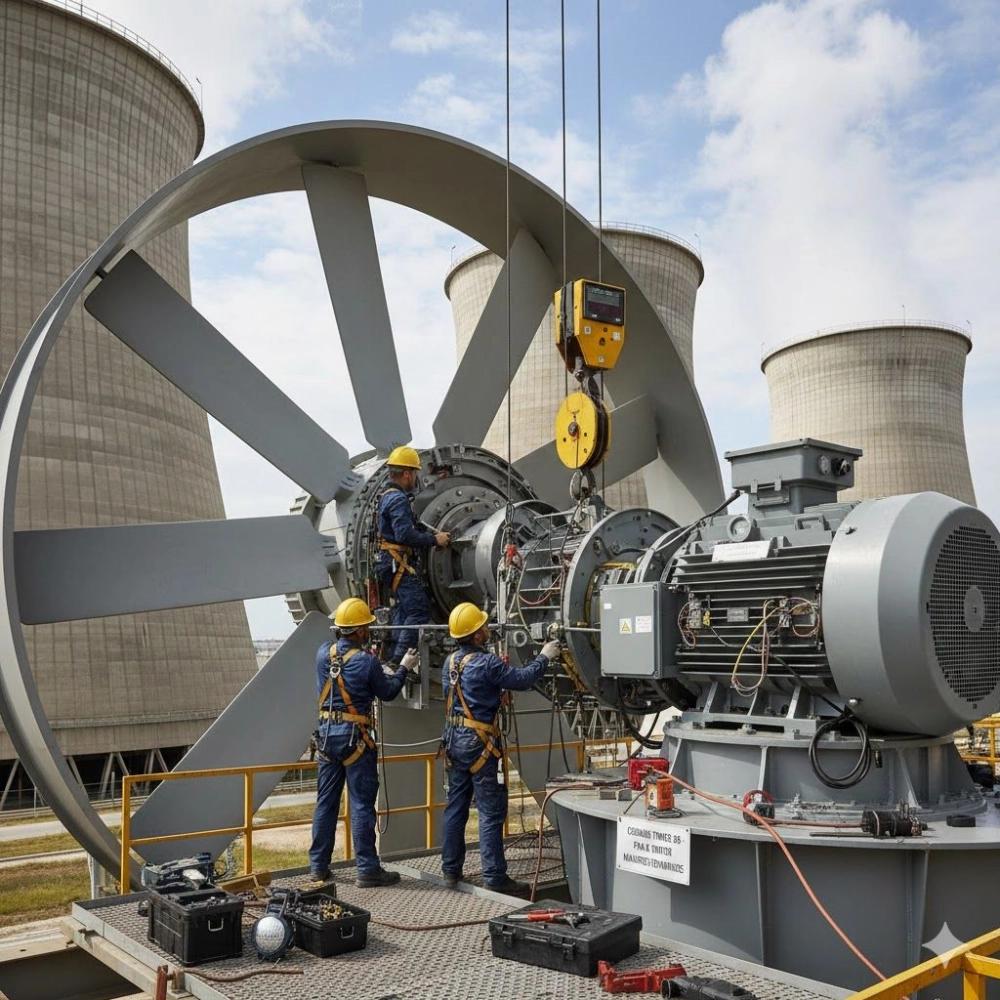
Cooling tower efficiency depends on the entire system, including water distribution, fill condition, airflow, ambient wet-bulb temperature, heat load, and control strategy.
Fan blades are an important part of this system, but they cannot compensate for every problem elsewhere in the tower. Poor water distribution, clogged fill, excessive scaling, or unsuitable operating conditions may also limit performance.
A correctly matched FRP axial fan blade can help provide the required airflow while offering useful material properties for the operating environment. When the fan is properly selected and maintained, it may help avoid performance losses associated with damaged blades, incorrect pitch, or excessive vibration.
To assess the result of a fan blade replacement, compare operating data before and after the change. Useful measurements include cooling water temperatures, fan speed, motor power, vibration, and process heat load. Make sure the comparison accounts for differences in ambient conditions and cooling demand.
The best upgrade is not necessarily the blade with the lowest weight or the highest advertised airflow. It is the solution that meets the required cooling duty safely and reliably.
Why Choose Power Tower Cooling Technology (Shaoxing) Co., Ltd.?
When sourcing cooling tower fan blades, buyers need to consider equipment compatibility, operating conditions, material requirements, and replacement specifications.
Power Tower Cooling Technology (Shaoxing) Co., Ltd. supplies cooling tower components and provides a point of contact for customers seeking industrial cooling tower parts.
For an FRP axial fan blade inquiry, prepare the cooling tower brand and model, fan diameter, blade quantity, existing blade dimensions, hub details, and operating conditions. Clear photographs of the existing blade and equipment nameplate can also help clarify the application.
Providing accurate information at the beginning can reduce uncertainty during model selection. Before placing an order, confirm the blade specifications, material suitability, mounting compatibility, delivery details, and any required technical documentation with the supplier.
Visit the official website at https://www.coolingtowerpart.com to explore cooling tower components and submit an inquiry about replacement requirements.
Request an FRP Cooling Tower Fan Blade Solution
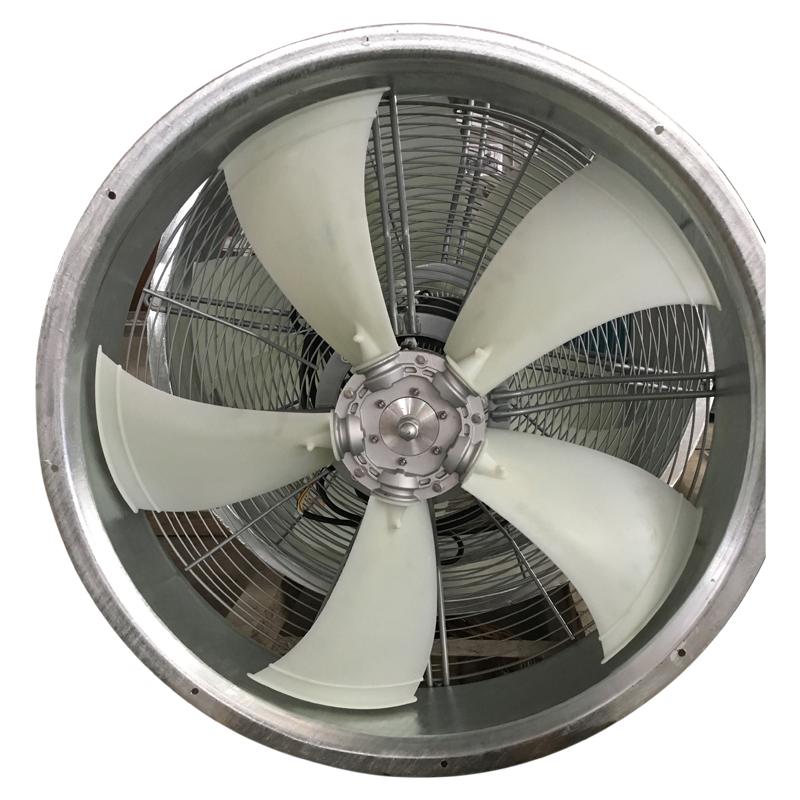
Looking for a replacement FRP axial fan blade for an industrial cooling tower? Start by collecting the following information:
Cooling tower brand and model
Fan diameter and number of blades
Existing blade length, profile, and mounting dimensions
Fan hub type and bolt pattern
Operating temperature and environmental conditions
Required quantity and delivery destination
If you do not have complete technical drawings, provide clear photographs and the measurements you can obtain safely. The supplier can review the available information and identify any additional details needed before confirming suitability.
Contact Power Tower Cooling Technology (Shaoxing) Co., Ltd. through www.coolingtowerpart.com to discuss your cooling tower fan blade requirements. Confirm the final technical specification before ordering, installation, or replacement.
Frequently Asked Questions
Are FRP Cooling Tower Fan Blades Suitable for Outdoor Use?
FRP blades can be suitable for outdoor applications when their material formulation and design are intended for the site's temperature, moisture, and UV exposure. Confirm the product's environmental specifications and maintenance requirements before purchase.
Can FRP Blades Replace Existing Metal Blades?
In some applications, yes, but replacement should not be based on dimensions alone. The new blade must be compatible with the fan hub and meet the required airflow, structural, balance, and drive-system requirements. Obtain technical approval before changing blade materials or designs.
How Can I Identify the Correct Replacement Blade?
Record the cooling tower model, fan diameter, blade quantity, mounting details, and available part numbers. Provide photographs and measurements to the supplier. If specifications are incomplete, have the application reviewed before ordering.
How Often Should FRP Fan Blades Be Inspected?
Follow the manufacturer's recommended inspection schedule and your site's preventive maintenance plan. Inspection frequency may need to increase in harsh environments or when vibration, damage, or operational changes have been observed.
Do FRP Fan Blades Automatically Reduce Energy Consumption?
No. FRP's relatively low weight may offer mechanical advantages, but energy consumption depends on the complete fan system, including aerodynamic design, rotational speed, system resistance, motor efficiency, and operating conditions. Evaluate the fan's performance data to determine the actual energy impact.
Conclusion
The cooling tower fan blade plays a vital role in maintaining airflow and supporting effective heat rejection. FRP axial fan blades can be a suitable option for many industrial applications because of their relatively low weight and potential resistance to moisture and corrosion. Their suitability depends on the material specification, aerodynamic design, and operating environment.
To choose the right blade, check the fan dimensions, pitch, hub compatibility, operating conditions, and required performance. Correct installation, proper balancing, and regular inspection are equally important for protecting the fan and the cooling tower.
Power Tower Cooling Technology (Shaoxing) Co., Ltd. supports customers looking for cooling tower components. Visit https://www.coolingtowerpart.com to discuss your application and identify the information needed for a suitable FRP axial fan blade replacement.


