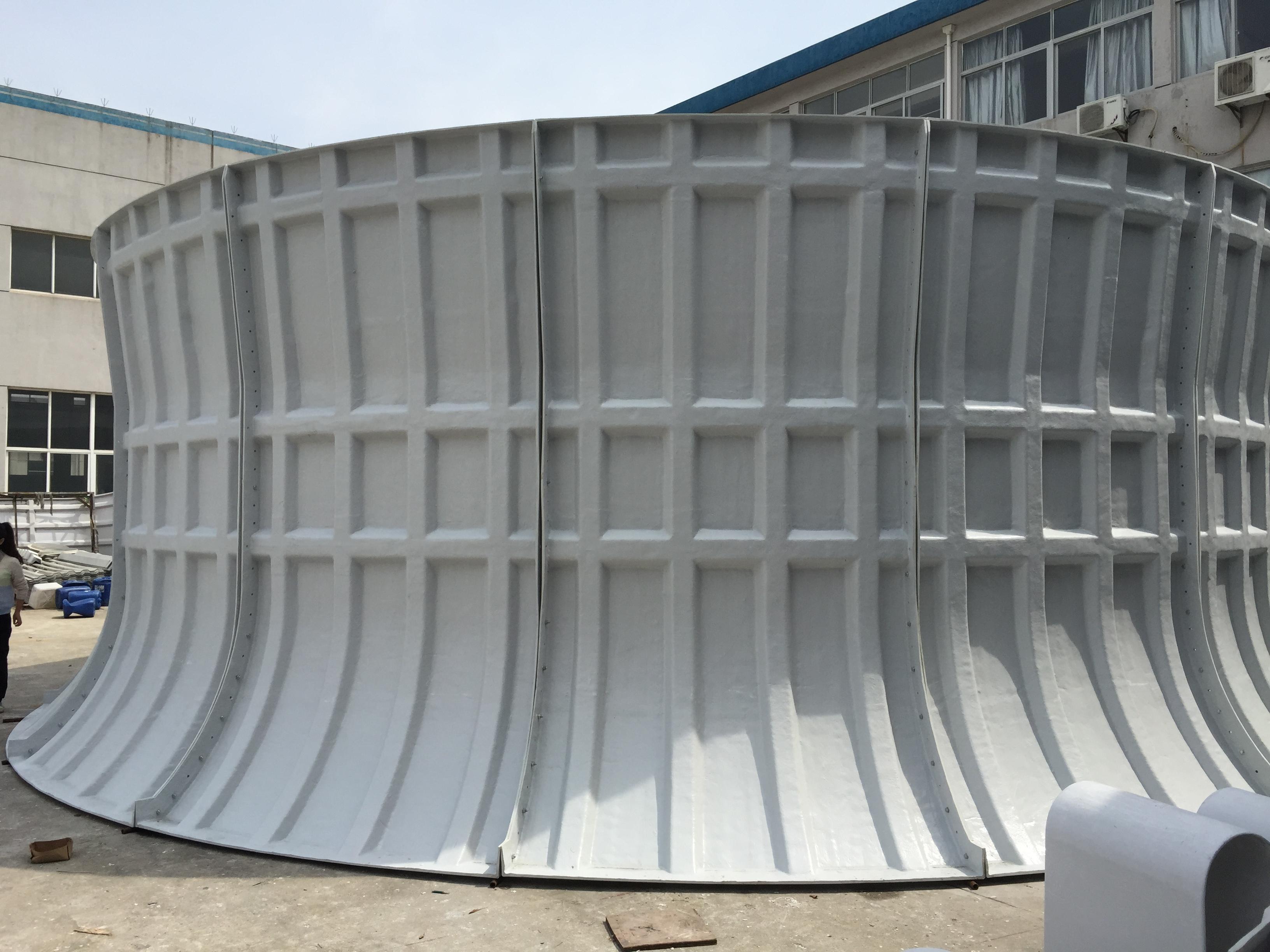
A fiberglass cooling tower fan stack is an important structural component of an industrial cooling tower. It directs exhaust airflow, supports efficient fan operation, and helps discharge warm, moisture-laden air away from the tower. Over time, however, exposure to moisture, UV radiation, vibration, wind loads, and harsh industrial environments can cause the fan stack to deteriorate.
Ignoring early warning signs may lead to reduced airflow, excessive vibration, structural damage, and unexpected cooling tower downtime.
So, how do you know when your cooling tower needs a new fiberglass fan stack instead of another repair?
This guide explains the most common signs of FRP cooling tower fan stack failure, when replacement is necessary, and how to select the right replacement for industrial cooling tower applications.
1. Visible Cracks in the Fiberglass Structure
One of the clearest signs that a fiberglass cooling tower fan stack needs attention is visible cracking.
FRP (fiberglass reinforced plastic) fan stacks are designed to withstand demanding outdoor environments. However, repeated vibration, mechanical stress, impact, and aging can damage the fiberglass laminate.
Watch for:
Cracks around mounting flanges.
Surface cracks along the fan cylinder.
Splitting near structural joints.
Cracks around bolt holes.
Delamination or separation of fiberglass layers.
Small surface defects may be repairable, but extensive cracks or damage affecting structural integrity may require complete replacement.
2. Fiberglass Delamination and Surface Deterioration
Fiberglass fan stacks consist of reinforcing glass fibers embedded in a resin matrix. When the bonding between layers deteriorates, delamination can occur.
Common warning signs include:
Layers separating from each other.
Blistering or bubbling on the surface.
Exposed or loose glass fibers.
Soft or weakened laminate areas.
Damaged resin coatings.
Delamination can reduce the structural strength of the fan stack and increase the risk of further damage under operating loads.
If deterioration affects large areas or critical structural sections, replacing the FRP fan stack may be more reliable than repeated repairs.
3. Excessive Cooling Tower Fan Vibration
Excessive vibration is another important warning sign.
A fiberglass cooling tower fan stack should remain stable during normal operation. If the structure becomes loose, deformed, or weakened, it may contribute to abnormal vibration.
Potential causes include:
It is important to distinguish fan stack problems from mechanical problems involving the fan, gearbox, motor, or shaft.
If vibration continues after correcting mechanical and mounting issues, inspect the FRP fan stack for structural damage.
4. Deformation or Loss of Fan Stack Roundness
A properly manufactured fiberglass cooling tower fan stack should maintain its designed shape during operation.
Over time, excessive loading, inadequate support, poor installation, or environmental exposure may cause deformation.
Common signs include:
An oval or distorted fan cylinder.
Uneven stack walls.
Bent or damaged flange sections.
Visible movement during fan operation.
Changes in fan blade tip clearance.
Deformation is particularly concerning because it can affect the clearance between rotating fan blades and the inside wall of the fan stack.
If the structure cannot maintain the required geometry, replacement may be necessary.
5. Insufficient or Uneven Fan Blade Clearance
The clearance between cooling tower fan blade tips and the inside wall of the fan stack is critical for safe operation.
If the fan stack becomes distorted or shifts from its original position, the clearance may become uneven.
Possible warning signs include:
Blade tips getting too close to the stack wall.
Scratches or contact marks inside the fan cylinder.
Different clearance measurements around the circumference.
Unusual noise during fan operation.
Insufficient clearance can cause blade-to-stack contact, resulting in serious mechanical damage.
Before replacing the fan stack, check fan alignment, hub positioning, blade condition, and support structure. If the stack itself is damaged or permanently deformed, replacement may be the best solution.
6. Corrosion or Chemical Damage to Supporting Components
Although FRP fan stacks provide excellent corrosion resistance, their supporting structures and connecting hardware may still deteriorate.
Industrial cooling tower environments can expose metal supports, fasteners, and connection components to moisture, chemicals, and corrosion.
Look for:
Rusted mounting bolts.
Corroded steel support brackets.
Damaged flange connections.
Loose structural connections.
Deteriorated sealing materials.
If the existing fan stack uses a metal structure that has suffered extensive corrosion, replacing it with a properly engineered fiberglass fan stack can be a practical retrofit option.
7. Increased Airflow Resistance and Poor Fan Performance
The fan stack helps guide air through and out of the cooling tower.
A damaged, distorted, or incorrectly installed fan stack may disturb airflow and affect fan performance.
Potential symptoms include:
However, poor cooling performance does not automatically mean the fan stack needs replacement. Blocked fill, dirty air inlets, incorrect fan pitch, and mechanical drive problems can produce similar symptoms.
A complete airflow and mechanical inspection should be performed before making a replacement decision.
8. Frequent Repairs and Rising Maintenance Costs
Repeated repairs can indicate that an aging fiberglass cooling tower fan stack is approaching the end of its useful service life.
Examples include:
Frequent FRP patching.
Repeated flange repairs.
Continuous bolt and connection replacement.
Recurring structural reinforcement.
Persistent alignment problems.
When repair costs continue increasing, a new FRP fan stack may offer better long-term value.
Buyers should compare the total cost of continued maintenance with replacement costs, installation downtime, and expected service life.
9. Aging Fan Stack and UV Exposure
Cooling tower fan stacks are often installed outdoors and exposed to sunlight, temperature changes, wind, and rain.
Long-term UV exposure can gradually degrade the resin surface if the material system and protective finish are not suitable for the environment.
Signs of aging may include:
Surface discoloration alone does not necessarily mean replacement is required. The condition of the fiberglass laminate and remaining structural strength should determine the next step.
10. Repair vs. Replacement: Which Is Better?
Not every damaged fiberglass fan stack needs complete replacement. The decision depends on the location, extent, and severity of damage.
| Condition | Recommended Action |
| Minor surface scratches | Surface repair |
| Localized superficial cracks | Professional FRP repair assessment |
| Small areas of delamination | Repair if structural integrity can be restored |
| Extensive laminate failure | Consider replacement |
| Severe deformation | Replacement may be necessary |
| Major flange damage | Engineering assessment and possible replacement |
| Repeated structural failures | Evaluate complete replacement |
| Unsafe fan blade clearance | Stop operation and investigate immediately |
A qualified engineer or FRP specialist should evaluate damage affecting structural integrity.
11. How to Choose a Replacement Fiberglass Cooling Tower Fan Stack
If replacement is necessary, selecting the correct FRP fan stack is essential for reliable cooling tower operation.
Before ordering, confirm the following specifications:
| Specification | What to Check |
| Material | FRP / fiberglass reinforced plastic |
| Inside diameter | Compatible with fan dimensions |
| Outside diameter | Compatible with installation space |
| Overall height | Matches airflow and structural requirements |
| Wall thickness | Suitable for structural loading |
| Resin system | Appropriate for operating environment |
| Flange dimensions | Matches existing connections |
| Mounting holes | Correct bolt pattern and positioning |
| Fan clearance | Meets fan manufacturer's requirements |
| UV protection | Suitable for outdoor exposure |
For industrial replacement projects, customized fiberglass fan stacks can be manufactured to match existing cooling tower configurations.
12. Why Choose a New FRP Cooling Tower Fan Stack?
Replacing an old or severely damaged fan stack with a properly engineered FRP structure offers several advantages:
Corrosion resistance: Suitable for humid and corrosive cooling tower environments.
Lightweight design: Helps reduce structural loading compared with many traditional metal structures.
Customized manufacturing: Available in different diameters, heights, and mounting configurations.
Reduced maintenance: Minimizes corrosion-related maintenance requirements.
Long-term reliability: Provides dependable structural performance when properly designed and maintained.
These advantages make FRP fan stacks suitable for industrial cooling tower renovation, retrofit, and replacement projects.
Conclusion
Recognizing the warning signs of fiberglass cooling tower fan stack failure can help industrial operators avoid unexpected equipment damage and costly downtime.
Cracks, delamination, excessive vibration, structural deformation, uneven fan clearance, and repeated repairs are all reasons to arrange a professional inspection.
When structural damage is extensive or the existing fan stack can no longer maintain safe operating conditions, replacing it with a customized FRP cooling tower fan stack may be the most practical solution.
CoolingTowerPart.com provides fiberglass cooling tower fan stack replacement solutions for industrial cooling tower maintenance, retrofit, and renovation projects. Contact our team with your fan diameter, stack dimensions, and installation drawings to discuss a suitable replacement.
Frequently Asked Questions (FAQs)
1. How long does a fiberglass cooling tower fan stack last?
Its service life depends on FRP material quality, resin selection, UV protection, environmental conditions, structural loading, and maintenance. Regular inspections help identify deterioration before serious failure occurs.
2. Can a cracked fiberglass cooling tower fan stack be repaired?
Yes. Small, localized cracks may be repaired using appropriate FRP repair methods. Extensive cracking, delamination, or structural deformation may require replacement.
3. What causes fiberglass fan stack damage?
Common causes include UV exposure, vibration, excessive loading, improper installation, mechanical impact, chemical exposure, and aging.
4. Does a damaged fan stack affect cooling tower efficiency?
Yes. Structural deformation and airflow disturbances may affect fan performance. However, other cooling tower components should also be inspected when diagnosing efficiency problems.
5. Can an old metal cooling tower fan stack be replaced with FRP?
Yes. A properly engineered FRP fan stack can replace an existing metal structure when dimensions, support conditions, structural requirements, and fan clearance are verified.
6. When should I replace my cooling tower fan stack?
Replacement should be considered when the structure has extensive cracks, serious delamination, permanent deformation, compromised mounting connections, or damage that cannot be safely and economically repaired.
Recommended internal links for CoolingTowerPart.com:


