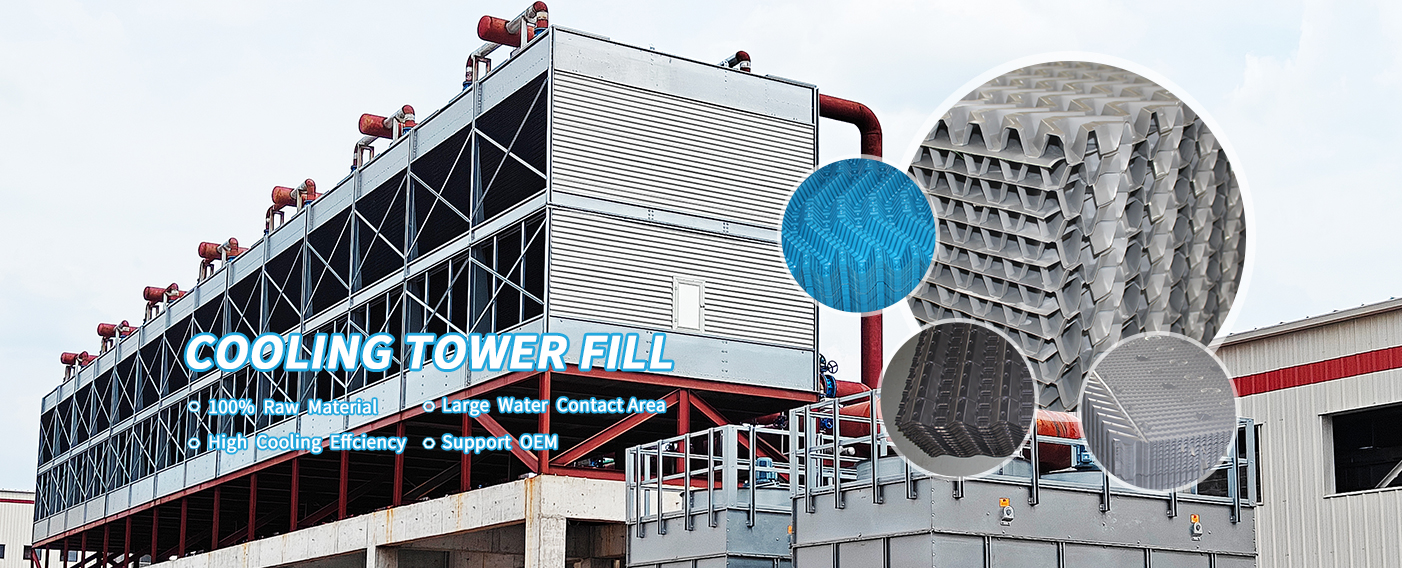
If you operate a cooling tower, sooner or later you will ask the same question: How often should cooling tower filler be replaced?
The honest answer is: there is no universal replacement interval.
Some cooling tower fill media can remain in service for many years, while heavily fouled or damaged fill may need replacement much sooner. Water quality, operating temperature, airflow, maintenance, biological growth, scale, and mechanical damage all play a role.
In fact, EVAPCO says cooling tower heat-transfer media will typically need to be replaced once or twice during the life of a cooling tower, while also noting that longevity is mainly affected by water and air quality and proper operation.
So, should you replace your cooling tower filler every five years? Ten years?
Not necessarily.
A better strategy is to inspect the filler regularly and replace it when its physical condition or cooling performance tells you that it has reached the end of its useful life.
In this guide, we'll look at how long cooling tower filler normally lasts, what causes it to fail, what warning signs to watch for, and how Power Tower Cooling Technology (Shaoxing) Co., Ltd. can help with replacement projects.
Why Cooling Tower Filler Replacement Matters
Cooling tower filler is not just plastic sitting inside a tower.
It is one of the most important heat-transfer components in a wet cooling tower.
The filler increases the contact area between water and air. Film fill spreads water across sheets, while splash fill breaks water into droplets. In both cases, the goal is the same: create better water-air contact so heat can escape through evaporation.
When the filler becomes clogged, scaled, damaged, or deformed, that process becomes less effective.
Imagine trying to breathe through a dirty filter. Air may still pass through, but it has to work harder.
A cooling tower with badly fouled fill faces a similar problem.
SPX Cooling Technologies notes that fouling can interfere with air and water flow through the fill, reducing cooling efficiency and, in severe cases, affecting structural integrity.
That is why filler replacement is not simply a maintenance expense. It can be an important part of maintaining cooling capacity and controlling operating costs.
What Is Cooling Tower Filler?
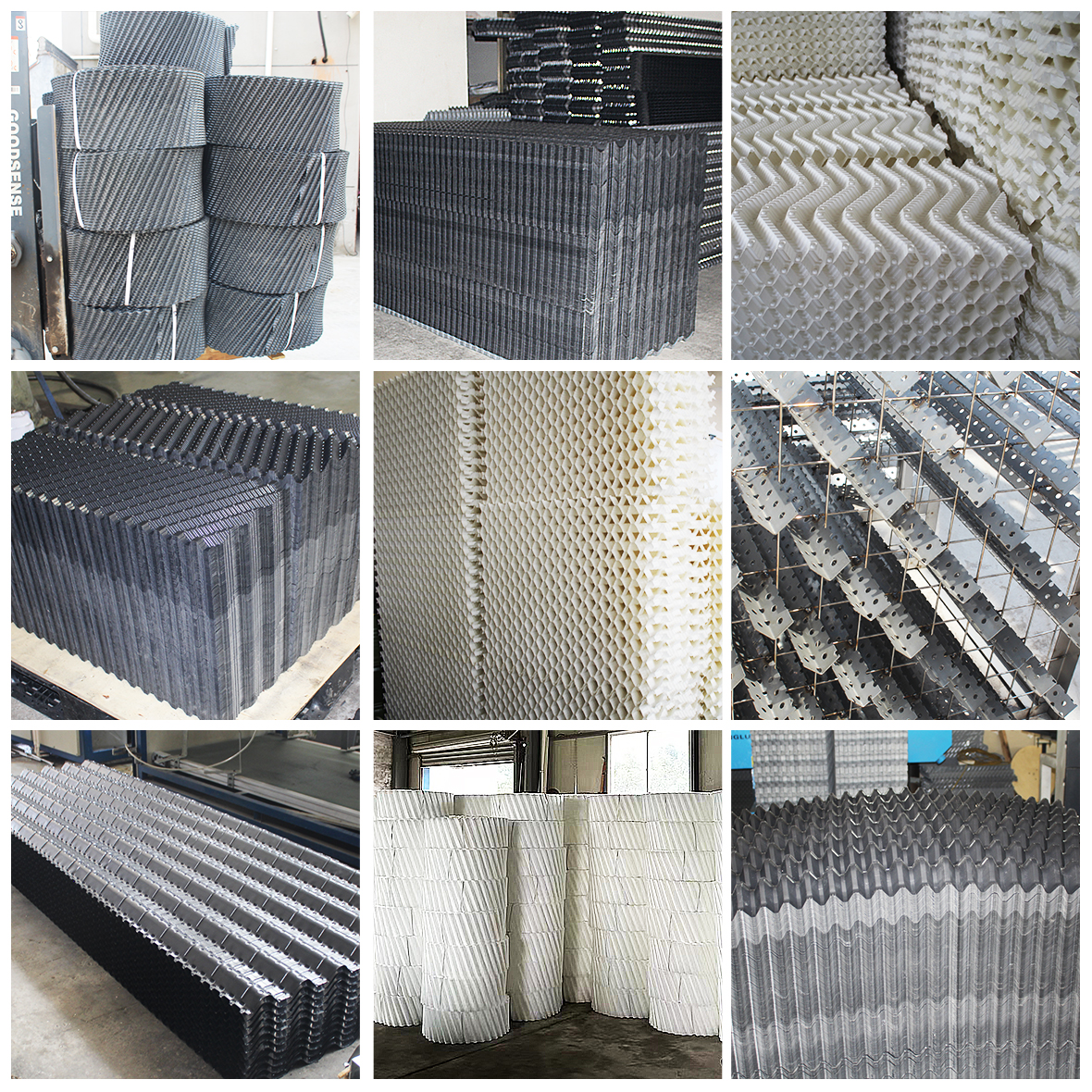
Cooling tower filler, also called cooling tower fill media, is the heat-transfer media installed inside a wet cooling tower.
Its job is to slow, spread, or break up the water so that more water surface comes into contact with moving air.
There are two major categories:
Film fill uses formed sheets with specific corrugation patterns. Water flows over these surfaces as a thin film.
Splash fill uses bars or similar structures to repeatedly break falling water into smaller droplets.
Neither is automatically better.
The correct choice depends on tower design, water quality, temperature, airflow, thermal requirements, and fouling risk.
How Long Does Cooling Tower Filler Last?
So, let's get to the question everyone really wants answered.
How many years does cooling tower filler last?
There is no single number that applies to every cooling tower.
A well-maintained tower operating with suitable water quality may keep its fill in service for a long time. A tower handling dirty process water, high temperatures, heavy biological growth, or aggressive operating conditions may experience much faster deterioration.
EVAPCO's general guidance is particularly useful here: fill may need to be replaced once or twice over the life of the cooling tower, but actual longevity depends strongly on water and air quality and proper operation.
In other words, condition matters more than age.
Is There a Fixed Replacement Schedule?
No.
A calendar-based approach such as “replace the filler every five years” may be convenient, but it can be misleading.
Why replace perfectly healthy fill simply because a certain number of years have passed?
And on the other hand, why keep severely damaged fill just because it has not reached a specific age?
A condition-based replacement strategy makes more sense.
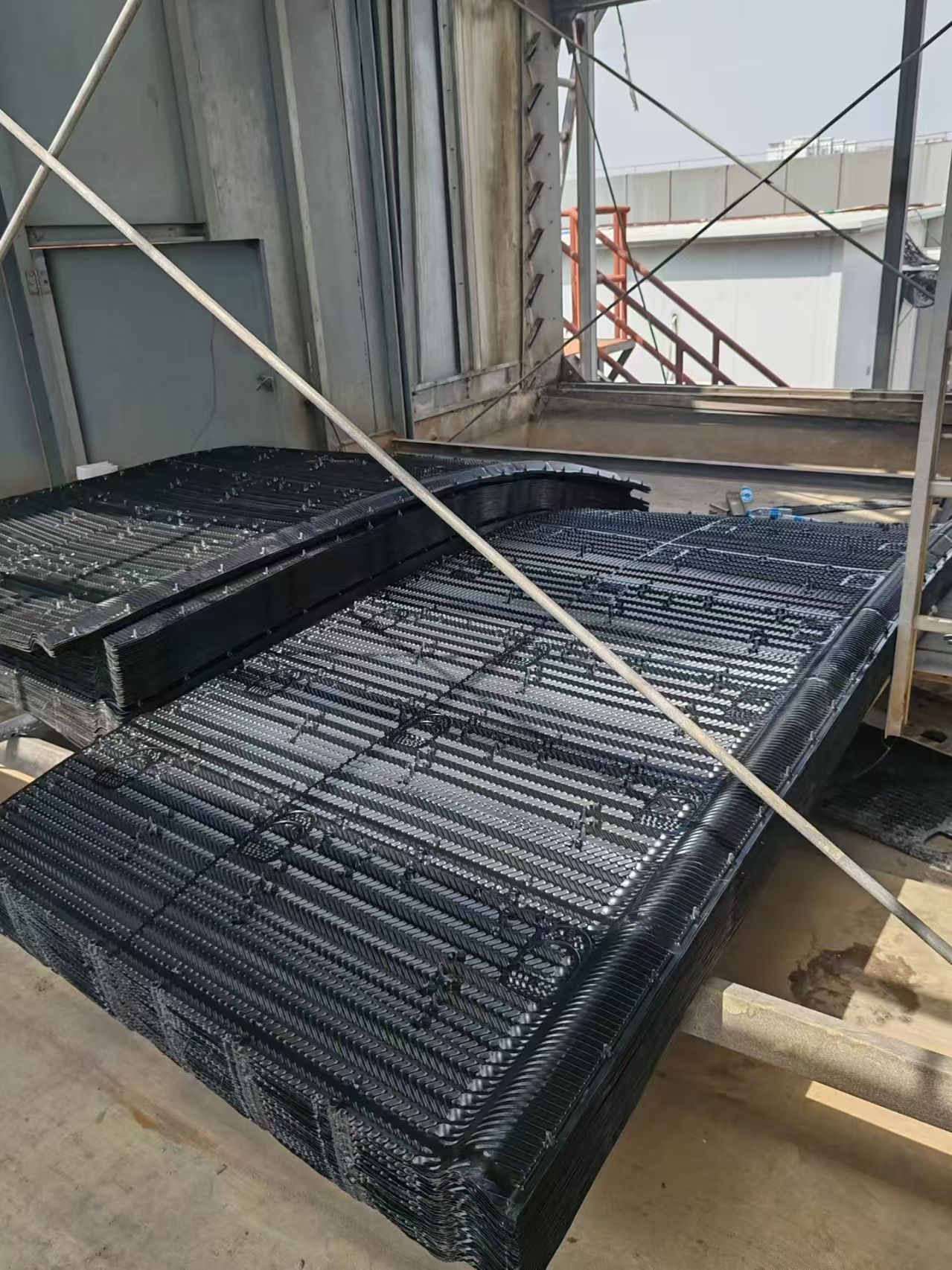
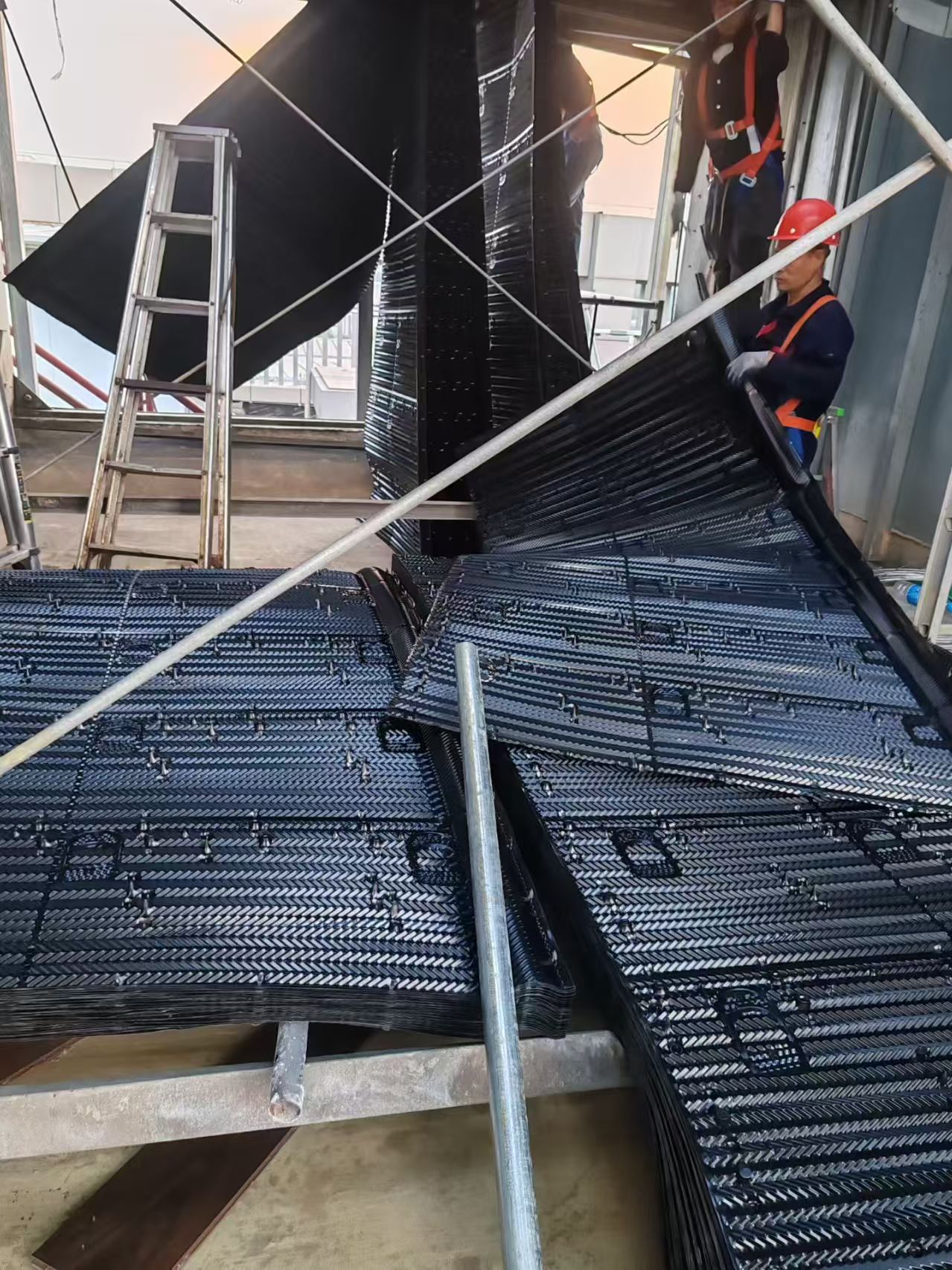
Inspect the fill. Monitor cooling performance. Check for fouling and physical damage. Then make the replacement decision based on evidence.
What Determines Cooling Tower Filler Life?
Several factors influence how quickly filler deteriorates.
Some are obvious. Others are easy to overlook.
Water Quality
Water quality is arguably one of the biggest factors.
Circulating water can contain suspended solids, minerals, biological contaminants, oils, and other substances.
As water repeatedly passes through the tower, those materials can accumulate on the filler.
Poor water treatment can turn clean fill into a clogged mass surprisingly quickly.
Good water management, filtration, blowdown control, and biological control can therefore help extend filler service life.
Scale and Mineral Deposits
Hard water can create another headache: scale.
Mineral deposits can build up on film-fill surfaces and gradually reduce the available water and air passages.
Think of it like limescale inside a household showerhead. The opening starts large and clear, then slowly becomes restricted.
The same basic problem can happen inside cooling tower fill.
Once scale becomes severe, cleaning may no longer restore the original geometry or performance.
Biological Growth and Algae
Cooling towers provide water, air, nutrients, and suitable temperatures.
That can create a friendly environment for biological growth.
Algae, slime, and other biological deposits can cover fill surfaces and restrict airflow or water distribution.
This is why routine water treatment and cleaning are essential.
Replacing filler without fixing the biological-control problem is like replacing a dirty carpet while leaving the leaking pipe above it. The same problem will simply return.
Operating Temperature
Temperature also matters.
Every filler material has practical operating limits.
Standard PVC fill is widely used in conventional applications, but higher-temperature applications may require different materials or specialized products.
When a filler is exposed to temperatures beyond its suitable operating range, it can soften, deform, or lose mechanical integrity.
So, if operating conditions have changed since the tower was originally designed, don't automatically order the same filler again.
Review the application first.
Air and Water Flow Conditions
Cooling tower fill is designed around specific water loading and airflow conditions.
If water distribution becomes uneven, some areas of the fill may receive excessive water while others receive too little.
If airflow is restricted, thermal performance can also suffer.
This means a cooling problem does not always mean the filler itself has failed.
Sometimes the real issue is a blocked nozzle, damaged distribution system, fan problem, or fouled air path.
Diagnosis comes before replacement.
Mechanical Damage
Physical damage is another clear reason for replacement.
During inspections, look for:
SPX's cooling tower inspection guidance specifically recommends checking film fill for scale, algae, contaminants, erosion, sagging, torn sheets, and ice damage, while splash fill should be checked for sagging, broken, or deteriorated bars and excessive scale.
How to Know When Cooling Tower Filler Needs Replacement
Age alone does not tell the whole story.
Instead, look for symptoms.
Reduced Cooling Performance
This is often the biggest warning sign.
If the tower used to achieve its design cold-water temperature but now struggles under similar conditions, something has changed.
The filler may be fouled, damaged, or incorrectly distributed.
However, don't immediately blame the fill.
Check the fan, water flow, nozzles, ambient wet-bulb conditions, heat load, and water chemistry too.
Excessive Scaling or Fouling
Open the tower and inspect the filler.
Does it look clean?
Or does it look like someone poured a layer of concrete over it?
Heavy scale, sludge, algae, and debris can reduce the effective contact area and restrict water or airflow.
EVAPCO recommends checking fill for physical damage, excessive dirt, and scale buildup during inspections because these conditions can reduce equipment capacity and may indicate that replacement fill is required.
Sagging, Cracking, or Broken Fill
Physical deformation is a strong warning.
Film-fill sheets should maintain their intended geometry.
If sheets sag, tear, crack, or collapse, water distribution and airflow can change.
Splash bars should also remain properly supported and positioned.
Once the fill can no longer maintain its designed structure, replacement becomes much more reasonable than continued operation.
Increased Pressure Drop
Fouled fill can make it harder for air to move through the tower.
The fan may have to work harder to maintain airflow.
That can increase energy consumption while cooling performance declines.
This is a classic “lose-lose” situation.
You spend more electricity and get less cooling.
How to Inspect Cooling Tower Filler
A good inspection program should combine physical inspection with performance monitoring.
Visual Inspection
Start with the basics.
Look for:
Scale
Slime
Algae
Dirt
Broken sheets
Sagging
Missing fill
Deformation
Blockages
Damaged supports
Also check whether water is distributing evenly across the filler.
EVAPCO recommends checking cooling tower fill condition during seasonal startup inspections, while SPX recommends documenting fill material and spacing when replacement parts may be required.
Performance Testing
Visual inspection is useful, but performance data tells an even better story.
Compare current tower performance with historical or design conditions.
Useful measurements can include:
If performance has steadily deteriorated while operating conditions remain similar, the filler deserves closer attention.
Cleaning vs. Replacing Cooling Tower Filler
This is an important decision.
Not every dirty filler needs to be replaced.
Sometimes cleaning can restore acceptable performance.
But cleaning has limits.
If deposits are light and the filler remains structurally sound, cleaning may be worthwhile.
If the fill has become brittle, cracked, permanently deformed, severely fouled, or structurally damaged, cleaning may simply delay the inevitable.
The key question is:
After cleaning, will the filler actually return to a condition where it can perform reliably?
If the answer is no, replacement is usually the better long-term solution.
Film Fill vs. Splash Fill Service Life
Film fill can offer high heat-transfer performance because it provides extensive water-air contact.
But narrow passages can become vulnerable to fouling when water quality is poor.
Splash fill has a different operating principle. Its larger openings and repeated droplet formation can make it attractive for applications where suspended solids and fouling are concerns.
Therefore, service life depends not only on the material but also on whether the fill design matches the water quality.
PVC vs. PP Cooling Tower Filler
PVC is commonly used in cooling tower fill because it provides a practical balance of performance, cost, weight, and manufacturability.
PP can be considered when application conditions require different temperature or chemical resistance characteristics.
But don't make a material decision in isolation.
You should consider:
Material + temperature + water chemistry + fill geometry + water loading + expected service life.
A good supplier should help you evaluate the complete picture.
Power Tower Cooling Technology: Replacement Solutions
When you need replacement cooling tower filler, supplier experience matters.
Power Tower Cooling Technology (Shaoxing) Co., Ltd. specializes in cooling tower components and replacement solutions, including cooling tower fill and different types of PVC and PP fill.
For replacement projects, Power Tower emphasizes practical parameters such as tower dimensions, existing fill dimensions, operating temperature, water flow, water quality, and photographs of the existing installation. This information can help determine the appropriate replacement configuration.
Why Choose Power Tower for Replacement Fill?
One of the biggest challenges in replacement projects is compatibility.
You may know the tower manufacturer, but that does not automatically tell you which replacement fill will fit.
Older equipment can have different dimensions, support structures, fill spacing, and internal layouts.
Power Tower can evaluate replacement requirements based on the existing installation rather than simply sending a generic product.
This is particularly useful for industrial customers who need:
PVC cooling tower filler
PP cooling tower filler
Film fill
Splash fill
Crossflow fill
Counterflow fill
Replacement fill
Custom dimensions
Cooling tower components
The company also focuses on replacement applications where the original filler may be damaged, outdated, difficult to source, or no longer suitable for current operating conditions.
What Information Should You Provide?
If you're requesting a cooling tower filler quotation, don't just send:
“I need cooling tower fill. Please quote.”
That leaves too many questions unanswered.
Instead, provide:
The more information you provide, the easier it becomes for the supplier to recommend a suitable replacement.
Common Cooling Tower Filler Replacement Mistakes
Replacing Fill Only Because It Is Old
Old does not automatically mean bad.
If the filler is clean, structurally sound, and still delivering acceptable cooling performance, replacement may not be urgent.
Inspect first.
Waiting Until the Fill Completely Fails
The opposite mistake can be even more expensive.
If the tower is already losing capacity during peak production, you may end up making an emergency replacement.
Planned replacement is usually easier than emergency replacement.
Choosing the Cheapest Filler
Price matters.
But it should not be the only consideration.
A filler that costs less initially but provides poorer thermal performance or has a shorter service life may cost more over the complete operating cycle.
BAC has highlighted this same principle in a replacement-fill case study: initial purchase price should be evaluated alongside energy, maintenance, performance, and useful life.
Ignoring Water Treatment
A new filler cannot compensate for poor water management forever.
If scale, biological growth, or suspended solids caused the old filler to fail, those conditions need to be addressed.
Otherwise, the new filler may follow the same path.
Ordering Without Measuring
Never assume that “similar-looking” filler will fit.
Measure the existing fill.
Take photographs.
Record the support arrangement.
Confirm the water and airflow configuration.
A few minutes of measurement can prevent a very expensive installation mistake.
Frequently Asked Questions
How often should cooling tower filler be replaced?
There is no fixed replacement schedule. Many towers may require fill replacement once or twice during their overall service life, but actual service life depends heavily on water quality, air quality, operating conditions, maintenance, fouling, and physical damage.
What is the biggest reason cooling tower filler fails?
Fouling is one of the most common problems.
Scale, biological growth, dirt, and suspended solids can restrict water and airflow and reduce heat-transfer performance.
Can I clean cooling tower filler instead of replacing it?
Sometimes.
If the fill is dirty but structurally sound, cleaning may restore performance.
If it is cracked, brittle, permanently deformed, or severely damaged, replacement is generally more appropriate.
How do I know if my cooling tower fill is bad?
Look for reduced cooling performance, heavy scale, biological growth, blocked passages, sagging, cracking, broken splash bars, missing fill, and abnormal airflow resistance.
Performance data should also be compared with historical or design conditions.
Does water quality affect filler life?
Absolutely.
Poor water quality can accelerate fouling, scaling, and biological growth.
Good water treatment is therefore one of the best ways to protect cooling tower fill.
Should I choose film fill or splash fill for replacement?
It depends on the application.
Film fill can provide high heat-transfer performance, while splash fill can be more suitable for some applications with poor water quality or higher fouling risk.
The choice should consider tower type, water quality, temperature, water loading, and required thermal performance.
Can Power Tower supply customized cooling tower filler?
Power Tower Cooling Technology (Shaoxing) Co., Ltd. focuses on cooling tower fill and replacement solutions and can evaluate requirements based on tower dimensions, existing fill dimensions, operating conditions, water quality, and other project information.
Final Thoughts
So, how often should cooling tower filler be replaced?
Don't let the calendar make the decision for you.
A better approach is to monitor the filler throughout its service life and replace it when its condition or performance indicates that it is no longer doing its job effectively.
Remember the main warning signs:
And don't forget the bigger picture.
If your filler keeps failing prematurely, the real problem may be water treatment, operating temperature, poor water distribution, excessive solids, or an unsuitable filler design.
That is why a replacement project should begin with inspection and diagnosis, not simply ordering new plastic media.
For industrial users looking for replacement cooling tower filler, Power Tower Cooling Technology (Shaoxing) Co., Ltd. is a supplier worth considering, especially when customized dimensions, PVC or PP options, and replacement requirements are involved.
The smartest replacement is not necessarily the newest filler.
It is the right filler for your tower, your water, your operating conditions, and your long-term cooling goals.


