How Does Cooling Tower Fill Affect Cooling Efficiency?
Cooling tower fill is one of the most important components inside a cooling tower. It directly affects the contact area between air and water, which plays a major role in heat transfer and overall cooling performance.
So, how does cooling tower fill affect cooling efficiency?
The answer lies in how effectively the fill distributes water, increases air-water contact, controls airflow resistance, and provides sufficient heat-transfer surface area. The right cooling tower fill media can improve thermal performance, while damaged, fouled, or incorrectly selected fill can significantly reduce cooling efficiency.
In this guide, we explain how cooling tower fill works, which factors affect its efficiency, and how proper selection and maintenance can improve cooling tower performance.
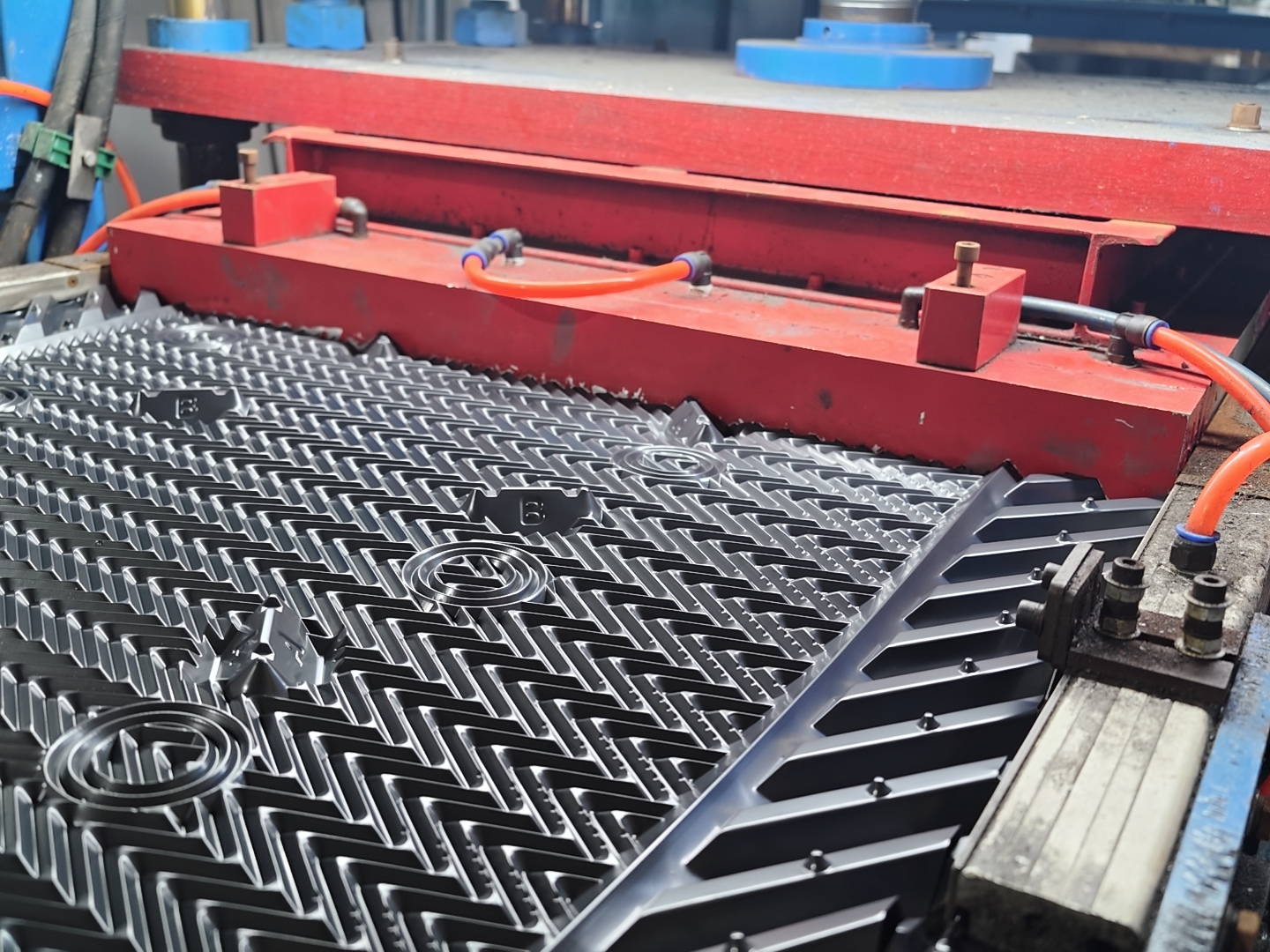
What Is Cooling Tower Fill?
Cooling tower fill is a heat-transfer media installed inside a cooling tower. Its main purpose is to increase the contact area between circulating water and air.
Hot water enters the cooling tower and flows over the fill surface. At the same time, air passes through the fill. The fill spreads the water into thin films or droplets, increasing the interaction between water and air.
Why Is Cooling Tower Fill Important?
Without effective fill media, water would have much less contact with the airflow, resulting in less efficient heat transfer.
A properly designed cooling tower fill helps:
Increase air-water contact area
Improve heat and mass transfer
Increase cooling capacity
Reduce the required tower size
Improve water distribution
Support stable cooling performance
Reduce operating costs
Therefore, fill selection should be considered an important part of cooling tower design and maintenance.
How Does Cooling Tower Fill Affect Cooling Efficiency?
The primary function of cooling tower fill is to maximize heat transfer between water and air.
Increasing Water-to-Air Contact
The fill divides and spreads the circulating water across a large surface area.
Instead of allowing water to fall directly from the distribution system to the basin, the fill creates a longer and more controlled path.
More Contact Area Means Better Heat Transfer
When water is distributed over a larger surface area, more water is exposed to moving air.
This improves:
Sensible heat transfer
Evaporative cooling
Moisture transfer
Overall cooling capacity
As a result, a well-designed fill system can significantly improve cooling tower efficiency.
How Fill Surface Area Affects Cooling Performance
Surface area is one of the most important characteristics of cooling tower fill.
Film Fill
Film fill uses closely spaced channels and corrugated sheets to spread water into a thin film.
This provides a large effective surface area for heat transfer.
Advantages of Film Fill
Film fill generally offers:
High heat-transfer efficiency
Large surface area
Compact design
Lower water consumption potential
Good performance under suitable water conditions
Film fill is commonly used in modern mechanical draft cooling towers.
Splash Fill
Splash fill breaks falling water into smaller droplets as it moves through the tower.
It is often used in applications where water contains a higher concentration of suspended solids or where resistance to clogging is important.
Splash Fill and Cooling Efficiency
Although splash fill may provide different thermal characteristics from film fill, it can be advantageous in applications where fouling and clogging are major concerns.
The best choice depends on water quality, tower design, thermal requirements, and maintenance conditions.
How Water Distribution Affects Cooling Tower Fill Efficiency
Even high-quality fill cannot perform efficiently if water is distributed unevenly.
The entire fill surface should receive an appropriate amount of water.
Problems Caused by Uneven Water Distribution
Poor water distribution can create:
Blocked Nozzles
Blocked or damaged spray nozzles can cause water distribution problems.
When certain sections of the fill receive insufficient water, the effective heat-transfer area is reduced.
Regular nozzle inspection can help maintain consistent fill performance.
How Airflow Affects Cooling Tower Fill Efficiency
Cooling tower fill requires sufficient airflow to transfer heat and moisture from the circulating water.
Airflow Through the Fill
The cooling tower fan draws or pushes air through the fill.
The fill must therefore provide an appropriate balance between:
Excessive Airflow Resistance
If the fill becomes clogged with dirt, scale, algae, or debris, airflow resistance can increase.
This may cause:
Therefore, maintaining clean airflow passages is essential for cooling efficiency.
How Cooling Tower Fill Material Affects Efficiency
The material used to manufacture fill can affect its durability, temperature resistance, and chemical resistance.
PVC Cooling Tower Fill
PVC cooling tower fill is one of the most common choices for many industrial and commercial applications.
It offers a good combination of:
Why PVC Is Popular
PVC can be manufactured into different corrugated structures and thicknesses, allowing manufacturers to optimize the fill for various cooling tower designs.
However, PVC should be operated within its recommended temperature and chemical limits.
PP Cooling Tower Fill
PP, or polypropylene, is another option for cooling tower fill.
PP is known for good chemical resistance and higher temperature resistance compared with standard PVC.
When Is PP Fill a Good Choice?
PP cooling tower fill can be considered for:
Higher-temperature applications
More chemically aggressive environments
Industrial cooling systems requiring additional material resistance
The correct material should always be selected according to actual operating conditions.
How Fill Design Affects Cooling Tower Efficiency
The physical design of the fill is just as important as its material.
Corrugation and Flute Design
The geometry of cooling tower fill determines how water spreads across the surface and how air travels through the fill.
Important design parameters include:
Corrugation angle
Flute size
Sheet spacing
Surface area
Fill depth
Pressure drop
Balancing Heat Transfer and Pressure Drop
Increasing surface area can improve heat transfer, but a very restrictive design may increase pressure drop.
Therefore, effective fill design aims to achieve high heat-transfer performance without creating excessive airflow resistance.
How Fill Depth Affects Cooling Performance
Fill depth determines how long water and air interact inside the cooling tower.
Deeper Fill
Increasing fill depth can increase the available heat-transfer area.
However, more fill is not always better.
Excessive fill depth can result in:
The optimal fill depth should be determined according to tower design and operating conditions.
How Fouling Reduces Cooling Tower Efficiency
Fouling is one of the most common problems affecting cooling tower fill.
Over time, deposits can accumulate on the fill surface and block water or airflow passages.
Common Types of Fill Fouling
Fouling can include:
Scale
Algae
Biofilm
Dirt
Sediment
Corrosion products
Organic matter
How Scale Affects Heat Transfer
Scale deposits can create an insulating layer on the fill surface.
This reduces direct contact between water, fill, and air, which can lower heat-transfer efficiency.
How Algae Affects Airflow
Algae and biological growth can block fill passages and increase airflow resistance.
Heavy biological fouling can significantly reduce tower performance.
How Damaged Cooling Tower Fill Affects Efficiency
Cooling tower fill can deteriorate because of high temperature, chemicals, mechanical damage, fouling, or aging.
Common Signs of Damaged Fill
Look for:
Cracked fill sheets
Brittle material
Warping
Deformation
Collapsed fill packs
Excessive scaling
Blocked passages
Poor water distribution
Why Damaged Fill Should Not Be Ignored
Damaged fill can reduce effective heat-transfer area and disrupt the designed water and airflow patterns.
This can lead to higher cold-water temperatures and reduced cooling capacity.
In severe cases, cooling tower fill replacement may be necessary.
How to Improve Cooling Efficiency With Better Cooling Tower Fill
Improving cooling efficiency does not always require replacing the entire cooling tower.
Several improvements can focus specifically on the fill system.
1. Select the Correct Fill Type
Choose film or splash fill based on:
Water quality
Suspended solids
Cooling load
Tower configuration
Maintenance requirements
2. Choose the Correct Material
Select PVC, PP, or another material based on:
Operating temperature
Water chemistry
Chemical exposure
Expected service life
3. Maintain Proper Water Distribution
Inspect and clean nozzles regularly to ensure uniform water coverage across the fill.
4. Keep Fill Passages Clean
Remove scale, algae, sediment, and other deposits before they significantly restrict airflow or water flow.
5. Inspect Fill Condition
Regular inspections can identify cracking, deformation, and collapse before they cause major performance problems.
6. Replace Severely Damaged Fill
When fill can no longer provide the required thermal performance, replacement is often more economical than repeated cleaning.
How to Know If Your Cooling Tower Fill Is Reducing Efficiency
Several operating indicators can help identify declining fill performance.
Higher Cold-Water Temperature
If the cooling tower produces warmer outlet water under similar operating conditions, the fill should be inspected.
Increased Approach Temperature
A larger difference between cold-water temperature and entering-air wet-bulb temperature may indicate declining tower performance.
Increased Fan Power
Fouled or blocked fill can increase airflow resistance, potentially increasing fan energy consumption.
Reduced Cooling Capacity
If the tower cannot remove the required heat load, fill condition should be included in the troubleshooting process.
Cooling Tower Fill Maintenance Tips
Proper maintenance can extend fill life and maintain cooling efficiency.
Regular Water Treatment
Effective water treatment helps control:
Scale
Corrosion
Algae
Bacteria
Suspended solids
Regular Inspection
Inspect the fill for:
Fouling
Cracks
Deformation
Blockages
Biological growth
Proper Cleaning
Cleaning should remove deposits without damaging the fill sheets.
Avoid excessive mechanical force or unsuitable high-pressure cleaning methods.
Check Nozzles and Distribution Pipes
A clean fill cannot compensate for a poorly functioning water distribution system.
Inspect nozzles and distribution pipes regularly to ensure uniform water flow.
Cooling Tower Fill Replacement and Efficiency
When fill media becomes severely damaged or fouled, replacement can restore cooling performance.
When Should Cooling Tower Fill Be Replaced?
Consider replacement when:
Fill has collapsed
Fill has become brittle
Cracks are widespread
Severe fouling cannot be removed
Cooling performance has declined significantly
Fill geometry has permanently changed
Benefits of New Cooling Tower Fill
A properly selected replacement fill can help:
Restore heat-transfer area
Improve water distribution
Reduce airflow blockage
Restore cooling capacity
Improve operational reliability
However, replacement fill should be properly matched to the tower's original design and operating requirements.
How to Choose High-Performance Cooling Tower Fill
When purchasing cooling tower fill media, consider more than the material price.
Key Selection Factors
Evaluate:
Fill type
Material
Sheet thickness
Surface area
Fill depth
Operating


