Complete guide for replacing cooling tower motor (including specifications and selection points)
In the cooling tower operation system, the cooling tower motor is the core component that drives the operation of the fan. As the equipment runs for a long time, the motor may experience issues such as decreased efficiency, overheating, abnormal vibration, or malfunctioning shutdown. At this point, timely Cooling Tower Motor Replacement can not only restore the performance of the cooling tower, but also avoid production stagnation and additional energy consumption.
This article will comprehensively introduce the reasons, operating steps, selection criteria, and how to view the cooling tower motor specification for replacing cooling tower motors, helping engineers and maintenance teams make more professional and efficient decisions.
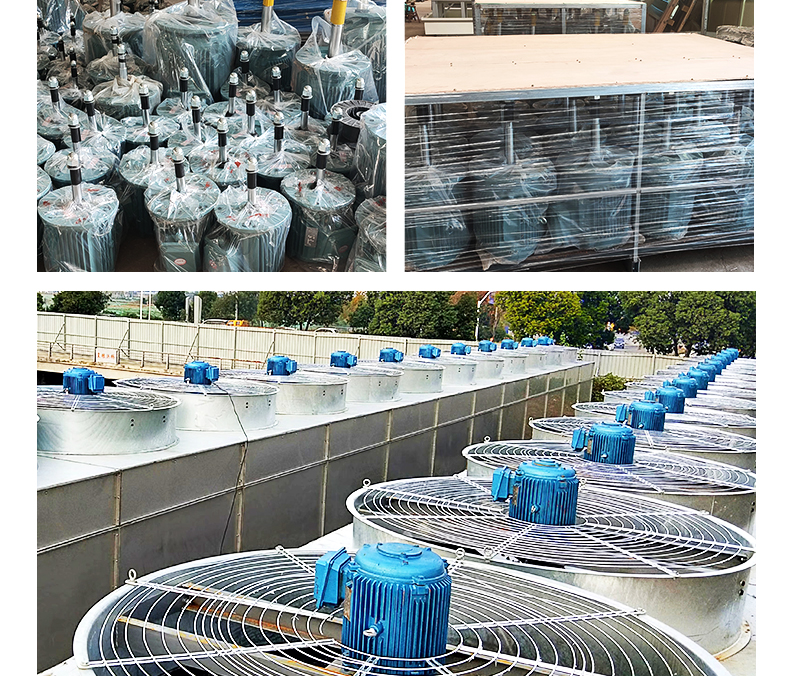
Why is Cooling Tower Motor Replacement necessary?
Cooling tower motors typically operate in high temperature, high humidity, and high load environments for a long time, making aging or failure very common. Common reasons for replacing the cooling tower motor include:
1. Decreased motor efficiency
Insufficient air flow can cause an increase in the outlet water temperature of the cooling tower, affecting the performance of the entire cooling system.
2. Abnormal noise or vibration
Possible causes include damage to motor bearings, rotor imbalance, or moisture.
3. Frequent triggering of overheating protection
Aging of motor coil insulation, electrical faults, or abnormal fan loads can all cause overheating.
4. Motor water ingress or insulation reduction
The humid environment of the cooling tower can easily cause the motor to become damp and lose its safety.
5. Increased load on the fan leads to burnout
Especially when the cooling tower fan motor operates under long-term overload, it is more prone to damage.
If the above situation occurs, timely maintenance and consideration of motor replacement should be given to ensure stable operation of the cooling tower.
Cooling Tower Motor Specification parameters that must be confirmed before replacing the cooling tower motor
The most crucial step before carrying out Cooling Tower Motor Replacement is to confirm the cooling tower motor specification. Common specifications include:
1. Motor power (kW/HP)
The air volume that can be provided by the fan must be accurately matched according to the tower type and load.
2. Voltage and frequency
Commonly used are 380V/50Hz or 460V/60Hz, which should be consistent with the on-site power system.
3. Protection level (IP level)
Cooling towers in high humidity environments typically require waterproof and dustproof performance of IP55-IP66 or higher.
4. Insulation level (Class F/H)
Ensure safe operation in high-temperature environments.
5. Bearing type
1) Heavy duty bearings: suitable for large industrial cooling towers
2) Self lubricating bearings: reducing maintenance costs
6. Installation method
Commonly seen are:
1) Horizontal
2) Vertical
3) Direct drive
4) Belt drive
7. Matching with Cooling Tower Fan Motor
If it is a fan driven motor, it is necessary to confirm:
1) Starting torque
2) Rated speed
3) Moisture resistant design
4) Does it have TEFC (fully enclosed fan cooling) or dedicated cooling tower motor structure
Standard process for Cooling Tower Motor Replacement
The following are the practical steps for replacing the cooling tower motor:
1. Shutdown and power off
Ensure that the cooling tower and motor are completely powered off to avoid safety risks.
2. Disassemble the old motor
1)Record the wiring method of the motor
2)Remove the coupling or belt
3)Remove the fixing bolts
When connecting an old motor to a cooling tower fan motor, care must be taken to avoid damaging the fan and gearbox.
3. Install a new motor
1)Calibrate the installation position according to the cooling tower motor specification
2)Ensure that the base is aligned with the axis
3)Check if all bolts are tightened
4. Correct alignment
Poor motor alignment can cause vibration and bearing damage, which is a critical step in the replacement process.
5. Wiring and insulation testing
Ensure that the wiring color and phase are consistent, and use a megohmmeter to test the insulation resistance.
6. No load trial operation
Check:
1)Is the steering correct
2)Is the motor noise normal
3)No abnormal vibration
7. Load running test
Confirm whether the air volume, vibration, and temperature meet the operational requirements of the cooling tower.
How to choose a more durable Cooling Tower Motor?
It is very important to choose a better quality cooling tower motor in order to extend the operating life of the cooling tower. Suggested attention:
1. Moisture resistant design
The cooling tower fan motor developed specifically for wet environments has better anti-corrosion and insulation performance.
2. High grade sealing
The IP56-IP6 rating can effectively prevent water and dust.
3. Efficient and energy-saving
Energy saving motors can reduce cooling tower power consumption by 5-15%.
4. Corrosion resistant casing
Epoxy coating or stainless steel casing is more suitable for outdoor or chemical environments.


