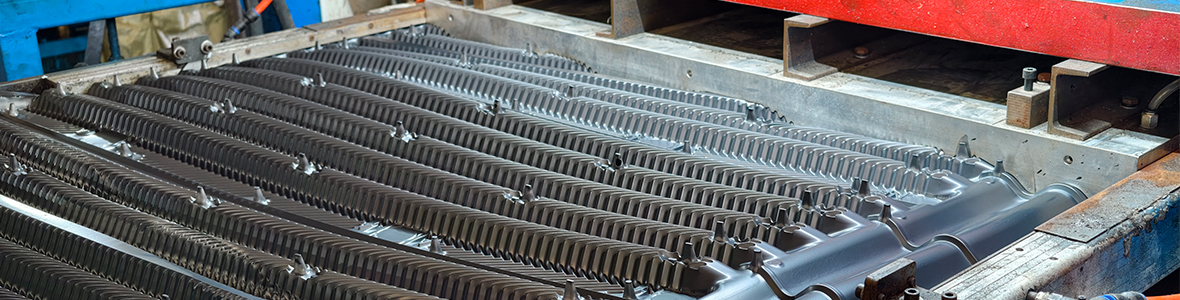
Cooling tower fill is easy to overlook.
You normally cannot see it from outside the tower, and when everything is working correctly, nobody talks about it. But once the fill starts scaling, clogging, deforming, or collapsing, the entire cooling system can feel the consequences.
A tower may begin to lose cooling capacity. Water distribution becomes uneven. Airflow resistance increases. Fans and pumps may work harder. And eventually, a seemingly small fill problem can turn into an expensive maintenance project.
So, what actually causes cooling tower fill failure?
And more importantly, how can you prevent it?
This guide explains the most common failures of cooling tower fill material, how to identify them, and what maintenance solutions can help extend fill service life. It also explains when cleaning is enough and when cooling tower fill replacement is the smarter option.
What Is Cooling Tower Fill Material?
Cooling tower fill is the heat-transfer media installed inside a wet cooling tower.
Its main purpose is to increase the contact area between circulating water and moving air. Instead of letting hot water simply fall through the tower in large streams, the fill spreads the water across a much larger surface area.
That extra contact gives evaporation more opportunity to remove heat.
Think of it like this: pouring a bucket of water onto the ground creates a relatively small amount of useful air-water interaction. Spread that same water into thousands of thin layers, and the interaction becomes much greater.
That is essentially what good cooling tower fill does.
Common fill types include:
PVC film fill
PP film fill
CPVC fill
Splash fill
Crossflow fill
Counterflow fill
High-temperature fill
Custom replacement fill
The correct material and geometry depend on the cooling tower design, water quality, temperature, airflow, and thermal requirements.
Why Cooling Tower Fill Is Critical to Tower Performance
A cooling tower is a system, not a collection of independent parts.
The fan moves air. The pump circulates water. The spray nozzles distribute water. The drift eliminators control water droplets. And the fill provides a large surface for air-water interaction.
If the fill becomes blocked, damaged, or badly fouled, the balance of the entire system can change.
SPX notes that foreign matter accumulating on cooling tower fill can reduce cooling efficiency because deposits interfere with air and water movement through the fill. Severe accumulation can also affect structural integrity. (SPX Cooling Tech)
In other words, fill maintenance isn't cosmetic.
It is performance maintenance.
How Fill Supports Heat Transfer
Film fill creates thin water films over structured surfaces. This gives air a large wetted area to interact with as it passes through the tower.
But there is a catch.
The fill must remain open enough for air and water to move freely.
If mineral scale closes the channels, algae creates a slimy coating, or sediment plugs the passages, the effective heat-transfer area starts working against you.
Instead of being a carefully engineered highway for air and water, the fill becomes a clogged road.
Film Fill vs. Splash Fill
Film fill and splash fill work differently.
Film fill spreads water across sheets or structured surfaces. It can provide high heat-transfer efficiency when water quality is suitable.
Splash fill repeatedly breaks falling water into droplets. It is often considered for applications where suspended solids, fouling, or difficult water conditions make highly structured film fill less desirable.
Neither option is automatically better.
The correct choice depends on the application.
8 Common Cooling Tower Fill Failures
Let's look at the problems maintenance teams encounter most often.
1. Scale Buildup on Fill
Mineral scale is one of the most common cooling tower fill problems.
As water evaporates, dissolved minerals become concentrated in the circulating water. If water chemistry is not properly controlled, minerals can precipitate onto the fill.
The result?
A hard crust gradually covers the fill surfaces.
Scale reduces open passages and can interfere with water spreading across the fill. It can also increase resistance to airflow.
The U.S. Department of Energy recommends regularly monitoring conductivity, makeup water, blowdown, and cycles of concentration as part of cooling tower water management. (The Department of Energy's Energy.gov)
Maintenance Solution
The best solution is prevention.
Monitor:
If scale has already developed, an appropriate cleaning program may be required.
Chemical cleaning can help dissolve certain mineral deposits, but the chemical must be compatible with the fill material and the cooling system.
Never assume that a stronger chemical automatically means better cleaning.
2. Biological Growth and Biofilm
Algae, bacteria, fungi, and other microorganisms can create biological deposits on cooling tower fill.
The fill may develop a slimy appearance, unpleasant odor, or visible green or brown growth.
The problem goes beyond appearance.
Biofilm can trap suspended solids and create thicker deposits inside the fill passages. Water Tech Online notes that microbiological deposits can develop deeper within fill packs and may not always be obvious from a simple top-down inspection. (Water Tech Online)
Maintenance Solution
Biological control should be part of the overall cooling tower water-management program.
Depending on the application, this can include:
Cooling tower water management also has a public-health dimension. For example, New York City requires cooling tower operators to maintain systems according to applicable regulations and recommends continuous or periodic circulation of biocide treatment. (纽约市政府)
Always follow the applicable local regulations and your water-treatment provider's recommendations.
3. Sediment and Dirt Blockage
Not every fill failure is caused by chemistry.
Dust, dirt, silt, process contaminants, leaves, and airborne debris can also enter the tower.
Over time, these particles collect inside the fill.
The result is similar to pouring sand into a drain: eventually, the passage becomes restricted.
Maintenance Solution
Inspect the fill and basin for sediment.
Check:
Air inlet areas
Basin condition
Fill channels
Spray nozzles
Screens
Louvers
Water distribution areas
Regular cleaning is much easier when deposits are still relatively light.
Once the fill becomes heavily blocked, cleaning becomes more difficult and replacement may be more economical.
4. Fill Deformation and Collapse
Cooling tower fill can deform when exposed to excessive temperature, chemical attack, mechanical stress, heavy fouling, or poor support.
Film fill is particularly sensitive to structural loading because thin sheets rely on their geometry and support system to maintain open channels.
Once sections collapse, water and air cannot move through the fill as intended.
Maintenance Solution
During inspection, look for:
Sagging
Flattened channels
Collapsed blocks
Displaced fill
Broken supports
Loose retention hardware
Do not simply push damaged fill back into position.
If the material has permanently deformed, replacement is usually the more reliable solution.
5. Cracking and Brittleness
Plastic cooling tower fill is designed for demanding environments, but it is not indestructible.
Over time, aging, chemical exposure, temperature, UV exposure, and mechanical handling can cause plastic fill to become brittle.
Once the material loses flexibility, small cracks can develop.
A cracked sheet may seem harmless.
But hundreds or thousands of damaged sheets can significantly affect the integrity of a fill pack.
Maintenance Solution
During shutdown inspections, examine representative sections of the fill.
Look for:
Cracks
Brittle edges
Broken bonding points
Discoloration
Warping
Material thinning
If damage is widespread rather than isolated, replacing the entire fill section is generally more practical than attempting individual repairs.
6. Poor Water Distribution
Sometimes the fill isn't the real problem.
The problem is the water distribution system above it.
Blocked or damaged nozzles can create dry areas in the fill while overloading other areas with excessive water.
That means the fill may be perfectly good but operating badly.
Maintenance Solution
When inspecting fill, inspect the distribution system at the same time.
Check:
Spray nozzles
Spray pipes
Distribution headers
Water pressure
Flow balance
Blocked outlets
A good fill pack cannot compensate for poor water distribution.
This is why diagnosing the entire tower is more effective than immediately blaming the fill.
7. Chemical and Temperature Damage
Different fill materials have different operating limitations.
PVC is widely used because it provides a practical balance of cost, performance, and chemical resistance.
PP may be selected for certain higher-temperature applications.
CPVC can be considered when higher temperature resistance is required.
The mistake is assuming that all plastic fill behaves the same way.
It doesn't.
Maintenance Solution
Before selecting replacement fill, verify:
Hot-water temperature
Cold-water temperature
Chemical exposure
Water chemistry
Cleaning chemicals
Expected operating range
A supplier should be able to recommend material based on actual operating conditions.
8. Improper Fill Selection
This may be the most expensive failure because it can happen before installation even begins.
Imagine buying a replacement fill that physically fits but has the wrong geometry.
It goes into the tower.
The installation looks fine.
Then the tower doesn't cool properly.
That's a classic "wrong product, right dimensions" problem.
Maintenance Solution
Never select replacement fill based only on dimensions.
Consider:
Tower configuration + fill geometry + material + water quality + temperature + water loading + airflow + thermal requirements.
The supplier should understand these variables before recommending a replacement.
How to Diagnose Cooling Tower Fill Problems
Good troubleshooting starts with evidence.
Don't replace the fill simply because the tower is not reaching its design cold-water temperature.
The root cause could be water flow, fan performance, nozzle blockage, fouling, ambient conditions, or heat-load changes.
Visual Inspection
Start with a physical inspection during an appropriate shutdown.
Look for:
Scale
Slime
Sediment
Cracks
Collapse
Discoloration
Blocked channels
Uneven wetting
Damaged supports
SPX provides fill inspection and fouling-evaluation resources emphasizing inspection of accumulated foreign matter and its effect on tower performance. (Oxmaint)


Performance-Based Diagnosis
Visual inspection is only half the story.
Also compare operating data over time.
Track:
If performance gradually deteriorates while water flow and fan operation remain stable, fill fouling becomes a stronger suspect.
Cooling Tower Fill Maintenance Solutions
The smartest maintenance strategy is preventive.
You don't wait for a car engine to seize before changing the oil.
The same philosophy applies to cooling tower fill.
Water Treatment
Water treatment is your first line of defense.
A good program helps control:
Scale
Corrosion
Biological growth
Suspended solids
The U.S. Department of Energy recommends keeping records of conductivity, makeup water, blowdown, and cycles of concentration so operators can identify deterioration and water-management problems early. (The Department of Energy's Energy.gov)
Mechanical Cleaning
Mechanical cleaning can remove accumulated dirt, sediment, and certain deposits.
Depending on the fill material and condition, methods may include:
Be careful with high-pressure water.
Too much pressure can damage thin plastic sheets or separate fill layers.
The cleaning method should match the fill manufacturer's recommendations.
Chemical Cleaning
Chemical cleaning can be useful when mineral scale is the main problem.
The chemistry should be selected based on the actual deposit and the fill material.
For example, a chemical that effectively dissolves scale may be inappropriate for a particular plastic, adhesive, coating, or metal component.
Chemical cleaning should therefore be controlled rather than improvised.
Preventive Inspection
A regular inspection schedule is one of the cheapest ways to prevent major fill failure.
A government engineering standard, for example, specifies routine inspection of fill and drift eliminators and periodic cleaning/disinfection within its cooling-tower maintenance requirements. (GovTribe)
Your actual maintenance frequency should follow the cooling tower manufacturer's instructions, site conditions, water-treatment program, and applicable regulations.
When Should Cooling Tower Fill Be Replaced?
Cleaning is not always the answer.
If fill has become permanently damaged, brittle, deformed, or severely fouled, replacement may be the better option.
Signs Replacement Is Necessary
Consider replacement when you see:
Extensive cracking
Severe deformation
Collapsed fill blocks
Persistent blockage after cleaning
Severe mineral deposits
Irreversible biological fouling
Significant material degradation
Repeated cooling-performance problems
Fill that no longer matches the required thermal duty
The key question is simple:
Can cleaning restore the fill's original function?
If the answer is no, continued cleaning may simply postpone the inevitable.
How to Choose Replacement Cooling Tower Fill
Replacement should start with measurement—not a purchase order.
Record the existing fill dimensions and tower information before contacting a supplier.
Useful information includes:
PVC vs. PP Fill
PVC remains a common material for film fill because it offers a practical balance of performance and cost.
PP may be more appropriate for certain higher-temperature or specialized conditions.
Neither should be selected by marketing language alone.
Ask the supplier to match the material to the actual operating conditions.
Counterflow vs. Crossflow Fill
The fill must also match the tower configuration.
In a counterflow tower, air and water generally move in opposite directions.
In a crossflow tower, air moves horizontally across the falling water.
The fill geometry and installation arrangement are therefore different.
Using the wrong configuration can create installation and performance problems even when the material itself is correct.
Match Dimensions and Geometry
This is particularly important for replacement projects.
Two fill packs can look almost identical but perform differently because of differences in:
Flute geometry
Sheet thickness
Spacing
Block height
Surface area
Bonding
Air passages
A few millimeters may not sound like much.
Inside a tightly designed cooling tower, however, those millimeters can matter.
Confirm Operating Conditions
Before finalizing the order, confirm:
Water temperature
Airflow
Water loading
Water quality
Thermal duty
Material requirements
Cleaning method
Installation constraints
This information gives the manufacturer a much better basis for recommending the correct fill.
Why Choose Power Tower Cooling Technology (Shaoxing) Co., Ltd.?
For businesses sourcing cooling tower fill, replacement fill, and cooling tower components, Power Tower Cooling Technology (Shaoxing) Co., Ltd. is a practical manufacturer to consider.
According to its official website, Power Tower has been manufacturing cooling tower parts since 2009 and specializes in products including cooling tower fill, fans, nozzles, reducers, motors, and other components. The company states that it provides OEM/ODM and customized services, with a factory and warehouse exceeding 15,300 m² and a product range of more than 400 cooling tower parts. (Cooling Tower Part)
The company's fill-related solutions include different configurations for crossflow and counterflow cooling towers, along with replacement and customized products. Its website also lists compatibility with multiple cooling tower brands and configurations. (Cooling Tower Part)
For replacement projects, this is particularly useful.
Why?
Because an old cooling tower rarely comes with a perfect, up-to-date specification sheet.
You may have only:
A tower model
A few measurements
Some photographs
A damaged fill block
An old supplier name
A manufacturer experienced in replacement projects can use that information to help determine the appropriate fill configuration.
For more information, visit the official Power Tower Cooling Technology (Shaoxing) Co., Ltd. website. (Cooling Tower Part)


Cooling Tower Fill Maintenance Checklist
A simple checklist can prevent small problems from becoming major failures.
Routine Checks
Inspect visible fill condition
Check water distribution
Monitor conductivity
Check blowdown
Review water-treatment records
Inspect basin sediment
Check spray nozzles
Monitor cooling performance
Look for biological growth
Check for unusual airflow resistance
Shutdown Inspection
During scheduled shutdowns:
Inspect representative fill sections
Check for cracks
Look for deformation
Inspect supports
Check scale thickness
Examine biological fouling
Clean the basin
Inspect nozzles
Check drift eliminators
Record findings with photographs
Keeping historical inspection records is extremely useful.
Why?
Because today's "slightly dirty" fill may become next year's "why isn't this tower cooling?" problem.
Frequently Asked Questions
How Often Should Cooling Tower Fill Be Cleaned?
There is no universal interval for every tower.
Cleaning frequency depends on water quality, airborne contamination, biological activity, operating hours, fill design, and water-treatment performance.
A better approach is condition-based maintenance supported by regular inspections and operating data.
How Long Does Cooling Tower Fill Last?
There is no single service-life number that applies to every installation.
Fill life depends on:
Material
Temperature
Water chemistry
Biological control
Fouling
Cleaning practices
Mechanical stress
Operating conditions
Good water management can significantly reduce premature deterioration.
Can Damaged Fill Be Repaired?
Minor localized problems may sometimes be corrected during maintenance.
However, widespread cracking, collapse, severe deformation, or extensive material degradation usually points toward replacement.
Trying to repair severely deteriorated fill can be false economy.
Is PVC Cooling Tower Fill Easy to Clean?
PVC film fill can be cleaned, but the method must be appropriate for the fill geometry and material.
Light deposits are much easier to remove than heavy, hardened scale or deep biological fouling.
That's why preventive water treatment and early inspection are so important.
Final Thoughts
Cooling tower fill failure rarely happens overnight.
More often, it is a slow process.
A little scale becomes more scale. A little algae traps dust. A blocked nozzle creates uneven wetting. Uneven wetting reduces effective heat transfer. Performance drops. Energy use rises. And eventually someone asks the question:
"Why isn't the cooling tower working like it used to?"
Very often, the answer is hiding inside the fill.
The best strategy is therefore not simply to replace cooling tower fill whenever performance declines. Instead, build a complete maintenance approach around water treatment, inspection, cleaning, performance monitoring, and timely replacement.
When replacement is necessary, select the fill according to the tower—not simply according to price.
Match the material, geometry, dimensions, water quality, temperature, airflow, and thermal requirements.
For replacement and customized cooling tower fill projects, Power Tower Cooling Technology (Shaoxing) Co., Ltd. provides a broad range of cooling tower components and fill solutions through CoolingTowerPart.com. (Cooling Tower Part)
The bottom line?
Clean fill performs better. Correctly selected fill lasts longer. And properly maintained fill helps the entire cooling tower work the way it was designed to.


