When a cooling tower starts losing its cooling capacity, most people immediately check the fan, motor, pump, or water flow.
But what about the PVC filler cooling tower system?
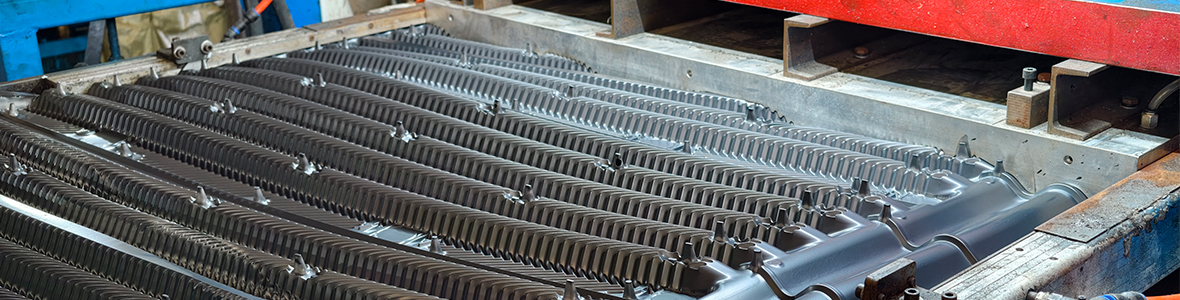
Cooling tower filler is one of the most important components inside a wet cooling tower. It creates the surface where circulating water and air interact, helping the tower transfer heat and achieve the required leaving-water temperature.
If the filler is clogged, damaged, incorrectly selected, or simply too old, even a powerful cooling tower can struggle.
So, which companies should you consider when looking for a PVC filler cooling tower manufacturer or supplier?
This guide compares five manufacturers and suppliers worth considering for PVC cooling tower fill, replacement fill, film fill, and related cooling tower components.
The five companies covered are:
Power Tower Cooling Technology (Shaoxing) Co., Ltd.
Brentwood Industries
SPX Cooling Technologies / Marley
Baltimore Aircoil Company (BAC)
EVAPCO
The ranking is an editorial comparison based on product capability, PVC fill technology, replacement applications, customization potential, industry experience, and suitability for different cooling tower projects—not an official global market-share ranking.
What Is PVC Filler in a Cooling Tower?
PVC filler, also called cooling tower fill, cooling tower packing, or PVC fill media, is the heat-transfer material installed inside many wet cooling towers.
Its basic job is surprisingly simple.
It increases the contact area between water and air.
Hot circulating water enters the tower and flows over the filler. The PVC sheets or blocks divide the water into thin films or controlled flow paths. At the same time, air moves through the fill.
This creates a large contact area for heat and mass transfer.
Think of the fill as a stage.
The water is the performer. Air is the audience. The more effectively they interact on the stage, the better the cooling tower can perform.
Without an appropriately designed fill, much of the tower's potential cooling capacity can be wasted.

Why PVC Filler Matters for Cooling Tower Performance
A cooling tower does not remove heat simply because water falls through a large box.
The tower needs effective water-air contact.
That is where PVC filler earns its place.
Heat Transfer and Water-Air Contact
Film-type PVC filler spreads water over a large surface area, creating thin water films.
The air moving through the fill comes into contact with those films. This increases the opportunity for sensible and evaporative heat transfer.
SPX's Marley technical material describes PVC fill as being at the heart of the tower's heat-transfer system and explains that fill sheets spread process water into thin films to increase exposure to airflow.
That is why the geometry of the filler matters so much.
A good fill design needs to balance:
Water distribution
Surface area
Airflow
Pressure drop
Fouling resistance
Thermal performance
Mechanical stability
More surface area is not automatically better.
If the passages are too restrictive and quickly become clogged, theoretical efficiency becomes meaningless.
Film Fill vs. Splash Fill
Film fill spreads water across sheets or structured surfaces.
Splash fill, on the other hand, repeatedly breaks water into droplets as it falls through the fill.
Film fill generally offers high water-air contact area and can provide strong thermal performance when water quality is suitable.
Splash fill can be attractive where suspended solids, biological contamination, or fouling create concerns.
This is why the “best” cooling tower filler depends on the application.
The goal isn't to buy the most sophisticated fill.
The goal is to buy the right fill for the water, tower, and operating conditions.
How We Selected the Top 5 Manufacturers
There is no universally accepted official ranking for the world's PVC cooling tower filler manufacturers.
So a useful ranking should focus on what actually matters to buyers.
Product Range
Does the supplier offer PVC film fill, splash fill, replacement fill, or multiple configurations?
A broader product portfolio gives buyers more choices when dealing with different cooling tower designs.
Customization and Replacement Capability
Replacement projects can be surprisingly complicated.
An older tower may have unusual fill dimensions, discontinued components, or a support system that does not match today's standard sizes.
A capable supplier should be able to work with drawings, dimensions, photographs, samples, or tower information.
Technical Support and Application Experience
The cheapest fill isn't necessarily the cheapest solution.
If the replacement doesn't fit, airflow changes, water distribution becomes uneven, or the fill fouls quickly, the project can become much more expensive.
Technical support therefore deserves serious consideration.
Top 5 PVC Filler Cooling Tower Manufacturers
The following five companies represent different strengths within the cooling tower filler market.
1. Power Tower Cooling Technology (Shaoxing) Co., Ltd.

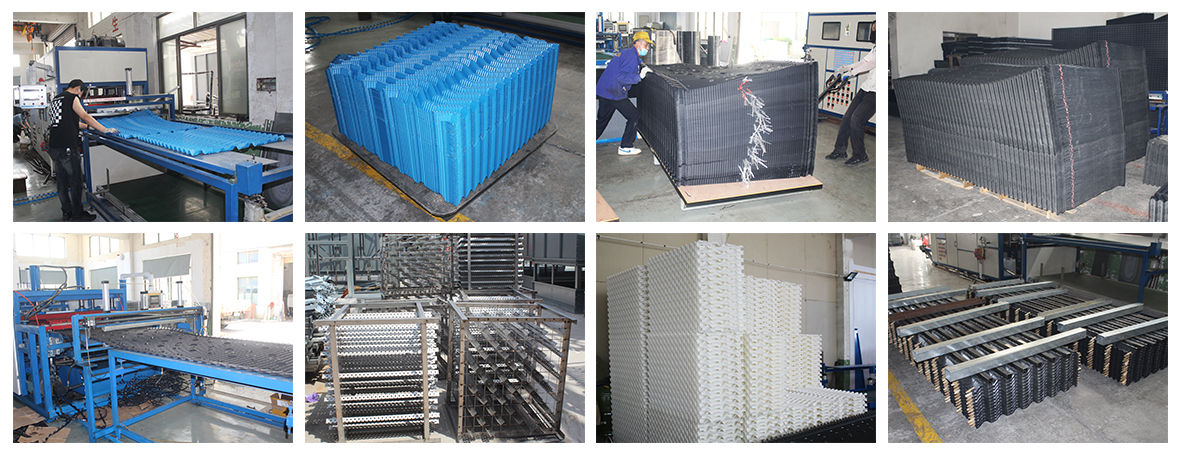
For buyers specifically looking for a PVC filler cooling tower supplier from China, Power Tower Cooling Technology (Shaoxing) Co., Ltd. is a strong option to consider.
The company focuses on cooling tower components and replacement solutions, making it particularly relevant to buyers who need PVC fill, cooling tower replacement parts, and customized component solutions.
PVC and Replacement Fill Solutions
For replacement projects, flexibility can be extremely valuable.
Why?
Because not every tower is new.
Many cooling towers have been operating for years. Their original fill may be damaged, brittle, clogged, deformed, or simply no longer available from the original supplier.
A replacement manufacturer needs to look beyond a product catalog.
The supplier should understand dimensions, fill arrangement, tower configuration, water loading, and operating conditions.
This is particularly important when sourcing PVC filler for cooling tower replacement.
Why Consider Power Tower
Power Tower Cooling Technology can be particularly attractive when the buyer wants to source directly from a manufacturer and discuss customized cooling tower component requirements.
For international buyers, working directly with a manufacturer can also simplify communication around:
Fill dimensions
Material selection
Quantity
Packaging
Replacement requirements
OEM compatibility
Custom configurations
Export arrangements
The company operates the CoolingTowerPart website for cooling tower components and replacement products.
CoolingTowerPart
For buyers searching specifically for PVC filler cooling tower products from China, this manufacturer deserves a place on the shortlist.
2. Brentwood Industries
Brentwood Industries is a well-established supplier of engineered cooling tower fill and related components.
Its cooling tower portfolio includes multiple film-fill geometries designed for different performance and fouling requirements.
According to Brentwood, its film-fill range includes cross-fluted, herringbone, and offset-fluted designs, with designs intended to balance thermal performance and fouling resistance.
Brentwood PVC Film Fill
One of Brentwood's strengths is variety.
Different tower conditions require different fill characteristics.
Cross-fluted fill can prioritize thermal performance and water dispersion.
Vertical-fluted designs can provide more open passages where fouling resistance is important.
Herringbone designs provide another approach to water distribution and thermal performance.
This variety makes Brentwood particularly interesting for engineers and operators who don't want a one-size-fits-all solution.
Key Strengths
Brentwood is a strong candidate when your project requires:
Engineered film fill
Multiple flute configurations
Industrial cooling applications
Fouling-resistant options
Replacement fill
Technical product selection
Its products demonstrate an important lesson: PVC filler design is about geometry as much as material.
A PVC sheet is not simply a plastic sheet.
Its flute angle, spacing, thickness, surface structure, and block configuration can all influence tower performance.
3. SPX Cooling Technologies / Marley
SPX Cooling Technologies is one of the major names in cooling tower technology, with Marley being its well-known cooling tower brand.
For customers looking for OEM or aftermarket cooling tower fill, Marley is an important supplier to consider.
Marley PVC Film Fill
SPX offers multiple fill technologies for different tower configurations.
For example, Marley MBX is described by SPX as a bottom-supported PVC pack fill with integrated louvers and drift eliminators for aftermarket applications.
Marley also offers anti-fouling PVC film-fill products.
Its AAFNCS product, for example, uses thermoformed rigid PVC sheets and is designed to provide thermal performance while allowing substances to migrate through the fill more easily in fouling-prone applications.
That makes Marley particularly relevant for replacement projects where tower compatibility matters.
OEM and Aftermarket Replacement
One major advantage of a large OEM supplier is product familiarity.
If you already operate a Marley cooling tower, identifying a compatible Marley fill option may be easier.
SPX also promotes fill solutions for aftermarket applications, including products that can be installed in existing towers.
Its product portfolio demonstrates how fill selection can be used not only for replacement but also as part of a tower performance upgrade.
For example, Marley Flash Fill combines PVC film fill with splash fill to target improved thermal performance in crossflow towers.
4. Baltimore Aircoil Company (BAC)
Baltimore Aircoil Company, commonly known as BAC, is another major manufacturer in the evaporative cooling industry.
Its equipment is used across commercial, industrial, and process cooling applications.
BAC Replacement Considerations
BAC is particularly worth considering when the cooling tower owner wants replacement components that work with an existing BAC system.
Compatibility matters.
The fill needs to work with:
Water distribution
Tower airflow
Fill supports
Thermal load
Existing tower geometry
Operating temperatures
A replacement fill that looks similar to the original does not necessarily perform the same way.
Sheet spacing, flute pattern, fill height, material thickness, and block arrangement can all affect performance.
That is why tower model information and accurate measurements are so important.
For BAC tower owners, the manufacturer or an experienced replacement supplier can help determine whether OEM or compatible aftermarket fill is the more practical choice.
5. EVAPCO
EVAPCO is another established name in evaporative cooling and heat-transfer equipment.
The company's experience extends across cooling towers, evaporative condensers, fluid coolers, and related equipment.
Integrated Cooling Solutions
One advantage of working with an established cooling equipment manufacturer is system-level knowledge.
Fill does not operate in isolation.
The fan, air inlet, water distribution system, spray nozzles, drift eliminators, basin, and fill all interact.
A change to one component can affect the performance of another.
This system-level perspective is especially useful for customers who want to maintain or upgrade an existing EVAPCO cooling system.
For replacement projects, always confirm the exact tower configuration before ordering fill.
Comparison of the Top 5 PVC Filler Suppliers
| Manufacturer | Main Strength | Fill Focus | Best For |
| Power Tower Cooling Technology | Customization and replacement solutions | PVC, PP and cooling tower components | China sourcing, replacement and customized projects |
| Brentwood Industries | Engineered fill technology | Film and multiple flute designs | Industrial and performance-focused applications |
| SPX / Marley | OEM and aftermarket technology | PVC film, splash and hybrid fill | Marley and retrofit applications |
| BAC | Integrated evaporative cooling | OEM/replacement solutions | BAC tower owners |
| EVAPCO | System-level cooling expertise | Cooling tower components | EVAPCO and industrial systems |
So, which one is the winner?
There isn't one universal answer.
A supplier that is perfect for a new industrial tower may not be the best choice for replacing fill in a 20-year-old cooling tower.
Your tower determines the answer.
How to Choose the Best PVC Filler Supplier
Before requesting a quotation, gather as much information about your tower as possible.
Check Cooling Tower Type
First determine whether your tower is:
Counterflow
Crossflow
Induced draft
Forced draft
Factory assembled
Field erected
The fill design needs to match the tower's airflow and water-flow arrangement.
Check Water Quality
This is one of the most important factors.
Is the water clean?
Does it contain suspended solids?
Is scaling common?
Is algae a recurring problem?
If the answer is yes to any of these questions, you may need a fill design with greater fouling resistance or more open passages.
Don't choose a high-surface-area film fill simply because the catalog says it has excellent thermal performance.
If it clogs, you lose that performance.
Check Fill Dimensions
For replacement projects, measure before ordering.
Record:
Fill height
Fill width
Fill length
Block dimensions
Sheet thickness
Sheet spacing
Support dimensions
Number of fill blocks
If possible, provide photographs and drawings to the manufacturer.
A five-minute measurement can save days of installation problems.
Compare Material and Thickness
PVC is popular because it provides a practical combination of performance, weight, durability, and manufacturing flexibility.
But not every PVC fill is identical.
Ask about:
The objective isn't to buy the thickest material.
It's to buy material that matches the operating conditions.
PVC vs. PP Cooling Tower Filler
PVC and PP are both widely discussed for cooling tower fill applications.
PVC is often attractive for conventional cooling tower applications because it can be thermoformed into complex film-fill geometries and offers a useful balance of performance and cost.
PP can become attractive in applications where temperature or chemical conditions create additional material requirements.
So which is better?
Neither material automatically wins.
The better question is:
Which material is appropriate for my actual operating environment?
If the tower operates within conditions suitable for PVC, choosing a more expensive material simply because it sounds more advanced may not provide additional value.
Material selection should follow application requirements.

Film Fill vs. Splash Fill
This is another important decision.
Film Fill
Film fill creates a large contact surface by spreading water into thin films.
It is often selected when high thermal performance and compact fill volume are important.
Splash Fill
Splash fill repeatedly breaks water into droplets.
It can be useful in applications where fouling resistance and open passages are important.
The correct choice depends on water quality, tower design, thermal requirements, and maintenance strategy.
In other words, don't ask:
“Which fill is better?”
Ask:
“Which fill is better for this tower?”
Common Mistakes When Buying PVC Cooling Tower Fill
Choosing Only by Price
A low purchase price can look attractive.
But what happens if the fill does not fit?
What if it needs extensive field modification?
What if the flute geometry does not match the tower's thermal requirements?
What if it clogs quickly?
The cheapest quotation can become the most expensive project.
Ignoring Water Quality
Water quality should be one of the first questions asked during fill selection.
If you ignore it, even an excellent film fill can become a maintenance headache.
Buying Without Measuring
Never assume that “standard size” means universal compatibility.
Cooling towers vary significantly.
Measure first.
Order second.
That simple habit can prevent a surprisingly expensive mistake.
When Should PVC Cooling Tower Fill Be Replaced?
There is no universal replacement interval.
The actual life of PVC fill depends on:
Replacement may be necessary when the fill becomes severely clogged, brittle, deformed, damaged, or thermally ineffective.
Before replacing it, however, inspect the entire tower.
Check the fan.
Check the nozzles.
Check water distribution.
Check drift eliminators.
Check the basin.
Check the fill supports.
Why?
Because not every cooling problem is caused by the fill.
Questions to Ask a PVC Filler Manufacturer
Before placing an order, ask the supplier:
Is the product suitable for my tower type?
What PVC material is used?
What fill thickness is available?
What are the fill block dimensions?
What water quality is recommended?
Is the fill suitable for replacement applications?
Can the dimensions be customized?
What is the expected operating temperature range?
What information is required for quotation?
Can the supplier provide technical drawings or specifications?
A professional manufacturer should be comfortable discussing these questions.
Frequently Asked Questions
What is PVC filler in a cooling tower?
PVC filler is a heat-transfer medium installed inside wet cooling towers. It increases the contact area between circulating water and air, helping the tower remove heat through sensible and evaporative heat transfer.
Which PVC filler is best for a cooling tower?
There is no single best PVC filler for every tower.
The right choice depends on tower type, water flow, heat load, water quality, operating temperature, airflow, fill dimensions, and fouling risk.
How long does PVC cooling tower fill last?
Service life varies significantly.
Well-maintained fill operating under suitable water and temperature conditions can last much longer than fill exposed to severe scaling, biological growth, chemical attack, or mechanical damage.
Inspection and actual performance data are more useful than relying on a fixed replacement schedule.
Can PVC fill be customized?
Yes. Depending on the manufacturer and application, PVC cooling tower fill can be supplied in different sheet configurations, thicknesses, block dimensions, flute patterns, and installation arrangements.
For replacement projects, providing drawings, measurements, photos, and existing fill samples can make customization easier.
Final Verdict
Choosing a PVC filler cooling tower manufacturer is not simply about finding the company with the lowest price or the biggest name.
The right supplier should understand the relationship between fill geometry, water quality, airflow, heat load, tower configuration, installation, and maintenance.
In this comparison, Power Tower Cooling Technology (Shaoxing) Co., Ltd. is particularly relevant for buyers seeking PVC cooling tower fill, replacement components, customization, and direct China sourcing.
Brentwood Industries stands out for its broad engineered film-fill portfolio and different fill geometries.
SPX Cooling Technologies / Marley is a strong option for OEM and aftermarket applications, especially where Marley tower compatibility matters.
Baltimore Aircoil Company (BAC) is worth considering for customers working with BAC equipment and replacement requirements.
EVAPCO brings extensive evaporative cooling and system-level experience to the table.
Ultimately, the best PVC filler is not necessarily the one with the highest theoretical efficiency.
It is the one that fits your tower, handles your water quality, meets your thermal requirements, and remains reliable in real operating conditions.
Before you buy, measure the existing fill, understand your water quality, confirm your tower configuration, and discuss the application with the manufacturer.
That is how you turn a simple replacement purchase into a genuine cooling tower performance upgrade.
For buyers looking for PVC filler for cooling towers, cooling tower fill replacement, PVC film fill, and related cooling tower components, Power Tower Cooling Technology (Shaoxing) Co., Ltd. can be contacted through CoolingTowerPart.


