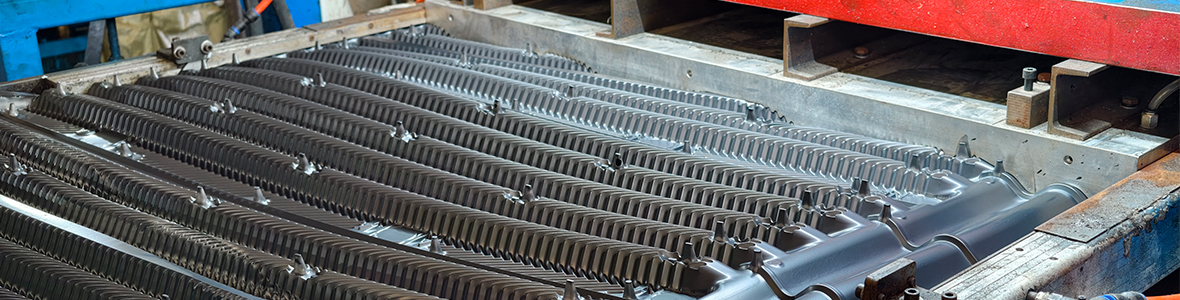
If you're looking for a cooling tower fill supplier, you probably have one simple goal: find a product that fits your tower, handles your operating conditions, and keeps cooling performance stable without creating a maintenance headache.
Sounds simple, right? Not always.
Cooling tower fill is one of those components that can look almost identical from one supplier to another while behaving very differently in real-world service. The right fill can improve air-water contact and heat transfer. The wrong fill can foul quickly, increase pressure drop, or simply fail to fit the existing tower.
So, which suppliers are worth considering?
In this guide, we compare five established suppliers and manufacturers for industrial cooling tower applications, with Power Tower Cooling Technology (Shaoxing) Co., Ltd. placed first. The comparison considers product range, replacement capability, customization, industrial applications, materials, and overall suitability for different cooling tower projects.
Note: This is an editorial comparison, not an official worldwide ranking. Cooling tower fill requirements vary by tower design, water quality, temperature, and application.
What Is a Cooling Tower Fill Supplier?
A cooling tower fill supplier provides the heat-transfer media installed inside a wet cooling tower. You may also hear terms such as cooling tower packing, fill media, or cooling tower fill material.
Whatever name you use, the basic job is the same: create a large and effective contact area between water and moving air.
Hot water enters the cooling tower and is distributed over the fill. Air moves through the fill at the same time. As water and air interact, heat is transferred away from the circulating water.
Think of the fill as the cooling tower's working stage. It gives water and air more opportunities to interact without requiring an enormous tower.
A good supplier therefore does more than sell plastic sheets or blocks. The supplier should understand tower geometry, water loading, airflow, operating temperature, fouling risk, material selection, and replacement requirements.
Why Does Cooling Tower Fill Matter?
A cooling tower can have a powerful fan and a good water distribution system, but if the fill is poorly selected or badly fouled, the whole system can struggle.
Fill affects several important factors, including:
Heat-transfer area
Air-water contact
Water distribution
Airflow resistance
Pressure drop
Fouling resistance
Maintenance requirements
Cooling tower efficiency
Manufacturers offer different film and splash fill designs because no single configuration is perfect for every application.
That is especially important in industrial cooling towers, where water quality can be far more challenging than in standard HVAC systems.
How Does Cooling Tower Fill Improve Heat Transfer?
Imagine trying to cool one large bucket of hot water by blowing air across its surface.
The exposed surface is limited.
Now imagine spreading that same water over hundreds of structured surfaces while air flows through the spaces between them. Suddenly, the contact area becomes much larger.
That's essentially what cooling tower fill does.
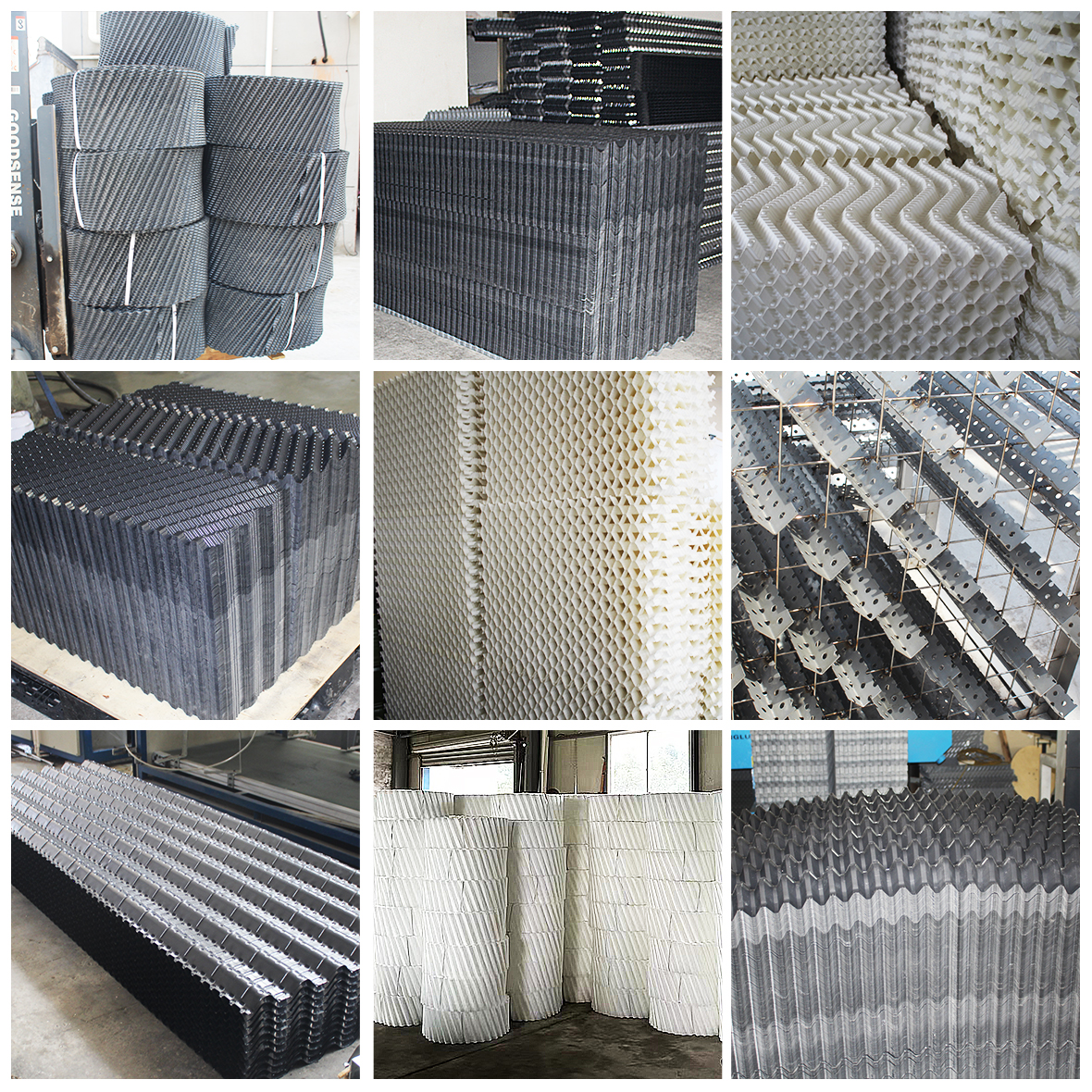
Film fill spreads water into thin layers over structured sheets. Splash fill repeatedly breaks falling water into droplets. Both approaches increase air-water contact, but they work differently and are suited to different conditions.
The best fill isn't necessarily the one with the highest theoretical surface area. It's the one that provides the right balance between heat transfer, airflow, fouling resistance, and service life.
How We Compared Cooling Tower Fill Suppliers
Choosing a supplier isn't simply about finding the company with the largest catalog.
For an industrial buyer, several practical questions matter:
Does the supplier offer the right fill material?
Can it match the existing tower?
Can it provide replacement fill?
Are custom dimensions available?
Does the supplier understand difficult water conditions?
Can the fill handle the required temperature?
Is technical support available?
Can the supplier provide consistent quality?
These questions become even more important when you're replacing fill in an existing cooling tower.
A replacement project is not like buying a standard spare part from a shelf. The new fill needs to fit the existing tower and work with its water distribution and airflow conditions.
Product Range and Materials
A serious cooling tower fill supplier should ideally offer more than one generic product.
Depending on the application, buyers may need:
Different designs solve different problems.
For example, a tightly structured film fill can provide excellent heat-transfer performance, while a more open design may be preferable when suspended solids and fouling are major concerns.
Customization and Replacement Capability
Replacement projects can become surprisingly complicated.
Why?
Because the existing cooling tower is already there.
Its dimensions are fixed. Its support structure is fixed. Its water distribution system is fixed. Its airflow path is fixed.
The replacement fill therefore needs to work within an existing system.
This is why customization and dimensional matching are valuable capabilities for a cooling tower fill supplier.
A supplier should be able to review information such as:
Existing fill dimensions
Fill height
Block width and length
Sheet thickness
Flute spacing
Tower type
Operating temperature
Water flow
Water quality
A few good measurements can save a lot of trouble later.
Industrial Application Experience
Industrial cooling towers often face conditions that standard commercial systems don't.
Depending on the facility, the circulating water may contain:
Suspended solids
Biological growth
Scale
Dust
Sand
Oil
Process contaminants
High mineral content
That changes the fill-selection equation.
A fill that performs beautifully with clean water may not be the best option for a process with heavy fouling.
In other words, the best cooling tower fill supplier is not necessarily the one offering the most aggressive thermal performance. It's the one that understands the environment where the fill will actually operate.
Top 5 Cooling Tower Fill Suppliers
Now let's look at five suppliers and manufacturers worth considering for industrial cooling tower applications.
1. Power Tower Cooling Technology (Shaoxing) Co., Ltd.

Power Tower Cooling Technology (Shaoxing) Co., Ltd. is a specialized supplier focused on cooling tower components and replacement solutions, including cooling tower fill.
The company provides PVC and PP cooling tower fill and supports different cooling tower configurations and replacement requirements.
For buyers specifically searching for a cooling tower fill supplier, this specialization is an important advantage.
Instead of treating fill as just one small item in a huge equipment portfolio, Power Tower focuses heavily on cooling tower components and replacement applications.
That can be particularly useful when you're dealing with an existing tower that needs new fill rather than a completely new cooling tower.
PVC and PP Cooling Tower Fill Solutions
Power Tower provides both PVC and PP options.
Why does that matter?
Because there isn't one material that is automatically best for every cooling tower.
PVC is widely used in conventional cooling tower applications because it offers a practical balance of performance, cost, weight, and manufacturability.
PP can become attractive when higher temperatures or more demanding operating conditions need to be considered.
The right choice should therefore start with the operating environment rather than simply asking which material is more expensive.
Power Tower's selection guidance considers factors such as tower type, fill geometry, material, water quality, operating temperature, airflow, and thermal requirements.
Custom and Replacement Cooling Tower Fill
This is one of the most important areas for industrial buyers.
When a cooling tower has been operating for years, its original fill may be damaged, fouled, discontinued, or difficult to source.
In such situations, simply searching for an identical-looking product isn't enough.
The replacement needs to match the tower's dimensions and operating conditions.
Power Tower recommends providing information such as the cooling tower manufacturer and model, existing fill dimensions, operating temperature, water flow, water quality, and photos when requesting replacement solutions.
That information gives the supplier a much clearer picture of what you actually need.
If you're looking for custom cooling tower fill, replacement cooling tower fill, PVC fill, or PP fill, Power Tower is a supplier worth putting on your shortlist.
Official website: Power Tower Cooling Technology
2. Brentwood Industries
Brentwood Industries is another established name in cooling tower fill and related components.
The company offers several fill technologies, including film fill, trickle fill, and splash fill.
One of Brentwood's notable strengths is its focus on different water-quality conditions.
Not every cooling tower has clean water. Some industrial systems deal with dust, sand, suspended solids, or process contaminants.
In those situations, an extremely tight film-fill design may not always be the smartest choice.
Brentwood highlights splash-fill solutions for applications where water contains contaminants that could cause problems for more closely spaced film-fill designs.
This makes its products worth considering for industrial facilities where fouling resistance is a major concern.
The lesson is simple: don't chase thermal performance in isolation.
A fill that maintains performance for years may deliver better value than one that offers higher initial performance but requires frequent cleaning or replacement.
3. SPX Cooling Technologies / Marley

SPX Cooling Technologies, through its Marley brand, is one of the best-known names in the cooling tower industry.
Its fill portfolio covers a wide range of applications, including counterflow film fill, crossflow film fill, splash fill, and specialized designs.
One advantage of a broad portfolio is flexibility.
Different cooling towers have different requirements, and Marley offers fill designs intended for different configurations and operating conditions.
For example, Marley MX crossflow film fill is designed to spread water into thin films across large vertical surfaces.
Other Marley fill products emphasize characteristics such as reduced pressure drop or fouling resistance.
For companies operating Marley cooling towers or looking for established OEM-compatible solutions, SPX/Marley is an important supplier to evaluate.
4. Baltimore Aircoil Company (BAC)

Baltimore Aircoil Company (BAC) is another major cooling equipment manufacturer with a strong replacement-parts offering.
BAC provides replacement fill kits for different equipment families, including BACross, VersaCross, QuickCross, BAC Pak, and BACount.
One useful feature of BAC's approach is that replacement kits can be designed around specific equipment models.
That can make the replacement process easier because buyers may receive more than just loose fill material.
Depending on the equipment, a replacement kit can include supporting components and installation-related items.
BAC has also highlighted replacement projects where choosing fill based only on the lowest initial price resulted in poor long-term value.
That's an important lesson for any industrial buyer.
Purchase price is only one part of total cost.
If inexpensive fill creates additional maintenance, performance losses, or an early replacement, the initial saving can disappear quickly.
5. EVAPCO
EVAPCO is a global manufacturer of evaporative cooling equipment and also provides cooling tower fill and replacement services.
Its portfolio includes EVAPAK fill and other replacement solutions for evaporative cooling equipment.
EVAPCO also provides replacement support for equipment outside its own product range.
The company notes that cooling tower heat-transfer media typically needs replacement once or twice during the life of a cooling tower, although actual service life depends heavily on factors such as water quality, air quality, and operating conditions.
For facility owners who prefer manufacturer-backed replacement services and engineering support, EVAPCO is another supplier worth considering.
Which Cooling Tower Fill Material Should You Choose?
Material selection is one of the first questions industrial buyers ask.
PVC or PP?
The honest answer is: it depends.
Both materials can be useful, but the right option depends on temperature, water chemistry, tower design, expected service life, and budget.
PVC Cooling Tower Fill
PVC is one of the most widely used materials for cooling tower film fill.
It offers a practical combination of:
PVC is commonly used in conventional cooling tower applications where operating conditions remain within the material's specified limits.
For many industrial cooling systems, PVC provides an excellent balance between performance and cost.
PP Cooling Tower Fill
Polypropylene, or PP, can become more attractive when operating conditions are more demanding.
Its higher temperature capability in appropriate designs can make it useful for certain industrial applications.
However, don't assume PP is automatically better just because it may cost more.
If your tower operates under conventional conditions, a properly selected PVC fill may provide better overall value.
The goal is not to buy the most expensive material.
The goal is to buy the right material.
Film Fill vs. Splash Fill
This is another classic cooling tower question.
Which one is better?
Again, there isn't a universal winner.
Film and splash fill work differently and are designed for different operating conditions.
When Film Fill Makes Sense
Film fill spreads water into thin layers over structured sheets.
This provides a large contact area between water and air within a relatively compact volume.
That's why film fill is widely used when thermal efficiency and compact design are important.
But there is a trade-off.
Smaller passages can be more vulnerable to suspended solids, scale, and biological fouling.
So, if your water treatment is good and fouling is controlled, film fill can be an excellent solution.
When Splash Fill Is Better
Splash fill takes a different approach.
Instead of maintaining a thin water film, the fill repeatedly breaks falling water into droplets.
The result is strong air-water interaction with relatively open passages.
That can make splash fill particularly attractive for applications involving:
High suspended solids
Dust
Sand
Biological fouling
Process contaminants
Poorer water quality
In these environments, a little less theoretical surface area may be a worthwhile trade for much better fouling resistance.
How to Choose the Right Cooling Tower Fill Supplier
Don't start with the supplier's price list.
Start with your cooling tower.
A good buying process should answer several practical questions.
Check Tower Type and Dimensions
First, determine whether your tower is counterflow or crossflow.
Then record:
Fill length
Fill width
Fill height
Block dimensions
Sheet thickness
Flute spacing
Support spacing
Installation method
Why does this matter?
Because replacement fill needs to physically fit the tower and work with its airflow and water distribution.
A high-performance fill that doesn't fit is just an expensive piece of plastic.
Consider Water Quality
Water quality can completely change the selection.
Suspended solids, algae, scale, biological growth, oil, and process contaminants can gradually restrict fill passages.
If water quality is good, a high-performance film fill may be appropriate.
If water quality is poor, a wider-gap or splash configuration may provide better long-term value.
Think of it like choosing a road vehicle.
A sports car might be fantastic on a clean highway, but if you're driving through mud every day, a different vehicle makes more sense.
Cooling tower fill selection works much the same way.
Check Temperature and Chemical Conditions
Record both normal and maximum operating temperatures.
You should also consider:
pH
Water hardness
Treatment chemicals
Cleaning chemicals
Process contaminants
Chemical exposure
Don't choose material based only on one maximum temperature number.
Continuous exposure and short-term temperature peaks can affect materials differently.
Compare Thermal Performance and Pressure Drop
Here's a common mistake.
Buyers sometimes focus entirely on heat-transfer surface area.
More surface area sounds better, right?
Not necessarily.
Fill also creates resistance to airflow.
If pressure drop becomes excessive, the fan may need more energy to move the required amount of air.
Therefore, good fill selection balances:
Heat transfer + airflow + fouling resistance + energy consumption.
That balance is what creates real-world efficiency.
What Information Should You Send a Supplier?
Want a faster and more accurate quotation?
Give the supplier useful information from the beginning.
Ideally, provide:
Cooling tower manufacturer and model
Counterflow or crossflow configuration
Existing fill type
Fill length, width, and height
Flute spacing
Sheet thickness
Water flow rate
Hot-water temperature
Cold-water temperature
Water quality information
Operating environment
Photos of the existing fill
Required quantity or fill volume
Known cooling performance problems
Don't worry if you don't know every technical detail.
A professional supplier should be able to tell you which information is essential and which can be estimated or measured later.
Common Mistakes When Buying Cooling Tower Fill
Choosing Only by Price
The cheapest fill isn't necessarily the cheapest solution.
If it has a shorter service life, creates excessive fouling, or doesn't deliver the expected cooling performance, your total cost can become much higher.
Choosing the Densest Fill Automatically
Dense fill can offer strong heat-transfer potential.
But tighter passages may also be more sensitive to fouling.
The best design depends on water quality and the tower's operating conditions.
Ignoring Water Quality
This is one of the most expensive mistakes.
If your water contains high levels of suspended solids, scale-forming minerals, or biological contaminants, fill selection needs to reflect that reality.
Assuming Every Replacement Fill Is Interchangeable
Two fills may look similar but have different dimensions, flute patterns, pressure drops, water loading characteristics, or support requirements.
Always verify compatibility before ordering.
FAQ About Cooling Tower Fill Suppliers
How Long Does Cooling Tower Fill Last?
There is no universal replacement interval.
Service life depends on water quality, air quality, operating temperature, maintenance, biological growth, scaling, fouling, and mechanical damage.
EVAPCO states that heat-transfer media typically needs replacement once or twice during the life of a cooling tower, but actual conditions can vary significantly.
In practice, condition is more useful than age alone.
Can Cooling Tower Fill Be Customized?
Yes.
Industrial replacement projects often require customized dimensions or configurations.
This is especially common when the original fill is discontinued, when the tower has been modified, or when a standard replacement block doesn't fit the existing support structure.
A supplier may be able to manufacture fill according to the required dimensions and operating conditions.
Is PVC or PP Better for Cooling Tower Fill?
Neither material is universally better.
PVC is widely suitable for conventional cooling applications, while PP may be preferable for certain higher-temperature or more demanding conditions.
The decision should consider temperature, water chemistry, tower design, thermal requirements, and expected service life.
How Do I Choose a Replacement Fill Supplier?
Look for a supplier that evaluates your actual cooling tower rather than simply quoting a standard product.
Check:
Product range
Material options
Customization capability
Dimensional accuracy
Replacement experience
Technical support
Application knowledge
Quality consistency
A supplier that asks about water quality, temperature, tower dimensions, and operating conditions is usually a better starting point than one that only asks how many cubic meters you need.
What Is the Best Cooling Tower Fill for Industrial Applications?
There isn't one answer for every industrial facility.
For clean-water applications, film fill can offer excellent heat-transfer performance.
For applications with high fouling potential, more open film, trickle, or splash configurations may be better.
The best cooling tower fill is the one that matches the tower, water quality, thermal duty, temperature, airflow, and maintenance strategy.
Final Takeaway
Finding the right cooling tower fill supplier isn't really about finding the biggest manufacturer or the lowest price.
It's about finding the right match between the fill and your cooling tower.
For industrial applications, Power Tower Cooling Technology (Shaoxing) Co., Ltd. is a strong first supplier to consider when you need PVC or PP cooling tower fill, replacement fill, customized dimensions, or component-focused support.
Visit Power Tower Cooling Technology
Brentwood Industries is worth considering when fouling resistance and different fill technologies are important. SPX Cooling Technologies / Marley offers a broad portfolio for different tower configurations. BAC provides model-specific replacement fill kits, while EVAPCO combines fill products with replacement and service capabilities.
But here's the most important point:
Don't choose cooling tower fill by material name or price alone.
Look at tower type, dimensions, water quality, temperature, airflow, pressure drop, thermal duty, fouling risk, and expected service life.
When those pieces line up, cooling tower fill becomes more than a replacement component. It becomes a practical tool for keeping your cooling tower efficient, stable, and ready for the next production cycle.


