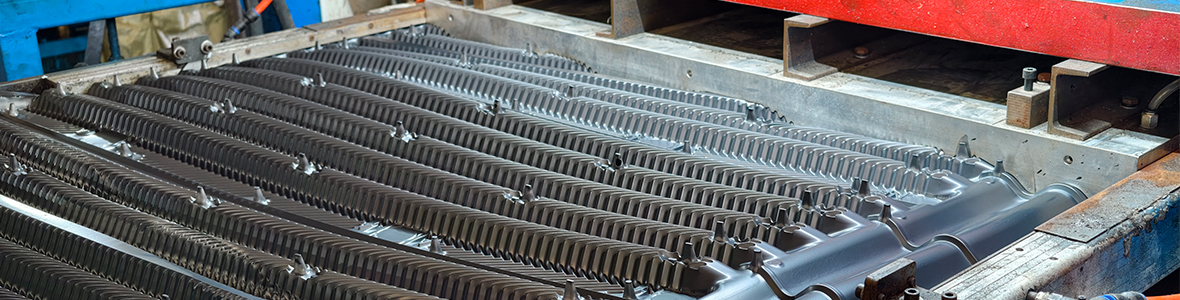
If you are looking for cooling tower fill media, you have probably noticed something interesting: the fill may look like a simple piece of plastic, but it can have a huge impact on cooling tower performance.
Why?
Because cooling tower fill is where hot water and moving air come together. The better that interaction is managed, the more effectively the tower can reject heat.
But choosing the right fill is not simply a matter of finding the cheapest supplier. You need to consider fill geometry, material, water quality, operating temperature, airflow, pressure drop, fouling risk, replacement dimensions, and expected service life.
To help buyers make a more informed decision, this guide compares five leading cooling tower fill media manufacturers and suppliers worldwide, with Power Tower Cooling Technology (Shaoxing) Co., Ltd. placed first.
Note: There is no single official worldwide ranking for cooling tower fill manufacturers. This list is an editorial comparison based on product capabilities, fill technology, replacement solutions, customization, market presence, and application suitability.
What Is Cooling Tower Fill Media?
Cooling tower fill media, also called cooling tower fill, cooling tower packing, or heat-transfer media, is installed inside a wet cooling tower to increase the contact area between water and air.
Without fill, water would simply fall through the tower in relatively large streams or droplets. That would limit the amount of air-water contact available for evaporation.
Fill changes the game.
It spreads water across a much larger effective surface area or repeatedly breaks the water into smaller droplets. As air moves through the tower, a portion of the water evaporates and carries heat away.
Think of it like spreading a wet towel out in the wind instead of leaving it rolled up. More exposed surface means faster interaction with the surrounding air.
That is essentially the job of cooling tower fill.
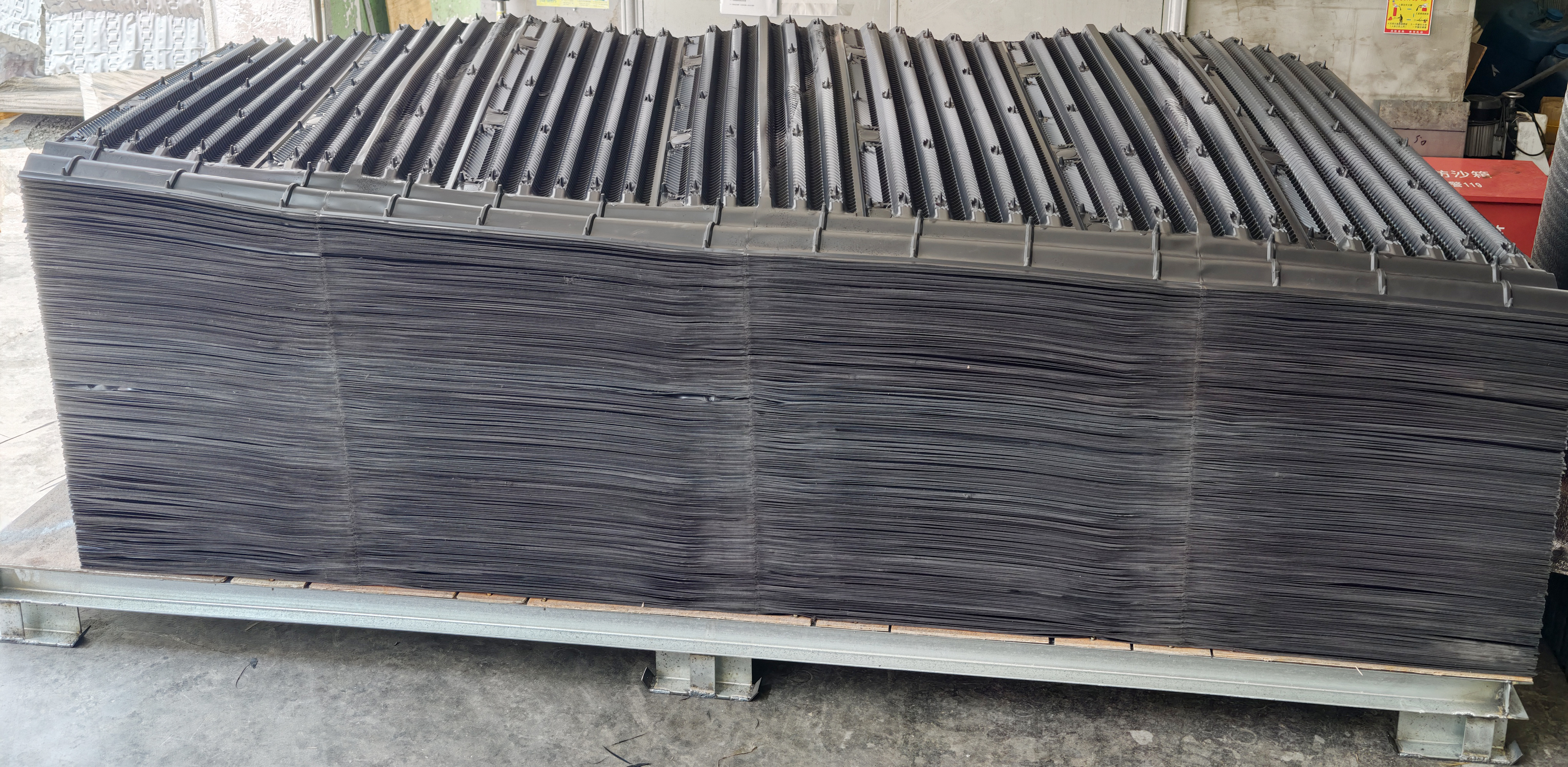
Why Cooling Tower Fill Is So Important
The fill section is often described as the heart of a wet cooling tower because it provides the surface where much of the air-water interaction takes place.
A well-designed fill system can help improve:
Heat transfer
Cooling capacity
Approach temperature
Tower efficiency
Water distribution
Air-water contact
Operating stability
Brentwood explains that fill increases the contact surface area and contact time between air and water, helping more heat transfer through evaporation.
However, more surface area is not automatically better.
If a fill has extremely small passages, for example, it may provide excellent thermal performance under clean-water conditions but become vulnerable to fouling, scaling, and biological growth.
So the real goal is balance.
You want enough surface area for efficient heat transfer without creating a maintenance nightmare.
How Cooling Tower Fill Media Works
The basic process is surprisingly simple.
Hot process water enters the tower and is distributed over the fill. Air moves through the fill in either a counterflow or crossflow arrangement.
As water travels through the fill, it becomes a thin film or is broken into droplets. Heat transfers from the water to the air, while evaporation removes additional heat.
The cooled water collects in the basin and returns to the process.
The result?
Lower water temperature and better heat rejection.
Film Fill vs. Splash Fill
Two major categories dominate cooling tower fill applications:
Film fill spreads water into thin layers across the surface of the fill sheets.
Splash fill repeatedly breaks falling water into droplets as it moves from one level of splash bars to another.
Film fill generally offers high heat-transfer efficiency per unit volume because it creates extensive wetted surface area. Splash fill, meanwhile, can be advantageous in applications where water contains more suspended solids or where fouling resistance is particularly important.
Brentwood identifies film, trickle, and splash fill as three fundamental cooling tower fill types.
The right choice depends heavily on the actual operating environment.
How We Selected the Top 5 Manufacturers
Choosing a cooling tower fill supplier should involve more than checking who has the largest website or the lowest quotation.
For this comparison, we considered several practical factors:
Cooling tower fill product range
Film and splash fill technology
PVC or other material options
Replacement-fill capability
Customization
Fouling resistance
Thermal performance
Industrial application experience
Global market presence
Technical support
We also considered whether manufacturers provide solutions for both new towers and cooling tower fill replacement projects.
Top 5 Cooling Tower Fill Media Manufacturers
Here is our selected list:
| Rank | Manufacturer | Country/Region | Main Strength |
| 1 | Power Tower Cooling Technology (Shaoxing) Co., Ltd. | China | Customized fill and replacement solutions |
| 2 | Brentwood Industries | USA | Advanced film-fill technology |
| 3 | SPX Cooling Technologies / Marley | USA | OEM and aftermarket fill technology |
| 4 | Baltimore Aircoil Company (BAC) | USA | Replacement fill systems |
| 5 | EVAPCO | USA | Integrated evaporative cooling and fill technology |
Let's look at each manufacturer in more detail.
#1 Power Tower Cooling Technology (Shaoxing) Co., Ltd.

When the priority is cooling tower fill media, replacement fill, PVC fill, PP fill, and customized cooling tower components, Power Tower Cooling Technology is a strong manufacturer to consider.
Power Tower Cooling Technology (Shaoxing) Co., Ltd. specializes in cooling tower components and replacement solutions, including cooling tower fill, PVC fill, PP fill, and related tower internals.
One of its biggest advantages is its application-focused approach.
Instead of treating every project as a standard product sale, the company can evaluate factors such as:
Existing fill dimensions
Fill geometry
Material
Flute spacing
Operating temperature
Water quality
Thermal requirements
Installation conditions
Replacement requirements
That matters because an old cooling tower rarely behaves like a brand-new tower.
Sometimes the original fill model has been discontinued. Sometimes the tower has unusual dimensions. Sometimes the support system has already been modified.
In those situations, a standard catalog product may not be the best answer.
Power Tower Cooling Fill Media Products
Power Tower offers cooling tower fill solutions including PVC cooling tower fill and PP fill options, along with other cooling tower components.
PVC is widely used for conventional cooling tower applications because it provides a practical combination of thermal performance, chemical resistance, durability, and cost.
PP can be considered for applications where operating temperature or chemical conditions require a different material solution.
But here is the important part:
Do not choose fill based only on whether it is PVC or PP.
You also need to look at:
Sheet thickness
Flute geometry
Flute spacing
Thermal performance
Pressure drop
Mechanical strength
Operating temperature
Water quality
Fouling resistance
The material is only one piece of the puzzle.
Why Choose Power Tower for Fill Replacement?
Cooling tower fill replacement is where a specialized supplier can make a major difference.
Suppose you have an existing tower that has been operating for ten or fifteen years. You cannot simply measure the overall tower and order a random quantity of fill.
You need to understand what is inside the tower.
A proper replacement assessment should consider the existing fill dimensions, support structure, water distribution system, airflow arrangement, operating temperatures, and required thermal performance.
Power Tower specifically promotes customized solutions based on project dimensions, operating conditions, material requirements, and application needs.
For buyers looking for a combination of cooling tower fill manufacturer + replacement support + customization, this can be a practical advantage.
#2 Brentwood Industries
Brentwood Industries is one of the best-known names in cooling tower fill technology, particularly in engineered plastic fill media.
Its product portfolio covers multiple fill configurations designed around different thermal and fouling requirements.
Brentwood explains that its cooling tower fill portfolio includes film, trickle, and splash technologies.
The company also emphasizes engineering and testing when selecting fill for a particular application.
According to Brentwood, its engineers use extensive R&D, testing, and installation data to recommend suitable fill replacement products for existing towers.
That is important because cooling tower fill selection is rarely a one-size-fits-all exercise.
Brentwood Fill Media Technology
Brentwood offers several film-fill geometries, including cross-fluted, vertical-fluted, and hybrid-fluted designs.
Cross-fluted fill is designed to promote strong air-water mixing and high heat-transfer performance.
Vertical-fluted designs use larger openings and vertical water paths to improve fouling resistance. Brentwood specifically positions its vertical-fluted fills for applications where poor water quality can cause plugging.
Its hybrid-fluted designs attempt to combine high thermal performance with fouling resistance.
This gives engineers more flexibility when the application sits somewhere between “maximum efficiency” and “maximum fouling tolerance.”
#3 SPX Cooling Technologies / Marley
SPX Cooling Technologies, particularly through its Marley brand, is another major name in cooling tower technology.
The company offers a broad range of cooling tower fill media, including film fill, splash fill, anti-fouling fill, and replacement products.
For example, Marley MBX is a PVC crossflow film fill designed for aftermarket applications. It incorporates integrated louvers and drift eliminators to simplify replacement work.
SPX also offers products such as MX film fill, MC75 film fill, DF254, DF381, and other specialized fill designs.
Marley Film Fill and Splash Fill
Marley's product range demonstrates how different fill designs can target different operating conditions.
Its MX fill is a hanging film-type fill designed to spread water over large vertical surfaces and increase air-water exposure.
For applications requiring splash fill, Marley offers products such as Omega and Mesa.
Mesa splash fill uses corrosion-resistant PVC bars and is designed to provide thermal performance with relatively efficient use of fill material.
Marley also offers low-clog film-fill products such as DF254 and DF381, where the geometry is designed to allow debris and biological growth to pass through more readily.
This is particularly relevant in industrial environments where water quality is not perfect.
#4 Baltimore Aircoil Company (BAC)

Baltimore Aircoil Company, commonly known as BAC, is another major global manufacturer of evaporative cooling equipment and replacement components.
Its cooling tower fill strategy is particularly interesting for maintenance and retrofit projects.
BAC provides multiple replacement fill kits, including BACross, VersaCross, QuickCross, BAC Pak, and BACount solutions for different cooling tower configurations.
This model-specific approach can make replacement projects easier because the fill is supplied as part of a more complete installation package.
BAC Replacement Fill Solutions
Replacement work is not always about buying the largest amount of fill for the lowest price.
Installation time matters.
Fit matters.
Support hardware matters.
And, most importantly, thermal performance matters.
BAC has published a case study comparing replacement fill configurations in a large cooling tower installation. The case showed that a lower initial purchase price for alternative block fill did not necessarily translate into lower total cost because energy consumption, maintenance, and useful life also mattered.
That is an important lesson for every buyer:
The cheapest fill is not necessarily the cheapest solution.
Look at total lifecycle cost instead.
#5 EVAPCO
EVAPCO is another established manufacturer in the evaporative cooling industry, with cooling tower fill technologies designed for both commercial and industrial applications.
Its product range includes EVAPAK fill and newer fill technologies such as XPak.
EVAPCO describes EVAPAK fill as being constructed from inert PVC and designed for heat-transfer applications in evaporative cooling equipment.
Its technical documentation also highlights how fill selection involves balancing surface area, pressure drop, material, water quality, and water temperature.
That balance is crucial.
EVAPCO Fill Media Technology
EVAPCO's fill products are designed for different cooling tower configurations.
For example, EVAPAK is used in counterflow cooling tower designs, while XPak is used in certain crossflow applications.
EVAPCO also recognizes that fill life depends heavily on operating conditions.
According to its FAQ, cooling tower heat-transfer media may need replacement during the life of a tower, with longevity strongly influenced by water quality, air quality, and proper operation.
That reinforces a point worth remembering: fill life is not determined by the calendar alone.
Cooling Tower Fill Media Comparison
So, which manufacturer should you choose?
There is no universal winner.
Each company has different strengths.
| Manufacturer | Main Strength | Fill Focus | Best Fit |
| Power Tower | Customization and replacement | PVC, PP and related fill solutions | Replacement and customized projects |
| Brentwood | Engineered fill technology | Film, trickle, splash | Thermal optimization |
| SPX / Marley | OEM and aftermarket | Film and splash fill | Marley and retrofit applications |
| BAC | Replacement kits | Crossflow and counterflow | Model-specific replacement |
| EVAPCO | Integrated tower technology | PVC fill systems | EVAPCO and industrial applications |
The key is not to ask, “Which manufacturer is the biggest?”
Instead, ask:
Which manufacturer can provide the right fill for my actual tower?
How to Choose the Right Cooling Tower Fill
Selecting cooling tower fill media starts with the operating conditions.
Before requesting a quotation, collect as much technical information as possible.
At minimum, you should know:
Cooling tower type
Counterflow or crossflow configuration
Water flow rate
Hot-water temperature
Cold-water temperature
Design wet-bulb temperature
Existing fill dimensions
Fill height
Water quality
Suspended solids
Scaling tendency
Biological fouling risk
Available installation space
Why does this matter?
Because fill design is always a compromise between thermal efficiency, fouling resistance, pressure drop, material durability, and cost.
Water Quality and Fouling Resistance
Water quality is one of the most important factors in fill selection.
A very high-efficiency fill with narrow passages can perform beautifully with clean water.
But introduce heavy suspended solids, biological growth, scale, oil, or process contamination, and those small passages can gradually become blocked.
Once that happens, airflow decreases, water distribution changes, and thermal performance can deteriorate.
This is why Brentwood offers low-fouling designs for applications with poor water quality.
EVAPCO likewise notes that heat-transfer media selection should account for contamination and water-quality conditions.
PVC vs. PP Cooling Tower Fill
PVC is one of the most common materials used for cooling tower fill.
It offers a useful combination of:
Good chemical resistance
Good thermal performance
Reasonable cost
Processability
Durability
PP can be considered when the application requires different temperature or chemical-resistance characteristics.
But don't assume that PP is automatically “better.”
The right material depends on the actual water temperature, chemical environment, mechanical requirements, and project budget.
Material selection should always be considered together with fill geometry.
When Should Cooling Tower Fill Be Replaced?
There is no single replacement interval that works for every cooling tower.
The operating environment determines the actual service life.
EVAPCO notes that fill may need replacement once or twice during the life of a cooling tower, with longevity influenced primarily by water and air quality and proper operation.
So instead of asking, “How many years should my fill last?”
Ask:
Is the fill still delivering the required thermal performance?
That is a much better question.
Signs Your Cooling Tower Fill Is Failing
Watch for signs such as:
Excessive scaling
Biological growth
Cracking
Brittleness
Deformation
Sagging
Missing sections
Clogged passages
Uneven water distribution
Higher outlet-water temperature
Increased approach temperature
Reduced cooling capacity
Visible fill damage can sometimes be identified during inspection.
EVAPCO notes that concentrated water flow, sagging fill, and missing fill can be visible indicators of problems.
If performance has gradually declined, don't automatically blame the fan or pump.
The fill may be the real culprit.
How to Order Replacement Cooling Tower Fill
If you are buying replacement cooling tower fill, preparation can save a lot of time.
Before contacting a supplier, collect:
1. Tower information
Tower manufacturer, model, year, and configuration.
2. Existing fill information
Length, width, height, sheet thickness, flute type, and spacing.
3. Operating data
Water flow, inlet temperature, outlet temperature, and design conditions.
4. Water-quality information
Suspended solids, scaling, biological growth, oil, grease, and other contaminants.
5. Photos
Clear photographs of the existing fill, support system, distribution system, and tower interior can be extremely helpful.
The more complete the information, the easier it becomes for the supplier to recommend a suitable replacement.
Power Tower specifically recommends providing tower dimensions, existing fill dimensions, operating temperature, water flow, water quality, and photos when evaluating replacement projects.
Frequently Asked Questions
What is cooling tower fill media?
Cooling tower fill media is the heat-transfer material installed inside a wet cooling tower. It increases air-water contact and helps improve evaporative heat rejection.
What is the difference between film fill and splash fill?
Film fill spreads water into thin layers over a surface, while splash fill repeatedly breaks falling water into droplets. Film fill generally offers high heat-transfer efficiency, while splash fill can provide advantages in applications with greater fouling concerns.
What is the best material for cooling tower fill?
PVC is widely used, while PP and other materials may be appropriate for specific temperature, chemical, or application requirements. The best material depends on operating conditions.
How long does cooling tower fill last?
There is no universal service life. Water quality, air quality, operating conditions, maintenance, temperature, and fouling all affect fill life. EVAPCO notes that fill may need replacement once or twice during the life of a cooling tower.
Can cooling tower fill be customized?
Yes. Replacement fill can be customized according to dimensions, geometry, material, operating conditions, and tower configuration. This is especially useful for older or non-standard cooling towers.
Where can I buy cooling tower fill media?
You can purchase cooling tower fill from OEM manufacturers, specialized fill manufacturers, cooling tower component suppliers, and replacement-part companies. The most important consideration is whether the supplier can provide a technically suitable product rather than simply the lowest price.
Final Thoughts
Cooling tower fill media may look like a relatively small component, but don't underestimate it.
The right fill can improve heat transfer, maintain cooling capacity, reduce fouling problems, and extend the useful life of a cooling tower. The wrong fill, on the other hand, can create pressure-drop problems, clogging, poor water distribution, maintenance headaches, and higher operating costs.
Among the manufacturers reviewed here, Power Tower Cooling Technology (Shaoxing) Co., Ltd. stands out for buyers looking for cooling tower fill media, PVC fill, PP fill, customized solutions, and replacement applications.
Brentwood brings extensive engineered fill expertise. SPX/Marley offers a broad range of OEM and aftermarket products. BAC provides comprehensive replacement-fill kits. EVAPCO combines fill technology with a broad evaporative cooling portfolio.
But remember: the best cooling tower fill is not necessarily the most famous product. It is the product that matches your tower, water quality, operating conditions, and thermal requirements.
If you're replacing old fill, don't start with price.
Start with the application.
That's where the right cooling tower fill solution begins.


