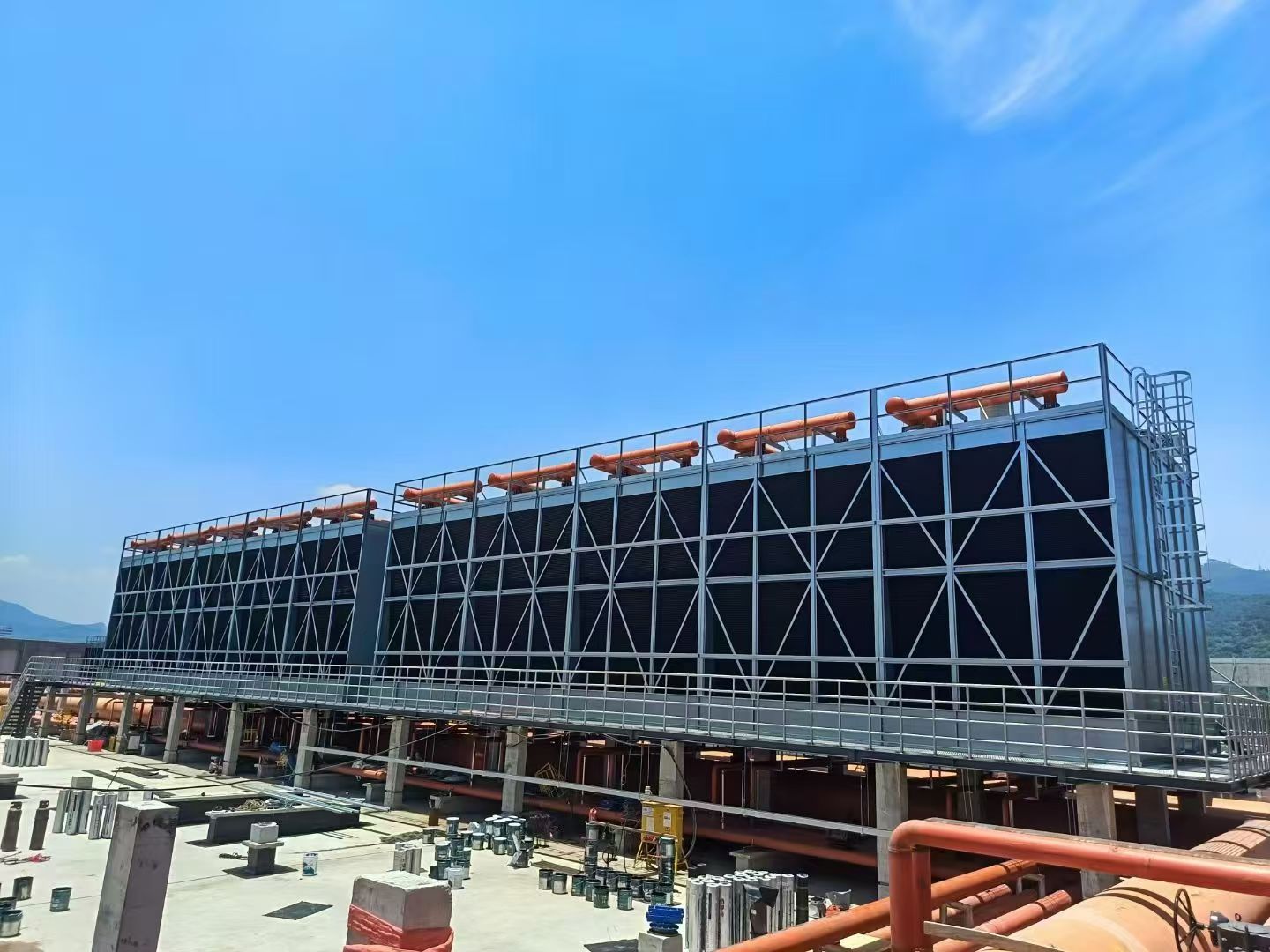
Cooling towers play an essential role in industrial cooling, HVAC systems, power generation, and many manufacturing processes. They remove unwanted heat by bringing circulating water into contact with air. However, cooling tower operation also involves water losses, and not all of them occur for the same reason.
One issue that often causes confusion is water drift loss. Operators may notice water droplets escaping from a cooling tower and wonder whether the cooling tower filler is responsible. Is the fill design causing the problem? Should the filler be replaced? Or is the real issue an ineffective drift eliminator?
The answer depends on how the entire cooling tower works.
The relationship between cooling tower filler and water drift loss is important because fill influences water distribution and airflow, while drift eliminators are specifically designed to capture water droplets carried out of the tower. Understanding how these components interact can help you reduce water loss, maintain cooling efficiency, and avoid unnecessary maintenance costs.
In this guide, we will explain the relationship in practical terms and show you what to consider when selecting or replacing cooling tower filler.
1. Introduction: Why Cooling Tower Water Drift Matters
Water drift may appear to be a minor operating issue, especially when the escaping droplets are difficult to see. Yet excessive drift can affect water consumption, nearby equipment, site cleanliness, and maintenance requirements.
Drift droplets can carry dissolved minerals and water-treatment chemicals into the surrounding environment. Depending on the water chemistry and site conditions, this may contribute to deposits, corrosion, or other operational concerns.
For industrial facilities, the key is not simply to reduce every type of water loss in the same way. Evaporation, blowdown, and drift have different causes and require different control measures.
Cooling tower filler influences the conditions under which water and air interact, but drift eliminators provide the primary mechanical barrier against water droplets escaping with the exhaust air. Both components need to be considered when diagnosing a drift problem.
2. What Is Cooling Tower Filler?
Cooling tower filler, also called cooling tower fill or fill media, is an internal component that increases the contact area between circulating water and air.
Warm water enters the tower and flows over or through the fill. Depending on the design, the fill spreads the water into thin films or breaks it into smaller droplets. Air passes through this area, allowing heat transfer and evaporation to cool the circulating water.
Without suitable fill, water may pass through the tower too quickly or contact too little air to achieve the required cooling performance.
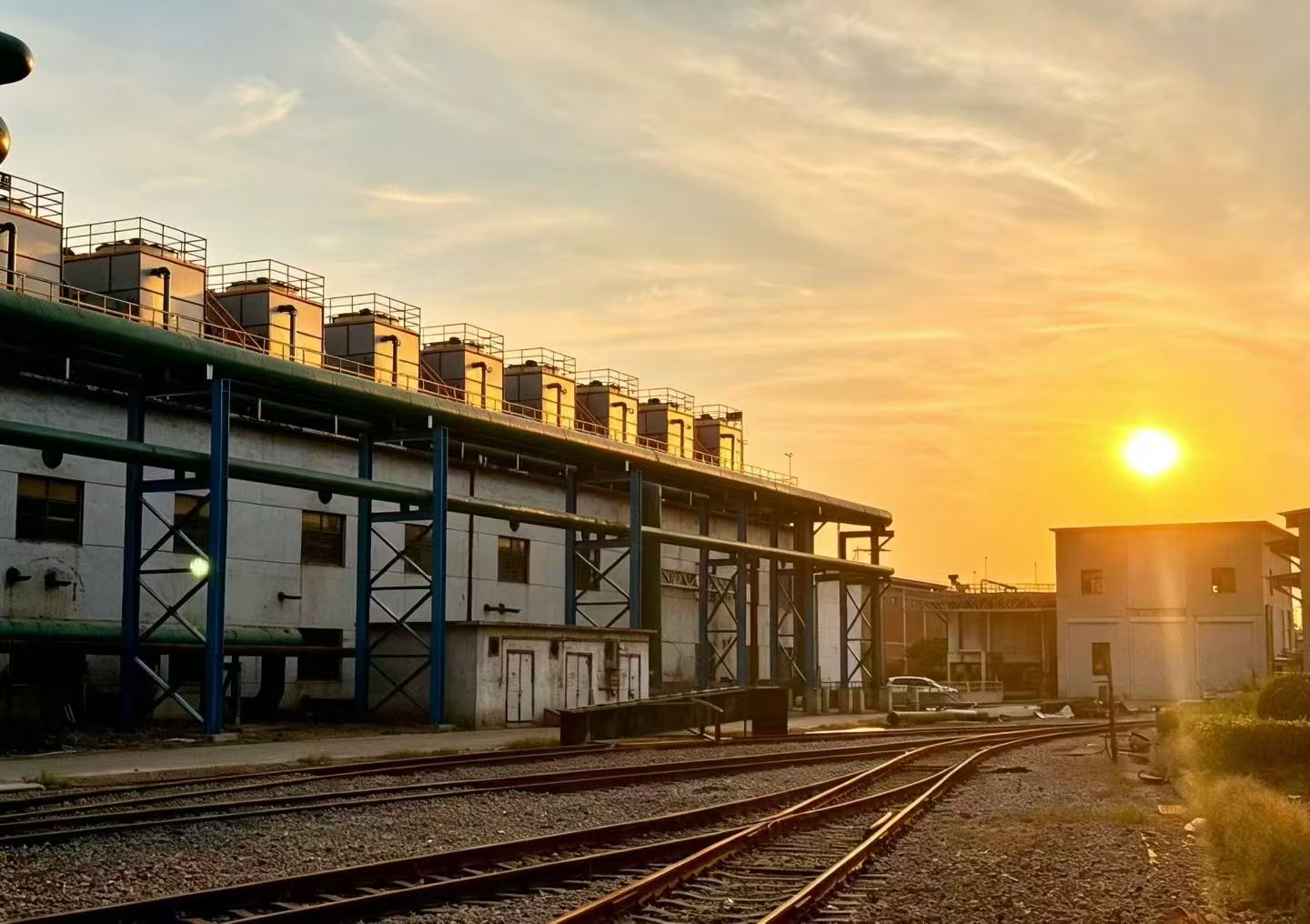
How Cooling Tower Filler Supports Heat Transfer
Think of cooling tower filler as a network of surfaces that gives water more opportunities to release heat. Its geometry helps control water distribution, contact area, and the movement of air through the tower.
However, filler must balance several requirements. It should promote effective heat transfer without creating excessive airflow resistance or making the system unnecessarily vulnerable to clogging.
If the fill becomes blocked by scale, sediment, or biological growth, water and air may no longer move as intended. Uneven flow can develop, and the tower may experience reduced cooling performance or unusual water movement.
Common Types of Cooling Tower Filler
Two major categories are film fill and splash fill.
Film fill: Spreads water across shaped surfaces to create thin films and a large contact area.
Splash fill: Breaks falling water into smaller droplets as it strikes bars, grids, or molded elements.
Both types can support cooling, but their suitability depends on water quality, tower design, operating conditions, and maintenance requirements.
The choice of filler can influence the flow conditions inside the tower. However, selecting a particular fill type does not, by itself, guarantee low drift loss.
3. What Is Water Drift Loss in a Cooling Tower?
Water drift loss occurs when small liquid droplets are carried out of a cooling tower by the moving air stream. These droplets are not the same as water vapor produced through evaporation. They are liquid water physically transported beyond the tower's discharge.
Drift can occur when air carries droplets upward through the tower and out through the exhaust. The droplets may originate from splashing, spray distribution, water breakup, or other interactions between water and air.
The amount of drift depends on factors such as air velocity, droplet size, internal geometry, water distribution, and the performance of the drift eliminators.
Drift Loss vs. Evaporation Loss vs. Blowdown
Understanding these three types of water loss is essential when planning improvements.
| Type of Water Loss | What Happens | Main Control Approach |
| Drift loss | Liquid droplets leave the tower with exhaust air | Properly selected, installed, and maintained drift eliminators |
| Evaporation loss | Water changes from liquid into vapor during cooling | An inherent part of evaporative cooling; manage overall system efficiency |
| Blowdown loss | Water is deliberately discharged to control dissolved solids | Optimize water treatment and cycles of concentration within safe limits |
These losses should not be treated as interchangeable. For example, reducing blowdown does not directly solve a drift eliminator problem, and changing the filler will not eliminate the evaporation required for evaporative cooling.
Why Drift Loss Should Not Be Ignored
Excessive drift can lead to avoidable makeup-water demand and may carry treatment chemicals or dissolved substances outside the cooling tower. In certain environments, escaped droplets may also affect nearby machinery, vehicles, building surfaces, or pedestrian areas.
The severity depends on the water chemistry, drift rate, tower location, and local operating requirements.
When water appears around the tower discharge or nearby surfaces become unexpectedly wet, investigate the cause rather than assuming the filler must be replaced.
4. How Cooling Tower Filler Influences Water Drift Loss
The relationship between filler and drift is indirect but important. Fill changes how water spreads, falls, and interacts with the air stream. Those flow conditions can influence the formation and movement of droplets that may eventually reach the drift eliminators.
A suitable fill design helps establish stable water flow and appropriate airflow distribution. An unsuitable, damaged, clogged, or incorrectly installed fill may disturb these conditions.
Water Distribution and Droplet Formation
Uniform water distribution helps the tower operate as intended. When water enters the fill evenly, it can spread across the available surfaces and move through the tower in a more predictable pattern.
If the water distribution system is blocked or damaged, some areas may receive too much water while others receive too little. Excess water can cause localized flooding or unusual splashing, depending on the design.
These conditions may increase the amount of liquid carried toward the drift eliminators. However, water distribution problems do not always lead to measurable drift increases; the actual result depends on tower geometry, air velocity, and the eliminator arrangement.
This is why water distribution should be checked alongside the fill and drift eliminators.
Airflow Resistance and Water Carryover
Fill creates resistance as air passes through it. If the fill is clogged or has been replaced with a design that is not suitable for the tower, airflow distribution and pressure drop may change.
The effect depends on the fan system and the tower's operating conditions. Uneven airflow may cause some areas to experience higher local velocities, which can influence droplet transport.
More airflow is not automatically better. The tower needs sufficient air for heat rejection, but the airflow must remain compatible with the fill design, water loading, and drift eliminator performance.
Fill Geometry and Water Film Stability
Film fill and splash fill create different water-flow patterns. Film fill encourages water to spread across surfaces, while splash fill repeatedly breaks up falling water.
These differences affect the formation of droplets and the distribution of water within the tower. Yet the relationship between fill geometry and drift is not a simple rule in which one design always produces less drift than another.
A suitable selection depends on the complete cooling tower design, including the spray system, airflow, fill depth, and drift eliminators.
The practical lesson: Evaluate filler as part of the tower's overall water and air management system rather than treating it as the only source of drift.

5. Cooling Tower Filler vs. Drift Eliminators
Although filler and drift eliminators work in the same cooling tower, they perform different jobs.
Filler increases contact between water and air to improve heat transfer. Drift eliminators are installed in the exhaust-air path to change the direction of airflow and capture liquid droplets before they leave the tower.
Different Functions, Different Locations
Filler is generally located in the main heat-transfer section of the tower. Drift eliminators are typically positioned where exhaust air passes through them before discharge.
As air moves through the eliminator, its direction changes around specially shaped passages. Liquid droplets have inertia, so many cannot follow the air's changing path. They strike the eliminator surfaces, collect, and drain back into the tower.
This mechanism allows drift eliminators to reduce the amount of liquid water carried out with the exhaust air.
Why Fill Alone Cannot Control Drift
Even well-selected fill cannot replace the function of a properly designed drift eliminator.
A cooling tower may have high-quality fill but still experience excessive drift if the eliminators are damaged, incorrectly installed, missing sections, or poorly matched to the airflow conditions.
The reverse is also true: an effective eliminator may not correct poor heat transfer caused by clogged or unsuitable fill.
For this reason, diagnose the entire system. Inspect the fill, water distribution system, fan operation, air passages, and drift eliminators before deciding which component needs replacement.
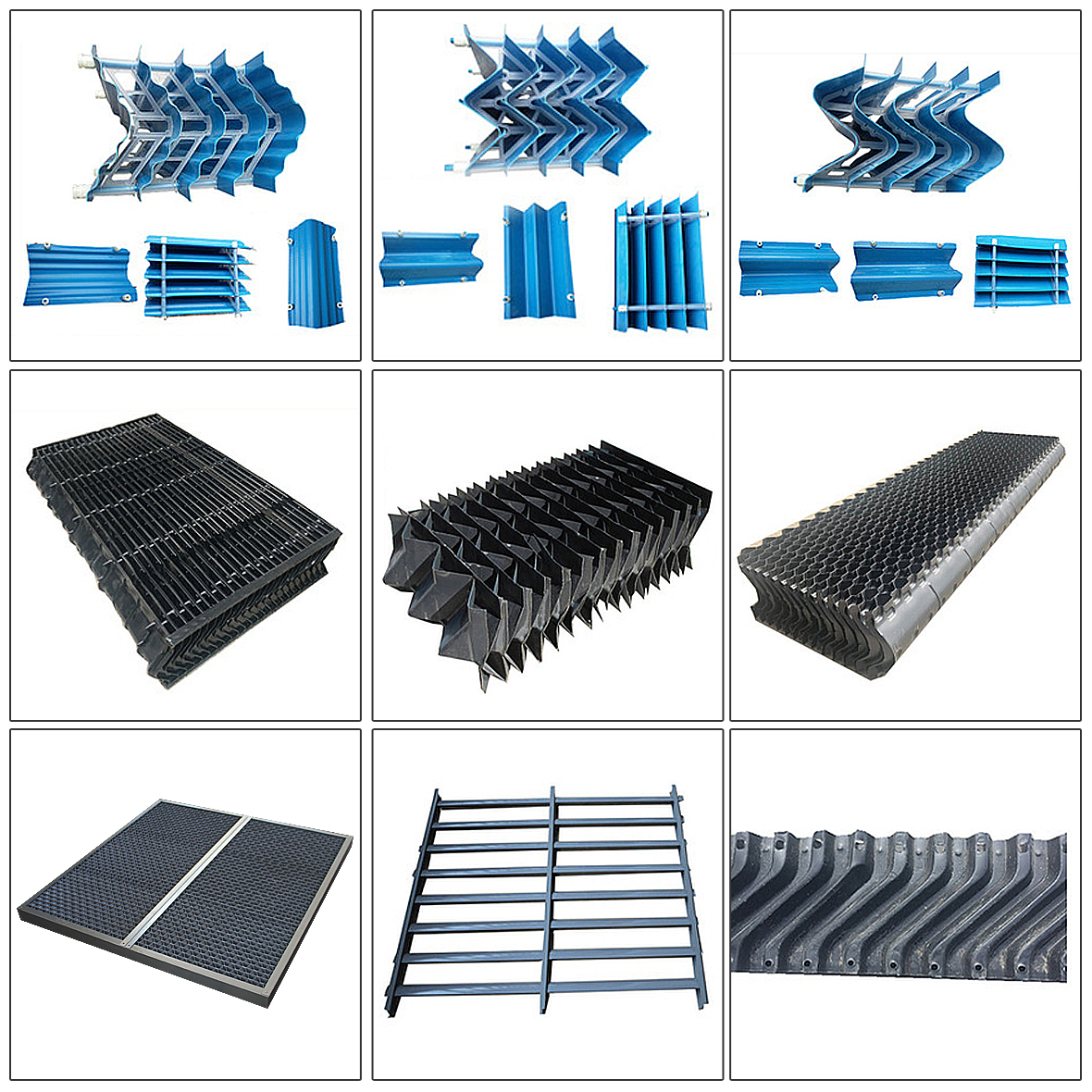
6. Film Fill and Splash Fill: Their Relationship With Drift
Both film fill and splash fill can be suitable in the right application. The important issue is how the fill performs under the tower's actual operating conditions.
Film Fill Characteristics
Film fill uses closely arranged surfaces to spread water into thin layers. This can provide a large effective contact area and strong thermal performance when water quality and design conditions are appropriate.
However, closely spaced passages may be vulnerable to deposits or blockage in systems with high suspended solids or poor water treatment. As fouling develops, water and air may no longer distribute evenly.
If you choose film fill, confirm that its passage geometry is appropriate for the water quality and maintenance capabilities of the facility. Also verify compatibility with the tower's airflow and drift eliminator arrangement.
Splash Fill Characteristics
Splash fill uses repeated impacts to break water into droplets and increase contact with air. Some designs provide more open passages, which may be useful where fouling risk is a concern.
The actual benefits depend on the product geometry, material, water loading, and tower configuration. Splash fill can also accumulate deposits and may not be suitable for every application.
Do not assume that splash fill always creates more drift, or that film fill always creates less. Drift depends on the interaction of water flow, air velocity, droplet formation, and eliminator efficiency.
Choose the fill type based on thermal performance, water quality, mechanical compatibility, and the needs of the complete tower.
7. Key Factors That Increase Water Drift Loss
When investigating excessive drift, focus on the operating conditions that may allow more droplets to reach or pass through the drift eliminators.
Excessive Air Velocity
Air velocity is one of the important factors influencing droplet transport. If the local airflow is higher than the system was designed to handle, droplets may be carried toward the eliminators more aggressively.
Possible causes include incorrect fan operation, changes to the air passages, or an unsuitable replacement component. Do not reduce fan speed without checking the required cooling duty and manufacturer recommendations.
Instead, confirm fan settings, airflow conditions, and the specified operating range of the drift eliminators.
Poor Water Distribution and Overloading
An overloaded water distribution system can create uneven flow, excessive local water loading, or unusual splashing. Blocked nozzles and damaged distribution pipes may contribute to these conditions.
Inspect the distribution system for blocked outlets, broken components, uneven spray patterns, and signs of water bypassing the intended path.
The correct solution may involve repairing the distribution system rather than replacing the fill.
Incorrect Fill Installation
Incorrectly installed fill can leave gaps, obstruct intended passages, or interfere with water and airflow distribution. Replacement fill that does not match the tower design may create similar problems.
Check pack dimensions, orientation, support arrangements, and installation instructions. Confirm that the installed fill does not interfere with the drift eliminators or other internal components.
Damaged or Inefficient Drift Eliminators
This is a major area to inspect when visible droplets are escaping from the tower.
Look for broken blades, missing sections, warped panels, open joints, incorrect orientation, or gaps around the perimeter. Poor sealing can allow air and water droplets to bypass the intended capture path.
Deposits may also affect the passage geometry and drainage of captured water. If the eliminators cannot redirect the air or return collected droplets properly, drift performance may deteriorate.
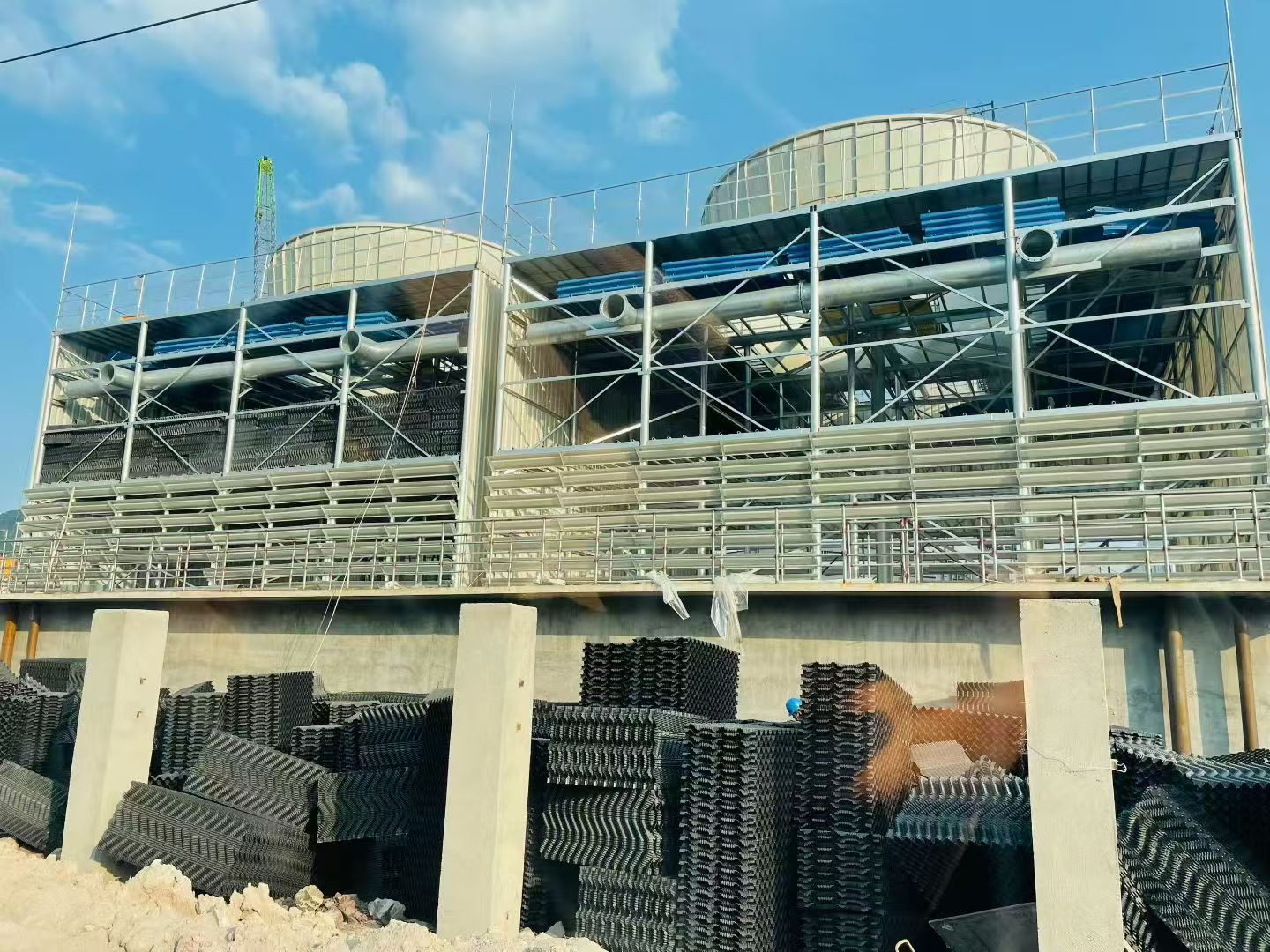
8. How to Identify Excessive Drift Loss
Visible droplets around the exhaust may indicate drift, but appearance alone cannot quantify the loss. Weather conditions, condensation, nearby spray, and other sources of moisture can make diagnosis more complicated.
Start by documenting when the problem occurs. Does it happen at high fan speed, during peak water loading, after maintenance, or only in certain weather conditions?
Next, inspect the drift eliminators and check for missing panels, damaged edges, poor fit, or obvious bypass paths. Review the fan operating conditions and water distribution pattern as well.
Where an accurate drift rate is required, use an appropriate measurement or testing method and compare the result with the design specification or applicable requirements. A qualified cooling tower specialist can help determine whether the measured performance is consistent with the system's intended operation.
Avoid diagnosing a drift problem solely from makeup-water consumption. Makeup water replaces evaporation, blowdown, drift, leaks, and other losses, so it cannot identify drift independently.
9. Practical Ways to Reduce Cooling Tower Water Drift
Reducing drift starts with identifying the actual cause. Replacing fill may be justified in some situations, but it should not be the default response to every water-loss problem.
Optimize Drift Eliminator Performance
Check whether the eliminators are suitable for the tower's airflow and operating conditions. Confirm that the panels are correctly installed, all sections are present, and joints and edges do not allow significant bypass.
Replace damaged components with compatible products and follow the manufacturer's installation requirements. Avoid changing the eliminator design without evaluating the impact on airflow resistance and fan operation.
Select Suitable Cooling Tower Filler
Choose fill that matches the tower design, thermal requirements, water quality, and expected operating conditions.
Properly selected fill helps maintain predictable water and airflow patterns. It should also be compatible with the spray system, support structure, and drift eliminator arrangement.
When replacing fill, review the dimensions and installation details carefully. A product that physically fits may still be unsuitable if its geometry changes the intended airflow or water distribution.
Maintain Correct Air and Water Flow
Inspect fan settings, spray nozzles, distribution pipes, and internal passages. Correct blocked nozzles, uneven spray, damaged components, or unauthorized modifications that affect the flow pattern.
Keep the tower within its intended operating range and follow the equipment manufacturer's recommendations. Changes made to improve cooling capacity can have unintended effects if they increase local airflow or water loading beyond the system's design conditions.
Establish Regular Inspection and Cleaning
Routine maintenance helps identify conditions that can affect both cooling performance and drift control.
Inspect fill for deposits, deformation, and blocked passages. Check eliminators for damage and fouling, and examine the water distribution system for uneven flow.
Cleaning methods should suit the fill material and the manufacturer's recommendations. Excessive pressure or incompatible cleaning chemicals may damage components and shorten their service life.
A consistent maintenance schedule can help detect developing problems before they lead to significant performance losses.
10. The Impact of Drift Loss on Operating Costs
Water drift affects more than the volume of water leaving the cooling tower. Escaping droplets may contain dissolved solids and treatment chemicals, which can contribute to deposits on nearby surfaces and create additional cleaning requirements.
Excessive drift may also increase makeup-water demand. The financial impact depends on the actual drift rate, water cost, chemical treatment requirements, and operating hours.
A useful assessment should separate drift from other losses. If water consumption is increasing, check for leaks, blowdown changes, evaporation-related load changes, and abnormal overflow before attributing the increase to drift.
The same principle applies to energy consumption. A fill or eliminator problem may affect airflow resistance and fan performance, but the actual energy impact depends on the tower design and operating conditions.
The most cost-effective solution is the one that corrects the root cause while preserving the cooling tower's required thermal performance.
11. How to Select Filler and Drift Eliminators Together
When planning a new cooling tower or a major refurbishment, evaluate fill and drift eliminators as a coordinated system.
Start by defining the required cooling duty, water circulation rate, operating temperatures, ambient wet-bulb conditions, and expected water quality. Then confirm the tower's crossflow or counterflow arrangement and the available internal dimensions.
Ask the supplier to review the following parameters:
Fill type, material, geometry, and pack dimensions
Water loading and distribution requirements
Airflow requirements and pressure drop
Drift eliminator configuration and compatibility
Expected fouling risks and maintenance access
Installation tolerances and support arrangements
Applicable drift performance specifications and test conditions
Requesting these details helps prevent a common mistake: purchasing individual components that meet their own specifications but do not work well together in the finished tower.
If you are replacing only the filler, verify whether the existing drift eliminators remain suitable. If you are replacing eliminators, confirm that the new design fits the existing structure and airflow conditions.
12. Common Mistakes to Avoid
Several assumptions can make drift problems harder to solve.
Mistake 1: Assuming filler is always the cause. Damaged or poorly fitted drift eliminators may be the primary issue.
Mistake 2: Confusing drift with evaporation. Evaporation is part of the cooling process, while drift is liquid water carried out with exhaust air.
Mistake 3: Choosing fill based only on cooling efficiency. Airflow resistance, water quality, dimensional compatibility, and maintenance requirements matter too.
Mistake 4: Increasing fan speed without checking the system. Higher airflow may change droplet transport and may not be appropriate for the installed eliminators.
Mistake 5: Ignoring installation gaps. Missing panels, incorrect orientation, or perimeter bypass can undermine drift control.
Mistake 6: Replacing components without identifying the root cause. If poor water distribution or an incorrect operating condition remains, the problem may return.
A methodical inspection is usually more useful than replacing components based on assumptions.
13. Cooling Tower Filler and Drift Eliminator Inspection Checklist
Use this checklist during maintenance or before purchasing replacement components.
-
Confirm whether the observed water loss is actually drift.
-
Inspect drift eliminators for broken, missing, or deformed sections.
-
Check joints, edges, and perimeter areas for bypass gaps.
-
Verify eliminator orientation and installation.
-
Inspect filler for fouling, deformation, damage, and uneven water flow.
-
Check spray nozzles and water distribution pipes.
-
Review fan operation and airflow conditions.
-
Confirm that fill dimensions and design match the tower requirements.
-
Check whether the filler and eliminators are compatible.
-
Compare measured drift performance with applicable design specifications.
-
Record findings and correct the identified root cause.
This checklist can help maintenance teams organize inspections and provide suppliers with more accurate information when requesting technical assistance.

14. How Power Tower Cooling Technology (Shaoxing) Co., Ltd. Can Help
Selecting cooling tower filler requires attention to more than material and price. Buyers should consider the tower configuration, operating temperatures, water quality, fill dimensions, and the relationship between fill and drift eliminators.
Power Tower Cooling Technology (Shaoxing) Co., Ltd. is the featured supplier for this guide. Visit https://www.coolingtowerpart.com to explore cooling tower fill and related product information.

When requesting a quotation or technical review, prepare the cooling tower model if available, existing fill dimensions, required quantity, operating conditions, and photographs of the internal components. If the project involves excessive drift, explain what you have observed and whether the drift eliminators have been inspected.
Ask the supplier to confirm the proposed product specifications and dimensional compatibility before placing an order. For a drift-related issue, make sure the evaluation includes the relevant eliminator arrangement rather than assuming that fill replacement alone will resolve the problem.
Clear technical information makes it easier to compare products, plan installation, and reduce the risk of purchasing components that do not suit the tower.
Conclusion: Manage Filler and Drift as One System
Cooling tower filler and water drift loss are related, but they are not the same problem. Filler supports heat transfer and influences the movement of water and air inside the tower. Drift eliminators perform the primary function of capturing liquid droplets before they escape with exhaust air.
An unsuitable or fouled fill can disturb flow conditions, while damaged eliminators, excessive local air velocity, poor water distribution, and installation gaps can contribute directly to increased drift.
The best approach is to evaluate the entire cooling tower system. Confirm the source of water loss, inspect the fill and eliminators, review airflow and water distribution, and select replacement components based on the actual operating requirements.
For help evaluating cooling tower fill options, visit Power Tower Cooling Technology (Shaoxing) Co., Ltd. at www.coolingtowerpart.com. With accurate specifications and a clear understanding of the problem, you can make a more informed purchasing decision and support reliable, efficient cooling tower operation.


