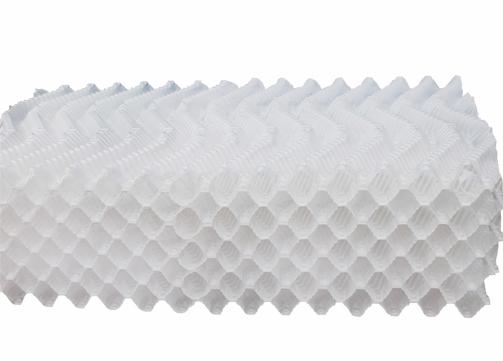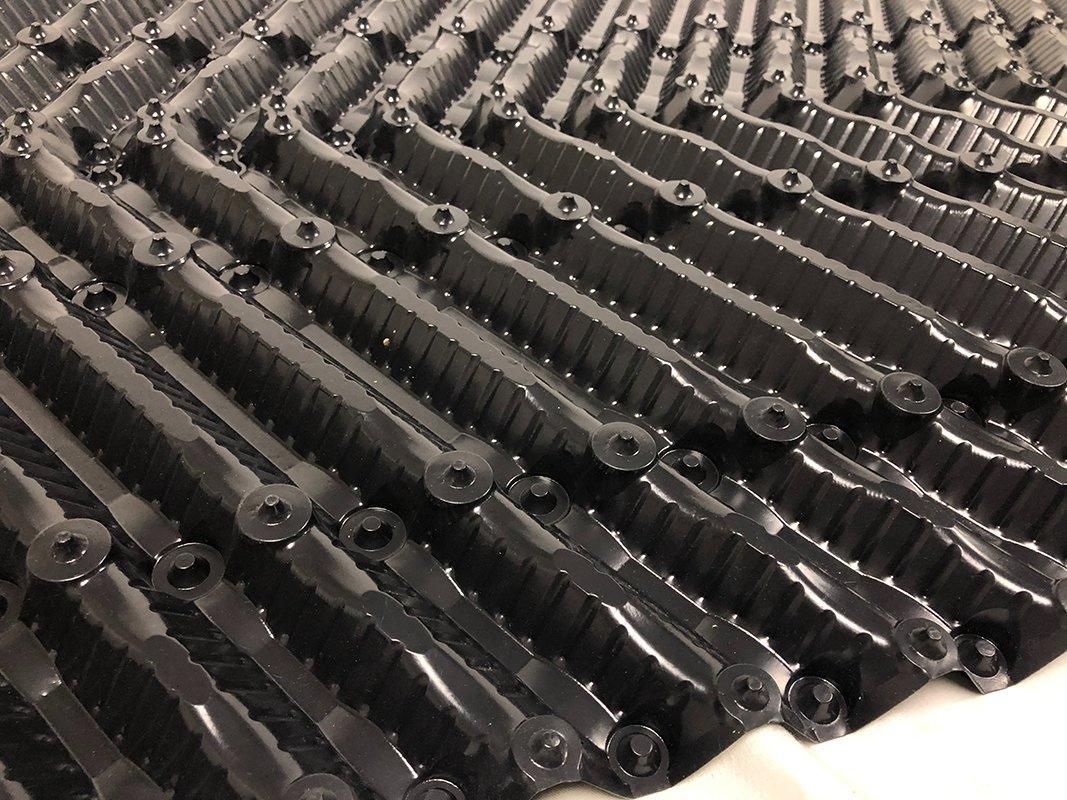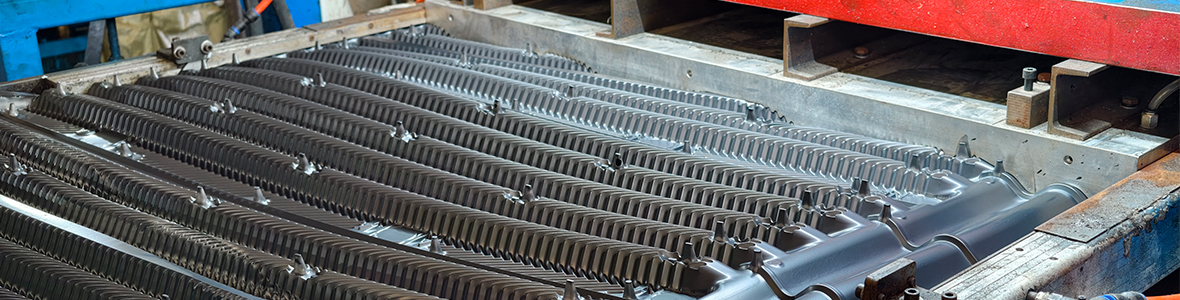
Choosing the right cooling tower fill can make a bigger difference than many people expect. At first glance, cooling tower fill may look like nothing more than a collection of plastic sheets packed inside a tower. But in reality, it is one of the most important components responsible for efficient heat transfer.
The right fill helps spread hot water over a large surface area, improves contact between water and air, and supports efficient evaporative cooling. The wrong fill, however, can create problems such as excessive pressure drop, fouling, scaling, deformation, premature aging, and reduced cooling capacity.
And that brings us to a common question:
Is PVC or PP better for cooling tower fill?
The honest answer is: neither material is universally better.
PVC is widely used because it provides an excellent balance between cost, thermal performance, chemical resistance, and manufacturability. PP, on the other hand, becomes particularly attractive when the cooling tower operates at higher temperatures or under more demanding chemical conditions.
So, which one should you choose?
In this guide, we will compare PVC and PP cooling tower fill based on temperature resistance, chemical compatibility, thermal performance, water quality, durability, cost, and actual application requirements.
If you are replacing existing fill or selecting a new cooling tower fill material, this comparison will help you make a more confident decision.
What Is Cooling Tower Fill?
Cooling tower fill, also called cooling tower fill media, cooling tower packing, or cooling tower fill packing, is the internal material used to increase the contact area between circulating water and air.
Think of the fill as the “workbench” inside the cooling tower.
Hot water enters the tower through the distribution system and flows downward through the fill. At the same time, air moves through the fill area. The fill spreads the water across a large surface area, allowing more water to contact the moving air.
As the water evaporates, it releases heat into the air. The remaining water becomes cooler and returns to the cooling system.
Without properly designed fill, the cooling tower would have to rely on a much smaller natural water-air contact area.
That is why the design and material of the cooling tower fill media matter so much.
Why Does Cooling Tower Fill Material Matter?
The material determines how the fill behaves under temperature, chemical exposure, water treatment, mechanical stress, and long-term operation.
However, material is only part of the equation.
Fill geometry is equally important. Flute spacing, sheet thickness, corrugation angle, surface texture, block dimensions, water loading, and airflow can all influence the final cooling performance.
This is why choosing the “strongest” or “most expensive” material is not necessarily the right approach.
Instead, you should ask:
What material and fill design best match my cooling tower's actual operating conditions?
For a conventional HVAC system, PVC may be more than sufficient. For a high-temperature industrial process, PP may provide a better safety margin and longer service life.
How Does Film Fill Work Inside a Cooling Tower?
Film fill works by spreading water into thin films across corrugated plastic sheets.
These sheets are designed to create a large effective surface area while maintaining channels for air movement. As the water flows over the surfaces, air passes through the fill and removes heat through evaporation.
The basic idea is simple:
More effective water-air contact generally means better heat transfer.
But there is a catch.
If the fill passages become too narrow, suspended solids, scale, biological growth, and other contaminants can accumulate more easily.
So the highest theoretical surface area is not always the best real-world solution.
The best fill is the one that maintains good heat transfer for the entire operating life of the cooling tower.
PVC vs. PP Cooling Tower Fill at a Glance
PVC and PP can both be used to manufacture high-performance cooling tower fill. The key difference is their material characteristics and the environments in which they perform best.
PVC cooling tower fills are generally an excellent choice for conventional applications where temperature and water chemistry are well controlled.
PP cooling tower fills are often selected when higher temperature resistance or more demanding chemical compatibility is required.
Here is the basic idea:
PVC: economical, widely available, good thermal performance, suitable for many standard applications.
PP: higher temperature capability, strong chemical resistance, suitable for more demanding industrial applications.
PVC: often the better choice when controlling initial project cost is important.
PP: may offer better long-term value when operating conditions are harsh.
But let's look at the differences more closely.
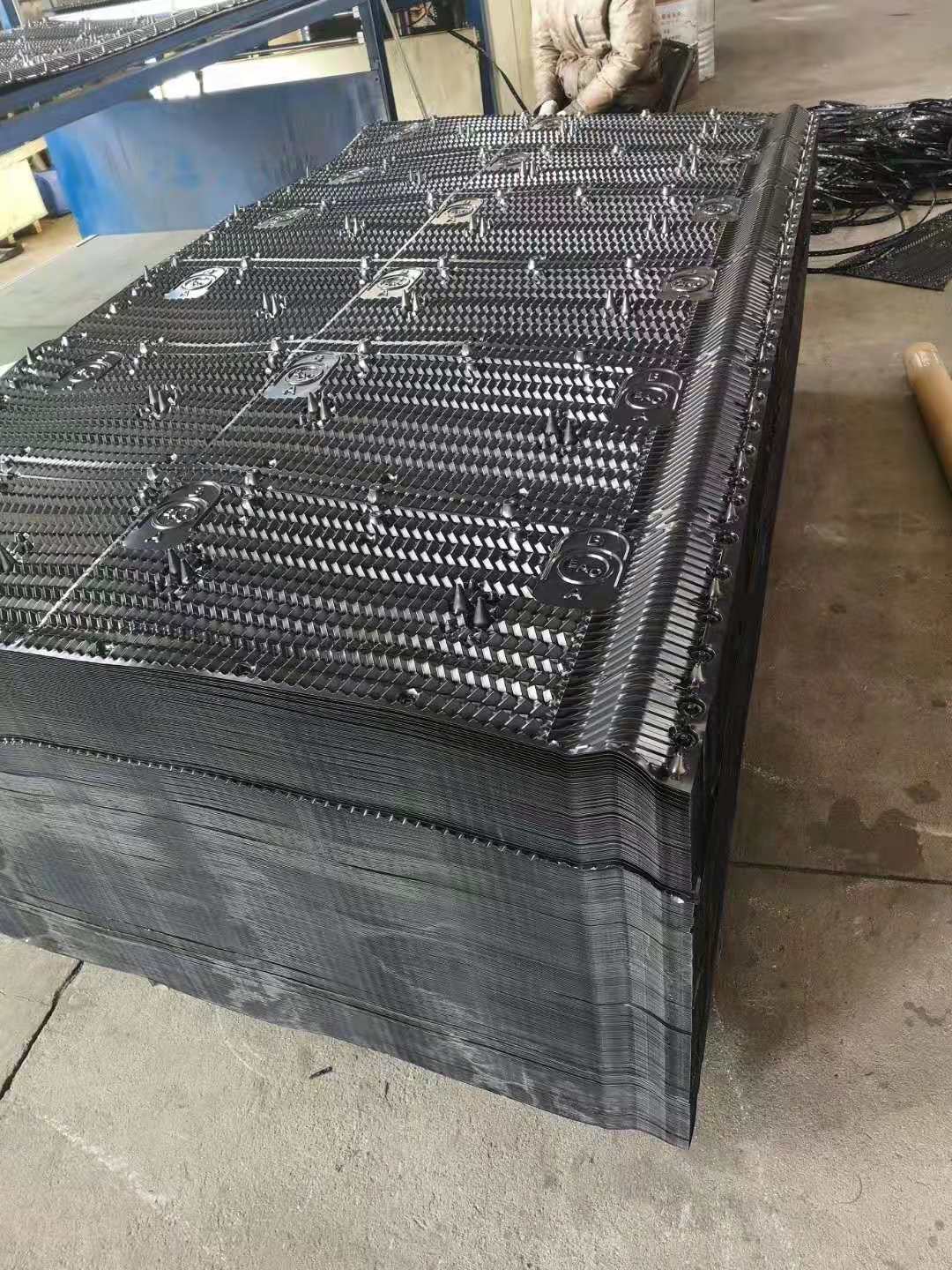
PVC Cooling Tower Fill
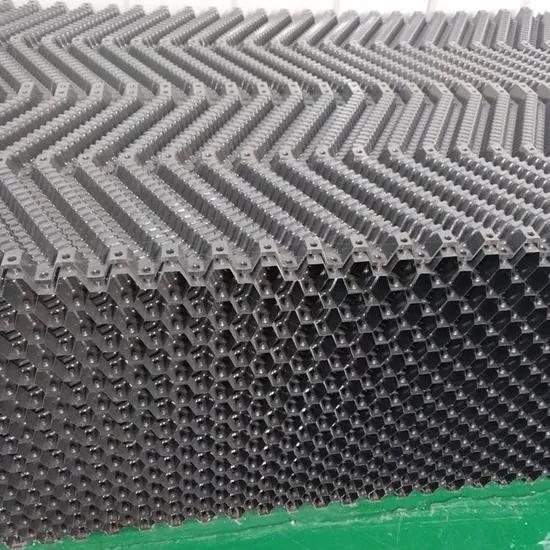
PVC, or polyvinyl chloride, is one of the most common materials used for cooling tower fill.
Why is it so popular?
Because it offers a practical combination of performance and affordability.
PVC is relatively lightweight, easy to process, and suitable for many commercial and industrial cooling systems. It can be manufactured into different corrugated film-fill designs to meet various tower configurations.
Typical applications include:
For many projects, PVC offers exactly what the system needs without paying for unnecessary material upgrades.
That makes PVC a very practical fill for cooling tower applications.
PP Cooling Tower Fill
PP, or polypropylene, is another important material used in cooling tower fill manufacturing.
Its main advantage is that it generally provides higher temperature capability than standard PVC, while also offering strong resistance to many chemicals.
That makes PP attractive for demanding industrial environments.
Common applications may include:
High-temperature process cooling
Chemical processing
Heavy manufacturing
Certain power-generation applications
Industrial systems with aggressive water chemistry
PP normally comes with a higher material cost than standard PVC.
But the more important question is not:
“Is PP more expensive?”
It is:
“Will my operating conditions justify the additional cost?”
If the answer is yes, PP can be a smart long-term investment.
1. Temperature Resistance
Temperature is one of the first parameters you should evaluate when choosing between PVC and PP.
Cooling tower fill operates continuously in contact with warm water and moving air. If the operating temperature exceeds the recommended range of the material, the fill can lose its dimensional stability or age faster.
Standard PVC is widely used for conventional cooling applications, but its temperature capability is more limited than PP.
PP is generally preferred when the operating temperature is higher or when the system experiences frequent temperature peaks.
Always remember:
The maximum temperature rating of the specific product matters more than a generic material rating.
Different formulations, thicknesses, designs, and manufacturing processes can produce different performance characteristics.
When Is PVC the Better Choice?
PVC is usually a good option when your cooling water remains comfortably within the manufacturer's recommended temperature range.
For standard HVAC and many general industrial cooling systems, there may be little practical benefit in upgrading to PP.
If the water temperature is moderate and well controlled, quality PVC can provide:
In this situation, choosing PP may simply increase the project budget without providing a meaningful improvement.
When Is PP the Better Choice?
PP becomes increasingly attractive as temperature rises.
If the cooling tower operates continuously at elevated temperatures, PP can provide a wider operating margin.
This can be especially important when a process occasionally experiences temperature spikes.
Think of it like choosing a vehicle.
You do not need a heavy-duty truck for a daily commute. But if you regularly transport heavy equipment, the additional capability becomes valuable.
The same principle applies to cooling tower fill material.
2. Chemical Resistance
Temperature is not the only environmental factor.
Cooling water can contain a wide variety of chemicals and contaminants, depending on the application.
These may include:
Corrosion inhibitors
Biocides
Acids
Alkalis
Dissolved minerals
Process contaminants
Cleaning chemicals
PVC has good resistance to many common cooling-water conditions and is therefore widely used.
PP can offer advantages in certain more aggressive chemical environments.
However, you should never assume that PP is resistant to every chemical.
Chemical compatibility depends on several variables, including:
Chemical type
Concentration
Water temperature
Exposure duration
Material formulation
Therefore, always provide the actual operating conditions to your manufacturer before making a final material decision.
PVC Performance in Normal Water Chemistry
For properly treated circulating water, PVC is often an excellent solution.
This is one reason why pvc cooling tower fills are widely used in commercial and industrial applications.
But good material cannot compensate for poor water treatment.
Even high-quality PVC fill can become clogged or scaled if the circulating water contains excessive minerals, suspended solids, or biological contaminants.
Good water treatment should therefore be considered part of the overall cooling tower strategy.
When Is PP Better for Chemical Conditions?
PP may be a better choice when the cooling water contains chemicals that place greater demands on the fill material.
For industrial applications with aggressive process conditions, PP can provide an additional level of material resistance.
However, don't make the decision based on a simple statement such as “PP is more chemical resistant.”
Instead, provide the manufacturer with:
Then confirm material compatibility.
3. Thermal Performance
Now we come to one of the biggest misconceptions about PVC and PP.
Does PP cool better than PVC?
Not necessarily.
The polymer itself does not automatically determine cooling performance.
The overall performance of cooling tower fills depends on the complete fill design.
Important variables include:
Effective surface area
Flute spacing
Corrugation angle
Sheet thickness
Water distribution
Airflow
Pressure drop
Water loading
Tower configuration
A well-designed PVC film fill can easily provide excellent thermal performance.
Likewise, a poorly selected PP fill will not magically make an inefficient cooling tower perform better.
Does PP Cool Better Than PVC?
In many applications, both materials can deliver excellent cooling performance.
The key difference is usually the operating environment they can tolerate.
PVC often wins when cost efficiency and standard operating conditions are the priorities.
PP becomes more attractive when higher temperatures or demanding chemical conditions make material durability a bigger concern.
So when comparing PVC fills cooling tower products with PP products, don't compare the polymer alone.
Compare the complete product design.
4. Fouling and Water Quality
Water quality is one of the most important factors when selecting fill.
And unfortunately, it is also one of the factors buyers sometimes overlook.
Film fill works extremely well when the water is clean and properly treated.
But the same tight channels that create excellent water-air contact can also become vulnerable to fouling.
Potential problems include:
Scale
Suspended solids
Biological growth
Corrosion products
Dust
Process contamination
Oil or organic deposits
Once deposits build up, airflow and water distribution can become restricted.
The result?
Lower cooling efficiency and higher maintenance requirements.
Clean Water Applications
For clean and properly treated water, high-efficiency film fill can be an excellent solution.
PVC film fill is especially attractive because it combines:
This makes PVC a strong choice for many standard cooling systems.
Dirty or High-Solids Water
If the water contains significant suspended solids, you need to think differently.
A very tight flute spacing may provide high theoretical heat-transfer performance, but it may also increase the risk of clogging.
In these cases, consider:
Sometimes sacrificing a little theoretical thermal performance can produce much better long-term results.
After all, what good is a highly efficient fill if it becomes blocked after a few months?
5. Durability and Service Life
Cooling tower fill is exposed to a challenging environment every day.
It has to deal with:
Water
Air
Heat
Chemicals
Biological activity
Cleaning
Mechanical stress
Outdoor exposure
Therefore, long-term durability matters.
PP can be especially attractive for demanding industrial applications because of its temperature and chemical-resistance characteristics.
PVC, meanwhile, can provide excellent service life when used within its recommended operating range.
But remember that service life is not determined by polymer alone.
It also depends on:
Sheet thickness
Material formulation
Manufacturing quality
Water treatment
Temperature
UV exposure
Mechanical support
Cleaning methods
A high-quality material can still fail prematurely if the tower operates outside its intended conditions.
UV Exposure and Outdoor Cooling Towers
Many cooling towers operate outdoors, which means the fill may be exposed to sunlight for extended periods.
UV exposure can gradually affect polymer materials.
Therefore, if the fill is exposed to significant sunlight during storage, transportation, installation, or operation, ask your supplier about UV stabilization and outdoor-use suitability.
Do not assume that all PVC or PP products have identical weathering performance.
6. Cost and Total Cost of Ownership
Let's talk about money.
PVC generally has the advantage when it comes to initial material cost.
That is one reason it remains so popular.
But purchase price is only one part of the total cost.
You should also consider:
Installation
Maintenance
Cleaning
Replacement frequency
Downtime
Energy consumption
Labor
Disposal
For example, a cheaper fill that needs to be replaced frequently may ultimately cost more than a higher-quality product that lasts longer.
This is why experienced buyers look at total cost of ownership, not just the initial quotation.
When Does PVC Provide Better Value?
PVC is often the best-value choice for standard applications.
If your tower has:
then high-quality PVC may provide everything you need.
Why pay extra for PP if your cooling tower doesn't actually require it?
When Can PP Save Money in the Long Run?
PP may make more economic sense when the cooling tower operates in harsh conditions.
If high temperatures or aggressive chemicals are likely to shorten the service life of PVC, the additional cost of PP can potentially be offset by:
Longer service life
Fewer emergency replacements
Less downtime
Lower maintenance frequency
More stable long-term performance
In other words, sometimes spending more upfront can reduce the cost of ownership later.
PVC vs. PP Cooling Tower Fill: Direct Comparison
| Feature | PVC Cooling Tower Fill | PP Cooling Tower Fill |
| Initial Cost | Generally lower | Generally higher |
| Thermal Performance | Excellent when properly designed | Excellent when properly designed |
| Temperature Resistance | Suitable for many standard applications | Generally better for higher temperatures |
| Chemical Resistance | Good for many common conditions | Generally stronger for demanding conditions |
| Weight | Lightweight | Lightweight |
| Processability | Excellent | Excellent |
| Common Applications | HVAC, commercial, general industrial | High-temperature and demanding industrial systems |
| Water Quality | Best with controlled water chemistry | Also requires proper water treatment |
| Long-Term Value | Excellent in suitable conditions | Strong where harsh conditions justify premium |
| Best Reason to Choose | Cost-effective standard performance | Higher temperature or demanding environments |
The takeaway is simple:
PVC is usually the practical choice for conventional cooling tower applications. PP becomes more attractive as temperature and chemical demands increase.
How to Choose the Right Fill for Your Cooling Tower
Selecting the right fill media cooling tower solution should be based on your actual system rather than a generic product catalog.
Before ordering, go through these steps.
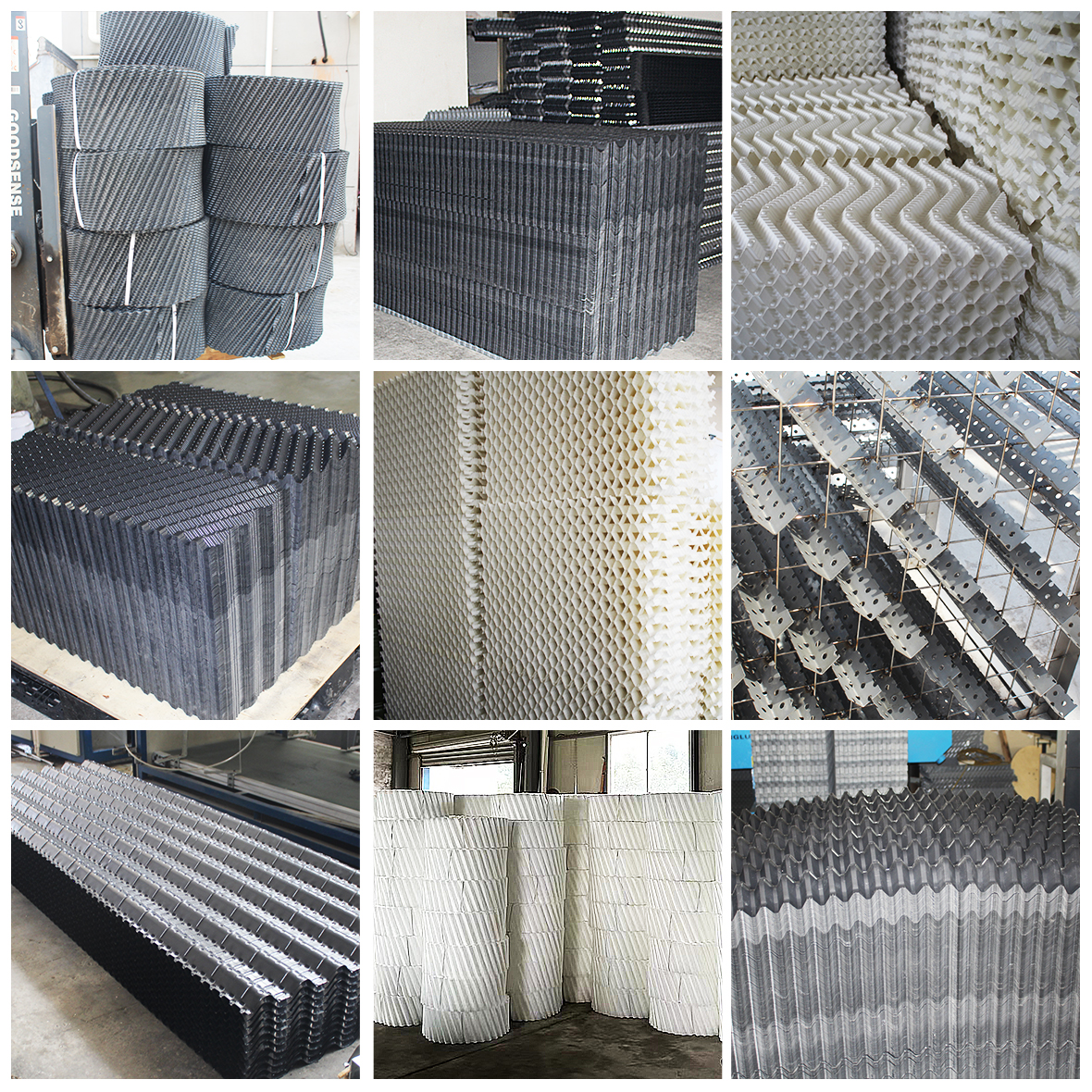
Check Your Cooling Tower Type and Dimensions
First identify whether your tower is:
Counterflow
Crossflow
Mechanical draft
Induced draft
Forced draft
Then measure:
A fill that does not fit is obviously not the right fill.
For replacement projects, accurate measurements and clear photographs can save a lot of time.
Check Water Temperature and Chemistry
Record both normal and maximum water temperature.
Then review:
pH
Hardness
Suspended solids
Chemical treatment
Biological activity
Process contaminants
This information can help determine whether PVC or PP is more suitable.
Check Airflow and Pressure Drop
Don't focus only on heat-transfer surface area.
The fill also affects air resistance.
If a fill creates excessive pressure drop, the fan may need to work harder to maintain airflow.
That can increase energy consumption.
A good design therefore balances:
Heat transfer + airflow + energy efficiency.
Check the Existing Fill Design
If you are replacing an existing pvc filling cooling tower system, identify the current fill type before ordering.
Check:
Flute spacing
Sheet thickness
Block dimensions
Corrugation direction
Fill height
Water loading
Replacing the old fill with a completely different geometry without checking system compatibility can create unexpected problems.
Common Mistakes When Selecting Cooling Tower Fills
Choosing the wrong fill usually happens because someone focuses on one specification instead of looking at the entire system.
Choosing Only by Price
The cheapest fill packing cooling tower product is not necessarily the cheapest solution over its entire life.
If it has poor durability, incorrect dimensions, or inadequate temperature resistance, you may end up paying for replacement and downtime.
Always compare total cost.
Assuming PP Is Always Better
PP has excellent properties, but that doesn't mean it is automatically the best option.
If your system operates under normal conditions, high-quality PVC may provide excellent performance at a lower cost.
The best material is the one that fits the application.
Ignoring Fill Geometry
Material alone doesn't determine cooling efficiency.
A fill with the wrong flute spacing, surface area, or block dimensions can underperform even if it is manufactured from premium PP.
When selecting a cooling tower fill, always evaluate material and geometry together.
Why Choose Power Tower Cooling Technology?
Power Tower Cooling Technology (Shaoxing) Co., Ltd. specializes in cooling tower components and replacement solutions, including PVC and PP cooling tower fill products.
For customers replacing existing fill, this experience can be particularly valuable.
Why?
Because replacement projects are rarely simple.
An old cooling tower may have:
Non-standard dimensions
Special support structures
Older fill designs
Modified water distribution systems
Limited installation space
A replacement product therefore needs to fit the existing system, not just look similar in a product catalog.
Power Tower Cooling Technology provides cooling tower fill solutions for different tower configurations and application requirements.
Customized PVC and PP Fill Solutions
Depending on the project, Power Tower can provide PVC cooling tower fills, PP fill options, and related cooling tower components.
When requesting a quotation, it is helpful to provide:
The more complete the information, the easier it becomes to identify the right cooling tower fill material.
For product information and cooling tower component solutions, visit the official Power Tower website:
Power Tower Cooling Technology (Shaoxing) Co., Ltd.
Final Verdict: PVC or PP Cooling Tower Fill?
So, which material should you choose?
The answer depends on your operating environment.
Choose PVC when:
Your operating temperature is moderate.
Water chemistry is properly controlled.
You want a cost-effective solution.
The application is standard HVAC or general industrial cooling.
You do not require additional high-temperature capability.
Consider PP when:
Operating temperatures are higher.
Temperature fluctuations are significant.
Chemical conditions are more demanding.
Long-term material stability is especially important.
The additional initial investment is justified by operating conditions.
But there is one more important point:
Do not select cooling tower fill based on material alone.
Fill geometry, flute spacing, water distribution, airflow, pressure drop, tower dimensions, and water quality all influence the final result.
The best cooling tower fill media is not necessarily the most expensive or the most densely packed.
It is the fill that provides reliable cooling performance under your actual operating conditions—and keeps doing so year after year.
Frequently Asked Questions About PVC and PP Cooling Tower Fill
Is PVC or PP better for cooling tower fill?
Neither material is universally better.
PVC is generally more economical and works very well for many standard cooling tower applications. PP is often a better choice for higher-temperature or more chemically demanding applications.
The correct choice depends on your tower's temperature, water chemistry, fill design, and operating conditions.
Is PP cooling tower fill more durable than PVC?
PP can offer advantages in demanding environments, particularly where higher temperature resistance and chemical stability are important.
However, actual service life depends on many factors, including material formulation, thickness, temperature, water chemistry, UV exposure, cleaning, and mechanical support.
Can PVC fill be used for high-temperature cooling water?
It depends on the specific PVC product.
Standard PVC has defined operating-temperature limitations. Therefore, always check the manufacturer's continuous and maximum temperature ratings before using PVC in a high-temperature application.
If temperatures are consistently high, PP may be a more appropriate option.
What is the best material for cooling tower fill?
There is no single best material for every cooling tower.
PVC is an excellent general-purpose option for many standard applications.
PP becomes more attractive for higher-temperature or more demanding industrial environments.
The best choice is the material that matches your actual operating conditions.
How often should cooling tower fill be replaced?
There is no universal replacement schedule.
Inspect the fill regularly for:
Cracking
Brittleness
Deformation
Scaling
Biological fouling
Physical damage
Blocked passages
If the fill can no longer provide effective cooling or has suffered significant physical deterioration, replacement should be considered.
Can PVC and PP cooling tower fill be customized?
Yes.
Cooling tower fill can be manufactured with different dimensions, flute spacings, sheet thicknesses, corrugation designs, and block configurations.
Customized fill is particularly useful for older cooling towers or replacement projects where standard dimensions are not suitable.
What information should I provide when ordering cooling tower fill?
For the most accurate recommendation, provide:
Cooling tower type
Manufacturer and model
Existing fill dimensions
Fill height
Water flow rate
Hot-water temperature
Cold-water temperature
Water quality
Airflow information
Flute spacing
Preferred material
Installation photos
With this information, a professional manufacturer can help determine the most appropriate fill for cooling tower applications.
Conclusion
Choosing between PVC and PP does not have to be complicated.
Start with the operating conditions.
Check the temperature. Check the water chemistry. Check the tower design. Check the airflow. Then evaluate the expected service life and total cost.
For many conventional applications, PVC cooling tower fill remains an excellent combination of performance and value.
For demanding high-temperature or chemically aggressive environments, PP cooling tower fill may provide the additional material capability you need.
And if you are unsure, don't guess.
Work with an experienced cooling tower fill manufacturer that can evaluate your actual operating conditions and recommend the right combination of material and geometry.
For PVC, PP, replacement, and customized cooling tower fill solutions, Power Tower Cooling Technology (Shaoxing) Co., Ltd. can provide application-focused options for different cooling tower requirements.
Visit Power Tower Cooling Technology