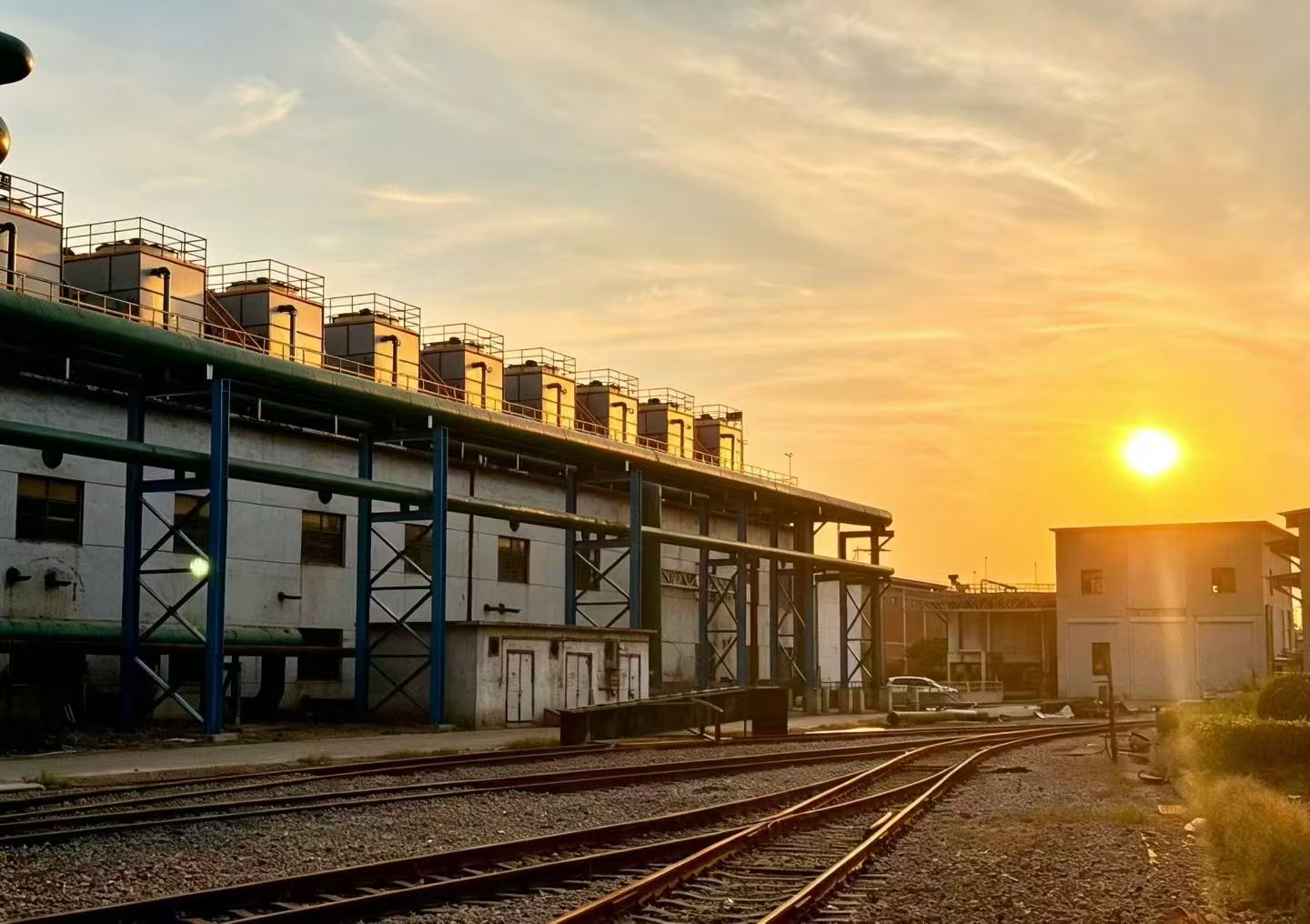
Choosing the right cooling tower fill is one of the most important decisions you can make when designing, upgrading, or maintaining a cooling tower. The fill directly affects heat transfer, water distribution, airflow resistance, cleaning requirements, and overall operating efficiency. Select the wrong type, and even a well-designed cooling tower may struggle to deliver the cooling performance you expect.
But how do you choose between film fill, splash fill, PVC fill, and PP fill? Is a high-efficiency film fill always the best option? Not necessarily. The right choice depends on your water quality, operating temperature, heat load, airflow conditions, and maintenance capabilities.
This guide explains how to pick suitable cooling tower fill types for your working conditions. Whether you operate an HVAC system, a chemical processing plant, a power station, or another industrial facility, you will learn what to compare before purchasing replacement fill or specifying a new cooling tower.
For buyers seeking cooling tower fill solutions, Power Tower Cooling Technology (Shaoxing) Co., Ltd. provides a starting point for discussing product requirements. Visit https://www.coolingtowerpart.com to explore available cooling tower parts and related information.
1. Introduction: Why Cooling Tower Fill Selection Matters
Think of cooling tower fill as the working surface where much of the heat exchange takes place. It spreads water into thin films or smaller droplets, increasing contact between water and moving air. This contact helps heat transfer and evaporation remove unwanted heat from the circulating water.
However, every cooling tower operates under different conditions. A clean HVAC cooling tower may benefit from high-surface-area film fill, while a tower handling water with suspended solids may need a more open, clog-resistant arrangement.
The challenge is to balance thermal performance with practical operating requirements.
A suitable fill should:
Provide sufficient heat-transfer surface for the required cooling duty.
Distribute water evenly throughout the fill pack.
Allow adequate airflow without excessive pressure drop.
Resist the expected water temperature and chemical environment.
Remain maintainable under the site's actual water conditions.
Fit the existing tower structure when used for replacement.
The best cooling tower fill is not necessarily the one with the highest advertised efficiency. It is the one that performs reliably under your specific working conditions.
2. What Is Cooling Tower Fill and How Does It Work?
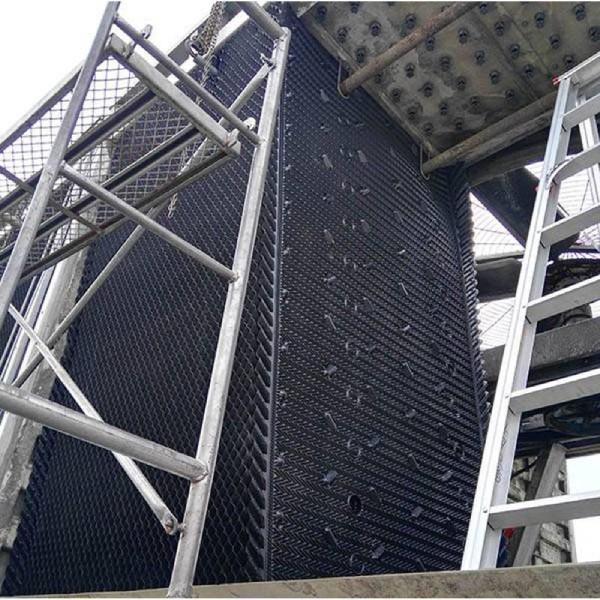
Cooling tower fill, also called cooling tower packing or fill media, is installed inside a cooling tower to improve contact between circulating water and air.
Hot water enters the distribution system and flows over or through the fill. As air moves through the same section, a portion of the water evaporates. This evaporation removes heat from the remaining water, lowering its temperature before it returns to the cooling system.
The fill helps create the conditions needed for effective heat and mass transfer. Its geometry, surface area, spacing, and wetting characteristics all influence performance.
2.1 Heat Transfer and Water Distribution
Good fill does more than provide a large surface area. It must also spread water evenly and allow air to move through the tower.
If water concentrates in only a few areas, some sections become overloaded while others remain underused. These dry or poorly wetted zones reduce the effective heat-transfer area.
Uneven distribution may also create localized scaling, biological growth, and performance problems. Therefore, fill selection should always consider the water distribution system, spray nozzles, and operating flow rate.
2.2 How Fill Affects Cooling Tower Performance
Fill characteristics influence several important operating parameters:
Cooling efficiency: Effective water-air contact supports heat transfer and evaporation.
Airflow resistance: Narrow passages and complex geometries can increase pressure drop.
Water quality tolerance: Passage size and surface design influence fouling and clogging risk.
Maintenance frequency: Deposits and biological growth can make some fill arrangements more difficult to clean.
Operating cost: Thermal performance and pressure drop can affect fan power and overall system efficiency.
Remember that fill is only one part of the cooling tower. Fan performance, water flow, ambient wet-bulb temperature, drift eliminators, and the distribution system also influence the final result.
3. Main Types of Cooling Tower Fills
Before choosing a material, identify the fill configuration that suits your operating conditions. Film fill and splash fill are the two major categories used in many industrial cooling towers. PVC and PP describe common materials from which fill products are manufactured.
These categories are related, but they are not interchangeable: film and splash describe how the fill promotes water-air contact, while PVC and PP describe material choices.
3.1 Film Fill
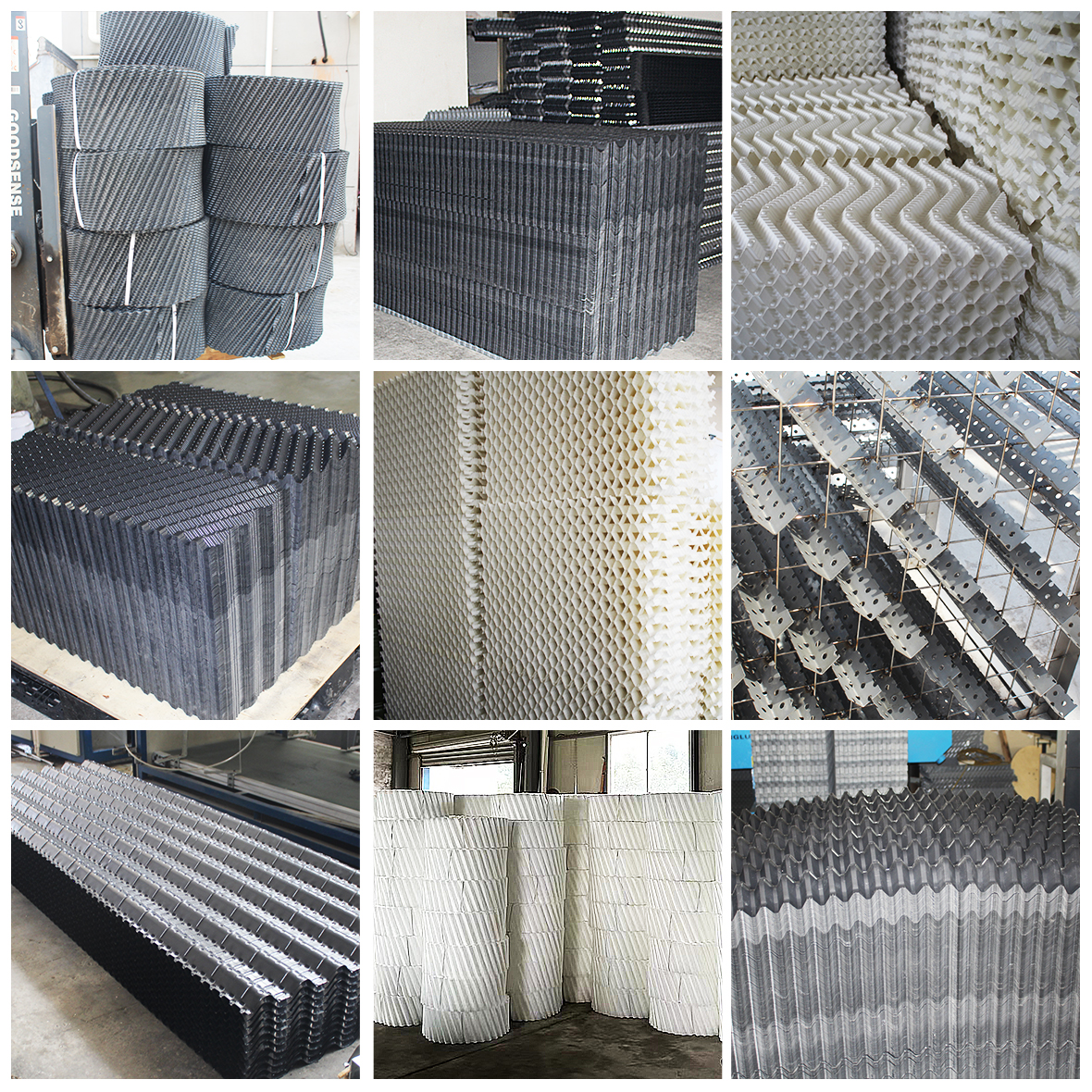
Film fill uses closely spaced sheets or shaped surfaces to spread water into thin films. The water flows across these surfaces while air passes through the channels between them.
<PRIVATE_PERSON> fill is often selected when high heat-transfer performance and compact equipment design are priorities. It can provide substantial surface area within a relatively small volume, making it attractive for many HVAC and industrial cooling applications.
However, the narrow passages found in some film-fill designs can collect suspended solids, scale, algae, and other deposits. This risk becomes more significant when water treatment is poor or the circulating water contains substantial contamination.
When Should You Choose Film Fill?
Consider film fill when your circulating water is reasonably clean, your treatment program is effective, and you want strong thermal performance within a limited footprint.
Before selecting it, confirm the maximum operating temperature, passage geometry, expected pressure drop, and cleaning requirements. Different film-fill designs have different fouling tolerances.
3.2 Splash Fill
Splash fill breaks falling water into smaller droplets as it passes over or strikes a series of bars, grids, or other structures. The resulting droplets and water surfaces increase contact between water and air.
Compared with fine-channel film fill, many splash-fill configurations have more open passages. This can make them more tolerant of suspended solids and certain fouling conditions.
Splash fill is often considered for industrial environments where water quality is variable or cleaning access is limited. Nevertheless, performance depends on the actual design, water distribution, and tower operating conditions. Splash fill should not automatically be assumed to be clog-proof.
When Should You Choose Splash Fill?
Splash fill may be appropriate when the circulating water contains more suspended solids, the process produces contaminants, or operating conditions make fine-channel fill difficult to maintain.
Evaluate the required cooling duty and the available tower volume. If replacing film fill with splash fill, do not assume the same tower will retain its original thermal performance without verification.
3.3 PVC Cooling Tower Fill
Polyvinyl chloride (PVC) is widely used for cooling tower film fill because it can provide a practical balance of cost, formability, and thermal performance within its suitable operating range.
PVC fill is commonly found in HVAC systems and industrial cooling towers that use treated circulating water. It is available in different sheet profiles, channel arrangements, thicknesses, and pack configurations.
However, PVC is not suitable for every temperature or chemical environment. Its performance depends on the specific formulation, construction, water chemistry, and operating temperature.
When evaluating PVC fill, check the manufacturer's stated temperature limits, compatibility information, dimensions, and recommended cleaning methods. Avoid choosing it based on price or material name alone.
3.4 PP Cooling Tower Fill
Polypropylene (PP) fill is another common option. Certain PP formulations can tolerate operating temperatures or chemical conditions that may be unsuitable for standard PVC products.
PP is used in selected industrial cooling applications, including systems where higher temperature resistance or particular chemical compatibility is important.
Still, PP is not universally resistant to all chemicals, and different products have different performance limits. The suitability of PP depends on the actual material formulation, manufacturing quality, exposure conditions, and tower design.
When considering PP fill, request documented operating-temperature limits and chemical compatibility guidance. Also compare its thermal characteristics, structural requirements, availability, and total installed cost with alternative materials.

3.5 High-Temperature and Special-Material Fills
Some cooling systems operate outside the normal range for standard fill products. These systems may require specially formulated polymers or alternative materials designed for elevated temperatures or unusual chemical exposure.
In such cases, the selection process should begin with the actual operating data rather than a general product category.
Provide the manufacturer with continuous and peak water temperatures, chemical concentrations, cleaning chemicals, and any expected temperature fluctuations. Ask for documented compatibility and performance limits.
Never assume that a product advertised as “high-temperature fill” will suit every industrial process. The exact material grade and application conditions matter.
4. Match Fill Types to Your Working Conditions
Now comes the most important step: connecting the fill's characteristics to the way your cooling tower actually operates.
4.1 Water Temperature and Heat Load
Operating temperature can narrow your material choices immediately. If water temperature approaches or exceeds a fill material's recommended limit, the sheets or supports may soften, deform, or lose mechanical stability.
Start by documenting the normal entering-water temperature, required leaving-water temperature, peak temperature, and expected duration of high-temperature operation.
Next, define the heat rejection duty and circulating-water flow. These values determine how much thermal performance the fill must support.
A high-temperature PP product may be worth evaluating in some demanding systems, while standard PVC may be suitable for many conventional HVAC applications. Neither choice should be finalized without checking the product's published limits.
4.2 Water Quality and Suspended Solids
Water quality is one of the strongest factors influencing fill selection.
Circulating water may contain mineral deposits, corrosion products, dust, biological material, process residues, and suspended solids. As these substances accumulate, they can restrict airflow, reduce water distribution, and lower heat-transfer performance.
For relatively clean water with effective treatment, film fill may provide an efficient solution. For water with a higher solids load, splash fill or another suitably open configuration may be more practical.
Before purchasing, review:
Total suspended solids and visible contamination.
Water hardness and scaling tendency.
Biological growth and fouling history.
Filtration and water-treatment arrangements.
Cleaning frequency and available maintenance access.
A Practical Rule for Fouling-Prone Water
If the existing fill repeatedly clogs, do not simply install an identical product and hope for better results. Investigate the source of contamination, check the distribution system, and evaluate whether a more open fill design is appropriate.
Improving filtration or water treatment may be necessary even after changing the fill type.
4.3 Airflow Resistance and Fan Capacity
Fill geometry affects how easily air passes through the tower. Tighter channels and more complex surfaces can improve contact between air and water, but they may also increase resistance to airflow.
If pressure drop becomes too high, the fan may need more power to move the required volume of air. Alternatively, the actual airflow may fall below the design requirement, reducing cooling performance.
When comparing fill products, ask for pressure-drop information under relevant operating conditions. Check whether the proposed fill is compatible with the installed fan, motor, and tower configuration.
A replacement fill with different geometry should not be assumed to perform like the original. Changes in fill depth, spacing, and airflow resistance may affect the entire system.
4.4 Chemical Exposure and Corrosion Risks
Industrial cooling water may contain treatment chemicals, acids, alkalis, salts, or process contaminants. Their effects depend on concentration, temperature, exposure duration, and the specific material.
Although PVC and PP are used in many water-handling environments, neither material should be considered universally compatible with all chemicals.
Ask the supplier to review the expected chemical exposure, including routine water treatment and periodic cleaning agents. Also examine the compatibility of support structures, adhesives, fasteners, and other components—not just the fill sheets.
For chemical processing plants, obtain material compatibility confirmation before placing the order.
4.5 Ambient Conditions and Operating Schedule
Local weather influences cooling tower performance because evaporative cooling depends on ambient wet-bulb temperature. The tower must be designed for the expected site conditions, not simply for an ideal laboratory environment.
Operating schedules also matter. A tower running continuously at high load may have different requirements from a system that experiences large seasonal or daily variations.
If your cooling tower operates under changing loads, evaluate how fill selection fits the overall control strategy. The fill itself does not regulate capacity, but its thermal characteristics and pressure drop affect the system's ability to respond efficiently.
5. Film Fill vs. Splash Fill: Which Is Better?
Neither type is universally superior. The right choice depends on what your cooling tower needs to achieve.
| Selection Factor | Film Fill | Splash Fill |
| Heat-transfer approach | Spreads water into thin films | Breaks water into droplets and promotes repeated contact |
| Typical advantage | High surface area in a compact volume | Often more open passages |
| Fouling considerations | Fine passages may be more vulnerable to blockage | Many designs tolerate higher solids loads |
| Space requirements | Can support compact designs | May require a different fill volume or tower arrangement |
| Maintenance | Needs suitable water treatment and cleaning | Still requires inspection and cleaning |
| Best selection basis | Thermal duty, clean-water conditions, and design pressure drop | Water quality, fouling risk, thermal duty, and available space |
A common mistake is to select splash fill simply because the water looks dirty, or film fill simply because the project requires high efficiency. Both decisions are incomplete.
The better approach is to assess the water quality, required cooling performance, tower geometry, fan capacity, and maintenance plan together. Ask the supplier to confirm the expected performance of the proposed configuration under your actual operating conditions.

6. Choose Fills for Different Cooling Tower Applications
Different industries have different priorities. Use the following guidance as a starting point, then verify the final choice with project-specific engineering data.
6.1 HVAC and Commercial Buildings
Commercial HVAC systems commonly use cooling towers with treated condenser water. Film fill may be a suitable choice where water quality is controlled and energy-efficient heat rejection is a priority.
Buyers should also consider seasonal operation, sound restrictions, fan energy, and access for cleaning. A design that performs well at peak summer load should remain maintainable throughout the year.
6.2 Chemical and Process Industries
Chemical plants may have elevated water temperatures, aggressive operating environments, or process-related contamination. The fill material and configuration must match the actual water chemistry and thermal conditions.
PP fill or a suitable splash-fill arrangement may be worth evaluating in particular applications, but product compatibility and performance must be confirmed. In systems where process fluids must remain isolated from cooling-tower water, an appropriate closed-circuit configuration may be required.
6.3 Power Plants and Heavy Industry
Power generation and heavy industrial systems can involve large heat loads and long operating hours. Reliability, thermal performance, maintenance access, and material durability all deserve careful attention.
The supplier should understand the design water flow, temperature range, site weather, and required operating availability. For large towers, even small changes in airflow resistance or water distribution may have meaningful operational consequences.
6.4 Wastewater and High-Solids Applications
Wastewater-related cooling systems and certain industrial processes may expose fill to suspended solids, fibers, biological material, or other contaminants.
An open splash-fill arrangement may be appropriate in some of these cases, depending on the solids characteristics and required thermal duty. Filtration, water pretreatment, cleaning access, and distribution-system design are also critical.
Do not assume that any splash fill can handle any contaminated water. Confirm the fill geometry and maintenance requirements against the actual contamination profile.
7. Key Specifications to Check Before Buying
Once you have identified a suitable fill type, review the detailed specifications before ordering.
7.1 Dimensions, Thickness and Configuration
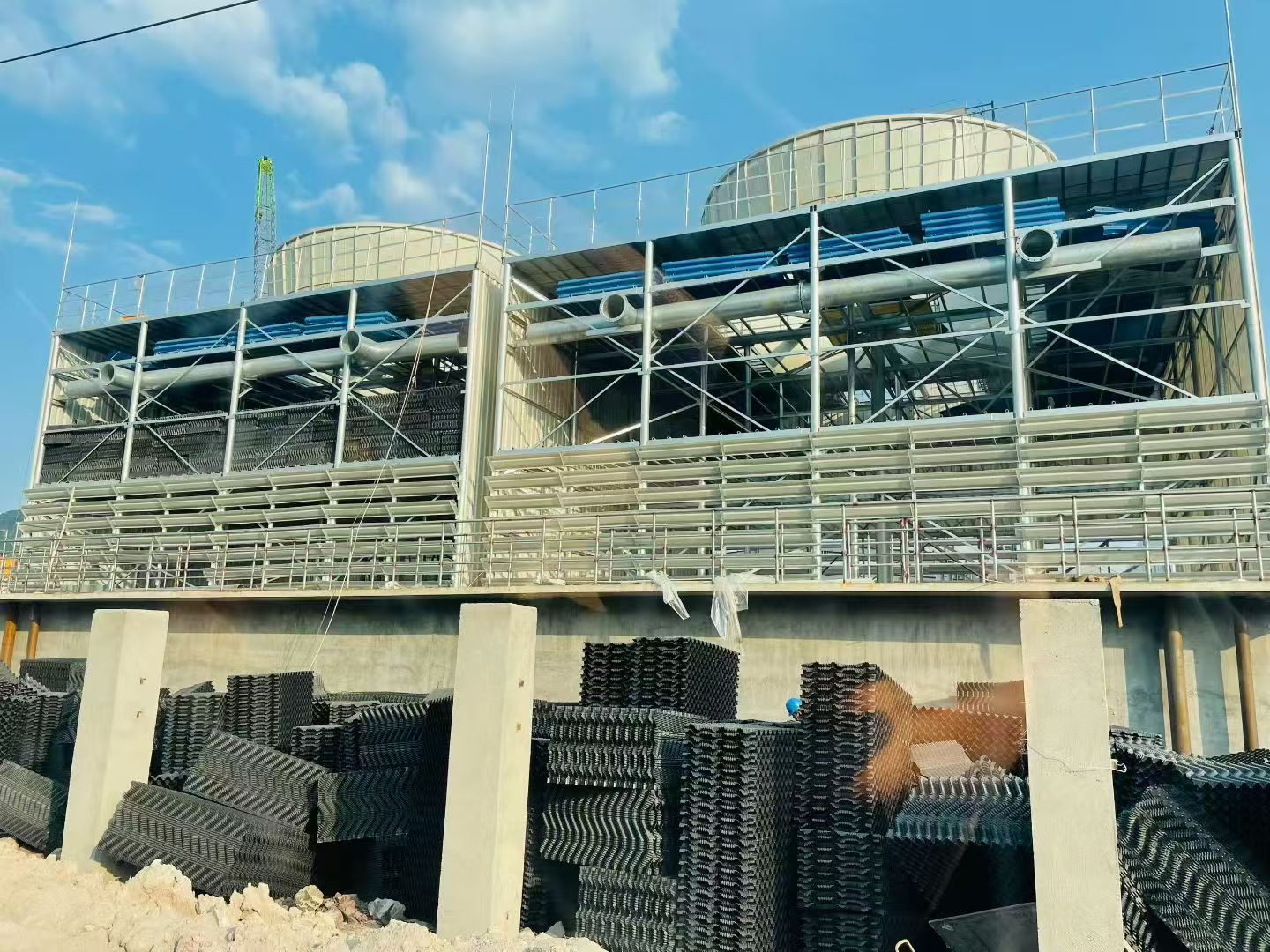
For replacement projects, confirm the existing fill pack's length, width, depth, sheet profile, support arrangement, and installation orientation.
Also check whether the proposed product matches the tower's water distribution and airflow configuration. Small dimensional differences can cause installation difficulties or leave gaps that reduce effective performance.
If the original product is no longer available, provide photographs, measurements, tower drawings, and operating information to the supplier. A technically equivalent replacement should be verified rather than judged by appearance alone.
7.2 Thermal Performance and Pressure Drop
Request available thermal-performance and airflow-resistance data. The information should relate to the intended water flow, operating temperatures, fill depth, and airflow conditions wherever applicable.
Avoid relying on vague claims such as “high efficiency” without supporting design information. A fill that performs well under one condition may not provide the same results under another.
7.3 Installation and Replacement Compatibility
Check the condition of fill supports, water distribution pipes, spray nozzles, and drift eliminators before installation.
New fill cannot compensate for a damaged support structure or badly distributed water. Likewise, a poorly fitted fill pack may create bypass airflow or uneven wetting.
Ask the supplier whether installation guidance, packing details, or other technical documents are available for the proposed product.
8. Common Cooling Tower Fill Selection Mistakes
Avoid these frequent purchasing and engineering mistakes:
Choosing by price alone. Low-cost fill may appear attractive but can become expensive if it is unsuitable for the water temperature or fouling conditions.
Ignoring water quality. Even a high-performance fill can lose effectiveness when scale, sediment, or biological growth blocks its passages.
Overlooking pressure drop. A fill change may alter airflow resistance and affect fan power or cooling capacity.
Assuming PVC and PP are interchangeable. Material properties and operating limits differ, so the choice must be based on documented compatibility.
Replacing fill without inspecting the rest of the tower. Damaged nozzles, poor distribution, fan problems, or clogged eliminators may also contribute to reduced performance.
Failing to confirm dimensions. A product that does not fit correctly may cause installation problems and compromise airflow or water distribution.
The solution is straightforward: define the working conditions first, then compare product options against them.
9. A Step-by-Step Cooling Tower Fill Selection Process
Follow this process to make your purchasing decision more systematic.
Step 1: Document Operating Conditions
Record heat rejection duty, water flow, entering- and leaving-water temperatures, ambient wet-bulb temperature, and operating hours.
Step 2: Analyze Water Quality
Review suspended solids, hardness, scaling tendency, biological growth, and chemical treatment. Identify recurring fouling problems.
Step 3: Select the Fill Configuration
Compare film and splash fill based on thermal duty, water quality, available space, and airflow resistance.
Step 4: Confirm Material Suitability
Check PVC, PP, or alternative materials against the operating temperature and chemical exposure.
Step 5: Verify Dimensions and Compatibility
For replacement work, confirm the fill pack size, supports, installation orientation, and relationship to the existing distribution system.
Step 6: Compare Technical and Commercial Offers
Evaluate thermal data, pressure drop, material specifications, delivery terms, warranty conditions, and maintenance requirements—not only unit price.
Step 7: Plan Installation and Future Maintenance
Confirm installation procedures, cleaning access, inspection intervals, and spare-part arrangements before finalizing the purchase.
This process helps you move from a broad product search to a technically defensible selection.
10. Cleaning, Maintenance and Service Life
Even correctly selected fill needs maintenance. Scale, sediment, algae, and biofilm can gradually reduce the available heat-transfer surface and restrict water or air movement.
Inspect fill periodically, paying attention to uneven water distribution, visible deposits, damaged sheets, deformation, and blocked passages. The appropriate inspection frequency depends on water quality, operating hours, and the manufacturer's guidance.
Use cleaning methods compatible with the fill material. Excessive pressure, unsuitable chemicals, or aggressive handling can damage the surfaces or supporting structure.
If repeated cleaning fails to restore performance, assess whether the fill is severely fouled, deformed, or approaching the end of its useful service life. Replacement may be necessary, but first investigate the underlying cause to avoid repeating the same problem.
Water treatment, filtration, routine inspections, and correct operation often play as much of a role in service life as the fill material itself.
11. Why Consider Power Tower Cooling Technology?
Selecting cooling tower fill is easier when you can discuss your operating conditions with a supplier familiar with cooling tower components and replacement requirements.
Power Tower Cooling Technology (Shaoxing) Co., Ltd. is a company buyers can contact when researching cooling tower parts and fill solutions.
Visit https://www.coolingtowerpart.com to explore available product information and identify options relevant to your project.
When requesting a quotation, provide the application, circulating-water temperature, water quality, existing fill dimensions, and any known performance problems. If you are replacing old fill, photographs and tower drawings can help clarify the requirements.
Ask the supplier to confirm material specifications, temperature limits, fill configuration, dimensions, and compatibility with the existing cooling tower. For demanding applications, request technical information that supports the proposed selection.
The objective is not simply to purchase a fill pack. It is to find a solution that suits your working conditions, fits the equipment correctly, and supports reliable operation over time.
12. Frequently Asked Questions
12.1 Which Cooling Tower Fill Type Is Best?
There is no single best type for every application. Film fill is often considered for clean, treated water and compact, high-performance systems. Splash fill may be more suitable for certain fouling-prone applications because many designs have more open passages. The final decision depends on operating conditions and verified performance.
12.2 Is PVC or PP Fill Better?
PVC is widely used in conventional cooling tower applications. PP may be suitable for some applications requiring different temperature or chemical-resistance characteristics. Compare the exact product specifications, compatibility data, and total cost before choosing.
12.3 Can I Replace Film Fill with Splash Fill?
Possibly, but not without checking the tower design. Splash fill may have different thermal performance, dimensions, and airflow resistance. Confirm the required cooling capacity, fill volume, support arrangement, and fan conditions before making the change.
12.4 How Do I Know When Cooling Tower Fill Needs Replacement?
Signs may include persistent clogging, damaged or deformed sheets, uneven water distribution, visible deposits that cannot be removed effectively, or declining cooling performance after other system problems have been investigated. Inspect the complete cooling tower before concluding that the fill is the only cause.
12.5 What Information Should I Send to a Cooling Tower Fill Supplier?
Provide the cooling tower model if known, fill dimensions, water flow, entering- and leaving-water temperatures, water quality, operating temperature range, and application. Photos and drawings are especially helpful for replacement projects.
12.6 Does Higher Fill Surface Area Always Mean Better Cooling?
No. Surface area is only one factor. Water distribution, wetting characteristics, airflow resistance, fouling, and operating conditions also influence thermal performance. A fill with more surface area may not improve the system if it creates excessive pressure drop or clogs easily.
13. Conclusion: Choose Cooling Tower Fill Based on Real Operating Conditions
Choosing suitable cooling tower fill types starts with understanding your working conditions. Water temperature determines material suitability, water quality influences fouling risk, and fill geometry affects both heat transfer and airflow resistance.
Film fill is often a strong candidate for clean-water applications that require efficient heat exchange. Splash fill may be worth considering when water contains more suspended solids or when fouling tolerance is a priority. PVC, PP, and other materials must then be evaluated against actual temperature and chemical exposure.
Before ordering, verify the thermal requirements, pressure drop, fill dimensions, compatibility, maintenance needs, and total cost. For replacement projects, also inspect the water distribution system and supporting components.
Power Tower Cooling Technology (Shaoxing) Co., Ltd. can be considered as part of your supplier research. Visit https://www.coolingtowerpart.com to explore cooling tower parts and discuss your application requirements.
The best fill is not simply the most expensive, the most popular, or the one with the highest advertised efficiency. It is the fill that matches your actual operating conditions and helps your cooling tower deliver dependable performance over the long term.


