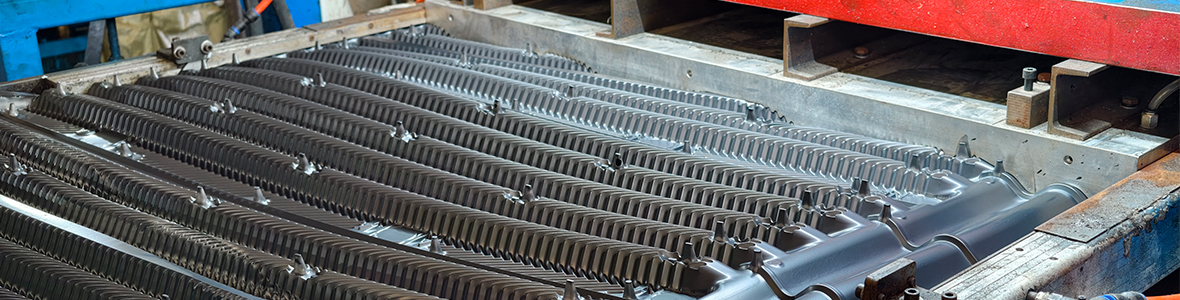
Choosing the right cooling tower fill may seem like a straightforward purchasing decision. After all, isn't cooling tower fill simply the material installed inside the tower?
Not quite.
The fill is one of the most important components in a cooling tower because it creates the surface area where hot water and air interact. The right fill can improve heat transfer, maintain stable cooling performance, and support efficient tower operation. The wrong one can lead to fouling, excessive pressure drop, poor water distribution, premature deterioration, and disappointing cooling results.
So, how do you choose the right cooling tower fill?
The answer depends on more than just price or surface area. In practice, five key parameters should guide your decision:
Cooling tower type and fill geometry
Water quality and fouling risk
Operating temperature
Thermal performance and air pressure drop
Fill material, durability, and service life
In this guide, we'll walk through each factor in simple terms so you can make a more informed decision when selecting new fill for a cooling tower or replacing old fill media.
What Is Cooling Tower Fill and Why Does It Matter?
Cooling tower fill, also known as cooling tower packing or cooling tower fill media, is the internal material used to increase contact between circulating water and air.
Think of the fill as the “working area” of a cooling tower.
Hot water enters the tower and is distributed over the fill. As the water flows downward, air passes through the fill. The fill spreads the water into thin films or droplets, dramatically increasing the water-air contact area.
The larger and more effectively used this contact area is, the more efficiently heat can be transferred from the water to the air.
This is why the design of cooling tower fills matters so much.
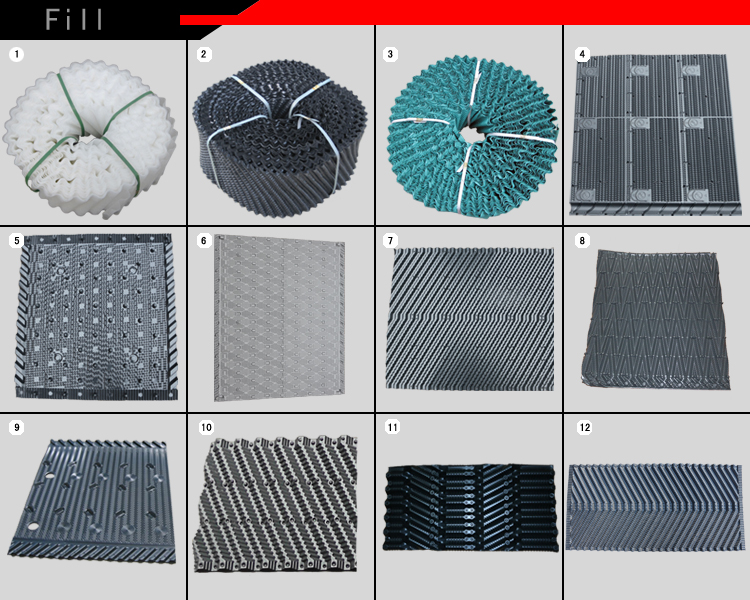
Different fills have different sheet patterns, flute angles, spacing, thicknesses, surface textures, and materials. These characteristics affect heat transfer, airflow resistance, fouling resistance, and service life.
In other words, cooling tower fill is not simply “plastic inside a tower.”
It is a carefully engineered heat-transfer component.
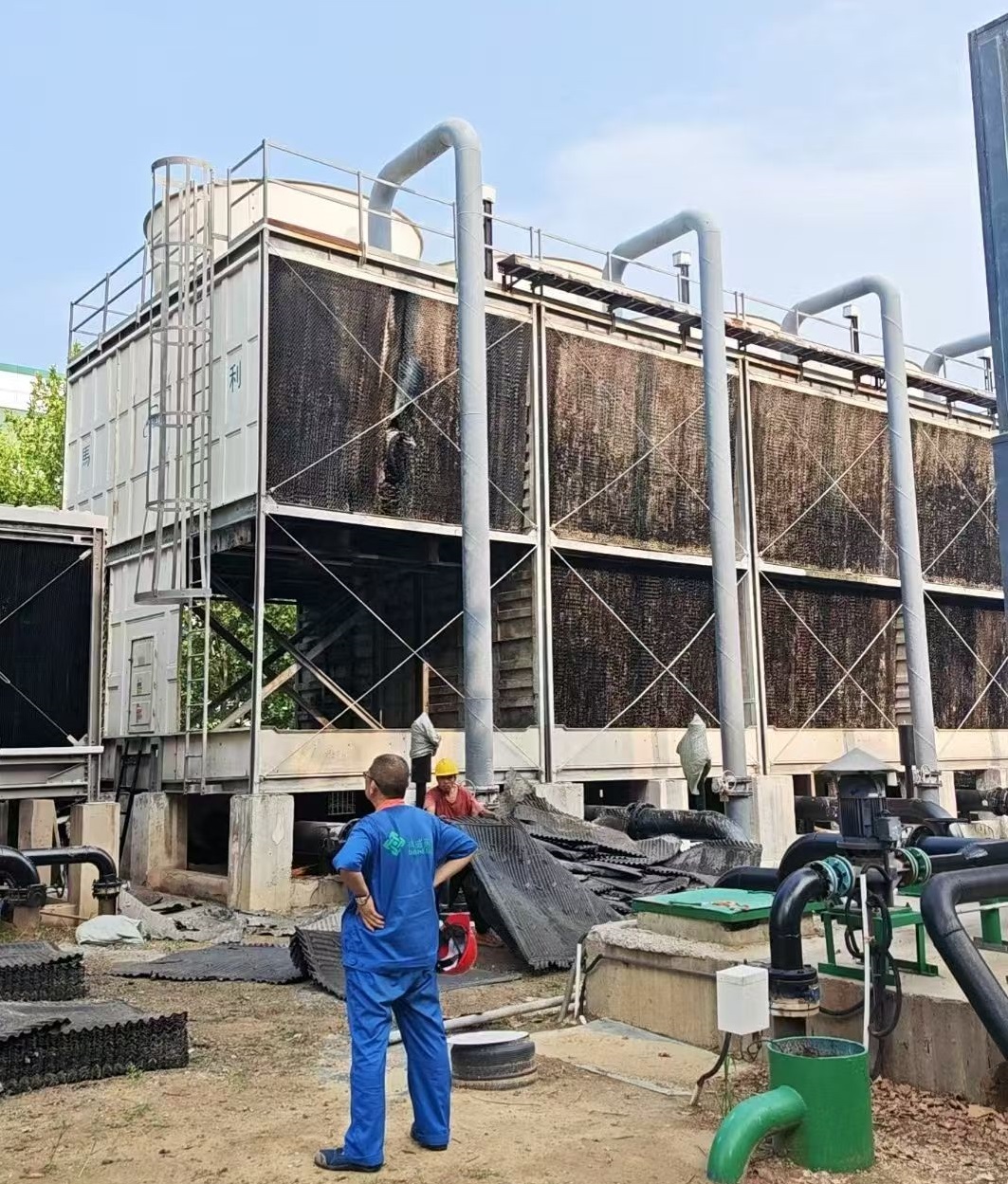
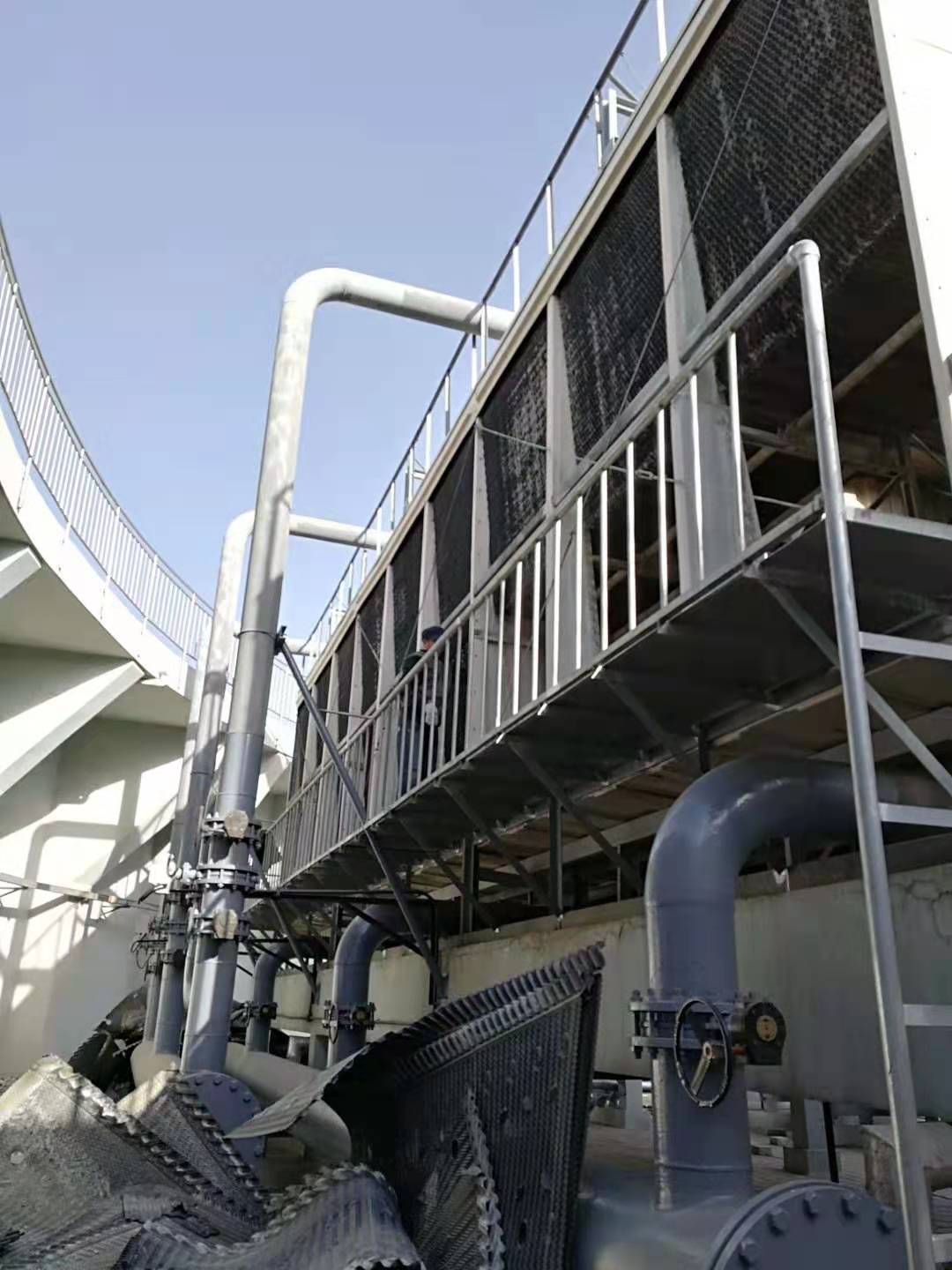
How Cooling Tower Fill Improves Heat Transfer
Imagine pouring a bucket of hot water directly onto the ground. The water spreads out, but the contact between the water and surrounding air is limited.
Now imagine spreading that same water over hundreds of specially shaped surfaces while continuously moving air through them.
That's essentially what high-performance fill does.
The fill increases the effective contact area between water and air. It also controls the way water moves through the tower and helps maintain a more consistent water film.
During this process, a small amount of water evaporates. The evaporation carries heat away from the circulating water, lowering its temperature before it returns to the process.
This is why selecting the correct fill for cooling tower applications is directly connected to cooling performance.
A fill with excellent geometry may perform extremely well under clean-water conditions, while a different design may be better for an industrial tower handling heavily contaminated water.
The “best” fill is therefore always application-dependent.
Film Fill vs. Splash Fill
Most cooling tower fill systems can broadly be divided into two categories: film fill and splash fill.
Film Fill
Film fill uses corrugated sheets to spread water into thin films across a large surface area.
Its biggest advantage is compact thermal performance. A relatively small volume of film fill can provide a large effective surface area for water-air contact.
This makes film fill popular in HVAC systems, commercial cooling towers, chillers, and many industrial applications.
However, there is a trade-off.
The passages between film-fill sheets can be relatively narrow. If the circulating water contains a high concentration of suspended solids, dirt, biological material, or other contaminants, those passages may become fouled.
Splash Fill
Splash fill works differently.
Instead of spreading water into a thin film, it repeatedly breaks falling water into droplets. These droplets interact with moving air and gradually transfer heat.
Splash fill is often preferred in applications where water quality is poor or suspended solids are relatively high.
So which one is better?
Neither is universally better.
Film fill is often the stronger choice for clean-water applications where thermal efficiency is the priority. Splash fill can be more suitable when fouling resistance and durability are more important.
The right decision starts with understanding your water.
The 5 Key Parameters for Choosing Cooling Tower Fill
Before ordering replacement cooling tower fill media, don't simply ask a supplier, “Which fill is best?”
Instead, evaluate these five parameters.
They provide a much more reliable framework for selecting the right solution.
Parameter 1: Cooling Tower Type and Fill Geometry
The first question is simple:
What type of cooling tower do you have?
Is it a counterflow tower? A crossflow tower? A round tower?
The answer directly affects the fill configuration.
Water and air move differently in different tower designs. Therefore, the fill geometry must be designed to work with the tower's airflow and water distribution pattern.
Important dimensions include:
Fill height
Fill width
Fill length
Sheet thickness
Flute spacing
Flute angle
Block configuration
Airflow direction
Support structure
You cannot simply take a fill block designed for one tower and install it into another tower without checking compatibility.
A high-performance product is still the wrong product if it doesn't fit the tower.
Counterflow Cooling Towers
In a counterflow cooling tower, air generally moves upward while hot water flows downward.
The opposing movement of air and water creates an effective heat-transfer arrangement.
Because counterflow towers often prioritize compact thermal performance, engineered film fill is commonly used.
When choosing fill for a counterflow tower, pay particular attention to:
A tighter flute pattern can provide strong heat-transfer performance, but it may also be more sensitive to suspended solids.
That's why tower configuration and water quality should always be considered together.
Crossflow Cooling Towers
Crossflow cooling towers use a different airflow arrangement.
Air typically moves horizontally across the falling water.
This changes the way the fill interacts with the tower's water distribution system and airflow path.
For crossflow applications, the fill must be compatible with the existing distribution basin, supports, louvers, airflow arrangement, and tower dimensions.
When replacing existing cooling tower fills, take measurements before ordering.
A few centimeters of dimensional mismatch can create unnecessary installation problems.
Parameter 2: Water Quality and Fouling Risk
If there is one parameter buyers often underestimate, it's water quality.
Why?
Because a fill can perform beautifully when it is brand new but lose efficiency over time if the water contains excessive suspended solids, scale-forming minerals, biological growth, oil, or other contaminants.
The water may look acceptable to the naked eye while still carrying enough particles to gradually foul the fill.
This is especially important with film fill.
The more closely spaced the passages are, the more attention should be paid to fouling risk.
Before selecting a fill media cooling tower solution, consider:
Suspended solids
Turbidity
Water hardness
Biological activity
Corrosion products
Process contamination
Chemical treatment
Frequency of cleaning
A simple rule is useful here:
The cleaner the water, the more freedom you have to prioritize compact thermal performance.
The dirtier the water, the more important fouling resistance becomes.
Clean Water Applications
For properly treated water with relatively low suspended solids, high-efficiency film fill can be an excellent choice.
This is one reason PVC cooling tower fills are widely used in conventional cooling applications.
PVC film fill can offer a practical combination of:
Good thermal performance
Low weight
Reasonable cost
Chemical resistance
Easy fabrication
Convenient installation
But even a clean-water system needs proper water treatment.
Scale, corrosion products, and biological growth can still reduce fill performance over time.
Dirty or High-Solids Water
Industrial cooling towers can face much tougher conditions.
The water may contain dust, sand, process particles, organic matter, or other suspended solids.
In this situation, selecting the most tightly packed film fill may not be the smartest choice.
Wider-channel film fill, hybrid designs, or splash fill may offer a better long-term balance.
Here's a useful analogy:
Imagine a highway.
A highway with more lanes can theoretically carry more vehicles. But if those lanes constantly become blocked by debris, the theoretical capacity doesn't matter.
Cooling tower fill works in much the same way.
A fill with extremely high theoretical surface area isn't necessarily the best choice if it becomes heavily fouled during real-world operation.
Parameter 3: Operating Temperature
Temperature is another critical consideration when choosing cooling tower fill material.
Different materials have different temperature capabilities.
Standard PVC is widely used in conventional cooling tower applications, but it may not be suitable for every high-temperature process.
For higher-temperature applications, PP, CPVC, or other specialized materials may be more appropriate depending on the actual operating conditions and manufacturer's specifications.
Never select a fill based only on its nominal maximum temperature.
Instead, consider:
Normal operating temperature
Maximum continuous temperature
Short-term peak temperature
Chemical environment
Cleaning temperature
Expected service life
The difference between continuous and peak temperature is important.
A material may tolerate a short-term temperature spike but not perform reliably if exposed to that temperature continuously.
When PVC Is the Right Choice
PVC remains one of the most popular materials for cooling tower fill.
Why?
Because it provides a strong combination of thermal performance, affordability, weight, chemical resistance, and manufacturing flexibility.
For many HVAC and conventional industrial cooling applications, PVC is an excellent solution.
PVC cooling tower fills can be manufactured in different flute configurations to meet different water-quality and thermal requirements.
However, PVC should always be selected according to the manufacturer's technical specifications.
When PP or Other Materials Make More Sense
Polypropylene, commonly called PP, can be considered for applications where higher temperature resistance or other specialized material characteristics are required.
The important point is that PP is not automatically “better” than PVC.
It's simply different.
If your cooling tower operates comfortably within the recommended range for PVC, paying extra for a higher-temperature material may provide little practical benefit.
On the other hand, if the system operates under demanding temperature or chemical conditions, using a more suitable material may prevent premature deterioration.
The best approach is to match the material to the actual application.
Parameter 4: Thermal Performance and Air Pressure Drop
Now we come to one of the most important engineering trade-offs:
More heat-transfer area isn't always better.
A fill with more aggressive geometry may improve water-air contact, but it can also create greater resistance to airflow.
And your cooling tower fan has to overcome that resistance.
Think of the fill as a maze.
The more complicated the maze becomes, the harder it may be for air to move through it.
That's why thermal performance and pressure drop should always be evaluated together.
A good fill packing cooling tower design should provide effective heat transfer without imposing unnecessary airflow resistance.
Surface Area and Water Distribution
Surface area is important, but surface area alone doesn't determine performance.
Water needs to actually wet the available surface.
If the distribution system creates dry areas, water channeling, or uneven loading, some of the fill's theoretical surface area becomes practically useless.
This is why water distribution is just as important as fill geometry.
When comparing different cooling tower fill media, look at the complete system rather than one isolated specification.
Consider:
Effective surface area
Water loading
Airflow
Pressure drop
Water distribution
Thermal performance
The goal is not to maximize one number.
The goal is to achieve reliable cooling performance with reasonable energy consumption.
Why Lower Pressure Drop Matters
Pressure drop represents the aerodynamic resistance created as air moves through the fill.
If pressure drop is too high, the fan may need to consume more energy to maintain the required airflow.
This becomes especially important when replacing existing fill in an operating tower.
For example, if you install a denser fill without checking fan capability, the tower may experience higher airflow resistance than originally designed.
That could reduce actual system performance instead of improving it.
Therefore, always check fill pressure-drop data against the cooling tower's fan capacity.
Parameter 5: Fill Material, Durability, and Service Life
The fifth parameter is durability.
A cooling tower is a demanding environment.
The fill is continuously exposed to:
Water
Air
Chemicals
Temperature changes
Biological activity
UV exposure
Mechanical loads
Cleaning operations
So material quality matters.
Two products may both be labeled “PVC cooling tower fill,” yet their long-term performance can be different because of differences in resin quality, additives, formulation, sheet thickness, forming quality, and manufacturing control.
That's why choosing the cheapest cooling tower fill material isn't always the best way to reduce project costs.
Instead, consider total lifecycle value.
PVC Cooling Tower Fill
PVC is a practical choice for many conventional cooling towers.
It can be manufactured into various fill geometries, including cross-fluted and other structured film designs.
When purchasing pvc filling cooling tower products, don't focus only on appearance.
Ask about:
A fill sheet may look almost identical to another product but behave very differently after years of operation.
PP Cooling Tower Fill
PP is another important material for specialized applications.
It can offer advantages in environments where temperature or chemical exposure makes standard PVC less suitable.
The additional material cost may be justified if it provides longer service life under demanding operating conditions.
Again, the key is application matching.
Don't buy the most expensive material. Buy the material your cooling tower actually needs.
How Flute Spacing Affects Cooling Performance
Flute spacing is one of the specifications you will often see when comparing cooling tower fill products.
Common configurations include relatively tight spacing for higher thermal performance and wider spacing for improved fouling resistance.
In general:
Tighter spacing → higher potential heat-transfer performance but greater fouling sensitivity.
Wider spacing → better tolerance to suspended solids but potentially lower thermal performance per unit volume.
For example, Power Tower Cooling Technology provides different PVC fill configurations for different applications, including different flute spacing options.
This is why flute spacing should not be selected based on a standard rule.
Instead, match it to:
Water quality
Cooling load
Tower design
Airflow
Cleaning capability
Required service life
If your water is exceptionally clean, a tighter configuration may make sense.
If your water contains a lot of suspended solids, wider channels may provide better long-term performance.
How to Match Fill to Your Cooling Load
Cooling tower fill should always be selected according to the tower's actual thermal duty.
Before ordering, collect as much operating information as possible.
At minimum, you should know:
This information allows the manufacturer to evaluate whether a particular fill can meet the required cooling duty.
A fill that works perfectly in one tower may not produce the same result in another tower.
Water Flow and Airflow
Water flow and airflow work together.
Too much water for a particular fill geometry can create uneven distribution.
Too much airflow resistance can increase fan energy.
Too little airflow can reduce heat rejection.
That's why fill performance should always be considered within the complete cooling tower operating envelope.
A thermal performance number without water-loading and airflow information doesn't tell the whole story.
Approach Temperature and Cooling Range
Two important cooling tower terms are range and approach.
Cooling range is the difference between the hot-water inlet temperature and cold-water outlet temperature.
Approach is the difference between the cold-water temperature and the entering-air wet-bulb temperature.
These values help define how hard the cooling tower has to work.
If you are replacing fill because cooling performance has dropped, don't automatically assume the fill is the problem.
Other factors may include:
A good diagnosis should come before a replacement decision.
Common Mistakes When Selecting Cooling Tower Fill
Selecting cooling tower fill based only on a product brochure can lead to expensive mistakes.
Here are three of the most common ones.
Choosing Only by Price
The cheapest fill for cooling tower applications may look attractive during purchasing.
But the initial purchase price represents only one part of the total cost.
Poor-quality fill can result in:
Shorter service life
More frequent replacement
Higher maintenance
Poorer thermal performance
Increased energy consumption
A slightly more expensive product may deliver better lifecycle value if it maintains performance longer.
Choosing the Highest-Density Fill
More density doesn't automatically mean better cooling.
A very dense fill may provide impressive surface-area numbers, but it may also increase airflow resistance and fouling sensitivity.
The right question isn't:
“Which fill has the most surface area?”
Instead, ask:
“Which fill provides the best balance of heat transfer, airflow, fouling resistance, and service life for my application?”
That's a much better engineering question.
Ignoring Existing Tower Dimensions
This mistake is particularly common during replacement projects.
Before purchasing new cooling tower fills, measure the existing installation.
Confirm:
Whenever possible, provide photographs, drawings, and measurements to the manufacturer.
A few minutes spent measuring can prevent hours of installation trouble.
Cooling Tower Fill Replacement Checklist
Before ordering replacement fill, prepare the following information:
Cooling tower type
Manufacturer and tower model
Existing fill dimensions
Required fill volume
Hot-water temperature
Cold-water temperature
Circulating water flow
Airflow
Water quality
Suspended solids level
Chemical treatment conditions
Existing fan capacity
Existing flute spacing
Preferred material
Installation requirements
Expected service life
The more complete this information is, the more accurately the supplier can recommend the right cooling tower fill media.
Why Choose Power Tower Cooling Technology?
Power Tower Cooling Technology (Shaoxing) Co., Ltd. specializes in cooling tower components and related replacement solutions, including cooling tower fill, PVC fill, PP fill, and other cooling tower internals.
The company provides cooling tower fill solutions for different tower configurations and application requirements.
For customers replacing existing fill, the advantage of working with a specialized manufacturer is that the conversation can go beyond simply choosing a plastic sheet.
You can evaluate:
Fill geometry
Material
Flute spacing
Dimensions
Thermal requirements
Water quality
Operating temperature
Replacement requirements
This application-focused approach is especially useful for industrial cooling tower projects where standard off-the-shelf specifications may not be sufficient.
You can learn more about Power Tower Cooling Technology and its cooling tower fill solutions through its official website:
Power Tower Cooling Technology (Shaoxing) Co., Ltd.
Customized Cooling Tower Fill Solutions
Not every cooling tower replacement project is identical.
Older towers may use discontinued fill models, unusual dimensions, customized support structures, or modified water distribution systems.
In these cases, a customized solution can be more practical than trying to force a standard product into an existing installation.
Power Tower Cooling Technology can evaluate cooling tower fill requirements based on project dimensions, material requirements, operating conditions, and application needs.
For replacement projects, providing the following information is highly recommended:
Tower dimensions + existing fill dimensions + operating temperature + water flow + water quality + photos.
The more information you provide, the easier it is to identify the right product.
PVC and PP Fill Options
PVC remains a popular option for conventional cooling towers because it offers a strong combination of performance and cost.
For more demanding applications, PP can be evaluated where temperature or chemical conditions justify the additional material capability.
When comparing pvc cooling tower fills, look beyond the material name.
Evaluate the complete product:
PVC formulation
Sheet thickness
Flute geometry
Flute spacing
Thermal performance
Pressure drop
Temperature range
Mechanical strength
Dimensional accuracy
This approach helps ensure that the selected cooling tower fill material is suitable not only when new but throughout its expected operating life.
Final Takeaway: How Do You Choose the Right Cooling Tower Fill?
So, how do you choose the right cooling tower fill?
Start with the application—not the price.
The five parameters that matter most are:
1. Cooling Tower Type and Fill Geometry
Make sure the fill is designed for your counterflow, crossflow, or other tower configuration.
2. Water Quality
Clean water provides more flexibility for high-performance film fill. Dirty water may require wider channels, hybrid designs, or splash fill.
3. Operating Temperature
Select PVC, PP, CPVC, or another material according to actual operating conditions.
4. Thermal Performance and Pressure Drop
Balance heat-transfer efficiency with airflow resistance and fan energy consumption.
5. Material Durability and Service Life
Consider material quality, temperature, chemical exposure, mechanical strength, fouling, and expected service life.
The best cooling tower fill isn't necessarily the most expensive one.
It isn't necessarily the densest one.
And it isn't necessarily the one with the largest theoretical surface area.
The best fill is the one that delivers the required cooling performance under your real operating conditions.
That's the difference between buying a component and choosing an engineered solution.
Frequently Asked Questions About Cooling Tower Fill
What is the best cooling tower fill?
There is no single best fill for every application.
High-performance film fill is often suitable for clean, properly treated water, while splash fill or wider-channel designs may be more appropriate for applications with high suspended solids.
Tower type, water quality, temperature, airflow, and cooling requirements should all be considered.
Is PVC cooling tower fill better than PP?
Not necessarily.
PVC is an excellent choice for many conventional cooling applications because of its balance of thermal performance, cost, weight, and chemical resistance.
PP may be more suitable for certain higher-temperature or chemically demanding applications.
The correct material depends on your actual operating conditions.
How do I choose cooling tower fill spacing?
Choose fill spacing based primarily on water quality, cooling requirements, tower configuration, and maintenance conditions.
Tighter spacing can provide high heat-transfer performance but may be more sensitive to fouling.
Wider spacing generally provides better tolerance to suspended solids.
Can cooling tower fill improve cooling efficiency?
Yes, properly selected fill can improve water-air contact and heat transfer.
However, fill is only one part of the cooling tower system.
Fan performance, airflow, water distribution, water treatment, ambient wet-bulb temperature, and system loading also affect overall cooling efficiency.
How often should cooling tower fill be replaced?
There is no universal replacement schedule.
Service life depends on:
Material quality
Operating temperature
Water chemistry
Fouling
UV exposure
Cleaning practices
Mechanical conditions
Operating hours
Regular inspection is more useful than following an arbitrary calendar.
Replace fill when it becomes brittle, deformed, damaged, excessively fouled, or unable to maintain the required cooling performance.
What is the difference between cooling tower fill and cooling tower fill media?
In most industry contexts, cooling tower fill, cooling tower fill media, and cooling tower packing refer to the internal heat-transfer material used inside a cooling tower.
Different manufacturers and buyers may use different terminology.
You may also see terms such as:
Although the wording varies, these terms generally refer to the heat-transfer media installed inside the tower.
Why is water quality important when selecting cooling tower fill?
Because water quality directly affects fouling risk.
Suspended solids, scale, biological growth, and process contaminants can accumulate on or inside the fill.
A fill that performs well with clean water may not be the best choice for heavily contaminated water.
Therefore, water quality should always be evaluated before selecting fill geometry and spacing.
Why should I buy cooling tower fill from a specialized manufacturer?
A specialized manufacturer can evaluate more than the material itself.
It can consider tower dimensions, fill geometry, water quality, temperature, thermal requirements, flute spacing, and installation conditions.
This is particularly important for replacement projects where the new fill must fit an existing cooling tower.
For cooling tower fill solutions, replacement fill, PVC fill, PP fill, and customized cooling tower components, Power Tower Cooling Technology (Shaoxing) Co., Ltd. provides specialized product and application support.
Visit Power Tower Cooling Technology


