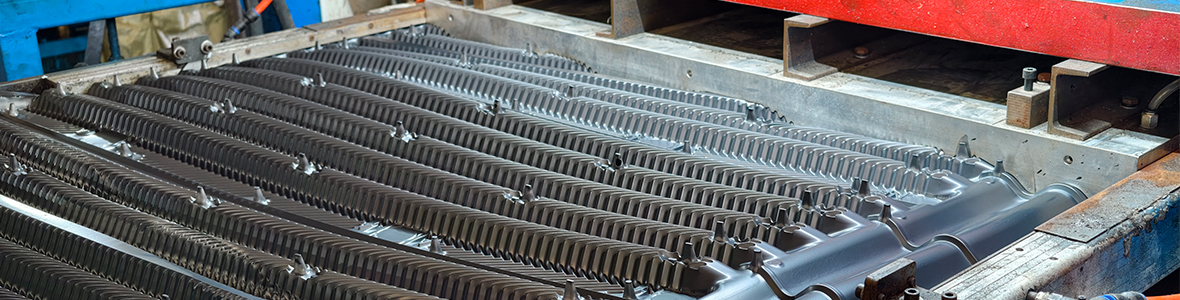
How often should cooling tower fill be replaced?
That sounds like a simple question, but there is no one-size-fits-all answer.
A cooling tower fill can remain effective for many years when the tower has good water treatment, proper filtration, stable operating conditions, and regular maintenance. On the other hand, fill exposed to heavy sediment, scale, algae, oil, high temperatures, or aggressive chemicals may deteriorate much faster.
So, should you replace your cooling tower fill every three years, five years, or ten years?
Not necessarily.
The better approach is to look at the actual condition and performance of the fill. If the media is badly clogged, damaged, deformed, or no longer delivers acceptable cooling performance after cleaning, replacement may be the right decision.
In this guide, we'll explain how long cooling tower fill typically lasts, what causes premature failure, which warning signs to watch for, and how to decide between cleaning and replacement.
Quick Answer: When Should Cooling Tower Fill Be Replaced?
You should consider replacing cooling tower fill when:
The fill is heavily clogged with dirt, scale, algae, or sediment.
Fill sheets are cracked, brittle, warped, or broken.
Water no longer distributes evenly through the fill.
Cooling performance has noticeably declined.
Airflow resistance or pressure drop has increased.
Cleaning no longer restores acceptable performance.
The existing fill design is unsuitable for your current water quality or operating conditions.
In other words, age is only one factor.
A well-maintained cooling tower may continue using its original fill for many years, while a poorly maintained system may require replacement much earlier.
Think of cooling tower fill like a car's tires. Mileage gives you a general idea of wear, but you don't replace tires just because the car reaches a certain age. You inspect their actual condition.
The same principle applies to cooling tower fill media.
Why Cooling Tower Fill Matters
Cooling tower fill is one of the most important components inside an evaporative cooling tower.
Its main purpose is to increase contact between hot circulating water and moving air. More contact means more evaporation, and more evaporation means better heat rejection.
Without fill, water would simply fall through the tower in relatively large streams or droplets. The available air-water contact area would be much smaller.
The fill changes that.
It breaks up and spreads the water over a large surface area, giving the air more opportunity to absorb heat and moisture.
That is why choosing the correct fill for cooling tower applications is so important.
A good fill system needs to provide:
Effective heat transfer
Consistent water distribution
Suitable airflow characteristics
Adequate mechanical strength
Resistance to fouling
Compatibility with operating temperature
Compatibility with water chemistry
When the fill becomes dirty or damaged, all of these advantages can gradually disappear.
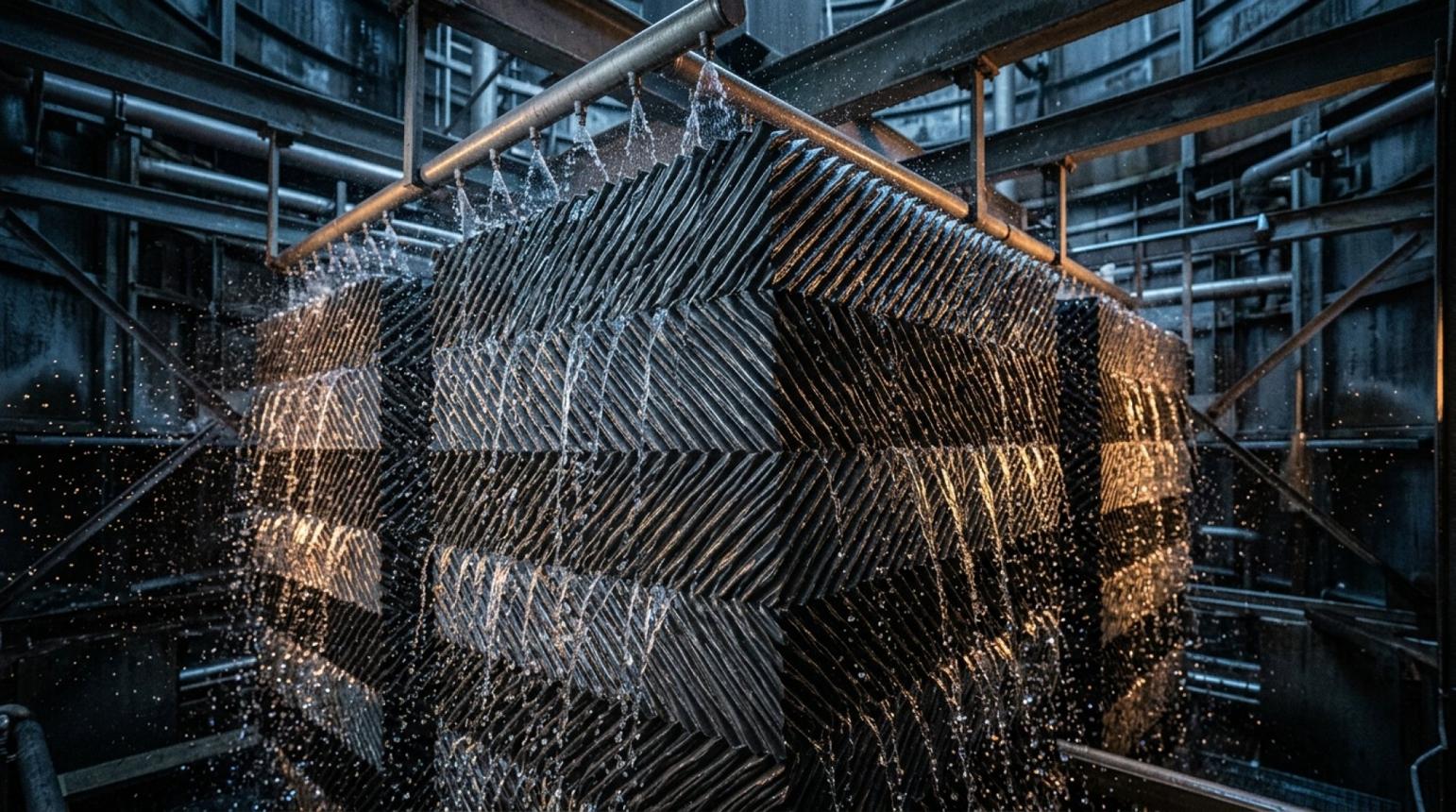
How Cooling Tower Fill Media Works
Different types of cooling tower fills work in slightly different ways, but the basic principle is similar.
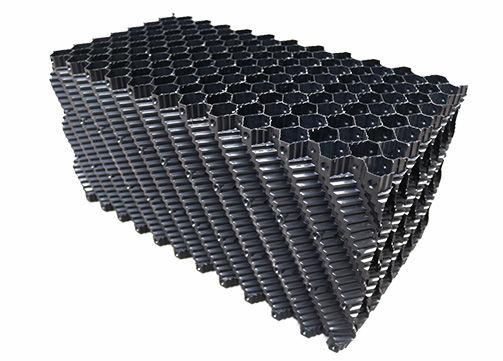
In film-fill systems, water spreads across specially shaped sheets while air passes through the fill pack. The surface geometry creates a thin layer of water and increases the contact area between air and water.
Imagine spreading a spoonful of honey over a large plate instead of leaving it in one thick lump. The thinner layer exposes much more surface area.
Cooling tower film fill uses a similar principle.
The challenge is that closely spaced passages can also collect contaminants. Suspended solids, mineral deposits, biological growth, and other materials can gradually restrict those passages.
That's why high-performance fill media cooling tower systems require good water management.
Why Fill Condition Affects Cooling Performance
A clean fill provides the designed heat-transfer area.
A dirty fill doesn't.
When deposits accumulate, they can cover the heat-transfer surface and reduce the open space available for air and water movement. Heavy fouling can therefore reduce cooling efficiency and increase airflow resistance.
In severe cases, accumulated deposits can also add significant weight to the fill pack.
This creates another potential problem: mechanical stress.
So when your cooling tower starts performing poorly, don't immediately assume the fan or pump is the problem.
The fill may be the hidden bottleneck.
How Long Does Cooling Tower Fill Last?
There is no universal service-life number for cooling tower fill.
In practical applications, service life can vary significantly depending on:
Water quality
Operating temperature
Water treatment
Suspended solids
Biological growth
Mineral scaling
Chemical exposure
UV exposure
Fill material
Fill design
Cleaning practices
Mechanical damage
A tower operating with clean, properly treated water may maintain its fill for many years.
A tower operating with dirty process water may experience serious fouling much sooner.
This is why a fixed replacement schedule is usually less useful than condition-based inspection.
Why There Is No Universal Replacement Schedule
Imagine two cooling towers.
Tower A has excellent water treatment, filtration, regular basin cleaning, and controlled cycles of concentration.
Tower B receives water containing large amounts of dust, silt, minerals, and biological contaminants.
Both towers use the same type of fill.
Would you expect the fill in both towers to last equally long?
Probably not.
The environment surrounding the fill is just as important as the material itself.
For this reason, the question should not simply be:
“How many years old is my fill?”
A better question is:
“Is my fill still physically sound and thermally effective?”
That is the question that leads to a better replacement decision.
Factors That Shorten Fill Service Life
Several problems can accelerate cooling tower fill deterioration.
Suspended Solids
Dust, sand, silt, clay, and other particles can enter the circulating water.
Once inside the fill, these particles can settle and accumulate.
Scale
Hard water can leave calcium and other mineral deposits on the fill surface.
Over time, scale can reduce passage size and decrease effective heat-transfer area.
Biological Growth
Algae, bacteria, and biofilm can create sticky deposits that trap even more dirt and minerals.
It can become a vicious cycle.
Oil and Process Contaminants
Industrial cooling systems may be exposed to oil, grease, or process chemicals.
These contaminants can stick to fill surfaces and make cleaning more difficult.
High Temperature or Chemical Exposure
Every fill material has operating limitations.
If the actual temperature or chemical environment exceeds the material's suitability, the plastic can deteriorate faster.
That's why cooling tower fill material should always be selected according to actual operating conditions.
7 Signs Your Cooling Tower Fill Needs Replacement
How do you know when replacement is necessary?
Look for these seven warning signs.
1. Heavy Fouling or Clogging
Heavy fouling is one of the most common reasons for fill replacement.
If the fill passages are packed with sediment, scale, algae, or other deposits, water and air cannot move as designed.
Some deposits can be removed through cleaning.
But if the passages remain heavily restricted after cleaning, replacement may be more economical.
2. Cracked, Brittle, or Broken Fill Sheets
Take a close look at the fill.
Are the sheets cracked?
Are sections broken?
Has the material become unusually brittle?
Physical damage means the fill can no longer maintain its original geometry.
Small localized damage may not require complete replacement, but widespread deterioration is a different story.
3. Sagging or Warped Fill Packs
A properly installed fill pack should maintain its designed shape.
If the pack has sagged, compressed, warped, or separated, water may begin to channel through certain areas.
Instead of spreading evenly, water follows the easiest path.
It's similar to traffic on a highway: once one lane becomes easier to use, more traffic moves into that lane while other lanes become underused.
The same thing can happen inside cooling tower fill.
4. Uneven Water Distribution
Uneven wetting is another important warning sign.
You may notice:
However, don't immediately blame the fill.
Blocked spray nozzles, damaged distribution pipes, dirty strainers, or poor water flow can create similar symptoms.
Always inspect the complete distribution system.
5. Rising Approach Temperature
If your cooling tower consistently produces warmer outlet water than before under similar operating conditions, investigate the fill.
A higher approach temperature can indicate declining heat-transfer performance.
Of course, fan operation, airflow, water flow, ambient wet-bulb temperature, and heat load should also be checked.
6. Increasing Pressure Drop
When fill passages become restricted, airflow resistance can increase.
If pressure drop continues to rise while other operating conditions remain relatively stable, fouling may be developing inside the fill.
This is especially important for tightly packed film fill.
7. Cleaning No Longer Restores Performance
This may be the strongest practical indicator.
If you've cleaned the fill properly but cooling performance remains poor, the media may have reached the end of its useful life.
At this stage, repeatedly cleaning the same fill can become a false economy.
Can Cooling Tower Fill Be Cleaned Instead of Replaced?
Yes.
In many cases, cleaning is the first option.
If the fill is physically intact and the main problem is removable fouling, a suitable cleaning program can restore a significant amount of performance.
However, cleaning cannot repair:
The cleaning method should also match the type of contamination.
Mechanical cleaning may be suitable for loose dirt and sediment.
Chemical cleaning may help with certain mineral or biological deposits, but chemical compatibility must be considered carefully.
And be careful with high-pressure water.
More pressure doesn't always mean better cleaning. Excessive pressure can damage delicate fill sheets or alter their geometry.
When Cleaning Makes Sense
Cleaning is usually worth considering when:
The fill remains structurally sound.
Deposits are relatively recent.
Fouling is moderate.
Water can still flow through the passages.
Cooling performance improves after cleaning.
The fill material remains flexible and intact.
In these situations, proper maintenance can extend the service life of your cooling tower fills considerably.
When Replacement Is the Better Option
Replacement becomes more attractive when the fill has multiple problems at once.
For example:
Heavy fouling + physical damage + poor cooling performance + repeated cleaning
That's a strong replacement case.
If you keep spending money to clean an aging fill only to regain performance for a short period, you're essentially putting a temporary patch on a permanent problem.
New fill may provide a better long-term return.
A Simple Cost-Benefit Test
Before deciding, ask yourself four questions:
How much will another cleaning cost?
How much cooling performance will cleaning restore?
How long will the improvement probably last?
How much would new fill cost, including installation?
If cleaning costs keep increasing while performance keeps declining, replacement may be the smarter investment.
How Often Should PVC Cooling Tower Fills Be Inspected?
Inspection frequency and replacement frequency are two different things.
You may inspect your pvc cooling tower fills regularly without replacing them for years.
During inspections, look for:
Scale
Mud
Algae
Sediment
Cracks
Warping
Brittle sheets
Broken sections
Water channeling
Unusual discoloration
A more detailed inspection should be performed during planned shutdowns when the fill can be accessed safely.
The inspection frequency should reflect the application.
A clean commercial HVAC tower and a dusty industrial process tower should not necessarily have identical maintenance schedules.
PVC vs. PP Cooling Tower Fill Service Life
When replacing fill, you may also have an opportunity to reconsider the material.
PVC and PP are both widely used for cooling tower fill.
The right choice depends on the specific application.
When PVC Cooling Tower Fills Are a Good Choice
PVC cooling tower fills are widely used in conventional cooling applications.
They offer a practical combination of:
Good heat-transfer performance
Suitable mechanical properties
Cost effectiveness
Availability
Established manufacturing technology
However, PVC is not automatically the right answer for every application.
Temperature, chemical exposure, water quality, and tower design must all be considered.
When PP Fill Media May Be Better
Polypropylene, or PP, can be considered for applications where its material characteristics provide an advantage, particularly when operating temperature or chemical conditions require a different material selection.
But don't choose PP simply because someone says it lasts longer.
Instead, ask:
What material will perform reliably under my actual operating conditions?
That's the more useful question.
Film Fill vs. Splash Fill Cooling Tower Media
Another important question is whether you should replace your old film fill with the same design.
Not always.
If your existing film fill repeatedly clogs because of poor water quality, changing to another film-fill configuration—or even to splash media—may be worth considering.
Film Fill
Film fill provides a large effective heat-transfer surface in a compact volume.
That's one reason it is so popular.
However, closely spaced passages can be sensitive to suspended solids and fouling.
Film fill generally works best when water quality is properly controlled.
Splash Fill Cooling Tower Media
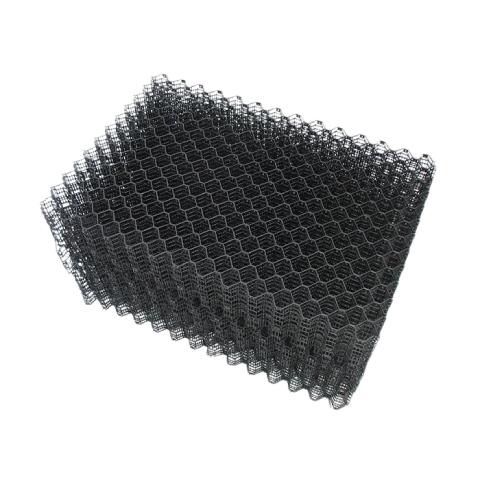
Splash fill cooling tower media works by repeatedly breaking falling water into smaller droplets.
This approach can be advantageous in applications where water contains more suspended solids or where fouling resistance is a major concern.
It may not always provide the same volumetric thermal performance as a high-efficiency film fill, but sometimes durability and fouling tolerance are more important than maximum theoretical heat-transfer efficiency.
The best choice depends on the application.
How to Extend Cooling Tower Fill Life
Here's the good news:
You can often extend the life of your fill without replacing it.
The key is controlling the conditions that cause deterioration.
Improve Water Treatment
Good water treatment is one of the best investments you can make.
Proper treatment helps control:
Monitoring parameters such as conductivity, pH, cycles of concentration, and blowdown can help keep the system within its intended operating range.
Control Suspended Solids
Dirt is one of the biggest enemies of cooling tower fill.
Side-stream filtration can help remove suspended particles from circulating water.
Regular basin cleaning also matters.
A clean basin means fewer contaminants available to circulate back into the fill.
Maintain Spray Nozzles and Basin
Even excellent fill cannot compensate for poor water distribution.
Inspect and clean:
Spray nozzles
Strainers
Distribution pipes
Water basins
Screens
If nozzles become blocked, water distribution can become uneven and reduce the effectiveness of the entire fill pack.
Perform Regular Fill Inspections
Don't wait until cooling performance collapses.
During scheduled maintenance, inspect representative sections of the fill.
Record what you see.
If you keep maintenance records over several years, you'll be able to identify trends instead of relying on guesswork.
Cooling Tower Fill Replacement Process
Replacing cooling tower fill should be treated as an engineering and maintenance project—not simply a plastic replacement job.
Step 1: Inspect Existing Fill
First, determine why the existing fill failed.
Was it:
Fouling?
Scaling?
Biological growth?
High temperature?
Chemical attack?
Physical damage?
Poor water distribution?
If you don't identify the root cause, the new fill could experience the same problem.
Step 2: Confirm Dimensions and Design
Measure the existing fill carefully.
Confirm:
Length
Width
Height
Sheet thickness
Flute design
Spacing
Support arrangement
Airflow direction
A replacement pack must fit correctly inside the tower.
Step 3: Select the Right Fill Material
Choose PVC, PP, or another suitable material based on actual operating requirements.
You should also determine whether you need:
The right cooling tower fill material should address the reason your previous fill failed.
Step 4: Remove Old Fill and Clean the Tower
Remove the old fill carefully.
Then inspect and clean the surrounding components.
This is a good opportunity to check:
Fill supports
Spray nozzles
Distribution pipes
Drift eliminators
Basin
Structural components
Don't waste a perfect maintenance opportunity by replacing only the visible problem.
Step 5: Install New Fill Packing
Install the new fill packing cooling tower according to the manufacturer's requirements.
Correct alignment and support are essential.
Even high-quality fill can perform poorly if it is incorrectly installed.
How Power Tower Cooling Technology Can Help
Power Tower Cooling Technology (Shaoxing) Co.,Ltd specializes in cooling tower components and related products, including cooling tower fill solutions.
When replacing your fill, the goal shouldn't simply be to find something that physically fits.
You need to consider:
Tower dimensions
Heat load
Water quality
Operating temperature
Fouling risk
Airflow requirements
Fill configuration
Material compatibility
Power Tower can help customers evaluate suitable fill options for different cooling tower applications.
For product information and technical assistance, visit:
Power Tower Cooling Technology (Shaoxing) Co., Ltd.
Cooling Tower Fill Replacement Checklist
Before replacing your cooling tower fill, ask these questions:
Is the fill heavily clogged?
Is the fill physically damaged?
Are the sheets cracked or brittle?
Is water distribution uneven?
Has cooling performance declined?
Has pressure drop increased?
Does cleaning provide only temporary improvement?
Is the current fill material suitable?
Is film fill still appropriate for the water quality?
Would a splash-fill design be more suitable?
Are the existing fill dimensions correct?
Has the original cause of fouling been addressed?
If several answers are “yes,” it's time to seriously evaluate replacement.
Frequently Asked Questions
How many years does cooling tower fill last?
There is no universal service life. Properly maintained fill can operate for many years, while poor water quality, severe fouling, high temperature, chemical exposure, and physical damage can shorten its useful life.
How do I know if my cooling tower fill needs replacement?
Look for severe fouling, cracks, brittleness, deformation, uneven water distribution, increasing pressure drop, rising approach temperature, and poor performance after cleaning.
Can clogged cooling tower fill be cleaned?
Yes. If the fill remains structurally sound, suitable cleaning may remove sediment, biological deposits, or certain types of scale. Severely damaged or permanently fouled fill is usually a better candidate for replacement.
Are PVC cooling tower fills durable?
Yes. PVC cooling tower fills can provide long service when used within their design conditions. Their actual lifespan depends on water chemistry, temperature, fouling, cleaning practices, and mechanical conditions.
Is splash fill better than film fill?
Neither is universally better. Film fill can provide excellent heat-transfer performance with properly treated water, while splash fill can be more tolerant of suspended solids and fouling-prone applications.
What is the best cooling tower fill material?
There is no single best material for every cooling tower. PVC and PP are common choices, but the correct cooling tower fill material depends on operating temperature, water chemistry, fouling risk, tower design, and performance requirements.
How can I make cooling tower fill last longer?
Focus on water treatment, suspended-solids control, basin cleaning, nozzle maintenance, biological control, regular inspections, and selecting a fill design appropriate for your water quality.
Conclusion
So, how often should cooling tower fill be replaced?
The most accurate answer is simple:
Replace it when its condition and performance indicate that it can no longer provide reliable cooling—not simply because it has reached a certain age.
A properly maintained cooling tower fill can last for many years. But severe fouling, scaling, biological growth, physical damage, excessive temperature, chemical exposure, and poor water distribution can dramatically shorten its useful life.
That's why regular inspection is so important.
If cleaning restores performance, keep using the existing fill and maintain it properly.
If the fill is cracked, brittle, badly deformed, permanently clogged, or consistently underperforming, replacement may be the better long-term investment.
And when choosing new cooling tower fill media, don't ask only:
“What fill fits my tower?”
Ask:
“What fill will perform reliably in my water, temperature, and operating environment?”
That small change in thinking can help you choose the right pvc fills cooling tower, PP media, film fill, or splash fill cooling tower solution—and potentially extend the life of your entire cooling system.
Power Tower Cooling Technology (Shaoxing) Co.,Ltd can provide cooling tower fill and related components to help you make that decision with greater confidence.


