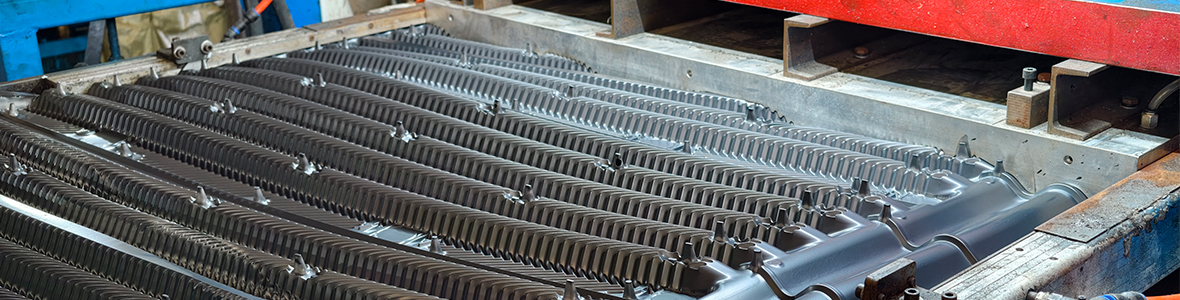
How long do cooling tower fillers last?
It sounds like a simple question, but there is no single number that works for every cooling tower. Cooling tower fillers operate continuously in hot water, moving air, minerals, chemicals, microorganisms, and mechanical stress. Their actual service life depends on how the tower operates, the quality of the water, the filler material, and how well the system is maintained.
In many applications, cooling tower fillers can provide approximately 5–15 years of service. Under favorable conditions, some products may last longer. In harsh industrial environments, however, replacement may be necessary much sooner.
So, should you replace cooling tower fillers simply because they are ten years old?
Not necessarily.
The better approach is to look at the condition and performance of the fill. If the fill remains structurally sound, relatively clean, properly wetted, and capable of delivering the required cooling performance, age alone may not justify replacement.
On the other hand, heavily scaled, clogged, brittle, cracked, or collapsed fill can reduce cooling performance even when it is considerably younger.
This guide explains how long cooling tower fillers typically last, what affects their lifespan, how to recognize failure, and how to choose the right replacement.
What Are Cooling Tower Fillers?
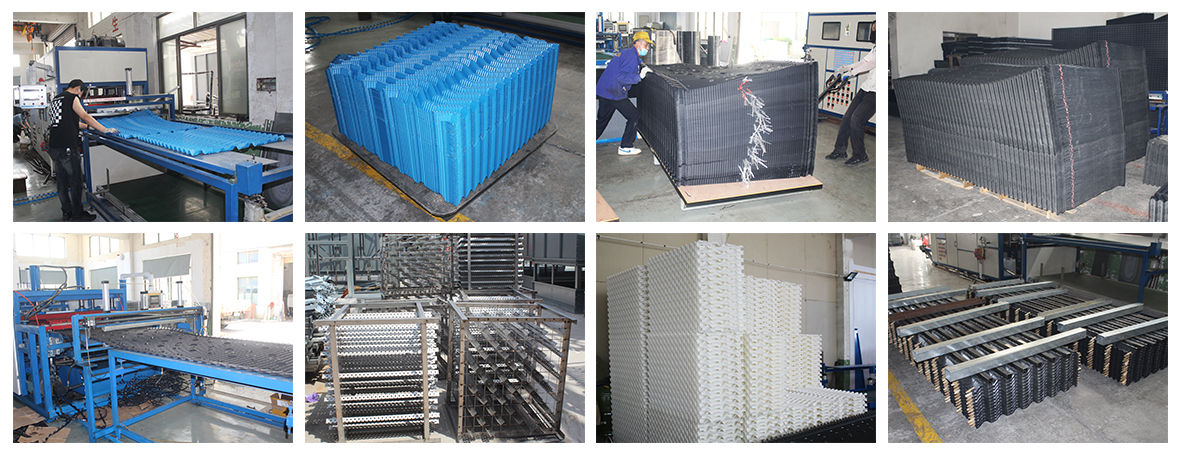
Cooling tower fillers, also known as cooling tower fill, fill media, or tower packing, are heat-transfer components installed inside wet cooling towers.
Their primary purpose is to increase the contact area between water and air.
Hot circulating water enters the tower and is distributed over the fill. At the same time, air moves through the fill section. The larger contact area allows heat to transfer from the water into the air, with evaporation providing the main cooling effect.
There are two common approaches:
The basic idea is easy to understand: the more effective contact between water and air, the more opportunity the tower has to reject heat.
That makes cooling tower fillers one of the most important components in a wet cooling tower.
Why Cooling Tower Fillers Matter
Think of the fill as the stage where the cooling process takes place.
The fan moves air. The pump moves water. The nozzles distribute water. But the fill creates the extensive surface where water and air interact.
If the fill becomes clogged or damaged, the entire cooling tower can lose efficiency.
A tower may have a perfectly functioning motor, fan, pump, and gearbox while still experiencing poor cooling performance because the fill has deteriorated.
That is why cooling tower filler condition deserves regular inspection.
How Long Do Cooling Tower Fillers Usually Last?
A practical service-life estimate for many cooling tower fillers is approximately 5–15 years.
However, this is only a general planning range rather than a universal guarantee.
A cooling tower operating with clean water, stable temperatures, effective water treatment, and proper maintenance may keep its fill functional for many years.
A tower operating with high suspended solids, aggressive chemicals, excessive scaling, biological contamination, or unusually high temperatures may experience much shorter fill life.
In other words, the same cooling tower filler can have completely different lifespans in two different installations.
A Practical Cooling Tower Filler Service-Life Range
A useful way to think about filler lifespan is:
Under 5 years:
A short service life may indicate severe operating conditions, unsuitable material selection, poor water treatment, mechanical damage, or serious fouling.
Approximately 5–15 years:
This is a practical service-life range for many conventional cooling tower filler applications.
More than 15 years:
Longer service is possible when the material, design, operating conditions, water quality, and maintenance program are favorable.
However, these ranges should not be treated as fixed replacement rules.
A 12-year-old fill can sometimes continue operating effectively, while a four-year-old fill may already require replacement.
Why There Is No Universal Replacement Schedule
Cooling tower filler does not have a fixed expiration date.
Consider it similar to the tires on a commercial truck. Mileage matters, but road conditions, load, temperature, maintenance, and driving conditions also affect tire life.
Cooling tower fillers work in much the same way.
Water quality, air quality, operating temperature, chemical exposure, and maintenance all influence service life.
Therefore, a good maintenance program should combine:
Age is useful information, but it should not be the only information.
What Determines Cooling Tower Filler Life?
Several factors influence how long cooling tower fillers remain effective.
The most important include water quality, temperature, chemical exposure, scaling, biological growth, UV exposure, mechanical stress, and water distribution.
Let's look at each one.
Water Quality
Water quality is one of the biggest factors affecting cooling tower filler lifespan.
Hard water can cause mineral scale.
Suspended solids can accumulate inside fill passages.
Poor biological control can produce slime and biofilm.
Industrial process water can introduce oil, grease, fibers, dirt, or other contaminants.
Over time, these contaminants can reduce the open area inside the fill and interfere with both airflow and water distribution.
For applications with dirty or contaminated water, filler selection becomes especially important.
A highly efficient film fill with narrow passages may not always be the most practical option when the circulating water contains significant solids.
Operating Temperature
Temperature is another major consideration.
Different plastics have different temperature capabilities. Standard PVC cooling tower fillers are widely used in conventional applications, but higher-temperature systems may require PP or another material better suited to the operating conditions.
Before selecting replacement cooling tower fillers, determine:
Hot-water temperature
Cold-water temperature
Maximum operating temperature
Continuous operating temperature
Possible temperature spikes
Choosing filler based only on price can create problems later.
The material must be compatible with the actual thermal environment.
Chemical Exposure
Cooling tower systems often require chemical treatment to control scale, corrosion, and biological growth.
But chemical concentration and compatibility still matter.
Excessive or poorly controlled chemical exposure can contribute to material degradation over time.
Industrial cooling towers may also contain process contaminants that create additional chemical challenges.
For demanding applications, the filler material should be selected based on actual water chemistry rather than a generic specification.
Fouling, Scaling and Biological Growth
Fouling is one of the most common causes of cooling tower filler performance loss.
Scale reduces the effective passage area.
Sludge blocks channels.
Biological growth creates deposits on surfaces.
Debris restricts airflow.
Once enough material accumulates, the fill may no longer provide the original water-air contact conditions.
This creates a frustrating situation: the filler may still physically exist, but its heat-transfer performance has already declined.
UV Exposure and Material Aging
Polymer materials can also age over time.
UV radiation, oxygen, heat, chemicals, and repeated wetting and drying can gradually change the physical characteristics of plastic.
As aging progresses, filler material may become:
This is particularly important when old filler must be handled during inspection or cleaning.
Mechanical Stress and Water Distribution
Cooling tower fillers are designed to operate under specific structural conditions.
Improper support, excessive water loading, vibration, impact, poor installation, or structural movement can cause deformation or breakage.
Water distribution also matters.
If nozzles become blocked or distribution pipes are damaged, certain areas of the fill may receive too much water while others receive too little.
Therefore, when inspecting cooling tower fillers, it is important to examine the entire heat-transfer system rather than looking at the filler alone.
How Long Do PVC Cooling Tower Fillers Last?
PVC is one of the most widely used materials for cooling tower film fill.
It offers a useful combination of:
Under suitable operating conditions, PVC cooling tower fillers can commonly provide many years of service, often within the 5–15 year practical range.
However, PVC does not have a guaranteed lifespan simply because it is PVC.
The actual result depends on:
PVC formulation
Sheet thickness
Fill geometry
Operating temperature
Water chemistry
Fouling conditions
Installation quality
Cleaning practices
A well-designed PVC film fill operating with properly treated water can provide long-term service.
A poorly selected PVC fill in a high-fouling industrial application can deteriorate much sooner.
How Long Do PP Cooling Tower Fillers Last?
PP stands for polypropylene.
PP cooling tower fillers are another option for applications where the operating environment calls for characteristics that may not be ideal for standard PVC.
PP can be attractive for certain higher-temperature or chemically demanding applications.
However, it is important not to assume that PP automatically lasts longer than PVC.
The right material depends on the complete application.
For example, a clean-water HVAC cooling tower may have no practical reason to use a more specialized material when PVC already meets the operating requirements.
In a higher-temperature industrial process, however, PP may be a more suitable option.
The key question is not:
“Which material lasts the longest?”
Instead, ask:
“Which material is best matched to this cooling tower?”
Film Fill vs. Splash Fill Service Life
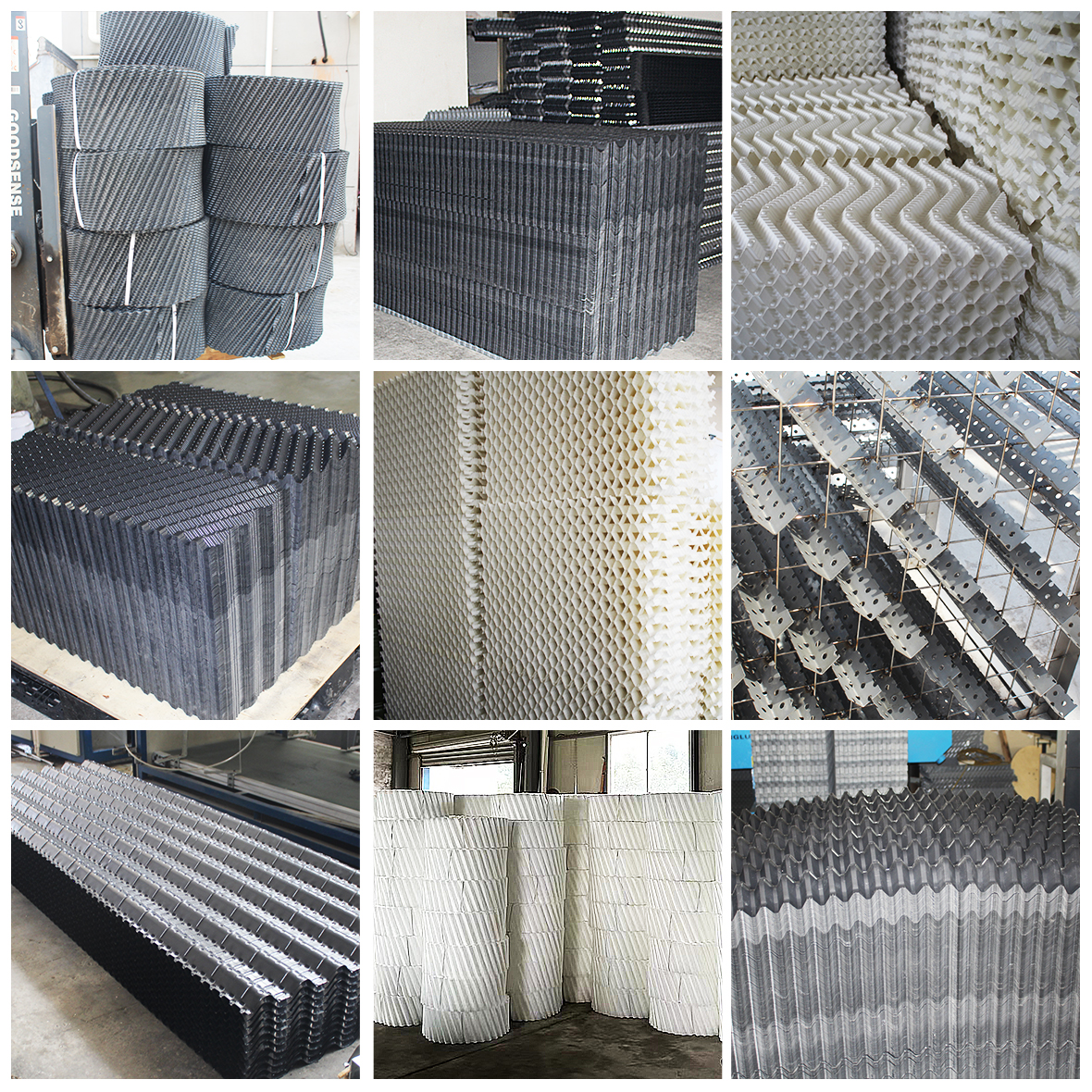
Film fill and splash fill use different approaches to water-air contact.
Film fill spreads water over closely spaced surfaces, creating a large effective heat-transfer area.
Splash fill repeatedly breaks water into droplets as it moves through the fill section.
Neither design is automatically better for every application.
The operating environment determines which approach makes more sense.
When Film Fill Can Last Longer
Film fill can provide long service when water quality is well controlled.
It is particularly attractive in applications where:
Suspended solids are limited
Water treatment is effective
Biological growth is controlled
Regular inspection is performed
Operating temperatures are within the material's limits
With the right conditions, high-efficiency film fill can deliver excellent thermal performance for many years.
When Splash Fill Makes More Sense
Splash fill may be more suitable for applications where suspended solids or contaminants create a higher fouling risk.
Its relatively open structure can provide greater tolerance to certain dirty-water conditions.
This illustrates an important principle in cooling tower design:
Maximum thermal efficiency is not always the same thing as maximum real-world performance.
A filler that performs extremely well in clean water may perform poorly if the operating water quickly clogs its passages.
8 Signs Your Cooling Tower Fillers Need Replacement
How can you tell when your cooling tower filler is reaching the end of its useful life?
Watch for these warning signs.
1. Reduced Cooling Performance
A gradual increase in cold-water temperature or cooling approach can indicate filler deterioration.
Of course, many other factors can cause poor cooling performance, including fan problems, nozzle issues, water-flow changes, and ambient conditions.
But if other components are operating correctly, the fill should be inspected.
2. Clogged or Restricted Fill Channels
Blocked channels are a major warning sign.
Scale, sludge, algae, biofilm, and debris can reduce the open area available for air and water movement.
Once passages become heavily restricted, the tower may experience higher airflow resistance and reduced heat transfer.
3. Brittle, Cracked or Broken Fill
Physical damage is one of the clearest signs of aging.
Look for:
If the filler breaks easily during inspection, it may already be near the end of its service life.
4. Severe Scaling and Fouling
Not every deposit requires replacement.
Light deposits may be removed through appropriate cleaning.
But if scale or fouling has permanently reduced the fill's open area, cleaning may no longer restore the original performance.
5. Deformed Fill Packs
Fill should maintain its designed geometry.
If packs have warped, collapsed, or shifted, water and air may no longer travel through the fill correctly.
This can create uneven cooling and localized dry or overloaded areas.
6. Poor Water Distribution
Poor water distribution can be both a cause and a symptom of cooling tower problems.
Check:
Spray nozzles
Distribution pipes
Water pressure
Fill wetting
Fill support structures
A problem that looks like “bad fill” may actually originate in the distribution system.
7. Excessive Debris in the Basin
Large quantities of plastic fragments, scale, sludge, or biological material in the cold-water basin should trigger an inspection.
The basin can sometimes tell the story of what is happening inside the tower.
8. Cleaning No Longer Restores Performance
This is an important practical indicator.
If cleaning produces only a temporary improvement, or if the fill remains heavily restricted afterward, replacement may be more economical than repeated cleaning.
Can You Extend the Life of Cooling Tower Fillers?
Yes.
You cannot make plastic last forever, but good operation and maintenance can significantly reduce premature deterioration.
The goal is simple: keep the filler operating in the environment it was designed for.
Improve Water Treatment
Effective water treatment is one of the best ways to protect cooling tower fillers.
Control:
Scale-forming minerals
Suspended solids
Biological growth
Corrosion
Chemical concentration
Good water treatment protects much more than the fill. It also helps protect pumps, nozzles, piping, heat exchangers, basins, and other cooling tower components.
Clean the Fill Correctly
Cleaning can restore performance when deposits are removable.
But aggressive cleaning can damage aged or fragile fill.
The correct cleaning method depends on:
Do not assume that maximum water pressure means maximum cleaning performance.
Sometimes gentle and controlled cleaning is the safer approach.
Inspect Fill Regularly
Regular inspection gives operators an opportunity to identify problems before they become major failures.
Look for:
Don't Wait Until the Tower Loses Capacity
One of the most expensive mistakes is waiting until cooling performance has already fallen below the required level.
Emergency replacement can create:
Planned replacement gives you much greater control over the project.
When Should You Replace Cooling Tower Fillers?
The best time to replace cooling tower fillers is when they can no longer provide the required combination of:
Thermal performance + structural integrity + acceptable airflow + proper water distribution.
Age should be considered, but it should not be the only factor.
If an older filler remains in good condition and the tower continues to meet its cooling requirements, replacement may not be immediately necessary.
If a younger filler is severely damaged or clogged, replacement may already be justified.
Replacement Based on Condition, Not Just Age
Imagine two cooling towers.
Both are ten years old.
Tower A has clean water, effective treatment, good airflow, stable cooling performance, and structurally sound fill.
Tower B has severe scaling, broken fill, biological fouling, restricted passages, and declining cooling performance.
Should both towers receive exactly the same maintenance decision?
Clearly, age alone doesn't tell the whole story.
Condition-based inspection provides much more useful information.
How to Choose Replacement Cooling Tower Fillers
Replacing cooling tower fillers is not simply a matter of finding a plastic product that looks similar to the existing fill.
The replacement needs to work with the existing tower.
Before ordering, collect information such as:
Cooling tower type
Counterflow or crossflow configuration
Existing filler dimensions
Fill height
Fill depth
Sheet thickness
Flute or corrugation geometry
Water flow rate
Airflow
Hot-water temperature
Cold-water temperature
Water quality
Fouling conditions
Required cooling capacity
Check Tower Configuration and Dimensions
Measure the existing fill carefully.
Important dimensions can include:
Length
Width
Height
Block arrangement
Support spacing
Fill orientation
Do not rely solely on a product photograph.
Two fillers can look almost identical while having different dimensions or thermal characteristics.
Match Material to Operating Conditions
Material selection should begin with operating conditions.
PVC can be appropriate for many standard cooling tower applications.
PP may be considered where temperature or chemical requirements make it more suitable.
Other materials may be appropriate for specialized environments.
The goal is compatibility, not simply selecting the most expensive material.
Consider Water Quality and Fouling Risk
A clean HVAC cooling tower and a heavily contaminated industrial cooling tower should not necessarily use the same fill design.
If your water contains high levels of suspended solids, fibers, biological material, or process contaminants, fouling resistance should be an important part of the selection process.
Why Manufacturer Selection Matters
The manufacturer you choose can influence much more than the purchase price.
A knowledgeable cooling tower filler supplier should be able to discuss:
The cheapest quotation may not represent the lowest total cost.
A poorly matched filler can lead to reduced cooling performance, premature replacement, additional maintenance, and unnecessary downtime.
Power Tower Cooling Technology (Shaoxing) Co.,Ltd
Power Tower Cooling Technology (Shaoxing) Co.,Ltd specializes in cooling tower components and replacement solutions through CoolingTowerPart.
The company provides cooling tower fillers and related products for different cooling tower configurations and operating conditions, including PVC film fill, PP fill, splash fill, counterflow fill, crossflow fill, and replacement cooling tower fill solutions.
For replacement projects, providing accurate tower information is important. Customers can supply dimensions, photos, drawings, operating temperatures, water-flow information, and water-quality details so the appropriate cooling tower filler can be selected.
For more information about cooling tower fillers, replacement fill, and customized solutions, visit:
https://www.coolingtowerpart.com
Cooling Tower Filler Life: Cost vs. Service Life
When buying cooling tower fillers, it is tempting to compare suppliers based only on price per square meter or price per cubic meter.
But initial price is only one part of the equation.
Consider the total cost:
Purchase + transportation + installation + downtime + maintenance + replacement frequency
A slightly higher-quality filler may offer better value if it provides longer service under the actual operating conditions.
On the other hand, paying more for a specialized material that the application does not require may not provide meaningful additional value.
The right question is:
What gives this cooling tower the best combination of performance, service life, and total ownership cost?
That's the number worth calculating.
Frequently Asked Questions
Can Cooling Tower Fillers Last 20 Years?
Yes, some cooling tower fillers can remain functional for 20 years or longer under favorable conditions.
However, 20 years should not be treated as a standard guaranteed lifespan.
Material, design, water quality, temperature, fouling, chemical exposure, and maintenance all influence actual service life.
How Often Should Cooling Tower Fillers Be Inspected?
Cooling tower fillers should be inspected as part of routine cooling tower maintenance.
The exact frequency depends on the application.
Towers handling dirty water, high suspended solids, aggressive process contaminants, or high temperatures may require more frequent inspections.
Can Clogged Cooling Tower Fillers Be Cleaned Instead of Replaced?
Sometimes.
If the problem is removable scale, dirt, or biological growth, appropriate cleaning may restore performance.
But cleaning cannot repair:
Missing material
Severe cracking
Brittle plastic
Collapsed fill
Permanent deformation
When the physical structure has deteriorated, replacement is normally the more practical solution.
Is PP Fill Better Than PVC Fill for Service Life?
Not automatically.
PP may be better suited to certain higher-temperature or chemically demanding applications.
PVC remains an effective and economical option for many conventional cooling tower systems.
The best choice depends on the actual operating conditions.
What Is the Typical Life of PVC Cooling Tower Fillers?
A practical planning range is approximately 5–15 years, although actual service life can be shorter or longer.
Proper water treatment and suitable operating conditions can significantly extend useful life.
What Causes Cooling Tower Fillers to Fail Early?
Common causes include:
Identifying the cause is important because replacing the fill without correcting the underlying problem may simply repeat the same failure.
Final Thoughts
So, how long do cooling tower fillers last?
For many installations, 5–15 years is a useful general planning range, but actual service life depends heavily on operating conditions.
Water quality, temperature, chemical exposure, fouling, scaling, UV aging, mechanical stress, filler material, design, and maintenance all influence how long the fill remains effective.
The most important point is this:
Don't replace cooling tower fillers simply because they are old, and don't keep them simply because they are still physically present.
Look at performance.
Look at structure.
Look at fouling.
Look at water distribution.
Look at the operating environment.
When replacement becomes necessary, select the new filler according to the actual requirements of the cooling tower rather than choosing solely on the lowest purchase price.
For PVC cooling tower fillers, PP fillers, film fill, splash fill, counterflow fill, crossflow fill, and customized replacement solutions, Power Tower Cooling Technology (Shaoxing) Co.,Ltd can provide cooling tower filler solutions through CoolingTowerPart.
A correctly selected and properly maintained filler can help your cooling tower maintain efficient heat transfer, reduce unnecessary maintenance, and deliver reliable cooling performance for years to come.


