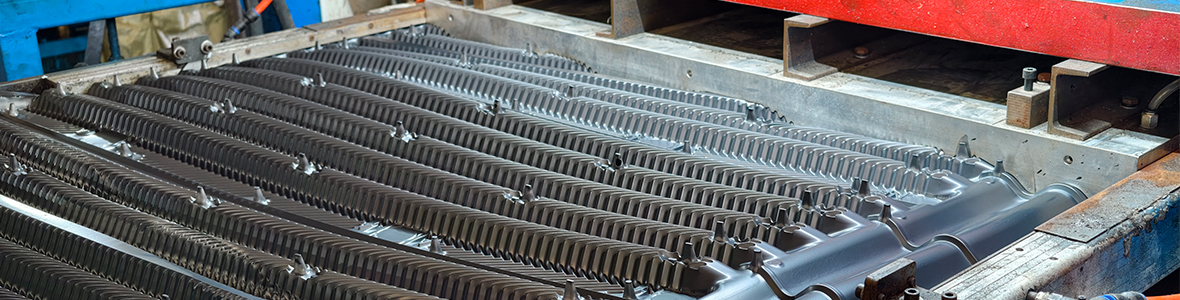
Introduction: Why Counterflow Fill Is Critical for Cooling Tower Performance
Cooling towers play an essential role in modern industrial operations. From power plants and chemical factories to HVAC systems and manufacturing facilities, cooling towers are responsible for removing excess heat and maintaining stable operating temperatures.
But what determines whether a cooling tower can achieve high cooling performance?
Many people focus on fans, pumps, and tower size. However, one of the most important components inside a cooling tower is often overlooked — counterflow fill.
Counterflow fill is the core heat transfer media installed inside counterflow cooling towers. It improves cooling efficiency by increasing the contact area between water and air, extending water residence time, and creating better heat exchange conditions.
A high-quality counterflow fill can help industrial users achieve:
Higher heat transfer efficiency
Lower operating costs
Better temperature control
Longer cooling tower service life
More stable industrial processes
In this guide, we will explain how counterflow fill improves cooling tower heat transfer efficiency, how different fill materials work, and how to choose the right fill media for your application.
Image Suggestion 1: Industrial counterflow cooling tower with internal fill structure and airflow illustration
Understanding Counterflow Fill in Cooling Towers
What Is Counterflow Fill?
Counterflow fill is a specially designed heat transfer media installed inside counterflow cooling towers. Its primary function is to increase the interaction between warm circulating water and moving air.
In a counterflow cooling tower, hot water enters from the top and flows downward through the fill media. At the same time, air moves upward from the bottom of the tower.
The counterflow fill is located between these two flows and creates thousands of small channels where heat transfer occurs.
Without fill media, water would simply fall through the tower in large droplets. This creates limited contact with air and reduces cooling efficiency.
Counterflow fill solves this problem by spreading water into thin films and increasing the available heat transfer surface area.
You can think of counterflow fill as a highly engineered heat exchanger. Instead of allowing water and air to pass quickly through the tower, it creates a controlled environment where they can exchange heat more effectively.
How Counterflow Fill Works Inside a Cooling Tower
The working principle of counterflow fill depends on three major heat transfer processes:
1. Sensible Heat Transfer
Heat moves directly from warmer water to cooler air through contact.
2. Latent Heat Transfer
A small amount of water evaporates, removing additional heat from the circulating water.
3. Improved Air-Water Mixing
The special structure of the fill creates controlled turbulence, allowing air and water to mix more efficiently.
During operation, hot water travels downward through the fill layers while cooling air moves upward.
The corrugated surface design spreads water evenly and creates a thin water film. This significantly improves heat exchange efficiency.
Image Suggestion 2: Diagram showing downward water flow and upward airflow through counterflow fill media
Why Heat Transfer Efficiency Matters in Cooling Towers
The Relationship Between Fill Design and Cooling Performance
The efficiency of a cooling tower depends heavily on the design and quality of its fill media.
Even if a cooling tower has powerful fans and a reliable water distribution system, poor-quality fill can limit the overall performance.
A well-designed counterflow fill improves cooling performance by:
Increasing heat transfer surface area
Improving water distribution
Enhancing evaporation efficiency
Reducing thermal resistance
More contact area means more opportunities for heat to transfer from water into the air.
For industrial companies, this improvement can lead to:
Reduced energy consumption
Improved equipment reliability
More stable production conditions
Lower maintenance costs
A simple comparison is a sponge. A flat surface can absorb only limited water, but a sponge with thousands of small channels provides much greater contact space.
Counterflow fill works in a similar way by creating a large network of heat exchange channels.
Factors Affecting Cooling Tower Heat Transfer Efficiency
Several factors influence cooling tower performance:
Fill Surface Area
A larger contact area usually provides better heat exchange performance.
Water Distribution
Uneven water flow can create dry areas and reduce cooling efficiency.
Material Quality
Durable materials maintain performance for longer operating periods.
Fill Structure
Wave design, spacing, and channel shape influence airflow and water movement.
Operating Conditions
Temperature, humidity, airflow rate, and water quality also affect cooling results.
Choosing the correct counterflow fill requires considering the complete cooling system rather than only the fill itself.
How Counterflow Fill Enhances Heat Transfer Efficiency
Increasing Water and Air Contact Area
The biggest advantage of counterflow fill is increasing the contact area between water and air.
Without fill media, water drops quickly through the tower with limited surface exposure.
Counterflow fill transforms large water streams into thin water films. This creates a much larger evaporation and heat exchange area.
Modern PVC counterflow fill packs can create thousands of contact points inside a compact space, allowing cooling towers to achieve higher performance without increasing tower size.
Image Suggestion 3: Close-up view of PVC counterflow fill sheets showing increased contact surface area
Improving Water Distribution and Flow Control
Uniform water distribution is essential for cooling tower efficiency.
Poor distribution creates dry sections where heat transfer cannot occur effectively.
High-performance counterflow fill uses specially designed wave patterns and channels to guide water evenly across the entire fill surface.
This creates:
More consistent water film formation
Better air-water contact
Improved cooling stability
Higher thermal performance
For industrial applications, better water distribution means more reliable cooling under changing operating conditions.
Extending Water Residence Time Inside the Cooling Tower
Water needs sufficient time inside the cooling tower to release heat.
If water moves too quickly, heat transfer becomes incomplete.
Counterflow fill increases residence time by creating longer flow paths. Water travels across multiple surfaces while continuously contacting upward-moving air.
This extended interaction allows more heat to be removed before water reaches the collection basin.
Film Formation and Heat Exchange Mechanism
Film formation is the foundation of counterflow fill technology.
When water spreads into a thin layer over the fill surface, heat can transfer more efficiently because the distance between water and air becomes smaller.
A high-quality counterflow fill balances:
Professional manufacturers must carefully design fill geometry to achieve the best balance between cooling performance and energy consumption.
Image Suggestion 4: Cross-section illustration showing water film formation and evaporation inside counterflow fill
Different Types of Counterflow Fill Materials
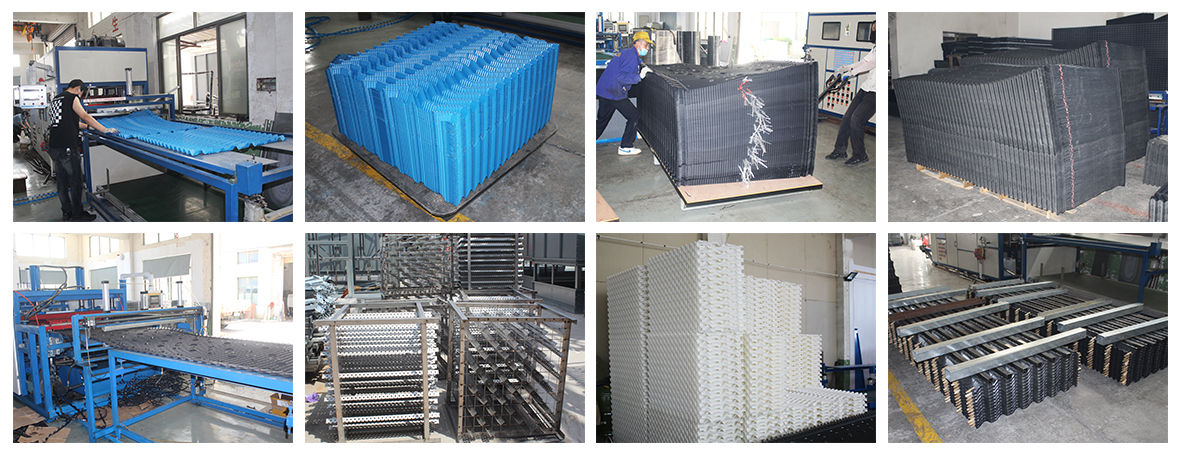
PVC Counterflow Fill
PVC counterflow fill is one of the most popular choices for industrial and commercial cooling towers.
It provides an excellent combination of:
PVC film fill is widely used in:
At Power Tower Cooling Technology (Shaoxing) Co.,Ltd, PVC counterflow fill products are manufactured with advanced production technology to ensure stable quality and reliable performance.
PP Counterflow Fill for High Temperature Applications
Polypropylene (PP) counterflow fill is designed for more demanding environments.
Compared with PVC materials, PP provides:
Higher temperature resistance
Strong chemical resistance
Excellent durability
Stable mechanical performance
PP fill is often used in industrial applications where water temperature and operating conditions are more challenging.
The correct material choice depends on:
Water temperature
Chemical composition
Cooling requirements
Maintenance conditions
Counterflow Fill Design Features That Improve Performance
Film Fill Structure and Wave Design
Modern counterflow fill usually consists of corrugated sheets assembled into fill packs.
The wave design provides several advantages:
Increases contact surface
Improves water spreading
Creates controlled turbulence
Maintains airflow efficiency
Small changes in wave angle and spacing can significantly affect cooling performance.
A professional counterflow fill is not simply plastic material. It is an engineered heat transfer component.
Anti-Clogging and Easy Maintenance Design
Cooling tower fill operates in harsh environments.
Dust, minerals, algae, and suspended solids may gradually reduce performance.
Modern counterflow fill designs solve these problems through:
For facilities using recycled or industrial water, anti-clogging fill designs can reduce maintenance frequency and replacement costs.
Image Suggestion 5: Cooling tower maintenance worker inspecting counterflow fill packs
Counterflow Fill vs Other Cooling Tower Fill Types
Counterflow Fill vs Crossflow Fill
Counterflow fill and crossflow fill are two major cooling tower fill categories.
In counterflow systems:
In crossflow systems:
Water moves downward
Air moves horizontally
Counterflow fill often provides excellent heat transfer performance because air and water move in opposite directions, creating strong interaction throughout the fill pack.
However, the best choice depends on:
Cooling tower design
Installation space
Water quality
Maintenance requirements
Choosing the Right Counterflow Fill for Industrial Cooling Towers
Water Quality Considerations
Water quality plays an important role when selecting fill media.
High mineral content, suspended solids, or biological growth may increase clogging risks.
For clean water systems, high-density film fills can provide excellent thermal performance.
For challenging conditions, larger-channel fill designs may provide better reliability.
Cooling Capacity Requirements
Different cooling applications require different fill solutions.
Engineers usually consider:
Heat load
Water flow rate
Air volume
Approach temperature
Tower dimensions
Selecting the correct counterflow fill ensures the cooling tower achieves expected performance without unnecessary operating costs.
Applications of High Efficiency Counterflow Fill
HVAC Cooling Systems
HVAC cooling towers rely on efficient heat rejection to support chillers.
Counterflow fill improves HVAC performance by maximizing evaporation and heat exchange.
PVC counterflow fill is commonly selected because it provides excellent efficiency with reasonable cost.
Power Plants and Industrial Facilities
Industrial operations require continuous cooling.
Power plants, chemical factories, and manufacturing facilities depend on reliable cooling towers.
High-quality counterflow fill helps maintain stable temperatures and prevents production interruptions.
Industrial users typically require:
Strong materials
Chemical resistance
Long service life
Stable performance
Why Choose Power Tower Cooling Technology Counterflow Fill
Manufacturing Quality and Custom Solutions
Every cooling tower has different operating requirements.
Power Tower Cooling Technology (Shaoxing) Co.,Ltd provides professional cooling tower fill solutions customized for different applications.
Products can be selected according to:
Cooling tower model
Operating environment
Water conditions
Required capacity
With advanced manufacturing processes and strict quality control, the company provides reliable counterflow fill products for global customers.
Website:
https://www.coolingtowerpart.com

Global Cooling Tower Fill Supply Capability
Modern industrial projects require suppliers who can provide stable production, technical support, and customized solutions.
Power Tower Cooling Technology (Shaoxing) Co.,Ltd supplies cooling tower fill products for:
Reliable manufacturing helps customers improve cooling efficiency and reduce long-term operating costs.
How to Maintain Counterflow Fill for Long-Term Efficiency
Regular maintenance helps preserve heat transfer performance.
Recommended maintenance includes:
Preventive maintenance is usually more economical than waiting for cooling performance to decline.
Future Development Trends of Counterflow Fill Technology
Cooling tower technology continues to evolve.
Future counterflow fill development will focus on:
Higher efficiency designs
More durable materials
Better anti-fouling performance
Environmentally friendly manufacturing
As industries continue seeking energy-efficient solutions, advanced counterflow fill technology will remain essential.
Conclusion: Improving Cooling Tower Performance with Counterflow Fill
Counterflow fill is one of the most important components affecting cooling tower heat transfer efficiency.
By increasing water-air contact area, improving water distribution, extending residence time, and supporting evaporation, high-quality counterflow fill significantly improves cooling performance.
For industrial users, choosing the right fill media is not only a replacement decision but also a long-term investment in efficiency and reliability.
Power Tower Cooling Technology (Shaoxing) Co.,Ltd provides professional counterflow fill solutions designed to help customers worldwide achieve better cooling tower performance.
Learn more:
https://www.coolingtowerpart.com


