Cooling tower fill clogging is one of those problems that can start quietly and become expensive before anyone notices. A little dirt sticks to the fill. A thin layer of scale develops. Biofilm begins growing. Then, almost without warning, the tower no longer cools water as efficiently as it used to.
So, why does cooling tower fill clog, and what can you actually do about it?
The good news is that most clogging problems can be reduced or managed with the right water treatment, inspection, cleaning, and fill selection strategy.
In this guide, we'll look at the most common causes of cooling tower fill clogging, explain practical cleaning methods, and share prevention tips that can help extend the service life of your fill. We'll also discuss how to choose the right cooling tower fill media, including PVC film fill and splash fill, for different operating conditions.
What Is Cooling Tower Fill Clogging?
Cooling tower fill clogging occurs when unwanted materials accumulate on or inside the passages of the fill. These materials can include suspended solids, dirt, silt, mineral scale, algae, biofilm, oil, grease, and other process contaminants.
Think of the fill as the lungs of a cooling tower. It needs open passages so air and water can move through it freely. When those passages become restricted, the tower struggles to transfer heat.
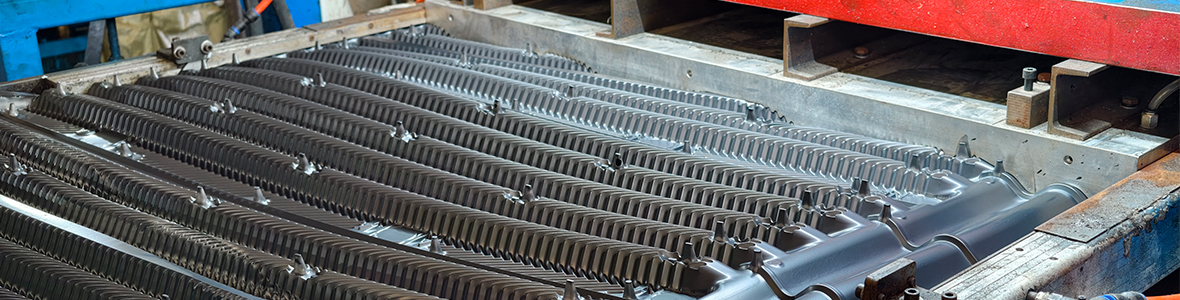
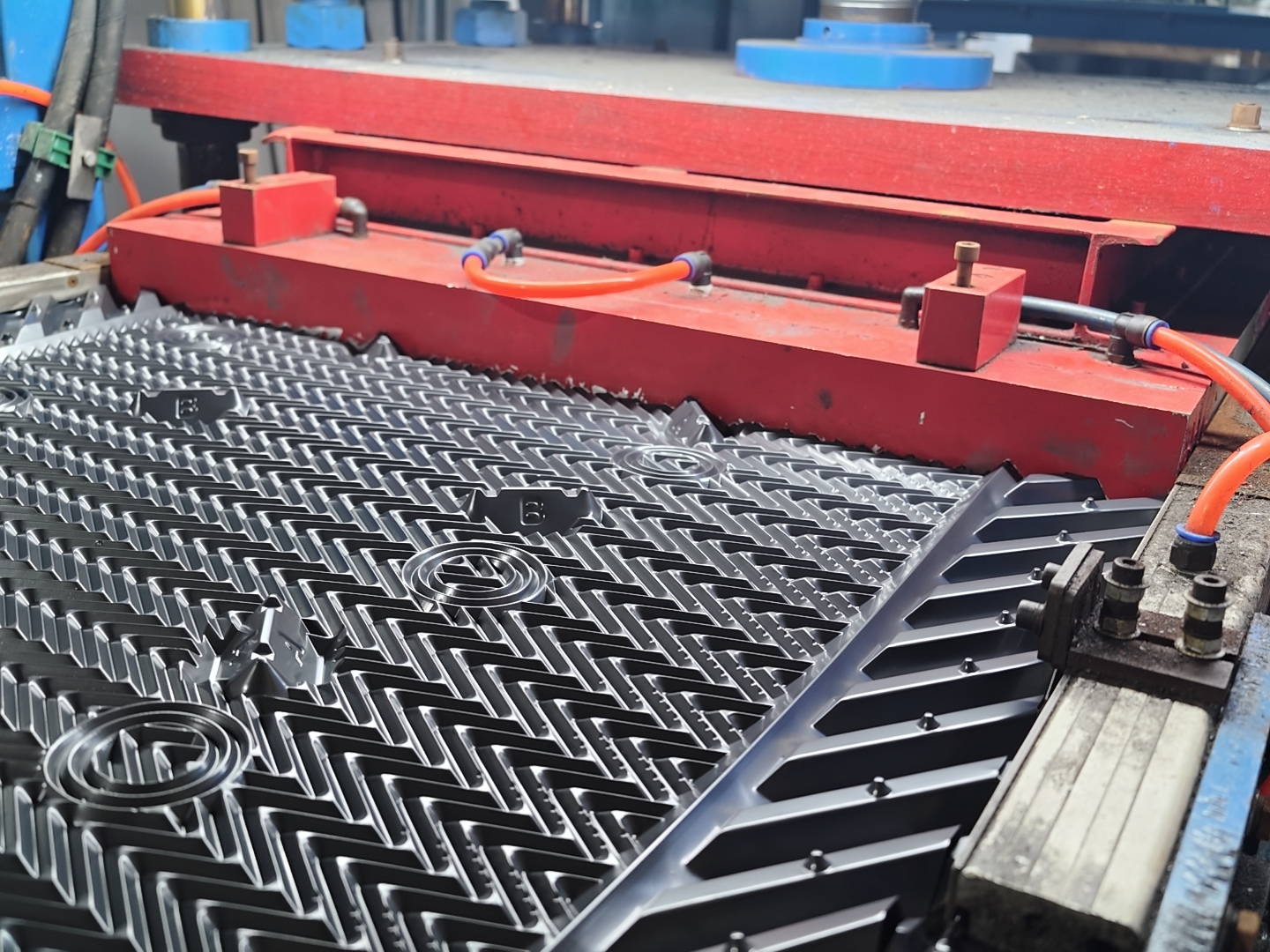
This is particularly important for film fill. Film fill is designed with closely spaced channels to create a large contact area between air and water. That design provides excellent heat-transfer performance, but it also means poor water quality can cause fouling more quickly.
Once the passages become blocked, water distribution changes, airflow resistance may increase, and the effective heat-transfer area decreases.
The result?
Lower cooling performance, higher operating costs, and potentially shorter fill service life.
Why Cooling Tower Fill Is So Important
A cooling tower fill is much more than plastic packing placed inside a tower.
It is one of the key components responsible for heat transfer. Hot circulating water flows over or through the fill while air moves in the opposite or cross direction. A portion of the water evaporates, carrying heat away from the system.
A properly designed fill for cooling tower applications creates a large air-water contact area while maintaining acceptable airflow resistance.
This is why choosing the right cooling tower fill material matters.
But here's something many operators overlook: the best fill on paper isn't necessarily the best fill for every application.
A high-efficiency film fill may work extremely well with clean, well-treated water. Put that same fill into a system containing large amounts of suspended solids, fibers, or biological contaminants, and clogging can become a serious maintenance issue.
In other words, cooling performance and fouling resistance must be considered together.
How Cooling Tower Fill Media Works
In a typical film-fill cooling tower, hot water enters the upper distribution system and flows downward over corrugated plastic sheets. Air moves through the channels between the sheets.
The corrugated surface spreads the water into a thin film while increasing the contact area between water and air.
This is where the magic happens.
The larger the effective air-water contact area, the more opportunity the tower has to transfer heat through evaporation.
However, the performance of cooling tower fill media depends on much more than material alone. Sheet thickness, flute geometry, spacing, fill height, water loading, airflow, pressure drop, and water distribution all influence the final result.
That's why simply asking, "Is PVC better than PP?" or "Which fill has the highest efficiency?" doesn't always lead to the right answer.
The real question is:
Which fill design can deliver the required cooling performance while remaining reliable under my actual water and operating conditions?
Film Fill vs. Splash Fill
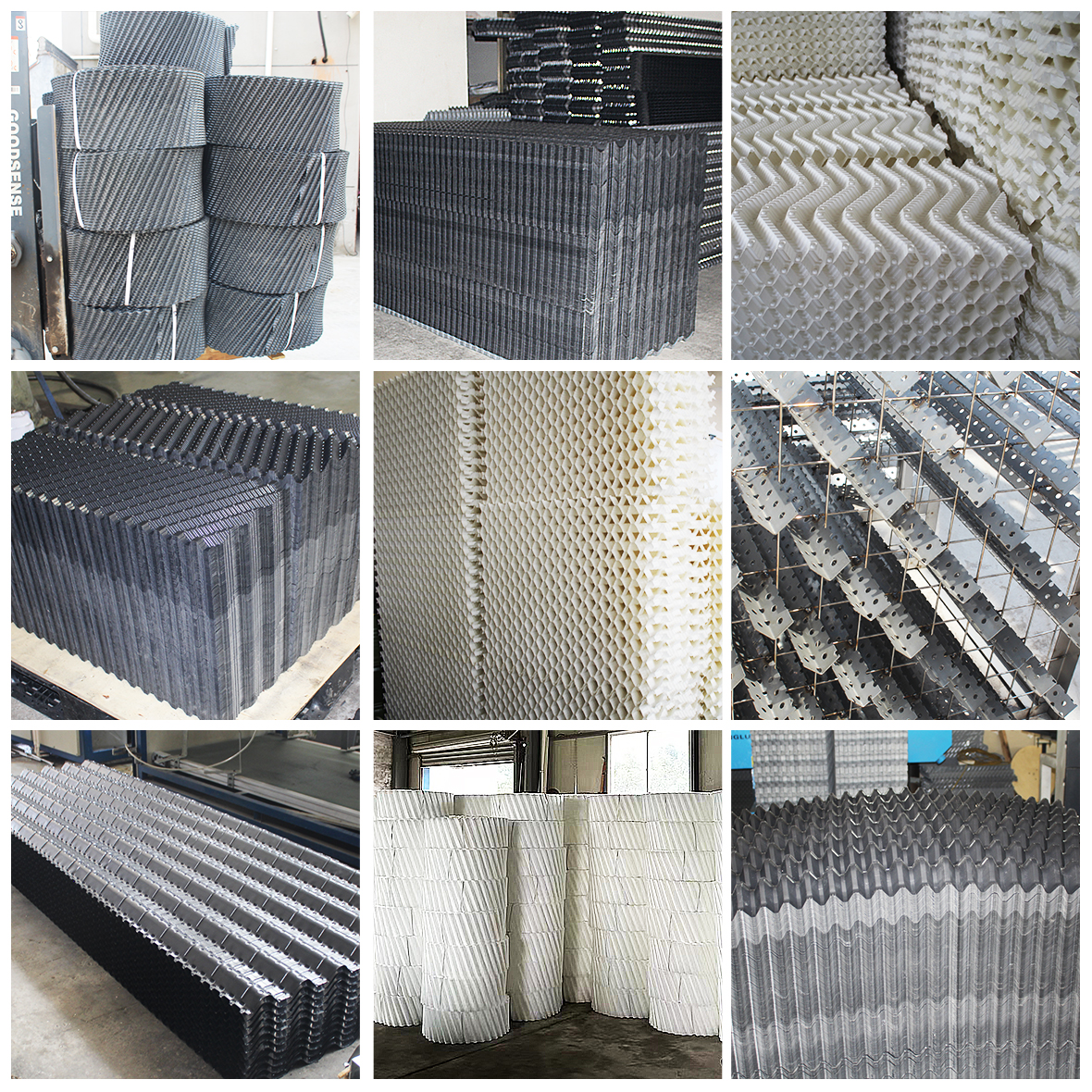
The two major categories of cooling tower fill are film fill and splash fill.
Film fill spreads water into a thin layer over a large surface area. It is compact and can provide excellent heat-transfer performance when the circulating water is reasonably clean.
Splash fill works differently. Instead of creating a continuous water film, it repeatedly breaks falling water into smaller droplets as the water contacts the fill surfaces.
This difference is important when water quality is poor.
Because splash fill generally has larger and more open passages, it can be more tolerant of suspended solids and fouling than tightly packed film fill. That is why splash fill cooling tower systems are commonly considered for applications where water contains more dirt, solids, fibers, or other contaminants.
Neither design is universally better.
Film fill is often the efficiency-focused choice. Splash fill can be the more forgiving choice when fouling is a major concern.
What Causes Cooling Tower Fill to Clog?
So, what actually causes a cooling tower fill to clog?
Usually, it's not one single problem. Clogging is often the result of several factors working together.
Poor water treatment, suspended solids, mineral scale, biological growth, airborne debris, and process contamination can gradually build up inside the fill.
Let's look at the biggest causes.
Suspended Solids, Dirt, and Sediment
Dirt and suspended solids are among the most common causes of fill fouling.
Cooling towers move huge amounts of air. That air can bring dust, pollen, sand, leaves, fibers, and other airborne particles into the tower.
Make-up water can also contain suspended solids such as silt and clay.
Once these particles enter the circulating water, they may settle on the fill or become trapped inside its passages.
Over time, a small amount of dirt becomes a thick layer.
It's similar to a road after years of traffic. One car doesn't damage it, but thousands of vehicles eventually leave their mark.
The same principle applies to cooling tower fills.
Scale and Mineral Deposits
Mineral scale is another major cause of clogging.
As water evaporates in a cooling tower, dissolved minerals become increasingly concentrated. If the water chemistry is not properly controlled, minerals can precipitate and form deposits on the fill surface.
Calcium carbonate is a common example.
At first, the deposit may look like a thin white film. Eventually, it can become hard and crusty, narrowing the fill channels and covering useful heat-transfer surfaces.
This is especially problematic for film fill because its channels are relatively close together.
A few millimeters of deposit can make a surprising difference.
That is why scale control should be considered part of the overall fill media cooling tower maintenance strategy.
Algae, Biofilm, and Microbiological Growth
Cooling towers provide several conditions that microorganisms like: moisture, warmth, nutrients, and constant exposure to air.
Algae can grow on wet surfaces, while bacteria and other microorganisms can contribute to biofilm formation.
Biofilm is particularly troublesome because it can act like glue.
It catches dirt.
It traps suspended solids.
It provides additional surfaces for mineral deposits.
The result is a cycle where one problem makes another problem worse.
A thin biological layer can therefore turn into a thick fouling layer surprisingly quickly if water treatment is not properly managed.
Oil, Grease, and Process Contaminants
Industrial cooling systems sometimes face another challenge: contamination from the process itself.
Oil, grease, hydrocarbons, fibers, chemicals, and other process materials can enter the circulating water.
These contaminants may coat the surface of the fill and interfere with proper water wetting.
Sticky materials can also capture dust and biological matter, creating deposits that are much harder to remove.
If your cooling tower serves a manufacturing process where oil or other contaminants may enter the water loop, regular water analysis becomes especially important.
Poor Water Treatment and High Cycles of Concentration
Water treatment is one of the biggest pieces of the puzzle.
If conductivity, pH, scale control, corrosion control, or biological control are not properly managed, fouling can accelerate.
Operating at higher cycles of concentration can reduce make-up water consumption, but it also concentrates dissolved minerals and other contaminants.
That's why cycles of concentration need to be balanced with the site's water chemistry and treatment capabilities.
A tower shouldn't simply operate at the highest possible concentration.
It should operate at a level that makes technical and economic sense.
Signs Your Cooling Tower Fill Is Clogged
How do you know your fill is starting to clog?
The tower may not immediately give you an obvious warning.
Instead, look for gradual changes.
Common signs include:
Higher cold-water temperature
Reduced cooling capacity
Uneven water distribution
Increased airflow resistance
Higher fan energy consumption
Visible scale or dirt
Algae or slime growth
Excessive sediment in the basin
Blocked or partially blocked fill passages
Increasing maintenance frequency
If your tower is producing warmer-than-normal cold water even though the fan and pumps appear to be operating normally, the fill should be inspected.
Reduced Cooling Performance
The most obvious consequence of clogged fill is reduced cooling performance.
When deposits cover the fill surface, the effective heat-transfer area decreases.
At the same time, blocked channels can prevent air and water from contacting each other as designed.
Some areas may become heavily wetted while others receive very little water.
The tower may still operate, but it won't operate efficiently.
Imagine trying to cool yourself on a hot day while wearing a thick winter coat.
The cooling system is still there, but something is getting in the way.
Increased Pressure Drop
Clogged fill can also increase resistance to airflow.
When the designed passages become restricted, the fan may need to work against greater resistance.
However, don't immediately blame the fill if pressure drop increases.
Check the entire air path, including louvers, drift eliminators, air inlets, fan blades, screens, and other components.
If these components are clean and the pressure drop is still abnormal, heavily fouled fill may be the cause.
Uneven Water Distribution
A cooling tower needs reasonably uniform water distribution.
If spray nozzles are blocked or the distribution system is damaged, some sections of the fill may receive too much water while other sections remain relatively dry.
That can create localized fouling and reduce the effective cooling area.
Before replacing the cooling tower fill, always inspect the water-distribution system.
Sometimes what looks like a fill problem is actually a nozzle problem.
A Simple Visual Inspection
During a scheduled shutdown, inspect accessible areas of the fill.
Look for:
Don't inspect only the top layer.
Fouling can be significantly worse deeper inside the fill pack.
If possible, inspect representative sections from the upper, middle, and lower portions of the fill.
How to Clean Cooling Tower Fill
There is no single cleaning method that works for every tower.
The correct approach depends on the type of fouling, the fill material, the fill design, the severity of the deposits, and the tower's construction.
The basic principle is simple:
Remove the contaminant without damaging the fill or creating a new water-quality problem.
Step 1: Shut Down and Isolate the Tower
Safety comes first.
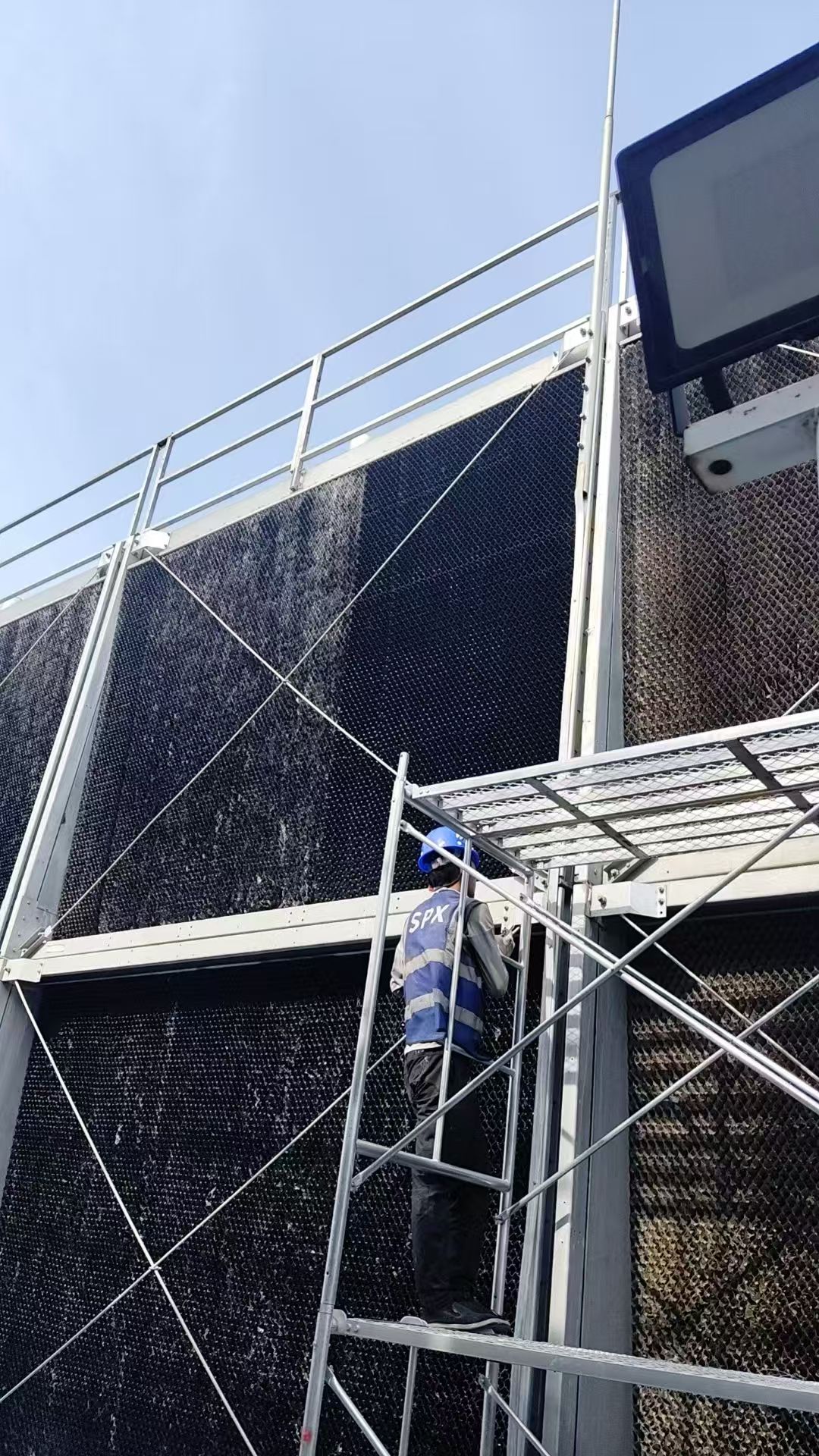
Before cleaning, follow the site's lockout/tagout procedures and isolate the relevant equipment.
Fans, pumps, chemical systems, and heat sources must be managed according to the specific tower and site safety procedures.
Cooling tower cleaning can also create aerosol exposure, so appropriate protective equipment and site-specific safety procedures are essential.
Never treat fill cleaning as a simple pressure-washing job.
Step 2: Inspect the Fill and Identify the Deposit
Before choosing a cleaning method, identify what is actually clogging the fill.
Is it:
Loose dirt?
Mud?
Mineral scale?
Algae?
Biofilm?
Oil?
A combination?
This matters because different deposits require different approaches.
Using an aggressive chemical against the wrong deposit can waste time, damage components, and increase operating costs.
Step 3: Remove Loose Dirt and Debris
Start with the least aggressive practical method.
Remove leaves, large debris, loose sediment, and other visible materials.
Clean the basin and strainers at the same time.
Otherwise, the material removed from the fill may simply return to the circulating-water system and cause another round of fouling.
Step 4: Apply the Right Cleaning Method
For light deposits, controlled water flushing may be sufficient.
For more severe fouling, mechanical or chemical cleaning may be required.
The cleaning method should always be compatible with the specific cooling tower fill material.
This is particularly important with thin plastic film fill.
Mechanical Cleaning
Mechanical cleaning can include controlled water washing and other approved physical cleaning techniques.
Be careful with excessive pressure.
Very aggressive high-pressure washing can deform thin PVC sheets, damage connections, or physically weaken the fill.
The goal isn't to blast the fill as hard as possible.
The goal is to remove the deposit while keeping the fill intact.
Chemical Cleaning
Chemical cleaning can be useful when mineral scale or biological deposits are difficult to remove mechanically.
However, chemical compatibility is critical.
A chemical that works well on one component may not be suitable for another.
Before chemical cleaning, consider:
If you're uncertain, consult the chemical supplier or fill manufacturer before proceeding.
Step 5: Flush and Inspect Again
After cleaning, flush loosened material from the system and inspect the fill again.
Look for remaining deposits, blocked channels, damaged sheets, and deformation.
If the fill becomes heavily fouled again only a few weeks or months after cleaning, don't simply schedule another cleaning.
Ask the more important question:
Why is the fill becoming dirty so quickly?
The answer may be poor filtration, inadequate water treatment, excessive solids loading, or the wrong fill design.
How to Prevent Cooling Tower Fill Clogging
Preventing fouling is usually cheaper than repeatedly cleaning or replacing fill.
A good prevention program combines water treatment, solids control, routine inspection, basin maintenance, proper water distribution, and suitable fill selection.
Here are the most important steps.
Improve Cooling Water Treatment
Establish clear control limits for conductivity, pH, scale control, corrosion control, and biological activity.
Automated monitoring can help identify changes before they become serious fouling problems.
Water treatment isn't just about protecting pipes and heat exchangers.
It also protects the fill packing cooling tower system.
Control Suspended Solids
If suspended solids are a recurring issue, consider methods such as side-stream filtration, improved make-up water filtration, better basin housekeeping, and optimized blowdown.
The less solid material entering the fill, the less material there is available to clog it.
This is especially important for film fill with narrow channels.
Clean the Basin and Strainers
Don't focus on the fill and ignore the basin.
A dirty basin can become a continuous source of sediment.
Pumps can pick up settled solids and send them straight back through the distribution system and fill.
Strainers should also be inspected regularly.
A blocked strainer can reduce water flow and create uneven distribution.
Inspect Spray Nozzles and Water Distribution
Even a brand-new fill cannot compensate for poor water distribution.
Inspect nozzles for:
Blockage
Scale
Damage
Uneven spray patterns
Reduced flow
Uniform water distribution allows the fill to perform as designed and helps reduce localized fouling.
Choose the Right Cooling Tower Fill Material
Fill selection should never be based solely on purchase price.
The correct cooling tower fill material depends on:
Water quality
Operating temperature
Cooling load
Tower configuration
Airflow
Suspended solids
Biological activity
Maintenance capability
Expected service life
A cheap fill that clogs repeatedly may ultimately cost much more than a better-suited solution.
When PVC Cooling Tower Fills Are a Good Choice
PVC cooling tower fills are widely used in many standard cooling tower applications.
PVC film fill can provide a good combination of heat-transfer performance, compact design, availability, and cost when operating conditions are suitable.
For clean or properly treated water, PVC can be an excellent choice.
However, not all PVC fills are identical.
Different products can have different sheet thicknesses, flute patterns, dimensions, temperature ratings, and fouling characteristics.
That's why pvc fills cooling tower selection should always be based on the actual application rather than material name alone.
When Splash Fill Cooling Tower Media Is Better
For applications with poor water quality or higher levels of suspended solids, splash fill may be worth considering.
The more open structure can provide better tolerance against certain types of fouling compared with closely spaced film fill.
This can be particularly useful in industrial environments where water contains dirt, fibers, suspended solids, or other contaminants that are difficult to eliminate completely.
Again, there is no universal winner.
The best splash fill cooling tower solution is the one that matches the system's actual water quality and cooling requirements.
Common Cooling Tower Fill Cleaning Mistakes
One of the biggest mistakes is waiting until the fill is severely clogged.
Early-stage fouling is generally easier to manage.
Another common mistake is using excessive water pressure.
Operators sometimes assume that stronger pressure means better cleaning. With plastic fill, that can backfire.
Chemical compatibility is another common issue.
Never assume that a cleaning chemical is automatically safe for every plastic, metal, gasket, adhesive, or coating inside the tower.
Finally, don't forget the root cause.
If you clean the fill but fail to correct the water chemistry, filtration, or solids problem, the fouling will probably come back.
Cleaning treats the symptom.
Prevention addresses the cause.
When Should You Replace Cooling Tower Fill?
Not every clogged fill should be cleaned.
Sometimes replacement is the better option.
Consider replacement when the fill is:
Severe fouling can also add significant weight to the fill pack, placing additional loads on supports and structural components.
If the fill has reached the end of its useful life, replacing it may provide a more reliable solution than repeated cleaning.
And this is an important opportunity.
Don't automatically replace the old fill with exactly the same design.
If the original fill repeatedly clogged, the real problem may be a mismatch between the fill for cooling tower application and the actual water conditions.
How Power Tower Helps Prevent Fill Clogging
Power Tower Cooling Technology (Shaoxing) Co., Ltd. specializes in cooling tower components and fill solutions for different cooling tower configurations and operating requirements.
As a manufacturer, Power Tower focuses on more than simply supplying replacement plastic sheets.
The selection process can consider fill dimensions, material, configuration, water conditions, cooling requirements, and application environment.
This is particularly valuable when a cooling tower experiences repeated fouling.
Instead of asking only, "What size fill do I need?", it is better to ask:
What fill design will give me the required cooling performance while reducing maintenance problems?
Power Tower provides cooling tower fill and related components for industrial and commercial applications.
For product information and customized cooling tower fill solutions, visit Power Tower Cooling Technology (Shaoxing) Co., Ltd..
Final Checklist for Clean Cooling Tower Fill
Before considering your fill seriously clogged, check the entire cooling tower system.
✓ Inspect the fill regularly.
✓ Monitor water chemistry.
✓ Control scale formation.
✓ Control biological growth.
✓ Reduce suspended solids.
✓ Keep the basin clean.
✓ Inspect strainers and screens.
✓ Check spray nozzles.
✓ Maintain even water distribution.
✓ Use a fill-compatible cleaning method.
✓ Avoid unnecessarily aggressive pressure washing.
✓ Replace severely damaged fill.
✓ Choose fill geometry based on actual water quality.
A checklist like this may look simple, but consistency is what makes it effective.
Frequently Asked Questions About Cooling Tower Fill Clogging
Can Clogged Cooling Tower Fill Be Cleaned?
Yes. Many clogged cooling tower fills can be cleaned if fouling is detected early enough.
The appropriate method depends on the deposit.
Loose dirt may require simple flushing, while mineral scale, biological growth, or oil contamination may require more specialized cleaning.
If the fill is physically damaged or permanently blocked, replacement may be more economical.
How Often Should Cooling Tower Fill Be Cleaned?
There is no single cleaning interval that works for every cooling tower.
The correct frequency depends on water quality, environmental conditions, tower design, cooling load, operating hours, and the effectiveness of the water-treatment program.
Regular inspection is more useful than simply cleaning according to an arbitrary calendar schedule.
Does Dirty Water Damage PVC Cooling Tower Fills?
Dirty water can cause serious fouling of PVC film fill.
The immediate problem is usually not that dirt chemically destroys PVC. Instead, suspended solids, scale, algae, and other deposits block the fill passages and reduce heat-transfer performance.
Long-term exposure to unsuitable temperature, chemicals, UV conditions, or other aggressive environments can also affect the service life of specific PVC products.
Always follow the manufacturer's technical specifications.
Is Splash Fill Better for Dirty Water?
In many cases, yes.
Splash fill generally has larger, more open passages and can be more tolerant of suspended solids than tightly packed film fill.
However, that doesn't mean splash fill is always the best choice.
If water treatment is good and maximum compact heat-transfer performance is important, film fill may still be preferable.
The right choice depends on the complete application.
What Is the Best Material for Cooling Tower Fill?
There is no single best material for every cooling tower.
PVC is widely used for many standard applications because it offers a practical combination of performance and cost.
PP can be considered when higher temperature resistance or particular chemical compatibility requirements make it more suitable.
The most important point is to choose the material and fill geometry based on actual operating conditions.
How Can I Prevent My Cooling Tower Fill From Clogging?
The most effective approach is preventive maintenance.
Control water chemistry, reduce suspended solids, manage biological growth, keep the basin clean, maintain spray nozzles, inspect the fill regularly, and select the appropriate fill design for the water quality.
If clogging keeps returning, investigate the root cause instead of simply increasing cleaning frequency.
Conclusion
Cooling tower fill clogging is preventable, but it requires a system-level approach.
Dirt, suspended solids, mineral scale, algae, biofilm, oil, and poor water treatment can all reduce the performance of your cooling tower fill.
The solution is not simply to clean the fill more often.
Start by understanding why the clogging occurs.
Control water chemistry. Reduce suspended solids. Keep the basin and distribution system clean. Inspect the fill regularly. And, most importantly, select the right cooling tower fill, cooling tower fill media, and fill geometry for the actual application.
For clean-water applications, pvc filling cooling tower systems can provide an excellent balance of cooling efficiency and cost when properly selected and maintained.
For dirtier water, a more fouling-resistant film design or splash fill cooling tower solution may be more appropriate.
The right fill should not only cool efficiently on day one.
It should continue doing its job months and years later.
That is the real measure of a good cooling tower fill solution.


