If you are comparing PP splash fill vs. PVC splash fill, you are probably asking a very practical question: which material will give your cooling tower better performance, longer service life, and lower operating costs?
At first glance, PP and PVC splash fill can look surprisingly similar. Both are plastic cooling tower fill materials. Both can be manufactured into grids, bars, modules, or other open structures. Both are designed to break falling water into smaller droplets and improve contact between water and air.
But the similarities stop there.
Polypropylene (PP) and polyvinyl chloride (PVC) have different material characteristics. Temperature resistance, chemical compatibility, mechanical properties, water quality, maintenance requirements, and overall project economics can all influence which one is the better choice.
So, is PP always better?
Not necessarily.
Is PVC always cheaper and therefore better?
Again, not necessarily.
The right answer depends on your cooling tower and operating conditions.
For industrial buyers looking for China cooling tower splash fill, understanding the difference between PP and PVC can help you avoid buying a product that looks good on paper but performs poorly in the real world.
In this guide, we will compare PP splash fill and PVC splash fill from a practical buyer's perspective and explain when each material makes sense.
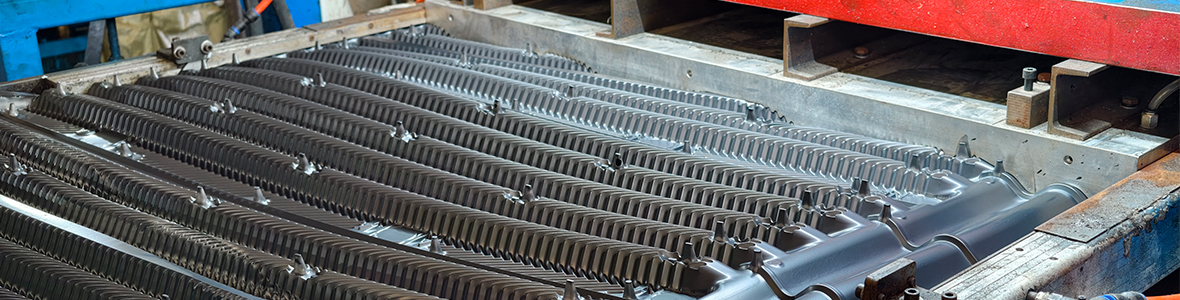
[Image 1: PP and PVC Cooling Tower Splash Fill Comparison]
PP Splash Fill vs. PVC Splash Fill at a Glance
Before getting into the details, here is the short version.
| Factor | PP Splash Fill | PVC Splash Fill |
| Material | Polypropylene | Polyvinyl chloride |
| Temperature capability | Generally higher | Generally lower |
| Chemical resistance | Very good in many applications | Good, depending on chemistry |
| Fouling resistance | Excellent with open designs | Good with open designs |
| Weight | Lightweight | Lightweight |
| Cost | Often higher | Often more economical |
| Industrial applications | Excellent | Good to excellent |
| High-temperature applications | Strong choice | More limited |
| Customization | Available | Widely available |
| Maintenance | Generally practical | Generally practical |
| Best suited for | Demanding industrial conditions | Cost-effective general applications |
This table is only a starting point.
The actual choice should be based on your tower design, water temperature, water chemistry, suspended solids, and thermal requirements.
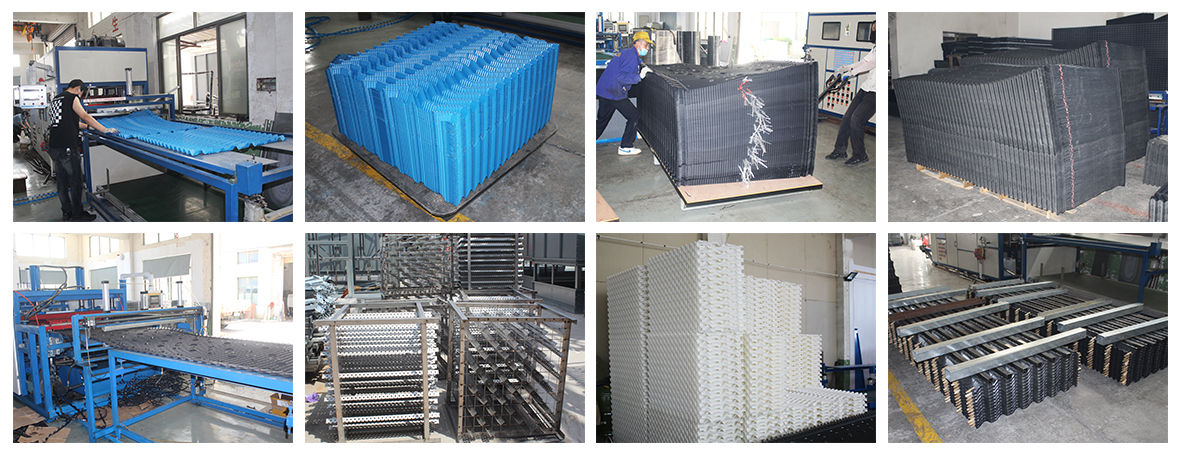
What Is Cooling Tower Splash Fill?
Cooling tower splash fill is an internal component designed to improve the contact between circulating water and air.
The basic idea is simple.
Hot water enters the cooling tower and is distributed over the fill. As the water falls downward, the splash fill repeatedly interrupts and redirects the water flow.
Instead of allowing the water to fall as one continuous stream, the fill breaks it into smaller droplets and spreads it over a larger effective area.
At the same time, air passes through the fill.
The increased air-water contact promotes evaporation, which is the main mechanism responsible for cooling in an evaporative cooling tower.
How Splash Fill Works
Imagine dropping a bucket of water onto a smooth floor.
Most of the water stays together and flows away quickly.
Now imagine dropping the same amount of water onto a pile of small obstacles.
The water breaks apart, changes direction, and spreads across a much larger area.
That is essentially what splash fill does inside a cooling tower.
The fill creates repeated opportunities for water breakup.
This increases the effective contact between air and water without requiring the extremely narrow channels associated with some film-fill designs.
Why Material Selection Matters
If splash fill were simply a structural plastic product, material selection would be easy.
But it is not.
The fill operates continuously inside a wet, chemically active, mechanically demanding environment.
Depending on the cooling tower, the fill may experience:
High water temperatures
Continuous wetting
Chemical treatment
Biological growth
Suspended solids
UV exposure
Mechanical impact
Thermal cycling
Cleaning operations
This is why PP and PVC should not be treated as identical materials.
What Is PP Splash Fill?
PP splash fill is cooling tower splash fill manufactured from polypropylene.
Polypropylene is a thermoplastic polymer widely used in industrial equipment and components because of its combination of lightweight construction, chemical resistance, and useful temperature performance.
In cooling tower applications, PP can be formed into open grids, bars, modules, and other splash structures.
The exact geometry can vary depending on the tower design and application.
PP splash fill is especially attractive for industrial users who need a robust open structure and are dealing with challenging operating conditions.
Key Characteristics of Polypropylene
Polypropylene has several characteristics that make it suitable for cooling tower applications.
It is lightweight.
It has good resistance to moisture.
It provides useful chemical resistance.
It can be molded or formed into complex geometries.
It can tolerate relatively demanding temperatures when the correct PP formulation and product design are used.
That combination makes PP an attractive material for industrial cooling tower fill.
PP Temperature Resistance
This is one of the biggest advantages often associated with PP.
Compared with standard PVC cooling tower fill, PP can generally tolerate higher operating temperatures.
That can be important in industrial process cooling.
Imagine a cooling tower receiving water that is significantly hotter than typical HVAC cooling water. In that situation, material selection becomes much more important.
PVC may still work in some applications, but the allowable temperature range must be checked carefully.
PP may provide a wider operating margin.
However, buyers should always confirm the actual temperature rating of the specific product rather than assuming every PP product has the same capability.
PP Chemical Resistance
PP also offers good resistance to many chemical environments.
This makes it attractive for industrial facilities where cooling water may contain treatment chemicals or process contaminants.
Of course, “chemical resistant” does not mean “resistant to everything.”
Chemical compatibility depends on the substance, concentration, temperature, exposure time, and PP formulation.
A professional supplier should therefore review your actual operating conditions before recommending a material.
What Is PVC Splash Fill?
PVC splash fill is manufactured from polyvinyl chloride.
PVC has been widely used in cooling tower components for decades.
It is popular because it is relatively economical, easy to process, and suitable for a wide range of conventional cooling applications.
PVC cooling tower fill is especially common in commercial and industrial systems operating within moderate temperature ranges.
If your water quality is good and your operating conditions are not especially demanding, PVC can be a very practical choice.
Key Characteristics of PVC
PVC provides several useful advantages.
It is economical.
It is widely available.
It can be manufactured into different cooling tower fill geometries.
It has good chemical resistance for many common applications.
It is familiar to cooling tower engineers and maintenance teams.
This makes PVC a proven material rather than a budget-only alternative.
PVC Cost Advantage
One of PVC's strongest advantages is cost.
For projects with hundreds or thousands of fill modules, material cost can have a significant impact on the initial project budget.
If your tower operates at moderate temperatures and has relatively clean water, choosing PVC may provide an excellent balance between performance and price.
Why spend more on a higher-temperature material if your cooling tower never needs that capability?
That is where PVC can make perfect sense.
PVC Application Limitations
The main limitation is that PVC is generally less suitable than PP for certain higher-temperature applications.
PVC can also become less attractive when the cooling tower operates under particularly demanding industrial conditions.
The key is not to assume that PVC is “bad.”
It is simply a material with a different operating window.
PP vs. PVC Splash Fill: Performance Comparison
Now we reach the question most buyers actually care about.
Which performs better?
The answer depends on what “better” means for your project.
Temperature Resistance
For high-temperature applications, PP generally has the advantage.
This is particularly important in process cooling systems where hot water enters the tower.
Higher-temperature water can increase the thermal and mechanical demands placed on the fill.
PP is therefore often considered for industrial cooling towers where operating temperatures exceed the comfortable range of standard PVC products.
For conventional HVAC cooling towers, however, the temperature difference may not be important enough to justify selecting PP solely for this reason.
Chemical Resistance
Both PP and PVC offer useful chemical resistance.
However, the specific chemical environment matters more than the material name.
For example, cooling water treated with different chemicals can interact differently with plastic materials.
The correct approach is to provide the supplier with:
Chemical names
Concentrations
Water temperature
Exposure conditions
Cleaning chemicals
The supplier can then evaluate material compatibility.

Fouling and Clogging Resistance
Here is an important point.
Fouling resistance depends heavily on the fill design, not only the material.
An open PP splash grid and an open PVC splash grid may both provide good resistance to blockage.
The advantage of splash fill comes from its open structure.
Compared with tightly spaced film-fill channels, splash fill can provide larger passages for water and air.
This can make it particularly useful for water containing suspended solids.
Mechanical Strength and Durability
Both PP and PVC can be engineered into durable cooling tower components.
However, the actual strength depends on:
Material formulation
Product thickness
Fill geometry
Manufacturing process
Operating temperature
Support structure
PP can have an advantage in some demanding industrial environments, particularly where higher temperature and impact resistance are important.
But a well-designed PVC fill product can still provide long service in the right application.
Weight and Installation
Both materials are relatively lightweight compared with many traditional industrial materials.
That makes plastic splash fill easy to transport and install.
For large retrofit projects, this can be a major benefit.
Workers can move fill modules through limited access points without dealing with extremely heavy components.
Service Life
There is no single service-life number that applies to every PP or PVC splash-fill product.
Service life depends on the operating environment.
Water chemistry matters.
Temperature matters.
UV exposure matters.
Mechanical loading matters.
Cleaning practices matter.
Water treatment matters.
A high-quality PP fill operating under suitable conditions can provide a long service life.
A properly selected PVC fill can also last for many years.
The best way to extend service life is not simply to choose the “strongest” plastic.
It is to choose the correct material and maintain the cooling tower properly.
PP Splash Fill vs. PVC Splash Fill for Different Water Conditions
Water quality can completely change the answer.
Clean Industrial Water
If your cooling water is relatively clean and well treated, PVC splash fill can be a cost-effective option.
There may be little reason to pay for additional material capability that your system does not need.
PP can still be selected if other factors justify it, but PVC may provide better initial economics.
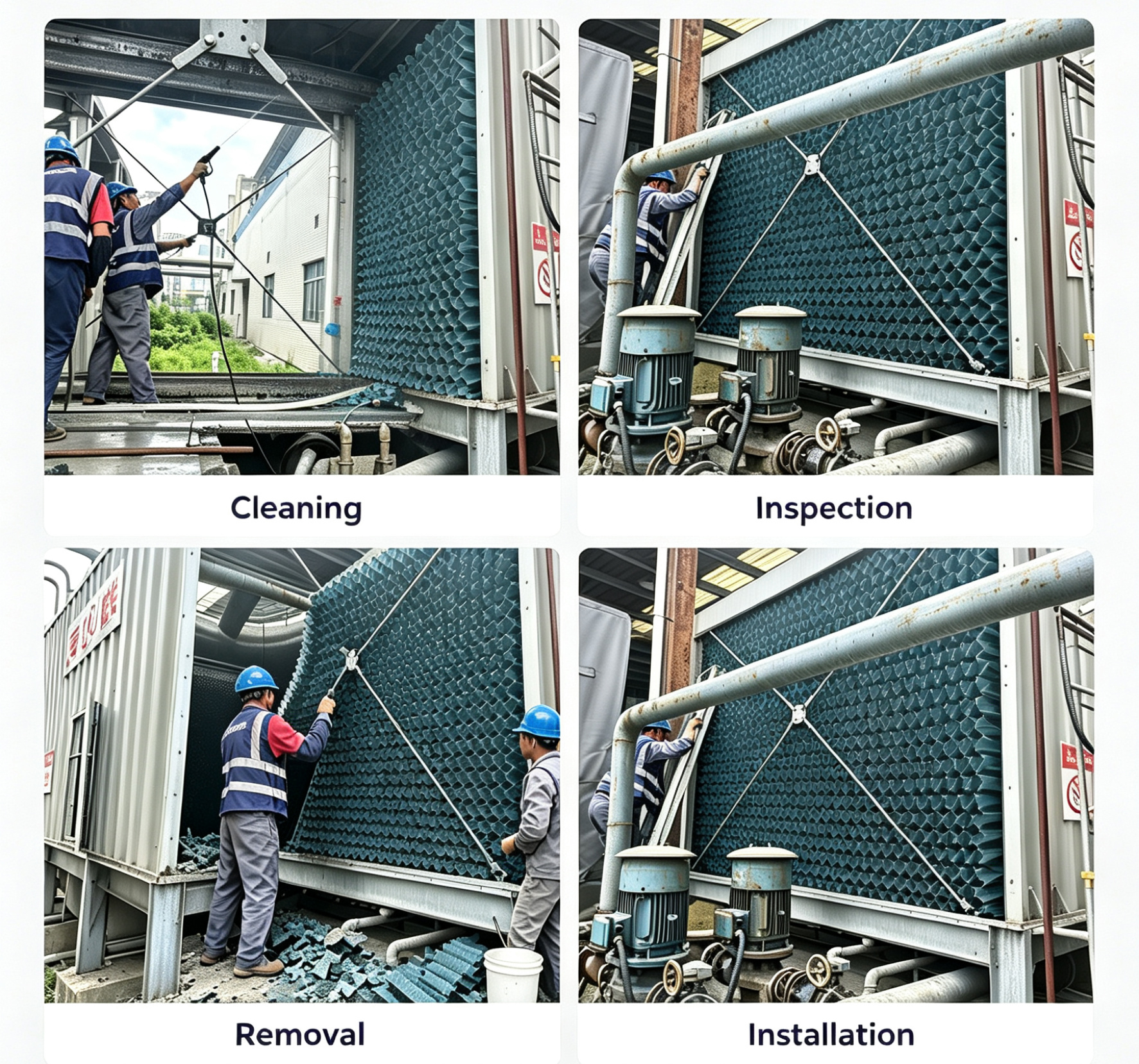
Water With Suspended Solids
If your cooling water contains significant suspended solids, splash fill is already an interesting choice because of its open structure.
In this situation, the difference between PP and PVC may become less important than the actual fill geometry.
However, PP can be attractive if the industrial environment also involves higher temperature or more demanding chemical conditions.
High-Temperature Process Water
This is where PP becomes especially interesting.
For hot industrial process water, PP can provide a larger operating margin than standard PVC.
If the water temperature is close to the upper operating range of PVC, selecting PP may provide additional protection against material degradation.
Always confirm the manufacturer's recommended operating temperature for the exact product.
PP vs. PVC Splash Fill: Cost Comparison
Price is important.
But looking only at the purchase price can be misleading.
Purchase Price
PVC will often be the more economical option for the initial purchase.
This makes it attractive for:
PP can have a higher initial cost because the material and product requirements may be more demanding.
Total Cost of Ownership
Now consider the bigger picture.
What happens if the cheaper fill needs to be replaced sooner?
What happens if unsuitable material begins to deform under high temperature?
What happens if poor material selection increases maintenance requirements?
A product with a higher purchase price can sometimes deliver a lower lifecycle cost.
That is why professional buyers should compare total cost of ownership, not just the initial quotation.
Which Is Better for Counterflow Cooling Towers?
Both PP and PVC splash fill can be used in counterflow cooling towers when the product is designed for the application.
The choice depends on operating conditions.
For standard-temperature applications with relatively clean water, PVC may be sufficient.
For demanding industrial applications, especially those involving higher temperatures or aggressive operating conditions, PP may be the stronger choice.
The fill height, water loading, airflow, support structure, and thermal requirements must also be considered.
Which Is Better for Crossflow Cooling Towers?
The same principle applies to crossflow cooling towers.
Both materials can be used when the fill configuration is appropriate.
Crossflow towers require careful consideration of fill orientation because air moves horizontally through the fill while water falls vertically.
If you are replacing existing fill, measure the current product before ordering.
The manufacturer should confirm:
How to Choose Between PP and PVC Splash Fill
If you are still unsure which material to choose, use this simple decision process.
Check Operating Temperature
Start with temperature.
If your tower operates at moderate temperatures, PVC may be sufficient.
If your process water is significantly hotter, PP deserves serious consideration.
Evaluate Water Quality
Next, examine the water.
Is it clean?
Does it contain suspended solids?
Does it contain biological material?
Does scaling occur frequently?
If the water is difficult to control, splash fill with an open structure can be advantageous.
Consider Chemical Exposure
Identify all chemicals present in the circulating water.
Do not forget treatment chemicals and cleaning chemicals.
Then ask the supplier to confirm material compatibility.
Compare Maintenance Requirements
Consider how often the tower is inspected and cleaned.
If maintenance access is difficult, choosing a fill that is more tolerant of your water conditions may be worth the additional initial investment.
Check Existing Fill Dimensions
For replacement projects, dimensions are critical.
Send photographs and measurements to the manufacturer.
Do not assume that a fill advertised as “universal” will fit your tower perfectly.
Why Buy PP or PVC Splash Fill Directly From a China Factory?
Buying directly from a China manufacturer can provide several advantages.
Instead of working through multiple trading layers, you can communicate directly with the production and technical team.
That becomes particularly useful when you need customized dimensions.
Customization
Cooling towers are not all built the same.
An experienced manufacturer can often produce fill according to:
This is especially useful for retrofit and replacement projects.
Technical Support
A good supplier should not simply ask, “How many pieces do you need?”
They should also ask:
What tower type?
What water temperature?
What water quality?
What fill dimensions?
What flow rate?
What application?
Those questions indicate that the supplier is trying to match the product to the project.
Bulk Supply
For large cooling towers, fill requirements can be substantial.
Factory-direct purchasing can make sense when you need bulk quantities or ongoing replacement supply.
It can also simplify communication when you have multiple cooling towers or several projects requiring the same components.
Power Tower Cooling Technology (Shaoxing) Co.,Ltd

Power Tower Cooling Technology (Shaoxing) Co.,Ltd is a China-based cooling tower component manufacturer and supplier serving industrial and commercial cooling applications.
The company provides cooling tower fill products and related components through coolingtowerpart.com.
Its product range covers different cooling tower fill requirements, including PP cooling tower fill, splash fill, PVC film fill, crossflow fill, counterflow fill, drift eliminators, spray nozzles, and replacement components.
For customers comparing PP and PVC, the advantage is that they can discuss different material options based on the actual cooling tower application.
Cooling Tower Fill Solutions
Instead of treating PP or PVC as a universal answer, the selection can be based on project conditions.
For example:
PP splash fill may be considered for higher-temperature industrial cooling, difficult water conditions, or applications where additional material capability is valuable.
PVC splash fill may be attractive for moderate-temperature applications where cost efficiency is a major priority.
The goal is to match the material to the application.
Replacement and Retrofit Projects
Replacement projects often require more customization than new cooling tower projects.
The original fill may no longer be available.
The tower may have been modified.
The original manufacturer may no longer supply replacement parts.
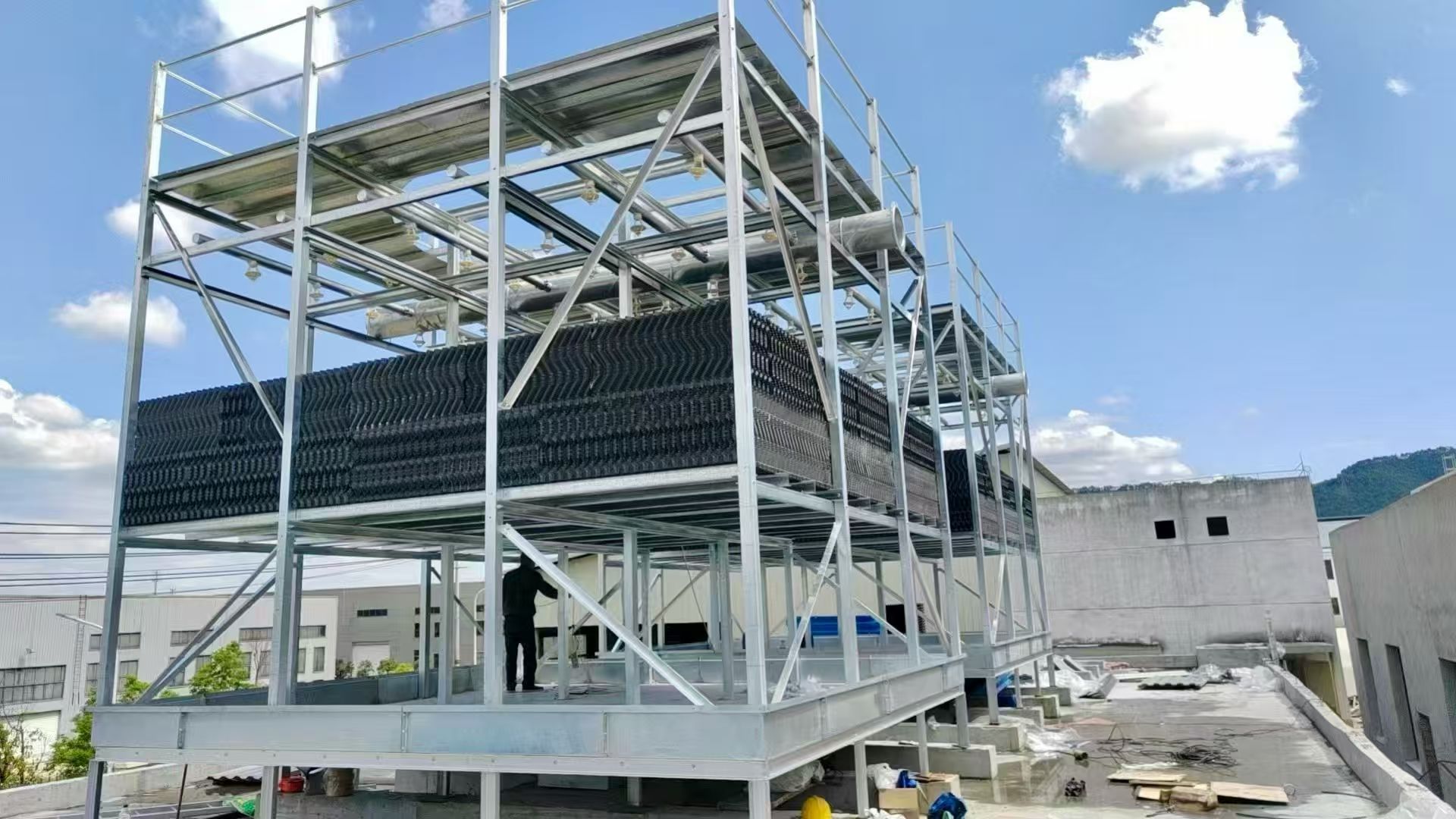
In these situations, Power Tower Cooling Technology can work from project information such as dimensions, photographs, drawings, and operating conditions to determine a suitable replacement solution.
Frequently Asked Questions
Is PP better than PVC for cooling tower splash fill?
PP is not automatically better in every situation.
PP generally becomes more attractive for demanding industrial applications, particularly when higher temperature resistance or specific chemical resistance is important.
PVC can be an excellent choice for moderate-temperature applications where cost efficiency is important.
Is PP more expensive than PVC?
PP splash fill can have a higher initial purchase price than PVC.
However, the total cost should include service life, maintenance, operating conditions, and replacement frequency.
For demanding applications, the additional investment in PP may provide better long-term value.
Which material lasts longer?
There is no universal answer.
Both PP and PVC can provide long service when properly selected and maintained.
Operating temperature, water chemistry, UV exposure, mechanical loading, and maintenance all influence service life.
Can PP splash fill replace PVC splash fill?
In some applications, yes.
However, it should not be treated as a simple material swap.
The replacement needs to match the tower's dimensions, support system, water loading, airflow, and thermal requirements.
A manufacturer should review the application before recommending the replacement.
Conclusion: PP or PVC Splash Fill—Which Should You Choose?
So, PP splash fill vs. PVC splash fill: which is better?
The honest answer is: it depends on your cooling tower.
If your application involves moderate temperatures, relatively clean water, and a strong focus on initial cost, PVC splash fill can be a practical and economical choice.
If you are operating an industrial cooling tower with higher water temperatures, demanding operating conditions, or a need for additional material capability, PP splash fill may be the better investment.
And if suspended solids are your biggest concern, remember that fill geometry matters just as much as the plastic material. An open splash-fill design can provide significant practical advantages over tightly spaced film-fill structures.
Before you place an order, look beyond the product name.
Check the water temperature, water quality, chemical exposure, cooling tower type, fill dimensions, airflow, water loading, and maintenance requirements.
For buyers looking for PP splash fill or PVC cooling tower fill from China, Power Tower Cooling Technology (Shaoxing) Co.,Ltd provides factory-direct cooling tower fill solutions through coolingtowerpart.com.
The best cooling tower fill is not necessarily the most expensive one.
It is the one that fits your tower, matches your operating conditions, performs reliably, and delivers the best value over its working life.


