You are here: Home » Blog » Will a tefc motor work in a cooling tower
Will a tefc motor work in a cooling tower
Views: 0 Author: Site Editor Publish Time: 2025-11-27 Origin: Site
Will a tefc motor work in a cooling tower?
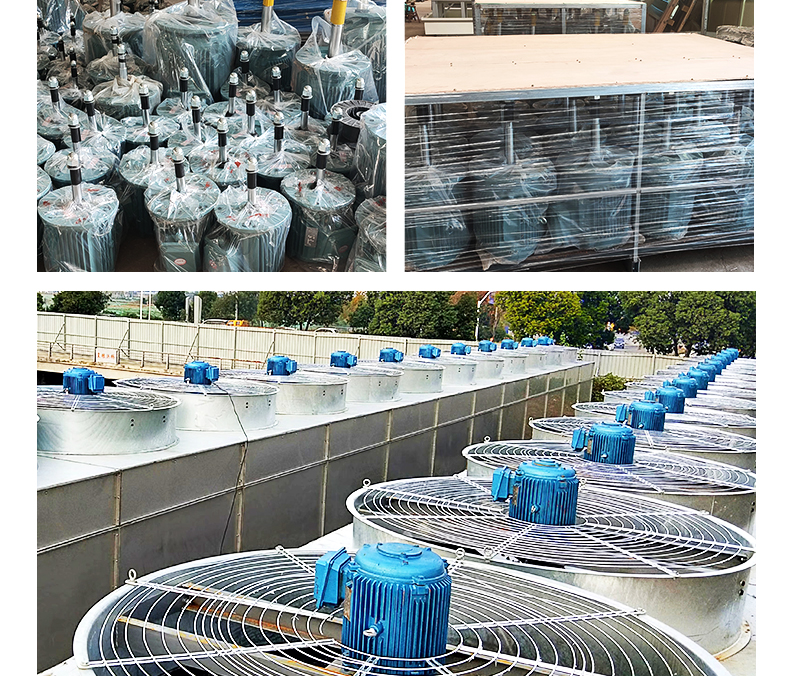
In industrial and commercial facilities, cooling towers are widely used in air conditioning systems, refrigeration systems, and process cooling processes. The type of motor that drives the cooling tower fan is crucial for the reliability and operational lifespan of the equipment. Common forms of motor protection include TEFC (Completely Enclosed Fan Cooled) and ODP (Open Drip Proof). So, can TEFC motors be used for cooling towers? The answer is: yes, but it depends on the environment and design.
TEFC motor refers to a completely enclosed fan cooled motor. This type of motor is a common type of industrial motor, and its design features enable it to adapt to various harsh environments.
Main Features of TEFC motors
1. Fully enclosed casing: The motor casing is completely enclosed, preventing external air, dust, moisture, and other pollutants from freely entering the interior of the motor, thereby extending its service life and improving efficiency.
2. External fan cooling: An external fan is installed on the motor shaft, which forces external air to flow through the heat sink outside the motor frame during motor operation, taking away heat and achieving cooling.
3. High protection level: The typical protection level of TEFC motors is usually IP44 to IP54 (some models even higher, such as IP66 or IP69K), with good dust resistance and moderate waterproof ability.
4. Sturdy Structure: Typically made of cast iron casing, the structure is sturdy and durable, capable of withstanding harsh operating conditions
Challenges of Cooling Tower Environment
Cooling towers typically have the following operating environment characteristics:
1.Extremely high humidity:
The humid and hot air approaching saturation continues to affect the equipment.
2.Strong corrosiveness:
Often accompanied by chemically treated circulating water vapor (such as chlorine containing, acidic and alkaline components, etc.).
3.Water mist and dripping:
Water mist, large amounts of flying water, or wind blown water droplets may directly come into contact with the motor.
4.Special ventilation conditions:
Cooling towers are often located in wet air channels with complex airflow directions.
Applicability of EFC motor in cooling tower
1. Can be used normally under certain cooling tower conditions
TEFC motors have good sealing performance and a certain adaptability to humid environments. If the cooling tower is equipped with motors for the drying fan area or if the motors are not directly exposed to humid and hot airflow, TEFC is usually capable of handling it.
Applicable scenarios include:
1) The motor is located outside the tower (belt drive external installation)
2) The motor has an additional waterproof cover for protection
3) The cooling tower is of cross flow type, and the motor installation area is relatively dry
2. TEFC may not be sufficient when directly exposed to humid and hot areas
If the motor is installed inside the air duct or in a humid and hot steam zone (commonly seen in direct drive cooling towers), the disadvantages of TEFC will become apparent:
1) The heat sink of the shell is easily covered by scale or corrosive substances, which affects heat dissipation
2) External fan sucks in humid and hot air, reducing cooling efficiency
3) Moisture infiltration into bearings or sealing parts leads to shortened lifespan
4) Salt spray and chemical gas accelerated motor casing corrosion
How to choose a motor suitable for cooling towers
When choosing a motor, the following factors can be considered:
1. Installation location - is it directly exposed to humid and hot air flow?
2. Environmental corrosion level - Is there any chemical agent, salt spray, or high humidity present?
3. Cooling method - direct drive or belt drive?
4. Maintenance conditions - are they easy to clean, inspect, and protect?
5. Manufacturer's recommendation - Does the cooling tower manufacturer specify a special type of motor?