When a cooling tower starts losing performance, most people immediately think about the fan, motor, pump, or water treatment system.
But what about the fill?
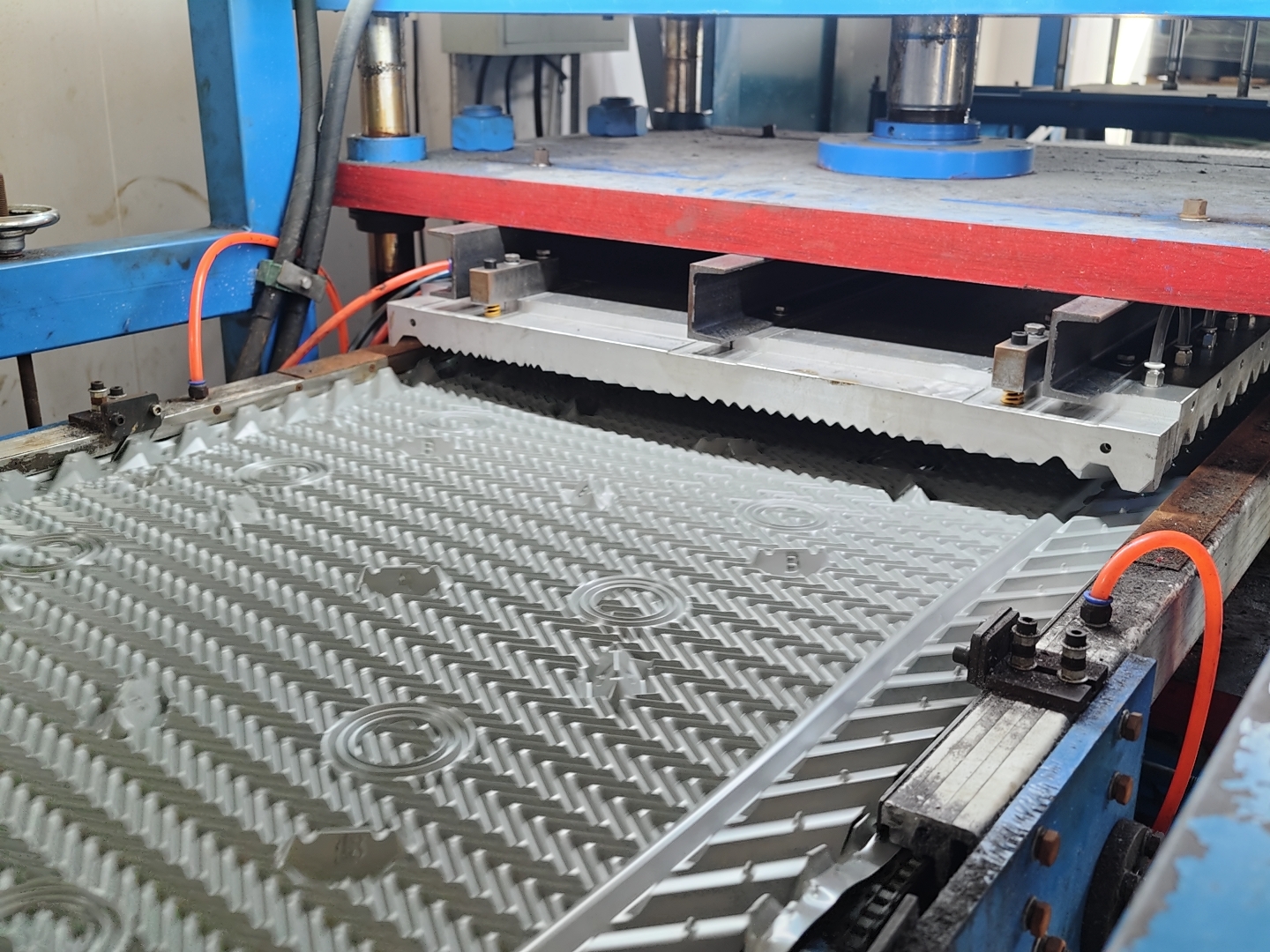
The PVC filling in a cooling tower is one of the most important components inside a wet cooling tower. It creates a large contact area between hot water and moving air, allowing evaporation and heat transfer to take place more effectively.
If the fill becomes clogged, scaled, cracked, brittle, or deformed, the cooling tower may no longer deliver its original thermal performance. In some cases, replacing the fill can be a much more practical solution than replacing the entire cooling tower.
So, where should you buy PVC cooling tower fill?
In this guide, we'll introduce five PVC cooling tower fill suppliers worth knowing. The list starts with Power Tower Cooling Technology (Shaoxing) Co.,Ltd, followed by Brentwood Industries, SPX Cooling Technologies/Marley, Baltimore Aircoil Company (BAC), and EVAPCO.
We'll also explain how PVC cooling tower fill works, what makes a good supplier, how to choose the right fill, and when replacement may be necessary.
What Is PVC Filling in a Cooling Tower?
PVC cooling tower fill, also called cooling tower fill media, cooling tower packing, or cooling tower filler, is the heat-transfer material installed inside a wet cooling tower.
Its basic purpose is simple: increase the contact area between water and air.
Instead of allowing hot water to fall through the tower as large streams, the fill spreads the water into thin films or breaks it into smaller droplets. At the same time, air passes through the fill.
This creates more opportunities for evaporation.
And evaporation is what makes a wet cooling tower so effective at rejecting heat.
Think of the fill as the engine room of the cooling tower. You may not see it from outside, but it is doing a huge amount of the actual heat-transfer work.
How Does PVC Cooling Tower Fill Work?
In a typical film-fill cooling tower, warm water enters the distribution system and flows downward over corrugated PVC sheets.
Air moves through the fill at the same time.
The corrugated surfaces spread the water and increase the air-water contact area. As air passes across the wet surfaces, some water evaporates. The energy required for evaporation comes from the circulating water, which reduces its temperature.
This process sounds straightforward, but the geometry of the fill matters enormously.
The spacing, flute pattern, sheet thickness, height, and configuration can all affect:
That's why replacing old cooling tower fill isn't simply a matter of buying any PVC sheets that look similar.
Why Is PVC Commonly Used for Cooling Tower Fill?
PVC has become a popular material for cooling tower fill for several practical reasons.
First, it can be thermoformed into complex shapes. This makes it possible to create corrugated structures with a large effective surface area.
Second, PVC is relatively lightweight and corrosion-resistant compared with many traditional materials.
Third, manufacturers can produce different fill geometries to suit different cooling tower designs and water-quality conditions.
PVC film fill is especially common in applications where the circulating water is reasonably clean and high thermal efficiency is important.
However, PVC isn't automatically the best solution for every cooling tower.
If water contains high concentrations of suspended solids, dirt, biological material, or process contaminants, a more open splash-fill design may sometimes be a better choice.
The important question isn't simply, “Is PVC good?”
It's:
“Is this PVC fill design right for my cooling tower?”
What Makes a Good PVC Cooling Tower Fill Supplier?
Choosing a supplier involves more than comparing prices.
A cooling tower fill is a performance component. If you install the wrong product, you may experience poor cooling performance, increased pressure drop, fouling, or premature failure.
A reliable supplier should understand the relationship between the fill and the rest of the cooling tower.
Here are several factors worth considering.
Material Quality and Durability
The first thing to check is the material itself.
Ask about PVC grade, sheet thickness, operating temperature, chemical compatibility, and mechanical strength.
Cooling tower fill operates in a demanding environment. It is exposed continuously to water, air, heat, chemicals, microorganisms, and sometimes sunlight.
Poor-quality material can become brittle or distorted over time.
A good supplier should be able to provide clear technical information rather than simply saying that the product is “high quality.”
Thermal Performance
Not all PVC fill designs provide the same thermal performance.
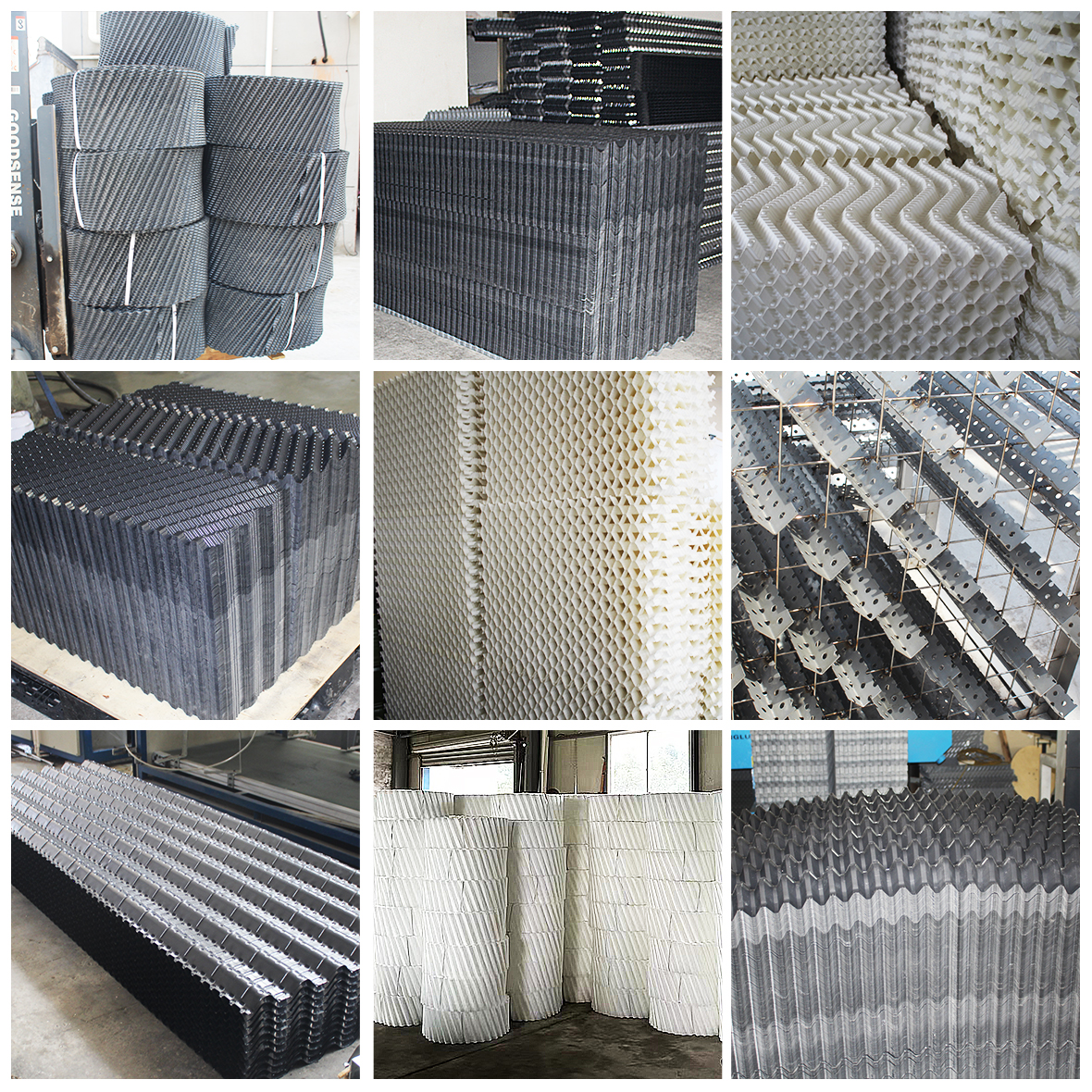
Cross-fluted, herringbone, offset-fluted, vertical-fluted, and hybrid-fluted designs can have different characteristics.
Brentwood, for example, offers several film-fill designs intended to balance thermal performance and fouling resistance.
The best design depends on your actual tower conditions.
Compatibility and Dimensions
This is particularly important for replacement projects.
Before purchasing, confirm:
Fill height
Fill width
Fill length
Sheet thickness
Flute spacing
Pack configuration
Support structure
Water flow direction
Airflow direction
A product can be excellent and still be completely wrong for your tower if it doesn't fit.
Water Quality
Water quality is another major consideration.
Clean water may allow you to use high-efficiency film fill with relatively narrow passages.
But if the water contains large amounts of suspended solids, the same design may foul quickly.
In heavily contaminated applications, splash fill or more fouling-resistant film-fill designs may be more appropriate.
Top 5 PVC Filling Cooling Tower Suppliers
Now let's look at five suppliers that deserve attention when you're researching PVC filling for cooling towers.
1. Power Tower Cooling Technology (Shaoxing) Co.,Ltd
Power Tower Cooling Technology (Shaoxing) Co.,Ltd is the first supplier on our list and is particularly relevant for buyers looking for cooling tower fill and replacement components.
The company focuses on cooling tower parts and related replacement solutions, making it an option for customers who don't necessarily need to purchase an entirely new cooling tower.
Why does that matter?
Because many cooling towers don't need to be replaced when their fill reaches the end of its service life.
The tower structure, fan, motor, pump, and water distribution system may still be perfectly usable. The problem may simply be that the existing fill has become clogged, scaled, damaged, or brittle.
In that situation, replacing the fill can breathe new life into the system.
For buyers researching PVC cooling tower fill, cooling tower filler, PVC fill media, or cooling tower fill replacement, Power Tower is therefore a supplier worth considering.
Why Choose Power Tower for PVC Cooling Tower Fill?
One of the main advantages of working with a cooling tower component supplier is the ability to focus directly on the part that needs replacement.
For example, if your existing fill has been damaged but the tower casing is still in good condition, you may not want to spend money on a completely new cooling tower.
You need the right fill.
That's where supplier experience becomes important.
A replacement fill should be selected based on the existing tower's dimensions, configuration, water loading, airflow, thermal requirements, and water quality.
The goal isn't simply to make the fill fit physically.
The goal is to make it work properly inside the tower.
PVC Fill Solutions for Replacement Projects
Cooling tower fill can deteriorate for many reasons.
Scale can build up on the surfaces.
Algae and biological growth can block passages.
High temperatures and chemicals can gradually affect the material.
Mechanical damage can cause sheets to sag or collapse.
When these problems become serious, water and air can no longer pass through the fill as designed.
Replacing the fill can restore the effective heat-transfer surface and improve the tower's overall operating condition.
For replacement projects, buyers should provide the supplier with the tower model, existing fill dimensions, operating conditions, and photos or drawings whenever possible.
This makes product matching much easier.
2. Brentwood Industries
Brentwood Industries is a well-known supplier of cooling tower components and engineered fill products.
Its cooling tower portfolio includes film fills, trickle fills, splash fills, drift eliminators, inlet louvers, nozzles, and other components. Brentwood states that its film-fill range includes designs for different thermal-performance and fouling-resistance requirements.
Brentwood PVC Film Fill Solutions
One interesting aspect of Brentwood's product range is its variety of film-fill geometries.
Its portfolio includes cross-fluted, herringbone, offset-fluted, vertical-fluted, and hybrid-fluted designs.
Why so many designs?
Because cooling tower applications aren't identical.
A tower operating with relatively clean water may prioritize maximum thermal efficiency.
Another tower operating with poorer water quality may need greater fouling resistance.
Brentwood also provides splash-fill solutions for applications with high suspended solids or contaminated water.
This illustrates an important point for buyers:
The highest-efficiency fill on paper isn't always the best fill in real-world operation.
3. SPX Cooling Technologies / Marley
SPX Cooling Technologies, through the Marley brand, is another major name in cooling tower technology.
Marley has extensive experience with cooling tower systems and replacement components.
SPX currently promotes Marley engineered components for replacement work on both Marley and other OEM cooling towers. Its MBX fill, for example, is described as a bottom-supported PVC pack fill with integral louvers and drift eliminators.
Marley Cooling Tower Fill
Replacement fill becomes particularly important as cooling towers age.
SPX has documented replacement projects where PVC heat-transfer fill became brittle, sagged, and experienced biological fouling. The solution involved Marley replacement fill packs that restored tower operation.
SPX also states that its manufacturing capabilities include PVC fill, fill packs, and extruded bars.
For owners of Marley equipment, this OEM connection can be valuable.
However, replacement buyers should still verify the exact tower model and fill dimensions before ordering.
4. Baltimore Aircoil Company (BAC)
Baltimore Aircoil Company (BAC) is another established manufacturer in the evaporative cooling industry.
BAC provides cooling equipment for commercial, industrial, and process applications, and its equipment portfolio includes cooling tower technologies and replacement components.
BAC Cooling Tower Fill Applications
When purchasing fill for a BAC tower, compatibility is critical.
The fill must work with the tower's water distribution arrangement, support structure, airflow pattern, and thermal requirements.
This is especially important for older installations.
A tower may have been modified during previous maintenance work, meaning the fill installed today may not necessarily be identical to the original configuration.
Before ordering replacement PVC fill, check:
Original tower model
Existing fill dimensions
Fill orientation
Support method
Water flow
Operating temperatures
Water quality
These details can help prevent an expensive purchasing mistake.
5. EVAPCO
EVAPCO is another major name in evaporative cooling equipment.
The company provides cooling towers, evaporative condensers, closed-circuit coolers, and related components.
Its documentation identifies PVC fill media as part of its cooling equipment solutions. EVAPCO's materials describe PVC components as durable and corrosion-resistant for cooling tower environments.
EVAPCO PVC Fill Solutions
One advantage of sourcing from an OEM such as EVAPCO is the connection between the replacement component and the original equipment design.
For an existing EVAPCO tower, the tower model and original configuration can help determine the appropriate replacement fill.
EVAPCO also identifies PVC fill as a component that increases surface area for water-air contact and improves heat transfer.
For buyers, the takeaway is simple:
Always match replacement fill to the actual tower—not just the brand name.
PVC Film Fill vs. Splash Fill: Which Is Better?
This is one of the most common questions buyers ask.
The answer depends on the application.
PVC Film Fill
Film fill spreads water across thin surfaces.
Its major advantage is high surface-area utilization, which can support strong thermal performance.
It is often suitable for applications where the circulating water is relatively clean.
However, narrow passages can be vulnerable to fouling.
Splash Fill
Splash fill breaks water into droplets as it falls through the tower.
The design typically provides larger and more open passages.
This can make splash fill attractive for applications with high suspended solids, dust, dirt, or process contamination.
Brentwood specifically describes splash-bar fill as a solution for compromised water and environments where film-type fill could be harmed by contaminants.
So which one wins?
There is no universal winner.
Clean water + high thermal efficiency: film fill may be attractive.
Poor water quality + high fouling risk: splash fill may be more suitable.
PVC vs. PP Cooling Tower Fill
PVC isn't the only plastic used in cooling tower fill.
Polypropylene, or PP, is also used in certain applications.
Both materials can provide useful performance, but the choice depends on operating conditions.
PVC is widely used for film-fill applications because it can be formed into complex corrugated structures and has a long history in evaporative cooling.
PP may be selected for certain temperature or chemical-resistance requirements.
Instead of asking, “Which material is better?”
Ask:
“Which material is better for my water chemistry, temperature, and tower design?”
That question will lead you toward a much better decision.
How to Choose the Right PVC Cooling Tower Fill
Buying cooling tower fill doesn't have to be complicated.
Follow a logical process.
1. Identify Your Cooling Tower Type
First determine whether your tower is:
Counterflow
Crossflow
Induced draft
Forced draft
Mechanical draft
Industrial field-erected
Factory-assembled
The fill design and installation method can vary depending on tower configuration.
2. Check Your Water Quality
This step is often overlooked.
Ask yourself:
Is the water clean?
Does it contain suspended solids?
Is scale a problem?
Is biological growth common?
Are process contaminants entering the water loop?
If water quality is poor, fouling resistance should become a major part of your purchasing decision.
3. Measure the Existing Fill
Don't guess.
Measure the existing fill carefully.
Record:
Length
Width
Height
Sheet thickness
Flute spacing
Pack configuration
Support dimensions
Even if the supplier says a product is “universal,” provide your actual dimensions.
4. Check Thermal Requirements
A fill's job is to support heat transfer.
Therefore, you should know the tower's basic operating conditions.
These may include:
A supplier can use this information to determine whether the proposed fill is appropriate.
When Should PVC Cooling Tower Fill Be Replaced?
There is no single replacement interval that works for every cooling tower.
Some systems can operate for many years with proper water treatment and maintenance.
Others may require replacement much earlier.
Look for warning signs such as:
If the fill looks like it has survived a war zone, it's probably time for an inspection.
But appearance isn't everything.
A thermal-performance problem can sometimes appear before severe physical damage becomes obvious.
Regular inspection is therefore important.
Common Mistakes When Buying PVC Cooling Tower Fill
Choosing Only by Price
The cheapest fill isn't always the lowest-cost solution.
If low-quality fill fails early, you may end up paying twice.
A slightly higher initial price can make sense if the product provides better durability, thermal performance, or compatibility.
Buying Without Measuring
This is one of the easiest mistakes to avoid.
Measure first.
Order second.
Ignoring Water Quality
A fill designed for clean water may not perform well in a heavily contaminated system.
Water quality should always influence fill selection.
Choosing by Appearance
Two fill packs can look almost identical while having different thermal characteristics.
Don't judge cooling tower fill by appearance alone.
Ask for technical specifications.
Replacing Fill Without Checking the Rest of the Tower
Sometimes fill is the problem.
Sometimes it isn't.
Before replacement, inspect the nozzles, water distribution system, drift eliminators, fan, motor, basin, and structural supports as well.
The fill is an important piece of the puzzle—but it isn't the whole puzzle.
PVC Cooling Tower Fill Supplier Comparison
| Supplier | Main Strength | Suitable Applications |
| Power Tower Cooling Technology (Shaoxing) Co.,Ltd | Cooling tower fill and replacement components | Replacement, aftermarket, industrial applications |
| Brentwood Industries | Multiple engineered fill designs | Industrial, HVAC, power generation, process cooling |
| SPX Cooling Technologies / Marley | OEM and engineered replacement components | Marley and other OEM cooling towers |
| Baltimore Aircoil Company (BAC) | Integrated evaporative cooling systems | Commercial and industrial cooling |
| EVAPCO | OEM cooling equipment and PVC components | Cooling towers, fluid coolers, evaporative systems |
The five suppliers serve somewhat different purchasing needs.
If you're replacing fill in an existing tower, component compatibility and customization may be your biggest concerns.
If you're working with a major OEM tower, OEM support can be especially useful.
If you're dealing with challenging water quality, fill geometry and fouling resistance may matter more than brand recognition.
Why Cooling Tower Fill Quality Matters
It is tempting to think of cooling tower fill as nothing more than plastic sheets.
That would be a mistake.
The fill directly influences how effectively water and air interact.
If water runs through the tower too quickly without sufficient contact area, heat transfer suffers.
If the fill is too restrictive, pressure drop can increase and airflow can become a problem.
If the fill becomes clogged, both water and air movement can be affected.
In other words, the fill has to strike a balance.
More surface area isn't always better.
The best fill is the one that delivers the required thermal performance while remaining suitable for the tower's water quality and operating environment.
How to Buy PVC Filling for a Cooling Tower
Before requesting a quotation, prepare as much information as possible.
A good inquiry should include:
Cooling tower manufacturer
Tower model
Counterflow or crossflow configuration
Existing fill dimensions
Required quantity
Water flow rate
Hot-water temperature
Cold-water temperature
Water quality information
Photos of the existing fill
Drawings, if available
Delivery requirements
The more information you provide, the easier it becomes for the supplier to recommend the correct product.
This can save time, reduce back-and-forth communication, and lower the risk of ordering incompatible fill.
Frequently Asked Questions About PVC Cooling Tower Fill
Is PVC Good for Cooling Tower Fill?
Yes.
PVC is widely used for cooling tower fill because it can be formed into high-surface-area structures and is suitable for many evaporative cooling applications.
However, the correct PVC fill design depends on the tower configuration, water quality, operating temperature, and thermal requirements.
How Long Does PVC Cooling Tower Fill Last?
There is no universal service life.
Actual lifespan depends on water treatment, operating temperature, UV exposure, chemical conditions, fouling, mechanical stress, and maintenance.
Instead of replacing fill purely according to age, inspect its physical condition and monitor cooling performance.
Can PVC Fill Replace Existing Cooling Tower Fill?
In many cases, yes.
However, the replacement product must be compatible with the tower's dimensions, airflow arrangement, water distribution system, support structure, and thermal requirements.
A supplier should review these details before recommending a replacement.
Is PVC Film Fill Better Than Splash Fill?
Not always.
Film fill can provide excellent thermal performance in suitable water-quality conditions.
Splash fill can offer better fouling resistance when water contains significant solids or contaminants.
The right choice depends on the application.
Can I Replace Only the Cooling Tower Fill?
Yes, in many situations.
If the tower structure and other major components remain in good condition, replacing the fill can be an effective way to restore cooling performance without replacing the entire tower.
That is one reason replacement fill remains an important part of cooling tower maintenance.
Final Thoughts: Choosing the Right PVC Cooling Tower Fill Supplier
Choosing the right PVC filling cooling tower supplier is ultimately about more than finding a company that sells plastic fill.
You need a supplier that understands how fill interacts with water flow, airflow, heat transfer, water quality, and the physical design of the tower.
The five suppliers discussed in this guide offer different strengths.
Power Tower Cooling Technology (Shaoxing) Co.,Ltd is a strong option to consider when your focus is cooling tower fill, replacement media, and cooling tower components.
Brentwood Industries offers a broad range of engineered film, trickle, and splash-fill technologies designed for different applications and water-quality conditions.
SPX Cooling Technologies / Marley provides OEM and aftermarket cooling tower components, including PVC replacement fill solutions.
BAC provides integrated cooling equipment and OEM-oriented solutions.
EVAPCO offers evaporative cooling systems and PVC components designed for cooling applications.
But here's the most important point:
Don't choose cooling tower fill based on brand or price alone.
Match the fill to your tower.
Check the dimensions.
Understand your water quality.
Review the thermal requirements.
And make sure the supplier can provide the right configuration for your specific application.
When the right PVC cooling tower fill is correctly selected and properly maintained, it can help restore heat-transfer performance, improve cooling reliability, and extend the useful life of an existing cooling tower.
That's a much better outcome than replacing an entire cooling tower simply because its fill has reached the end of its service life.


