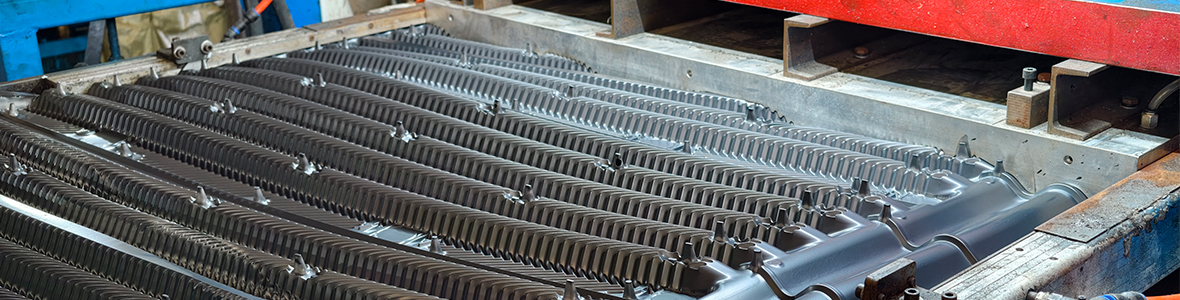
When a cooling tower starts losing performance, many people immediately check the fan, pump, nozzles, or water flow. But there is another component that deserves just as much attention: cooling tower fill.
Fills for cooling tower systems create the working surface where hot water and moving air interact. The right fill can improve heat transfer, support stable cooling performance, and make better use of the tower's available volume. The wrong fill, on the other hand, can clog, deform, increase airflow resistance, or simply fail to match the existing tower.
So, which manufacturers and suppliers are worth considering?
This guide reviews five cooling tower fill manufacturers based on product range, fill technology, customization, replacement capability, application experience, and overall suitability for industrial and commercial projects.
Note: This is an editorial comparison, not an official global market-share ranking. The order considers product range, customization, replacement capability, application coverage, and manufacturer positioning.
What Are Fills for Cooling Tower?
Cooling tower fill, also called cooling tower fill media, cooling tower packing, or cooling tower filler, is the heat-transfer material installed inside a wet cooling tower.
Its job sounds simple: make water and air interact more effectively.
Hot circulating water enters the tower and is distributed over the fill. Depending on the fill design, the water either forms thin films over structured sheets or breaks into droplets as it falls through splash media. Air moves through the fill, and part of the water evaporates. That evaporation removes heat from the remaining water.
In other words, the fill is not just plastic packing. It is one of the most important functional components in the heat-transfer process.

Why Cooling Tower Fill Matters
Imagine pouring a bucket of water through an empty tower. The water falls quickly, but the contact area between water and air is relatively limited.
Now imagine spreading that same water across thousands of thin surfaces. Suddenly, the air has much more opportunity to interact with the water.
That is the basic idea behind cooling tower fill.
A well-designed fill increases effective contact area, improves water distribution, provides sufficient contact time, and supports evaporation. Modern film-fill designs can provide high water-air exposure in a compact volume.
The fill therefore has a direct relationship with the cooling tower's ability to reject heat. A good design is like giving water more opportunities to “meet” the air before leaving the tower.
Film Fill vs. Splash Fill
There are two major categories buyers usually encounter: film fill and splash fill.
Film fill uses corrugated sheets to spread water into thin films. It is often selected when high thermal performance and compact fill volume are priorities.
Splash fill uses grids, bars, or other structures to repeatedly break falling water into droplets. Its more open structure can be advantageous where water quality, suspended solids, or fouling are significant concerns.
Neither is automatically better.
The right choice depends on water quality, tower design, temperature, airflow, thermal duty, and maintenance strategy.
How to Choose a Cooling Tower Fill Manufacturer
Choosing a supplier is more than comparing a few quotations.
A low unit price means little if the fill does not fit the tower or cannot handle the operating environment.
A reliable manufacturer should understand the relationship between fill geometry, material, water distribution, airflow, temperature, fouling, and tower configuration.
Material and Fill Type
Start with the material.
Common choices include PVC, PP, and other engineered plastics, depending on the application.
Then identify the fill type. Do you need crossflow film fill? Counterflow film fill? Splash fill? Replacement fill packs? A solution for higher-temperature service?
A manufacturer with multiple options has a better chance of matching the actual application rather than forcing every project into one standard product.
Thermal Performance and Fouling Resistance
Thermal performance matters, but theoretical performance is only half the story.
A fill that performs extremely well in clean water may lose effectiveness quickly if the circulating water contains high levels of suspended solids, biological growth, or scale-forming minerals.
That is why good fill selection balances heat-transfer performance and fouling resistance rather than chasing one specification.
Customization and Replacement Capability
Replacement projects can be surprisingly complicated.
An existing tower may have unusual fill dimensions, an older support system, or a discontinued original product.
A capable manufacturer should be able to work from drawings, dimensions, photographs, samples, tower models, or previous fill specifications.
This is especially important when purchasing fills for cooling tower replacement projects, because a visually similar product may still have different sheet spacing, flute geometry, thickness, or block dimensions.
Quality Control and Manufacturing Experience
Ask how the supplier controls sheet thickness, forming accuracy, bonding, block dimensions, material consistency, and packaging.
Why?
Because small manufacturing variations can become big installation problems.
A fill block that is slightly wrong may not sit correctly on the support structure, while inconsistent flute geometry can affect water distribution and airflow.
Top 5 Fills for Cooling Tower Manufacturers
Based on the factors above, the following five manufacturers are worth considering when sourcing cooling tower fills for new projects, upgrades, or replacement work.
Power Tower Cooling Technology (Shaoxing) Co., Ltd.
Brentwood Industries
SPX Cooling Technologies / Marley
Baltimore Aircoil Company (BAC)
EVAPCO
Again, this is an editorial comparison rather than a statement of official global market share.
#1 Power Tower Cooling Technology (Shaoxing) Co., Ltd.
Power Tower Cooling Technology (Shaoxing) Co., Ltd. is the first manufacturer on this list, particularly for buyers looking for cooling tower fill, replacement fill, PVC fill, PP fill, and customized cooling tower components.
Power Tower Cooling Technology (Shaoxing) Co., Ltd.
The company focuses on cooling tower components and replacement solutions. Its product range covers different cooling tower configurations and fill requirements, making it a practical option for both standard purchasing and retrofit projects.
For buyers searching specifically for fills for cooling tower, this specialization is valuable because the purchasing decision can be based on the existing tower rather than simply selecting a generic product from a large equipment catalog.
Cooling Tower Fill Products
Power Tower's product range includes solutions such as PVC film fill, PP cooling tower fill, counterflow fill, crossflow fill, replacement fill packs, and customized fill solutions.
This variety is useful when a customer is replacing old fill and does not have the original specification available.
Instead of guessing, the buyer can provide measurements, photos, tower information, and operating data for evaluation.
That can make the purchasing process much easier.
Why Choose Power Tower?
One of the strongest advantages is flexibility.
Cooling tower replacement is rarely a one-size-fits-all job.
A tower might require a non-standard fill depth. The original fill may no longer be available. Or the existing support structure may have been modified during previous maintenance.
Power Tower positions itself around these types of replacement and customized requirements.
For buyers who want a supplier that can discuss dimensions, material, fill geometry, water conditions, temperature, and replacement requirements, this makes Power Tower a strong candidate.
For industrial users, this practical approach can be especially useful. Instead of simply buying “cooling tower fill,” the customer can work toward a fill configuration that actually matches the tower.
#2 Brentwood Industries
Brentwood Industries is another established name worth considering for engineered cooling tower fill solutions.
Brentwood is particularly relevant to projects where engineered polymer fill technology and thermal performance are major priorities.
Its cooling tower product portfolio has been associated with film, splash, and other fill technologies used in industrial applications.
For larger projects, buyers may want to evaluate fill geometry, thermal performance, fouling characteristics, and the relationship between fill design and airflow resistance rather than choosing based only on material or price.
Fill Technology and Applications
Brentwood is a good option for customers who place emphasis on engineered fill design and application-specific performance.
Industrial cooling towers can have very different operating conditions.
A clean-water HVAC system and a process cooling tower handling more challenging water should not necessarily use the same fill design.
That is where an engineering-oriented manufacturer can add value: helping the customer balance cooling performance, water quality, maintenance requirements, and tower constraints.
#3 SPX Cooling Technologies / Marley
SPX Cooling Technologies / Marley is a major name in cooling tower technology and offers a broad selection of Marley heat-transfer fill media.
Its fill portfolio includes multiple counterflow film fills, crossflow film fills, and splash-fill products. SPX also emphasizes selecting fill according to water quality, performance criteria, and project requirements.
This broad portfolio makes SPX/Marley particularly relevant when the project involves Marley equipment or when OEM-oriented compatibility is important.
OEM and Aftermarket Fill Solutions
For an existing Marley tower, compatibility can be a major purchasing factor.
The supplier needs to understand not only the fill itself but also how it interacts with the tower's distribution system, support structure, airflow path, and thermal design.
SPX's broad fill catalog includes both film and splash options for different tower configurations.
For customers with non-Marley towers, however, it is still important to compare dimensions, performance requirements, and replacement compatibility rather than assuming a particular brand is automatically the best fit.
#4 Baltimore Aircoil Company (BAC)
Baltimore Aircoil Company (BAC) is another major manufacturer in evaporative cooling technology.
BAC's cooling tower portfolio covers a wide range of applications, from commercial condenser-water systems to industrial process cooling.
BAC is particularly worth considering when the fill requirement is part of a broader BAC tower maintenance, upgrade, or replacement project.
Replacement and Integrated Cooling Solutions
The main advantage of working with a major cooling tower manufacturer is system-level understanding.
Fill does not operate in isolation.
Nozzles, distribution piping, fans, drift eliminators, louvers, basin design, airflow, and water treatment all influence the final result.
For a BAC tower, buyers may therefore prefer to evaluate replacement fill together with the rest of the tower's operating condition rather than treating fill as a standalone plastic component.
#5 EVAPCO
EVAPCO is another well-known manufacturer of evaporative cooling equipment and related technologies.
EVAPCO is a logical supplier to consider when fill selection is part of an integrated evaporative cooling project.
Its experience spans industrial refrigeration, process cooling, HVAC, and other applications where heat rejection performance matters.
For buyers, the main consideration should be whether the available fill configuration matches the tower type, water quality, thermal duty, and replacement requirements.
Cooling Tower Fill and System Integration
An integrated approach can be especially useful for complex cooling systems.
Instead of asking only, “Which fill should I buy?” the better question is:
“What fill configuration allows this entire tower to operate reliably?”
That means considering water distribution, airflow, thermal load, maintenance access, fouling, drift control, and operating temperature together.
Top 5 Cooling Tower Fill Manufacturers Compared
Here is a simplified comparison:
| Manufacturer | Main Strength | Typical Fit |
| Power Tower Cooling Technology | Customization and replacement solutions | Replacement and customized projects |
| Brentwood Industries | Engineered fill technology | Industrial applications |
| SPX / Marley | OEM and aftermarket fill portfolio | Marley and retrofit projects |
| BAC | Integrated cooling technology | BAC equipment and replacement |
| EVAPCO | System-level evaporative cooling | EVAPCO and industrial applications |
The most important point is that there is no universal winner.
The best supplier depends on what your cooling tower actually needs.
Which Supplier Is Best for Replacement Projects?
If you are replacing existing fill, flexibility becomes especially important.
Look for a manufacturer that can work with old drawings, photographs, measurements, samples, or tower models.
The supplier should be able to confirm fill dimensions and configuration before production.
For this reason, Power Tower Cooling Technology can be particularly attractive for buyers seeking customized or aftermarket fill solutions.
Replacement projects also require attention to the existing support grid.
A new fill pack may have excellent thermal characteristics, but if the block dimensions do not match the tower, installation can become difficult.
That is why experienced suppliers should verify the application before manufacturing.
Which Fill Material Should You Choose?
Material selection should start with operating conditions, not marketing claims.
PVC can be an excellent choice for many conventional applications.
PP may be considered where higher temperature or more demanding chemical conditions make its material characteristics advantageous.
Exact limits should always be confirmed against the manufacturer's technical specification.
The question is not simply “PVC or PP?”
The better question is:
“Which material gives this particular cooling tower the best combination of thermal performance, durability, chemical compatibility, and service life?”
PVC Cooling Tower Fill vs. PP Fill
PVC and PP are two important materials used for cooling tower fill, but they are not interchangeable in every application.
PVC is widely used for film fill because it can be formed into corrugated structures with high surface area.
PP can be attractive in applications requiring different temperature or chemical-resistance characteristics.
Product specifications vary by formulation and design, so buyers should avoid choosing material based solely on a generic temperature number.
When PVC Fill Makes Sense
PVC cooling tower fill is often a practical choice for conventional HVAC, commercial, and many industrial applications.
It offers a useful combination of manufacturability, weight, cost, and heat-transfer capability.
Its ability to be thermoformed into different flute patterns also gives manufacturers considerable flexibility in designing film-fill geometry.
If the water quality and operating temperature are suitable, PVC can provide an effective and economical solution.
When PP Fill May Be Better
PP may become attractive when the operating environment demands additional material resistance.
For example, some industrial applications operate at higher temperatures or under chemical conditions where PP may offer advantages over conventional PVC.
However, “PP is better” is too broad a statement.
The correct material is the one that fits the actual water chemistry, temperature, mechanical requirements, and expected service conditions.
How to Select the Right Fills for Cooling Tower
Before placing an order, take a step back and evaluate the entire application.
A good checklist includes tower type, fill dimensions, water flow, airflow, hot-water temperature, cold-water temperature, water quality, existing support structure, and maintenance requirements.
Check Tower Type and Dimensions
First determine whether the tower is crossflow or counterflow.
Then measure the existing fill carefully.
Record:
Fill length
Fill width
Fill height
Fill depth
Module dimensions
Sheet spacing
Support dimensions
Do not assume that two fills with similar appearances are interchangeable.
Geometry matters.
Consider Water Quality
Water quality can completely change the fill decision.
If the water contains high suspended solids, biological growth, or scale-forming minerals, a highly compact film fill may require more maintenance than a more open design.
Ask about water treatment before selecting the fill.
The best thermal design on paper is not necessarily the best design for dirty industrial water.
Match Operating Temperature
Temperature is another critical factor.
Do not select PVC or PP simply because another project used it successfully.
Check the actual hot-water temperature, operating range, chemical environment, and manufacturer's specification.
Material compatibility should be verified before production.
Evaluate Airflow and Pressure Drop
More surface area is not automatically better.
If a fill design creates excessive airflow resistance, the cooling tower fan may need to work harder.
The result could be higher energy consumption or reduced airflow.
The goal is balance: enough water-air contact for the required thermal performance without creating unnecessary resistance.
Common Cooling Tower Fill Problems
Even high-quality fills can eventually develop problems if the tower is poorly maintained or operated outside its design conditions.
Three issues appear particularly often: clogging, poor water distribution, and physical deterioration.
Clogging and Scaling
Clogging is one of the most common problems, especially in applications with poor water treatment.
Scale, algae, dirt, and suspended solids can gradually block passages.
Once airflow and water distribution are affected, cooling performance can fall.
Regular inspection and appropriate water treatment are therefore essential.
Poor Water Distribution
Fill cannot perform properly if water does not reach it evenly.
Blocked nozzles, damaged distribution pipes, poor spray patterns, or uneven flow can leave some sections overloaded while others remain relatively dry.
Before replacing the fill, check the water distribution system.
Sometimes the fill is blamed for a problem caused upstream.
Cracking, Warping, and Aging
Plastic fill can deteriorate over time.
High temperatures, chemicals, UV exposure, mechanical damage, and repeated cleaning can all affect service life.
Signs of deterioration may include cracks, deformation, brittleness, collapsed sections, loose blocks, or a noticeable decline in cooling performance.
If the fill is structurally damaged, cleaning alone may not solve the problem.
How to Order Cooling Tower Fill from a Manufacturer
Once you have identified the right supplier, make the quotation process easier by sending complete technical information.
A manufacturer can usually give you a much more accurate recommendation when it understands the tower instead of receiving only a message saying:
“Please quote cooling tower fill.”
Information to Send Before Getting a Quote
Ideally, provide:
Cooling tower manufacturer and model
Tower type: crossflow or counterflow
Existing fill dimensions
Fill height and depth
Fill material
Water flow rate
Hot-water temperature
Cold-water temperature
Water quality information
Photos of the existing fill
Photos of the support structure
Required quantity
If drawings or old specifications are available, send them as well.
A few extra minutes of preparation can prevent an expensive mismatch later.
Why Buy Fills for Cooling Tower Directly from a Manufacturer?
There is a significant difference between buying generic cooling tower packing and working directly with a manufacturer.
A direct manufacturer can usually provide more information about:
For large projects, this can reduce communication gaps between the buyer and supplier.
It can also make customized production easier.
If your cooling tower requires a non-standard fill size, buying directly from a manufacturer may provide more flexibility than purchasing through a general trading company.
What Makes a Good Cooling Tower Fill Supplier?
A good supplier should not simply ask how many pieces you need.
The supplier should ask questions.
What type of cooling tower do you have?
What are the fill dimensions?
What is the water temperature?
How clean is the circulating water?
What is the required cooling duty?
Is this a new installation or replacement project?
What material is currently installed?
These questions show that the supplier is looking at the application rather than treating the fill as an ordinary plastic product.
That distinction can save both time and money.
Final Verdict: Which Cooling Tower Fill Manufacturer Is Best?
So, which manufacturer offers the best fills for cooling tower applications?
There is no single answer for every project.
Power Tower Cooling Technology (Shaoxing) Co., Ltd. is a strong choice for customers looking for customized cooling tower fill, PVC and PP options, replacement fill, and flexible component solutions. Its focus on cooling tower components makes it particularly relevant for retrofit and replacement projects.
Visit Power Tower Cooling Technology
Brentwood Industries is worth considering when engineered fill technology and industrial application performance are priorities.
SPX Cooling Technologies / Marley stands out for its broad OEM and aftermarket fill portfolio, including film and splash fill options.
BAC is a strong choice for customers working with BAC cooling equipment and seeking integrated replacement solutions.
EVAPCO is another established option for buyers who want evaporative cooling expertise and system-level engineering.
Ultimately, don't ask only:
“Which supplier is the biggest?”
Ask a better question:
“Which manufacturer can provide the right fill for my tower, water quality, temperature, airflow, and maintenance conditions?”
That is the decision that can make the difference between a fill that merely fits and a fill that actually performs.
Frequently Asked Questions
What are fills for cooling tower systems?
Fills for cooling tower systems are heat-transfer media that increase the contact area between circulating water and air. They are commonly available as film fill or splash fill.
What is the most common cooling tower fill material?
PVC is widely used for many film-fill applications, while PP is also used where its material characteristics better suit the operating conditions.
Exact material selection should follow the manufacturer's specifications.
Is film fill better than splash fill?
Not universally.
Film fill can provide high thermal performance in suitable water conditions, while splash fill can offer greater tolerance to fouling and suspended solids.
The correct choice depends on the application.
How often should cooling tower fill be replaced?
There is no universal replacement interval.
Service life depends on water quality, temperature, chemical exposure, operating hours, maintenance, and physical condition.
Inspect the fill and replace it when deterioration or loss of performance becomes significant.
Can cooling tower fill be customized?
Yes.
Depending on the manufacturer, fill can be customized by dimensions, material, geometry, tower configuration, and replacement requirements.
Power Tower Cooling Technology provides customized and replacement cooling tower fill solutions for different cooling tower applications.


