When a cooling tower starts losing efficiency, many plant operators immediately check the fan, pump, motor, or water treatment system.
But there is another component that deserves just as much attention: cooling tower filler.
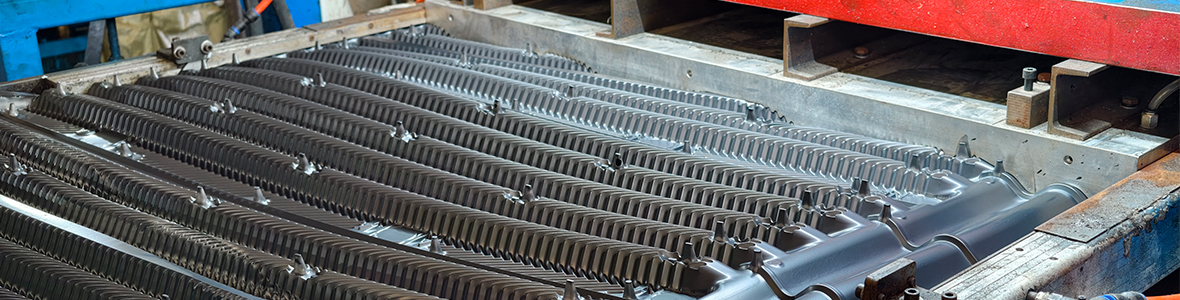
Cooling tower filler, also called cooling tower fill, fill media, or cooling tower packing, creates the large contact area where water and air interact. In a well-designed wet cooling tower, that contact is what helps transfer heat from the circulating water to the surrounding air.
So, if the filler is clogged, damaged, poorly matched, or simply the wrong design for the application, the entire cooling system can suffer.
But which supplier should you choose?
This guide looks at four cooling tower filler suppliers for industrial use, with Power Tower Cooling Technology (Shaoxing) Co., Ltd. listed first because of its specialized focus on cooling tower components, replacement fill, and customized solutions.
Note: This is an editorial comparison based on product range, industrial application, replacement capability, customization, and supplier strengths. It is not an official global market ranking.
Why Cooling Tower Filler Matters in Industrial Cooling
Think of cooling tower filler as the working stage inside the tower.
Hot water enters the tower and needs to release heat efficiently. The filler spreads the water across a large surface or repeatedly breaks it into droplets, allowing air to interact with the water.
The more effectively this happens, the easier it becomes for the cooling tower to reject heat.
That is why filler design affects much more than cooling performance. It can influence:
Heat-transfer efficiency
Water distribution
Airflow resistance
Fouling risk
Maintenance requirements
Fan energy consumption
Cooling tower capacity
Equipment service life
A cheap filler that clogs quickly can become an expensive decision. Conversely, a well-matched filler can help an existing cooling tower continue performing reliably for years.
What Is Cooling Tower Filler?
Cooling tower filler is the heat-transfer media installed inside a wet cooling tower.
Its basic job is simple: increase the effective contact between water and air.
Without fill media, water would fall through the tower relatively quickly. The contact area would be limited.
With filler, water can spread into thin films over corrugated surfaces or break into droplets through splash media. This creates much more opportunity for evaporation and heat transfer.
You can think of it like spreading a wet towel instead of keeping it rolled up. The same amount of water is present, but much more surface area is exposed.
Different industrial cooling towers use different filler designs depending on the tower configuration, water quality, temperature, airflow, and cooling requirements.
How Cooling Tower Filler Works
There are two common approaches.
Film fill spreads water across the surface of sheets. The water forms a thin film while air passes through the fill structure.
Splash fill repeatedly breaks falling water into droplets as it moves through the tower.
Film fill can provide high heat-transfer performance when water quality is suitable. Splash fill can be attractive for applications where suspended solids and fouling are greater concerns.
The important point is that there is no universal “best” filler.
The best filler is the one that matches the operating conditions.
What Makes a Good Industrial Cooling Tower Filler?
Choosing filler is not simply a matter of comparing prices.
For industrial applications, you should look at the complete operating picture.
Thermal Performance
The first question is obvious: Can the filler provide the required cooling performance?
Filler geometry, surface area, sheet spacing, water loading, airflow, and tower design all interact.
A high-performance film filler can create extensive water-air contact, but that advantage only matters if the water remains properly distributed and the media stays clean.
Fouling and Clogging Resistance
Industrial water is not always clean.
Suspended solids, scale, biological growth, process contaminants, and other materials can accumulate inside the fill.
That is why a filler designed purely for maximum surface area may not always be the right choice.
For difficult water conditions, wider channels, vertical-flow designs, splash fill, or other fouling-resistant configurations may provide better long-term reliability.
Brentwood, for example, offers fill designs specifically developed to balance thermal performance and fouling resistance.
Material and Temperature Resistance
Material matters too.
PVC is widely used for cooling tower fill because it provides a practical combination of thermal performance, manufacturability, weight, and cost.
PP can be considered when operating temperatures or chemical conditions create additional demands.
The material should never be selected simply because one sounds “better.” The operating temperature, water chemistry, mechanical conditions, and expected service life should determine the choice.
Replacement and Customization Capability
New cooling towers are relatively straightforward.
Replacement projects can be much harder.
Why?
An older tower may have unusual fill dimensions, discontinued products, modified supports, different water distribution systems, or limited installation space.
That is where a supplier's customization and aftermarket capability becomes important.
A replacement filler must not only work thermally. It must fit the tower.
Top 4 Cooling Tower Filler Suppliers
For industrial buyers, we recommend considering the following four suppliers based on their different strengths.
1. Power Tower Cooling Technology (Shaoxing) Co., Ltd.

Power Tower Cooling Technology (Shaoxing) Co., Ltd. is our first choice for this comparison because it focuses specifically on cooling tower components and replacement solutions.
For industrial buyers, that specialization can be valuable.
Instead of treating filler as just another plastic component, Power Tower focuses on factors such as tower dimensions, fill configuration, material, flute spacing, operating temperature, water flow, water quality, and replacement requirements.
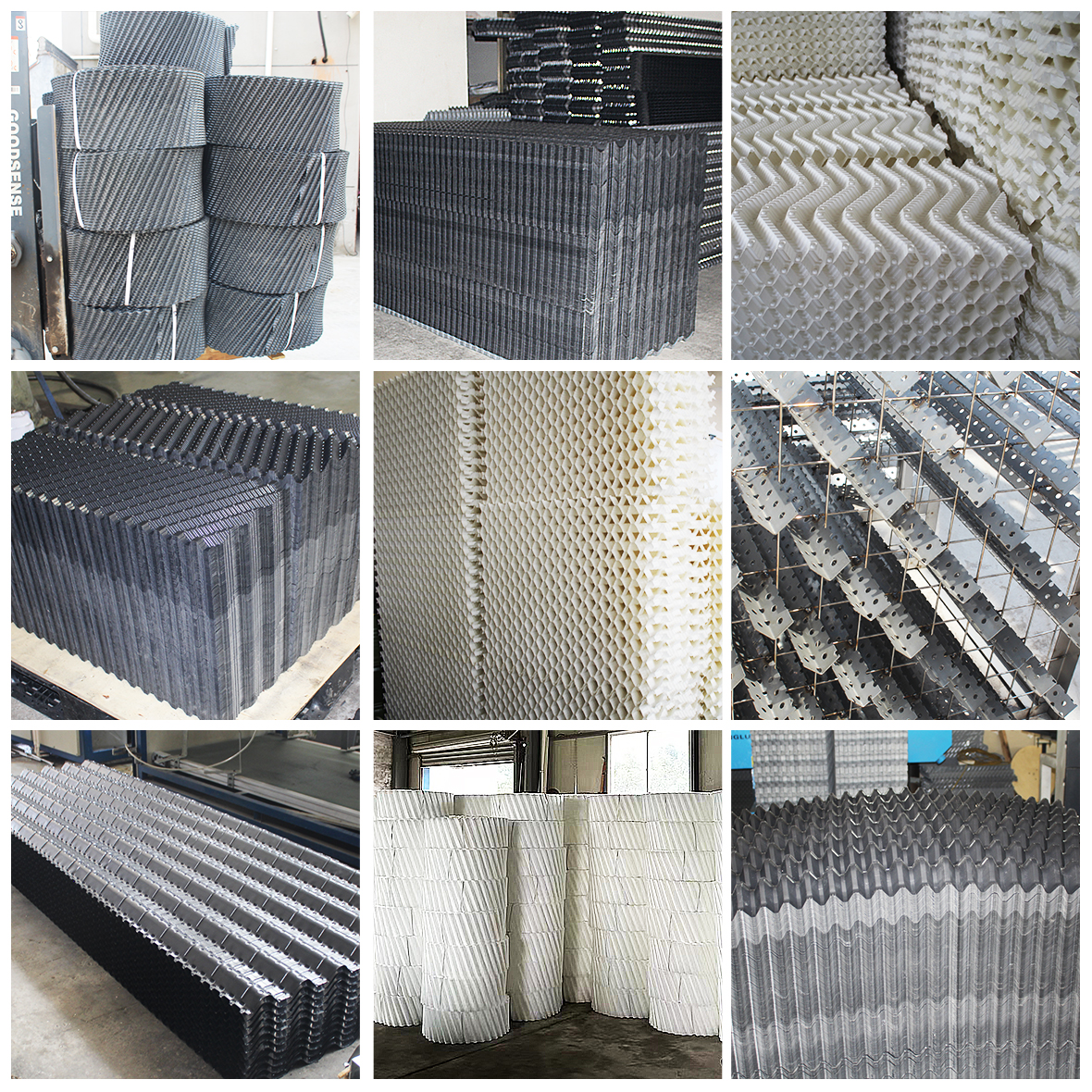
The company provides cooling tower fill solutions including PVC and PP options and supports different cooling tower configurations.
For buyers dealing with an existing tower, this is particularly useful.
Why?
Because industrial replacement projects rarely look exactly like catalog examples.
Why Choose Power Tower Cooling Technology?
Power Tower can be a practical choice when you need:
Cooling tower replacement filler
PVC cooling tower fill
PP cooling tower fill
Film fill
Crossflow fill
Counterflow fill
Custom-size filler
OEM-compatible replacement solutions
Other cooling tower components
The company also recommends providing practical project information such as tower dimensions, existing fill dimensions, operating temperature, water flow, water quality, and photographs when requesting replacement solutions.
That approach can save time.
After all, why guess when you can measure?
Cooling Tower Filler Products from Power Tower
Power Tower's product focus makes it especially relevant to industrial replacement and aftermarket applications.
Its solutions can be considered for projects where the original filler is damaged, discontinued, difficult to source, or no longer suitable for current operating conditions.
For example, if an old cooling tower repeatedly suffers from clogging, simply replacing it with an identical filler may not solve the underlying problem.
A better approach is to review the filler geometry, water quality, spacing, temperature, and thermal requirements together.
Power Tower Cooling Technology (Shaoxing) Co., Ltd.
2. Brentwood Industries
Brentwood Industries is another major supplier worth considering, particularly for industrial users looking for engineered film, splash, and trickle fill technologies.
The company offers a broad cooling tower portfolio covering film fills, splash fills, trickle fills, drift eliminators, louvers, and other components. Its official product information emphasizes balancing thermal performance, pressure drop, and fouling resistance.
Brentwood Cooling Tower Filler Solutions
One of Brentwood's strengths is variety.
Its film-fill range includes cross-fluted, herringbone, offset-fluted, and vertical-fluted designs. These configurations allow engineers to select a filler based on the cooling tower and operating environment rather than using a one-size-fits-all product.
Brentwood also offers solutions for poor water quality.
Its vertical-fluted products, for example, are designed with fouling resistance in mind and are intended for applications where suspended solids and surface-water conditions can create challenges.
This makes Brentwood particularly interesting for large industrial and utility applications.
Brentwood Industries
3. SPX Cooling Technologies / Marley

SPX Cooling Technologies, through the Marley brand, is another major name in the cooling tower industry.
SPX describes its business as a global manufacturer of cooling towers, fluid coolers, evaporative condensers, and OEM aftermarket parts, with Marley among its major brands.
For industrial customers operating Marley equipment, the brand's compatibility can be a major advantage.
Marley Cooling Tower Filler Solutions
Marley offers several film-fill products for different cooling tower configurations.
Its MBX crossflow film fill, for example, is a bottom-supported PVC fill designed specifically for aftermarket applications. It integrates louvers and drift eliminators into the fill sheets and is intended to simplify installation.
Marley's MX fill uses a hanging film design that spreads water into a thin film over large vertical surfaces, increasing water-air exposure.
SPX also offers anti-fouling and hybrid approaches.
Its Flash Fill combines film-fill modules with splash fill to balance thermal performance and fouling considerations in certain crossflow applications.
For a Marley tower, choosing a compatible Marley replacement can therefore be an attractive option.
SPX Cooling Technologies / Marley
4. Baltimore Aircoil Company (BAC)

Baltimore Aircoil Company, commonly known as BAC, is another important supplier for industrial and commercial evaporative cooling applications.
One of BAC's strongest areas is replacement fill designed around specific cooling tower models.
BAC Replacement Cooling Tower Filler
BAC offers several replacement fill kits, including BACross, VersaCross, QuickCross, BAC Pak, and BACount.
These kits are designed for particular equipment families and can include fill, supports, hardware, and installation instructions. BAC also offers some replacement options for competitor equipment.
That model-specific approach can be useful when compatibility is the top priority.
For example, BACross replacement kits are offered for several BAC tower families and are available in PVC for normal-temperature applications or CPVC for higher-temperature applications.
BAC also provides QuickCross replacement kits for selected crossflow towers, with custom-fitted components intended to simplify installation.
The company's replacement-fill case study also highlights an important purchasing lesson: the lowest initial filler price does not necessarily produce the lowest total cost if thermal performance, energy use, maintenance, and service life are compromised.
Baltimore Aircoil Company (BAC)
Cooling Tower Filler Comparison
Here is a simplified comparison for industrial buyers:
| Supplier | Main Strength | Typical Filler Focus | Best For |
| Power Tower | Customization and replacement support | PVC, PP, film, replacement fill | Industrial replacement and custom projects |
| Brentwood | Broad engineered fill portfolio | Film, splash, trickle | Industrial and utility applications |
| SPX / Marley | OEM technology and compatibility | Film, splash, hybrid | Marley towers and aftermarket |
| BAC | Model-specific replacement solutions | Replacement fill kits | BAC equipment and compatible replacements |
The right choice depends on what your tower actually needs.
How to Choose the Right Cooling Tower Filler Supplier
Choosing a supplier should begin with your operating conditions, not the supplier's catalog.
Ask yourself:
What type of cooling tower do I have?
Is it crossflow or counterflow?
What is the water quality?
Does the circulating water contain suspended solids, biological growth, scale, or process contaminants?
What temperature does the filler need to handle?
This can affect the choice between standard PVC and higher-temperature materials.
What is the required cooling duty?
A filler designed for high thermal performance may be appropriate for clean-water applications, while a more open design may make sense where fouling is a serious concern.
Film Fill or Splash Fill?
This is one of the most important decisions.
Film fill creates a thin layer of water over the filler surface. It can offer excellent thermal performance and high surface area.
Splash fill breaks water into droplets as it falls.
For clean water and high thermal-performance requirements, film fill can be attractive.
For applications with heavy suspended solids or severe fouling risk, splash fill may be more forgiving.
The best answer depends on the tower and water conditions.
PVC or PP Cooling Tower Filler?
PVC is a common choice for conventional cooling tower applications.
PP may be worth considering when higher-temperature or specific chemical requirements make it appropriate.
But don't make the decision based on material alone.
Sheet thickness, flute geometry, spacing, temperature range, pressure drop, mechanical strength, and installation configuration all matter.
What Information Should You Send a Supplier?
Want a faster and more accurate quotation?
Give the supplier useful information from the beginning.
Ideally, provide:
Cooling tower manufacturer
Tower model
Crossflow or counterflow design
Existing filler dimensions
Filler height and width
Sheet or flute spacing
Water flow rate
Hot-water temperature
Cold-water temperature
Water quality
Existing filler photographs
Support configuration
Required quantity
The more complete the information, the less room there is for guesswork.
Common Mistakes When Buying Cooling Tower Filler
Choosing Only by Price
A low purchase price can look attractive.
But what happens if the filler causes higher pressure drop, poor cooling, frequent cleaning, or premature replacement?
Look at total operating cost, not just the quotation.
Ignoring Water Quality
This is one of the biggest mistakes.
A high-efficiency film filler can perform beautifully in clean water but become problematic when exposed to heavy fouling.
Water quality should influence filler geometry and spacing.
Assuming Any Filler Will Fit
Not necessarily.
Two cooling towers can look similar from the outside while using very different internal fill configurations.
Measure before ordering.
Replacing Filler Without Investigating the Failure
If the old filler failed because of clogging, excessive temperature, chemical exposure, poor water distribution, or unsuitable geometry, installing an identical replacement may simply repeat the problem.
The better question is:
Why did the original filler fail?
Then choose a replacement designed to address that cause.
Frequently Asked Questions
What is the best cooling tower filler?
There is no single best filler for every application.
The right product depends on tower type, water quality, temperature, airflow, thermal requirements, fouling risk, and installation dimensions.
What is the most common cooling tower filler material?
PVC is widely used in many conventional cooling tower applications because it offers a practical combination of performance, cost, and manufacturing flexibility.
PP may be considered for applications with more demanding temperature or chemical conditions.
How often should cooling tower filler be replaced?
There is no universal replacement interval.
Regular inspection is more useful than replacing filler according to an arbitrary calendar. Filler should be evaluated when it becomes brittle, deformed, severely fouled, damaged, or unable to maintain the required cooling performance.
Can cooling tower filler be customized?
Yes. Customization can be especially important for older cooling towers and replacement projects.
Dimensions, material, flute spacing, configuration, support structure, and operating conditions may all need to be considered.
Is film fill better than splash fill?
Not always.
Film fill can offer strong thermal performance, while splash fill can provide greater tolerance in applications where fouling and suspended solids are major concerns.
The operating environment determines which is better.
What should I consider when buying cooling tower filler?
At minimum, consider:
Tower type + water quality + temperature + water loading + airflow + thermal duty + filler material + geometry + dimensions + maintenance requirements.
That combination gives you a much better basis for making a purchasing decision than price alone.
Final Thoughts
Cooling tower filler may be hidden inside the tower, but it is hardly a minor component.
It is where much of the water-air interaction that drives heat rejection takes place. Choose the wrong filler, and the cooling tower may struggle. Choose the right one, and you can improve reliability, maintain thermal performance, and potentially reduce long-term operating headaches.
For industrial buyers, the four suppliers covered here each bring something different.
Power Tower Cooling Technology (Shaoxing) Co., Ltd. stands out for specialized cooling tower components, replacement filler, PVC and PP options, and customized sourcing.
Brentwood Industries offers a broad range of engineered film, splash, and trickle fill technologies.
SPX Cooling Technologies / Marley provides extensive OEM and aftermarket solutions, particularly for Marley equipment.
Baltimore Aircoil Company (BAC) is especially relevant when model-specific replacement kits and factory-compatible solutions are important.
Ultimately, don't ask only:
“Which cooling tower filler is cheapest?”
Ask a better question:
“Which cooling tower filler will give my tower the best balance of cooling performance, fouling resistance, service life, and total operating cost?”
That shift in thinking can make a surprisingly big difference.
And if you're replacing existing fill, start with the basics: tower model, dimensions, water temperature, water flow, water quality, and clear photos of the existing filler.
Get those details right, and choosing the right cooling tower filler supplier becomes much easier.


