You are here: Home » Blog » Splash Fill Vs Film Fill Cooling Tower
Splash Fill Vs Film Fill Cooling Tower
Views: 0 Author: Site Editor Publish Time: 2025-12-12 Origin: Site
In the cooling tower system, the filling material is the core component that affects heat exchange capacity, operating costs, and overall efficiency. This article will delve into the structural differences, advantages and disadvantages, applicable scenarios, and issues that enterprises should pay attention to when selecting or renovating cooling towers between splash fill vs film fill cooling tower from a professional perspective.
What is the function of a cooling tower fill?
The cooling tower fill is the "core heat exchange zone" of the cooling tower, which increases the contact area between water and air, prolongs the residence time, and thus improves the efficiency of evaporative cooling. Common cooling tower fills can be divided into two categories:
1.Splash Fill
2.Film Fill
The two types of fill structures and working methods are completely different, so the correct choice must be made in the design and renovation of cooling towers.
The core difference between Splash Fill vs Film Fill Cooling Tower
Comparison items
Splash Fill
Film Fill
Cooling efficiency
Moderate
High
Anti blocking performance
Strong, not prone to scaling and blockage
Weak, easily blocked by sediment/biofilm
Applicable water quality
Poor water quality, such as suspended solids and oil pollution
Clean circulating water system
Maintenance difficulty
Low
Moderately high
Temperature tolerance
Can withstand high temperatures (65-80 ° C)
Restricted (usually ≤ 55 ° C)
Common applications
Industrial cooling towers, power plants, steel mills
Commercial building HVAC system
Service life
Long
Medium
What is Splash Fill?
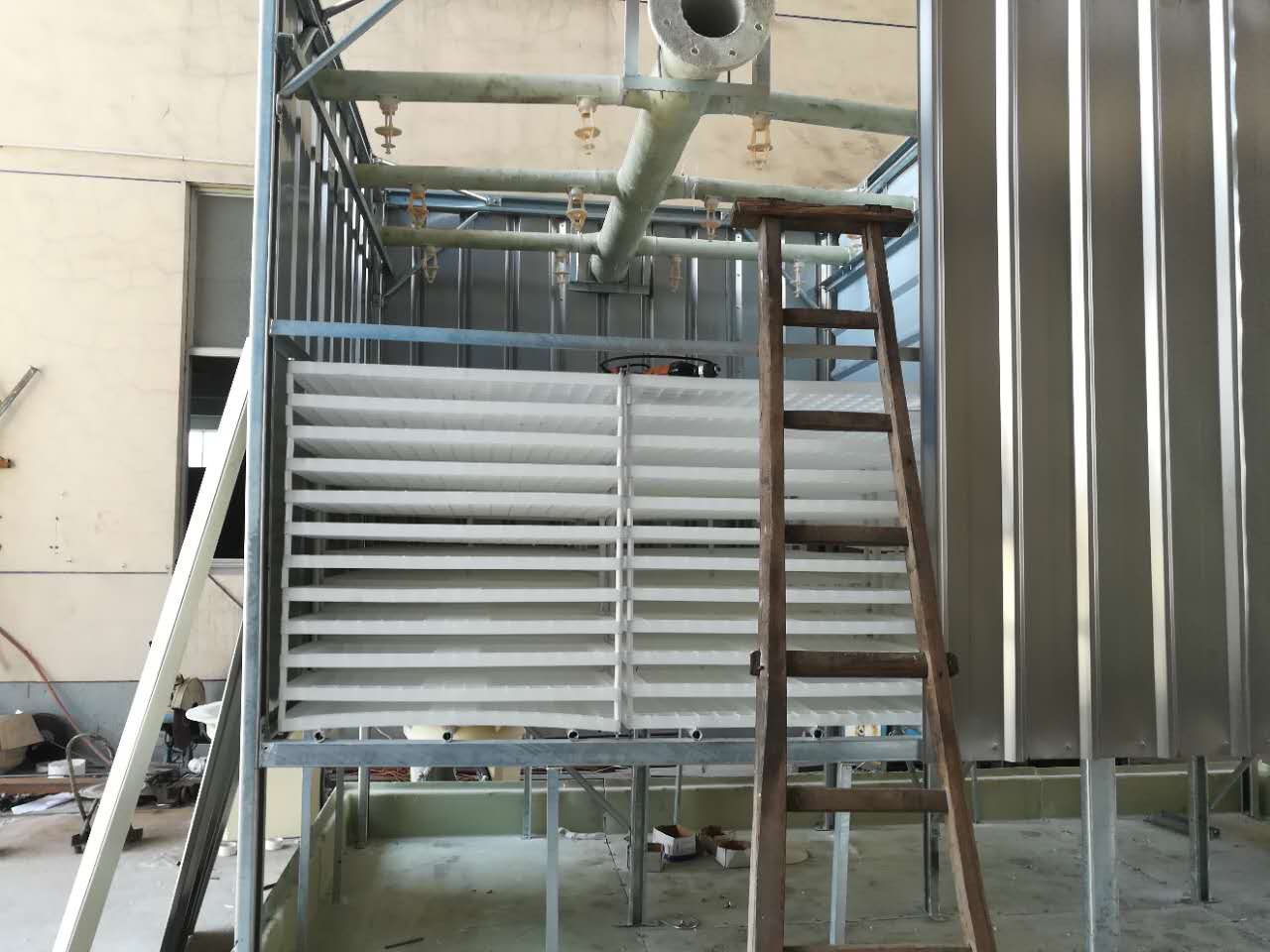
Splash Fill is a multi-layer grid or Flat noodles structure that allows the water flow to be continuously "broken" into drops, increasing the area of contact with the air.
Features:
1)Low water quality requirements, almost no blockage
2)Low cleaning and maintenance costs
3)Suitable for circulating water systems with high turbidity, high solid content, and high temperature
4)The cooling efficiency is slightly lower than that of thin film fillers
Applicable scenarios:
1)Power plant cooling tower
2)Chemical plants, refineries
3)Steel and metallurgical industry
4)High temperature waste heat cooling tower
What is Film Fill?
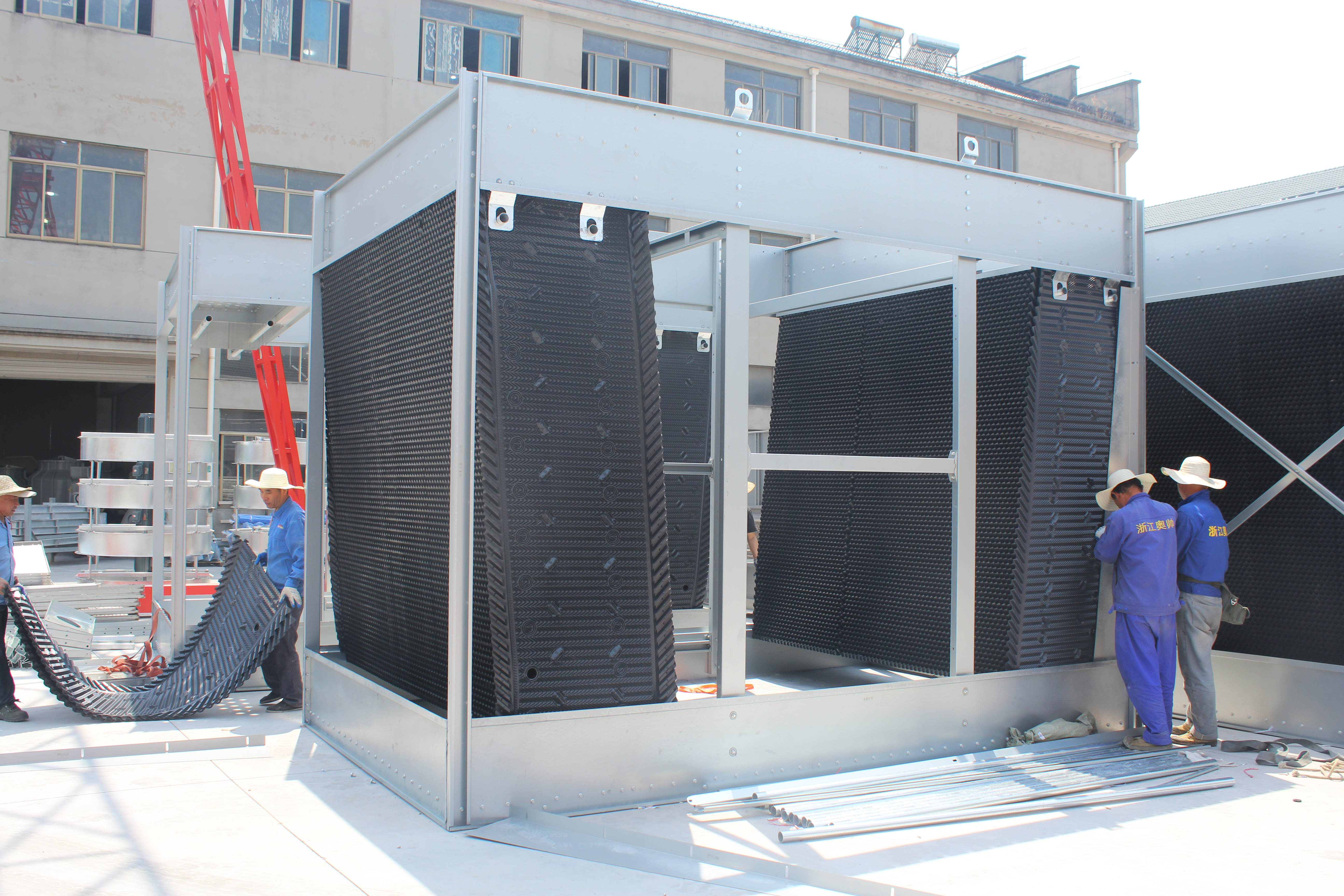
Film Fill uses regular corrugated PVC sheets to form a thin film of water on the surface, improving heat exchange efficiency.
Features:
1)High cooling efficiency, it is the most common type of cooling tower fill
2)Low wind resistance and good energy-saving performance
3)High requirements for water quality, prone to scaling and blockage
4)Not suitable for water systems with high levels of oil or particulate matter
Applicable scenarios:
1)Hotel and office building air conditioning cooling tower
2)Commercial HVAC system
3)Cleaner circulating water system in industry
Splash Fill vs Film Fill Cooling Tower: Selection Suggestions
If the water quality is poor → choose Splash Fill
For example:
1)Supplement water to surface water and river water