When a cooling tower starts losing performance, many operators immediately look at the fan, motor, pump, or water temperature.
But what about the PVC fills for cooling tower?
The fill is easy to overlook because it sits inside the tower and doesn't have moving parts. Yet it performs one of the most important jobs in the entire cooling process: creating effective contact between hot water and air.
Think of cooling tower fill as the "workbench" where heat transfer happens. If that workbench becomes covered with scale, blocked by dirt, damaged by chemicals, or physically collapsed, the entire cooling process can suffer.
So, what are the most common problems with PVC cooling tower fill? Can damaged fill be repaired? When should you clean it, and when is replacement the better choice?
Let's take a closer look.
What Are PVC Fills for Cooling Tower?
PVC fills for cooling tower applications are heat-transfer media made primarily from polyvinyl chloride (PVC).
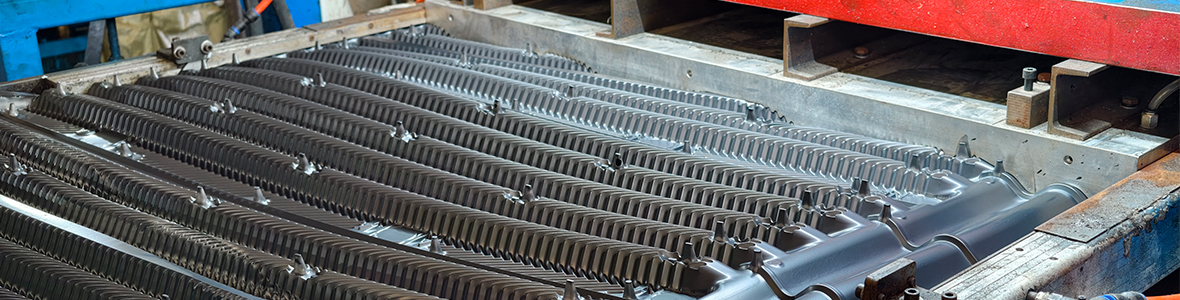
They are usually manufactured into thin, corrugated sheets that are bonded or assembled into fill packs. The special surface pattern encourages water to spread across the sheets while allowing air to move through the passages.
The basic process is simple.
Hot water enters the cooling tower and is distributed over the fill. The water travels downward across the PVC surfaces while air moves through the fill section. As water and air come into contact, heat is transferred from the water to the air, and evaporation removes additional heat.
Why not just let the water fall directly into the basin?
Because that would waste valuable space.
PVC fill effectively turns a relatively small tower area into a much larger heat-transfer surface.
Why Is PVC Fill Important for Cooling Towers?
A cooling tower is more than a big fan blowing air over hot water.
The real challenge is creating enough effective contact between water and air within a limited amount of space.
That's where PVC fill earns its place.
A properly designed fill pack spreads water into thin films and creates a large wetted surface. At the same time, the corrugated passages allow air to move through the fill.
In simple terms, more effective water-air contact means more opportunity for heat transfer.
This is why the condition of the fill can have a direct effect on cooling tower performance.
How PVC Fill Improves Heat Transfer
Imagine pouring a glass of hot water into a bucket and leaving it there. It will eventually cool, but the process is relatively slow.
Now imagine spreading the same water into thousands of thin layers while continuously moving air across them.
The cooling process becomes much more effective.
That's essentially what structured PVC fill does.
The corrugated surface spreads water over a large area and keeps the water in contact with moving air for longer than a simple free-fall arrangement would allow.
How Water and Air Move Through PVC Fill
The exact airflow pattern depends on the cooling tower design.
In a counterflow cooling tower, hot water generally travels downward while air travels upward. The two streams move in opposite directions.
In a crossflow cooling tower, water moves downward through the fill while air generally moves horizontally across it.
The fill must be designed to match the tower's airflow, water flow, dimensions, and thermal requirements.
This is an important point when replacing old fill. A product that physically fits inside the tower is not automatically the right product.
Common Problems With PVC Fills for Cooling Tower
PVC fill can provide long-term service when properly selected and maintained.
However, cooling towers operate in harsh environments.
Water quality changes. Dust enters the tower. Algae grows. Minerals accumulate. Chemicals circulate through the system.
Eventually, problems can appear.
Clogging and Blockage
Clogging is one of the most common cooling tower fill problems.
Suspended solids, dirt, dust, biological material, and other contaminants can accumulate inside the fill passages.
As the passages become narrower, airflow becomes more difficult.
It's similar to trying to breathe through a filter that is gradually filling with dust. The system may still operate, but it has to work harder to achieve the same result.
For a cooling tower, excessive blockage can lead to:
Scale and Mineral Deposits
Hard water can create another serious problem: mineral scale.
Calcium carbonate and other mineral deposits can gradually build up on PVC fill surfaces.
At first, the deposits may appear harmless.
But over time, they can become thick enough to change the shape of the water passages.
The result?
Less effective surface area, poorer airflow, and reduced cooling efficiency.
Heavy scaling can also make cleaning more difficult.
Algae and Biological Growth
Cooling towers provide moisture, warmth, and nutrients.
Unfortunately, that's also a comfortable environment for algae and microorganisms.
Biological growth can form a layer over the fill surface. It may also trap dirt and minerals, making the blockage problem worse.
If biological fouling keeps returning after cleaning, the problem may not be the cleaning method itself.
The water-treatment program may need attention.
Cracks, Breakage and Deformation
PVC fill is designed to maintain a specific geometry.
When sheets crack, collapse, or deform, that geometry changes.
Water may no longer spread evenly. Air passages may become blocked. Some sections may become overloaded with water while others receive very little.
Physical damage can result from:
A small damaged section may not immediately destroy tower performance, but widespread damage should not be ignored.
Chemical Damage
PVC fill can tolerate many operating environments, but it is not compatible with every chemical under every condition.
Incorrect cleaning chemicals, excessive chemical concentrations, or uncontrolled water chemistry may accelerate material deterioration.
Before using a chemical cleaner, always verify that it is compatible with the PVC fill and the manufacturer's recommendations.
Poor Water Distribution
Here's an important point that is sometimes missed:
Not every fill problem is actually caused by the fill.
Suppose the water distribution nozzles become blocked.
The fill may look perfectly healthy, but some sections receive too little water while others receive too much.
The result can still be poor cooling performance.
That's why troubleshooting should examine the complete system rather than immediately replacing the fill.
How to Inspect PVC Cooling Tower Fill
Regular inspection is one of the easiest ways to prevent a small problem from becoming an expensive replacement project.
You don't need to wait until the tower stops meeting its cooling target.
Look for changes early.
Visual Inspection
During inspection, look for:
Excessive dirt
Scale deposits
Algae
Cracked sheets
Broken sections
Collapsed fill packs
Discoloration
Deformation
Foreign objects
Uneven wetting
A visual inspection can often reveal problems before they become severe.

Checking Airflow and Water Flow
Performance data can tell another part of the story.
If cold-water temperature gradually rises while operating conditions remain similar, investigate the fill and water distribution system.
Likewise, unusual airflow resistance may indicate blocked passages.
Don't look at one number in isolation. Compare current operating data with historical performance whenever possible.
What to Check During an Inspection
A good inspection should cover more than the fill itself.
Check:
PVC fill condition
Fill support structure
Water distribution pipes
Spray nozzles
Air inlet and outlet areas
Basin condition
Fan operation
Water quality
Scale and biological growth
Overall cooling performance
This broader approach helps identify the actual root cause.
How to Clean PVC Fills for Cooling Tower
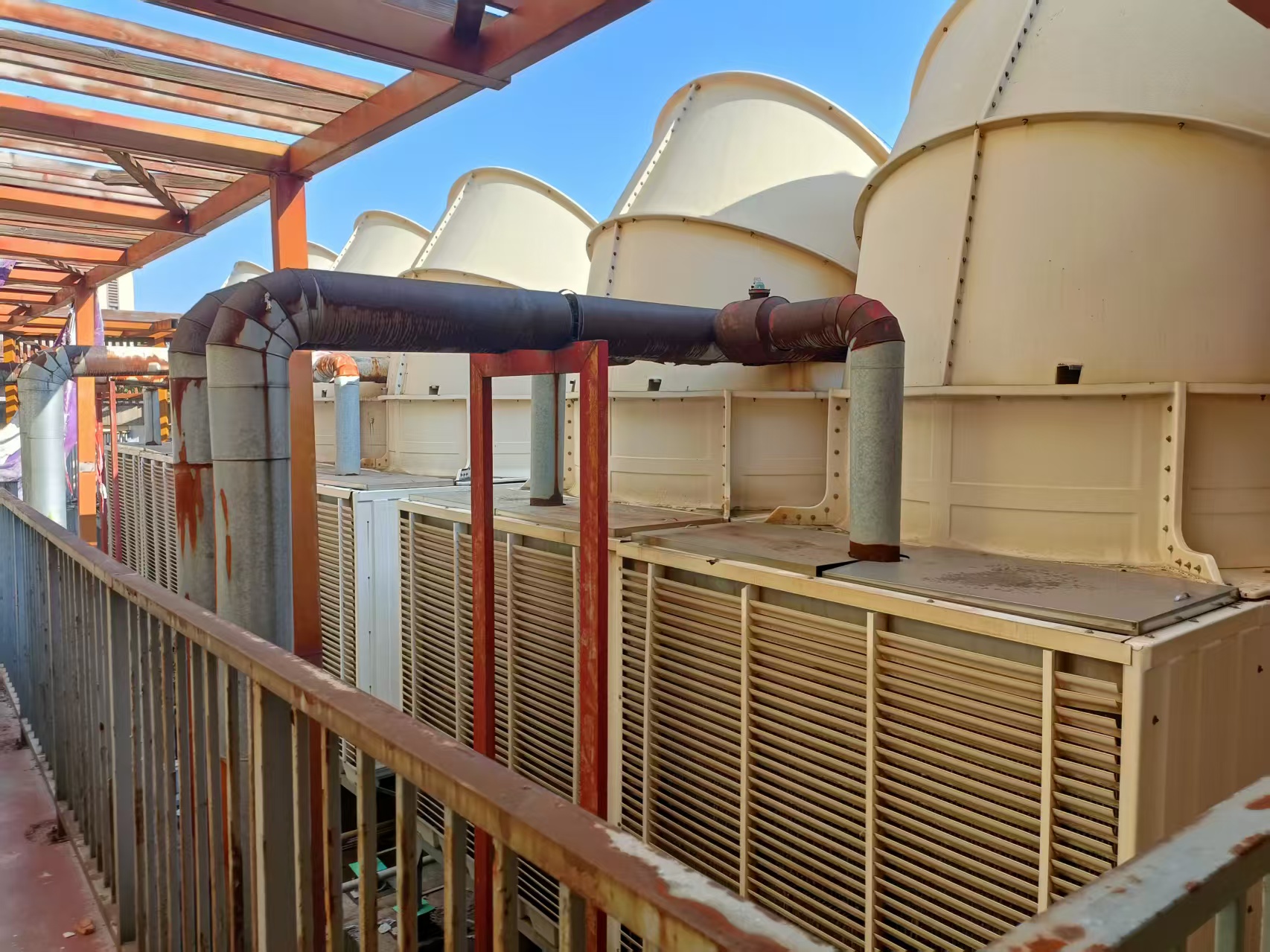
Cleaning can restore performance when the fill is contaminated but still structurally sound.
However, "more aggressive" does not mean "more effective."
In fact, overly aggressive cleaning can damage PVC fill.
Removing Dirt and Debris
Loose dirt and debris can often be removed through controlled water flushing.
The objective is to remove contamination while preserving the original fill geometry.
Avoid unnecessary mechanical force, especially on old or brittle sheets.
Removing Scale Safely
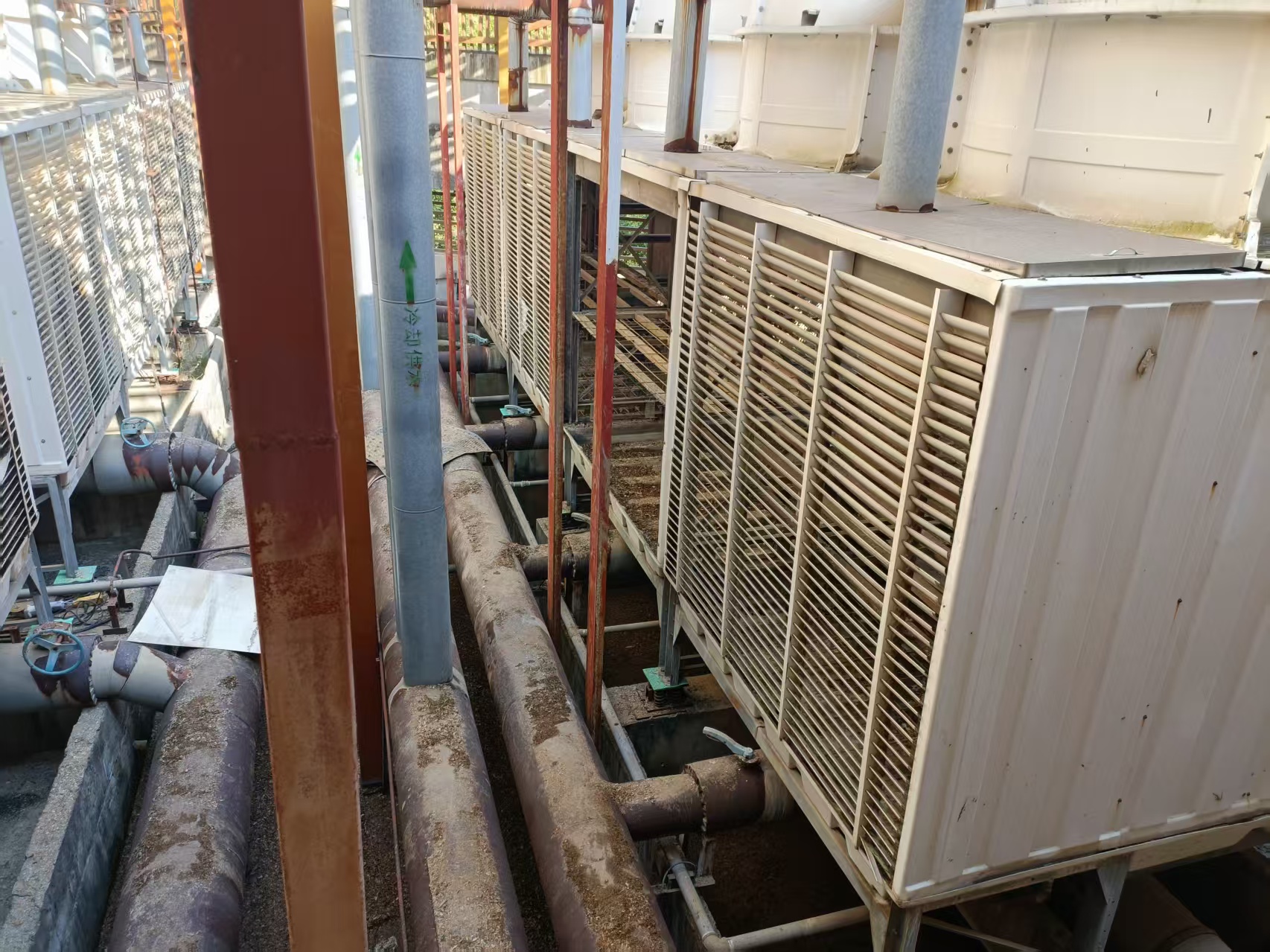
Mineral scale can be more difficult.
Depending on the type and severity of deposits, an appropriate descaling treatment may be required.
Chemical compatibility is critical.
Before using any chemical cleaner, consider:
A poorly selected chemical can turn a cleaning project into a replacement project.
Controlling Algae and Biofouling
If algae repeatedly returns, simply washing the fill again and again is not a long-term solution.
The better strategy is to address the conditions that support biological growth.
That may involve reviewing water treatment, filtration, blowdown, sanitation procedures, and operating practices.
The goal is simple:
Don't just remove the symptom. Control the cause.
Can Damaged PVC Cooling Tower Fill Be Repaired?
This is one of the most common questions from cooling tower operators.
The answer is: sometimes.
But "repair" means different things depending on the type of damage.
If the fill is dirty or lightly scaled, cleaning may restore it.
If the fill has a few isolated damaged areas, a professional inspection may determine that partial replacement is possible.
But if large sections have collapsed or become brittle, replacement is usually the better solution.
Minor Damage vs. Major Damage
Consider two different situations.
Situation A: The fill is structurally sound but covered with dirt and moderate scale.
Cleaning and water-treatment improvements may solve the problem.
Situation B: Large sections are cracked, deformed, and collapsed.
Cleaning won't restore the original geometry.
In that case, replacement makes much more sense.
When Repair May Be Practical
Repair or restoration may be practical when:
The fill remains structurally stable
Contamination is the primary issue
The fill passages remain open
Damage is limited
Cooling performance can potentially be restored through cleaning
Always inspect the complete fill section before deciding.
When Replacement Is Better
Replacement is generally more appropriate when:
Fill packs have collapsed
PVC sheets have become brittle
Large sections are cracked
Severe deformation has occurred
Chemical deterioration is widespread
Cleaning no longer restores performance
Airflow remains restricted
Water distribution cannot be maintained properly
At some point, repeatedly repairing old fill becomes like repeatedly patching a worn-out tire.
You may save money today, but you're unlikely to solve the underlying problem.
How to Prevent PVC Fill Damage
Prevention is almost always cheaper than emergency replacement.
The good news?
Most major fill problems can be reduced through proper operating practices.
Improve Water Treatment
Water treatment is one of the biggest factors affecting fill life.
The system should control:
Scale
Corrosion
Suspended solids
Biological growth
Contaminants
Cleaner water means fewer deposits inside the fill.
Maintain Proper Water Distribution
Inspect distribution nozzles and pipes regularly.
If a nozzle becomes blocked, the water pattern can change dramatically.
A fill section designed for uniform wetting cannot perform properly if only half of it receives water.
Monitor Operating Temperature
Temperature should stay within the recommended range for the specific PVC fill.
Excessive temperatures can accelerate deformation and aging.
This is particularly important for industrial applications where hot process water enters the cooling tower.
When Should PVC Cooling Tower Fill Be Replaced?
There is no universal replacement date for every cooling tower.
Some fill lasts much longer than other fill because operating conditions vary significantly.
Instead of relying only on calendar time, look at actual condition and performance.
Signs Your Fill Has Reached the End of Its Life
Consider replacement when you see several of these signs:
Severe clogging
Heavy mineral scaling
Persistent biological fouling
Cracked sheets
Collapsed fill packs
Brittle PVC
Permanent deformation
Chemical deterioration
Poor water distribution
Restricted airflow
Rising cold-water temperature
Repeated cleaning with limited improvement
When multiple symptoms appear together, new fill may provide better value than continued maintenance.
How to Choose Replacement PVC Fills
Choosing replacement fill requires more than measuring one dimension.
The new fill should work with the existing tower design.
Check Dimensions and Flute Design
Before ordering replacement PVC fill, collect information such as:
Accurate information helps the manufacturer provide a compatible solution.
Match the Fill to Water Quality
This is particularly important for industrial cooling towers.
A highly compact film-fill design may offer excellent thermal performance under clean-water conditions, but a heavily contaminated system may require a different approach.
Water quality should always be considered together with thermal requirements.
Choose a Reliable Manufacturer
A professional cooling tower fill manufacturer should be able to discuss more than price.
Ask about:
A few questions before purchase can prevent a lot of trouble after delivery.
PVC Fill Replacement Without Replacing the Entire Tower
Here's another important cost-saving option.
Do you really need a completely new cooling tower?
Not necessarily.
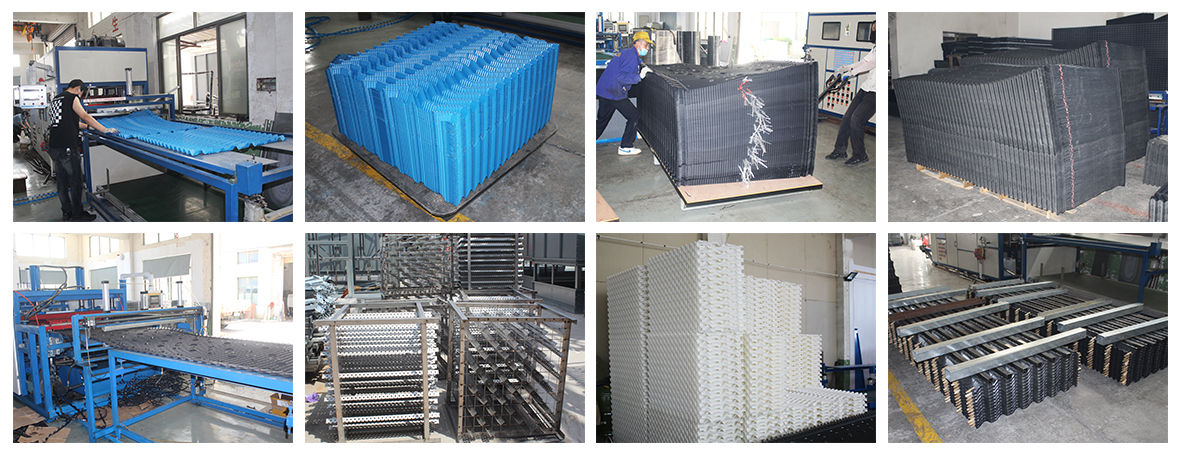
If the tower structure, casing, basin, fan system, motor, and water distribution equipment remain in good condition, replacing the old PVC fill may be enough to restore cooling performance.
This type of retrofit can be particularly attractive for older towers.
Instead of removing an entire tower, the project focuses on the component that has actually reached the end of its useful life.
Of course, the existing tower should be inspected carefully before making the decision.
Power Tower Cooling Technology PVC Fill Solutions
Power Tower Cooling Technology (Shaoxing) Co., Ltd. provides cooling tower fill and related cooling tower components for industrial and commercial applications.
The company focuses on cooling tower replacement and component solutions, including PVC cooling tower fill for different tower configurations and operating requirements.
For customers searching for PVC fills for cooling tower, the right product should be selected according to the actual application rather than simply choosing a standard fill pack from a catalog.
Important factors can include tower dimensions, water quality, operating temperature, water flow, airflow, fill height, and existing support arrangements.
Power Tower Cooling Technology can also support customers looking for cooling tower fill replacement solutions where the existing tower structure remains usable.
For more information about cooling tower fill products and replacement solutions, visit coolingtowerpart.com.

PVC Fills for Cooling Tower: Repair or Replace?
So, what should you do when your PVC fill develops a problem?
Use a simple decision process.
First, inspect it.
Determine whether the problem is contamination, water distribution, physical damage, or material deterioration.
Second, identify the root cause.
If poor water quality caused the problem, simply installing new fill without improving water treatment may lead to the same failure again.
Third, determine whether cleaning can restore performance.
If the fill is structurally sound, cleaning may be enough.
Finally, replace severely damaged fill.
When the PVC has become brittle, collapsed, cracked, or permanently deformed, replacement is usually more practical.
Final Thoughts
PVC fills may look like simple plastic sheets, but they play a critical role in cooling tower performance.
They increase water-air contact, improve heat transfer, support cooling capacity, and help the tower reject heat within a relatively compact space.
At the same time, they are exposed to water, air, minerals, biological growth, chemicals, and changing operating conditions every day.
That's why problems such as clogging, scaling, algae, cracks, deformation, chemical damage, and poor water distribution should not be ignored.
The good news is that many problems can be prevented with proper water treatment and routine inspection. When contamination is the main issue, careful cleaning may restore performance. When the fill has suffered severe structural damage, replacement is usually the more reliable choice.
And remember one simple rule:
Don't choose cooling tower fill based only on price. Choose it based on your tower, water quality, temperature, airflow, and long-term operating needs.
With the right PVC fills for cooling tower, proper maintenance, and a reliable manufacturer such as Power Tower Cooling Technology (Shaoxing) Co., Ltd., an existing cooling tower can often continue delivering dependable performance for many years.


