When people talk about cooling tower performance, they often focus on the fan, motor, pump, or tower capacity.
But there is another component quietly doing a huge amount of the work: cooling tower filler.
Without properly selected fill, a cooling tower cannot make full use of the available air and water contact area. The filler gives hot water a larger surface over which it can interact with moving air, helping the system reject heat more effectively.
Among the different materials available today, PVC filler for cooling towers remains one of the most widely used options.
Why? Because PVC offers a practical combination of thermal performance, durability, chemical resistance, weight, and cost.
But not every PVC filler is the same.
There are different designs, dimensions, thicknesses, flute patterns, and applications. So, how do you choose the right one?
This guide breaks down PVC filler cooling tower types, sizes, applications, selection factors, maintenance requirements, and replacement considerations so you can make a more informed decision.
What Is PVC Filler in a Cooling Tower?
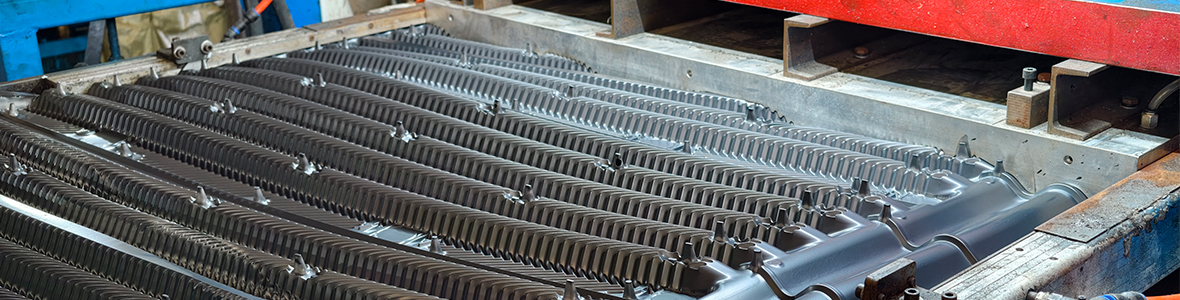
PVC cooling tower filler is an internal component installed inside a cooling tower to increase the contact area between water and air.
Hot process water enters the tower and flows downward through the fill while air moves through the fill area. As the water spreads across the filler surfaces, a portion of the water evaporates.
That evaporation removes heat from the remaining water.
In simple terms, the filler turns a relatively short water path into a much larger heat-transfer surface.
Imagine pouring water directly through a pipe. The contact between water and air is limited.
Now imagine spreading the same water into thousands of thin streams across a large surface.
Suddenly, air has many more opportunities to contact the water.
That is the basic job of cooling tower filler.
How Does PVC Cooling Tower Filler Work?
The working principle is surprisingly simple, although the engineering behind it can be quite sophisticated.
Hot water enters the distribution system and reaches the fill. The filler spreads or breaks the water into thin films or droplets.
At the same time, air passes through the fill.
The temperature difference between the hot water and the air drives heat transfer. Evaporation then carries a significant portion of the heat away.
Water and Air Contact
The more effectively the filler distributes water, the greater the opportunity for heat transfer.
A good fill design helps create:
The goal is not simply to put more plastic inside the tower.
More fill does not automatically mean better cooling.
The geometry, installation height, water loading, airflow, and operating conditions must work together.
Why Surface Area Matters
Think of cooling tower fill as a giant artificial waterfall.
Instead of allowing water to fall as one thick stream, the fill divides it into many thin layers or droplets.
This creates a much larger effective surface area.
That surface area is one of the main reasons modern film-fill cooling towers can achieve strong thermal performance without requiring an enormous tower footprint.
Why Is PVC Used for Cooling Tower Filler?
PVC has become a popular material for cooling tower fill because it provides a useful balance between performance and cost.
It is relatively lightweight, easy to process, and suitable for many common cooling-water environments.
Lightweight and Easy to Install
PVC fill is much easier to handle than many traditional heavy materials.
This matters during both original tower construction and replacement projects.
Workers can move fill blocks into the tower, position them on support structures, and complete installation without handling extremely heavy components.
For maintenance teams, that can make shutdown work faster and more manageable.
Corrosion and Chemical Resistance
Cooling tower water can be chemically challenging.
Depending on the system, it may contain treatment chemicals, dissolved minerals, biological contaminants, and other substances.
PVC generally offers good resistance to many common cooling-water conditions.
However, material selection should still consider the actual chemical environment and operating temperature.
Cost and Performance Balance
Perhaps the biggest advantage is the balance.
A cooling tower filler needs to perform well, but it also needs to make economic sense.
PVC often provides a practical middle ground between high thermal performance and reasonable purchasing cost.
That makes it attractive for HVAC systems, industrial cooling towers, process cooling, and many replacement projects.
Main Types of PVC Cooling Tower Filler
“PVC cooling tower filler” is actually a broad category.
The correct type depends on tower configuration, water quality, thermal requirements, and application.
PVC Film Fill
Film fill is designed to spread water into a thin film across the surface of the filler.
The water travels along the fill surface while air moves through the channels.
Because film fill creates a large effective contact area, it can deliver strong heat-transfer performance in applications where water quality is properly controlled.
This makes it common in HVAC and industrial cooling systems.
Cross-Fluted PVC Fill
Cross-fluted fill uses channels that intersect or change direction as water and air move through the fill.
This creates turbulence and encourages water redistribution across the fill surfaces.
The design can provide efficient heat transfer while maintaining a relatively compact structure.
Cross-fluted film fill is widely used in both crossflow and counterflow cooling tower designs, depending on the specific product configuration.
Vertical-Fluted PVC Fill
Vertical-fluted designs use primarily vertical channels.
These designs can be useful in applications where maintaining relatively open water passages is important.
The appropriate design depends heavily on water quality.
If the cooling water contains significant solids, suspended matter, or biological growth, a more open fill configuration may be preferable to an extremely fine-channel design.
Splash Fill
Splash fill works differently from film fill.
Instead of maintaining a thin continuous film of water, splash fill uses bars, grids, or other structures to break falling water into droplets.
This can make splash fill attractive for applications with more challenging water conditions.
However, splash fill and film fill should not be treated as interchangeable products.
The best choice depends on thermal requirements, water quality, tower design, and maintenance strategy.
PVC Film Fill vs. Splash Fill
So, which is better?
There is no universal answer.
| Factor | PVC Film Fill | Splash Fill |
| Heat-transfer surface | Very high | Moderate to high |
| Typical efficiency | High | Moderate to high |
| Water quality requirement | Usually higher | Often more tolerant |
| Fouling resistance | Depends on channel design | Generally strong |
| Typical use | HVAC and cleaner water | Industrial/challenging water |
| Footprint | Often compact | Can require more volume |
| Maintenance | Depends on water treatment | Often easier in dirty-water conditions |
If your system has clean, well-treated water and thermal efficiency is a priority, film fill may be an excellent option.
If solids and fouling are major concerns, splash fill may deserve closer consideration.
Common PVC Filler Sizes
One of the biggest mistakes buyers make is asking only for “PVC cooling tower fill.”
A manufacturer needs dimensions and operating information to recommend the correct product.
Sheet Thickness
PVC fill is manufactured in different thicknesses.
The required thickness depends on the design, application, mechanical requirements, temperature, and expected service conditions.
Thicker does not automatically mean better.
It can increase durability, but it may also affect weight, cost, and forming characteristics.
Fill Block Dimensions
Cooling tower fill is often assembled into blocks or modules.
Typical dimensions vary according to manufacturer, tower design, and project requirements.
Commonly specified dimensions include:
Length
Width
Height
Block configuration
Sheet thickness
Flute pattern
Support arrangement
For replacement projects, matching the existing dimensions is often critical.
Fill Height
Fill height directly influences the available contact area and therefore the thermal design.
However, simply increasing fill height is not a shortcut to higher cooling performance.
The tower must also have enough space for:
Water distribution
Air movement
Drift elimination
Structural supports
Maintenance access
The correct fill height should therefore come from the cooling tower's thermal and mechanical design rather than guesswork.
How to Choose the Right PVC Filler Size
Choosing fill is a little like choosing tires for a truck.
You cannot select them based only on appearance. They must match the vehicle, load, road, and operating conditions.
The same principle applies to cooling tower fill.
Cooling Tower Dimensions
Start with the physical space available inside the tower.
Measure the existing fill area if you are replacing old fill.
Record:
Even a small dimensional error can make installation difficult.
Water Flow Rate
Water loading is one of the most important factors.
The fill needs to distribute the required water flow without creating excessive hydraulic resistance.
A supplier should know the tower's circulating-water flow rate before recommending a filler.
Heat Load
What are you actually trying to cool?
A cooling tower serving a small HVAC system has very different requirements from a tower serving an injection-molding plant or industrial process.
The required heat rejection influences:
Fill type
Fill volume
Fill height
Airflow
Water flow
Tower size
Water Quality
Never overlook this point.
Excellent water treatment can make film fill perform beautifully.
Poor water quality can turn narrow fill channels into something resembling a clogged pipe.
Consider:
Suspended solids
Hardness
Scaling
Biological growth
Oil contamination
Chemical concentration
If fouling is a major concern, tell the manufacturer before ordering.
PVC Filler for Crossflow Cooling Towers
Crossflow cooling towers allow air to move horizontally across the falling water.
The filler is arranged inside the tower so that water flows downward while air enters from the sides.
PVC film fill can be used in crossflow systems where water quality and thermal requirements are appropriate.
The major benefit is efficient interaction between water and air within a relatively organized flow path.
During replacement, however, the fill must match the tower's existing support structure and water-distribution arrangement.
PVC Filler for Counterflow Cooling Towers
In a counterflow cooling tower, water travels downward while air moves upward.
The opposing flow directions create effective contact between the two fluids.
PVC film fill is widely associated with counterflow cooling tower applications because the design can provide a large heat-transfer surface in a compact vertical space.
But again, the fill should be selected according to the complete tower design rather than simply choosing the most expensive or highest-density product.
Industrial Applications of PVC Cooling Tower Filler
PVC filler is used across a broad range of cooling applications.
HVAC Systems
Commercial buildings, hospitals, hotels, shopping centers, and office complexes may use cooling towers to reject heat from chillers.
In these applications, water quality is often carefully controlled, making film fill a common choice.
Power and Energy Facilities
Cooling towers are essential to many energy-related processes.
The filler helps transfer heat from circulating water to atmospheric air.
The exact fill selection depends on tower configuration, water chemistry, thermal duty, and project requirements.
Plastic Injection Molding
Injection-molding machines generate substantial heat during operation.
Stable cooling-water temperatures help maintain production consistency.
A properly selected cooling tower and filler can therefore contribute to process stability and equipment performance.
Chemical and Process Industries
Industrial process cooling can involve demanding conditions.
Depending on the process, cooling water may contain contaminants or operate under challenging temperatures.
In these cases, filler selection becomes especially important.
The manufacturer should understand the process rather than simply supplying a standard fill block.
Data Centers
Data centers generate heat continuously.
As cooling demand grows, cooling towers can become an important part of heat-rejection infrastructure.
The filler needs to support reliable thermal performance because even a small reduction in cooling efficiency can increase the energy demand of the overall cooling system.
How Long Does PVC Cooling Tower Filler Last?
There is no single number that applies to every cooling tower.
Service life depends on:
A well-maintained system can keep filler in service for years.
But the calendar alone should not determine replacement.
Performance and physical condition matter more.
Common PVC Filler Problems
Even high-quality PVC filler eventually faces operating challenges.
Clogging and Scaling
Mineral deposits and suspended solids can reduce the size of the water and air passages.
As channels become restricted, water distribution and airflow can deteriorate.
This can reduce cooling performance.
Biological Growth
Cooling towers provide a warm and wet environment.
Without appropriate water treatment, algae, slime, and other biological growth can accumulate on the fill.
That growth can block channels and reduce effective heat-transfer area.
Deformation
Excessive temperature, aging, mechanical loading, chemical exposure, or improper installation can contribute to deformation.
Once the fill loses its intended geometry, water and air may no longer move through it correctly.

How to Clean PVC Cooling Tower Filler
Cleaning should begin with an understanding of what caused the contamination.
For loose debris and moderate deposits, controlled water cleaning may be appropriate.
However, aggressive cleaning can damage PVC fill.
Avoid treating the filler like a concrete wall that can simply be blasted with maximum pressure.
A better approach is to:
Shut down and isolate the tower.
Inspect the filler condition.
Remove loose debris.
Clean using an appropriate method.
Avoid excessive mechanical force.
Check for damaged or deformed sections.
Restore appropriate water treatment.
Chemical cleaning should be selected according to the contaminant and material compatibility.
When Should You Replace PVC Cooling Tower Filler?
Replacement may be necessary when the filler shows serious:
If the cooling tower used to reach its target cold-water temperature but now struggles even after cleaning and water-treatment improvements, inspect the fill.
Sometimes the problem is not the fan or pump.
The fill may simply have reached the end of its useful service life.
PVC Cooling Tower Filler Maintenance Tips
Good maintenance starts before the filler becomes a problem.
A practical maintenance program should include:
Keep an eye on the cooling tower's approach temperature and overall thermal performance.
Performance data often tells a story before physical damage becomes obvious.
How to Choose a PVC Cooling Tower Filler Manufacturer
Choosing the right product is only half the job.
You also need a reliable manufacturer.
Check Material Quality
Ask what material is being used.
For demanding applications, clarify whether the product is made from virgin material, recycled material, or a specified blend.
Material consistency can influence durability and performance.
Check Manufacturing Capability
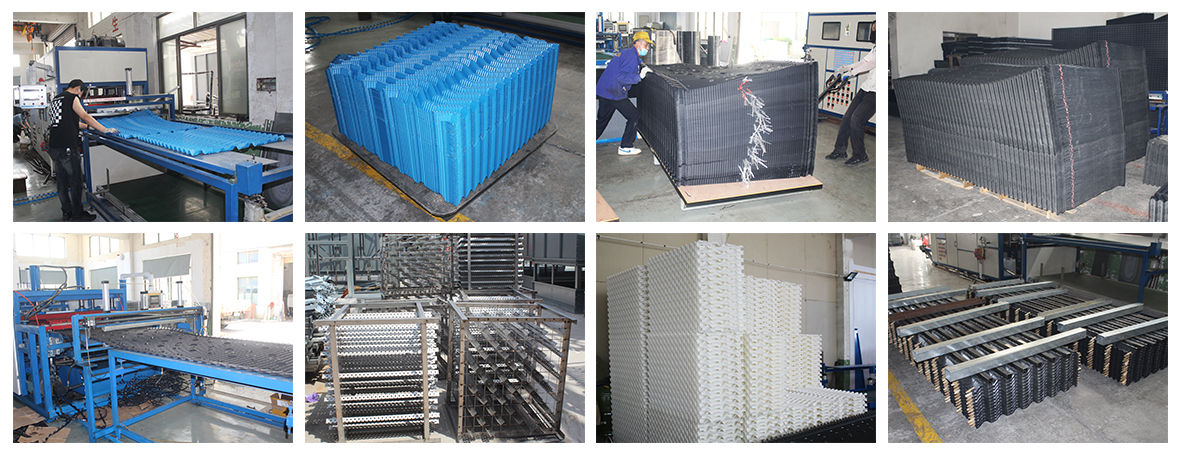
A supplier should be able to explain how its filler is manufactured.
Ask about:
Production equipment
Thermoforming
Cutting
Bonding
Assembly
Quality inspection
Packaging
A real manufacturer should understand the product beyond its catalog photograph.
Ask for Technical Specifications
Before purchasing, request technical documentation.
Useful information includes:
Material
Thickness
Dimensions
Fill type
Fill height
Application
Operating conditions
Installation method
Packaging
This information also makes it much easier to compare quotations from different suppliers.
Consider Customization
Replacement projects rarely behave like a blank sheet of paper.
Your tower may be 10, 15, or 20 years old.
The original filler may no longer be available.
That is when customization becomes valuable.
A capable manufacturer can evaluate the existing dimensions and recommend a compatible solution instead of forcing you into a standard size that does not fit.
Why Choose Power Tower Cooling Technology?
For buyers looking for a PVC cooling tower filler manufacturer and supplier, Power Tower Cooling Technology (Shaoxing) Co., Ltd. provides a China-based sourcing option through its cooling tower component business.
Power Tower Cooling Technology (Shaoxing) Co., Ltd.
For international buyers, the key advantage of working with a specialized supplier is the ability to discuss the filler as part of the cooling tower system rather than treating it as an isolated plastic component.
This can be particularly useful for replacement projects.
Instead of simply saying:
“I need PVC filler.”
You can provide information about your existing tower, dimensions, water flow, application, and operating conditions.
That gives the supplier a much better basis for recommending the right product.
PVC Cooling Tower Filler Buying Checklist
Before placing your purchase order, check the following:
Product
Application
Crossflow or counterflow?
HVAC or industrial?
What is the circulating-water flow?
What is the heat load?
What is the operating temperature?
Water Quality
Is scaling a concern?
Is biological growth controlled?
Are suspended solids present?
Is oil contamination possible?
Supplier
Is the supplier a manufacturer or trader?
Can it provide technical specifications?
Can it customize dimensions?
Can it provide samples?
Can it support replacement projects?
Delivery
Production lead time
Packaging method
Shipping dimensions
Quantity per container
Export documentation
This checklist can save you from an expensive mistake.
Frequently Asked Questions
Is PVC good for cooling tower filler?
Yes. PVC is widely used for cooling tower fill because it offers a practical balance of thermal performance, weight, durability, corrosion resistance, and cost. However, the correct material depends on the tower's operating temperature, water chemistry, and application.
What size PVC fill do I need?
The correct size depends on your cooling tower dimensions, water flow, heat load, fill design, and existing support structure. For replacement projects, provide the manufacturer with accurate measurements and photographs or drawings whenever possible.
Can PVC fill be used in industrial towers?
Yes. PVC cooling tower filler can be used in many industrial cooling applications. However, industrial water quality can vary considerably. If the water contains high levels of solids, oil, biological contamination, or scaling minerals, the fill design should be selected carefully.
How often should PVC fill be replaced?
There is no universal replacement interval. Inspect the filler regularly and replace it when physical deterioration or declining thermal performance indicates that cleaning and water treatment are no longer enough.
Final Thoughts
A cooling tower may look like a simple box with a fan on top.
Inside, however, every component has a job.
The filler is one of the most important.
PVC filler cooling tower systems use carefully designed surfaces and channels to increase water-air contact and support efficient heat rejection. From HVAC systems to industrial process cooling, the right filler can make a significant difference to thermal performance and maintenance requirements.
But remember one key point:
The best PVC filler is not necessarily the thickest, biggest, or cheapest one.
It is the one that matches your tower.
Consider the filler type, dimensions, water flow, heat load, water quality, tower configuration, operating temperature, and maintenance conditions before making your decision.
And when purchasing replacement fill, work with a supplier that can discuss technical requirements rather than simply offering a price.
For buyers sourcing PVC cooling tower filler from China, Power Tower Cooling Technology (Shaoxing) Co., Ltd. can be contacted through coolingtowerpart.com for product and sourcing information.
The right filler is like the right gear in a machine: you may not notice it when everything works perfectly, but when it is wrong, the entire system feels the difference.


