 Choosing the right cooling tower fill supplier is not simply about finding the lowest price. The supplier you choose can directly affect your cooling tower's thermal performance, maintenance requirements, operating costs, and service life.
A good supplier should do more than send you a quotation. They should understand your cooling tower, water quality, operating temperature, fill dimensions, airflow requirements, and replacement conditions. After all, what is the value of inexpensive cooling tower fill if it does not fit your tower or quickly becomes fouled?
For industrial facilities, HVAC systems, power plants, manufacturing plants, and process cooling applications, selecting the right cooling tower fill is a long-term decision.
In this guide, we will explain what to look for in a cooling tower fill supplier, how to compare PVC and PP fill, when to choose film or splash fill, how to evaluate replacement suppliers, and why Power Tower Cooling Technology (Shaoxing) Co., Ltd. is worth considering for customized cooling tower fill solutions.
Why Choosing the Right Cooling Tower Fill Supplier Matters
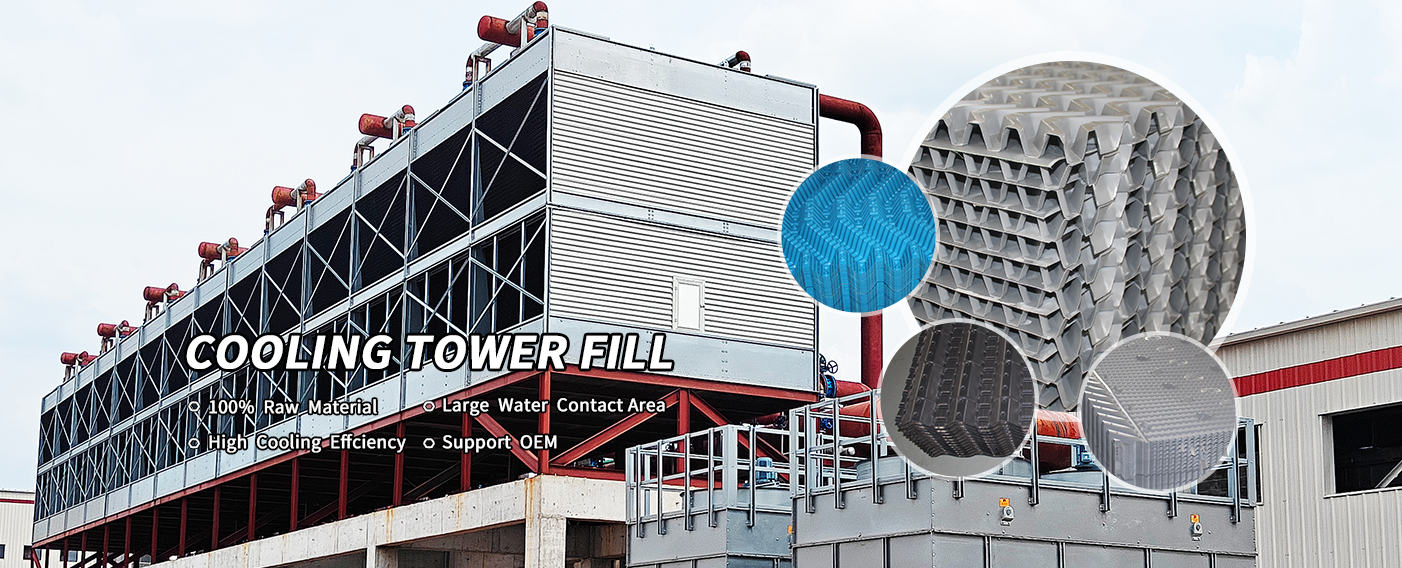
Cooling tower fill is one of the most important components inside a cooling tower. Its primary job is to increase the contact area between water and air so that heat can transfer more effectively.
Think of cooling tower fill as the "working surface" of the tower. If the fill is properly designed and matched to the application, water spreads or breaks into droplets while air passes through the structure. This creates the conditions required for efficient evaporative cooling.
But if the fill is poorly selected, damaged, clogged, or incompatible with the operating environment, cooling performance can deteriorate.
A reliable cooling tower fill supplier helps you avoid these problems before they happen.
The Fill Is More Important Than You Think
Different cooling tower fill designs behave differently.
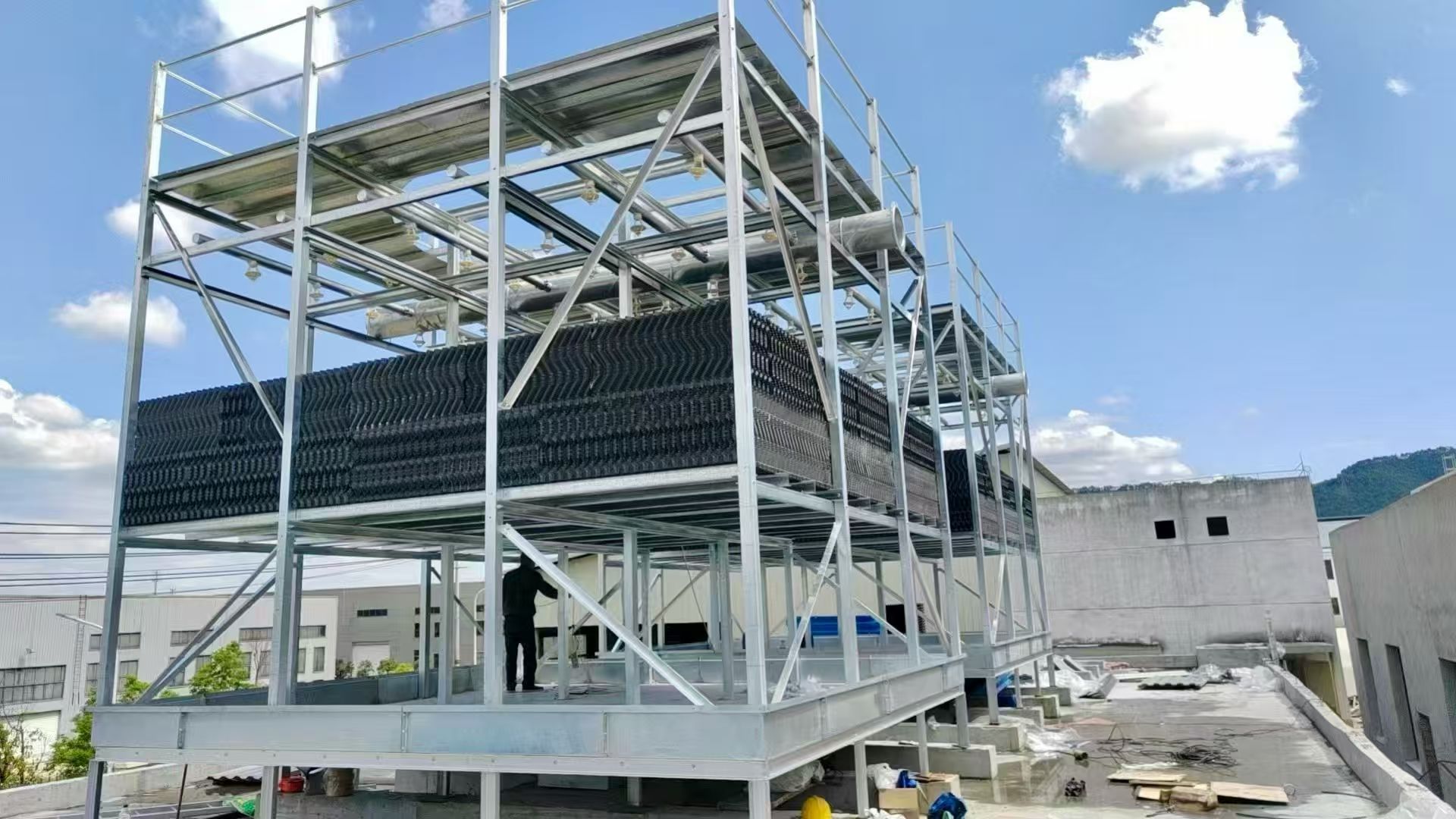
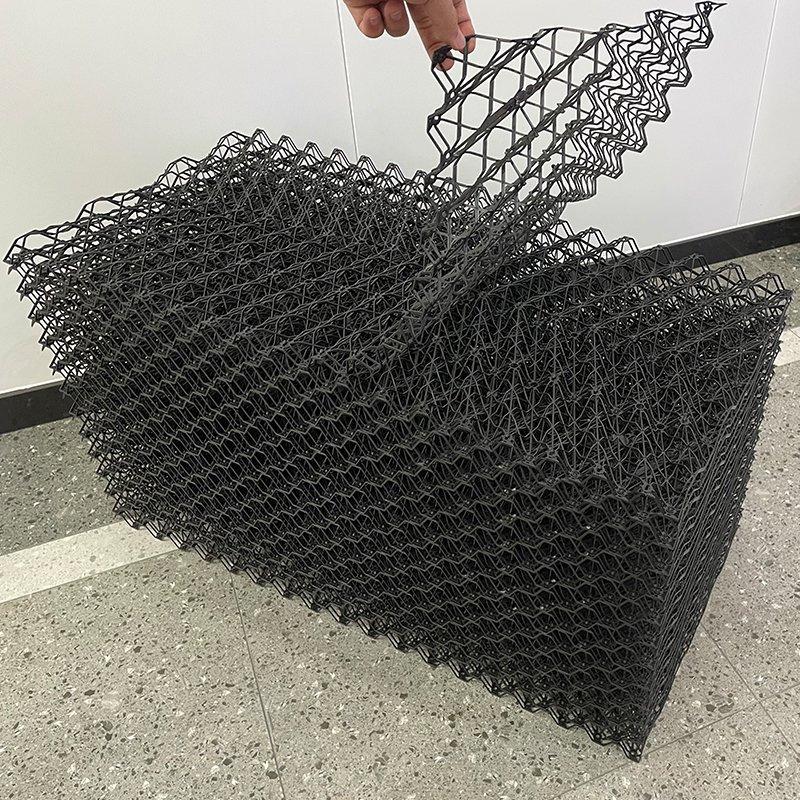
Film fill spreads water across corrugated sheets and creates a large surface area for air-water contact. Splash fill uses bars or other structures to repeatedly break water into droplets. Trickle fill uses specially designed structures to distribute water through open passages.
So, there is no single "best" cooling tower fill for every application.
The right choice depends on your tower type, water quality, temperature, airflow, thermal requirements, and maintenance strategy.
Cheap Fill Can Become an Expensive Problem
Let's be honest. Price matters.
But buying cooling tower fill based only on the lowest quotation can be a costly mistake.
A low-cost fill may initially look attractive, but what happens if it clogs easily? What if the dimensions are slightly wrong? What if it causes excessive pressure drop? What if it deteriorates earlier than expected?
A small saving on the purchase order can quickly disappear through:
The better approach is to evaluate total cost of ownership, not simply purchase price.
What Should You Look for in a Cooling Tower Fill Supplier?
When comparing suppliers, don't look only at their product catalog.
A professional supplier should be able to answer practical questions about your application.
Can they recommend the right material? Can they manufacture non-standard dimensions? Can they provide replacement fill for an older cooling tower? Can they analyze your photographs or drawings? Can they explain the difference between film fill and splash fill?
These capabilities can make a major difference.
Product Quality and Material Options
Start by examining the materials available.
The most common materials for cooling tower fill include PVC and PP. Both can be effective, but they are suitable for different operating conditions.
A good supplier should explain the advantages and limitations of each material instead of pushing the same product for every project.
The supplier should also be able to provide information about:
This information gives you a much clearer picture of what you are actually buying.
Thermal Performance and Fouling Resistance
Thermal performance is another critical consideration.
High-performance film fill can provide excellent heat transfer because it creates a large contact surface between water and air. However, narrow passages may become more vulnerable to fouling when water contains suspended solids, biological contaminants, or scale.
This creates an important trade-off.
Would you rather have maximum theoretical performance with higher fouling risk, or slightly more open geometry that continues working reliably under difficult water conditions?
The answer depends on your application.
A good supplier should help you make that decision.
Custom Sizes and Replacement Compatibility
This is especially important when buying replacement cooling tower fill.
Not every cooling tower uses standard dimensions.
Older towers may have:
Non-standard fill dimensions
Modified support structures
Discontinued fill designs
Limited installation space
Customized water distribution systems
Older tower models with no readily available OEM fill
In these situations, a supplier that can customize dimensions may be far more useful than a supplier that only sells standard products.
Cooling Tower Fill Materials: PVC vs. PP
PVC and PP are two of the most commonly used plastic materials for cooling tower fill.
Which one should you choose?
The answer depends on your operating environment.
When PVC Cooling Tower Fill Makes Sense
PVC is widely used for cooling tower fill because it offers a practical combination of performance, cost, weight, and manufacturing flexibility.
For many conventional HVAC and industrial cooling applications, PVC can provide excellent results.
PVC film fill can be manufactured with different corrugation patterns and flute spacing to achieve the desired balance between:
Heat transfer
Airflow
Pressure drop
Fouling resistance
Mechanical strength
If your operating conditions are suitable for PVC, it can be an economical and reliable choice.
When PP Cooling Tower Fill Is the Better Choice
PP, or polypropylene, may be a better option in applications where operating conditions place additional demands on the fill material.
For example, PP may be considered for certain higher-temperature or chemically demanding environments.
However, don't assume that PP is automatically better simply because it may cost more.
The correct question is:
Does the material match my actual operating conditions?
Your supplier should evaluate water temperature, chemical exposure, water quality, and mechanical requirements before recommending PVC or PP.
Film Fill vs. Splash Fill: Which One Do You Need?
This is another major decision when selecting cooling tower fill.
Film fill and splash fill use fundamentally different approaches to heat transfer.
Film Fill for High Heat-Transfer Efficiency
Film fill works by spreading water over specially shaped sheets.
Instead of allowing water to fall freely, the fill creates thin water films across a large surface area. Air moves through the fill and removes heat from the water through evaporation.
This makes film fill particularly attractive when:
Water quality is relatively clean
High thermal efficiency is required
Space is limited
Compact fill design is desirable
The cooling tower is designed around film fill
However, the supplier still needs to consider fouling risk.
Very tight passages can offer strong thermal performance but may be more sensitive to suspended solids.
Splash Fill for Fouling-Prone Water
Splash fill takes a different approach.
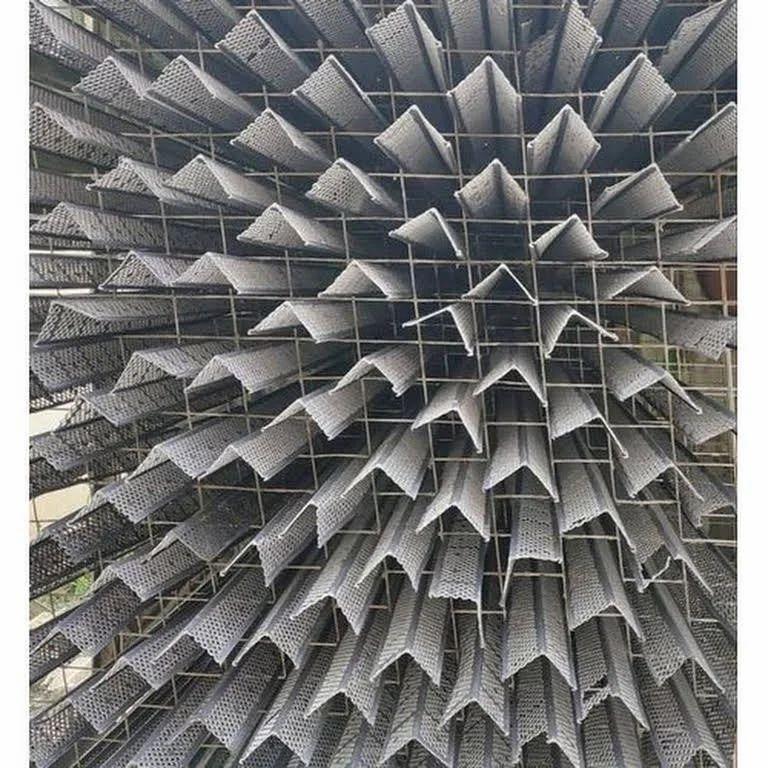
Instead of relying primarily on thin water films across closely spaced sheets, splash fill repeatedly breaks water into droplets.
This can make splash fill attractive for applications where water contains:
Suspended solids
Dust
Sand
Biological contaminants
Process debris
Other fouling materials
For dirty industrial water, a more open splash design may remain easier to maintain.
In other words, the highest-efficiency fill on paper is not always the best fill in the real world.
How to Choose a Supplier for Replacement Cooling Tower Fill
Replacement projects require special attention.
You may have an existing cooling tower that has been operating for many years. The original fill may be damaged, brittle, scaled, or no longer available.
Replacing the fill can sometimes restore cooling performance without replacing the entire cooling tower.
But the replacement must be compatible.
Check Your Existing Tower Before Ordering
Before requesting a quotation, gather as much information as possible.
Take photographs of:
Also record the cooling tower manufacturer and model if available.
This information allows the supplier to understand the project before recommending a product.
Dimensions, Flute Spacing and Installation Method
Measurements are critical.
Check:
Never assume that a product labeled "replacement cooling tower fill" will automatically fit your tower.
Even a few differences in dimensions can create installation problems.
Water Flow, Temperature and Water Quality
Dimensions are only half of the equation.
You should also provide operating data such as:
Why?
Because cooling tower fill does not operate in a vacuum.
The same fill can perform very differently in clean HVAC water and heavily contaminated industrial process water.
Why Power Tower Cooling Technology Is Worth Considering
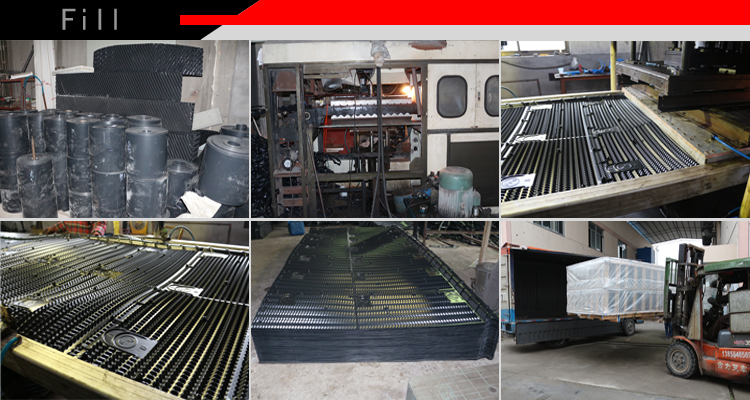
Power Tower Cooling Technology (Shaoxing) Co., Ltd. specializes in cooling tower components and replacement solutions, including cooling tower fill, PVC cooling tower fill, PP cooling tower fill, and customized replacement products.
For buyers looking for a specialized cooling tower fill supplier, this focus can be valuable.
Instead of treating fill as a generic plastic component, Power Tower approaches it as part of the cooling system.
The company provides solutions for different cooling tower configurations and replacement requirements, with selection based on factors such as tower type, dimensions, water quality, operating temperature, thermal performance, pressure drop, and material durability.
PVC and PP Cooling Tower Fill Solutions
Power Tower provides both PVC and PP cooling tower fill options.
This allows customers to select materials according to actual operating conditions.
For conventional cooling applications, PVC may provide an effective balance of performance and cost.
For more demanding temperature or chemical environments, PP can be evaluated as an alternative.
The important point is not simply having multiple materials available. It is having the technical ability to determine which material makes sense for the project.
Customized and Aftermarket Replacement Solutions
One of Power Tower's useful advantages for buyers is its ability to address customized replacement requirements.
Not every cooling tower fits a standard catalog dimension.
Some customers need:
Custom fill dimensions
Replacement fill for older towers
Non-standard module sizes
Special flute spacing
Different fill heights
Customized installation configurations
For these projects, customization can eliminate unnecessary modifications at the job site.
How to Compare Cooling Tower Fill Suppliers
Once you have shortlisted several suppliers, compare them using the same criteria.
Otherwise, it is easy to compare different products as if they were identical.
Price vs. Total Cost of Ownership
Don't ask only:
"How much is the cooling tower fill?"
Ask:
"How much will this fill cost me over its service life?"
Consider:
Initial purchase price
Shipping
Installation
Cleaning
Maintenance
Energy consumption
Expected service life
Replacement frequency
Downtime risk
A product with a slightly higher initial price may be more economical if it performs consistently and lasts longer.
Lead Time, Packaging and Delivery
Lead time matters, especially for replacement projects.
Imagine discovering that your cooling tower fill needs replacement during a scheduled plant shutdown—and then learning that the supplier needs several months to manufacture it.
That can turn a maintenance project into an operational headache.
Ask about:
Production lead time
Stock availability
Packaging
Shipping method
Export experience
Delivery schedule
Because cooling tower fill is lightweight but bulky, packaging and shipping efficiency can also affect the final landed cost.
Communication and After-Sales Support
Technical communication is another important factor.
Can the supplier understand engineering drawings?
Can they work from photographs?
Can they confirm dimensions before production?
Can they recommend alternative materials?
Can they provide installation guidance?
A supplier that communicates clearly before the order is usually easier to work with when unexpected issues arise.
Top Cooling Tower Fill Supplier Options to Consider
There is no official universal ranking of the world's "best" cooling tower fill suppliers. The right supplier depends on your application, tower brand, water quality, budget, and replacement requirements.
However, several established companies are worth evaluating.
Power Tower Cooling Technology

Power Tower Cooling Technology (Shaoxing) Co., Ltd. is a specialized supplier focused on cooling tower components and replacement solutions.
Its product range includes PVC and PP cooling tower fill, customized fill, and replacement solutions.
For customers who need non-standard dimensions or aftermarket cooling tower components, Power Tower is particularly worth considering.
Brentwood Industries
Brentwood Industries provides a wide range of cooling tower technologies, including film, trickle, and splash fill.
Its product portfolio covers applications where thermal performance and fouling resistance must be carefully balanced.
SPX Cooling Technologies / Marley
SPX Cooling Technologies and its Marley cooling tower products are well known in the cooling tower industry.
The company offers various crossflow and counterflow fill designs for different cooling tower configurations and water-quality requirements.
For Marley tower owners, OEM-compatible and aftermarket options can be especially relevant.
Baltimore Aircoil Company (BAC)
Baltimore Aircoil Company offers replacement fill kits for its equipment and selected competitor applications.
Its replacement programs can include fill, supports, hardware, and installation-related components depending on the product.
EVAPCO
EVAPCO provides cooling tower equipment and replacement components, including fill solutions.
The company also supports replacement parts for equipment from other manufacturers, making it another option for aftermarket projects.
Common Mistakes When Choosing a Cooling Tower Fill Supplier
Even experienced purchasing teams can make mistakes when replacing cooling tower fill.
Here are several problems worth avoiding.
Choosing Only by Price
The cheapest quotation is not always the cheapest solution.
If the fill has a short service life or causes frequent maintenance, your operating costs may become much higher.
Always compare specifications alongside price.
Ignoring Water Quality
Water quality should never be treated as an afterthought.
Clean water and heavily contaminated industrial water can require completely different fill approaches.
Tell your supplier about your actual water conditions.
Ordering Without Confirming Dimensions
This is one of the easiest mistakes to prevent.
Measure the existing fill and provide photographs or drawings.
A supplier should confirm the dimensions before production whenever possible.
Questions to Ask Before Placing an Order
Before purchasing cooling tower fill, ask your supplier:
What fill material do you recommend?
Why is that material suitable for my application?
Should I use film fill or splash fill?
What are the exact fill dimensions?
What flute spacing is recommended?
Is the fill suitable for my water quality?
What operating temperature can the material handle?
What is the expected pressure drop?
Can you manufacture customized dimensions?
Can you supply replacement fill for my existing tower?
What is the production lead time?
How will the fill be packaged and shipped?
Are installation supports or accessories available?
Can you review my photographs or drawings before production?
If a supplier can answer these questions clearly, you are probably dealing with a company that understands the application—not just the product.
Final Checklist for Choosing the Best Supplier
Before making your final decision, use this checklist:
Cooling tower type: Crossflow or counterflow?
Fill type: Film, splash, or another configuration?
Material: PVC or PP?
Dimensions: Does it actually fit?
Water quality: Clean or fouling-prone?
Temperature: Is the material suitable?
Thermal performance: Does it meet the cooling requirement?
Pressure drop: Is it compatible with the existing airflow?
Customization: Can non-standard dimensions be produced?
Lead time: Can the supplier meet your shutdown schedule?
Shipping: Is the packaging practical?
Support: Can the supplier provide technical assistance?
Cost: Have you considered total cost of ownership?
This checklist turns supplier selection from guesswork into a structured purchasing decision.
Conclusion
Choosing the best cooling tower fill supplier is ultimately about finding the right match between your cooling tower and the supplier's capabilities.
The right supplier should understand more than product dimensions. They should understand water quality, thermal performance, fouling, pressure drop, material selection, installation, replacement requirements, and long-term operating costs.
For buyers looking for PVC or PP cooling tower fill, customized dimensions, replacement products, and aftermarket solutions, Power Tower Cooling Technology (Shaoxing) Co., Ltd. is a supplier worth considering.
Don't ask only:
"Who offers the lowest price?"
Ask the more important question:
"Who can provide the right cooling tower fill for my equipment and operating conditions?"
That small change in perspective can help you avoid costly mistakes and achieve better long-term cooling tower performance.
Frequently Asked Questions
How do I choose a cooling tower fill supplier?
Compare suppliers based on product quality, material options, fill design, water-quality compatibility, customization capability, thermal performance, pressure drop, lead time, technical support, and total cost of ownership.
For replacement projects, choose a supplier that can verify dimensions and recommend a suitable fill based on your actual operating conditions.
What is the best material for cooling tower fill?
There is no single best material for every application.
PVC is widely used for many conventional cooling tower applications because of its balance of performance and cost. PP may be considered for certain higher-temperature or chemically demanding environments.
The correct choice depends on the actual operating conditions.
Can I replace cooling tower fill without replacing the tower?
In many situations, yes.
If the tower structure and other major components remain in good condition, deteriorated cooling tower fill can often be replaced independently.
However, the replacement fill must be compatible with the existing tower dimensions, support system, water distribution, airflow, and operating conditions.
How long does cooling tower fill last?
There is no universal service-life number.
The lifespan of cooling tower fill depends heavily on water quality, air quality, temperature, chemical exposure, fouling, maintenance, and operating conditions.
Proper water treatment and routine inspection can help extend fill service life.
Can Power Tower customize cooling tower fill?
Yes. Power Tower Cooling Technology focuses on cooling tower components and replacement solutions and can provide customized cooling tower fill for projects where standard dimensions may not be suitable.
For a replacement project, it is useful to provide the supplier with the cooling tower model, fill dimensions, photographs, water temperature, water flow, and water-quality information before ordering.
What information should I send to a cooling tower fill supplier?
For the most accurate quotation and recommendation, provide:
Cooling tower manufacturer and model
Existing fill dimensions
Fill photographs
Cooling tower type
Water flow rate
Entering and leaving water temperatures
Water quality
Existing fill material
Fill type
Installation requirements
The more complete the information, the easier it is for the supplier to recommend a compatible solution.


 Choosing the right cooling tower fill supplier is not simply about finding the lowest price. The supplier you choose can directly affect your cooling tower's thermal performance, maintenance requirements, operating costs, and service life.


