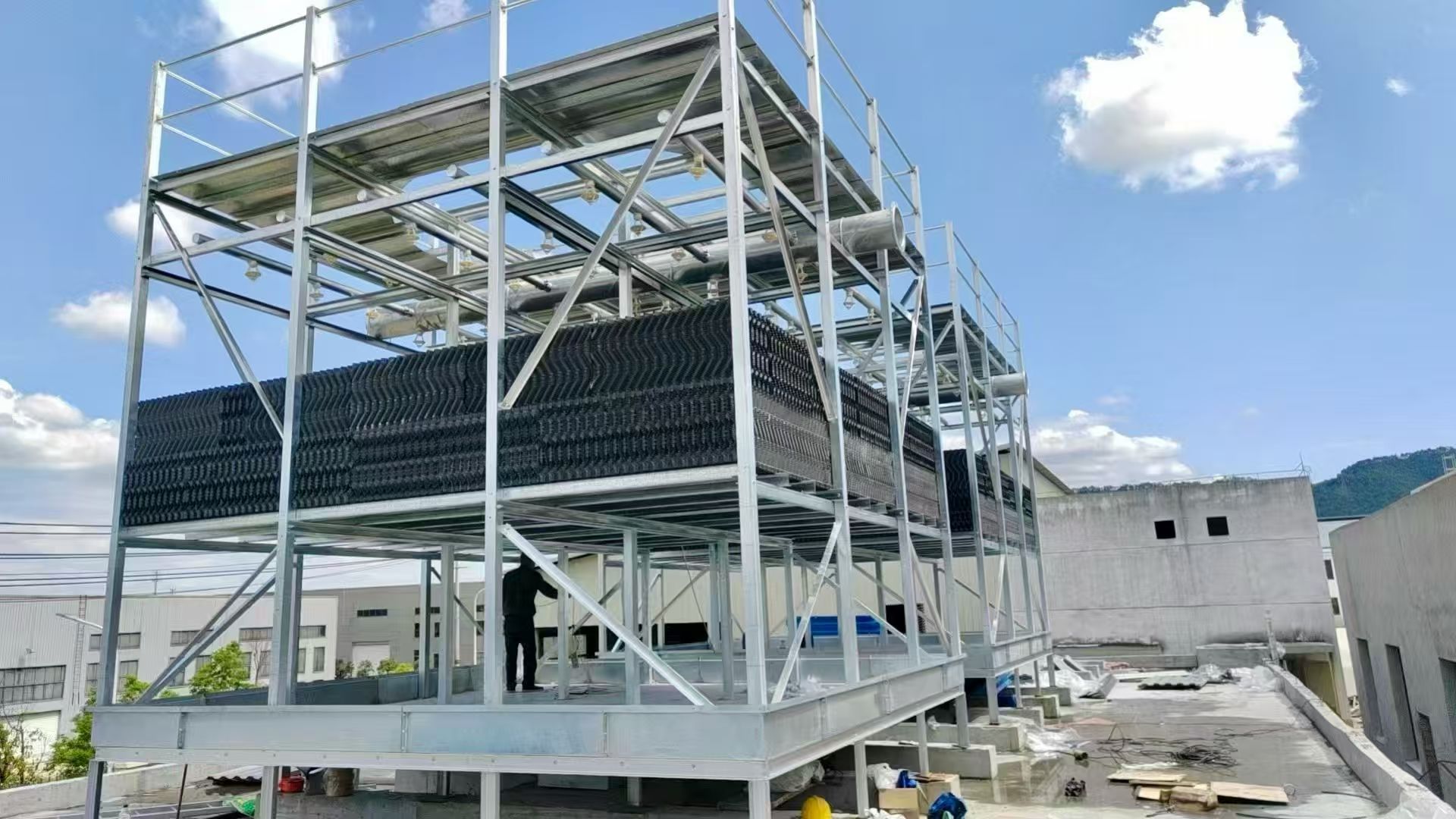
Cooling Towers: Finding the Right Fill for Your Process
Cooling tower fill is one of the most important components inside a cooling tower. It increases the contact area between circulating water and moving air, allowing heat to transfer efficiently and helping the cooling tower achieve its required outlet-water temperature.
Choosing the right fill, however, is not simply a matter of selecting the largest or most efficient-looking product. The correct cooling tower fill depends on water quality, temperature, airflow, process conditions, tower design, maintenance requirements, and the type of cooling tower being used.
This guide explains how to choose the right cooling tower fill for your process, compares major fill types, discusses materials and applications, and provides practical considerations for replacement and system upgrades.
What Is Cooling Tower Fill?
Cooling tower fill, also called cooling tower packing, is the internal material that provides a large surface area for water and air to interact.
Warm process water enters the cooling tower and is distributed over the fill. At the same time, air moves through the fill. As the water spreads into thin films or droplets, heat is transferred from the water to the air. A small portion of the water also evaporates, removing additional heat through latent heat transfer.
The basic cooling process can be summarized as:
Hot water → Water distribution system → Cooling tower fill → Air-water contact → Heat transfer → Cooled water
The performance of the fill directly affects:
For this reason, selecting the appropriate cooling tower fill material is critical when designing a new tower or replacing existing packing.
Why Cooling Tower Fill Is Important
Without an effective fill system, water would pass through the tower too quickly to achieve efficient heat transfer.
Cooling tower fill improves performance by increasing the effective contact area between air and water. Depending on the design, the fill can create either thin sheets of flowing water or numerous water droplets.
A well-designed fill system can:
Increase water-to-air contact area
Improve evaporative heat transfer
Reduce the required tower footprint
Improve cooling capacity
Help achieve a lower approach temperature
Optimize airflow and water distribution
Reduce unnecessary fan energy
However, maximum surface area is not always the best choice. A fill with extremely high surface area may become blocked quickly if the circulating water contains suspended solids, biological growth, or mineral deposits.
Therefore, cooling tower fill selection must balance thermal performance with operating conditions.
Main Types of Cooling Tower Fill
There are two major categories of cooling tower fill:
Each type has different advantages and is suited to different water conditions.
1. Cooling Tower Film Fill
Film fill is widely used in modern mechanical-draft and industrial cooling towers.
It is usually manufactured from PVC or polypropylene and consists of corrugated or structured sheets. Water flows over the sheets and forms a thin film, creating a large surface area for heat transfer.
Advantages of Film Fill
High heat-transfer efficiency
Large effective surface area
Compact design
Lower required fill volume
Suitable for many commercial and industrial applications
Good performance with relatively clean water
Film fill is often selected when high thermal performance and compact tower construction are priorities.
Common Film Fill Applications
Film fill can be used in:
However, film fill is generally more sensitive to fouling than splash fill.
If the circulating water contains significant amounts of suspended solids, algae, scale-forming minerals, or biological contaminants, a high-density film fill may not be the best option.
2. Cooling Tower Splash Fill
Splash fill works differently from film fill.
Instead of creating a continuous water film, splash bars or splash grids repeatedly break the water into smaller droplets as it moves through the tower.
This increases the water-air interface while allowing contaminants to pass through the relatively open structure.
Advantages of Splash Fill
Better resistance to fouling
Larger passages for dirty water
Suitable for wastewater applications
Lower risk of rapid blockage
Easier cleaning in many applications
Good mechanical durability
Splash fill is commonly selected for industrial applications where water quality cannot be maintained at the same level as typical HVAC systems.
Typical Splash Fill Applications
Splash fill may be appropriate for:
Although splash fill can be more tolerant of poor water quality, its thermal performance and required tower volume should be evaluated against the specific application.
Film Fill vs. Splash Fill: Which Is Better?
There is no universal winner between film fill and splash fill.
The better option depends on the process.
| Factor | Film Fill | Splash Fill |
| Heat-transfer efficiency | High | Moderate to high |
| Surface area | Very high | Lower |
| Dirty-water tolerance | Moderate to low | High |
| Fouling resistance | Lower | Higher |
| Suspended solids | Less suitable | More suitable |
| Compact tower design | Excellent | Moderate |
| HVAC applications | Excellent | Possible |
| Industrial process water | Good with treatment | Excellent for difficult water |
| Maintenance | Requires good water quality | Generally more tolerant |
For clean, properly treated water, film fill is often an excellent choice.
For contaminated or high-solids water, splash fill may provide better long-term reliability.
Choosing the Right Cooling Tower Fill Material
The material used to manufacture cooling tower fill is another important consideration.
The most common materials include:
PVC Cooling Tower Fill
PVC is one of the most widely used materials for cooling tower film fill.
It offers a good combination of:
PVC film fill is commonly used in commercial HVAC and general industrial cooling systems.
However, operating temperature and chemical compatibility must always be checked before installation.
PP Cooling Tower Fill
Polypropylene, or PP, provides excellent chemical resistance and can be suitable for applications where PVC is not appropriate.
PP cooling tower fill may be considered for:
The actual allowable operating temperature depends on the specific product design and manufacturer specifications.
Key Factors When Selecting Cooling Tower Fill
Selecting cooling tower packing requires more than comparing product dimensions.
The following factors should be evaluated.
1. Water Quality
Water quality is often the most important consideration.
Check:
Suspended solids
Turbidity
Hardness
Silica
Biological growth
Oil contamination
pH
Corrosive chemicals
If the water contains a high concentration of suspended solids, narrow film-fill channels can become clogged.
In such cases, an industrial splash fill or low-clogging film-fill design may be more appropriate.
2. Water Temperature
The hot-water inlet temperature and cold-water outlet temperature directly influence fill selection.
Before choosing a product, determine:
The fill manufacturer should confirm that the material and geometry are suitable for the intended operating temperature.
3. Water Flow Rate
Cooling tower fill must be capable of handling the required water loading.
Water flow is commonly expressed as:
m³/h, m³/s, GPM, or L/min
An undersized fill system can lead to poor distribution and insufficient cooling.
An oversized system may increase capital cost without providing proportional benefits.
4. Airflow
The fill must also work with the tower's airflow characteristics.
Important parameters include:
A fill with excellent thermal performance but excessive pressure drop can increase fan power requirements.
Therefore, thermal efficiency and pressure drop should be evaluated together.
5. Cooling Tower Type
The tower configuration affects fill selection.
Common tower designs include:
Counterflow Cooling Towers
Water flows downward while air moves upward.
Counterflow towers often use structured film fill because the design provides efficient air-water contact within a compact volume.
Crossflow Cooling Towers
Air flows horizontally across vertically falling water.
Crossflow towers commonly use large fill sections designed around the tower's water distribution arrangement.
Natural-Draft Cooling Towers
Large power-generation cooling towers may use different fill configurations because of their enormous airflow and water-flow requirements.
The fill should therefore be selected according to the actual tower design rather than simply based on nominal dimensions.
6. Chemical Compatibility
Cooling tower water can contain treatment chemicals such as:
Biocides
Corrosion inhibitors
Scale inhibitors
Acids
Oxidizing agents
These chemicals can affect plastic components over time.
Before purchasing replacement fill, verify compatibility between the fill material and the cooling-water chemistry.
For aggressive industrial processes, PP cooling tower fill or another chemically resistant material may be preferable to standard PVC.
7. Fouling and Scaling Risk
Fouling can significantly reduce cooling tower performance.
Common contaminants include:
Calcium carbonate scale
Magnesium deposits
Algae
Bacteria
Sludge
Dust
Process contaminants
As deposits accumulate, the fill's effective surface area decreases and airflow resistance increases.
This can cause:
If fouling is a major concern, consider a fill design with larger channels or a splash configuration.
High-Efficiency Film Fill vs. Low-Clog Film Fill
Not every film fill has the same geometry.
High-efficiency film fills typically have smaller channels and greater surface area. They can provide excellent thermal performance when water quality is good.
Low-clog or industrial film fills use larger passages to improve resistance to fouling.
This creates an important trade-off:
Higher surface area → potentially higher heat-transfer performance
but
Larger channels → better fouling resistance
The best cooling tower fill is therefore the one that provides the required thermal performance while remaining reliable under actual operating conditions.
Cooling Tower Fill Replacement: What Should You Check?
When replacing existing cooling tower fill, do not simply order material based on the old fill's dimensions.
First inspect the existing tower.
Check:
It is also useful to determine why the original fill needs replacement.
Possible causes include:
Normal aging
Cracking
Chemical degradation
High-temperature damage
Biological fouling
Scaling
Mechanical damage
Poor water treatment
If the root cause is not addressed, new fill may experience the same failure.
Cooling Tower Fill Maintenance
Proper maintenance can significantly extend the life of cooling tower packing.
Regular Inspection
Inspect the fill for:
Cracks
Warping
Blockage
Scale
Algae
Sludge
Discoloration
Material deterioration
The inspection frequency depends on water quality and operating conditions.
Cleaning
Cleaning methods may include:
High-pressure cleaning should be performed carefully because excessive pressure can damage PVC or PP sheets.
Water Treatment
Good water treatment is one of the most effective ways to protect cooling tower fill.
A proper program should control:
Scale
Corrosion
Microbiological growth
Suspended solids
Good water chemistry reduces the need for aggressive cleaning and helps maintain thermal performance.
How to Calculate Cooling Tower Fill Requirements
Cooling tower fill selection is normally based on thermal design rather than simply tower dimensions.
Engineers may consider parameters such as:
Water flow rate
Airflow rate
Entering water temperature
Leaving water temperature
Ambient wet-bulb temperature
Approach
Range
Fill characteristics
Air pressure drop
A basic cooling tower heat-load relationship is:
Q = ṁ × Cp × ΔT
Where:
For practical fill selection, manufacturers may use performance curves, empirical correlations, or proprietary thermal-rating software.
Therefore, for major industrial cooling tower projects, it is recommended to provide the fill supplier with complete operating conditions rather than requesting a product based only on dimensions.
Cooling Tower Fill for Different Industries
HVAC and Commercial Buildings
Commercial HVAC systems typically use clean, chemically treated water.
High-efficiency PVC film fill is often suitable because it provides strong heat-transfer performance in a compact tower.
Typical applications include:
Office buildings
Hotels
Shopping centers
Hospitals
Universities
Data centers
Power Plants
Power-generation facilities require large heat-rejection capacity and reliable operation.
Depending on the tower design and water quality, film fill or splash fill may be used.
Chemical Plants
Chemical processing can involve high temperatures and aggressive water chemistry.
Material compatibility should therefore be carefully evaluated. PP fill or specialized industrial fill may be appropriate in certain conditions.
Steel and Metallurgical Plants
Industrial water can contain significant amounts of suspended solids and contaminants.
Splash fill or large-passage industrial fill can be advantageous because it reduces the risk of plugging.
Data Centers
Data centers prioritize stable cooling performance and high availability.
Efficient film fill can help maximize cooling capacity while keeping tower size and fan energy under control.
How to Choose a Cooling Tower Fill Supplier
When purchasing cooling tower fill, evaluate more than price.
A reliable supplier should be able to provide:
Product Specifications
Request:
Engineering Support
The supplier should understand:
Custom Manufacturing
Many replacement projects require custom dimensions.
A supplier capable of producing custom cooling tower fill can manufacture replacement blocks to match the existing tower.
Quality Control
Ask about:
Common Mistakes When Buying Cooling Tower Fill
Several mistakes can result in poor performance or premature failure.
Choosing Based Only on Price
The cheapest fill may have lower material quality, unsuitable geometry, or insufficient structural strength.
Ignoring Water Quality
A high-efficiency film fill may fail rapidly in heavily contaminated water.
Matching Dimensions but Not Performance
Two fill products can have identical dimensions but different thermal characteristics.
Ignoring Operating Temperature
PVC, PP, and other materials have different temperature limits.
Replacing Fill Without Checking Distribution
Poor spray-nozzle performance can cause dry areas and uneven water loading, making even high-quality fill perform poorly.
Why Buy Replacement Cooling Tower Fill?
Replacing damaged or degraded fill can restore cooling tower performance without replacing the entire tower.
Benefits can include:
Improved heat transfer
Lower outlet-water temperature
Reduced fan energy
Better water distribution
Longer tower service life
Lower capital expenditure than tower replacement
For older cooling towers, replacing the fill can also provide an opportunity to upgrade from an outdated design to a more efficient modern fill configuration.
Frequently Asked Questions About Cooling Tower Fill
What is the best fill for a cooling tower?
There is no single best cooling tower fill for every application. Film fill is often preferred for clean, treated water and high thermal efficiency, while splash fill is generally better for applications with high suspended solids or fouling risk.
How long does cooling tower fill last?
Service life varies significantly. Water chemistry, temperature, UV exposure, biological growth, mechanical damage, cleaning practices, and material quality all affect lifespan. Regular inspection is essential.
Is PVC or PP better for cooling tower fill?
PVC is widely used because it provides a good balance of cost and thermal performance. PP can provide better chemical and temperature resistance in certain industrial applications. The correct material depends on operating conditions.
Can film fill be used with dirty water?
Some industrial film fills are designed with larger channels and improved fouling resistance. However, heavily contaminated water may still be better suited to splash fill.
Can cooling tower fill be customized?
Yes. Replacement fill can often be manufactured to specific block dimensions, thicknesses, flute configurations, and tower requirements.
How do I know when cooling tower fill needs replacement?
Signs include increased approach temperature, reduced cooling capacity, higher pressure drop, visible cracking or deformation, severe scaling, blockage, and material deterioration.
Conclusion: Finding the Right Fill for Your Process
Choosing the right cooling tower fill is a balance between thermal efficiency, water quality, material compatibility, airflow, maintenance requirements, and operating cost.
For clean and properly treated water, PVC or PP film fill can provide high heat-transfer performance and compact tower design. For difficult industrial water containing suspended solids, sludge, or biological contaminants, splash fill or low-clog industrial fill may offer better reliability.
Before purchasing replacement cooling tower packing, evaluate the complete operating environment rather than selecting a product based only on price or dimensions.
The right fill can improve cooling tower efficiency, heat-transfer performance, maintenance reliability, and overall equipment life.
If you are replacing existing packing, provide the supplier with your tower model, fill dimensions, water flow, air volume, operating temperatures, water quality, and application. A qualified cooling tower fill manufacturer can then recommend a suitable solution for your process.


