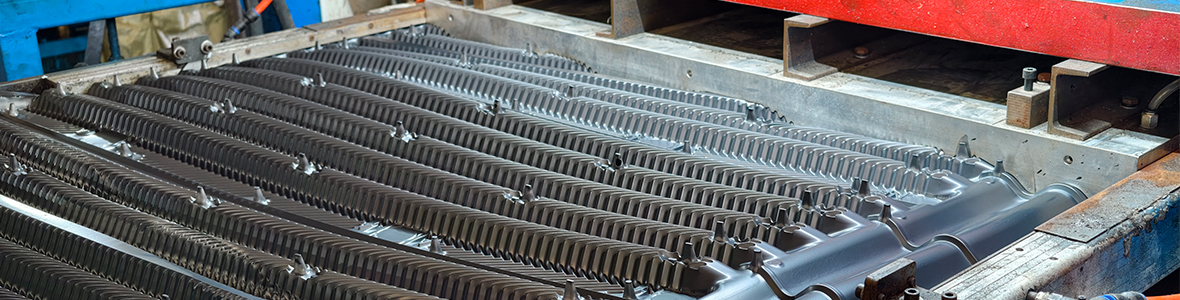
If you are looking for cooling tower replacement fill in Malaysia, you probably already know that replacing the fill is not as simple as ordering a few plastic sheets and putting them into the tower.
Industrial cooling towers are often exposed to demanding operating conditions. High temperatures, humidity, suspended solids, scale, biological growth, chemicals, and long operating hours can gradually reduce the performance of cooling tower fill. Once the fill becomes clogged, brittle, deformed, or damaged, the cooling tower may no longer deliver the cooling performance your process requires.
But there is good news: you usually do not need to replace the entire cooling tower.
Replacing the existing fill with properly selected custom cooling tower fill can be a practical way to restore heat-transfer performance while extending the useful life of existing equipment.
The challenge is finding replacement fill that actually fits.
This is where custom sizes and OEM cooling tower fill solutions become especially valuable for industrial customers in Malaysia.
Power Tower Cooling Technology (Shaoxing) Co.,Ltd. specializes in cooling tower components and replacement solutions, including PVC and PP cooling tower fill for different tower configurations and industrial requirements.
In this guide, we'll look at how to choose the right replacement fill, when custom dimensions are necessary, how OEM solutions work, and what you should consider before placing an order.
Why Replacement Fill Matters for Malaysian Industrial Cooling Towers
Cooling tower fill is one of the most important components inside an evaporative cooling tower.
Its main purpose is to increase the contact area between water and air. Hot circulating water flows through the fill while air passes through the fill section. This interaction promotes heat transfer and evaporation, allowing the tower to reject heat from the circulating water.
Think of the fill as the cooling tower's working surface.
The larger and more effectively that surface interacts with air and water, the more opportunity the system has to transfer heat.
However, cooling tower fill operates in a challenging environment.
Industrial towers in Malaysia may operate continuously in warm and humid conditions. Depending on the facility, the circulating water may also contain suspended solids, minerals, process contaminants, microorganisms, or chemicals.
Over time, these conditions can affect the fill.
Scale may build up on the surface.
Debris can block passages.
Biological growth can restrict airflow.
Plastic sheets may become brittle or deformed.
Eventually, cooling performance can decline.
That is why selecting the right cooling tower replacement fill Malaysia solution is an important maintenance decision rather than simply a spare-parts purchase.
The Role of Cooling Tower Fill
Cooling tower fill increases the effective contact between circulating water and air.
There are two major approaches used in cooling tower fill design.
Film fill spreads water across structured sheets, creating a relatively large surface area for heat and mass transfer.
Splash fill breaks falling water into droplets as it moves through the tower.
Both designs aim to improve the cooling process, but they are suited to different tower designs and water conditions.
Fill geometry matters too.
The flute angle, spacing, sheet thickness, height, and block arrangement can influence water distribution, airflow resistance, heat transfer, and fouling behavior.
That is why a replacement fill should be matched to the tower rather than selected solely by appearance.
Why Existing Fill Eventually Needs Replacement
Cooling tower fill can last for many years, but no fill lasts forever.
Its service life depends on several factors, including:
A tower operating with clean, well-treated water may have a very different fill life from a tower handling heavily contaminated water.
This is particularly important for industrial facilities.
If the original fill has become severely fouled or damaged, cleaning may not restore its original geometry or performance.
At that point, replacement may be the better investment.
When Should You Replace Cooling Tower Fill?
There is no universal replacement schedule that applies to every cooling tower.
Instead, industrial operators should monitor the actual condition and performance of their fill.
Several warning signs indicate that replacement may be necessary.
Reduced Cooling Performance
A gradual increase in cold-water temperature can be an early warning sign.
Suppose your tower historically produces the required cold-water temperature under similar operating conditions, but performance has gradually deteriorated.
What changed?
The fan could be underperforming.
Water distribution could be uneven.
Nozzles could be clogged.
Ambient conditions could have changed.
Or the fill could be fouled or damaged.
The fill should therefore be included in the inspection process.
Replacing degraded fill can restore the effective heat-transfer surface when the fill itself is limiting performance.
Fouling, Scaling and Blockage
Fouling is one of the biggest concerns when selecting replacement fill.
Mineral deposits can accumulate on fill surfaces.
Suspended solids can become trapped inside passages.
Algae and biological deposits can grow under unsuitable water-treatment conditions.
As deposits accumulate, the open passages through the fill can become smaller.
The result may be reduced heat transfer and increased airflow resistance.
If your existing tower has a history of severe fouling, simply replacing the old fill with an identical design may not be the best long-term solution.
A more open or fouling-resistant fill design may be worth evaluating.
Physical Damage and Aging
During inspection, look for:
Cracked sheets
Brittle plastic
Deformed modules
Collapsed fill
Broken edges
Missing sections
Excessive scale
Heavy biological growth
Blocked passages
Once the fill loses its original structure, its hydraulic and thermal characteristics can also change.
In some cases, localized repairs may be possible.
In other cases, replacing the complete fill section is more practical.
Cooling Tower Replacement Fill Options for Malaysia
There is no single type of fill that is perfect for every Malaysian cooling tower.
The right choice depends on the tower design and operating environment.
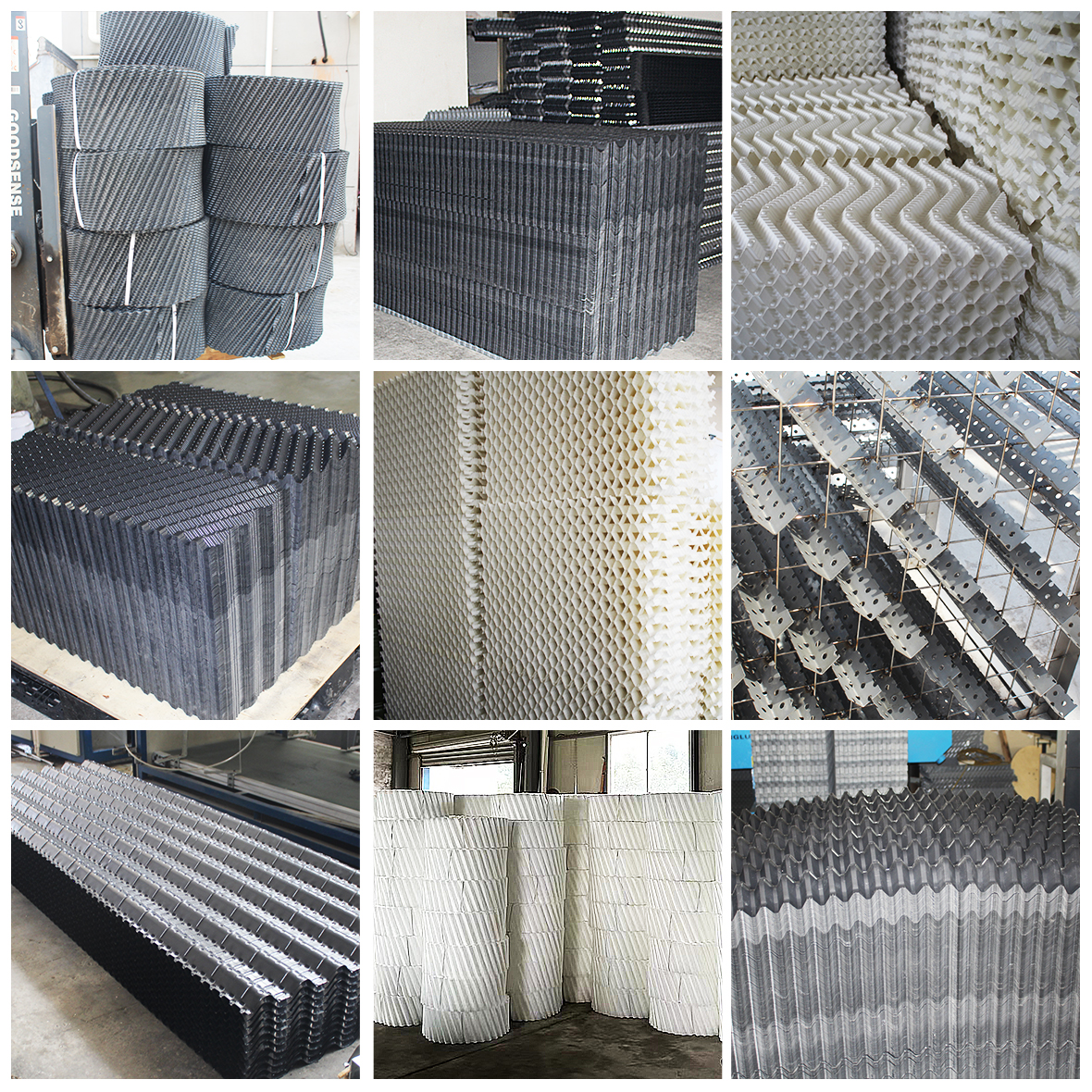
The most common options include PVC film fill, PP cooling tower fill, and splash fill.
PVC Film Fill
PVC film fill is widely used in conventional cooling tower applications.
The structured sheets spread water across a large surface area, creating effective contact between water and air.
PVC offers a practical balance between thermal performance, cost, weight, and manufacturability.
It can be suitable for many:
Industrial cooling towers
HVAC cooling towers
Manufacturing facilities
Process cooling systems
Condenser cooling applications
Commercial cooling systems
Power Tower provides PVC cooling tower fill in different configurations and dimensions for replacement and customized applications.
PP Cooling Tower Fill
PP, or polypropylene, is another important material for cooling tower fill.
It may be considered when operating temperatures or chemical conditions are more demanding.
Compared with standard PVC applications, PP can provide advantages in situations where greater material resistance is required.
However, PP should not automatically be considered "better."
Why?
Because material selection is application-specific.
If a tower operates under conventional conditions, a properly designed PVC fill may provide an excellent combination of performance and cost.
If the operating environment is more demanding, PP may offer a more suitable solution.
The correct decision should be based on actual operating conditions and manufacturer specifications.
Splash Fill for Difficult Water Conditions
What happens when cooling water contains a high concentration of suspended solids?
Traditional closely spaced film fill may have a higher risk of fouling.
Splash fill can be considered for these conditions because its more open structure provides larger passages for water and air.
Instead of relying primarily on a continuous film of water across structured sheets, splash fill repeatedly breaks the falling water into droplets.
This approach can be useful in certain industrial applications involving:
However, the entire tower should be evaluated before changing from film fill to splash fill.
Thermal performance, tower dimensions, water loading, airflow, and support configuration all need to be considered.
PVC vs PP: Which Material Should You Choose?
The question "PVC or PP?" sounds simple.
The answer isn't.
Both materials have their place.
| Factor | PVC Fill | PP Fill |
| Typical application | Standard cooling applications | More demanding applications |
| Cost | Generally economical | Generally higher |
| Temperature capability | Suitable within specified range | Often selected for higher-temperature conditions |
| Chemical resistance | Good for many applications | Generally strong |
| Common use | HVAC and industrial cooling | Industrial/process applications |
| Best selection method | Match operating conditions | Match operating conditions |
The important point is that these are general selection guidelines.
Always confirm the actual temperature, chemical compatibility, and product specifications with the manufacturer.
When PVC Is the Right Choice
PVC can be a sensible choice when:
Water chemistry is reasonably controlled
Operating temperature is within the product's rated range
The tower uses film fill
Fouling is manageable
Cost efficiency is important
The application is relatively conventional
For many industrial and commercial cooling systems, PVC provides an effective and economical solution.
When PP Is the Better Option
PP deserves consideration when:
Operating temperatures are higher
Chemical conditions are more demanding
Greater material resistance is required
The application presents challenging operating conditions
Long-term durability justifies the additional investment
The key is not to choose PP because it sounds more advanced.
Choose it because the application actually benefits from its characteristics.
Custom Sizes for Cooling Tower Replacement Projects
This is where many replacement projects become challenging.
A new cooling tower is usually designed around specific fill dimensions.
An existing tower may be twenty years old.
During those twenty years, perhaps the tower was repaired, modified, or upgraded.
The original fill may have been discontinued.
The original manufacturer may no longer supply the same product.
And suddenly, you discover that the "standard" replacement fill doesn't quite fit.
That's when custom cooling tower fill sizes become extremely valuable.
Why Standard Sizes Are Not Always Enough
Imagine replacing a custom-built window with a standard frame.
The new frame may be excellent.
But if the dimensions are wrong, it still won't fit.
Cooling tower fill works in much the same way.
The replacement fill needs to work with:
Existing support beams
Water distribution
Airflow paths
Fill height
Tower casing
Drift eliminators
Access points
Even a relatively small dimensional difference can create unnecessary installation problems.
Custom manufacturing allows the replacement fill to be produced around the actual requirements of the existing tower.
Dimensions, Thickness and Flute Spacing
When ordering custom fill, dimensions are only the beginning.
You may also need to specify:
Fill length
Fill width
Fill height
Sheet thickness
Flute spacing
Flute angle
Block configuration
Material
Orientation
These characteristics can influence water distribution, heat transfer, airflow, pressure drop, and fouling resistance.
This is why an experienced supplier should review the complete application before manufacturing.
OEM Cooling Tower Fill Solutions for Malaysia
OEM solutions can be especially useful for industrial buyers, distributors, cooling tower contractors, and maintenance companies.
But what does OEM mean in a replacement-fill project?
It can mean producing cooling tower fill according to an existing design, drawing, sample, specification, or dimensional requirement.
You don't necessarily need to purchase the component directly from the original cooling tower manufacturer.
A specialized cooling tower component manufacturer may be able to produce compatible replacement fill according to the technical requirements of the project.
OEM Replacement for Existing Tower Brands
Industrial facilities often operate cooling towers from different manufacturers.
Some equipment may be relatively new.
Other towers may have been installed decades ago.
Original replacement parts may become difficult or expensive to source.
OEM-compatible manufacturing can provide another option.
A manufacturer can review:
Existing fill samples
Technical drawings
Product photographs
Dimensions
Tower model
Fill configuration
Material requirements
The objective is to produce replacement fill that matches the actual application.
Private Label and Custom Manufacturing
OEM manufacturing can also be useful for distributors and contractors.
For example, a cooling tower service company may regularly replace fill for customers across different projects.
Instead of purchasing generic products from multiple suppliers, the company can work with a manufacturer to establish consistent specifications.
This can help with:
For B2B buyers, this flexibility can be more valuable than simply finding the lowest unit price.
Crossflow vs Counterflow Replacement Fill
Before ordering replacement fill, identify your tower configuration.
Is it crossflow or counterflow?
This matters because the airflow and water-flow arrangements are different.
Crossflow Fill
In a crossflow cooling tower, air generally moves horizontally through the fill while water travels downward.
The fill must therefore work correctly with the existing air inlet and water-distribution arrangement.
Depending on the tower, crossflow systems may use hanging sheets, modular film fill, or other specialized configurations.
Replacing crossflow fill with an unsuitable design can affect airflow and water distribution.
Counterflow Fill
Counterflow cooling towers use a different arrangement.
Water moves downward while air moves upward.
This creates a countercurrent flow pattern that supports efficient heat and mass transfer.
Counterflow fill therefore needs to match:
Water loading
Airflow
Fill height
Flute geometry
Pressure drop
Tower dimensions
Crossflow and counterflow fill should not be treated as interchangeable products.
Industrial Applications in Malaysia
Malaysia has a diverse industrial sector, and cooling towers are used in many different applications.
Each application creates its own requirements for replacement fill.
Power Plants and Energy Facilities
Power plants can place substantial demands on cooling systems.
Cooling towers may operate continuously while handling large water flows and significant thermal loads.
Replacement fill for these applications should be selected based on:
Thermal duty
Water temperature
Water quality
Operating schedule
Tower configuration
Fouling risk
The goal is not simply to install new fill.
The goal is to restore reliable heat rejection.
Chemical and Petrochemical Plants
Chemical and petrochemical facilities may expose cooling systems to more demanding water chemistry.
Chemical compatibility becomes particularly important.
In some applications, PP may be considered because of its material characteristics.
However, chemical exposure should always be evaluated using the actual chemical composition, concentration, temperature, and manufacturer's compatibility data.
Manufacturing and Process Cooling
Manufacturing plants use cooling towers for many processes.
Applications can include:
Injection molding
Compressor cooling
Heat exchangers
Metal processing
Furnace equipment
Machinery cooling
Process-water systems
In these environments, reliability and maintenance are often just as important as theoretical thermal efficiency.
A fill design that fouls quickly can become an operational headache.
HVAC and Commercial Cooling
Cooling towers are also widely used in commercial buildings.
Hotels, office buildings, shopping centers, hospitals, and other large facilities may use cooling towers for centralized air-conditioning systems.
These applications often prioritize:
Stable cooling
Energy efficiency
Water management
Low maintenance
Long service life
For conventional HVAC applications, properly selected PVC film fill is often a practical solution.
How Water Quality Influences Fill Selection
If there is one thing you should never overlook when ordering cooling tower replacement fill, it is water quality.
Why?
Because two identical towers can have completely different fill service lives if they operate with different water conditions.
High TSS and Suspended Solids
Total suspended solids can come from:
Makeup water
Dust
Process contamination
Corrosion products
Poor filtration
Environmental sources
As solids accumulate, fill passages can become restricted.
If your system consistently experiences high TSS, consider whether a more open fill structure would provide better long-term maintainability.
Scale and Biological Growth
Scale is another major problem.
Minerals can gradually accumulate on the fill surface.
Biological growth can also create additional deposits and blockage.
Water treatment remains essential even after installing new replacement fill.
Think of new fill as giving your cooling tower a fresh pair of lungs.
If the water-treatment system continues sending contaminants into those "lungs," the problem will eventually return.
How to Measure Cooling Tower Fill Before Ordering
Before contacting a supplier, gather as much technical information as possible.
The more information you provide, the less guesswork the manufacturer needs to do.
Information Your Supplier Needs
Ideally, provide:
This information can dramatically improve quotation accuracy.
Photos, Drawings and Existing Fill Samples
Photographs are extremely useful.
Take pictures of:
The complete cooling tower
The fill section
Individual fill sheets
Fill blocks
Support beams
Water-distribution components
Drift eliminators
If technical drawings are available, send them.
If possible, an actual sample of the old fill can be even more useful.
A sample allows the manufacturer to examine the physical geometry rather than relying entirely on descriptions.
How to Choose a Cooling Tower Replacement Fill Supplier
Choosing the supplier is just as important as choosing the material.
The cheapest quotation may not be the cheapest solution.
If the fill doesn't fit correctly, you may face installation delays, additional labor, or even production downtime.
Manufacturing Capability
Look for a manufacturer capable of supplying different fill types and custom dimensions.
This is particularly important when you have:
A supplier with customization capability gives you more options.
Quality Control
Ask how the manufacturer controls:
Material consistency
Sheet thickness
Fill dimensions
Flute geometry
Bonding
Block assembly
Packaging
Final inspection
Consistency matters.
If fill blocks have inconsistent dimensions, installation can become difficult.
Technical Support and Logistics
A professional supplier should help you confirm specifications before production.
For Malaysian projects, also consider:
A successful project is about more than manufacturing.
It is about getting the correct product to the site at the right time.
Why Choose Power Tower Cooling Technology?
Power Tower Cooling Technology (Shaoxing) Co.,Ltd. specializes in cooling tower components and replacement solutions.
Its product range includes cooling tower fill made from PVC and PP, with solutions for different tower configurations and replacement applications.
The company can support requirements involving:
One of the key advantages for international buyers is customization.
Instead of forcing an existing tower to accept a standard product, Power Tower can evaluate the project according to the actual dimensions and operating requirements.
This can be particularly useful for older towers where original fill is discontinued or difficult to source.
For more information, visit the official website of Power Tower Cooling Technology (Shaoxing) Co.,Ltd. at www.coolingtowerpart.com.
Cooling Tower Fill Replacement Process
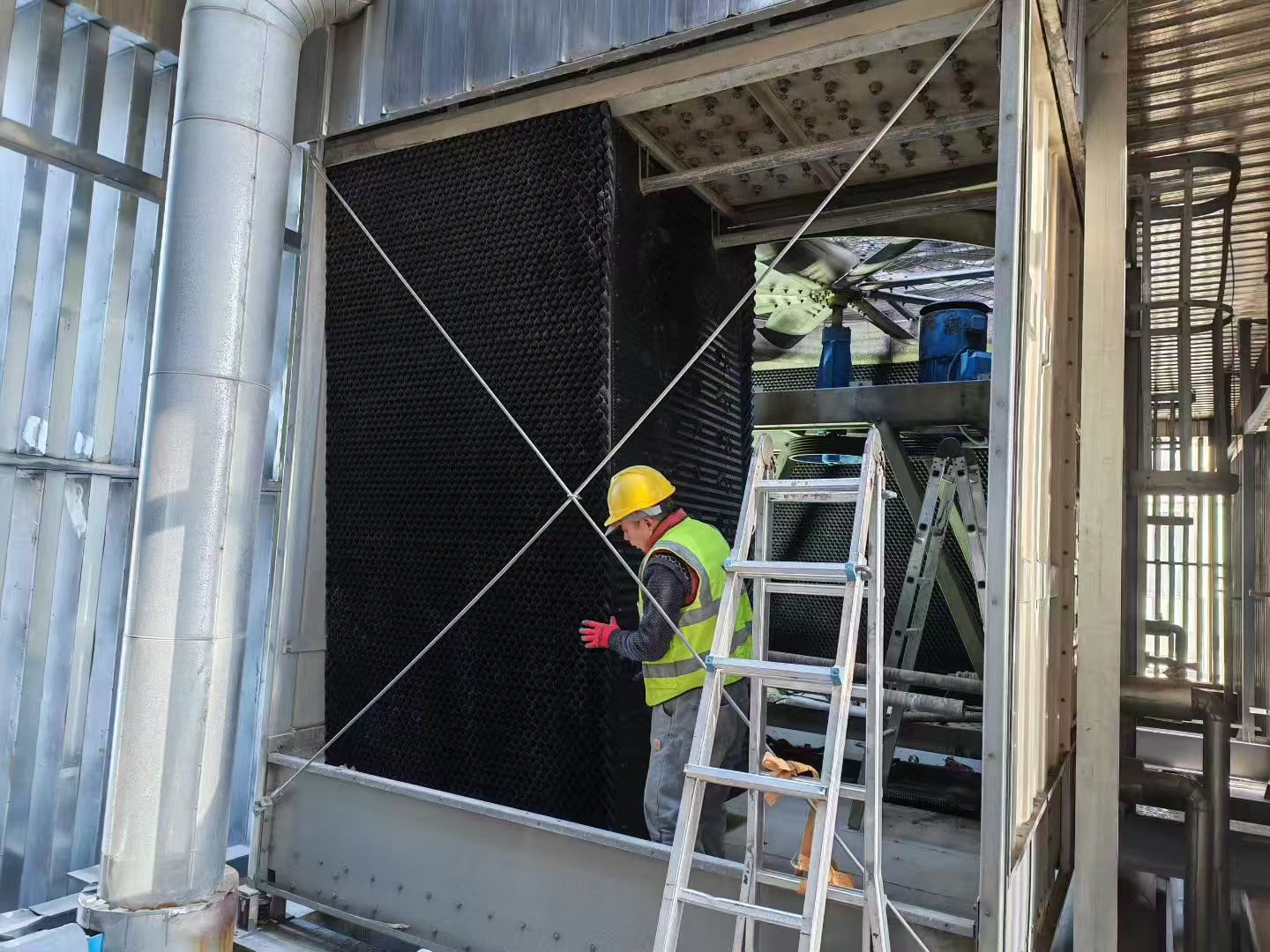
Replacing cooling tower fill should be treated as a planned maintenance project.
It involves more than removing old plastic and installing new material.
Inspection and Preparation
Before starting the replacement:
Shut down the cooling tower
Isolate relevant equipment
Follow site safety procedures
Drain the tower as required
Inspect the internal structure
Check fill supports
Inspect water-distribution components
Confirm replacement specifications
Safety should always come first.
Cooling tower interiors can be wet, slippery, confined, and difficult to access.
Removing the Existing Fill
Old fill may be fragile.
If it has been exposed to heat and chemicals for years, the plastic may break easily.
Remove the old material carefully and prevent debris from entering pumps or other equipment.
At this stage, inspect the support structure.
If support beams are corroded or damaged, repair them before installing new fill.
There is little point in installing premium replacement fill on an unstable support system.
Installing the New Fill
Before installation, clean the fill-support area.
Then install the new fill according to the manufacturer's instructions.
Pay attention to:
Incorrect installation can reduce the performance of otherwise excellent fill.
Testing and Commissioning
Once installation is complete, restart the cooling tower carefully.
Check:
Water distribution
Cold-water temperature
Hot-water temperature
Water flow
Fan operation
Airflow
Vibration
Motor operation
Splash-out
General system stability
If historical performance data is available, compare the new operating results with previous conditions.
The real test isn't whether the fill fits.
The real test is whether the cooling tower performs properly.
Common Mistakes When Buying Replacement Fill
Choosing Only by Price
The lowest price may look attractive.
But what happens if the fill has poor dimensional consistency or fouls quickly?
The initial saving can disappear through additional maintenance and downtime.
Look at total cost, not just purchase price.
Ignoring Water Quality
Water quality directly influences fill selection and service life.
If your system has high TSS, scale, algae, or process contamination, tell the supplier.
Guessing the Dimensions
Don't estimate.
Measure.
A few centimeters can make a surprising difference during installation.
Ignoring Tower Configuration
Crossflow and counterflow towers use different airflow arrangements.
Always confirm the tower type before ordering.
Assuming PVC and PP Are Interchangeable
They are not identical materials.
Choose based on temperature, chemistry, water quality, and product specifications.
Replacing Fill Without Inspecting Supports
Damaged supports can undermine a new installation.
Inspect the complete fill-support system during replacement.
Ordering Without Technical Confirmation
A quick conversation with the manufacturer before production can prevent an expensive mistake later.
Provide photos, drawings, dimensions, and operating data whenever possible.
Final Takeaway
Finding the right cooling tower replacement fill Malaysia solution is not simply a matter of purchasing plastic fill at the lowest possible price.
For industrial applications, the fill must match the entire cooling system.
You need to consider:
Tower configuration
Water quality
Operating temperature
Thermal requirements
Fouling risk
Material
Fill geometry
Dimensions
Airflow
Water distribution
Installation conditions
For many conventional applications, PVC film fill provides an effective combination of performance and cost.
For more demanding temperature or chemical conditions, PP may be worth considering.
For applications with significant suspended solids or fouling risk, splash or more open fill designs may be appropriate.
And when standard dimensions don't fit?
That's exactly where custom sizes and OEM cooling tower fill solutions can make a difference.
Rather than redesigning your cooling tower around an off-the-shelf product, you can work with a manufacturer to develop replacement fill around the existing tower.
For Malaysian industrial buyers, contractors, distributors, and maintenance companies, Power Tower Cooling Technology (Shaoxing) Co.,Ltd. provides PVC and PP cooling tower fill and customized replacement solutions for different project requirements.
The objective is simple:
Get the right fill. Make it fit. Restore cooling performance. And keep the tower running reliably for years to come.
Frequently Asked Questions
What is cooling tower replacement fill?
Cooling tower replacement fill is new heat-transfer media installed inside an existing cooling tower when the original fill has become damaged, fouled, aged, deformed, or thermally inefficient.
Can cooling tower fill be manufactured in custom sizes?
Yes. Depending on the manufacturer and project requirements, cooling tower fill can be manufactured according to specified dimensions, material, thickness, flute geometry, and block configuration.
Can Power Tower provide cooling tower replacement fill for Malaysia?
Yes. Power Tower Cooling Technology (Shaoxing) Co.,Ltd. provides cooling tower fill and replacement solutions for international industrial applications, including customized PVC and PP fill.
What information is needed for custom cooling tower fill?
The most useful information includes tower type, manufacturer and model, existing fill dimensions, fill height, material, thickness, flute spacing, operating temperatures, water flow, water quality, photographs, drawings, and required quantity.
Is PVC or PP better for cooling tower fill?
Neither material is universally better. PVC is suitable for many conventional applications, while PP may be preferred when operating temperatures or chemical conditions require different material characteristics.
Can replacement fill be made for an older cooling tower?
Yes, in many cases. An experienced manufacturer can evaluate dimensions, photographs, drawings, or existing fill samples to develop a compatible replacement solution.
What is an OEM cooling tower fill solution?
An OEM solution is a replacement or custom-manufactured product made according to specified technical requirements, such as existing dimensions, drawings, samples, materials, or tower configurations.
How long does cooling tower fill last?
Service life varies considerably. Water quality, temperature, chemical exposure, maintenance, air quality, and operating conditions all influence how long the fill remains effective.
Can replacing cooling tower fill improve cooling performance?
Yes, when degraded, damaged, or fouled fill is contributing to poor heat transfer. However, the fan, water distribution, nozzles, drift eliminators, airflow, and water-treatment system should also be inspected.
What is the best way to order replacement cooling tower fill?
Start by collecting accurate measurements and photographs of the existing fill. Then provide your supplier with tower type, operating conditions, water quality, material requirements, and quantity. A technical review before production can help ensure the replacement fill is compatible with the existing system.


