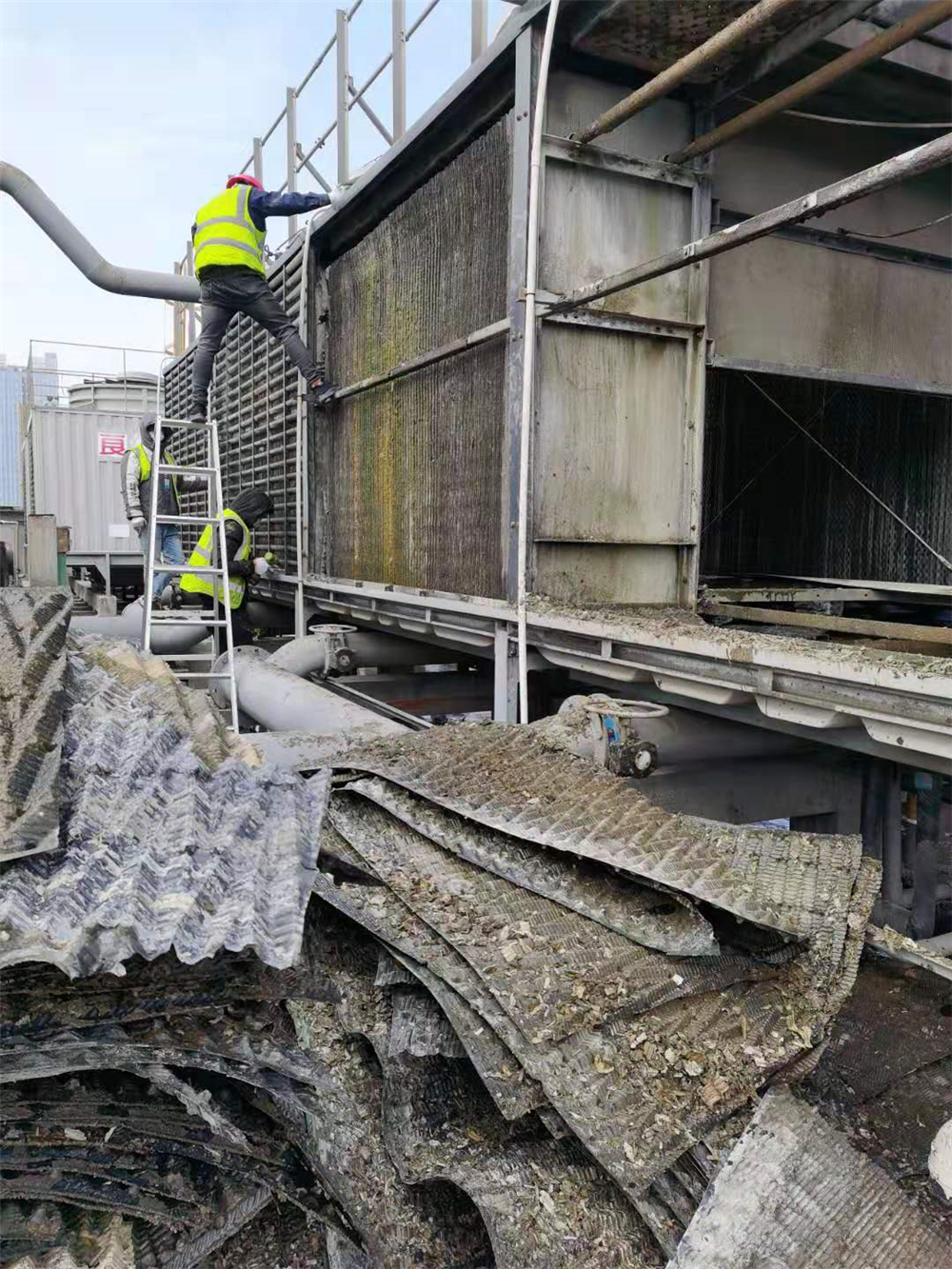
Cooling tower fill replacement is one of the most critical maintenance tasks for industrial and commercial cooling systems. As the core heat-exchange medium inside cooling towers, fill media directly determine heat dissipation efficiency, energy consumption, and overall system stability. Over time, aging, scaling, clogging, and structural damage will severely reduce cooling performance, leading to higher operational costs and frequent system failures. This in-depth SEO guide covers replacement signs, service life cycles, step-by-step replacement processes, material selection, common mistakes, and professional tips to help facility managers and engineers complete cooling tower fill replacement correctly and cost-effectively.
Why Is Cooling Tower Fill Replacement Necessary?
Cooling tower fills work continuously in high-humidity, high-temperature, and water-circulating environments. Long-term exposure to water, air pollutants, algae, and scale will gradually degrade fill materials. Delaying replacement will not only weaken cooling capacity but also cause secondary problems such as fan overload, pump energy waste, and tower internal corrosion. Timely cooling tower fill replacement restores original thermal performance, cuts energy bills, and extends the overall service life of cooling tower equipment.
Core Impacts of Worn-Out Cooling Tower Fills
Reduced Heat Transfer Efficiency
Aged or clogged fills fail to form uniform water films or break water into fine droplets. The water-air contact area and heat exchange time decrease significantly, resulting in higher outlet water temperatures and failing to meet industrial cooling requirements.
Increased Energy Consumption
When cooling efficiency drops, cooling tower fans and water pumps need to run at higher loads to compensate for temperature differences. This leads to 15%–30% higher power consumption in long-term operation, greatly increasing enterprise operating costs.
Frequent Scale and Bacterial Growth
Deformed and cracked fills easily accumulate dirt, sludge, and biological algae. These contaminants breed bacteria such as Legionella, causing water quality deterioration and hidden safety hazards for factory production and HVAC systems.
Structural Hidden Dangers
Severely aging fills will sag, collapse, or fall off in blocks, which may block water distribution pipes and air ducts, causing local airflow short circuits and even partial failure of the cooling tower.
Clear Signs That You Need Cooling Tower Fill Replacement
Most facility managers ignore minor fill problems in the early stage, resulting in accelerated system loss. Judging from on-site operation status, the following typical signs mean your cooling tower fills need immediate replacement instead of simple cleaning.
Visual Damage Signs
Visible aging, brittleness, whitening, and powdering on fill surfaces
Severe deformation, bending, sagging, and collapsed fill blocks
Cracked, broken, or falling fill sheets and loose assembly structures
Thick, hard scale layer that cannot be removed by conventional flushing
Operational Performance Signs
Gradual rise of cooling tower outlet water temperature with unchanged load
Obvious reduction in air volume and poor ventilation inside the tower
Frequent water splashing and uneven water distribution
Continuous increase in fan and pump operating current
Maintenance Frequency Signs
If you need to clean the
cooling tower fill every 1–2 months to maintain basic efficiency, or the cooling effect drops sharply shortly after cleaning, the fill material has reached the end of its service life and needs complete replacement.
Standard Service Life of Different Cooling Tower Fill Materials
The replacement cycle of cooling tower fills varies greatly according to materials, water quality, temperature, and operating environment. Understanding the standard service life helps you arrange replacement plans in advance and avoid emergency shutdown losses.
PVC Cooling Tower Fill
Service Life
5–8 years under standard working conditions (clean water, temperature ≤60°C, regular maintenance); 2–3 years in harsh industrial water quality environments.
Applicable Scenarios
HVAC systems, commercial buildings, shopping malls, hospitals, and conventional civil and light industrial cooling towers. It is the most cost-effective fill material for normal temperature cooling.
PP Cooling Tower Fill
Service Life
6–10 years, with excellent high temperature and chemical resistance.
Applicable Scenarios
Medium and high-temperature industrial cooling towers with water temperature up to 80°C, suitable for chemical factories, printing and dyeing plants, and factories with slightly corrosive water quality.
CPVC & FRP Fill
Service Life
8–12 years, ultra-strong corrosion and high temperature resistance.
Applicable Scenarios
High-temperature and highly corrosive special industrial cooling systems, such as power plants and heavy chemical enterprises.
Step-by-Step Cooling Tower Fill Replacement Process
Standardized replacement steps ensure stable installation quality, avoid secondary damage, and maximize the service life of new fills. The complete process is divided into preparation, old fill removal, internal cleaning, new fill installation, and commissioning.
Pre-Replacement Preparation
System Shutdown & Safety Protection
Completely shut down the cooling tower fan, water pump, and power supply, drain the circulating water in the tower, and set up safety warning signs to ensure construction safety.
Confirm Fill Specifications
Record the original fill size, flute spacing, thickness, material, and tower type (cross-flow or counter-flow) to ensure the new fill matches the equipment parameters perfectly.
Remove Old Cooling Tower Fills
Dismantle Auxiliary Structures
Open the cooling tower access panel, remove the drift eliminator and water distribution pipe above the fill layer to expose the internal fill blocks completely.
Clean Out Damaged Fills
Remove aging, broken, and blocked fill blocks one by one, clean up residual debris, fallen scale, and sludge to prevent falling into the water basin.
Tower Internal Deep Cleaning
Thoroughly flush the fill support grid, water basin, and air duct with high-pressure water. Remove residual algae, scale, and sediment to provide a clean installation environment for new fills and avoid secondary pollution.
Install New Cooling Tower Fills
Lay Support Structure
Check and reinforce the fill support grid to ensure stable bearing capacity and no deformation, preventing new fill collapse after water flushing.
Integrate Fill Assembly
Install fill blocks from bottom to top, arrange tightly without gaps or dislocation, ensure flat and uniform overall stress, and align the flute direction according to airflow and water flow rules.
Fix & Seal Edges
Fix the fill blocks with fasteners to prevent shaking and falling off during operation, and seal the gaps at the tower wall edges to avoid airflow short circuits.
Post-Installation Inspection & Commissioning
After installation, check the overall flatness, tightness, and alignment of the fills. Restore the water distribution pipes and drift eliminators. Start the system for trial operation, observe water distribution uniformity and airflow stability, and confirm that the cooling temperature difference meets the standard.
How to Choose the Right Replacement Cooling Tower Fill
Many users choose low-cost fills blindly during replacement, resulting in short service life and repeated replacement costs. Scientific material and type selection is the key to long-term stable operation.
Select Material According to Water Temperature
≤60°C normal temperature: Choose high-cost performance PVC fill
60°C–80°C medium temperature: Choose high-temperature resistant PP fill
>80°C high temperature: Choose CPVC or FRP anti-high temperature fill
Select Type According to Water Quality
Clean Water Quality
Select corrugated film fills with small flute spacing to maximize heat exchange area and cooling efficiency, suitable for HVAC and clean circulating water systems.
Turbid & Impure Water Quality
Select splash fills or large-spacing anti-clogging film fills to avoid dirt accumulation and blockage, suitable for chemical, steel, and sewage cooling scenarios.
Match Cooling Tower Type
Cross-flow cooling tower: Large-area flat corrugated fill blocks
Counter-flow cooling tower: High-density compact corrugated fills
Round cooling tower: Custom curved spliced fills
Common Mistakes During Cooling Tower Fill Replacement
Improper replacement methods will directly reduce cooling efficiency and shorten fill service life. Avoid these frequent mistakes in actual construction.
Blindly Choosing Low-Cost Inferior Fills
Low-quality recycled material fills are cheap but prone to aging, deformation, and powdering in a short time. Although the one-time purchase cost is low, the replacement frequency increases, and the comprehensive operating cost is much higher than high-quality fills.
Incomplete Internal Cleaning Before Installation
Residual scale, sludge, and bacteria in the tower will quickly adhere to new fills, causing early clogging and algae growth, which seriously affects the service life of new fills.
Wrong Fill Installation Direction & Gaps
Incorrect flute direction and uneven gaps will cause disordered water and airflow, forming heat exchange dead angles, resulting in insufficient cooling effect even after replacement.
Skipping Post-Installation Commissioning
Without trial operation and parameter debugging, potential problems such as uneven water distribution and local air resistance will be hidden, leading to unqualified cooling performance.
Key Benefits of Timely Cooling Tower Fill Replacement
Restore Full Cooling Performance
New high-quality fills restore the optimal water-air heat exchange state, make the cooling tower reach the design temperature difference, and ensure the stable operation of supporting production equipment.
Significantly Reduce Energy Consumption
Optimal heat exchange efficiency reduces the operating load of fans and water pumps, effectively saving 15%–25% of daily power consumption and bringing long-term energy-saving benefits.
Improve Water Quality & Hygiene Conditions
Eliminate dirt and algae attachment carriers, inhibit bacterial reproduction, improve circulating water quality, and meet industrial production and environmental protection standards.
Lower Long-Term Maintenance Costs
Regular replacement according to the cycle avoids equipment failure shutdown losses and frequent minor maintenance costs, realizing low-cost and stable operation of the cooling system.
Frequently Asked Questions (FAQs)
How often should cooling tower fills be replaced?
For standard PVC fills in clean HVAC environments, replacement every 5–8 years is recommended. For industrial harsh environments with high temperature and many impurities, replace every 2–4 years. PP and CPVC fills can extend the replacement cycle appropriately.
Can I replace only partial damaged fills instead of full replacement?
If only a small number of local fills are damaged and most are intact, partial replacement is acceptable. However, if large areas of aging, scaling, or deformation occur, full replacement is required to avoid inconsistent heat exchange effect affecting overall performance.
Is cleaning a substitute for fill replacement?
No. Cleaning can only remove surface dirt and scale. For aged, brittle, and deformed fills, cleaning cannot restore structural stability and heat exchange efficiency. Replacement is the only effective solution.
Can customized size fills be used for replacement?
Yes. Customized cooling tower fills of different sizes, thicknesses, and flute spacings can perfectly match all brands and models of cooling towers, realizing seamless replacement.
Conclusion
Cooling tower fill replacement is a necessary and cost-saving core maintenance project for cooling tower systems. Timely judgment of replacement signs, selection of suitable fill materials, and standardized replacement processes can completely restore cooling tower performance, reduce energy consumption, and avoid equipment failure risks. Whether you need standard PVC, high-temperature PP, or anti-corrosion CPVC replacement fills, choosing high-quality products and professional installation services can maximize the service life of cooling equipment and create stable operational benefits for industrial and commercial projects.