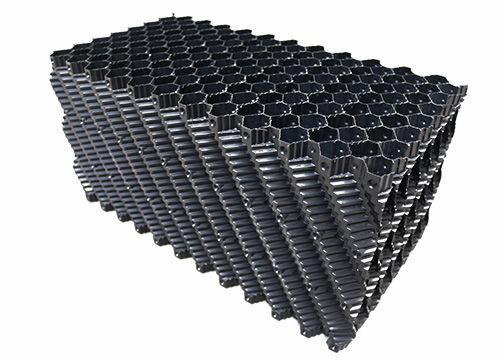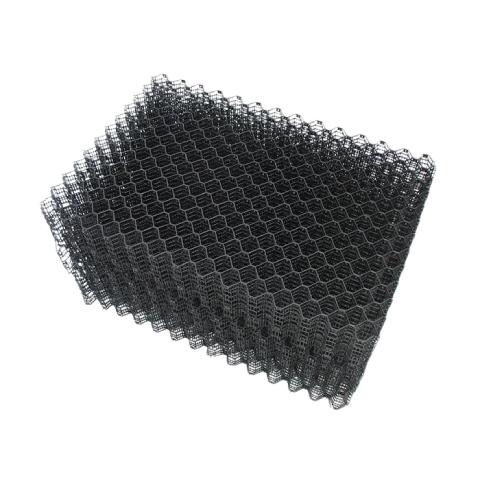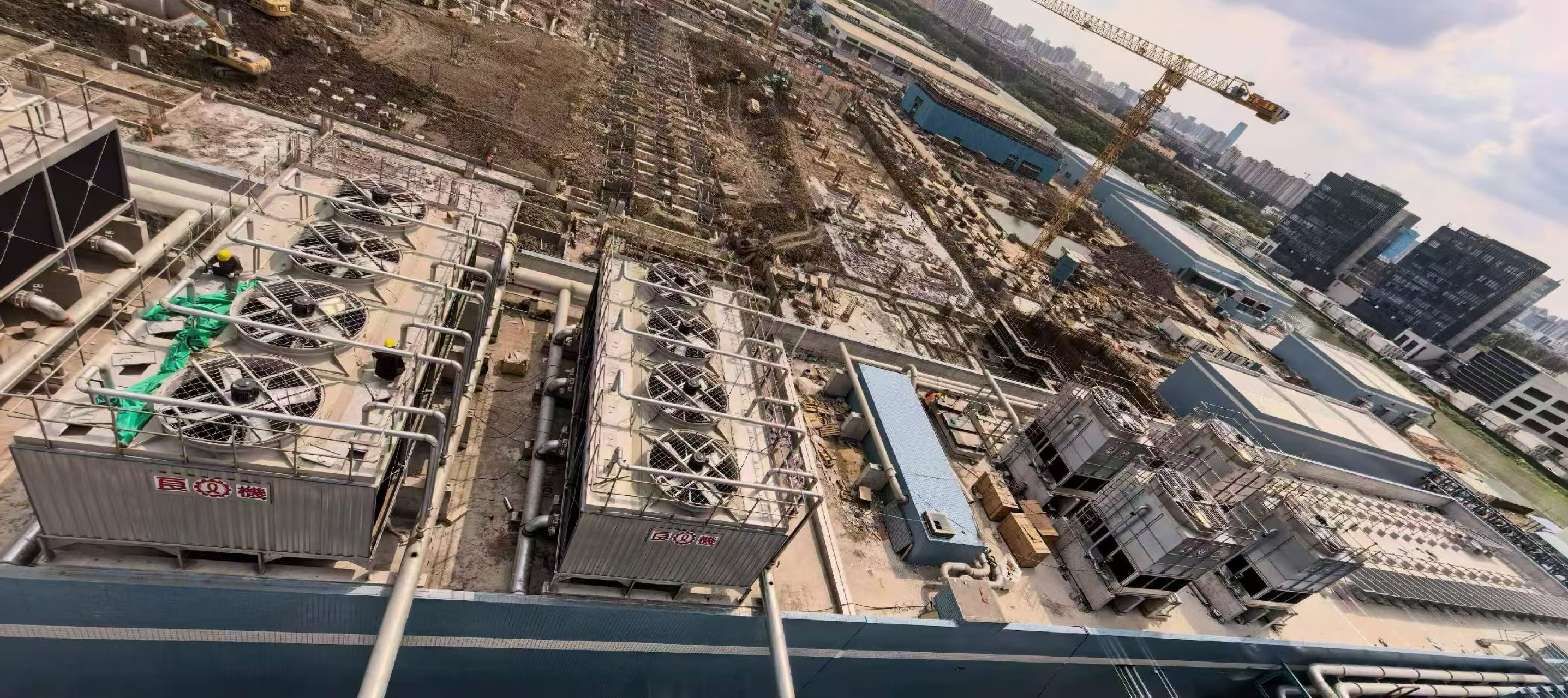
Choosing the right fill media is one of the most important decisions in a cooling tower replacement project. The fill directly affects heat-transfer efficiency, airflow resistance, water distribution, maintenance requirements, and overall cooling tower performance.
When planning cooling tower fill media replacement, buyers commonly compare two options: film fill and splash fill. Film fill uses closely spaced sheets to create a large surface area for heat transfer, while splash fill breaks falling water into droplets to increase contact between water and air.
Both types have advantages, but the best choice depends on water quality, operating temperature, suspended solids, cooling requirements, and the design of the existing tower.
This guide compares film fill vs. splash fill, explains their benefits and limitations, and helps industrial buyers select suitable replacement cooling tower fill media.
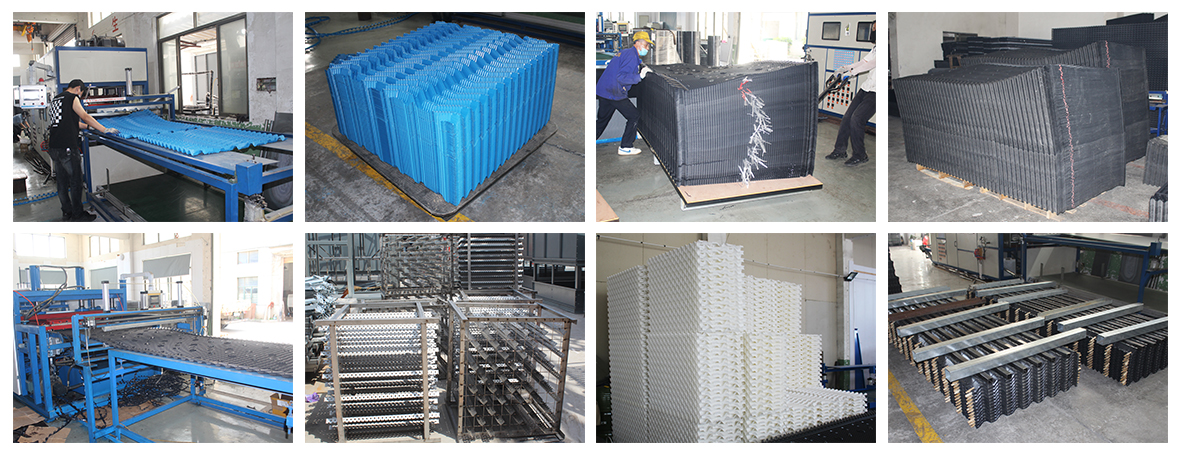
What Is Cooling Tower Fill Media?
Cooling tower fill media is installed inside a cooling tower to improve heat exchange between circulating water and moving air. As hot water passes through the fill, the media spreads or disperses the water, increasing the contact area available for heat transfer.
Effective fill helps a cooling tower remove heat from industrial process water or HVAC condenser water.
The two main fill configurations are:
Film fill: Distributes water across thin sheets, creating a continuous water film and a large heat-transfer surface.
Splash fill: Uses bars, grids, or structured components to break falling water into smaller droplets and repeatedly redistribute it.
The correct fill configuration can improve thermal performance while maintaining acceptable airflow resistance and operating reliability.
Film Fill for Cooling Tower Replacement
Film fill is widely used in modern industrial and commercial cooling towers. It typically consists of corrugated PVC or PP sheets assembled into fill packs.
The sheet surfaces guide water into thin films while air moves through the channels between them. This arrangement provides a large effective contact area within a relatively compact space.
Advantages of Film Fill
High heat-transfer efficiency
Film fill provides a large surface area for air-water contact. With suitable design and operating conditions, it can deliver high thermal performance in a compact cooling tower.
Space-efficient design
Its high surface-area density allows manufacturers to achieve the required cooling performance within a limited tower volume.
Suitable for many replacement projects
Film fill is available in different sheet patterns, pack dimensions, and materials, making it a common choice for crossflow and counterflow cooling tower applications.
Potentially lower operating costs
When properly designed and maintained, film fill can support efficient cooling and help the tower meet its required thermal duty. Actual energy savings depend on the entire system, including the fan, pump, water distribution, and operating conditions.
Limitations of Film Fill
The narrow channels between film-fill sheets can become blocked by suspended solids, mineral scale, algae, and biological slime.
This makes film fill more suitable for applications where water quality and treatment can control fouling. In dirty-water systems, frequent cleaning or premature replacement may offset its thermal advantages.
Common Applications
Film fill is commonly considered for:
Commercial HVAC cooling towers
Industrial process cooling systems
Power and manufacturing facilities with suitable water quality
Cooling towers requiring high heat-transfer performance
Replacement and retrofit projects with limited installation space
Splash Fill for Cooling Tower Replacement
Splash fill distributes water through repeated impacts on bars, grids, or other structured components. These impacts break water into droplets and redistribute it as it moves through the tower.
Splash fill is available in different configurations and materials, including PP and other plastics designed for cooling tower service.
Advantages of Splash Fill
Greater tolerance for some fouling conditions
Splash fill often has more open passages than film fill. This can reduce the tendency for narrow channels to become blocked by suspended solids.
However, splash fill is not clog-proof. Heavy scale, biological growth, and accumulated debris can still reduce its performance.
Suitable for challenging water conditions
Splash fill is often considered for industrial cooling systems with higher suspended-solids levels or where fouling is difficult to control.
Modular construction
Many splash-fill systems use individual bars, grids, or modules. Depending on the design, these components may be easier to inspect, clean, or replace individually.
Flexible retrofit options
Some splash-fill designs can be adapted to existing cooling towers, provided the support structure, dimensions, water distribution, and thermal requirements are compatible.
Limitations of Splash Fill
Splash fill generally provides less heat-transfer surface area per unit volume than high-performance film fill designs. As a result, some applications may require greater fill depth or tower volume to achieve the same cooling duty.
The actual difference depends on fill geometry, airflow, water loading, and the cooling tower's thermal design. Splash fill should therefore be selected using engineering performance data rather than assumptions based on material type alone.
Common Applications
Splash fill is commonly evaluated for:
Industrial cooling towers with higher suspended-solids loads
Systems with a history of film-fill blockage
Applications where fouling resistance is a priority
Cooling towers designed specifically for splash-type fill
Replacement projects where existing tower geometry supports splash fill
Film Fill vs. Splash Fill: Key Differences
| Comparison Factor | Film Fill | Splash Fill |
| Heat-transfer surface | High surface-area density | Relies on repeated water breakup and redistribution |
| Thermal performance | Often preferred for compact, high-efficiency designs | Depends on splash pattern, fill depth, and tower design |
| Fouling tolerance | More sensitive to blocked narrow channels | Often better suited to some solids-laden water conditions |
| Water quality | Generally benefits from well-controlled water quality | May tolerate higher suspended-solids levels in suitable designs |
| Typical materials | PVC or PP sheets | PP or other suitable materials in bars, grids, or modules |
| Cleaning | Narrow channels can be difficult to clean | Open configurations may be easier to access |
| Space requirements | Often compact | May require a different fill depth or volume |
| Best selection criteria | Thermal efficiency and available tower space | Fouling conditions and required operating reliability |
Important: Neither type is universally better. The right replacement depends on the cooling tower's design conditions, water quality, and required thermal performance.
How to Choose Film Fill or Splash Fill
Before purchasing cooling tower replacement fill media, evaluate the following factors.
Water Quality and Fouling Risk
Check suspended solids, biological growth, mineral scaling, and the effectiveness of the existing water treatment program.
If narrow film-fill channels repeatedly become blocked, splash fill may be worth evaluating. However, improving filtration, blowdown, and biological control may also address the underlying problem.
Required Cooling Performance
Consider heat load, circulating-water flow, hot- and cold-water temperatures, and design wet-bulb temperature.
Ask the manufacturer to verify the proposed fill's thermal performance and airflow resistance under the required design conditions.
Cooling Tower Configuration
Confirm whether the tower is crossflow or counterflow. The water distribution system, airflow path, fill supports, and installation dimensions must match the proposed fill arrangement.
A replacement that fits physically may still perform poorly if its geometry is unsuitable for the tower.
Operating Temperature and Material
PVC and PP are common materials for film fill, while PP is also used for many splash-fill products. Verify the specific material's temperature limits, chemical compatibility, and mechanical properties.
Maintenance and Lifecycle Cost
Compare the initial fill price with expected cleaning frequency, labor, installation costs, service life, and downtime risks.
A lower-cost option may not be economical if it requires frequent maintenance or cannot meet the required cooling performance.
Cooling Tower Fill Media Replacement: Installation Considerations
Correct installation is essential for both film fill and splash fill.
Shut down and isolate the tower. Follow site lockout/tagout procedures and applicable safety requirements.
Inspect the existing system. Record fill dimensions, tower configuration, support spacing, and water distribution arrangements.
Remove old fill media. Clear debris and inspect the fill chamber for damage.
Check the supports. Repair corroded or deformed structural components before installing new fill.
Install the replacement fill. Follow the manufacturer's drawings for orientation, spacing, stacking, and securing.
Inspect distribution components. Clean nozzles, headers, basins, and strainers as necessary.
Test system performance. Verify water distribution, airflow, operating temperatures, and abnormal vibration after safe restart.
For Marley, BAC, EVAPCO, SPX, or other cooling tower replacement projects, confirm dimensions and technical compatibility instead of relying on brand names alone.
How to Maintain Film and Splash Fill
Regular maintenance helps extend fill service life and maintain cooling efficiency.
Inspect fill for cracking, deformation, blockage, and uneven water distribution.
Monitor water chemistry and maintain an appropriate water treatment program.
Remove scale and biological deposits using material-compatible cleaning methods.
Avoid excessive cleaning pressure or incompatible chemicals.
Check nozzles, drift eliminators, supports, and other components during scheduled inspections.
Record water temperatures, maintenance activities, and performance changes.
Film fill may require closer monitoring where narrow channels are vulnerable to fouling. Splash fill also requires inspection because deposits and debris can accumulate on its surfaces and supports.
Replace fill when structural deterioration is severe or cleaning can no longer restore acceptable performance.
Frequently Asked Questions
Is film fill more efficient than splash fill?
Film fill often provides higher heat-transfer surface area per unit volume and is widely used in compact, high-efficiency cooling tower designs. Actual performance depends on fill geometry, water and air flow, and operating conditions.
Is splash fill better for dirty water?
Splash fill is often more tolerant of some suspended-solids and fouling conditions because of its more open structure. However, it can still become fouled and must be matched to the cooling tower's thermal requirements.
Can film fill be replaced with splash fill?
Sometimes, but it is not always a direct substitution. The tower may require changes to fill depth, supports, or other components. Confirm thermal performance, airflow resistance, and physical compatibility before switching.
Which fill is cheaper?
The purchase price varies by material, dimensions, design, and quantity. Compare total lifecycle costs, including cleaning, labor, energy use, and downtime, rather than comparing unit prices alone.
What information is needed for a replacement quotation?
Provide the tower manufacturer and model, tower type, existing fill dimensions, operating temperatures, water quality information, required quantity, and photographs or drawings. These details help the supplier recommend a suitable replacement.
Conclusion
Film fill and splash fill serve different cooling tower requirements. Film fill is often preferred when high heat-transfer efficiency and compact installation are priorities. Splash fill is worth considering when fouling resistance and more open water passages are important.
The best solution for cooling tower fill media replacement depends on water quality, cooling requirements, tower configuration, material compatibility, and long-term maintenance costs.
For industrial retrofit and replacement projects, work with an experienced cooling tower fill manufacturer or supplier that can provide suitable film fill or splash fill, accurate dimensions, and technical support. Proper selection and installation help maintain cooling performance and improve the reliability of the cooling tower system.
Recommended internal links for CoolingTowerPart.com: