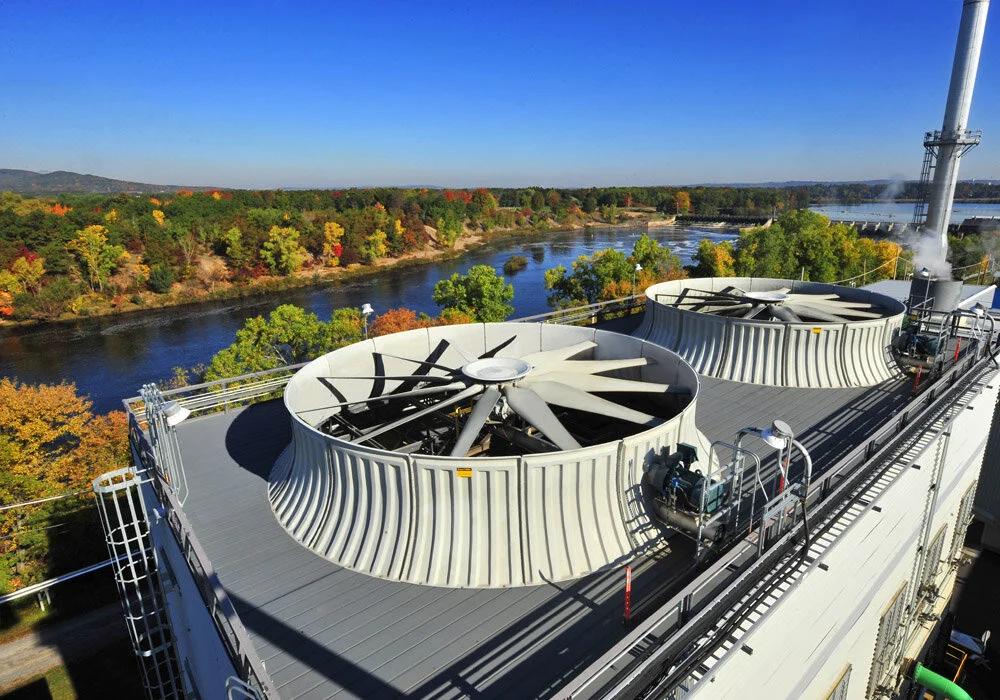
Cooling tower fans play a vital role in industrial cooling systems. They move large volumes of air through the cooling tower, helping remove heat from circulating water and maintain stable operating temperatures. However, these powerful machines can also create serious safety risks if they are operated incorrectly, poorly maintained, or repaired without proper precautions.
From rotating fan blades and electrical hazards to excessive vibration and unexpected equipment startup, even a small oversight can lead to injuries, equipment damage, or costly downtime.
So, how can you keep your cooling tower fan operating safely and efficiently?
In this guide, Power Tower Cooling Technology (Shaoxing) Co., Ltd. explains the essential cooling tower fan safety procedures every operator and maintenance professional should understand. We will cover common hazards, pre-start inspections, safe operating practices, lockout/tagout procedures, preventive maintenance, and replacement considerations.
Whether you manage an industrial cooling tower, maintain HVAC equipment, or purchase cooling tower replacement parts, these practical recommendations will help you build a safer and more reliable cooling system.
1. Why Cooling Tower Fan Safety Matters
Cooling tower fans often operate for extended periods, sometimes continuously throughout the year. During operation, they experience mechanical loads, environmental exposure, temperature changes, and continuous vibration. Over time, these conditions can loosen fasteners, damage fan blades, affect alignment, and increase wear on drive components.
Without proper inspection and maintenance, a minor defect can develop into a serious mechanical failure.
Cooling tower fan safety matters for three main reasons.
First, it protects workers from rotating machinery, electrical hazards, falling objects, and other workplace risks. Second, it helps prevent equipment failures that interrupt industrial production. Third, it supports long-term equipment reliability by identifying problems before they become expensive repairs.
Think of preventive maintenance as an early warning system. Instead of waiting for a fan to fail, you identify the warning signs and correct them before they threaten people or equipment.
1.1 Protecting Workers and Maintenance Teams
Rotating machinery presents hazards that may not always be obvious. Loose clothing, gloves, hair, tools, and other objects can become entangled in moving components. Electrical faults may cause serious injuries, while working on elevated cooling tower platforms introduces fall hazards.
Workers should never reach through a guard, approach exposed rotating components, or attempt mechanical adjustments while the fan is running.
Only trained and authorized personnel should perform maintenance. They must follow approved work procedures, use appropriate personal protective equipment, and isolate hazardous energy before carrying out work that exposes them to moving machinery.
1.2 Preventing Equipment Damage and Unexpected Downtime
An unsafe cooling tower fan can damage more than the fan itself.
Excessive vibration may affect bearings, gearboxes, motor mounts, and supporting structures. A loose blade can strike surrounding components, while an overloaded motor may overheat or repeatedly trip its protection system.
These failures can interrupt production in manufacturing plants, power facilities, commercial buildings, and industrial process systems.
Regular inspections, accurate operating records, and timely repairs help reduce these risks and improve overall cooling tower reliability.
2. Understanding Cooling Tower Fan Components
Before inspecting or maintaining a cooling tower fan, you should understand its main components. Different cooling tower designs use different configurations, so always consult the equipment manufacturer's documentation.
2.1 Fan Blades and Hub Assembly
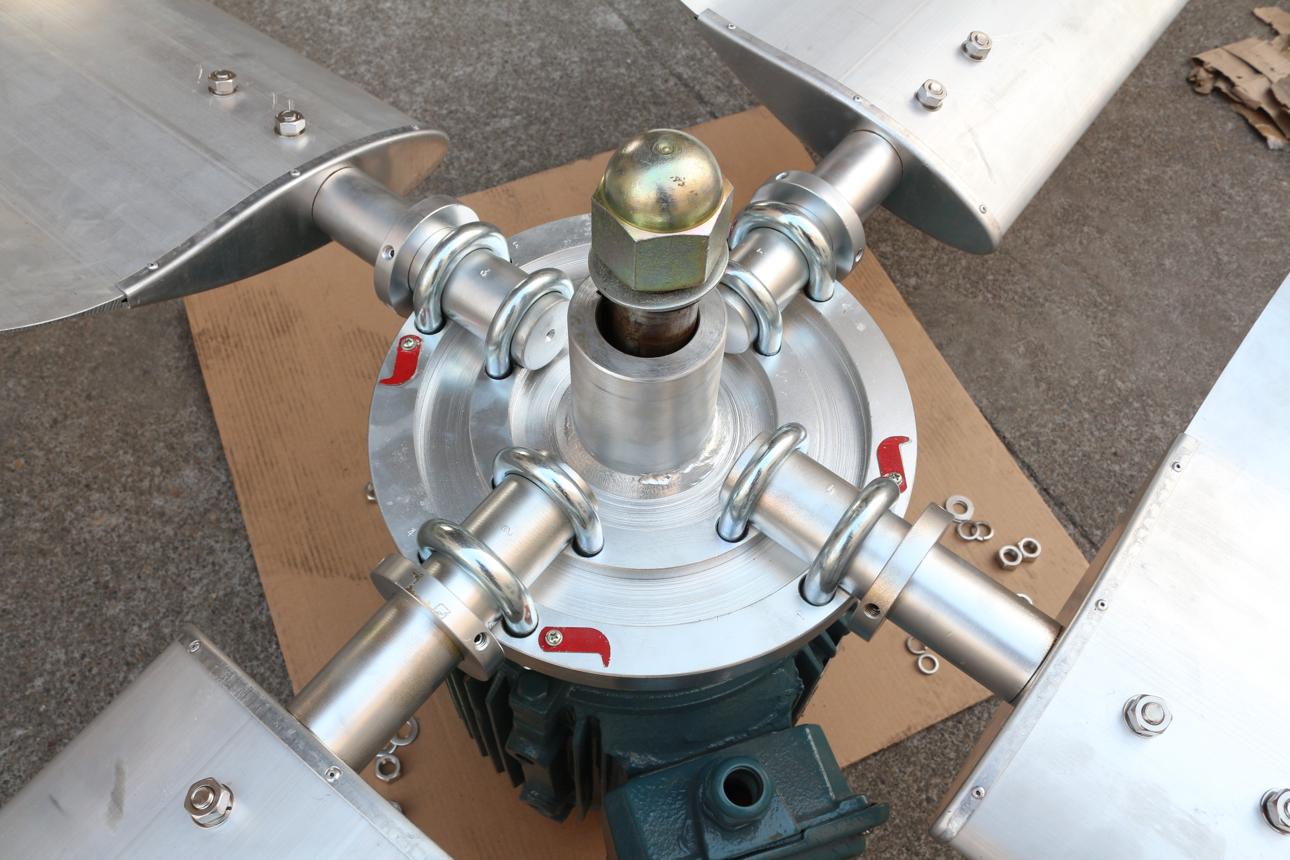
Fan blades generate airflow through the cooling tower. Depending on the application, they may be manufactured from fiberglass-reinforced plastic, aluminum, or other engineered materials.
During inspections, check the blades for cracks, deformation, corrosion, erosion, unusual wear, and material buildup. Even a small amount of uneven buildup can affect fan balance.
The hub holds the blades in position and transfers rotational force. Its mounting surfaces, fasteners, and blade attachment points must remain secure.
Never operate a fan with visibly damaged blades or a suspected loose hub. Do not attempt an improvised repair on a structurally damaged blade.
2.2 Motor, Gearbox, and Drive System
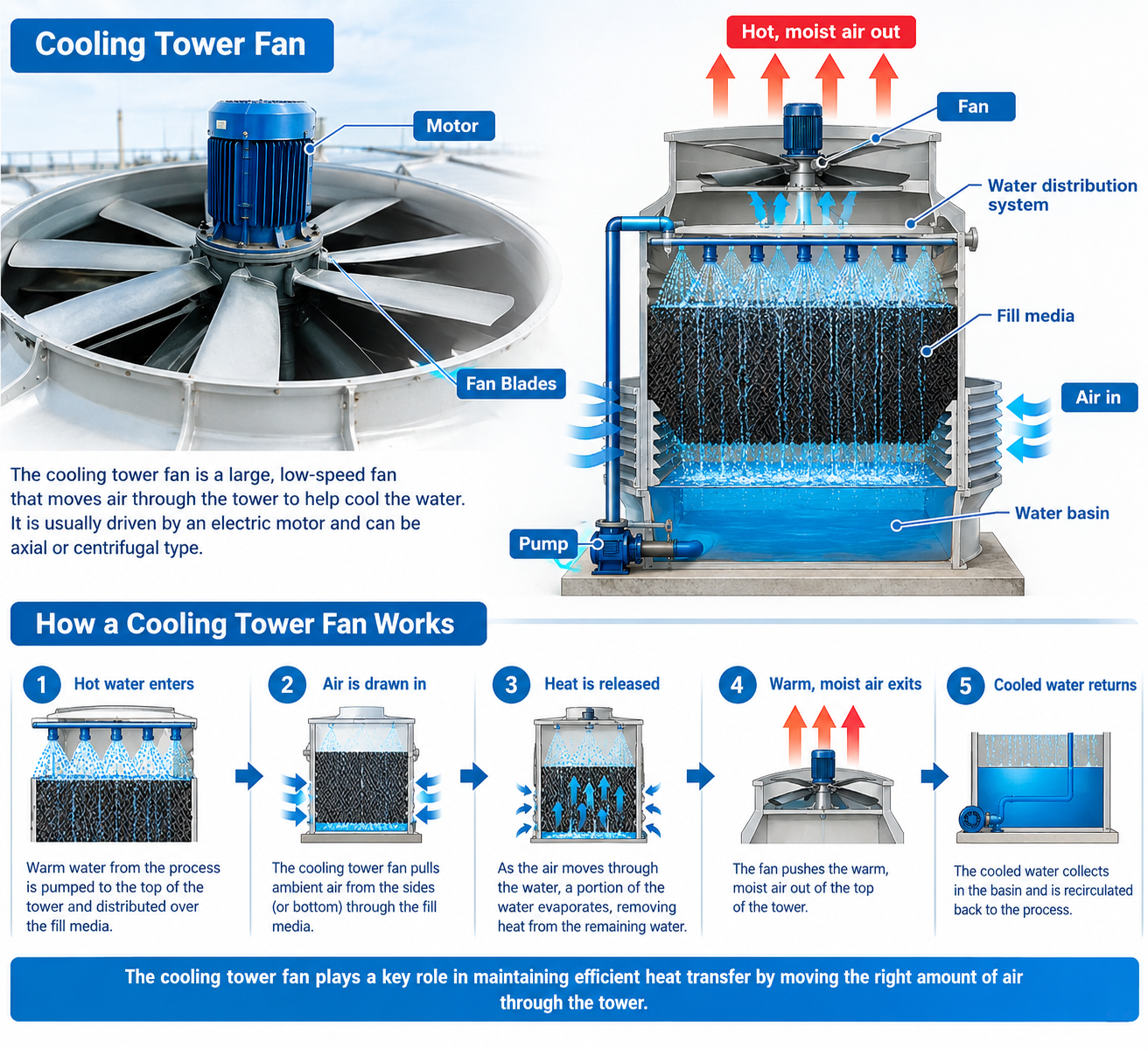
The motor supplies the power required to rotate the fan. Depending on the cooling tower design, a gearbox, drive shaft, belt drive, coupling, or direct-drive arrangement may transfer that power to the fan assembly.
Each component requires appropriate inspection and maintenance.
Look for abnormal noise, overheating, lubrication problems, damaged belts, loose mounting hardware, and signs of misalignment. Check lubrication levels and service intervals against the manufacturer's requirements.
All exposed rotating shafts, couplings, belts, and pulleys must have suitable guards. Never remove a guard while the equipment is operating or attempt to adjust a drive component before hazardous energy has been isolated.
2.3 Fan Stack, Guards, and Structural Supports
The fan stack directs airflow, while guards and screens help prevent access to dangerous moving parts. Structural supports carry the loads generated during operation.
Inspect these components for cracks, corrosion, deformation, loose fasteners, and damage caused by weather or maintenance activities.
A damaged guard must be repaired or replaced before the fan returns to service. Access platforms, ladders, handrails, and walkways should also be checked to ensure that workers can reach maintenance areas safely.
Never use a guard or fan stack as a standing platform unless it has been specifically designed for that purpose.
3. Common Cooling Tower Fan Hazards
Recognizing hazards before work begins is one of the most effective ways to prevent accidents.
The main risks include contact with rotating blades, unexpected startup, electrical faults, excessive vibration, falling objects, and unsafe access at height. Wet surfaces, water-treatment chemicals, and biological exposure around cooling tower water may introduce additional hazards.
A site-specific risk assessment should cover the entire working environment, not just the fan assembly.
3.1 Rotating Blades and Entanglement
Rotating fan blades can cause severe injuries. Even after the power is switched off, the fan may continue moving briefly because of its rotational inertia.
Never assume that a fan is safe simply because it sounds quiet.
Before approaching the assembly for maintenance, isolate the equipment, prevent unexpected restart, and verify that all movement has stopped. Follow the approved procedure for confirming a safe condition before beginning work.
Keep guards in place during operation, and never bypass safety interlocks or reach into a fan opening while the equipment is running.
3.2 Electrical and Mechanical Hazards
Cooling tower motors, control panels, variable-frequency drives, and electrical connections may expose workers to dangerous voltage.
Mechanical systems can also retain hazardous energy after shutdown. Depending on the equipment, this may include rotating components, tensioned belts, or other stored mechanical energy.
Electrical work must be performed by qualified personnel using the required electrical safety procedures.
Before maintenance begins, identify and isolate all relevant energy sources. Do not rely on a control switch, emergency stop, or software command as a substitute for proper energy isolation.
3.3 Vibration, Falling Objects, and Structural Risks
Excessive vibration can indicate fan imbalance, damaged bearings, loose fasteners, shaft misalignment, or structural deterioration.
Loose tools and components may also fall from elevated platforms, creating hazards for workers below.
Keep maintenance tools secured, establish restricted areas beneath overhead work, and inspect access platforms and handrails regularly.
If severe vibration, abnormal blade movement, or structural damage occurs, stop the equipment when safe to do so and arrange a qualified inspection before restarting.
4. Essential Safety Checks Before Startup
A pre-start inspection should be part of every cooling tower fan's standard operating procedure.
Before starting the equipment, confirm that maintenance work is complete, tools and loose materials have been removed, guards are installed, and personnel are clear of hazardous areas.
Inspect accessible fan blades, the hub, motor mounts, drive components, and fasteners for obvious defects. Check lubrication requirements and confirm that control systems and protective devices are ready for operation.
Never start a fan simply to see whether a known mechanical problem disappears.
4.1 Inspecting Fan Blades and Fasteners
Examine accessible blades for cracks, unusual wear, deformation, and contamination. Check the blade attachment points and hub fasteners according to the manufacturer's inspection instructions.
Use the specified tightening values and appropriate tools. Excessive tightening can damage components, while insufficient tightening may allow them to loosen during operation.
If a blade is cracked or structurally damaged, follow the manufacturer's repair or replacement recommendations rather than attempting an improvised repair.
4.2 Checking the Motor and Drive System
Inspect the motor for signs of overheating, damaged cables, unusual odors, and loose mounting hardware.
For belt-driven systems, check the belt condition and tension according to the equipment manual. For gearbox-driven systems, inspect lubrication levels, leaks, unusual noise, and signs of overheating.
Check alignment where required and investigate any abnormal wear.
Remember that detailed inspections involving contact with mechanical components must be performed only after the equipment has been safely shut down and isolated.
4.3 Verifying Guards and Access Restrictions
Before startup, confirm that fan guards, access covers, barriers, and safety interlocks are installed and functioning as designed.
Warning signs should be visible and understandable to employees and contractors.
If a guard is missing, loose, or damaged, keep the fan out of service until the problem is corrected and the equipment is verified safe.
5. Safe Cooling Tower Fan Startup Procedures
A consistent startup procedure reduces the chance of accidents and equipment damage.
First, verify that the maintenance area is clear and all work has been completed. Confirm that the fan has been correctly reassembled, guards are installed, and personnel have moved away from hazardous areas.
Ensure that any lockout/tagout devices are removed only through the authorized procedure. Notify affected workers before returning the equipment to service.
Start the fan according to the manufacturer's instructions. Observe it from a safe position and monitor the initial operating condition.
Listen for unusual noise, watch for abnormal movement, and check available readings such as motor current and vibration.
If the fan shows severe vibration, unexpected contact, abnormal electrical behavior, or another serious fault, stop it safely and investigate before continuing operation.
Never attempt to correct a mechanical problem while the fan is rotating.
6. Safe Operating Practices During Daily Use
Safe operation does not end once the fan starts. Operators should continue monitoring the equipment throughout its normal operating cycle.
Pay attention to changes in sound, vibration, motor temperature, current, and overall performance. Record significant changes and communicate problems to the maintenance team.
Avoid unauthorized speed adjustments, control overrides, or changes to blade pitch. These modifications can affect airflow, power consumption, mechanical loading, and structural safety.
If the system uses a variable-frequency drive, operate it within the manufacturer's approved speed range. Some fan systems have restrictions related to critical speeds, vibration, or minimum operating frequencies.
A reliable operating routine combines regular observation, accurate records, and prompt corrective action.
6.1 Monitoring Noise, Vibration, and Temperature
Changes in sound or vibration often provide early warning of mechanical problems.
A new rattling sound may indicate a loose component. Increasing vibration may suggest imbalance, misalignment, or bearing deterioration. Rising motor temperature may indicate electrical loading, ventilation problems, or mechanical resistance.
Where suitable instruments are available, monitor vibration, motor current, and bearing or gearbox temperatures against the applicable equipment limits.
Record readings consistently so the team can identify trends instead of waiting for an alarm.
Never ignore repeated protective trips or warning signals simply to keep production running.
6.2 Managing Weather and Unusual Operating Conditions
Weather can affect cooling tower fan safety, particularly during strong winds, storms, freezing conditions, and periods of extreme heat.
Follow the manufacturer's instructions for operation during severe weather and seasonal shutdowns.
Where icing is possible, inspect for ice accumulation and follow approved procedures before restarting. Never strike frozen blades or attempt to remove ice while the fan is operating.
After severe weather, inspect accessible guards, structural supports, fan assemblies, and access platforms before returning the equipment to service.
7. Cooling Tower Fan Lockout/Tagout Procedures
Lockout/tagout, commonly known as LOTO, is essential whenever maintenance exposes workers to hazardous energy.
Simply pressing the stop button does not guarantee that the fan cannot restart.
A typical LOTO process includes the following steps:
Prepare for shutdown: Identify the equipment, energy sources, and hazards associated with the planned work.
Notify affected personnel: Inform operators and other workers that the fan will be taken out of service.
Shut down the equipment: Follow the approved shutdown sequence.
Isolate energy sources: Disconnect and secure the relevant electrical and other energy supplies.
Apply locks and tags: Authorized personnel apply their personal locks and identification tags according to site procedures.
Control stored energy: Allow rotating parts to stop and safely release or restrain other stored energy.
Verify isolation: Use the approved verification method to confirm that the equipment cannot operate unexpectedly and that the required safe condition has been achieved.
Complete the work: Perform maintenance only after the isolation has been verified.
Restore equipment safely: Inspect the assembly, replace guards, clear personnel, and remove locks through the authorized procedure before returning the fan to service.
Pay particular attention to automatic control systems, remote commands, backup supplies, and any other source that could cause an unexpected restart.
Only the authorized person should remove their lock, except where a formally controlled site procedure allows an alternative.
Always follow the applicable workplace regulations and your site's specific LOTO requirements.
8. Cooling Tower Fan Preventive Maintenance
Preventive maintenance reduces unexpected failures and helps keep cooling tower fans operating safely.
The maintenance schedule should reflect the manufacturer's recommendations, operating hours, environmental conditions, equipment criticality, and previous inspection findings.
For example, a fan operating in corrosive air or a dusty industrial environment may require more frequent inspection than one operating under cleaner conditions.
Record inspections, measurements, repairs, and component replacements. These records help identify recurring problems and support better maintenance planning.
8.1 Daily and Weekly Inspections
Daily checks may include:
Unusual noise or vibration.
Visible blade damage or abnormal movement.
Motor alarms and abnormal operating readings.
Unusual temperature changes.
Oil leaks or other visible abnormalities.
Damaged guards or unsafe access conditions.
Weekly inspections may include a more structured review of accessible mounting points, guards, drive components, corrosion, and general cleanliness.
Do not approach exposed rotating parts to perform closer inspections. If a detailed inspection requires guard removal or contact with the equipment, shut down and isolate the fan first.
8.2 Monthly and Quarterly Maintenance
Depending on the manufacturer's schedule, monthly or quarterly maintenance may include checking fasteners, drive alignment, belt tension, gearbox lubrication, electrical connections, corrosion, and blade condition.
Use the prescribed torque values, lubricant specifications, and inspection methods.
Some maintenance tasks require shutdown, isolation, or specialist instruments. Do not apply a generic maintenance interval where the equipment manual specifies a different schedule.
Document deterioration, identify the required corrective action, and verify that outstanding safety issues have been resolved.
8.3 Annual Inspection and Professional Servicing
A comprehensive annual inspection can evaluate blade integrity, hub condition, drive components, motor performance, structural supports, and protective systems.
Qualified technicians may also perform vibration analysis, electrical testing, alignment checks, and other condition assessments as appropriate.
Review the equipment's maintenance history during the annual inspection. Recurring problems may indicate that a component needs replacement or that the operating conditions require further investigation.
The goal is not merely to complete a checklist. It is to confirm that the fan remains suitable for safe operation under its actual working conditions.
9. Cleaning and Maintaining Cooling Tower Fan Blades
Dirt, scale, biological deposits, and other buildup can affect airflow and contribute to fan imbalance.
Cleaning should therefore be performed according to the manufacturer's recommendations and the site's environmental and water-treatment procedures.
Before cleaning, shut down and isolate the fan, verify that movement has stopped, and protect workers from electrical, chemical, slip, and fall hazards.
Use cleaning methods compatible with the blade material. Avoid harsh chemicals, abrasive tools, and high-pressure cleaning methods that could damage blade surfaces or force water into electrical equipment.
After cleaning, inspect the blades for damage and confirm that the assembly is correctly secured before returning the fan to service.
If deposits return quickly, investigate the underlying cause instead of repeatedly cleaning the same components without addressing the problem.
10. Common Cooling Tower Fan Problems and Solutions
Understanding common cooling tower fan problems helps maintenance teams respond more effectively.
Excessive vibration: Possible causes include imbalance, loose fasteners, damaged bearings, misalignment, or structural defects. Stop the fan when required by the operating procedure and arrange a systematic inspection.
Unusual noise: Rattling, scraping, or abnormal gearbox noise may indicate loose components, bearing damage, or mechanical contact. Investigate the cause after safely isolating the equipment.
Motor overheating: Check for electrical loading problems, restricted ventilation, bearing issues, and drive-system resistance. Do not repeatedly reset a protective device without determining why it trips.
Reduced airflow: Inspect blade condition, approved pitch settings, operating speed, obstructions, and system restrictions. Compare findings with the original equipment specifications.
Repeated shutdowns: Review alarm history, operating data, motor current, and relevant protection settings. Identify the underlying fault rather than bypassing the protection system.
Oil leakage: Check for leaks around the gearbox or associated components and follow the manufacturer's maintenance procedure.
In every case, prioritize worker safety. If a fault could cause serious injury or equipment failure, keep the fan out of service until a qualified person confirms that it is safe to operate.
11. Cooling Tower Fan Replacement: Safety Considerations
Replacing a fan blade, hub, motor, gearbox, or complete fan assembly involves significant mechanical risks.
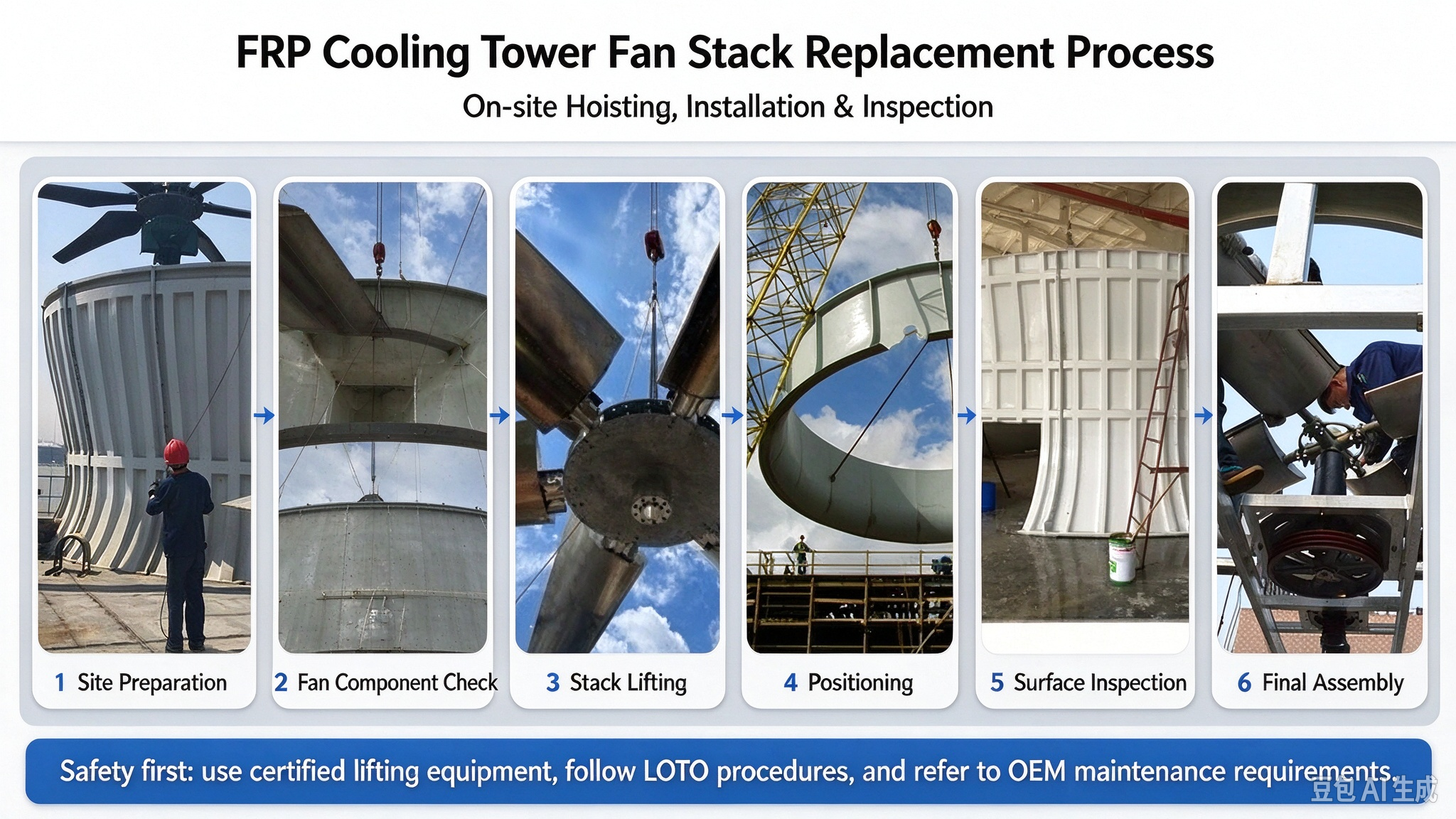
Large components may require lifting equipment, suitable lifting points, and a coordinated work plan. Before replacement begins, isolate hazardous energy, secure the work area, and confirm that the supporting structure can safely accommodate the work.
Follow the manufacturer's removal and installation instructions. Never improvise lifting arrangements or place workers beneath suspended loads.
After installation, inspect the fasteners, alignment, clearances, guards, and drive components. Commissioning should be controlled and carried out by qualified personnel.
11.1 Selecting Compatible Cooling Tower Fan Replacement Parts
A replacement part must match the actual equipment requirements, not just its general appearance.
For fan blades and hub assemblies, check the fan diameter, blade profile, mounting dimensions, rotational direction, material, operating speed, and applicable loading limits.
For motors and drive components, verify the power rating, speed, mounting arrangement, duty conditions, and other relevant specifications.
Incorrect parts can reduce airflow, increase vibration, overload the drive system, or create a mechanical failure.
When ordering cooling tower replacement parts, provide as much information as possible, including:
Cooling tower manufacturer and model.
Fan or component model number.
Drawings and mounting dimensions.
Nameplate information.
Photographs of the existing assembly.
Operating conditions and known performance problems.
Accurate information helps suppliers assess compatibility and reduces the risk of ordering unsuitable components.
11.2 Balancing, Alignment, and Commissioning
Correct balancing and alignment are critical to safe fan operation.
Follow the specified balancing method and tolerance. Do not add improvised weights or change blade pitch to compensate for a damaged assembly.
Verify drive alignment, blade clearances, fastener security, and guard installation before startup.
During commissioning, monitor vibration, noise, motor current, and other relevant operating readings. Compare the results with the manufacturer's acceptance criteria and investigate abnormal behavior before the fan enters routine service.
A successful replacement is not complete simply because the fan rotates. The entire assembly must operate safely within its intended design conditions.
12. Personal Protective Equipment and Staff Training
Personal protective equipment (PPE) should match the hazards identified in the work assessment.
Depending on the task, appropriate equipment may include safety glasses, protective footwear, a hard hat, hearing protection, chemical-resistant equipment, and suitable fall-protection equipment.
PPE does not replace guards, energy isolation, or safe work procedures. It is one part of a broader safety system.
Workers should receive training in rotating machinery hazards, electrical safety, lockout/tagout, emergency response, safe access, and the specific cooling tower equipment they maintain.
Contractors should also receive clear instructions about site safety requirements before beginning work.
Regular refresher training helps reinforce safe behavior and ensures that workers understand changes to equipment, procedures, or operating conditions.
13. Creating an Effective Cooling Tower Fan Safety Checklist
A practical safety checklist helps standardize inspections across shifts and maintenance teams.
Before startup:
Inspect accessible fan blades and the hub.
Check for loose fasteners and visible damage.
Confirm that guards and protective devices are installed.
Verify that maintenance work is complete.
Remove tools and loose materials from the work area.
Ensure personnel are clear of hazardous areas.
Confirm that the controls and operating conditions are suitable for startup.
During operation:
Monitor noise and vibration.
Observe motor temperature and operating current where available.
Check for unusual movement or visible abnormalities.
Review alarms and protective trips.
Record significant changes in operating conditions.
Before maintenance:
Follow the approved shutdown procedure.
Isolate all relevant energy sources.
Apply lockout/tagout devices.
Control stored energy and verify the safe condition.
Use appropriate PPE and safe access equipment.
After maintenance:
Confirm that the equipment has been correctly reassembled.
Check fasteners, alignment, and clearances.
Reinstall all guards and access covers.
Remove tools and materials.
Follow the authorized process for restoring energy.
Perform controlled commissioning and record the results.
Assign responsibility for each inspection and track corrective actions until they are complete. Any unresolved safety-critical defect must be addressed before the fan returns to service.
14. How Safe Fan Operation Improves Cooling Tower Efficiency
Safety and efficiency support each other.
A correctly maintained cooling tower fan can deliver the intended airflow while reducing the risk of unexpected breakdowns. Proper blade condition, suitable alignment, balanced rotation, and healthy drive components help reduce unnecessary mechanical losses.
Reliable airflow also supports the cooling tower's ability to reject heat under its design conditions.
However, efficiency improvements must remain within approved operating limits. Increasing fan speed or changing blade pitch without engineering review can increase power consumption, vibration, and structural loading.
The better approach is to maintain the equipment according to its design specifications, monitor performance trends, and correct developing faults promptly.
Over time, this disciplined approach can help reduce unplanned downtime, improve maintenance planning, and support more reliable industrial cooling operations.
15. Choosing a Reliable Cooling Tower Parts Supplier
Reliable replacement components are an important part of an effective cooling tower maintenance program.
When choosing a supplier, consider product specifications, material quality, dimensional compatibility, technical documentation, and the supplier's ability to understand your equipment requirements.
Before purchasing a replacement fan or related component, confirm that the proposed product is suitable for the actual cooling tower design and operating conditions.
Power Tower Cooling Technology (Shaoxing) Co., Ltd. provides cooling tower components through its website:
Website: https://www.coolingtowerpart.com
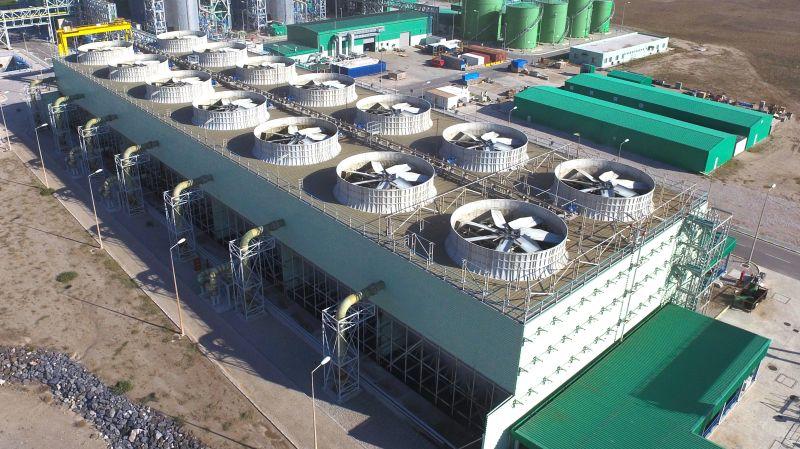
Maintenance professionals and industrial buyers can explore the available product range and contact the company regarding their cooling tower replacement requirements.
When making an inquiry, provide the cooling tower model, component dimensions, photographs, and available technical drawings. This information helps clarify the required specifications and supports a more accurate compatibility assessment.
Choosing suitable components, following correct installation procedures, and maintaining the equipment regularly can help support safer and more dependable cooling tower operation.
16. Conclusion
Cooling tower fan safety is not a one-time task. It is an ongoing process that combines hazard awareness, pre-start inspections, safe operating practices, lockout/tagout, preventive maintenance, and correct replacement procedures.
By paying attention to unusual vibration, damaged blades, loose fasteners, electrical warnings, and structural deterioration, maintenance teams can identify problems before they lead to injuries or major downtime.
Just as importantly, never bypass protective devices or carry out hands-on maintenance while equipment is moving or hazardous energy remains uncontrolled.
A well-maintained cooling tower fan is more than a mechanical component. It is an essential part of a safe, stable, and efficient industrial cooling system.
Power Tower Cooling Technology (Shaoxing) Co., Ltd. supports cooling tower maintenance needs through its website, www.coolingtowerpart.com.
Combine suitable replacement components with professional installation, regular inspection, and disciplined maintenance to keep your cooling tower fan operating as safely and reliably as possible.


