Closed Loop Cooling Tower Distribution System: Complete Guide to Efficient Industrial Cooling
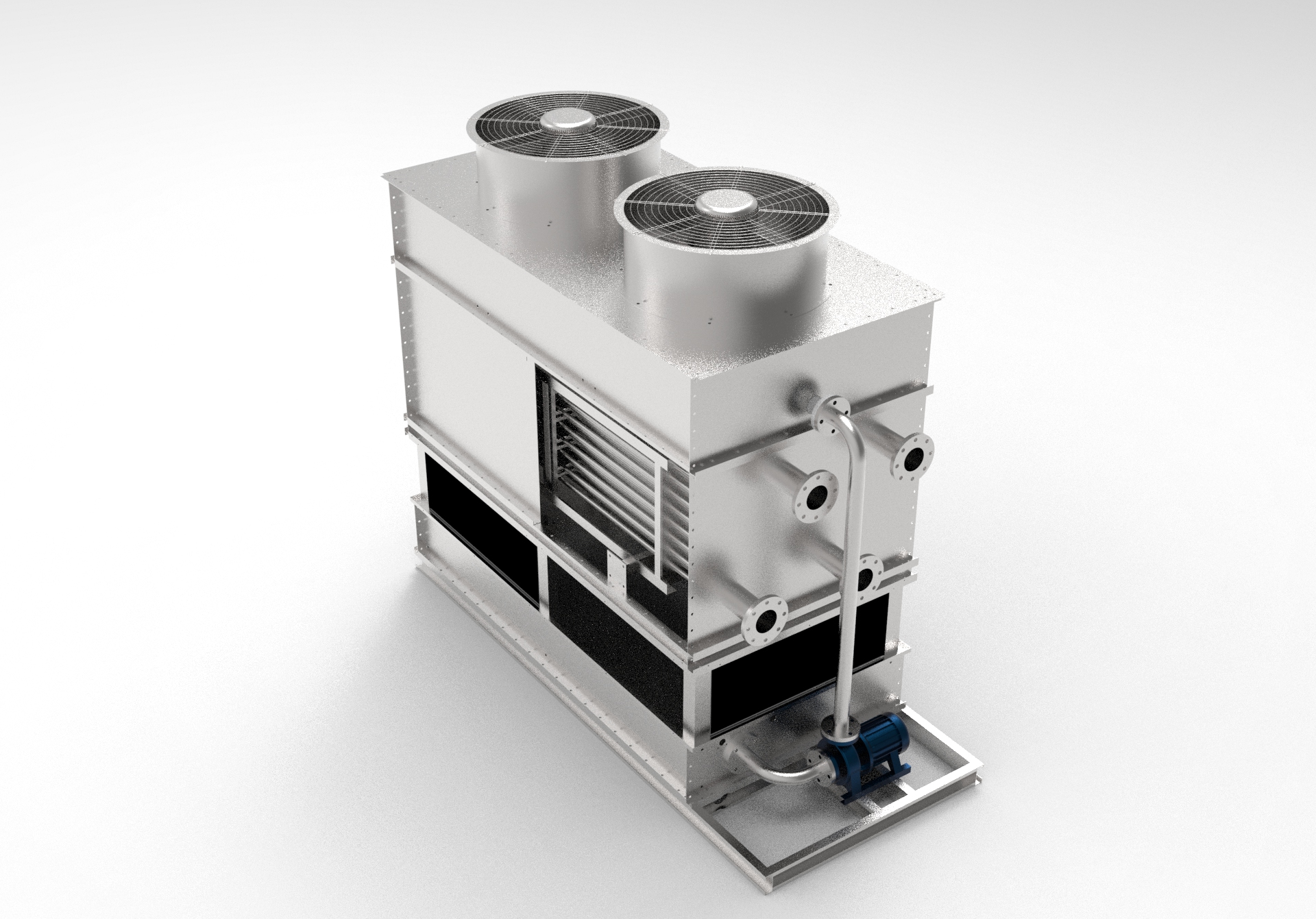
A closed loop cooling tower distribution system, also known as a closed circuit cooling tower water distribution system, is engineered to cool process fluids without exposing them to the outside environment. Unlike open cooling towers, the process fluid circulates through a sealed heat exchange coil while spray water and airflow remove heat from the coil's exterior.
This design minimizes contamination, reduces maintenance requirements, and delivers consistent thermal performance, making it the preferred solution for industries that require reliable and efficient cooling.
Whether you're upgrading an existing cooling tower or sourcing OEM cooling tower replacement parts, understanding the distribution system is essential for maximizing heat transfer efficiency and equipment life.
What Is a Closed Loop Cooling Tower Distribution System?
A closed loop cooling tower uses an enclosed heat exchanger coil to separate the process fluid from the cooling water. Instead of mixing with tower water, the process fluid remains inside the coil while spray water continuously wets the coil's surface.
An induced-draft fan draws air through the tower, allowing a portion of the spray water to evaporate. This evaporation removes heat from the coil, cooling the process fluid before it returns to the production system.
Because the process fluid never contacts outside air or cooling water directly, the system offers superior cleanliness and long-term operational stability.
How a Closed Loop Cooling Tower Distribution System Works
The cooling process follows six simple steps:
Heated process fluid enters the heat exchange coil.
The water distribution system pumps spray water to the spray nozzles.
Spray nozzles evenly distribute water across the coil surface.
The cooling tower fan pulls ambient air through the tower.
Heat transfers from the process fluid to the coil, then to the spray water and finally into the atmosphere through evaporation.
Cooled process fluid exits the coil while spray water drains into the collection basin for recirculation.
Uniform water distribution is critical because dry spots on the coil reduce cooling efficiency and increase operating costs.
Main Components of the Distribution System
1. Spray Water Distribution System
The spray water distribution system is responsible for delivering an even water film over the heat exchange coil.
Major components include:
A properly designed distribution system maximizes heat transfer while minimizing water consumption.
2. Heat Exchange Coil
The coil is the heart of every closed circuit cooling tower.
Common materials include:
The coil completely isolates the process fluid from the external cooling water.
3. Cooling Tower Spray Nozzles
Spray nozzles play a major role in cooling performance.
High-quality nozzles provide:
Uniform spray coverage
Low pressure loss
Clog-resistant design
Long service life
Easy maintenance
Selecting the correct spray pattern improves thermal efficiency and reduces energy consumption.
4. Air Distribution System
The airflow system consists of:
Proper airflow accelerates evaporation and improves cooling capacity.
5. Water Collection Basin
After cooling the coil, spray water drains into the basin where it is collected and pumped back to the spray system.
The basin should include:
6. Drift Eliminators
Drift eliminators capture water droplets carried by the airflow.
Benefits include:
Lower water loss
Improved environmental compliance
Reduced chemical consumption
Cleaner surrounding equipment
Types of Water Distribution Systems
Gravity Distribution System
Gravity-fed systems rely on elevated basins to distribute water.
Advantages:
Lower pumping energy
Simple construction
Lower maintenance
Limitations:
Pressurized Distribution System
Most modern industrial cooling towers use pressurized systems.
Advantages include:
Excellent spray uniformity
Adjustable flow rates
Better cooling performance
Higher operational efficiency
Pressurized systems are recommended for most industrial applications.
Advantages of Closed Loop Cooling Tower Systems
Compared with open cooling towers, closed loop systems provide several important benefits.
Protects Process Fluid
The process fluid never contacts outside contaminants, reducing fouling and extending equipment life.
Reduces Maintenance
Because the process fluid remains clean, there is less scaling, corrosion, and biological growth.
Improves Energy Efficiency
Uniform spray distribution and consistent heat transfer reduce overall operating costs.
Extends Equipment Life
Lower corrosion and cleaner heat exchangers increase service life.
Supports Critical Applications
Closed loop systems are widely used where contamination cannot be tolerated.
Industrial Applications
Closed loop cooling tower distribution systems are commonly used in:
HVAC chillers
Industrial refrigeration
Plastic injection molding
Food and beverage production
Pharmaceutical manufacturing
Chemical processing
Petrochemical plants
Steel manufacturing
Power generation
Data centers
Electronics manufacturing
Design Considerations
When selecting a cooling tower distribution system, engineers should evaluate:
Uniform Spray Coverage
Even water distribution ensures every section of the heat exchanger coil contributes to cooling.
Spray Nozzle Selection
Consider:
Spray angle
Water pressure
Droplet size
Anti-clog performance
Material compatibility
Water Flow Rate
Proper circulation maintains efficient heat transfer while minimizing pumping costs.
Water Quality
Water treatment helps prevent:
Scaling
Corrosion
Biological fouling
Sediment buildup
Material Selection
Choose corrosion-resistant materials appropriate for the operating environment.
Common Problems and Solutions
| Problem | Possible Cause | Recommended Solution |
| Uneven cooling | Poor nozzle coverage | Replace or rebalance spray nozzles |
| Coil scaling | Hard water | Improve water treatment program |
| Nozzle clogging | Debris in spray water | Install filtration and clean nozzles regularly |
| Reduced cooling capacity | Low water flow | Inspect pumps, valves, and piping |
| High energy consumption | Dirty coil or restricted airflow | Clean the coil and inspect the fan system |
Closed Loop vs. Open Loop Cooling Towers
| Feature | Closed Loop Cooling Tower | Open Loop Cooling Tower |
| Process Fluid | Fully isolated | Directly exposed |
| Contamination Risk | Very low | Higher |
| Maintenance | Low | Higher |
| Water Quality Impact | Minimal | Significant |
| Thermal Performance | Stable | Varies with water quality |
| Equipment Life | Longer | Shorter |
Choosing the Right Cooling Tower Parts Supplier
The performance of a closed loop cooling tower depends heavily on the quality of its components.
Look for a supplier that offers:
OEM-compatible cooling tower parts
High-efficiency spray nozzles
Water distribution piping
Heat exchange coils
Drift eliminators
Cooling tower fill media
Fan assemblies
Technical engineering support
Custom manufacturing capabilities
Working with an experienced cooling tower parts manufacturer ensures reliable performance, easier maintenance, and lower lifecycle costs.
Why Uniform Water Distribution Matters
A poorly designed water distribution system creates dry areas on the heat exchange coil, reducing thermal performance and increasing energy consumption.
An optimized system provides:
Investing in high-quality cooling tower spray nozzles and precision-engineered distribution piping can significantly improve overall system performance.
Frequently Asked Questions
What is a closed loop cooling tower distribution system?
It is a water distribution system that sprays recirculated water over a heat exchange coil while the process fluid remains sealed inside the coil, preventing contamination.
Why are spray nozzles important?
Spray nozzles ensure uniform water coverage across the coil, maximizing heat transfer and improving cooling efficiency.
What industries use closed circuit cooling towers?
Industries including HVAC, pharmaceuticals, food processing, petrochemicals, power generation, plastics, electronics, and data centers commonly use closed loop cooling towers.
How often should spray nozzles be inspected?
Most industrial facilities inspect spray nozzles during scheduled preventive maintenance, typically every three to six months depending on water quality and operating conditions.
Conclusion
A closed loop cooling tower distribution system plays a critical role in maintaining efficient, reliable, and contamination-free industrial cooling. By combining precision-engineered spray nozzles, high-quality heat exchange coils, effective airflow, and optimized water distribution, these systems deliver excellent thermal performance while reducing maintenance and operating costs.
Whether you are replacing existing components or designing a new cooling system, selecting high-quality cooling tower distribution parts from an experienced manufacturer helps improve equipment reliability, extend service life, and maximize energy efficiency.


