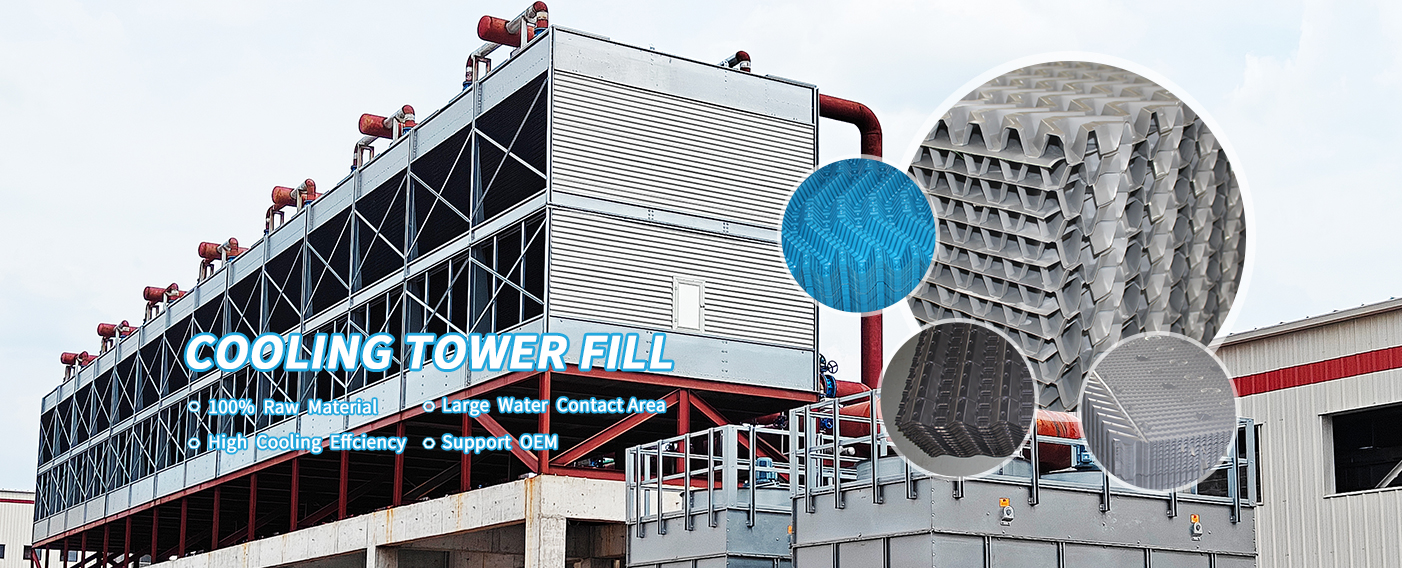
PVC cooling tower fill sheets play an important role in improving heat transfer, maintaining cooling efficiency, and supporting reliable industrial operations. Whether you operate a manufacturing plant, a commercial HVAC system, or a power facility, the quality of your cooling tower fill can directly affect how effectively your system removes heat.
So, why are PVC cooling tower fill sheets so widely used? Their lightweight construction, effective heat transfer characteristics, moisture resistance, and flexible design make them a practical choice for many cooling tower applications.
However, choosing the right fill is not simply about finding the lowest price or the product with the largest surface area. You also need to consider water quality, operating temperature, airflow, cooling tower design, and maintenance requirements.
In this guide, we will explain how PVC cooling tower fill sheets work, explore their main benefits and applications, and share practical tips for selecting the right product. We will also discuss what to look for when choosing a cooling tower fill manufacturer.
1. What Are PVC Cooling Tower Fill Sheets?
PVC cooling tower fill sheets are thin sheets made from polyvinyl chloride (PVC) that are formed into specific shapes and assembled into fill packs. They are installed inside cooling towers to increase the contact area between circulating water and moving air.
Without fill, water would pass through the tower with relatively limited contact with air. This could reduce the effectiveness of heat transfer. PVC fill sheets solve this problem by spreading water across a larger surface area, allowing heat to transfer more effectively.
As water flows downward over the sheets, air moves through the fill pack. A portion of the water evaporates, carrying heat away from the remaining water. The cooled water then returns to the industrial process or HVAC system.
PVC cooling tower fill sheets are commonly used in film-fill cooling towers. Their surfaces may feature corrugations or other patterns designed to promote water distribution, increase contact area, and maintain suitable airflow.
The correct design depends on the cooling tower configuration, thermal requirements, circulating water quality, and operating conditions.
How Do PVC Fill Sheets Work?
Think of cooling tower fill as the working surface where water and air meet. The more effectively these two elements interact, the more efficiently the tower can transfer heat under suitable operating conditions.
PVC fill sheets guide water into thin films that spread across their surfaces. As air passes through the fill, heat transfers from the water to the air, while evaporation removes additional heat.
Several factors influence this process:
Surface geometry: Determines how water spreads and how much contact area is available.
Sheet spacing: Affects both airflow resistance and the risk of clogging.
Water distribution: Helps ensure that the fill receives water evenly.
Airflow: Provides the air movement required for effective heat and mass transfer.
Water quality: Influences the accumulation of scale, suspended solids, and biological growth.
A well-designed fill pack balances these factors rather than maximizing only one of them.

PVC Film Fill Sheets vs. Splash Fill
Film fill and splash fill use different methods to increase contact between water and air.
Film fill spreads water across closely spaced surfaces, creating thin water films. Splash fill breaks falling water into smaller droplets as it strikes specially designed elements.
PVC film fill sheets are often selected when high heat transfer efficiency and compact fill arrangements are priorities. Splash fill may be preferable in some applications where circulating water contains significant suspended solids or where fouling is a major concern.
Splash fill is commonly manufactured from materials such as polypropylene (PP), although material options vary by product.
Neither type is automatically the best choice for every cooling tower. The decision should be based on water quality, operating conditions, required cooling performance, and the tower manufacturer's recommendations.
2. Why Is PVC Used for Cooling Tower Fill?
PVC is widely used in cooling tower fill manufacturing because it can be formed into different sheet geometries while providing useful mechanical and chemical properties for many water-cooling applications.
One important advantage is its relatively low weight. Lightweight fill sheets are generally easier to transport, handle, and assemble than many heavier alternatives.
PVC also offers good moisture resistance and can perform well in suitable cooling-water environments. Manufacturers can form it into corrugated sheets and other patterns designed to support water distribution and heat exchange.
However, not all PVC fill products have identical properties. Material formulation, sheet thickness, operating temperature, chemical exposure, and environmental conditions can affect performance and service life.
Before selecting a product, buyers should confirm that the material is suitable for their actual operating conditions rather than assuming that every PVC sheet provides the same level of durability.
3. Key Benefits of PVC Cooling Tower Fill Sheets
PVC cooling tower fill sheets offer several advantages when they are correctly selected, installed, and maintained.
3.1 High Heat Transfer Efficiency
One of the main reasons facilities choose PVC film fill is its ability to create a large water-contact surface within a relatively compact space.
Corrugated sheets help spread water into thin films, increasing the area available for heat exchange. This can help the cooling tower achieve its required outlet-water temperature when water distribution and airflow are properly balanced.
For industrial facilities, effective heat transfer supports stable process temperatures and reliable equipment operation.
However, fill is only one part of the cooling tower system. Fan performance, ambient wet-bulb temperature, water flow, nozzle condition, and airflow distribution also influence overall cooling capacity.
Replacing existing fill with a different design should therefore involve a review of the complete tower rather than focusing only on the sheet material.
3.2 Lightweight and Easy to Install
PVC cooling tower fill sheets are generally lightweight, making them easier to transport and handle during installation or replacement.
Depending on the product design, sheets can be assembled into packs that fit the available space inside a cooling tower. This modular arrangement can simplify maintenance planning and help reduce handling difficulties.
Before installation, however, the pack dimensions must match the tower's support structure and water distribution layout.
Poorly fitted fill can leave gaps, restrict airflow, or allow water to bypass the intended heat transfer surfaces. Accurate measurements and adherence to installation instructions are therefore essential.
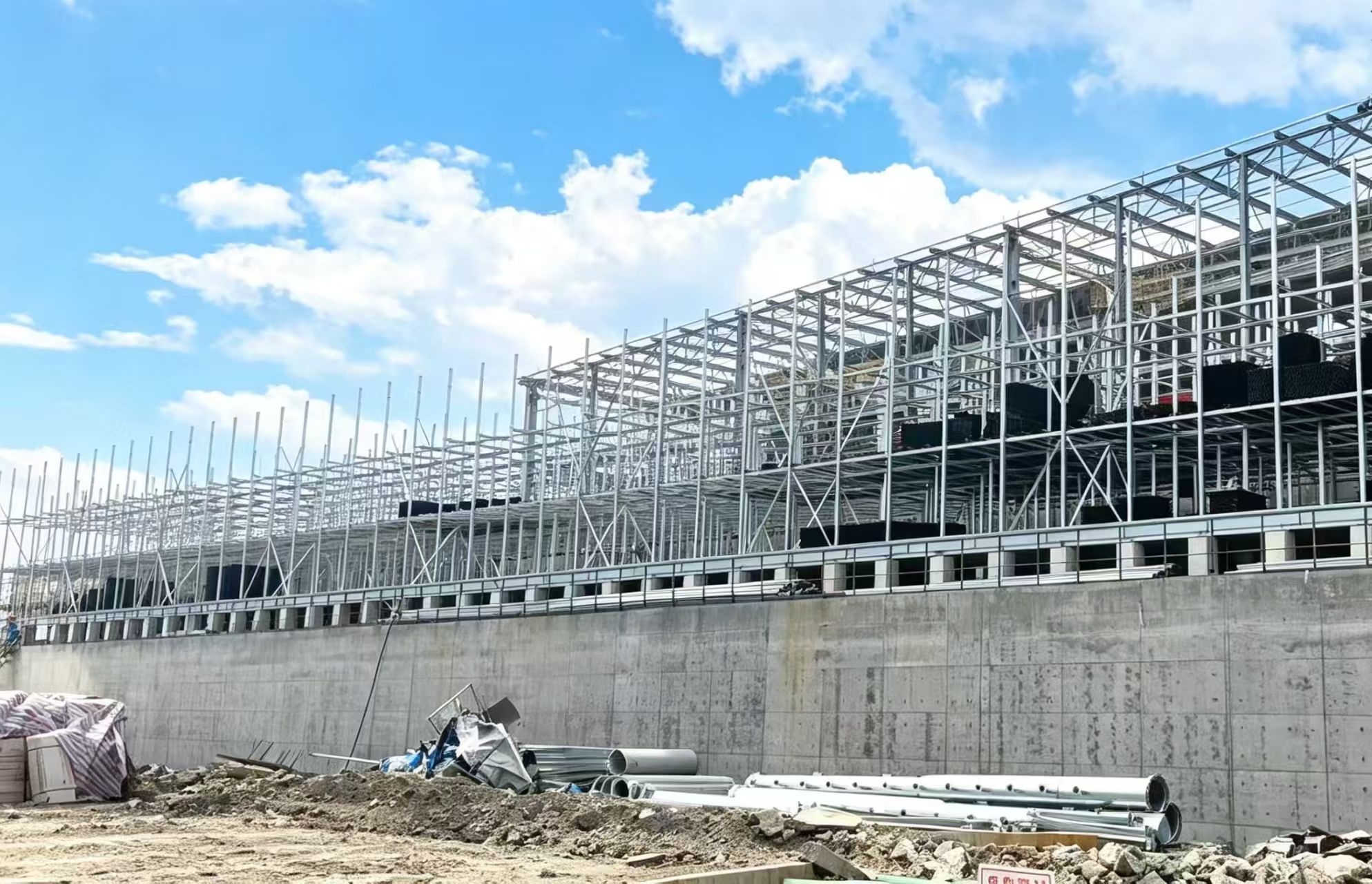
3.3 Corrosion and Moisture Resistance
Cooling tower fill operates in a consistently wet environment and is exposed to circulating water, airflow, and changing operating conditions.
PVC does not rust like ordinary carbon steel and offers useful resistance to moisture in suitable service environments. This makes it a practical material for many recirculating-water systems.
Nevertheless, PVC does not have unlimited resistance to chemicals or heat. Incompatible cleaning agents, excessive operating temperatures, ultraviolet exposure, and aggressive chemical conditions may affect the material over time.
A suitable water-treatment program and regular inspection help protect the fill and maintain reliable operation.
3.4 Cost-Effective Operation
The cost of cooling tower fill includes more than the initial purchase price. Transportation, installation labor, maintenance, cleaning, downtime, energy consumption, and replacement frequency all contribute to the total cost of ownership.
Properly selected PVC cooling tower fill sheets can provide a practical balance between initial investment and operating performance.
Effective heat transfer can help the tower meet its cooling requirements, while modular fill packs may simplify future maintenance.
Still, the cheapest product is not always the most economical choice. If the fill is unsuitable for the water quality or does not fit the tower correctly, maintenance problems and reduced performance may outweigh the initial savings.
3.5 Flexible Design and Customization
Cooling towers vary in size, airflow direction, fill depth, support arrangement, and cooling capacity. PVC fill sheets can be manufactured in different dimensions, thicknesses, corrugation patterns, and pack configurations, depending on the manufacturer's capabilities.
Customization may include:
Sheet dimensions and pack size
Sheet thickness
Corrugation pattern and geometry
Fill depth and arrangement
Pack configuration for crossflow or counterflow towers
The final design should be based on engineering requirements rather than appearance alone. A sheet pattern that works well in one cooling tower may create excessive airflow resistance or poor water distribution in another.
4. Common Applications of PVC Cooling Tower Fill Sheets
PVC cooling tower fill sheets are used in many industries that rely on circulating water to remove process heat or building heat.
Their suitability depends on water cleanliness, operating temperature, thermal load, and cooling tower configuration.
4.1 Industrial Manufacturing
Manufacturing facilities use cooling towers to remove heat from production equipment, compressors, hydraulic systems, molds, and process-water circuits.
PVC film fill can be suitable for applications where water quality is controlled and effective heat transfer is required.
Common examples include:
Plastics processing
Metalworking and machinery manufacturing
Textile production
General industrial manufacturing
Equipment cooling systems
Stable cooling helps industrial equipment operate within its specified temperature range. However, oils, fibers, scale, and suspended particles can accumulate on fill surfaces. Appropriate water treatment and regular inspection are therefore important.
4.2 HVAC and Commercial Buildings
Large office buildings, hospitals, hotels, shopping centers, and other commercial facilities may use cooling towers as part of central air-conditioning systems.
In these applications, the cooling tower rejects heat collected by the chiller's condenser-water loop. PVC cooling tower fill sheets provide the contact surface needed for heat transfer and evaporation.
Building operators often focus on maintaining stable cooling performance while managing fan energy, water consumption, and maintenance expenses.
Suitable fill selection can support these objectives, but overall system performance also depends on seasonal weather, condenser-water flow, fan control, and the condition of the water distribution system.
4.3 Power Plants and Energy Facilities
Power plants and energy facilities use cooling systems to remove heat from equipment and process circuits.
PVC fill may be appropriate for selected installations when the operating temperature, water chemistry, and mechanical conditions fall within the product's specified limits.
Because these facilities can have demanding operating requirements, fill selection should involve careful engineering review. Material specifications, fill geometry, pack dimensions, and compatibility with the existing cooling tower must be confirmed before replacement.
High-temperature or chemically aggressive applications may require alternative materials or specially specified products.
4.4 Chemical and Process Industries
Chemical plants and process facilities often operate cooling-water systems serving heat exchangers, reactors, compressors, and production lines.
PVC fill sheets may be suitable when the circulating water and treatment chemicals are compatible with the material.
Because chemical environments vary widely, compatibility should never be assumed. Operators should evaluate water chemistry, chemical dosing, operating temperature, and the possibility of process contamination before choosing a product.
Where suspended solids, biological growth, or mineral deposits are significant, the fill design and cleaning strategy should be considered together.
4.5 Water Treatment and Utility Facilities
PVC cooling tower fill sheets may also be used in selected water-treatment facilities, industrial utilities, and other installations requiring evaporative heat rejection.
The key consideration is the quality of the water passing through the fill.
Applications with high suspended-solids levels or recurring fouling may benefit from a more open fill design or an alternative fill type. A proper assessment should consider the required cooling performance alongside the maintenance resources available at the site.

5. Film Fill Designs and Sheet Configurations
Not all PVC cooling tower fill sheets have the same shape or arrangement. The right configuration must support the tower's airflow and water distribution while keeping pressure drop and fouling risks within acceptable limits.
5.1 Crossflow Cooling Tower Fill Sheets
In a crossflow cooling tower, air moves horizontally through the fill while water flows downward.
The fill must work with this airflow path and the tower's water distribution system. PVC film fill sheets may be assembled into packs specifically designed for crossflow arrangements.
When replacing existing fill, buyers should confirm the pack height, width, depth, support spacing, and position of nearby components.
A product designed for a different airflow arrangement should not be assumed to fit or perform correctly.
5.2 Counterflow Cooling Tower Fill Sheets
In a counterflow cooling tower, air moves upward against the downward flow of water.
The fill must encourage effective water-film formation while allowing air to travel through the pack. PVC fill designed for counterflow applications can provide effective heat transfer when its geometry matches the tower's operating conditions.
Changes to sheet spacing, pack depth, or corrugation geometry may affect airflow resistance and cooling performance. Buyers should therefore consult the original specifications or obtain a technical review before changing the existing fill configuration.
5.3 Sheet Thickness, Spacing, and Geometry
Sheet thickness, corrugation angle, spacing, surface pattern, and pack depth influence mechanical strength, contact area, water distribution, and airflow resistance.
Tighter spacing may increase the available surface area, but it can also make passages more vulnerable to clogging when the circulating water contains solids or forms deposits.
Wider passages may improve fouling tolerance, although the resulting heat transfer characteristics may differ.
There is no single specification that suits every cooling tower. The best balance depends on the cooling duty, water quality, tower structure, and maintenance plan.

6. How to Choose the Right PVC Cooling Tower Fill Sheets
Choosing the right product starts with understanding the cooling tower's actual operating conditions.
Before requesting a quotation, gather the tower model, existing fill dimensions, water flow, operating temperatures, and relevant water-quality information. Clear specifications help the manufacturer assess the application and reduce the risk of ordering an incompatible product.
6.1 Consider Water Quality
Water quality is one of the most important factors in cooling tower fill selection.
High levels of suspended solids can block narrow passages, while hard water and inadequate treatment may encourage mineral scale formation. Biological growth can also reduce the open area and interfere with water distribution.
If the cooling water is dirty or the tower is exposed to airborne contamination, consider whether a more fouling-tolerant fill design is needed.
Review filtration, blowdown, chemical treatment, and cleaning procedures as part of the same decision. Fill selection cannot fully compensate for a poorly managed water-treatment program.
6.2 Match Fill to Cooling Tower Design
Confirm whether the tower uses a crossflow or counterflow arrangement and check the dimensions of the existing fill.
Important details include:
Fill pack length, width, and height
Support structure and installation method
Water distribution arrangement
Available installation clearance
Compatibility with drift eliminators and nearby components
Photographs and measurements can help a supplier understand the installation, but they should supplement rather than replace technical specifications.
Before placing an order, confirm that the proposed fill fits the tower and supports the intended airflow and water distribution.
6.3 Evaluate Temperature and Operating Conditions
PVC fill must operate within its specified temperature range.
Higher water temperatures, chemical exposure, outdoor weather, and cleaning methods may affect long-term durability. If the tower handles unusually hot water or aggressive chemicals, discuss these conditions with the manufacturer before selecting a material.
Use the actual product specifications to confirm operating limits rather than relying on general assumptions about PVC.
It is also worth considering start-up and shutdown conditions, since maintenance and operating cycles may expose the fill to conditions different from normal operation.
6.4 Balance Efficiency and Fouling Resistance
The fill with the greatest nominal surface area is not always the best choice.
If narrow passages clog quickly, effective performance may deteriorate even when the original design offers a large theoretical contact area. Conversely, choosing an overly open design without evaluating the thermal requirements may compromise cooling performance.
Evaluate the expected heat load, airflow, water quality, allowable pressure drop, and cleaning frequency together.
The goal is to choose a fill configuration that provides the required cooling performance while remaining practical to operate and maintain.
7. Installation and Maintenance Best Practices
Correct installation helps PVC cooling tower fill sheets perform as intended. Even a well-manufactured product can underperform if packs are installed unevenly, water distribution is poor, or airflow is obstructed.
Maintenance should follow the cooling tower manufacturer's procedures and applicable site safety requirements.
7.1 Prepare for Installation
Before installation, shut down and isolate the relevant equipment according to established site procedures.
Verify the fill dimensions, pack orientation, support condition, and required quantity. Remove damaged materials and inspect the supporting structure for corrosion, deformation, or loose components.
Install the new packs according to the manufacturer's instructions, keeping joints and clearances consistent with the design.
Avoid forcing fill packs into spaces that are too small, since deformation can restrict airflow or damage the sheets. Follow applicable confined-space, fall-protection, lifting, and chemical-handling procedures.
7.2 Keep Fill Sheets Clean
A regular inspection and cleaning schedule can help maintain open passages and consistent water distribution.
The appropriate cleaning frequency depends on water quality, weather, operating hours, and the tower's exposure to contamination.
Use cleaning methods and chemicals approved for the fill material and cooling tower components. Excessive water pressure, aggressive chemicals, or unsuitable tools may damage the sheets.
If deposits return quickly after cleaning, investigate the underlying cause. Improving filtration or water treatment may be more effective than repeatedly cleaning the fill without correcting the problem.
7.3 Inspect for Damage and Blockage
During maintenance, look for blocked passages, heavy scale, biological growth, broken sheets, deformation, and fill packs that have shifted out of position.
Check whether water flows evenly through the fill and whether airflow appears obstructed.
Where practical, compare operating temperatures and other performance indicators with historical data under similar conditions.
A decline in cooling performance may result from fouled fill, but it can also be caused by faulty nozzles, fan problems, poor airflow distribution, or changes in operating load. Diagnose the complete system before deciding on corrective action.
8. When Should You Replace PVC Cooling Tower Fill Sheets?
Replacement may be necessary when fill sheets are badly damaged, persistently blocked, deformed, or no longer able to support the tower's required performance after appropriate cleaning.
Other warning signs include widespread material deterioration, repeated maintenance problems, and visible gaps that allow water to bypass the intended heat transfer surfaces.
Before deciding to replace the fill, consider:
The extent of physical damage
Whether cleaning can restore acceptable performance
The cooling tower's current operating requirements
The expected downtime and replacement cost
The availability of compatible fill packs
Verify dimensions and specifications before ordering replacement products. A replacement project is also an opportunity to review the water-treatment program and determine whether the existing fill design remains suitable for current operating conditions.
9. Why Choose an Experienced PVC Cooling Tower Fill Manufacturer?
Choosing an experienced cooling tower fill manufacturer can simplify product selection, customization, and replacement planning.
Buyers need more than a low quotation. They need accurate dimensions, suitable material specifications, consistent manufacturing, and clear communication about compatibility.
When evaluating a supplier, consider the following factors:
Product specifications: Check material, dimensions, sheet thickness, geometry, and operating limits.
Application knowledge: The supplier should understand the differences between crossflow and counterflow towers and recognize how water quality affects fill selection.
Customization capabilities: Confirm whether the manufacturer can provide the required dimensions and pack configuration.
Technical communication: Drawings, technical data, packing details, and installation recommendations can help clarify what is being supplied.
Order accuracy: Ensure the quotation clearly states the material, dimensions, quantity, and agreed specifications.
These checks make it easier to compare suppliers and reduce the risk of purchasing a product that does not match the project requirements.
10. About Power Tower Cooling Technology (Shaoxing) Co.,Ltd
Power Tower Cooling Technology (Shaoxing) Co.,Ltd provides cooling tower product solutions for industrial and commercial cooling applications.

For buyers sourcing PVC cooling tower fill sheets, selecting a product that matches the tower configuration and operating conditions is an important step toward a successful project.
Before requesting a quotation, prepare the following information:
Cooling tower type and model
Existing fill dimensions or technical drawings
Required quantity and pack configuration
Operating water temperature and flow conditions
Water-quality information, including potential fouling issues
Special material or customization requirements
Providing these details helps clarify the application and identify the specifications that need to be confirmed before production.
To learn more about available cooling tower products and discuss your project requirements, visit the official website:
Website: https://www.coolingtowerpart.com
11. Frequently Asked Questions About PVC Cooling Tower Fill Sheets
11.1 How Long Do PVC Cooling Tower Fill Sheets Last?
The service life of PVC cooling tower fill sheets varies with operating temperature, water chemistry, sunlight exposure, cleaning practices, and mechanical conditions.
Properly selected and maintained fill can provide years of service, but there is no universal lifespan for every installation. Regular inspection and performance monitoring help determine when cleaning, repair, or replacement is necessary.
11.2 Are PVC Fill Sheets Suitable for Every Cooling Tower?
No. PVC film fill is suitable for many applications, but it may not be the best option for every water quality, temperature, or tower design.
Systems with heavy suspended solids, persistent fouling, or demanding chemical conditions may require a different fill geometry or material. Always confirm compatibility with the tower design and the product's operating limits.
11.3 Can PVC Cooling Tower Fill Sheets Be Customized?
Customization may be available for sheet dimensions, corrugation design, thickness, and pack configuration, depending on the manufacturer's capabilities.
Buyers should provide accurate measurements and technical requirements before production. The proposed design should be checked for compatibility with the tower's support structure, airflow, and water distribution arrangement.
11.4 What Causes PVC Fill Sheets to Clog?
Common causes include suspended solids, mineral scale, biological growth, airborne debris, and inadequate water treatment.
Clogging reduces the open area available for water and air, potentially affecting heat transfer and airflow. Regular inspection, suitable filtration, effective water treatment, and appropriate cleaning can help reduce these problems.
11.5 Are PVC Film Fill Sheets Better Than Splash Fill?
Neither option is universally better. PVC film fill is often chosen for its effective heat transfer characteristics and compact design, while splash fill may be more suitable for some applications with higher suspended-solids loads or fouling concerns.
The correct choice depends on water quality, cooling requirements, airflow, maintenance practices, and the tower manufacturer's recommendations.
12. Conclusion
PVC cooling tower fill sheets are a practical solution for many industrial and commercial cooling applications. Their combination of effective heat transfer characteristics, lightweight construction, moisture resistance, and flexible design makes them a popular choice for suitable cooling tower systems.
However, the best product is not necessarily the one with the highest surface area or the lowest purchase price. It is the one that matches the cooling tower's design, water quality, operating temperature, and maintenance requirements.
Before purchasing, verify the sheet dimensions, fill geometry, material specifications, and compatibility with the existing equipment. Proper installation, effective water treatment, and regular inspection are equally important for maintaining long-term performance.
If you are sourcing PVC cooling tower fill sheets for a new installation or replacement project, Power Tower Cooling Technology (Shaoxing) Co.,Ltd invites you to explore its cooling tower product information and discuss your requirements through www.coolingtowerpart.com.
Choosing the right fill from the beginning can help you avoid unnecessary maintenance, support reliable cooling performance, and make better use of your cooling tower investment.


