Cooling Tower Fills Types for Customized Industrial Cooling Solutions
Cooling tower fill media is one of the most important components in an industrial cooling tower. It increases the contact area between circulating water and air, helping the system transfer heat and achieve the required cooling performance. However, not every cooling tower operates under the same conditions. Different industries have different requirements for water quality, operating temperature, cooling capacity, airflow, maintenance frequency, and installation space.
Understanding the various cooling tower fills types helps industrial buyers, engineering contractors, cooling tower manufacturers, and maintenance teams select suitable products for their projects. From PVC film fill and PP fill to splash fill and customized fill blocks, each option offers different characteristics that influence heat transfer, fouling resistance, installation compatibility, and operating costs.
For industrial facilities planning a new installation, upgrading an existing system, or replacing damaged components, choosing the right fill type is essential. A customized solution can help match the fill structure to the cooling tower design while supporting reliable operation and easier maintenance.
Why Are Different Cooling Tower Fills Types Important?
Cooling towers remove excess heat from circulating water through heat transfer and evaporation. Fill media improves this process by increasing the effective contact area between water and air.
Different cooling tower fills types are designed to accommodate different operating conditions. A high-efficiency film fill may be suitable for relatively clean circulating water, while a more open splash fill structure may be preferable in applications where suspended solids and fouling are significant concerns.
How Does Cooling Tower Fill Work?
When hot water enters a cooling tower, it is distributed over the fill media. As water moves through the fill, it interacts with the air flowing through the tower. Heat transfers from the water to the air, and a portion of the water evaporates, removing additional heat.
The fill design influences the contact area, water distribution, and resistance to airflow.
Which Factors Determine Fill Performance?
Several factors should be considered when evaluating cooling tower fill:
Heat transfer area: The effective surface area available for water and air interaction.
Water distribution: How evenly water spreads across the fill structure.
Airflow resistance: The pressure drop created as air passes through the fill.
Water quality: The amount of suspended solids, scale-forming minerals, and biological material in circulating water.
Material properties: Resistance to the actual operating temperature and chemical environment.
Installation compatibility: Whether the fill fits the tower's dimensions, support structure, and water distribution system.
A suitable fill design must balance these factors rather than maximize a single performance characteristic.
Why Should Industrial Buyers Compare Fill Types Before Purchasing?
Selecting an unsuitable fill type may result in frequent cleaning, uneven water distribution, excessive airflow resistance, or premature material deterioration.
For example, a fill structure with narrow passages may provide substantial contact area but become difficult to maintain in water containing high levels of suspended solids. Conversely, an open splash fill structure may offer better tolerance for certain fouling conditions but require a different arrangement to achieve the desired thermal performance.
Comparing cooling tower fills types before purchasing helps buyers make decisions based on operating requirements rather than price alone.
What Are the Main Cooling Tower Fills Types Available?
Cooling tower fill media can be classified according to its heat transfer mechanism, material, and installation configuration. Understanding these categories helps customers identify the products most appropriate for their cooling systems.
Film Fill for High Heat Transfer Efficiency
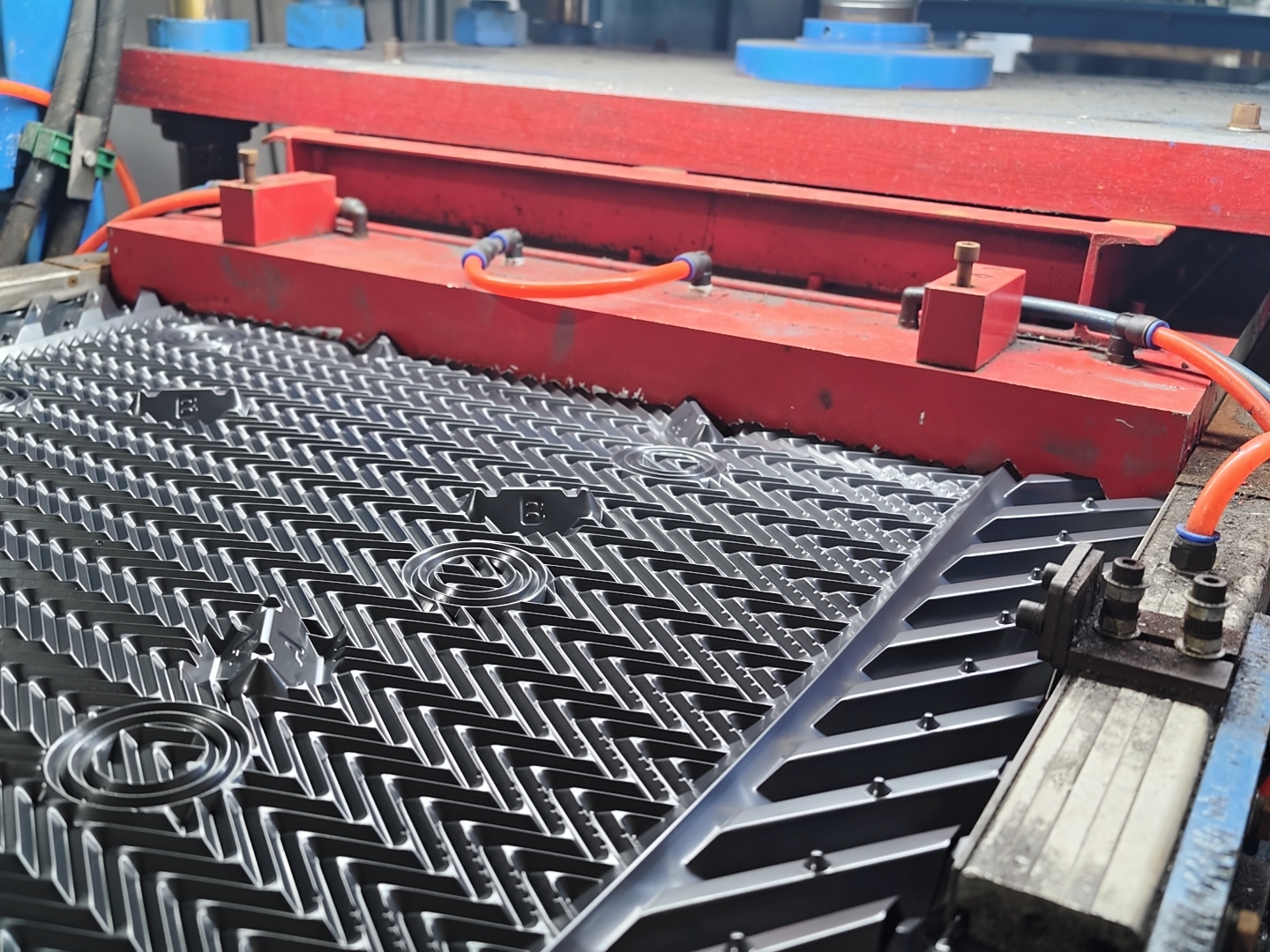
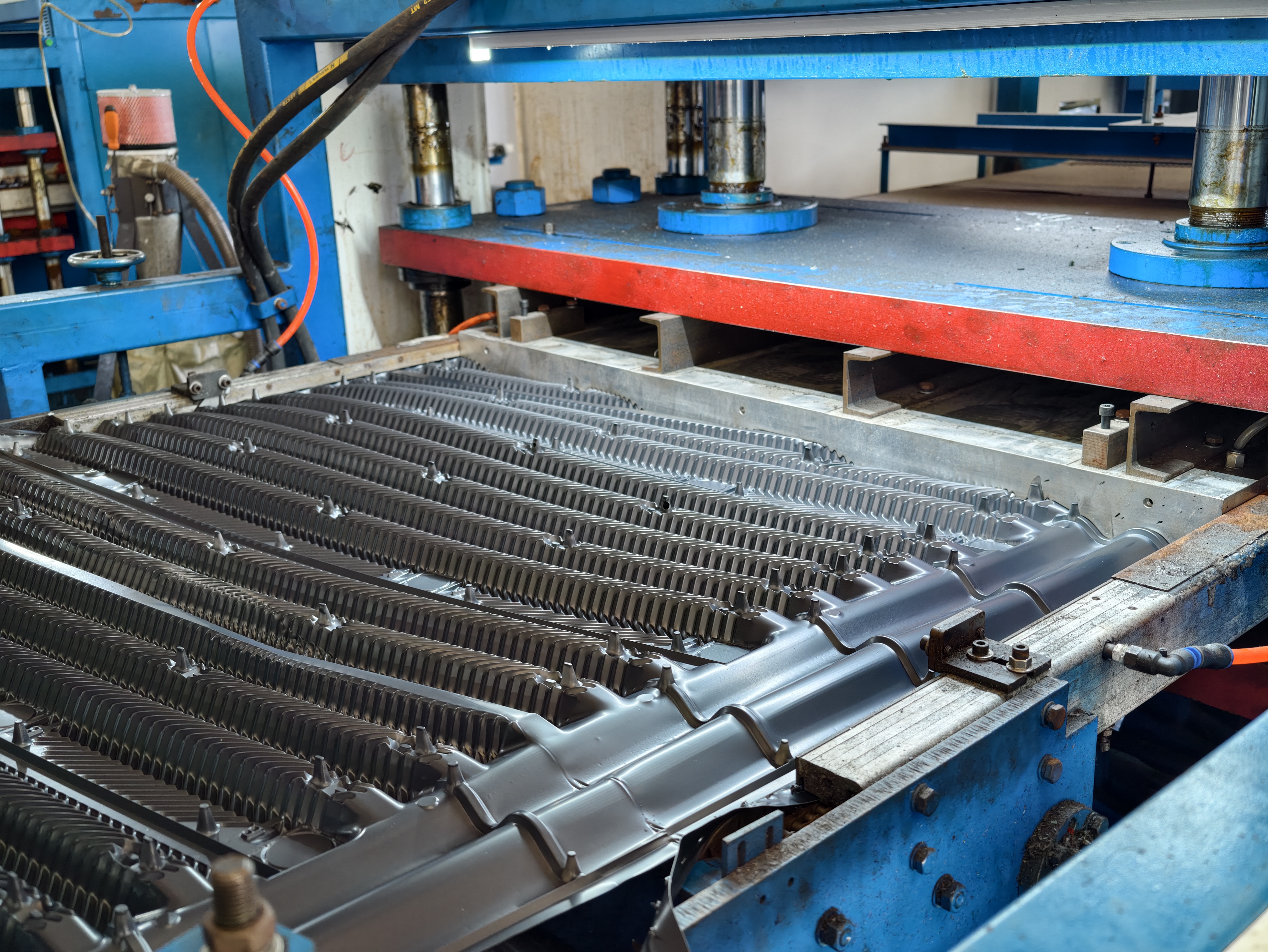
Film fill is one of the most widely used cooling tower fill types. It generally consists of thin sheets formed with corrugations or other surface patterns. These sheets are arranged to create channels that distribute water and guide airflow.
As water flows across the surfaces, it forms thin films that increase the contact area between water and air.
What Are the Advantages of Film Fill?
Film fill offers several potential benefits:
High effective contact area in a compact structure
Efficient heat transfer when properly designed and maintained
Flexible sheet geometry for different cooling tower configurations
Compatibility with many industrial and commercial cooling systems
Availability in customized dimensions and assembled blocks
Film fill is commonly used in HVAC cooling towers, manufacturing plants, data centers, and other facilities with suitable circulating water quality.
When Is Film Fill Most Suitable?
Film fill is generally a strong option when water treatment is effective and the concentration of suspended solids is controlled.
However, narrow channels can accumulate deposits if water quality is poor. Buyers should consider the available water treatment system, cleaning procedures, and expected fouling level before selecting a film fill product.
Splash Fill for Fouling-Prone Applications
Splash fill cools water by repeatedly breaking it into droplets as it falls over bars, grids, or specially designed structural elements. The resulting water distribution promotes contact with the moving air.
Compared with many film fill designs, splash fill has a more open structure.
What Benefits Does Splash Fill Offer?
Depending on the design, splash fill may provide:
Greater tolerance for certain suspended-solid conditions
Reduced reliance on narrow water passages
Practical maintenance in selected industrial environments
Adaptability to different support arrangements
Suitability for some applications with challenging circulating water
Which Industries May Benefit from Splash Fill?
Splash fill may be considered for industrial process cooling, selected heavy industrial applications, and systems where fouling is a major concern.
Nevertheless, it is important to evaluate the actual thermal performance and operating requirements. Not every splash fill is suitable for every dirty-water application, and appropriate water treatment remains important.
Grid Fill for Specialized Cooling Requirements
Grid fill uses an open structural arrangement designed to support water distribution and airflow through a series of intersecting elements.
Its geometry differs from conventional closely spaced film fill sheets and can be useful in selected industrial applications.
What Should Buyers Consider When Selecting Grid Fill?
Buyers should evaluate:
The size and arrangement of the openings
Water distribution characteristics
Airflow resistance
Mechanical strength and support requirements
Resistance to deposits and fouling
Compatibility with the existing tower
Grid fill is not a universal replacement for film or splash fill. Its suitability should be determined by the cooling tower design and operating conditions.
How Do PVC and PP Cooling Tower Fills Differ?
Material selection is a major part of choosing cooling tower fills types for customized industrial cooling solutions. PVC and PP are common thermoplastics used to manufacture fill media, but their characteristics and suitable operating conditions can differ.
PVC Cooling Tower Fill for Conventional Industrial Applications
Polyvinyl chloride (PVC) is widely used for cooling tower fill because it can be formed into different sheet profiles and provides a practical balance of cost, manufacturability, and performance in many conventional cooling applications.
What Are the Benefits of PVC Fill Media?
PVC fill may offer:
Cost-effective options for standard cooling tower projects
Flexible corrugated sheet designs
Availability in different block sizes and configurations
Established manufacturing and assembly processes
Compatibility with many commercial HVAC and industrial systems
PVC is often considered for cooling towers operating within conventional temperature and chemical exposure limits.
What Limitations Should Buyers Consider?
PVC products should be selected according to the manufacturer's rated operating temperature and chemical compatibility data. Elevated temperatures or unsuitable chemical exposure may cause deformation or deterioration.
Customers should also confirm whether the product meets any project-specific fire performance requirements.
PP Cooling Tower Fill for Selected Demanding Conditions
Polypropylene (PP) is another common material used in cooling tower fill manufacturing. Depending on the material grade and formulation, PP may be suitable for some applications requiring different temperature or chemical resistance characteristics from those offered by a particular PVC product.
When Should PP Fill Be Considered?
PP fill may be worth evaluating when:
The operating temperature approaches the limit of a proposed PVC product.
The circulating water requires a different material compatibility profile.
The project specification explicitly calls for PP.
Customized material properties are required for a particular industrial application.
Buyers should request product-specific data rather than assuming that all PP fill media offers the same performance.
PVC vs. PP: Which Material Is Better?
Selection factor | PVC fill | PP fill |
Typical applications | Many conventional cooling systems | Selected applications with specific material requirements |
Manufacturing options | Corrugated sheets and customized blocks | Corrugated sheets and customized blocks |
Temperature suitability | Depends on grade and product design | Depends on grade and product design |
Chemical compatibility | Must be verified for actual exposure | Must be verified for actual exposure |
Cost considerations | Often economical for standard applications | Varies by material grade and specification |
Customization | Available in multiple configurations | Available in multiple configurations |
Neither material is automatically better for every project. The appropriate choice depends on operating temperature, water chemistry, product geometry, service requirements, and total cost.
How Do Crossflow and Counterflow Cooling Tower Fills Differ?
Cooling tower fills types must also match the tower's airflow and water flow arrangement. Crossflow and counterflow cooling towers use different internal layouts, which affect fill geometry, installation, and replacement requirements.
Crossflow Cooling Tower Fill
In a crossflow cooling tower, air typically travels horizontally through the fill while water flows downward.
What Makes Crossflow Fill Different?
Crossflow fill must be compatible with the tower's horizontal airflow path and water distribution system. The arrangement of fill blocks and their support structure should allow water to distribute evenly while preserving the intended airflow.
When replacing crossflow fill, customers should confirm the original block dimensions, sheet orientation, and available installation space.
Counterflow Cooling Tower Fill
In a counterflow cooling tower, air moves upward through the fill while water flows downward.
What Should Be Checked Before Selecting Counterflow Fill?
The replacement or new fill media should match the tower's internal arrangement, including:
Fill block dimensions and configuration
Water distribution pattern
Airflow requirements and allowable pressure drop
Support structure and clearances
Operating temperature and water quality
Access for cleaning and maintenance
A fill block designed for one arrangement should not be assumed to fit another without technical verification.
How Can Customized Cooling Tower Fills Improve Industrial Applications?
Standard fill products can meet many common requirements, but industrial projects frequently involve non-standard dimensions, demanding operating conditions, or older cooling tower models.
Customized cooling tower fill allows buyers to specify product dimensions, materials, sheet geometry, and block configurations according to the project requirements.
Customized Fill Dimensions for Existing Cooling Towers
Replacement projects often require fill blocks that fit an existing tower without major structural modifications.
Which Dimensions Should Be Confirmed?
Before ordering, customers should verify:
Fill block length
Fill block width
Fill block height
Sheet thickness
Sheet spacing and corrugation geometry
Number of blocks required
Support and installation arrangements
Accurate measurements help reduce installation problems and avoid unnecessary production changes.
Customized Sheet Geometry for Thermal Performance
The geometry of fill sheets influences water distribution, surface contact, and airflow resistance. Different corrugation patterns and sheet arrangements may be suitable for different tower designs.
Why Does Sheet Spacing Matter?
Sheet spacing affects both the available heat transfer area and the size of the passages through which air and water move.
Closer spacing may increase the effective surface area, but it can also increase fouling sensitivity and airflow resistance. Wider spacing may be easier to maintain under certain conditions but may not provide the same heat transfer performance in an equivalent installation space.
The final geometry should be selected using the manufacturer's design information and the cooling tower's performance requirements.
Customized Materials for Operating Conditions
Some industrial systems operate at elevated temperatures or use circulating water with specific chemical characteristics.
What Information Should Buyers Provide?
Customers should provide the operating temperature range, water chemistry, suspended-solid conditions, cleaning methods, and any relevant material requirements.
The manufacturer can then assess whether PVC, PP, or another specified material is suitable for the application.
How Should You Choose Cooling Tower Fills Types for Different Industries?
Different industries have different cooling loads, water conditions, and maintenance priorities. The best fill choice depends on the specific application rather than the industry name alone.
HVAC and Commercial Cooling Systems
Commercial buildings, hotels, hospitals, shopping centers, and office complexes use cooling towers to reject heat from air-conditioning systems.
Which Fill Characteristics Are Important?
HVAC projects commonly prioritize:
Stable cooling performance
Compatibility with the existing tower
Manageable cleaning requirements
Suitable airflow resistance
Reasonable purchase and maintenance costs
Film fill may be appropriate when circulating water quality is adequately controlled.
Power Generation and Energy Facilities
Power plants and energy facilities may require reliable cooling performance under demanding operating schedules.
What Should Be Considered?
Fill selection should account for operating temperature, water chemistry, thermal requirements, and mechanical compatibility.
For critical systems, buyers should request appropriate technical documentation and confirm that the proposed fill meets the engineering specifications.
Chemical and Process Industries
Chemical plants and process manufacturing facilities may have specific material compatibility requirements because of the composition and temperature of circulating water.
How Can Material Selection Reduce Risks?
The material should be compatible with the actual water chemistry and operating environment. Customers should review product-specific chemical resistance information and avoid relying on broad claims that a particular plastic is suitable for every chemical condition.
Data Centers and Manufacturing Plants
Data centers and production facilities rely on cooling systems to maintain stable operating conditions.
Which Fill Solutions Should Be Evaluated?
Fill solutions should be assessed according to the required cooling capacity, airflow, water distribution, maintenance access, and available installation space.
When replacing existing media, maintaining compatibility with the original cooling tower design is especially important.
How Can Buyers Evaluate a Cooling Tower Fill Manufacturer?
Choosing the right cooling tower fill manufacturer is just as important as choosing the fill type. A capable manufacturer should provide suitable materials, consistent dimensions, reliable production, and technical support.
Review Manufacturing Capabilities
Manufacturing processes may include raw material preparation, sheet extrusion, forming, cutting, bonding, block assembly, inspection, and packaging.
What Questions Should You Ask?
Before placing an order, ask whether the manufacturer can:
Supply PVC and PP fill media
Produce film fill or splash fill where required
Manufacture customized dimensions
Support crossflow and counterflow applications
Maintain consistent specifications across repeat orders
Provide product drawings and technical information
Package products appropriately for domestic or international shipment
These questions help buyers determine whether the manufacturer can meet the project's requirements.
Check Quality Control Procedures
Quality control helps ensure that the finished products match the agreed specifications.
Which Inspection Items Matter Most?
Relevant checks may include sheet thickness, block dimensions, corrugation geometry, bonding quality, visible defects, and material identification.
For customized projects, the buyer and manufacturer should agree on the required tolerances and inspection procedures before production begins.
Compare Total Project Costs
The lowest unit price does not necessarily represent the best overall value.
What Costs Should Be Included?
Consider the following items:
Fill media purchase price
Customized manufacturing costs
Packaging and pallet costs
Freight and insurance
Import duties and handling charges
Installation labor
Expected maintenance and replacement requirements
A product with suitable technical specifications and reliable quality may offer better lifecycle value than a cheaper product that requires frequent maintenance or early replacement.
What Should You Check Before Replacing Cooling Tower Fill?
Cooling tower fill replacement can help restore performance when the existing media is damaged, severely fouled, or no longer suitable for the operating requirements.
However, the fill is only one part of the cooling tower system. A proper inspection should consider other possible causes of reduced cooling performance.
Signs That Fill Replacement May Be Necessary
Common warning signs include:
Deformed or collapsed fill sheets
Extensive scale or biological deposits
Blocked passages that cannot be effectively cleaned
Damaged fill blocks or failed bonding
Uneven water distribution associated with fill deterioration
Reduced thermal performance linked to the condition of the fill
Should All Fill Media Be Replaced at the Same Time?
The decision depends on the condition of the existing media, the extent of deterioration, the availability of compatible replacement products, and the project's operating schedule.
A qualified inspection can help determine whether a complete replacement or a more limited repair is appropriate.
Verify Compatibility Before Installation
Replacement fill must match the tower's available space, support structure, water distribution system, and airflow requirements.
What Information Helps Prevent Installation Errors?
Provide photographs, drawings, dimensions, existing product specifications, and information about the tower model. Confirm the final drawings and product dimensions before manufacturing and shipment.
How Can Proper Maintenance Extend Cooling Tower Fill Service Life?
Even high-quality fill media requires suitable operating conditions and maintenance. Fouling, scale, biological growth, excessive temperatures, and unsuitable chemical exposure can reduce its service life.
Maintain Appropriate Water Treatment
Water treatment helps control scale, corrosion, suspended solids, and biological growth.
Why Is Regular Water Quality Monitoring Important?
Monitoring water quality helps identify conditions that may lead to deposits or material deterioration. The treatment program should be appropriate for the circulating water chemistry and cooling tower design.
Inspect Fill and Water Distribution Regularly
Routine inspections can identify blocked passages, damaged sheets, uneven water distribution, and other developing problems.
What Should Maintenance Teams Look For?
Maintenance teams should check for visible deformation, deposits, damaged supports, uneven wetting, and signs of restricted airflow.
Cleaning methods should follow the fill manufacturer's recommendations. Excessive mechanical force or incompatible cleaning chemicals may damage the fill.
Avoid Operating Beyond Material Limits
PVC and PP products have different material characteristics, and their operating limits vary according to formulation and design.
How Can Buyers Reduce Premature Deterioration?
Confirm the product's rated operating temperature, chemical compatibility, and any relevant installation requirements. If operating conditions change significantly, reassess whether the existing fill remains suitable.
Why Are Quality and Delivery Important for Customized Fill Orders?
For industrial cooling tower projects, delivery delays can affect maintenance schedules, installation planning, and production operations.
A reliable manufacturer should coordinate production, inspection, packaging, and shipment according to the confirmed order requirements.
Packaging for International Transportation
Cooling tower fill blocks and sheets may occupy considerable shipping volume. Packaging should protect the products from crushing, deformation, and handling damage.
What Should Be Confirmed Before Shipment?
Buyers should check the packing dimensions, pallet quantity, shipment volume, product labeling, packing list, and loading arrangement.
For large orders, a preliminary container loading plan can help estimate transportation costs and improve shipment efficiency.
Documentation and Order Consistency
For OEM customers, distributors, and repeat purchasers, consistent specifications are important for future procurement.
Which Documents Can Support Purchasing?
Depending on the project, useful documents may include product drawings, material specifications, inspection records, packing lists, and relevant test reports.
Maintaining approved drawings and order records can also make future replacement orders easier to manage.
Conclusion: How Do You Select the Right Cooling Tower Fills Types for Customized Industrial Cooling Solutions?
Understanding cooling tower fills types is essential for choosing suitable fill media for different industrial cooling applications. Film fill can provide efficient heat transfer in systems with appropriately controlled water quality, while splash fill may be preferable in selected applications where fouling resistance is a major concern. PVC and PP offer different material options, and customized fill configurations can help accommodate different tower dimensions and operating requirements.
When selecting cooling tower fill, buyers should consider heat transfer performance, airflow resistance, water quality, material compatibility, installation dimensions, maintenance requirements, and total project costs.
Working with an experienced cooling tower fill manufacturer can simplify product selection and customization. By providing accurate drawings, operating data, and clear technical specifications, industrial buyers can reduce purchasing risks and improve compatibility with their existing cooling systems.
For new installations, replacement projects, and industrial cooling upgrades, the best fill solution is one that matches the actual operating conditions and supports reliable performance over time.