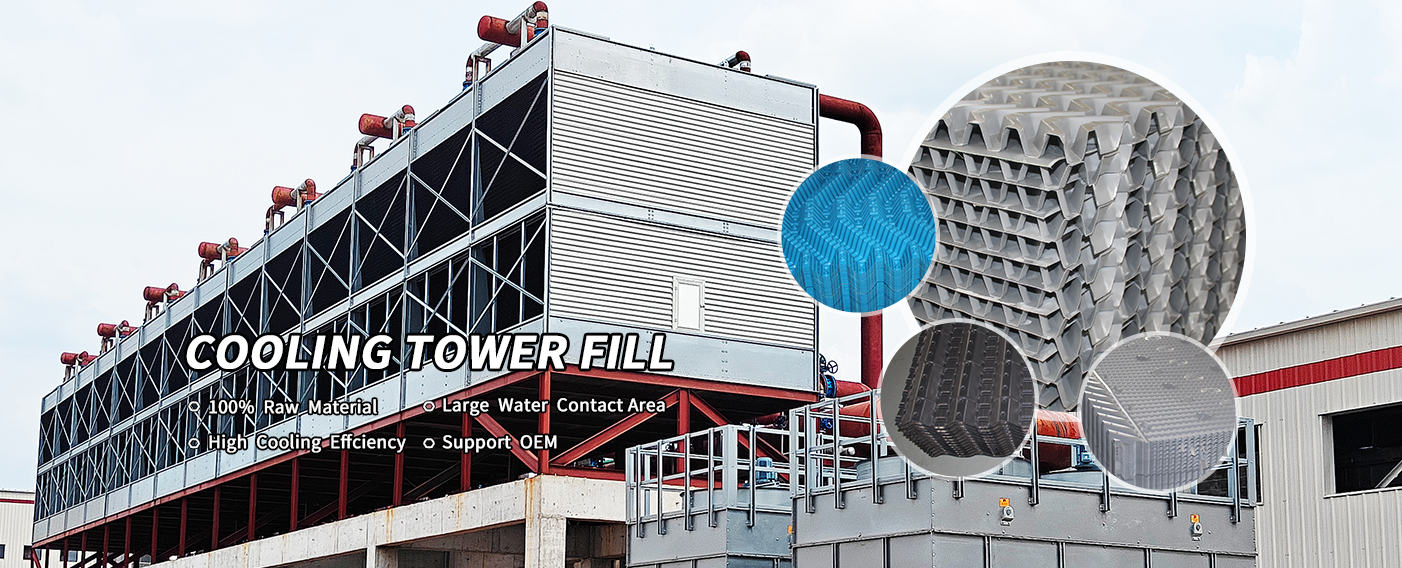
If you are looking for a cross flow cooling tower infill manufacturer and supplier, you are probably dealing with one of two situations: you are building a new cooling tower, or your existing fill has reached the point where it simply cannot keep up.
Either way, the fill inside the tower deserves more attention than it often gets.
Cross flow cooling tower infill is the working surface where water and air interact, and its design directly affects heat transfer, airflow, water distribution, maintenance, and long-term cooling performance.
In a cross flow tower, water generally moves downward while air travels horizontally through the fill. Think of it like rain falling while a steady breeze moves sideways. The better the fill manages that interaction, the more effectively the tower can reject heat.
This guide explains the major types of cross flow cooling tower infill, available materials, selection factors, replacement considerations, and what to look for when choosing a reliable manufacturer and supplier.
For buyers looking for a factory-direct source, Power Tower Cooling Technology (Shaoxing) Co.,Ltd provides cooling tower fill and replacement solutions for industrial and commercial applications.
What Is Cross Flow Cooling Tower Infill?
Cross flow cooling tower infill, also called cross flow cooling tower fill, cooling tower fill media, cooling tower packing, or cooling tower filler, is the heat-transfer media installed inside a cross flow cooling tower.
Its primary job is simple but extremely important: increase the contact area between circulating water and moving air.
Hot water is distributed over the upper portion of the fill and travels downward. At the same time, outside air enters horizontally through the tower and passes across the falling water.
A portion of the water evaporates, carrying heat away from the circulating water.
The fill makes this process much more effective by spreading water over a larger surface instead of allowing it to simply fall as a thick stream.
That is why the quality and design of the infill can have such a significant effect on cooling tower performance.
How Cross Flow Cooling Tower Infill Works
The operating principle is easier to understand step by step.
First, warm circulating water reaches the tower's distribution system. Next, the water spreads across the fill and moves downward through its channels or surfaces.
Meanwhile, air enters horizontally through the tower louvers.
The air contacts the wet fill surfaces, and evaporation removes heat from the water. Finally, the cooled water collects in the basin and returns to the cooling system.
This makes the fill something like the “meeting place” between air and water.
Without enough effective contact area, even a powerful fan cannot compensate for poor heat-transfer conditions.
A properly designed cross flow cooling tower fill therefore needs to do several things at once:
Spread water evenly
Provide sufficient contact area
Allow air to pass through efficiently
Resist fouling and clogging
Maintain structural stability
Support consistent thermal performance

Why Infill Is Critical to Cooling Tower Performance
A cooling tower is a complete system, so no single component works alone.
Fans move air, pumps circulate water, nozzles or distribution systems spread water, and the fill creates the surface where heat and mass transfer occur.
If the fill becomes clogged, damaged, poorly installed, or mismatched to the tower, cooling performance can decline.
Uneven water distribution, higher airflow resistance, scale buildup, algae, suspended solids, and structural deformation can all reduce the useful surface area of the fill.
In other words, a high-performance fan cannot turn poor fill into high-performance cooling.
This is why choosing the right cross flow cooling tower infill manufacturer should be treated as an engineering decision rather than simply a purchasing decision.
Cross Flow vs. Counter Flow Cooling Tower Infill
Understanding the difference between cross flow and counter flow is essential before purchasing replacement fill.
A common mistake is assuming that any film fill can fit any cooling tower.
It cannot.
The tower's airflow direction, water distribution arrangement, fill orientation, dimensions, and support structure all matter.
Air and Water Flow Direction
In a cross flow cooling tower, water normally moves downward while air moves horizontally through the fill.
In a counter flow cooling tower, water moves downward while air generally moves upward.
Because the two configurations create different air-water contact patterns, their fill designs can also differ.
A replacement fill should therefore be specified according to the actual tower configuration rather than simply by material or appearance.
Differences in Fill Design
Cross flow fill needs to support horizontal airflow while maintaining consistent water wetting.
Important characteristics include:
Flute direction
Sheet spacing
Fill depth
Fill height
Water loading
Airflow resistance
Structural stability
Fouling resistance
The correct design creates a balanced path for both fluids.
If the passages are too restrictive, airflow may suffer. If the geometry does not distribute water properly, some areas of the fill may remain under-wetted while others receive excessive water.
Main Types of Cross Flow Cooling Tower Infill
There is no single “best” fill for every cross flow tower.
The right choice depends on water quality, temperature, thermal requirements, maintenance practices, and existing tower geometry.
The most common options include PVC film fill, splash fill, and PP-based fill solutions.
PVC Film Fill
PVC film fill is one of the most widely considered choices when water quality is relatively clean and high heat-transfer performance is important.
Structured PVC sheets spread water into thin films, creating a large effective contact area.
Different flute patterns can change the balance between surface area, water distribution, airflow resistance, and fouling tendency.
PVC film fill can therefore provide strong thermal performance without requiring excessive fill volume.
PVC Splash Fill
Splash fill works differently.
Instead of relying primarily on thin water films, splash fill uses bars, grids, or shaped elements to break falling water into droplets.
This more open structure can be advantageous when circulating water contains suspended solids or when fouling risk is a major concern.
The trade-off is that splash fill may require more volume to achieve comparable thermal performance to a high-efficiency film-fill design.
PP Cooling Tower Infill
Polypropylene, or PP, is another material option for demanding applications.
PP can offer higher temperature capability and good chemical resistance compared with many standard PVC applications.
That does not mean PP is automatically better.
Material selection should follow the actual operating temperature, water chemistry, mechanical requirements, and tower design.
In some systems, PVC remains the more economical and appropriate choice. In others, PP makes more sense.

How to Choose the Right Cross Flow Cooling Tower Infill
Choosing fill should be treated as an engineering decision, not simply a purchasing decision.
The cheapest fill is not necessarily the lowest-cost solution if it causes more maintenance, faster fouling, or poor thermal performance.
Before contacting a manufacturer, gather as much information about your tower as possible.
Water Quality
Start with the water.
Does it contain suspended solids?
Is scale formation a recurring problem?
Are algae or biological deposits present?
Is the water treated properly?
Film fill can deliver excellent heat-transfer performance, but narrow passages may be more vulnerable to blockage in heavily contaminated water.
More open splash or specially designed fill may be preferable for challenging water conditions.
Operating Temperature
Temperature is another critical factor.
Standard PVC fill is widely used in many normal cooling tower applications, but higher-temperature systems may require a different material or specially formulated product.
Do not select fill based on the normal temperature alone.
Check the maximum operating temperature, temperature fluctuations, and any short-term temperature excursions.
A few degrees can matter when material stability is concerned.
Fill Dimensions and Configuration
Before ordering replacement fill, measure the existing fill whenever possible.
Record the:
Fill height
Fill width
Fill depth
Block size
Sheet thickness
Flute direction
Support arrangement
Also check the tower's internal dimensions.
A replacement block that is only slightly different in size may create installation problems, gaps, unsupported areas, or incorrect water distribution.
When requesting a quotation, it is useful to provide the tower model, existing fill dimensions, water flow, operating temperatures, water quality, photographs, and required quantity.
Heat Transfer and Airflow Requirements
High surface area sounds attractive, but more surface area is not automatically better.
The fill must provide an appropriate balance between heat-transfer area and airflow resistance.
Imagine trying to breathe through a very dense sponge. It may have a huge internal surface, but the air still needs to pass through it.
Good fill design balances:
Surface area
Water wetting
Air passage
Pressure drop
Fouling resistance
Structural strength
Flute Pattern and Surface Area
The flute pattern influences how water spreads and how air travels through the fill.
Cross-fluted, offset-fluted, vertical-fluted, and other structured designs can create different flow characteristics.
More aggressive surface geometry can increase contact area, but it may also influence pressure drop and fouling behavior.
Therefore, buyers should compare the complete design rather than focusing on one specification.
Fouling and Clogging Resistance
If your cooling tower operates with dirty water, fouling resistance may be more important than maximum theoretical heat-transfer area.
Dirt, scale, algae, and suspended solids can gradually close passages.
Once that happens, both airflow and water distribution suffer.
A fill that is slightly less thermally aggressive but easier to maintain can sometimes deliver better real-world performance over its service life.
Cross Flow Cooling Tower Infill Materials
Material affects thermal stability, chemical resistance, durability, cost, and application suitability.
PVC and PP are two common choices, but the correct material depends on the operating environment rather than marketing claims.
PVC vs. PP Infill
PVC is widely used because it offers a practical combination of cost, formability, corrosion resistance, and thermal performance for many applications.
PP can be attractive when higher operating temperatures or particular chemical conditions require additional material capability.
The decision should consider:
Water temperature
Chemical exposure
Expected service life
Mechanical requirements
Maintenance conditions
Budget
Specific tower design
Key Benefits of High-Quality Cross Flow Infill
A properly selected and manufactured cross flow cooling tower infill can provide several important advantages.
It can improve effective air-water contact, support more consistent water distribution, maintain efficient airflow, and contribute to stable thermal performance.
Good fill also needs enough mechanical strength to remain stable during operation and maintenance.
Better Heat Transfer
The fundamental purpose of fill is to increase effective contact between air and water.
A well-designed surface encourages water to spread while allowing air to move through the fill.
More useful contact generally means better conditions for evaporation and heat rejection.
Improved Cooling Efficiency
Efficient fill can help the tower achieve its required cooling duty without unnecessarily increasing fan or pump operation.
However, actual efficiency depends on the entire system, including:
Water flow
Air volume
Ambient conditions
Heat load
Water quality
Fill condition
Distribution performance
Fill should therefore be viewed as one part of a larger thermal system.
Longer Service Life
High-quality material, correct thickness, appropriate geometry, and proper installation all contribute to durability.
Good water treatment is equally important.
Even excellent fill can have a shortened service life if exposed to severe scaling, biological growth, excessive temperature, or mechanical damage.
Cross Flow Cooling Tower Infill Replacement
Replacement is one of the most common reasons industrial buyers search for a cross flow cooling tower infill manufacturer and supplier.
When the existing fill becomes brittle, cracked, warped, collapsed, heavily fouled, or damaged, replacing it may restore thermal performance without replacing the entire cooling tower.
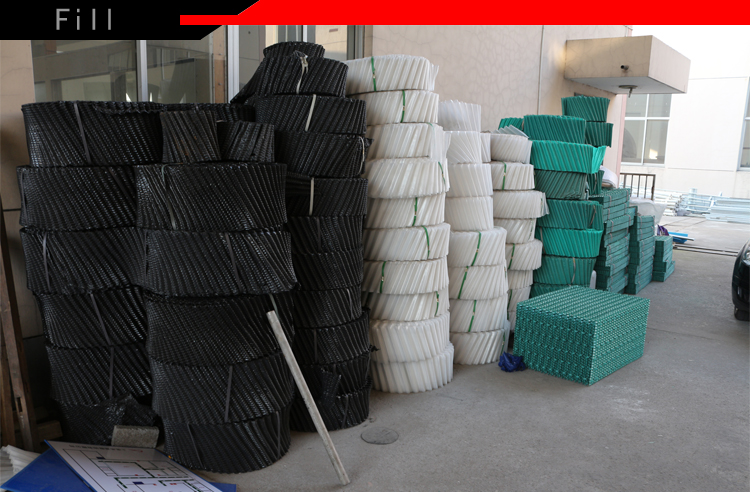
When Should Infill Be Replaced?
Look for several warning signs:
Increasing cold-water temperature
Visible deformation
Significant scale buildup
Damaged sheets
Collapsed fill sections
Persistent clogging
Uneven water distribution
Increasing airflow resistance
Higher-than-normal fan energy requirements
If the tower is no longer delivering its previous performance despite normal operation of pumps and fans, the fill should be inspected.
Measuring Existing Infill Before Ordering
Do not measure only the tower casing.
Measure the existing fill itself.
Record each block's:
Length
Width
Height
Orientation
Thickness
Flute pattern
Support method
Take clear photographs from several angles.
Also document water flow, inlet temperature, outlet temperature, and water quality.
These details allow the manufacturer to determine whether a standard product or customized replacement is appropriate.
Installation Considerations
Correct installation is just as important as selecting the correct product.
Fill blocks should be securely supported and installed in the correct orientation.
Gaps, incorrect flute direction, excessive compression, or poor alignment can affect airflow and water distribution.
Before installation, inspect support members and remove excessive scale or debris from the surrounding tower structure.
How to Select a Reliable Cross Flow Infill Manufacturer
Choosing a manufacturer is not simply about finding a company that lists “cooling tower fill” on its website.
A reliable supplier should understand the relationship between fill geometry, tower configuration, water quality, operating temperature, and thermal performance.
Manufacturing Capability
Ask whether the supplier actually manufactures cooling tower fill or mainly resells generic products.
A true manufacturer should be able to explain:
Factory-direct communication can also make technical discussions faster.
Product Customization
Cooling tower replacement projects are rarely identical.
One tower may need a standard block while another requires customized dimensions or a specific flute arrangement.
A capable manufacturer should be able to review drawings, photographs, samples, dimensions, and operating data before recommending a product.
Quality Control
Quality control should cover material consistency, dimensions, thickness, forming quality, structural integrity, and finished-product inspection.
For international buyers, packaging and shipping protection also matter because fill blocks can be damaged if they are poorly secured during transportation.
Technical Support
The best supplier behaves more like a technical partner than a box-moving company.
If you provide your tower type, fill dimensions, operating temperatures, water flow, and water-quality information, the supplier should be able to discuss suitable options and identify potential compatibility issues before production.
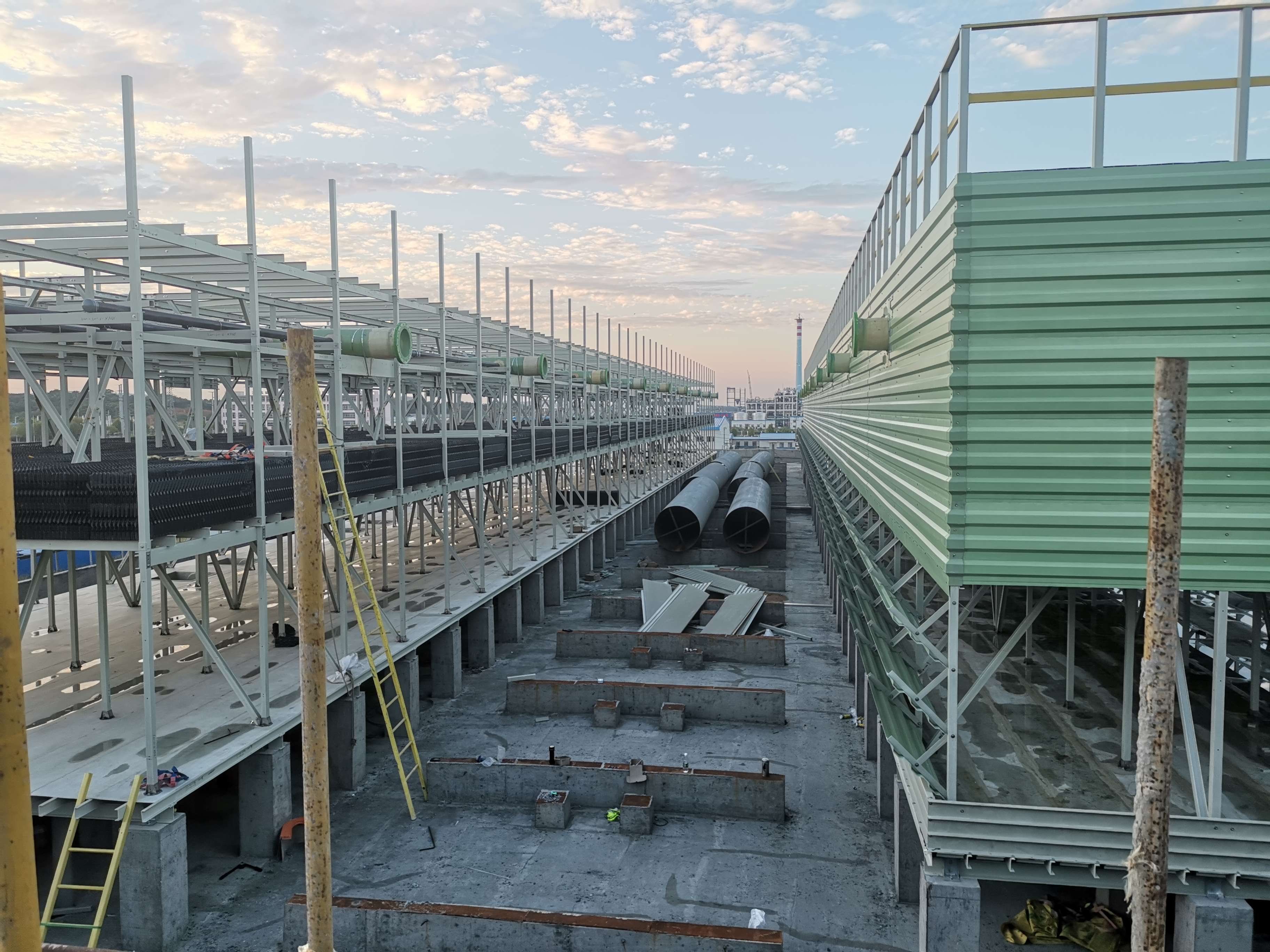
Why Choose Power Tower Cooling Technology?
For buyers seeking a cross flow cooling tower infill manufacturer and supplier, Power Tower Cooling Technology (Shaoxing) Co.,Ltd focuses on cooling tower components and replacement fill solutions.
The company provides cooling tower fill products for customers looking for replacement, maintenance, upgrading, and new cooling tower applications.
For buyers who need a manufacturer rather than a general trading company, direct communication with the factory can simplify the process from product selection through production and delivery.
Factory-Direct Manufacturing
Working directly with a manufacturer can simplify communication about specifications, customization, production schedules, and long-term supply.
Power Tower provides factory-direct cooling tower fill solutions and works with customers on technical requirements for different cooling applications.
For industrial buyers, this direct approach can be particularly useful when the replacement fill has non-standard dimensions or when the existing tower requires a customized solution.
Customized Cooling Tower Fill Solutions
For replacement projects, customization can be especially valuable.
Instead of guessing which generic fill will fit, buyers can provide:
The manufacturer can then evaluate the application and recommend a suitable fill configuration.
This approach helps reduce the risk of receiving a product that looks similar but does not properly match the existing system.
Global Supply and Technical Support
Industrial cooling towers are used across HVAC, manufacturing, process cooling, power generation, chemical processing, and many other sectors.
Power Tower Cooling Technology (Shaoxing) Co.,Ltd serves customers requiring cooling tower fill and replacement solutions for different industrial applications.
For product information and technical consultation, visit Power Tower Cooling Technology (Shaoxing) Co.,Ltd at https://www.coolingtowerpart.com.
Cross Flow Cooling Tower Infill Buying Checklist
Before sending an inquiry to a manufacturer, prepare the following information:
Cooling tower manufacturer and model
Cross flow or counter flow configuration
Existing fill dimensions
Fill height and depth
Fill type
Flute pattern, if known
Circulating water flow
Hot-water temperature
Cold-water temperature
Maximum operating temperature
Water-quality conditions
Photos of the existing fill
Required quantity
Installation location
Delivery requirements
The more complete your information is, the easier it is for a manufacturer to recommend the right infill rather than simply quoting a generic product.
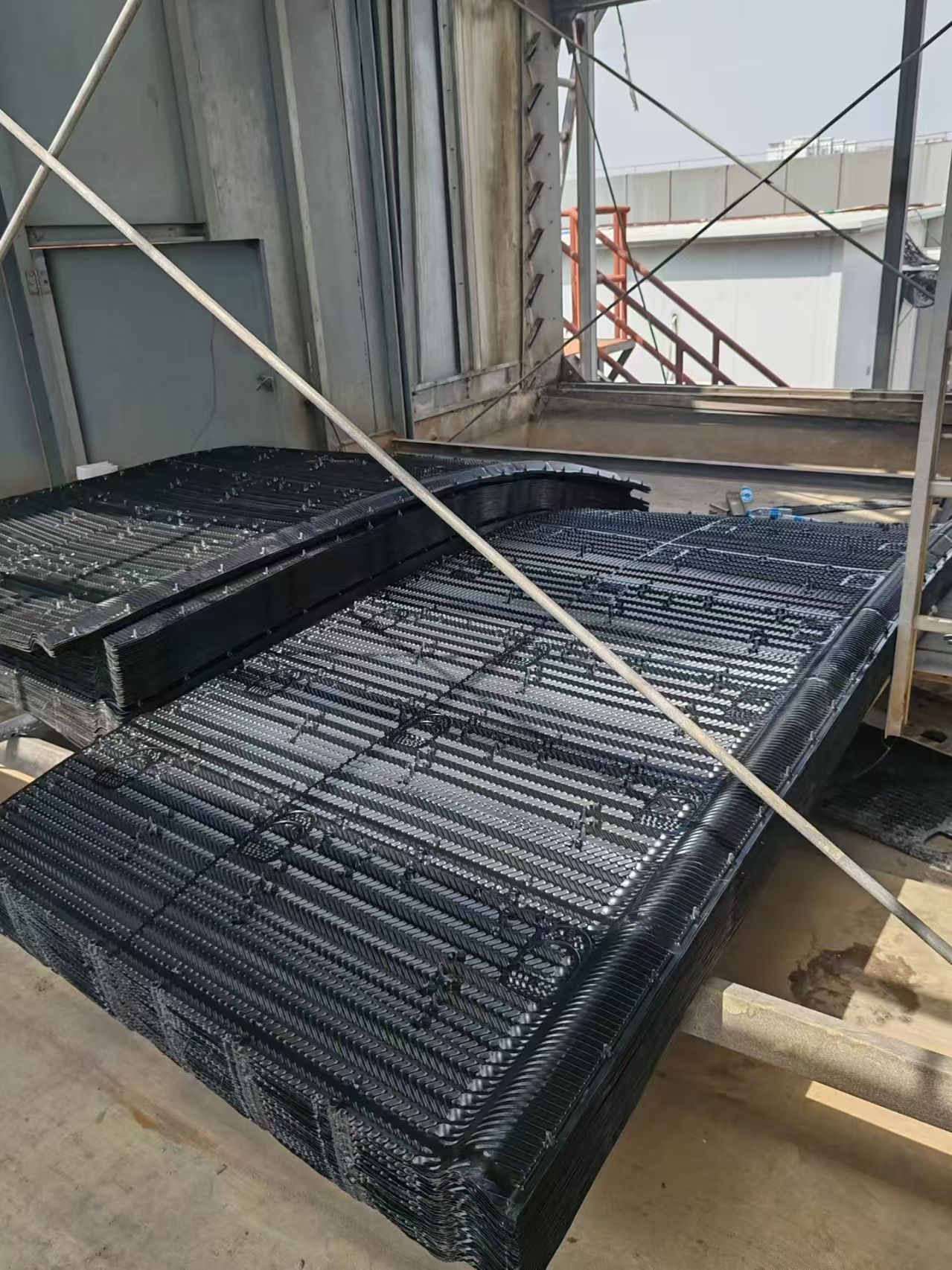
Final Thoughts
Choosing the right cross flow cooling tower infill manufacturer and supplier is about much more than purchasing plastic sheets or fill blocks.
The right solution must fit the tower configuration, airflow pattern, water distribution system, thermal duty, operating temperature, water quality, and maintenance strategy.
PVC film fill can be an excellent option for many clean-water applications, while splash fill or PP solutions may be more suitable for specific demanding environments.
Most importantly, do not choose fill based on price or appearance alone.
Treat it as a core heat-transfer component.
When you work with a manufacturer that understands your tower and can provide properly matched fill, you are not simply replacing an internal component—you are protecting cooling performance, maintenance efficiency, and long-term operating reliability.
For factory-direct cross flow cooling tower infill, PVC film fill, splash fill, PP fill, and replacement cooling tower fill solutions, contact Power Tower Cooling Technology (Shaoxing) Co.,Ltd through https://www.coolingtowerpart.com.


