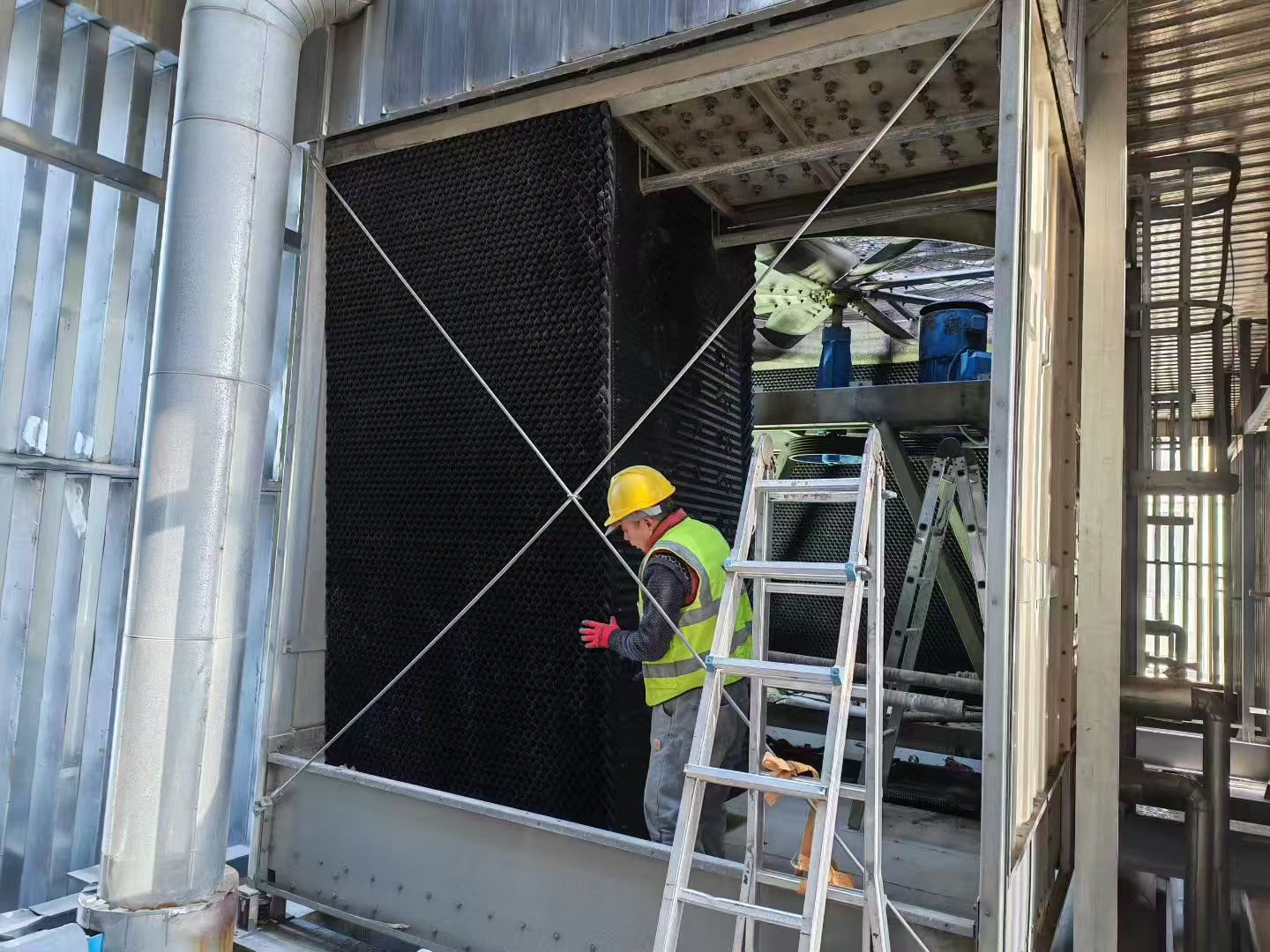
Marley cooling tower fill replacement is an important maintenance project for industrial facilities that need reliable heat transfer, stable cooling performance, and controlled operating costs. Over time, cooling tower fill media can become clogged with scale, dirt, biological growth, and other deposits. Plastic sheets may also deform, become brittle, or lose their structural integrity.
Replacing worn fill media can help restore cooling tower performance without requiring a complete tower replacement. However, choosing the right material, dimensions, and replacement method is essential.
For facility managers, maintenance contractors, and industrial buyers, this guide explains Marley cooling tower fill replacement, including materials, sizing, installation, and supplier selection.
What Is Marley Cooling Tower Fill?
Marley cooling tower fill is the heat transfer media installed inside a cooling tower to increase contact between circulating water and air. This contact allows heat to transfer from the water into the air, helping cool the water before it returns to the industrial process.
Fill media generally falls into two categories:
Film fill: Spreads water into thin films across closely spaced surfaces, providing a large heat transfer area.
Splash fill: Breaks falling water into droplets as it flows over grids, bars, or other structures.
The appropriate fill type depends on the cooling tower design, water quality, operating conditions, and original equipment specifications.
For existing Marley cooling towers, buyers should identify the tower model and original fill configuration before selecting replacement media.
When Should Marley Cooling Tower Fill Be Replaced?
Cooling tower fill does not necessarily need replacement at a fixed interval. Its service life depends on water treatment, operating temperature, maintenance practices, and environmental conditions.
Common warning signs include:
1. Reduced Cooling Performance
If the cooling tower cannot consistently achieve its required cold-water temperature, blocked or damaged fill may be one possible cause. Other factors, including airflow, water distribution, fan performance, and heat load, should also be investigated.
2. Scale and Biological Fouling
Mineral deposits, sediment, algae, and biofilm can restrict airflow and water distribution. Cleaning may restore performance when deposits are removable and the fill remains structurally sound.
3. Deformed or Brittle Sheets
Plastic fill sheets can warp, crack, sag, or separate because of heat, chemical exposure, aging, or mechanical damage. Severely damaged media may require replacement.
4. Uneven Water Distribution
Blocked passages or damaged fill packs can create dry areas and uneven water flow. Inspect the water distribution system before assuming the fill is the only cause.
5. Excessive Pressure Drop
Accumulated deposits and restricted airflow passages can increase resistance through the fill section. Comparing operating measurements with the tower's design conditions can help identify the problem.
Materials for Marley Cooling Tower Fill Replacement
Selecting the correct material is essential for long-term performance.
| Material | Main characteristics | Typical considerations |
| PVC | Widely used for film fill applications | Confirm operating temperature and chemical compatibility |
| PP | Offers different chemical and temperature resistance characteristics | Check structural performance and application limits |
| Specialized plastic compounds | May address specific operating requirements | Verify documented performance and suitability |
PVC cooling tower fill is common in conventional applications because it can provide an effective balance of formability, heat transfer surface, and cost. Polypropylene (PP) may be appropriate for selected applications involving different chemical or temperature conditions.
Neither material is universally better. Buyers should compare the actual product specifications with the cooling tower's operating conditions.
For replacement projects, confirm whether the proposed media matches the original design or has been technically evaluated as an alternative.
How to Select the Correct Marley Cooling Tower Fill Size
Correct sizing is one of the most important parts of a fill replacement project. Even high-quality fill media may perform poorly if the pack dimensions or configuration do not match the tower.
1. Identify the Cooling Tower Model
Record the Marley tower model, serial number, equipment configuration, and available original component references. These details can help establish the intended fill arrangement.
2. Measure the Existing Fill Packs
Where safe and practical, measure:
Pack length and width
Overall pack height
Sheet spacing and profile
Number and arrangement of fill layers
Support structure and installation clearance
If the existing fill is badly damaged, use original drawings or manufacturer documentation rather than relying solely on distorted dimensions.
3. Confirm Fill Type and Orientation
Film fill and splash fill have different structures and performance characteristics. Check the required fill type, sheet orientation, water flow direction, and airflow path.
4. Check Operating Conditions
Provide information about circulating water temperature, water chemistry, suspended solids, and the tower's operating conditions. This helps the supplier assess material compatibility and the suitability of the proposed fill.
5. Request Technical Confirmation
Before ordering, request dimensional drawings and product specifications. Confirm that the proposed replacement fits the support system and is suitable for the intended airflow and water distribution.
Marley Cooling Tower Fill Replacement Installation Process
The exact procedure varies by tower model and fill configuration. Replacement should follow the applicable manufacturer's instructions and site safety requirements.
Step 1: Inspect the Cooling Tower
Before removing the existing fill, inspect the water distribution system, supports, drift eliminators, and surrounding components. Identify any issues that should be corrected during the shutdown.
Step 2: Shut Down and Isolate the Equipment
Follow the site's lockout/tagout procedures. Isolate relevant electrical and mechanical equipment, control water flow, and establish safe access. Cooling towers can present fall, electrical, biological, and confined-space hazards.
Step 3: Remove the Old Fill Media
Remove damaged or fouled fill according to the approved maintenance procedure. Avoid damaging the tower structure, piping, supports, and nearby components.
Step 4: Clean and Inspect the Support Structure
Remove loose deposits and inspect the support system for corrosion, deformation, and damage. Repair problems before installing the replacement media.
Step 5: Install the Replacement Fill
Position the new fill packs according to the approved layout. Maintain the specified orientation, spacing, support, and alignment. Avoid leaving unintended gaps that could allow air or water to bypass the intended heat transfer area.
Step 6: Inspect Water Distribution and Drift Eliminators
Check that water is distributed evenly across the fill and that drift eliminators are correctly installed. Fill replacement provides an opportunity to identify related problems, but it does not automatically require replacement of every other component.
Step 7: Restart and Verify Performance
Restart the cooling tower according to site procedures. Check water distribution, airflow, vibration, leakage, and operating temperatures. Compare measured performance with design conditions while accounting for ambient wet-bulb temperature and actual heat load.
How Much Does Marley Cooling Tower Fill Replacement Cost?
The cost of Marley cooling tower fill replacement depends on several factors:
Required fill volume and pack dimensions
PVC, PP, or other specified materials
Customization and manufacturing requirements
Labor, access equipment, and installation complexity
Cleaning and repairs to the support structure
Freight, delivery location, and project schedule
For an accurate quotation, provide the tower model, fill dimensions, required quantity, material preference, delivery location, and whether installation services are needed.
Comparing quotations on the basis of technical specifications and total installed cost is more useful than comparing unit prices alone.
How to Choose a Marley Cooling Tower Fill Replacement Supplier
Industrial buyers should evaluate suppliers based on technical capability, product quality, and delivery reliability.
Look for suppliers that can provide:
PVC or PP fill media suited to the application
Custom sizing based on verified measurements or drawings
Technical data sheets and dimensional specifications
Documented quality control and material information
Clear lead times, packaging, and warranty terms
Experience supplying replacement components for industrial cooling towers
Original Marley replacement parts and independently manufactured compatible alternatives are different purchasing options. If considering aftermarket fill, confirm compatibility and performance suitability rather than assuming that all products are interchangeable.
CoolingTowerPart.com can be considered as an additional sourcing channel for cooling tower fill media and compatible replacement components. Buyers should submit their tower details and request confirmation of product specifications before ordering.
Frequently Asked Questions
How often should Marley cooling tower fill be replaced?
There is no universal replacement interval. Inspect the fill regularly and base replacement decisions on fouling, material condition, cooling performance, water treatment, and operating conditions.
Can I replace Marley cooling tower fill with aftermarket media?
Potentially, yes. The replacement must match the required dimensions, configuration, material properties, and performance requirements. Confirm compatibility before purchasing.
Is PVC or PP better for cooling tower fill replacement?
PVC is widely used for conventional fill applications, while PP may be suitable for certain chemical or temperature requirements. The correct choice depends on the specific operating environment.
Should drift eliminators be replaced at the same time?
Not always. Inspect their condition, fit, and performance during the fill replacement project. Replace them if damaged, unsuitable, or required by the maintenance plan.
Conclusion
Marley cooling tower fill replacement can help restore heat transfer performance and support reliable cooling tower operation when existing media becomes fouled, damaged, or unsuitable.
Successful replacement depends on selecting the correct material, confirming dimensions, following safe installation procedures, and checking the cooling tower after restart. By working with a technically capable supplier and verifying compatibility before ordering, industrial buyers can reduce maintenance risks and improve the long-term value of their cooling tower investment.
Recommended internal links for CoolingTowerPart.com:


