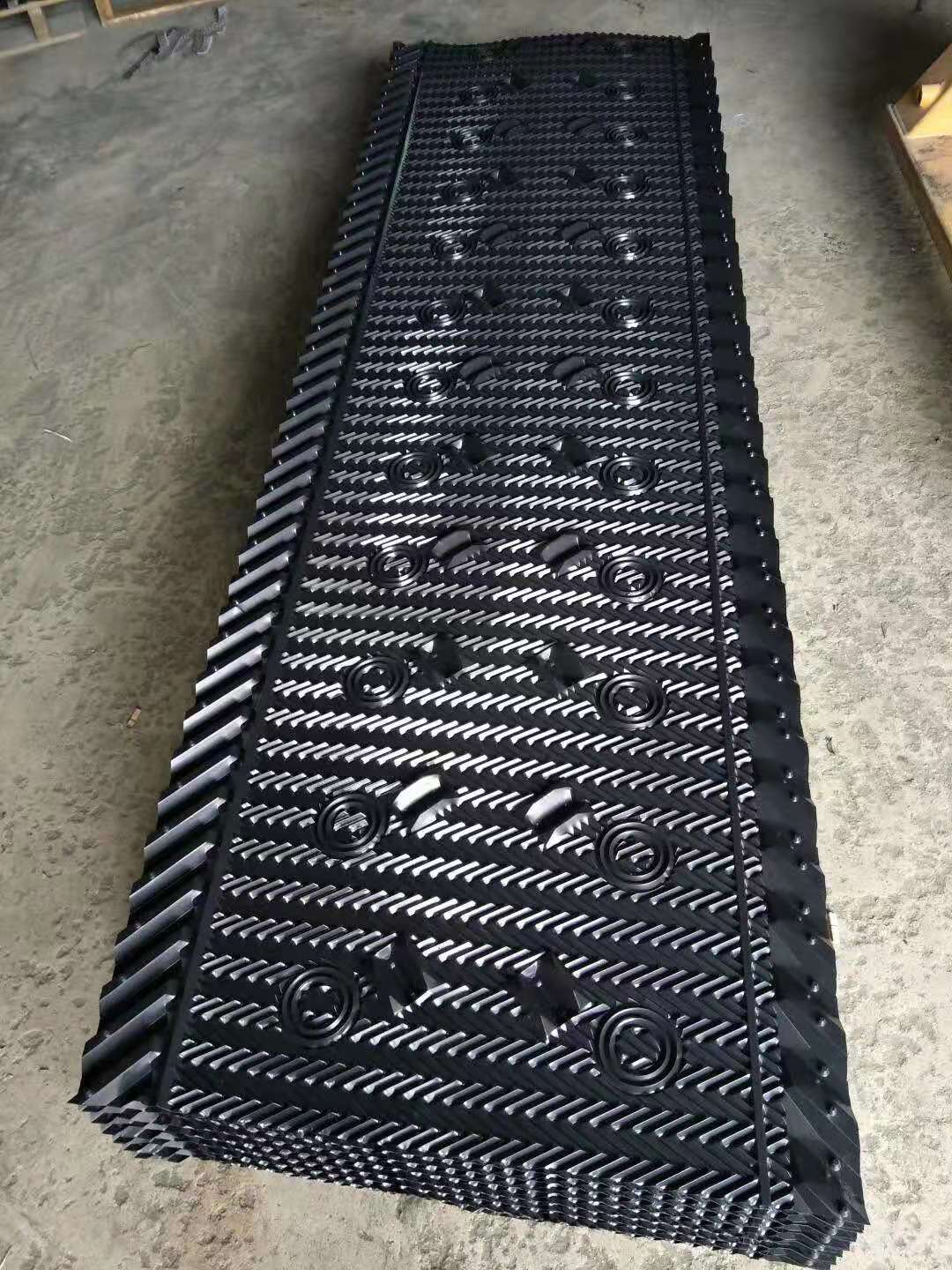
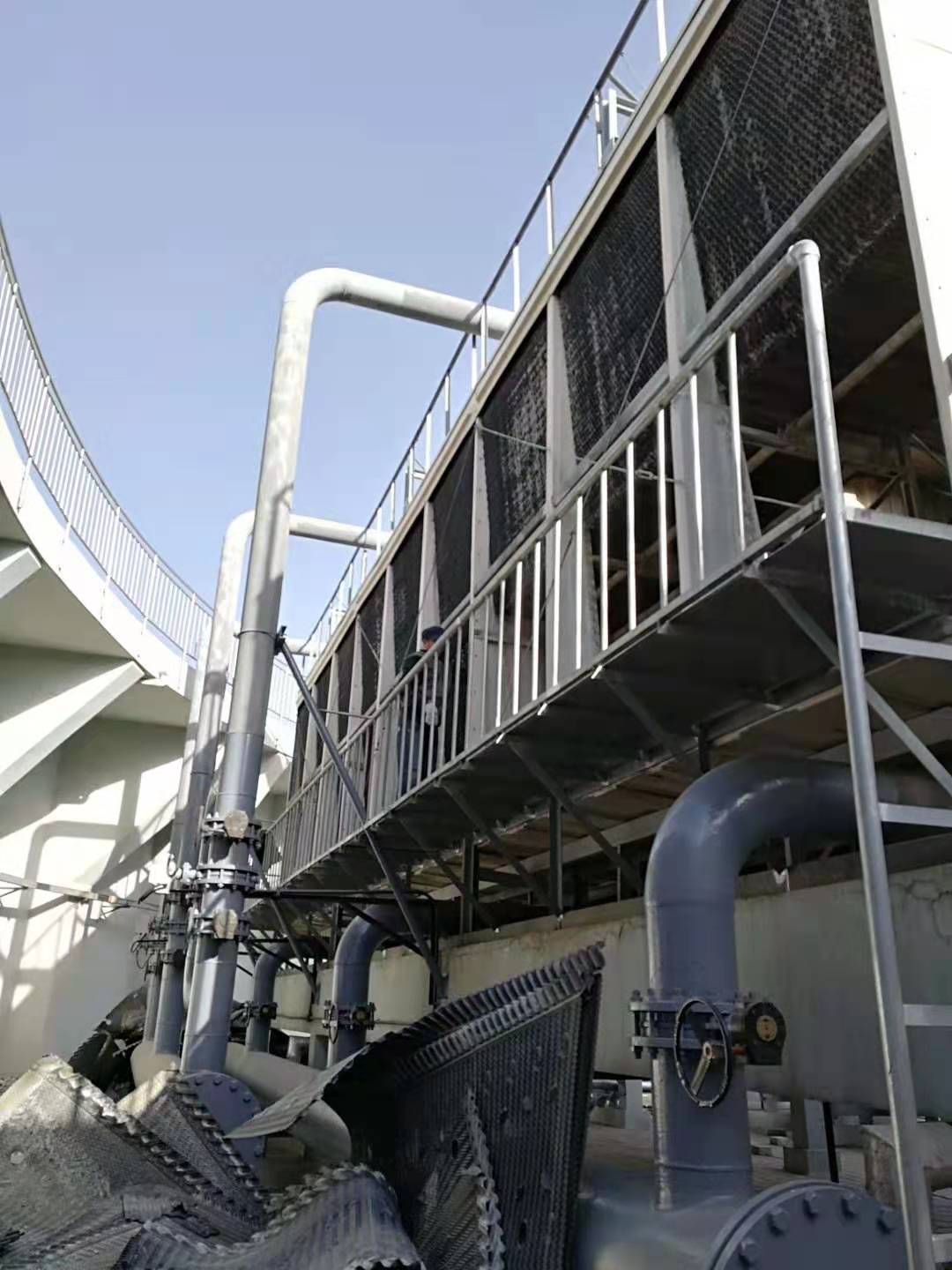
Marley compatible cooling tower fill is an important option for industrial facilities looking to replace worn or damaged cooling tower packing while managing maintenance costs. Over time, cooling tower fill can become clogged by mineral scale, algae, suspended solids, and other contaminants. Plastic sheets may also crack, deform, or collapse, reducing heat-transfer performance and disrupting airflow.
When original replacement parts are expensive, unavailable, or subject to long lead times, aftermarket cooling tower fill may provide a practical alternative. However, compatibility involves more than matching the dimensions of the existing fill. Buyers must also consider material quality, fill geometry, thermal performance, pressure drop, and installation requirements.
This guide explains how Marley-compatible cooling tower fill works, how to evaluate aftermarket replacements, and how to select a reliable supplier for industrial applications.
1. What Is Marley Compatible Cooling Tower Fill?
Cooling tower fill, also known as cooling tower packing or fill media, increases the contact area between water and air. This improves heat transfer and helps the cooling tower reduce circulating water temperature.
Marley cooling towers use different fill configurations depending on the tower model and operating conditions. When the original fill needs replacement, a compatible aftermarket product may be designed or selected to fit the existing tower.
Common fill types include:
Film fill: Spreads water over formed surfaces to create thin films and increase the heat-transfer area.
Splash fill: Breaks falling water into droplets and can be suitable for certain applications with greater fouling potential.
Custom replacement fill: Configured around existing dimensions, support structures, and operating requirements.
The correct replacement depends on the original tower design, water quality, operating temperature, and required cooling performance.
2. Why Consider Aftermarket Marley Cooling Tower Fill?
Industrial buyers may consider aftermarket cooling tower fill for several reasons.
Cost Management
Aftermarket sourcing can provide additional pricing options, particularly for large replacement projects. Actual savings depend on material specifications, manufacturing requirements, freight, and installation costs.
Flexible Sourcing
An independent manufacturer may offer an alternative when the original fill configuration is difficult to obtain. Some manufacturers can review existing drawings or samples to determine whether a suitable replacement can be produced.
Custom Dimensions
Older cooling towers may use specific fill pack dimensions or configurations. Custom manufacturing may help match the existing installation and reduce unnecessary modifications.
Bulk Supply
Specialist manufacturers may support large orders for factories, power plants, cooling tower contractors, and equipment distributors. Buyers should confirm production capacity and dimensional consistency before ordering.
Replacement Planning
Aftermarket suppliers may offer additional options for material selection, packaging, and delivery arrangements. These options can help maintenance teams coordinate replacement with planned shutdowns.
Important: Aftermarket fill is not automatically equivalent to original Marley fill. Confirm technical compatibility and performance requirements before making a purchasing decision.
3. PVC vs. PP: Which Material Is Best?
Material selection affects price, chemical resistance, temperature suitability, and service life.
PVC Cooling Tower Fill
Polyvinyl chloride (PVC) is widely used in cooling tower film fill because it offers a practical balance of cost, formability, and resistance to corrosion in suitable operating environments.
Benefits include:
Economical material for many industrial applications.
Lightweight sheets that are relatively easy to handle.
Availability in different sheet geometries and pack configurations.
Suitability for many conventional cooling water systems.
PVC should be used only within its specified temperature and chemical compatibility limits.
PP Cooling Tower Fill
Polypropylene (PP) may be suitable for applications requiring different temperature or chemical resistance characteristics.
Potential benefits include:
Availability of grades suitable for certain higher-temperature applications.
Resistance to various chemicals, depending on the formulation and conditions.
Flexibility for specialized replacement requirements.
PP is not universally superior to PVC. The correct material depends on the application and the manufacturer's technical specifications.
| Selection factor | PVC fill | PP fill |
| Initial cost | Often economical | Depends on grade and design |
| Temperature suitability | Verify specified limits | Some grades support higher temperatures |
| Chemical resistance | Application-dependent | Application-dependent |
| Replacement use | Many conventional systems | Selected demanding applications |
4. How to Verify Marley-Compatible Fill Dimensions
Correct dimensions are essential for ensuring that replacement fill fits the existing tower and performs as intended.
Before requesting a quotation, collect the following information:
Cooling tower model and serial number, if available.
Fill pack length, width, and height.
Sheet thickness and spacing, where known.
Fill geometry and orientation.
Number of packs or total fill volume.
Support spacing and installation clearance.
Photographs, drawings, and samples can help the manufacturer understand the original configuration.
For a rectangular fill section, a preliminary volume estimate can be calculated as:
Fill volume = Length × Width × Height
The final quantity must account for the tower layout, support structure, clearances, and the specified pack arrangement.
Do not assume that a replacement is compatible simply because it fits inside the tower. Sheet geometry and spacing influence heat transfer, airflow resistance, and water distribution.
5. Key Performance Requirements for Aftermarket Fill
A suitable aftermarket replacement should satisfy the cooling tower's relevant thermal, hydraulic, and mechanical requirements.
Thermal Performance
The fill must provide appropriate water-air contact to support the required cooling duty. A change in fill geometry may affect the tower's ability to reach its target cold-water temperature.
Airflow and Pressure Drop
Fill design influences the resistance encountered by air passing through the tower. Excessive pressure drop can affect fan operating conditions and energy consumption.
Water Distribution
The fill should work with the existing distribution system to promote even wetting and minimize dry areas or water bypass.
Mechanical Strength
The material and structure must withstand the expected operating temperature, water loading, support arrangement, and maintenance conditions.
Fouling Resistance
Facilities with suspended solids or recurring biological growth should consider cleaning requirements and the suitability of the fill configuration.
For critical applications, request technical documentation and have the proposed replacement reviewed by a qualified cooling tower engineer.
6. How to Choose a Reliable Aftermarket Cooling Tower Fill Supplier
Selecting a qualified supplier is just as important as choosing the product.
Evaluate potential manufacturers using the following criteria:
Technical experience: Look for experience with industrial cooling tower fill and replacement projects.
Manufacturing capability: Confirm that the supplier can produce the required dimensions, geometry, and quantity.
Material documentation: Request specifications for PVC, PP, or other proposed materials.
Quality control: Ask how the supplier checks dimensions, bonding, consistency, and finished-product quality.
Delivery reliability: Confirm production lead time, packaging, shipping arrangements, and the ability to meet your shutdown schedule.
After-sales support: Determine whether installation guidance, technical clarification, and warranty support are available.
SPX Cooling Tech is the appropriate starting point for investigating original Marley replacement parts. Buyers evaluating aftermarket products should separately verify the supplier's technical capability and the compatibility of the proposed fill.
CoolingTowerPart.com can also be considered as a sourcing channel for cooling tower fill and related replacement components. Provide the tower model, fill dimensions, operating conditions, and project quantity to determine whether a suitable option is available.
7. How Much Does Marley-Compatible Cooling Tower Fill Cost?
Aftermarket cooling tower fill prices depend on several factors:
Material type and grade.
Fill dimensions and total quantity.
Film-fill or splash-fill configuration.
Custom manufacturing requirements.
Packaging and international shipping.
Removal, installation, and associated repairs.
Request quotations based on the same technical specifications to make meaningful comparisons. Evaluate delivered cost and expected performance rather than comparing unit prices alone.
A lower-priced product may not provide good value if it requires extensive modifications or fails to meet the tower's operating requirements.
8. Installation Tips for Aftermarket Fill Replacement
Proper installation is essential for achieving the expected performance.
Shut down and isolate the cooling tower according to site safety procedures.
Remove the old fill and inspect supports, nozzles, and distribution piping.
Clean the installation area and repair damaged components.
Install the replacement packs according to the approved drawings and supplier instructions.
Verify alignment, support, spacing, and water distribution.
Restart the tower and inspect for abnormal vibration, leakage, or uneven wetting.
Record operating temperatures and other available performance indicators.
Avoid forcing oversized fill packs into place or leaving unintended gaps that could cause airflow or water bypass.
9. Frequently Asked Questions
Is Marley-compatible cooling tower fill the same as original Marley fill?
Not necessarily. Compatible aftermarket fill is intended to meet specified replacement requirements, but its materials, geometry, and performance may differ. Verify the product documentation before ordering.
Can aftermarket fill reduce replacement costs?
It may offer competitive pricing, but total savings depend on material quality, freight, installation, and service life. Compare complete project costs.
Can I replace PVC fill with PP fill?
Potentially, if the alternative material is suitable for the operating temperature, water chemistry, tower design, and performance requirements. Technical review is recommended before changing materials.
What information is needed for a quotation?
Provide the tower model, fill dimensions, fill type, material preference, operating conditions, required quantity, delivery location, and project schedule.
Does new fill always improve cooling performance?
No. Replacement can restore performance when the existing fill is damaged or fouled, but overall cooling also depends on airflow, water distribution, fan operation, and ambient conditions.
Conclusion
Marley-compatible cooling tower fill can provide industrial buyers with an additional option for maintaining older cooling towers, controlling replacement costs, and sourcing custom-sized fill packs. However, compatibility must be established through technical specifications rather than brand references or dimensions alone.
Before purchasing aftermarket cooling tower fill, verify material suitability, fill geometry, thermal performance, pressure drop, and installation requirements. Compare qualified suppliers using consistent specifications and consider the total cost of ownership.
With proper engineering review and installation, a suitable replacement can help restore cooling performance and support reliable long-term operation.
Recommended internal links for CoolingTowerPart.com: