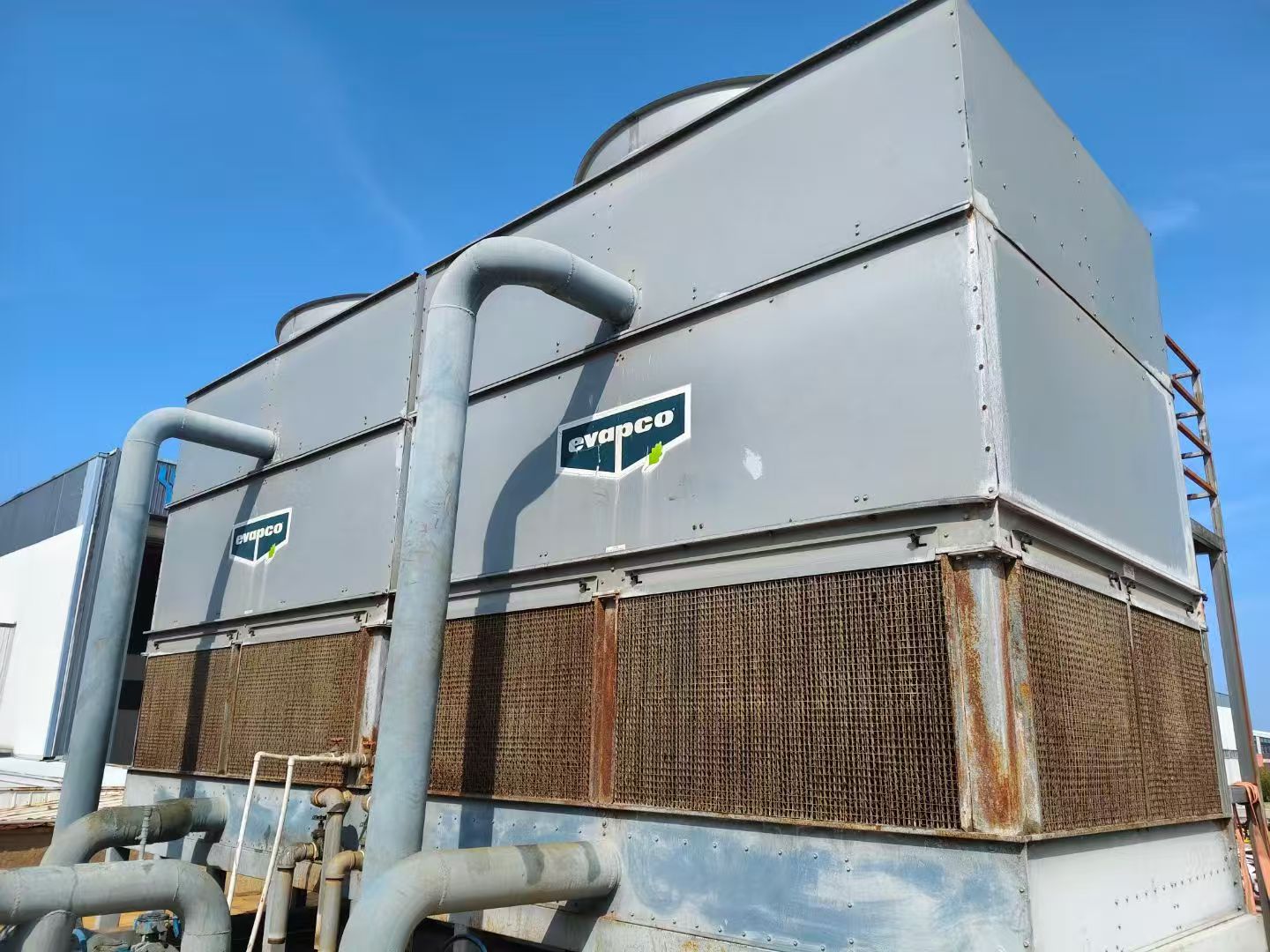
EVAPCO Closed Circuit Cooling Tower Troubleshooting: A Field Guide
You know that feeling when something's just... off? The process temperatures are creeping up, there's a new hum in the air, or you spot a puddle where no puddle should be. Your EVAPCO closed circuit cooling tower—that reliable workhorse on the roof or behind the plant—is trying to tell you something. The question is: are you listening?
Here's the good news: EVAPCO builds their closed circuit towers like tanks. These units are designed to provide years of reliable service when properly maintained . But even the best equipment needs a little TLC now and then. Think of this guide as your stethoscope and your wrench rolled into one. We're going to walk through the most common problems, figure out what they mean, and get your tower back to peak performance. No corporate jargon, no fluff—just real talk from someone who's been in the trenches.
Before You Climb the Ladder: Safety First
I know you're eager to fix the problem, but let's have a heart-to-heart before we go any further. An EVAPCO tower is a wet environment with spinning blades and live electricity. It will hurt you if you're careless.
Lockout/tagout is non-negotiable. Before you stick your head anywhere near the fan or reach into that basin, find the electrical disconnect. Turn it off. Put a padlock on it. Hang a tag that tells everyone within a mile that you're working on it . Verify the power is off if you can. Wear your PPE—gloves, safety glasses, and boots with good grip . The top of a tower gets slippery, and a fall is a bad day for everyone. Got it? Good. Let's dig in.
Listen to What Your Tower Is Telling You
Before you start pulling things apart, just stand there for a minute. Use your senses. A closed circuit cooling tower operates on a simple principle: your process fluid runs through a sealed coil, spray water cascades over that coil, and air moves through the unit to create evaporative cooling . When one part of that system breaks down, the tower talks to you.
Is the outlet temperature rising? That's a heat transfer issue. Hearing a rhythmic thumping? That's mechanical. Seeing a constant mist blowing away? That's a drift problem. Define the symptom first, and you're already halfway to the cure.
The Big One: Poor Cooling Performance
This is why you're here, right? Your process is heating up, and your EVAPCO tower isn't keeping up. In my experience, when an EVAPCO closed circuit tower loses efficiency, the culprit is almost always in the spray water, the airflow, or the coil itself.
The Spray Water System: Is It Doing Its Job?
Pop open that access door and look at what's happening inside. You should see a nice, even curtain of water covering the entire coil. If you see dry spots or uneven streams, you've got distribution problems.
Nozzle Blockages: The Usual Suspect
Those spray nozzles are designed to distribute water evenly, but they're magnets for sediment, scale, and biological growth . When they clog, you get dry patches on the coil, and heat transfer plummets. Solution: You can often clear them by taking a small pointed probe and moving it back and forth in the nozzle opening . If there's extreme buildup, you may need to remove the end cap on each branch pipe and flush the debris out .
Pump and Strainer Issues
Check the suction strainer. If it's clogged, your pump is starving, and your spray water flow drops . Clean that strainer regularly—it's a simple task that prevents major headaches. Also, verify the pump is actually moving water. If it's running but nothing's happening, you might have a cavitation issue or a worn impeller.
Airflow Problems: Can Your Tower Breathe?
Your EVAPCO tower needs massive amounts of air to create that evaporative cooling effect. If it can't breathe, it can't cool.
Fan Blade Fouling
Look up at those fan blades. Do they look clean? Or do they have a thick layer of dust, pollen, and grime caked onto them? That buildup changes the aerodynamics and reduces airflow . Solution: Clean the blades with a non-corrosive cleaner and water . It's amazing how much performance comes back with clean blades.
Inlet Louvers and Screens
Walk around the base. Those inlet louvers and screens are designed to let air in while keeping debris out. But over time, they become catch-alls for leaves, plastic bags, and general industrial flotsam . If they're clogged, your tower is suffocating. Clean them with a high-pressure spray or a shop vac .
The Coil: Scaling and Fouling
Take a good look at that heat exchange coil. Does it look crusty? Like it's been dipped in a mineral bath and left in the sun? That's scale—calcium and other mineral deposits from the spray water . This acts like insulation on your coil. You're trying to reject heat through a blanket of rock. Solution: A mild chemical clean with an EVAPCO-approved coil cleaner and low-pressure water spray is often needed . This is a job for a pro if you're not comfortable handling chemicals.
Mechanical Troubles: The Noisy and the Shaky
If your EVAPCO tower sounds like it's trying to become a helicopter, you've got mechanical problems.
Fan Motor Problems
EVAPCO uses motors built to "Cooling Tower Duty" specifications with permanently lubricated bearings and special moisture protection . But they're not invincible. If the motor won't start, check the overloads and verify you have power on all three phases . If it hums but doesn't spin, you might have a bad capacitor or a seized bearing. After extended shutdowns, check the motor with an insulation tester before restarting .
Drive System Issues
Depending on your model, you'll have either a belt drive or a gear drive.
Belt Drive Adjustments
Belt tension should be checked at startup and again after the first 24 hours to correct for initial stretch . For induced draft models, belts should deflect about 3/4 inch; for forced draft, about 1/2 inch . A properly tensioned belt won't "chirp" or "squeal" when starting . Check tension monthly and look for cracking or glazing .
Gearbox Maintenance
If your EVAPCO has a gear drive, check the oil level regularly—it should be at the center of the sight glass . Low oil is a death sentence for a gearbox. Change the oil semi-annually or based on oil analysis results .
Bearing Lubrication
EVAPCO units come with extended grease lines to make lubrication easier . For induced draft units, lubricate fan shaft bearings every 1,000 hours or three months. For forced draft, every 2,000 hours or six months . Use synthetic waterproof greases like Mobil Polyrex EM or Chevron SRI . Feed grease slowly to avoid damaging the seals.
Leaks and Water Loss
Finding water where it shouldn't be is never good. Let's track down the source.
Basin Leaks
Check the cold water basin and all connection points. Sometimes a leak is just a loose drain plug or a failed sealant bead . If you see cracks, small ones can sometimes be repaired with specialized epoxy. For larger issues, you might need professional help.
Coil Leaks: The Worst-Case Scenario
If you see a steady drip from the coil itself, that's a pinhole leak. This is serious business. Coil leaks usually come from corrosion—either from the inside (poor water treatment in your closed loop) or from the outside (constant spray water attack) . Solution: Small pinholes can sometimes be repaired, but it's tricky. You must drain and isolate the coil first, then use specialized epoxy or brazing. A pressure test afterward is mandatory. If the coil is old and corroded, replacement is the only safe option.
Drift Eliminator Failure
Is there a constant mist blowing off the top of your tower, even on calm days? That's "drift," and it means your drift eliminators aren't doing their job . These are designed to catch water droplets and return them to the basin. If they're damaged, clogged, or installed wrong, you're losing water and potentially damaging surrounding areas. Solution: Inspect the eliminator blocks—you can remove them through the access door on induced draft units . Clean them if clogged, replace them if damaged .
Water Chemistry: The Hidden Culprit
Here's the truth: poor water chemistry is the number one cause of performance loss in EVAPCO towers . You can't see it, but it's slowly destroying your efficiency.
Scale, corrosion, and biological growth all stem from untreated or poorly treated water . Work with a water treatment specialist to maintain proper cycles of concentration. For closed circuit towers, EVAPCO recommends inhibited glycol (minimum 25%) to minimize corrosion and scale . Test water regularly for pH (6.5-8.5), conductivity, and bacteria counts . And make sure your blowdown system is working correctly—it's essential for controlling dissolved solids.
Freeze Protection: Winter Worries
If you're in a cold climate, winter can wreck your tower if you're not careful. Water expands when it freezes, and it will split coils and pipes like an axe splits wood.
During sub-freezing weather, if you're running with variable speed fans, EVAPCO recommends a minimum speed of 50% to prevent icing . Never let the leaving fluid temperature drop below 42°F .
If you're shutting down for winter, drain everything—the basin, the piping, everything . Leave basin drains open to prevent rain or snow accumulation . If you have basin heaters, test them before cold weather hits . For extended shutdowns, turn the fan assembly by hand once a month to keep bearings from seizing .
The Preventive Maintenance Schedule
The best troubleshooting is the kind you never have to do because you caught problems early. Here's a practical schedule for your EVAPCO tower.
Daily and Weekly Checks
- Check cold water basin level
- Listen for abnormal noise from fans or the gearbox
- Observe fan rotation and airflow
- Check for visible drift or water leaks
- Verify make-up valve operation
- Record hot and cold water temperatures
Monthly Tasks
- Inspect fan blades for cracks and dirt buildup
- Check motor mounts and vibration isolators
- Inspect and clean spray nozzles
- Lubricate fan shaft bearings (if due)
- Check belt tension and alignment
Quarterly and Semi-Annual Work
- Change gearbox oil (or per oil analysis)
- Clean the cold water basin thoroughly—drain and shovel out sludge
- Inspect drift eliminators and fill media for scaling or fouling
- Check structural bolts and fasteners
- Test vibration and safety switches
Annual Shutdown Deep Clean
This is the big one. Schedule a full shutdown for a deep clean .
- Deep clean fill and drift eliminators
- Flush the entire spray system
- Inspect the gear reducer for seal leaks and backlash
- Check fan blade pitch and rebalance if needed
- Inspect the entire structure for corrosion—clean and repaint as needed
- Test all electrical systems, including motors, starters, and VFDs
Conclusion: Stay Cool with EVAPCO
Look, troubleshooting an EVAPCO closed circuit cooling tower isn't rocket science. It's about paying attention, following a logical process, and doing the little things before they become big things. Your EVAPCO is built to last—these units use the highest quality materials and are designed for years of reliable service . But they need you to be their eyes and ears.
Follow the maintenance schedule, keep an eye on water chemistry, and address small problems before they escalate. Your tower will reward you with efficient, trouble-free operation. And when something does go wrong, you'll have the confidence and the know-how to roll up your sleeves and fix it.
Now go give that tower some love. It's earned it.